
Quick Take
- King cobras were recently reclassified in a way that changes what we thought we knew about the species, and this happened just last year. See the 2024 reclassification →
- The world-record king cobra met a fate that had nothing to do with its venom, and the story behind it is unexpectedly dark. Read the record cobra's story →
- A king cobra's iconic hood isn't what most people think it is, and the anatomy behind it reframes the whole encounter in the video. See the hood behavior explained →
- King cobras do something during reproduction that no other snake on Earth does, and this behavior is part of what makes them so dangerous to approach. Discover their nesting behavior →
Standing face-to-face with a raised king cobra is not a position most people would willingly put themselves in. In the TikTok clip below, an animal handler remains directly in front of a large cobra as the snake lifts its body and spreads its hood in a defensive display. That posture is not something to take lightly. King cobras are highly venomous snakes capable of delivering a medically serious, potentially fatal bite.
Watch the Footage
What Is a King Cobra?
King cobras are the longest venomous snakes in the world. They belong to the genus Ophiophagus, a name that fittingly means “snake-eater.” Other snakes make up most of their natural diet, although they can also eat lizards and other small vertebrates.
King cobras can be brown, olive, yellowish, greenish, or black, often with lighter crossbands or chevrons. Scientists long treated king cobras across South and Southeast Asia as a single species, Ophiophagus hannah. A major taxonomic revision published in 2024 recognized four distinct king cobra species distributed across different parts of Asia.
They are also unusual among snakes because females construct nests for their eggs, gathering leaves and other vegetation into a mound before guarding the clutch. That nesting behavior is considered unique among snakes.
How Large Are King Cobras?
Adult king cobras commonly reach roughly 10 to 13 feet long, and exceptionally large individuals can grow considerably longer. The largest king cobra on record measured 5.71 meters, or 18 feet 8 inches. According to Guinness World Records, it was captured near Port Dickson in Malaysia in April 1937 and later reached its record length at London Zoo by the autumn of 1939.
The snake was ultimately euthanized along with other venomous snakes at the zoo after World War II began because officials feared dangerous animals could escape if the zoo were bombed.
Where Do King Cobras Live?
King cobras are native to Asia, with populations spread across South and Southeast Asia. Depending on the species, their range includes parts of India, southern China, mainland Southeast Asia, the Malay Peninsula, Indonesia, and the Philippines. They occupy habitats including forests, bamboo thickets, mangrove swamps, agricultural edges, and areas near streams.
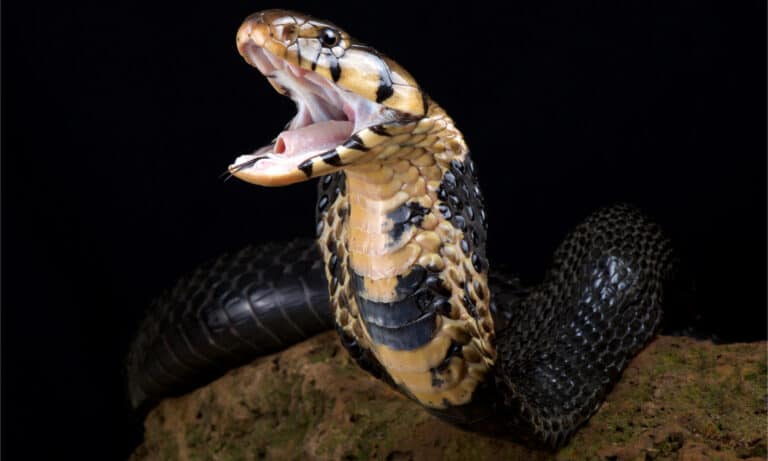
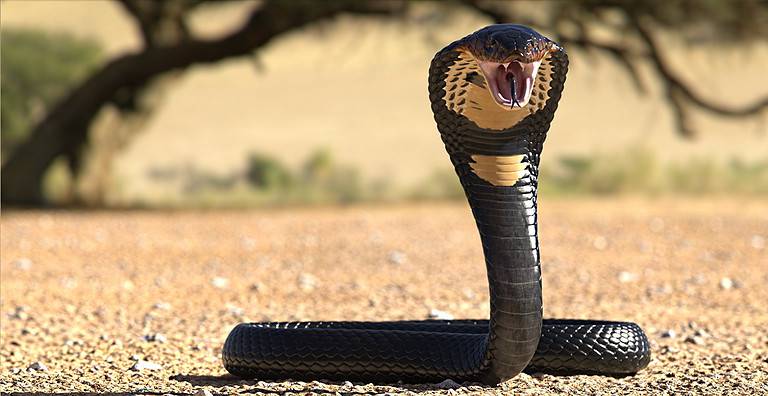
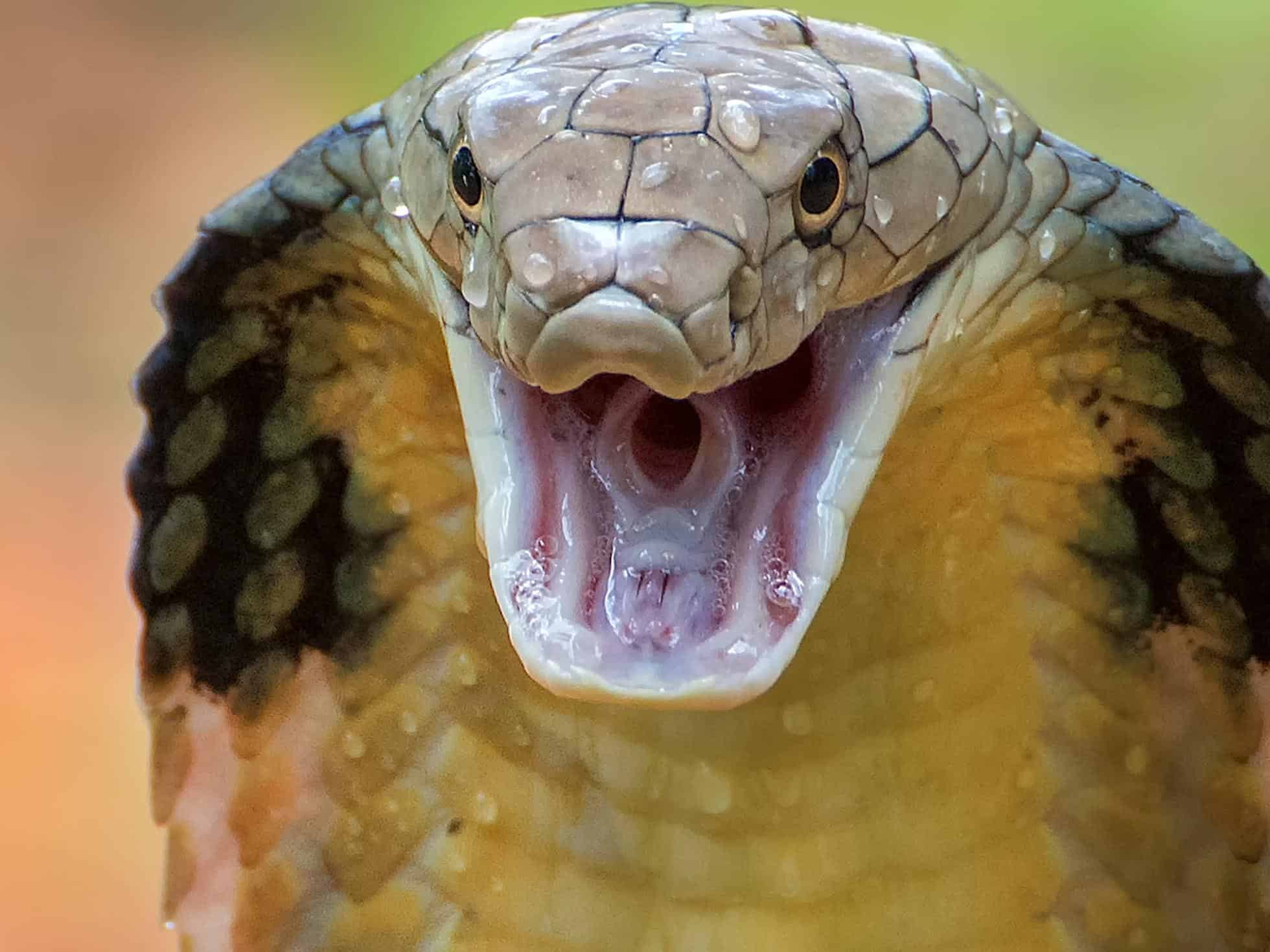
King cobras can live for roughly 20 years in the wild. Despite their intimidating appearance, they generally prefer to escape from people when given the opportunity. When threatened, however, they can raise several feet of their body off the ground, spread the ribs in their neck to form the familiar hood, and maintain that elevated posture while confronting a perceived threat.
Can a King Cobra’s Bite Kill a Human?
Yes. A king cobra bite can cause life-threatening envenomation and can be fatal without appropriate treatment. These snakes generally avoid people and are more likely to bite when cornered, handled, threatened, or defending a nest. That makes deliberately approaching or handling one an extremely high-risk situation.
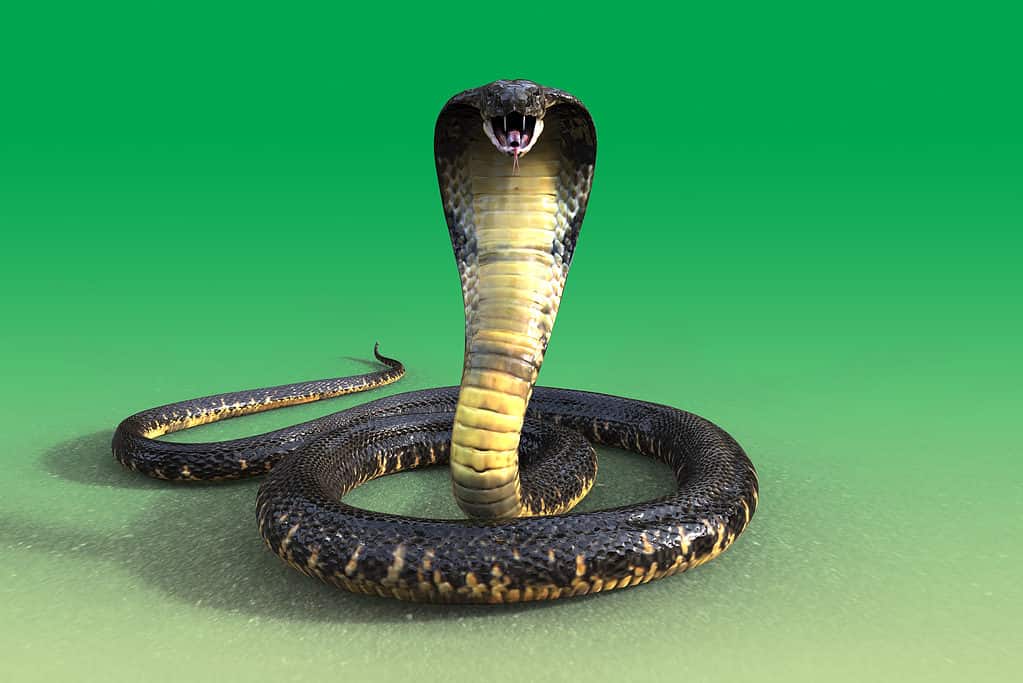
A king cobra’s “hood” is actually its ribs.
©mrjo/Shutterstock.com
A king cobra spreads its hood by extending elongated ribs in its neck beneath the skin. Its fixed front fangs inject venom from glands in the head when it bites. King cobra envenomation can cause severe pain and swelling around the bite as well as systemic neurotoxicity. In serious cases, progressive muscle paralysis can interfere with swallowing and breathing and may lead to respiratory failure.
That puts the encounter in the video into perspective. Even an experienced animal handler is dealing with a snake capable of causing a medical emergency with a single successful bite. The cobra’s raised posture and expanded hood are warning signals, not an invitation to get closer. Anyone who encounters a venomous snake in the wild should give it space rather than attempting anything resembling what happens in this clip.