
Quick Take
- After the sudden loss of 26 individual Javan rhinos, the need to conserve them became an utmost priority.
- A 2.2-pound piece of Javan rhino horn is worth $65,000, incentivizing poaching.
- 33% of the species vanished inside a protected park without officials detecting any activity.
- 2024 testimony from arrested poachers sheds light on how few Javan rhinos were left in the wild.
Despite education about rhinos, they continue to be hunted around the world for one simple reason: their horns. With just five rhino species alive today, all face the very real threat of extinction. Some, like the white rhino, have larger populations and are considered near-threatened, whereas the Sumatran rhino is the world’s most endangered rhino species, with no more than 47 left in the world.
Not far behind the Sumatran rhino is the Javan rhino. Until recently, it was believed the population was faring better than it had in the past. However, numbers plummeted overnight, going from 76 rhinos to approximately 50, indicating there is still massive poaching pressure when it comes to these critically endangered animals.
Javan Rhino Population Has Declined Dramatically Over the Last Few Years
As recently as 2024, it was believed the Javan rhino population stood at 76 individuals. However, this was only an estimate, given that the dense rainforest where the rhinos live makes it difficult to conduct an accurate census.
While small, the numbers were positive given that not only had the population increased from 40 in 2009, but there were calves spotted in Ujung Kulon National Park, the only place where the Javan rhino can be located today, in 2021, 2023, and 2024. This excitement was short-lived after members of two poaching gangs were arrested and testified that 26 of the 76 rhinos had been killed.
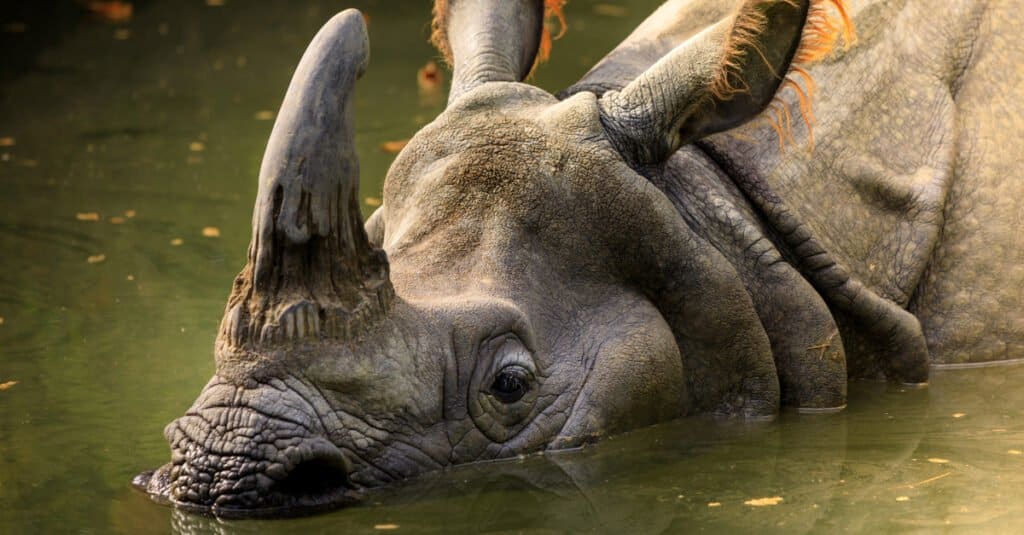
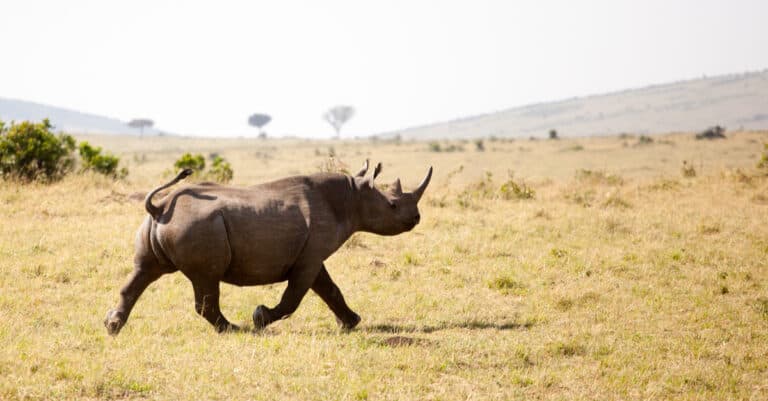
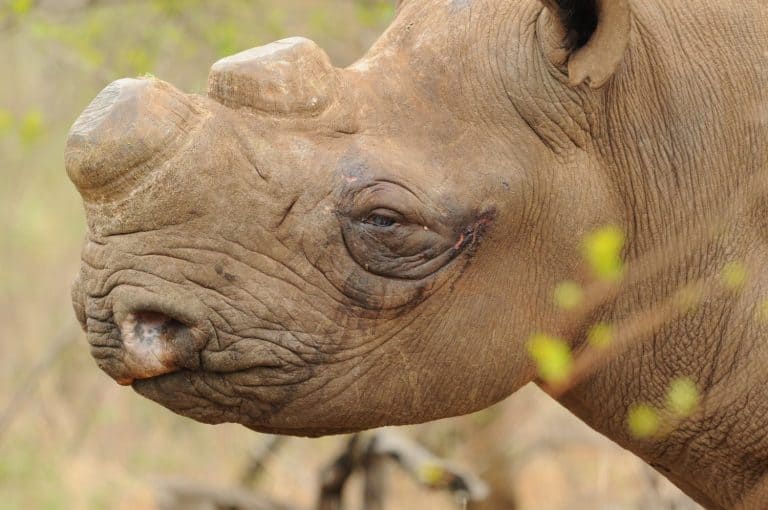
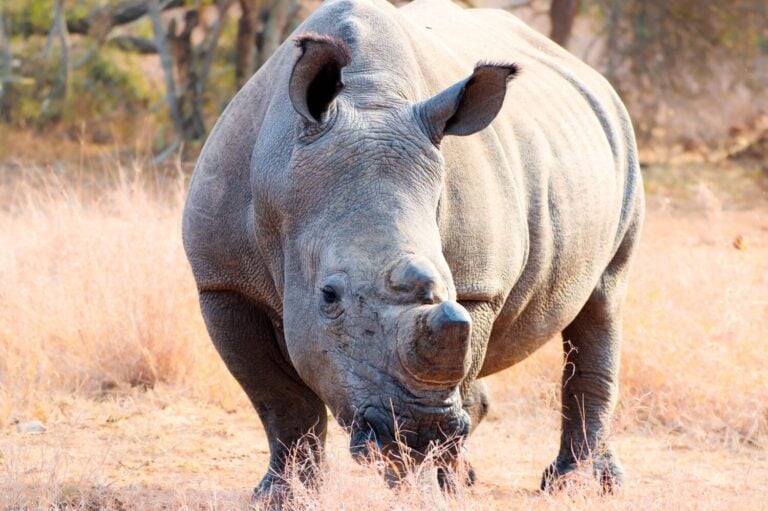
Javan rhinos are a critically endangered species only found in Ujung Kulon National Park.
©Maximilian Pawlikowsky/Shutterstock.com
It was believed that, given the difficulty in locating the Javan rhino, they would be safe in the national park. Clearly, this was not the case, with so many being not only killed but also had their horns removed from the park, with no one being the wiser.
Three calves were reported in 2025. Whether this increases the population by 50 is not clear. What is amazing is that despite poaching pressures, habitat loss, and other factors that threaten the very survival of Javan rhinos, they have proven resilient. Whether the population can make another comeback, as it did from 2009, remains to be seen.
Why Do Javan Rhinos Continue to Be Poached?
As long as there is a market for Javan rhino horns, they will continue to be poached. It does not matter what risks are involved for poachers. With the potential to make a large amount of money (up to $65,000 for 2.2 pounds of horn), poachers are willing to take the chance of getting caught.
The Javan rhino’s horn is used medicinally to treat a number of ailments, including gout and fever, and is even considered an aphrodisiac. More often than not, however, owning one is seen as the ultimate status flex. Those who display it show that they have wealth. Others will purchase the horn, only to hide it away, knowing it will only gain value in years to come, given the scarcity of the Javan rhinos today.
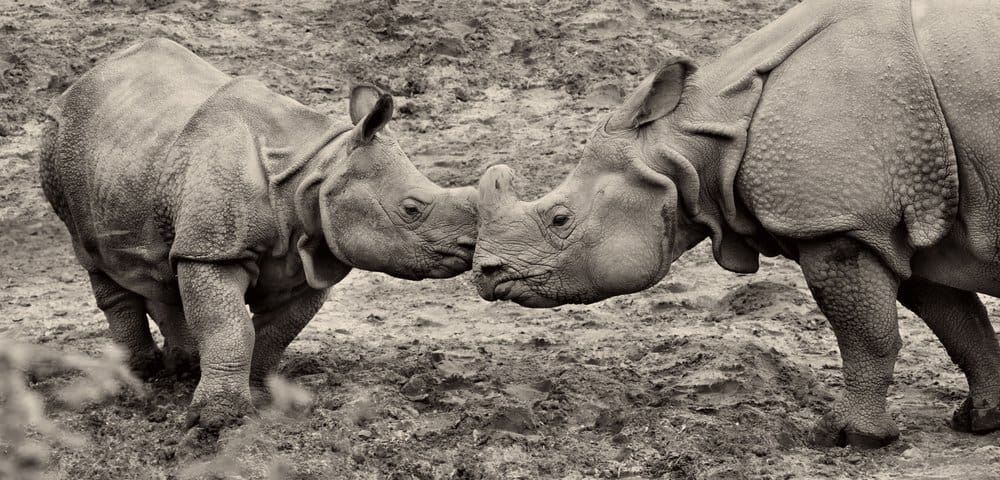
Javan rhinos continue to be poached because there is a profitable market for their horns.
©Nataly Reinch/Shutterstock.com
Unless the market disappears for Javan rhino horns, there are still going to be those who will hunt the rhinos. With the rhinos difficult to track, there is no real way to know how many are still alive. Up until 13 poachers were arrested from two separate poaching gangs, it was believed there were 76 Javan rhinos still in the wild. Their testimony in 2024 shocked conservationists, as 26 of those rhinos had been poached without anyone knowing. Black market trade is alive and well for the Javan rhino horns. But this is not the only threat Javan rhinos face.
Threats Outside of Poaching That Threaten the Existence of Javan Rhinos
Poaching remains the biggest threat to the survival of Javan rhinos. However, it is not the only threat the rhino population faces. Others, some of which are beyond conservationists’ control, could prove devastating to the critically endangered rhinos and even cause them to go extinct.
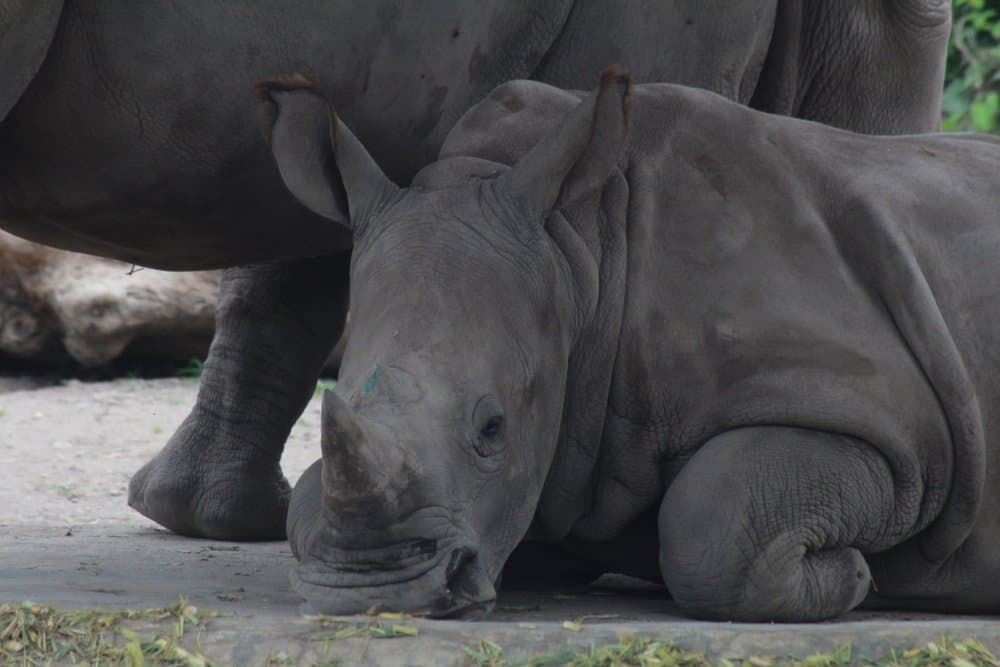
Threats to Javan rhinos include habitat loss, proximity to volcanic eruptions and tsunamis, and disease.
©Halimpratama/Shutterstock.com
The threats to Javan rhinos, in addition to poaching, include:
- Proximity to Krakatoa volcano: The volcano is active, and the last major eruption it had in 1883 nearly caused the entire island of Java to be destroyed
- Proximity to the Indonesian Sundra Arc: The arc is the location of multiple active volcanoes and has the possibility of creating tsunamis that could blanket Java in water
- Disease: Water buffalo that live in the same habitat as the rhinos have spread disease in the past, killing several Javan rhinos
- Loss of habitat: Between the loss of rainforest acreage and invasive species choking out the native plants Javan rhinos consume, habitat loss is a big problem for the rhinos
There is no denying that it is an uphill battle if the Javan rhinos are to survive. Losing even a few can turn the tide and cause irrevocable damage to the species.
Why Losing a Few Javan Rhinos Has Catastrophic Consequences
Given that there are just 50 or so Javan rhinos left, the loss of any one will have negative effects on the species. This is because the rhinos are already struggling to survive, and any fewer will further stack the odds of survival against them.
One of the biggest issues, aside from the actual number of Javan rhinos left, is the lack of genetic diversity within living rhinos. According to a 2023 study published in Zoophara, interbreeding among Javan rhinos is common, given how few remain. This makes the rhinos more susceptible to disease and genetic deficiencies, according to study co-author Francesco Nardelli, which can easily lead to the extinction of Javan rhinos.
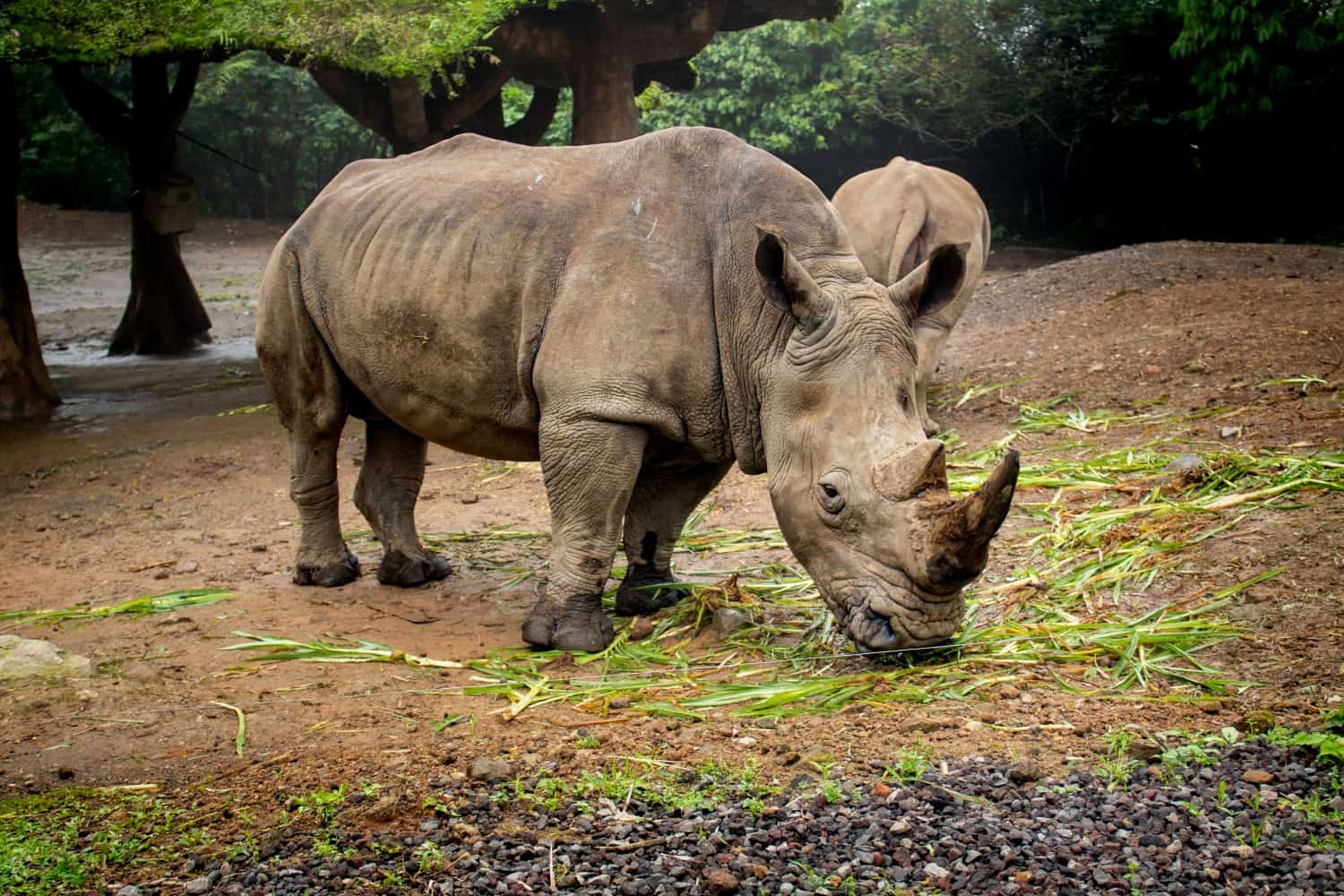
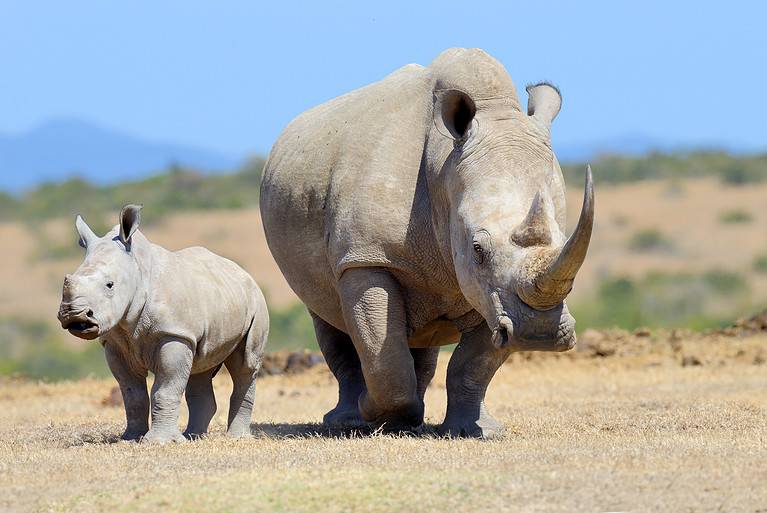
Losing more Javan rhinos may lead to the collapse of the species and the ecosystem it inhabits.
©Jose Krishnawan/Shutterstock.com
“Genetic studies conducted on the Javan rhinoceros have indicated low genetic diversity within the population,” Nardelli explains to Mongabay. “Low genetic diversity is often associated with inbreeding depression, which can lead to reduced fitness and increased susceptibility to diseases.”
It is not only the species that will face catastrophic consequences, though. Javan rhinos are considered a keystone species in Ujung Kulon National Park. Thanks to their seed dispersal and ability to allow new growth in the rainforest, as well as their foraging behaviors that create open spaces, the fewer Javan rhinos there are, the more the ecosystem suffers. Biodiversity begins to collapse as more invasive species are allowed to take over. Eventually, other species begin to decline in population and may go extinct if they cannot adapt.
Currently, the decline in Javan rhinos has led to the spread of Arenga palms across Ujung Kulon National Park. This has reduced the number of plant species the rhinos need to eat, and is beginning to change the appearance of the ecosystem in the national park.
What Can Be Done to Save the Javan Rhinos?
With the loss of any Javan rhinos, the species faces the very real and unfortunate risk of extinction. This is why conservationists have been sounding the alarm for years: change is needed if these rhinos have any chance of survival.
Given the dramatic decline in rhinos over such a short period, it is unclear whether the species can recover. But if they are to be given a chance, there needs to be a massive crackdown on poaching. This can only happen if officials stop turning a blind eye and stop taking bribes to allow horns to be shipped out of Java, where they fetch large sums for even the smallest piece.
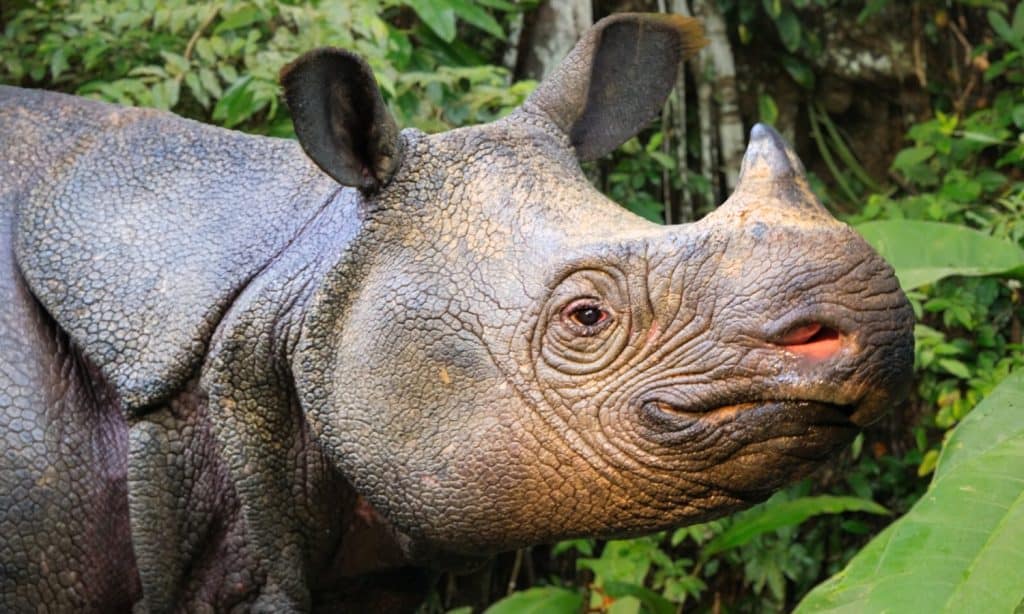
Javan rhinos need better protection from poaching and habitat loss to end, and animals with the potential for spreading disease need to be kept clear.
©Nisansala99/Shutterstock.com
Additionally, other steps need to be taken to prevent the Javan rhino population from further declining. Those steps include:
- Ujung Kulon National Park needs better security measures to stop poachers from killing the remaining Javan rhinos
- Ujung Kulon National Park needs invasive species of plants cleared to allow the native plants to grow that the rhinos rely for survival
- More camera traps need to be placed in Ujung Kulon National Park for monitoring of the Javan rhinos
- More local community education needs to take place to inform why losing the Javan rhino would be disastrous for local ecosystems
- Community involvement in reporting and turning in poachers
- Keeping water buffalo and other animals capable of spreading disease to the Javan rhinos out of Ujung Kulon National Park
Additionally, discussions of bringing Javan rhinos into captivity for breeding have persisted for the past several years. To date, this idea has not come to fruition. There is no sugar coating the fact that saving the Javan rhinos will be a difficult task, at best. However, as these same steps were implemented in other regions of the world where rhinoceros populations were declining, rhinoceros populations have steadily increased, particularly the Greater one-horned rhinos and black rhinos. But if the Javan rhinos are to stand a chance, poaching needs to end. If it does not, the rhinos may no longer be classified as critically endangered, but extinct instead.