Quick Take
- Losing lions wouldn't just erase an iconic species. It could trigger wildfires, disease outbreaks, and a food web collapse most people never see coming. See the cascade effects →
- For decades, lions were worth more dead than alive. That economic reality is exactly why one unconventional strategy is now outpacing traditional conservation. Explore the economic case →
- Lion populations didn't collapse because of one villain. The real cause is a compounding chain of factors that conservationists are still racing to untangle. Unpack the compounding causes →
- Conservation efforts have actually reversed decline in some regions, and yet the reason they're failing everywhere else exposes a critical flaw in the current strategy. See what's working and why →
August 10th is World Lion Day, dedicated as a time to raise awareness of lion conservation. This means highlighting population decline, the threats that lions continue to face today, and what can be done to help save them.
With the king of beasts under siege, it helps to understand what led to their population decline and what conservation efforts truly look like. Has the beginning of the end of lions begun or is there still time to save them?
Lion Populations Have Dramatically Declined in a Century
The numbers are startling. In one century, lion populations have declined by 90%. With populations losing up to 99% of their historic range, there simply is no place for lions to go. Without change, the future for lions looks bleak.
According to the IUCN, lions are classified as “vulnerable.” While the organization noted that the population is decreasing, it hadn’t acknowledged that some populations across Africa are disappearing faster than others. This prompted subpopulations across Africa, specifically the West African population, to be categorized as “critically endangered.”
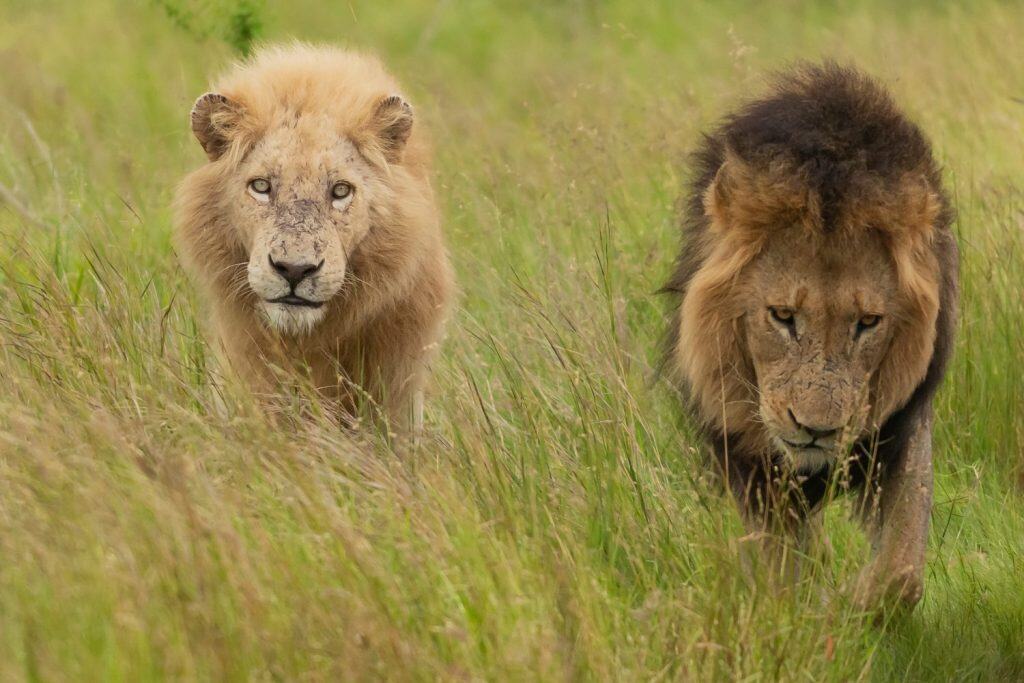
Lion populations have decreased by as much as 93% since the 1970s.
©Piotr Poznan/Shutterstock.com
The populations of lions across Africa are as follows:
- Congo Basin: Population of 1,600 in 1970 to 211 today, signifying a decrease of 93%
- West Africa: Population of 1,600 in 1970 to fewer than 200 today, signifying a decrease of 87%
- Central Africa: Population of 1,600 in 1970 to fewer than 200 today, signifying a decrease of 87%
- Southern Africa: Population of 36,000 in 1970 to 9,800 today, signifying a decrease of 73%
- East Africa: Population of 31,000 in 1970 to 11,000 today, signifying a decrease of 65%
In 1970, the existing lion habitat was connected, allowing all lion populations to move freely. Today, each population is fragmented. Unfortunately, diversity among lion populations has decreased significantly as a result. How this will impact lions in the future is still being studied.
What Caused the Collapse of Lion Populations?
There is no single reason lion populations have collapsed over the last several decades. Instead, it has to do with multiple factors that have reduced a once-robust global population of hundreds of thousands of lions to only 20,000 to 30,000 today.
The reasons that lions have faced a massive population decline include:
- Habitat loss
- Habitat fragmentation
- Human-lion conflict
- Depletion of prey
- Overhunting
- Poaching
- Disease
- Inbreeding
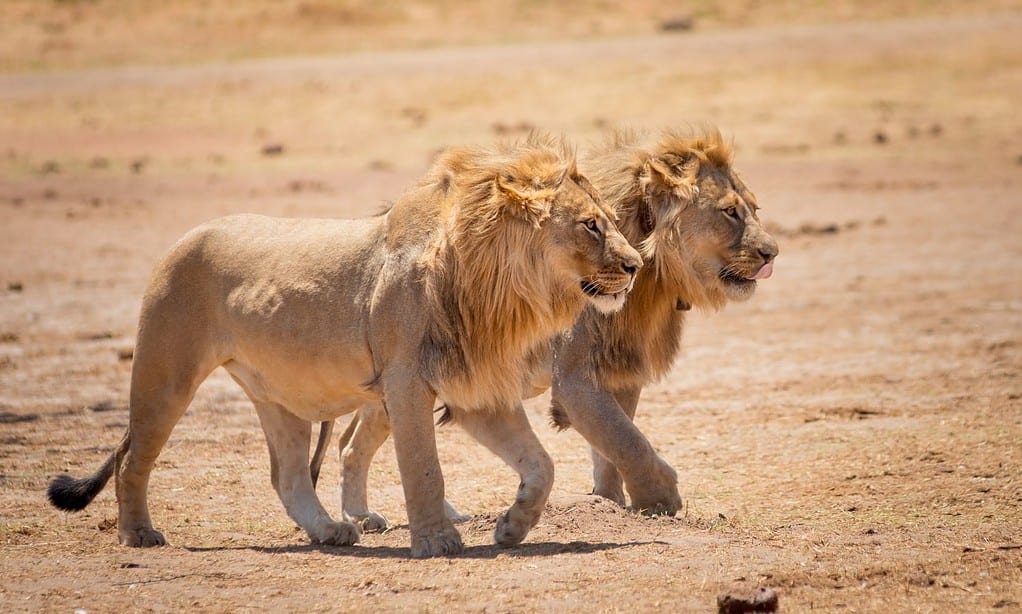
Lion population collapse is a result of habitat loss, habitat fragmentation, depletion of prey, human-lion conflict, and more.
©Gray Aletter/Shutterstock.com
The decline did not happen overnight. It happened over the course of the last century as regulations on urban expansion and hunting were lacking. With lion hunting now allowed only by permit, fewer of these wild cats are legally targeted. However, poaching has increased, with governments still turning a blind eye.
These factors combined have led to the collapse of lion populations. Until stronger conservation efforts are put in place, there is a very real chance that the ecosystems lions live in will pay the price.
Lions Play a Crucial Role in Their Ecosystems
Lions are apex predators. Consequently, they play a large role in their ecosystems. From regulating herbivore populations to influencing ecosystem biodiversity, lions are the glue that keeps their habitats healthy.
Were lions to go extinct, the savannah and grassland ecosystems would collapse. The herbivores they currently keep in check would see population booms, which would lead to overgrazing. If overgrazing occurred, landscapes would be incapable of holding water, soil would be eroded, and vegetation patterns would change. This altering vegetation not only increases the chances of wildfires but also increases their intensity.
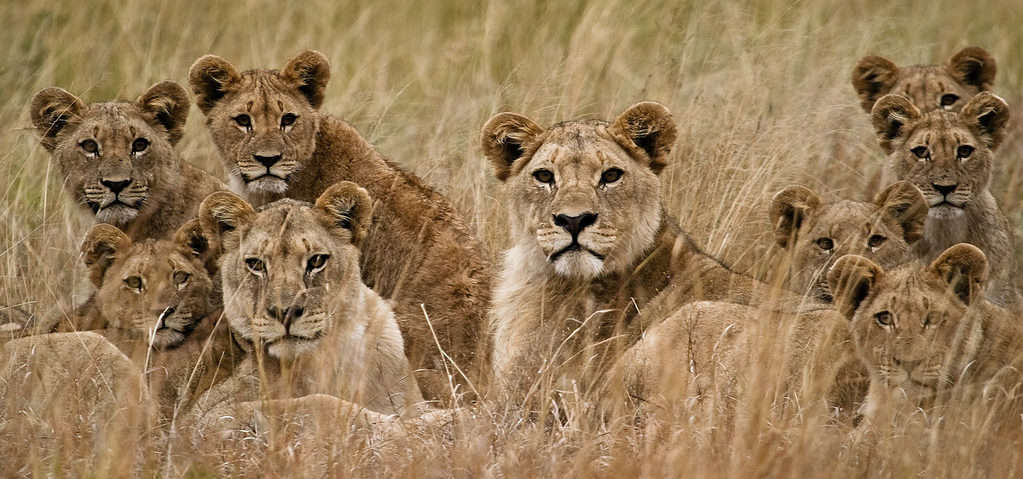
Lions are the glue that keeps their ecosystems running smoothly.
©Riaan van den Berg/Shutterstock.com
Smaller predators also have population control thanks to lions. In the lions’ absence, these populations would grow. As a result, bird and smaller prey populations would see a massive decrease. The insects and invertebrates that birds prey on would no longer be consumed in the quantities necessary to keep populations from exploding, further disrupting the food web.
Finally, the term “survival of the fittest” would no longer apply. Without lions, the weakest herbivores would not be hunted. This could lead to the spread of disease across multiple species, eventually weakening the herbivore population to the point of potential collapse.
How Lions Are Being Conserved
With lion conservation status ranging from vulnerable to critically endangered, it is imperative that conservation efforts succeed. In Africa, only 56% of the lion population resides in protected habitats. Increasing habitat and protected areas is the number one factor that will ensure the survival of lions.
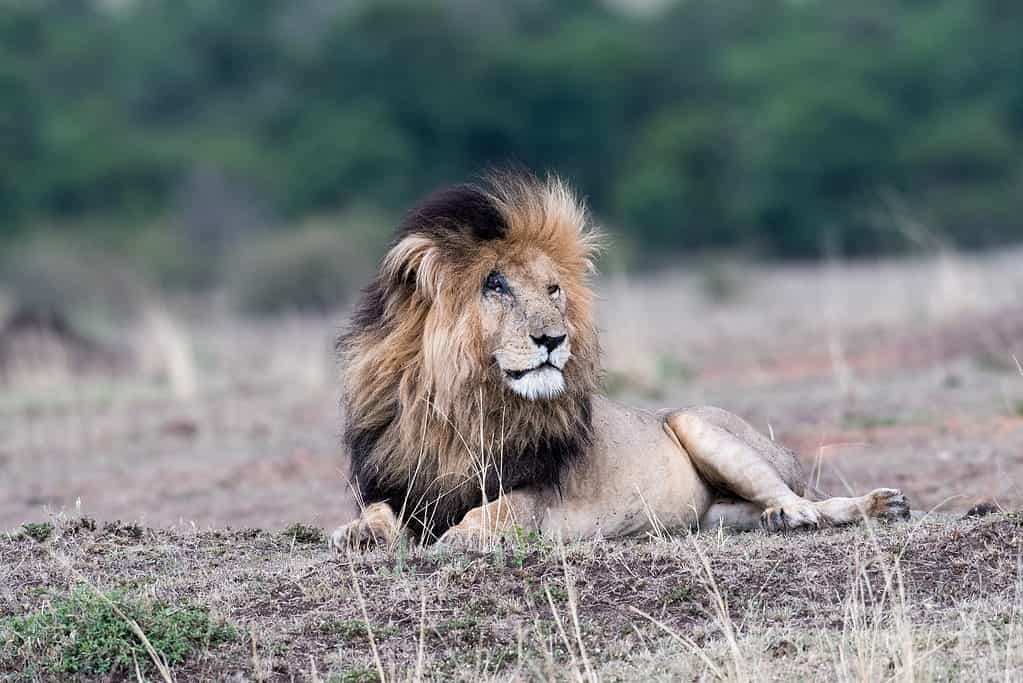
Lions are being conserved through anti-poaching patrols, GPS-based collaring, coexistence incentives, and more.
©Tony Campbell/Shutterstock.com
Other ways that lions are being conserved are as follows:
- Anti-poaching patrols
- GPS collaring
- Deterrents to mitigate livestock killings which decreases human-lion conflict
- Creating incentives for coexistence, such as tourism, job creation, and livestock protection
- Creating stronger trade relations between countries to stop the illegal sale of lion parts
- Local education
By implementing these practices, the decline in the lion population has stopped in some regions, and even slowly increased in some. However, if lions are to survive long-term, these practices need to be in place across Africa, not just in small regions throughout the continent.
Threats Lions Face Today
Despite massive crackdowns on poaching, this practice still remains one of the biggest threats to lions. The illegal killing of lions is not the only threat to their survival, however.
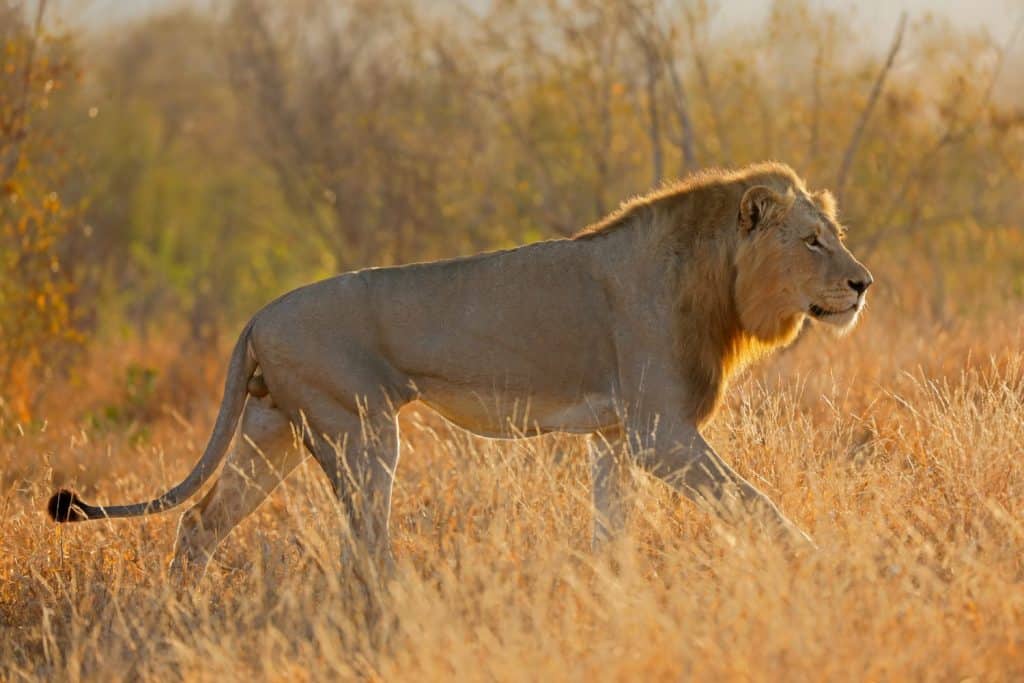
Threats that lions face today are habitat loss, fragmentation, and more.
©EcoPrint/Shutterstock.com
The other biggest threats that lions face today include:
- Habitat loss
- Habitat fragmentation
- Declining populations of prey
- Climate change
- Disease
To date, lions have gone extinct in nearly 25 of their historic ranges. This represents 94% habitat loss. While national parks and other protected areas have played a massive role in preventing further habitat loss, to truly thrive, lions need more territory to roam. Some efforts have been made to link larger portions of protected land together. However, the majority of lion prides are still small and fragmented. Over time, the lack of land and lack of interconnectivity could very well become the reason lions go extinct.
Why Anti-Poaching Tourism is Key to Lion Survival
Lions have historically been seen as having economic value only after they are no longer alive. The rewards of participating in poaching far outweighed the risk of being caught. But with anti-poaching tourism becoming extremely popular over the last two decades, lions are beginning to be seen as more valuable alive than dead.
Safaris are among the most revenue-generating forms of anti-poaching tourism. Far more people will pay to see lions in their wild habitat than they will to have them as a trophy. This form of tourism ensures there is a consistent stream of income. The funds are used to pay employees and go toward building much-needed infrastructure in the region, creating a better life for all involved.
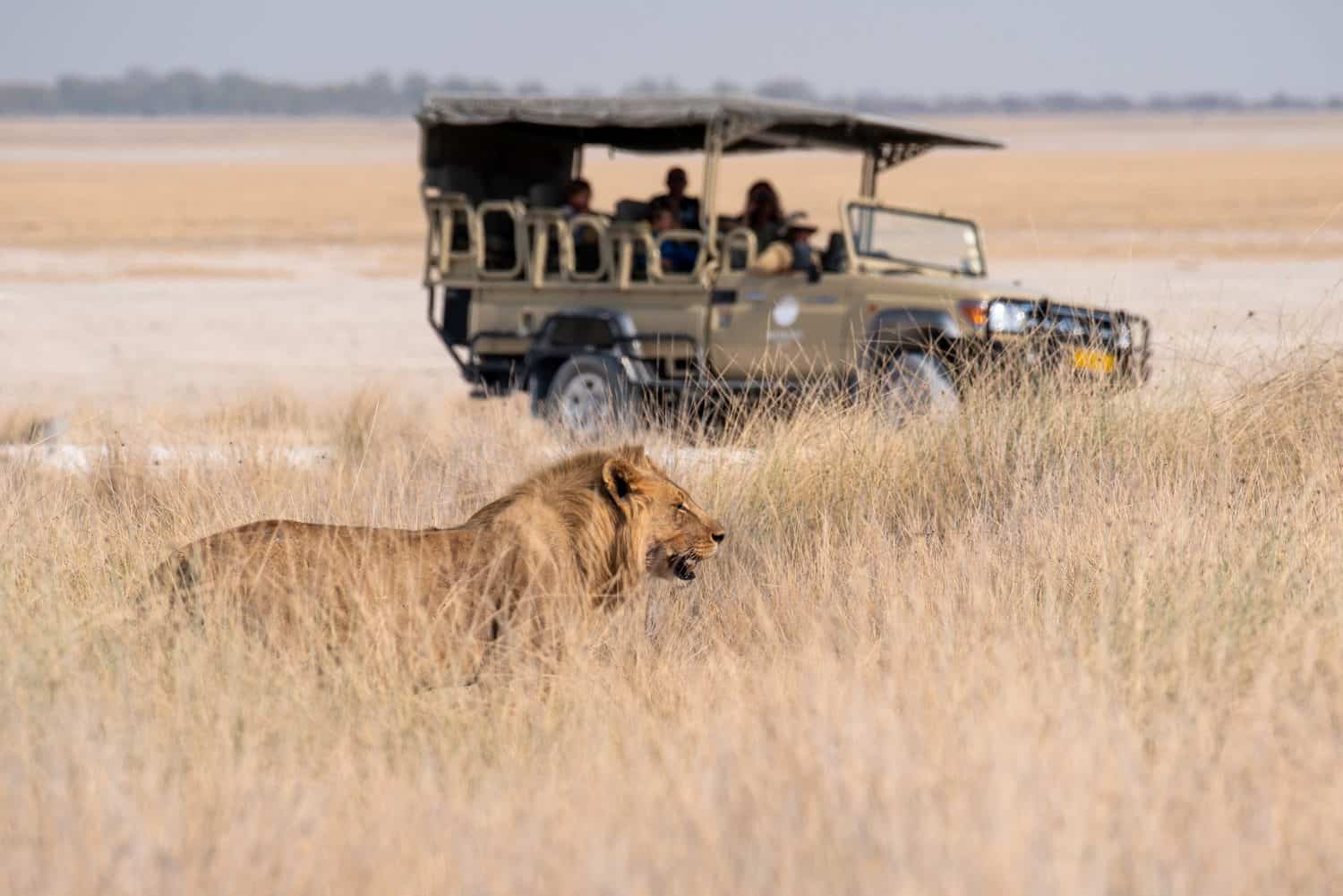
Safaris have played a positive economic and subsequent conservation role for lions.
©Marie Zedig/Shutterstock.com
Because lions have a positive economic impact, communities and local governments are more likely to protect them rather than turn a blind eye to poaching. Local communities are also more receptive to education on how to deter lions from hunting livestock. Consequently, there is less human-lion conflict.
The purpose of anti-poaching tourism is to use the money earned to better protect the lions. A large portion goes directly to the national parks and other protected areas. This ensures that there are adequate rangers and the most efficient monitoring equipment to stop poachers.
That money also goes back to the community, bettering the lives of all it touches. When people are not worried about their basic needs being met, the temptation to kill lions diminishes. This has been proven in areas where tourism has boomed, as wild animal populations have dramatically increased.
Lions are on the brink of extinction. It will take cooperation between conservationists and local communities to prevent the loss of this beautiful big cat. On World Lion Day, we hope more people will become aware of how fragile their existence has become and why they need all the support possible to survive.