
Quick Take
- Adult bulls can attain speeds of 35 miles per hour to navigate the open grasslands of Kansas.
- The 1800s expansion created a stunning collapse that reduced millions of bison to hundreds.
- Returning bison to Konza Prairie yields a counter-intuitive doubling of plant diversity and resilience.
- Kansas initiated the 1955 designation to capture the rhythm of frontier life and migration.
Kansas did not pick the plains bison as one of its state animals just because it looked cool on a flag; lawmakers chose to honor the bison because it made life on the Great Plains possible and symbolized strength, movement, and survival on open grasslands. The bison’s speed, power, and role in shaping the prairie matched the story Kansas wanted to tell about this frontier state built on hard work, wide skies, and resilient ecosystems. In 1955, when legislators officially named the American buffalo the state animal, they were tying modern Kansas to a much older landscape of Native nations, bison herds, and fast-changing horizons.
Plains Bison (Bison bison bison)
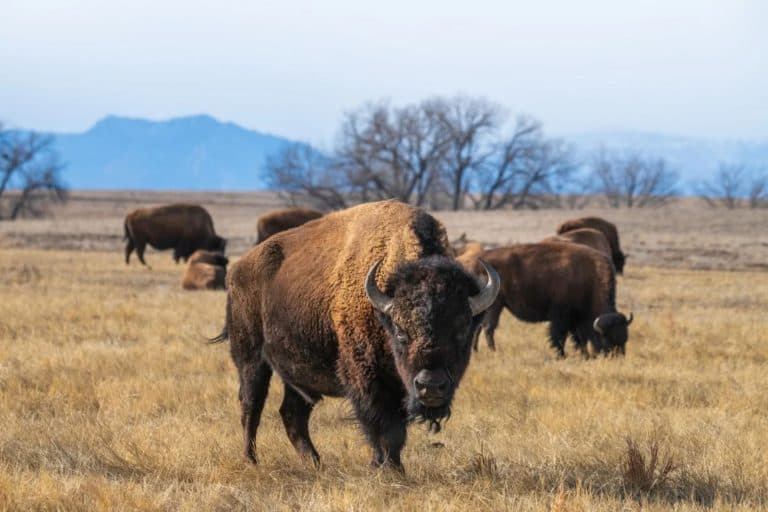
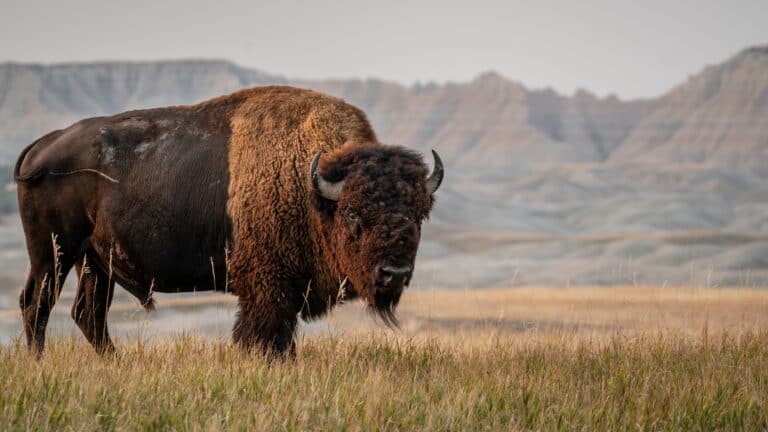
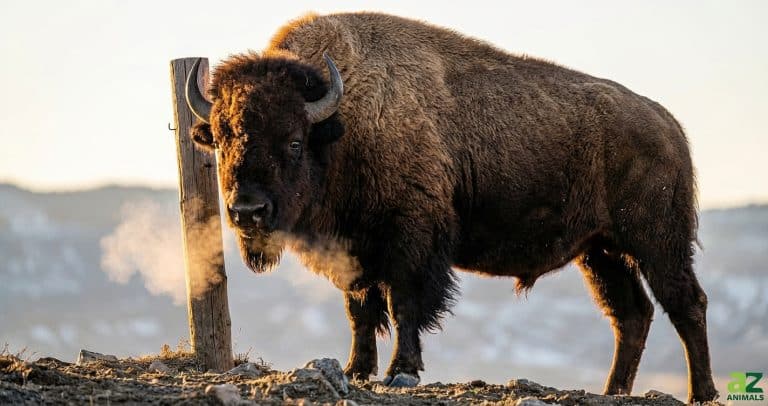
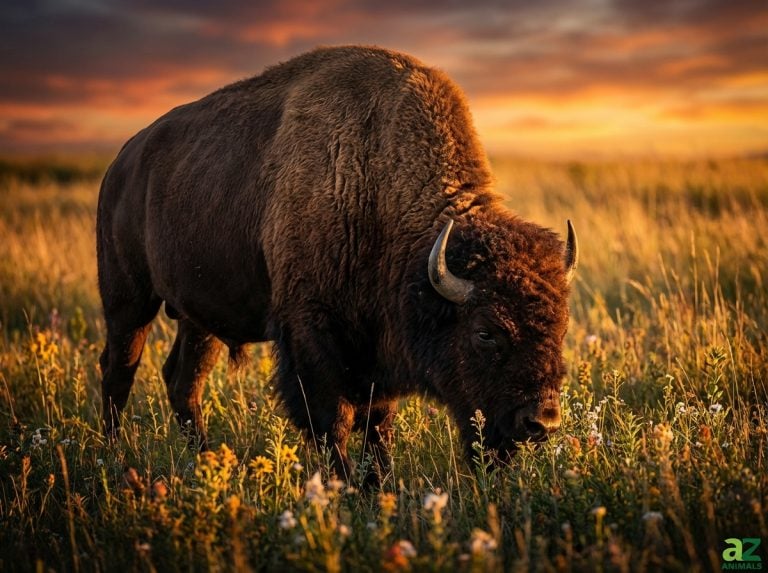
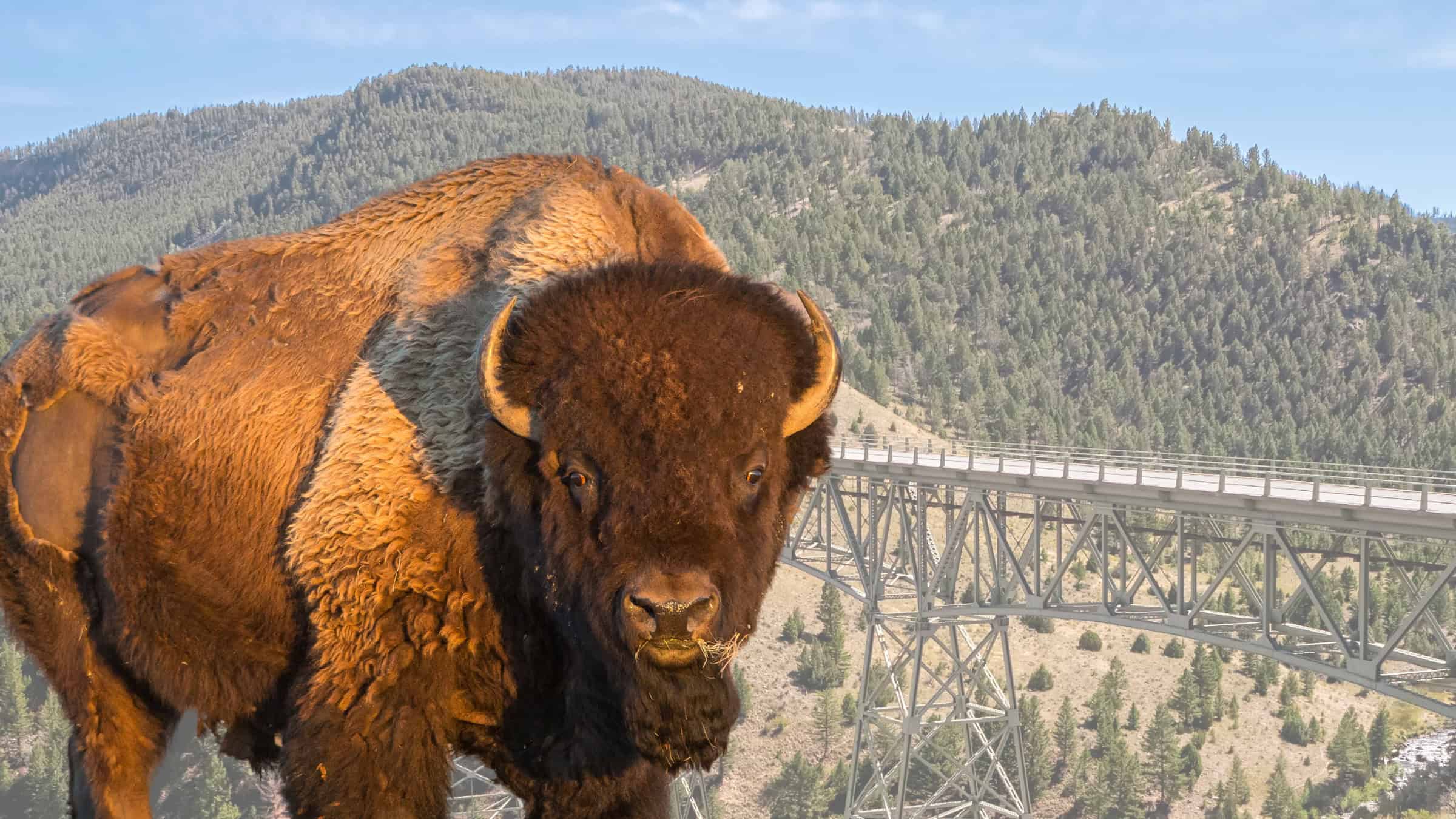
At first glance, plains bison look slow and shaggy, but they are built for speed and survival on open grasslands. Adult bulls can stand around six feet at the hump and weigh close to a ton, yet they can sprint at roughly 30–35 miles per hour and keep up a strong pace over distance, matching the speed of horses over short distances.
Massive shoulder muscles power their large heads, which they swing like living snowplows to clear drifts and reach buried grass, while sharp hooves grip uneven prairie ground and churn the soil as they move.
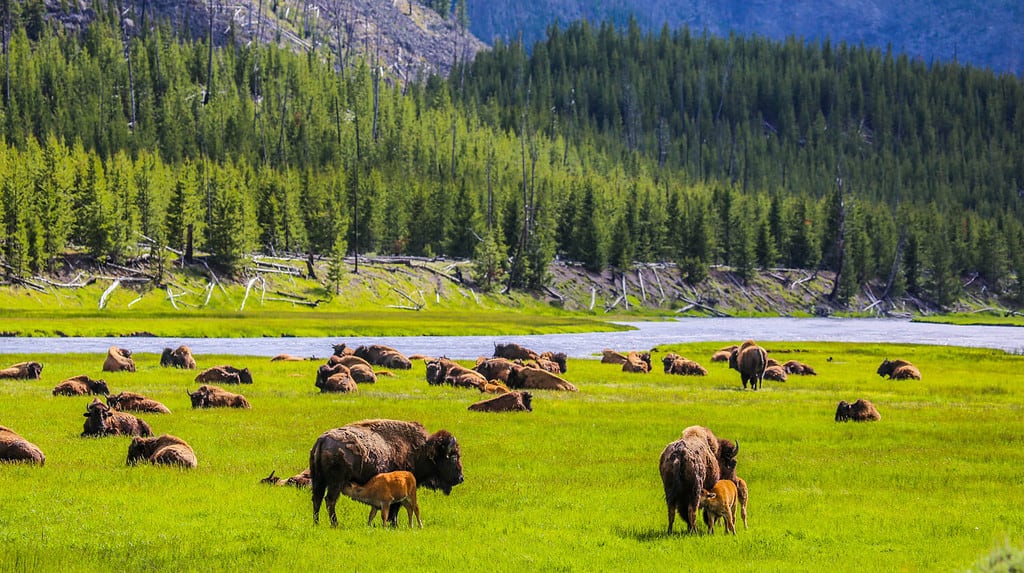
Moving together across open grasslands, bison herds turn individual strength into collective motion that once shaped life on the Great Plains.
©Gjeterhund Photography/Shutterstock.com
In a herd, those traits turn into collective motion—quick turns, sudden stampedes, and constant roaming that once defined the rhythm of Great Plains life.
Grasslands Built for Speed
The Great Plains are mostly open space: low hills, wide sky, and long sweeps of grass that favor animals that can run, spot danger early, and keep moving. Out here, speed is a survival tool, not a luxury; predators and prey both rely on fast bursts and long chases with almost no trees to hide behind.
Bison, horses, pronghorn, and elk evolved or adapted to this environment, using keen senses and strong legs to cross miles of prairie in search of fresh forage and safety. Mobility and endurance became essential traits for life on the plains.
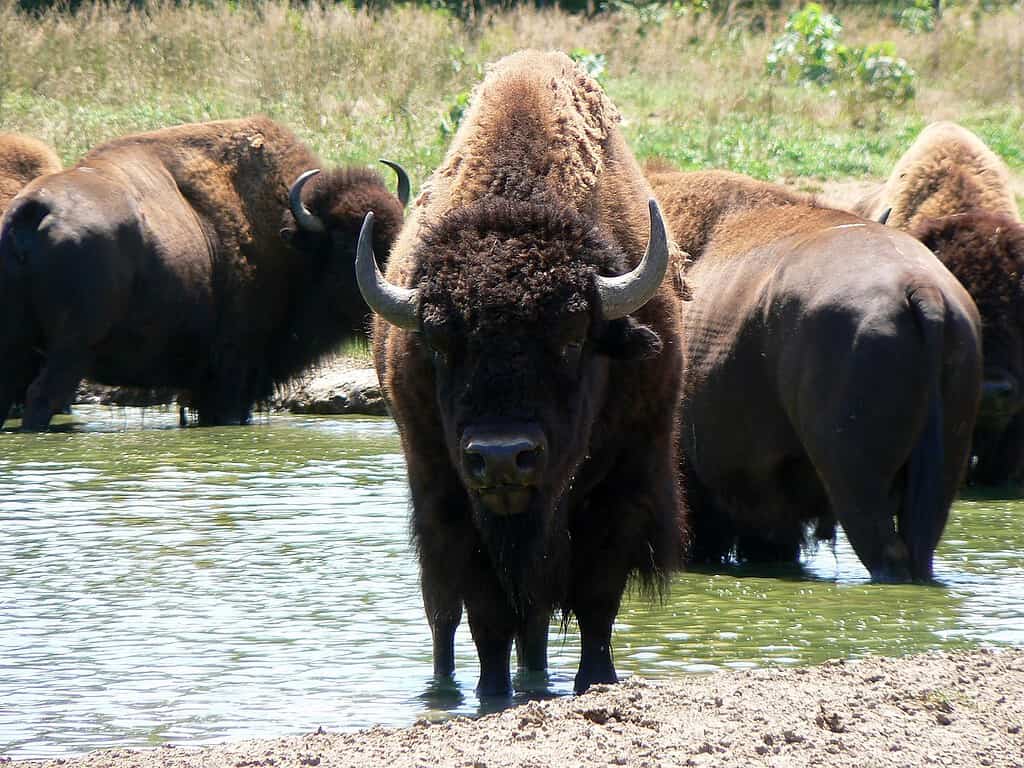
On the open plains, bison traveled long distances between food and water, shaping patterns of movement across the Kansas prairie.
©User: MONGO / Public domain, via Wikimedia Commons – Original / License
For Kansas, these grasslands are more than scenery—they shaped settlement patterns, ranching, and even the stories Kansans told about toughness and forward motion, making a quick, powerful grazer a natural symbol of place.
Why Kansas Chose the Bison
By the mid‑1900s, Kansas lawmakers were looking for a state animal that matched the state’s history and landscape, and the American buffalo was the obvious choice. In 1955, the Kansas Legislature passed a law declaring the American buffalo (a common name for the American bison) the official animal, linking modern Kansas to the herds that once roamed the region in the millions.
The bison already charged across the state seal and flag alongside images of settlers and wagon trains, representing frontier life and the clash and coexistence of cultures on the Plains. Choosing the bison as the state animal confirmed that image: Kansas as a grassland state defined by motion, migration, and the raw power of the prairie.
Native Nations and the Buffalo
Long before Kansas became a state, Native nations on the central Plains built entire ways of life around the buffalo. Bison provided food, clothing, shelter covers, tools, and ceremonial objects, and many tribes saw them as sacred relatives or gifts, not just resources to be used.
This close relationship demanded knowledge of the animal’s movements and speed: hunters had to read the land, track herds, and sprint alongside them on foot or horseback during dangerous chases. When Kansas later chose the bison as its state animal, that decision quietly echoed these older connections, even though official explanations in the 1950s focused more on frontier imagery than on Indigenous voices.
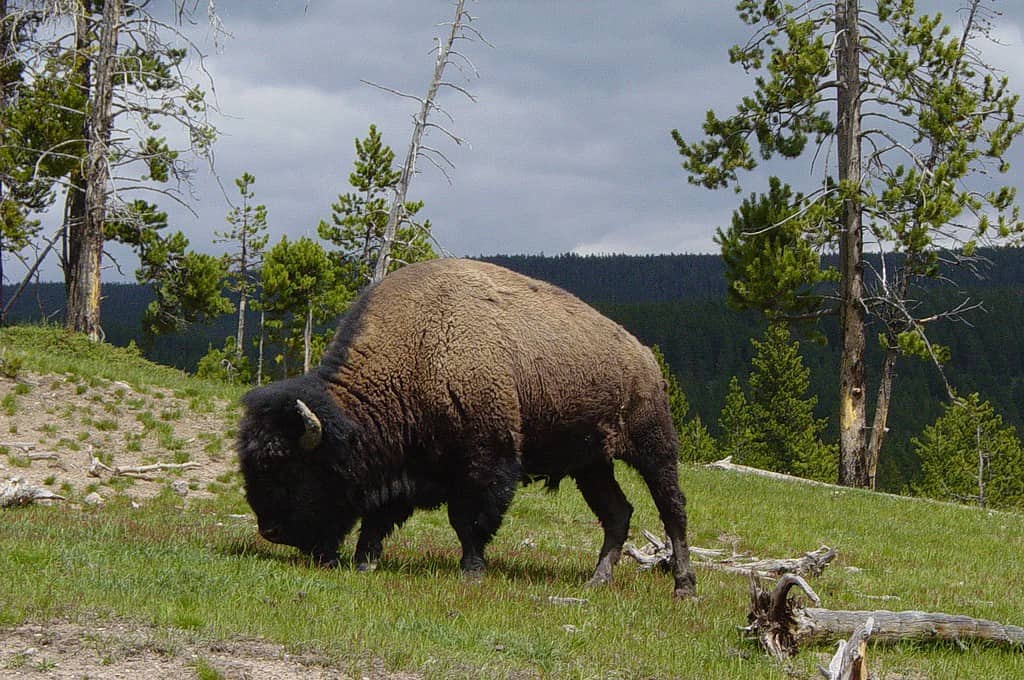
Long before it became a state symbol, the bison held deep cultural meaning for Native nations who built entire ways of life around the animal.
©Daniel Mayer, CC BY-SA 3.0, via Wikimedia Commons – Original / License
Frontier Hunters, Herds, and Collapse
For early Euro‑American travelers, the sight of fast‑moving bison herds in Kansas was unforgettable, but that same spectacle encouraged overhunting. As the railroad and commercial hide trade expanded in the 1800s, professional hunters targeted huge herds, shooting animals from trains and wasting much of the meat. Destruction of the herds was also part of a deliberate strategy by the United States government to destroy the economy of Plains Indian tribes and end their resistance.
The result was a stunning collapse: from tens of millions of bison across the Great Plains, numbers crashed to just a few hundred wild individuals by the late 1800s. In Kansas, lawmakers even debated bills to curb “wanton destruction” of buffalo, but weak or vetoed protections arrived too late to save the original herds. That tragic history helps explain why, decades later, Kansas embraced the bison as a reminder of what was lost and what had to be restored.
Keeping the Prairie Healthy
Bison are not just symbols; they are keystone animals that reshape Kansas grasslands wherever they return. As they roam, their hooves churn soil, their grazing patterns create a patchwork of short and tall vegetation, and their wallows form small depressions that collect water and support unique plants.
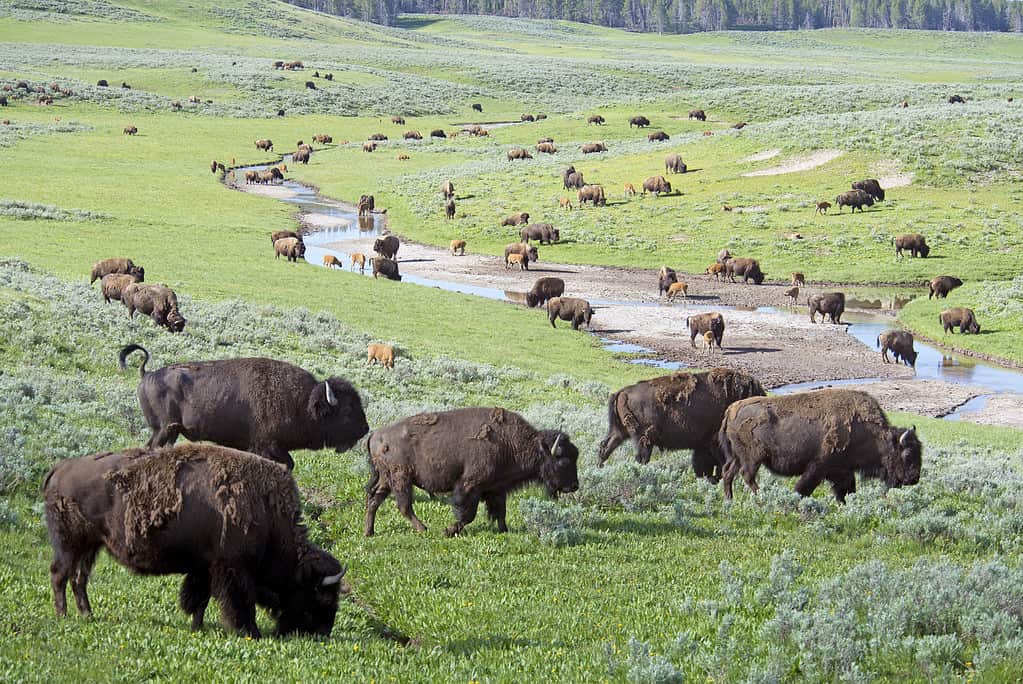
Bison herds function as keystone forces on the prairie, driving plant diversity and strengthening grassland resilience.
©iStock.com/Betty4240
Long‑term research at Konza Prairie in eastern Kansas shows that reintroducing bison can roughly double plant diversity in tallgrass prairie and improve resilience to drought. That ecological role strengthens the logic behind Kansas’ choice in 1955: the bison does not just remember the old prairie; it actively helps rebuild and maintain it.
Modern Bison Herds in Kansas
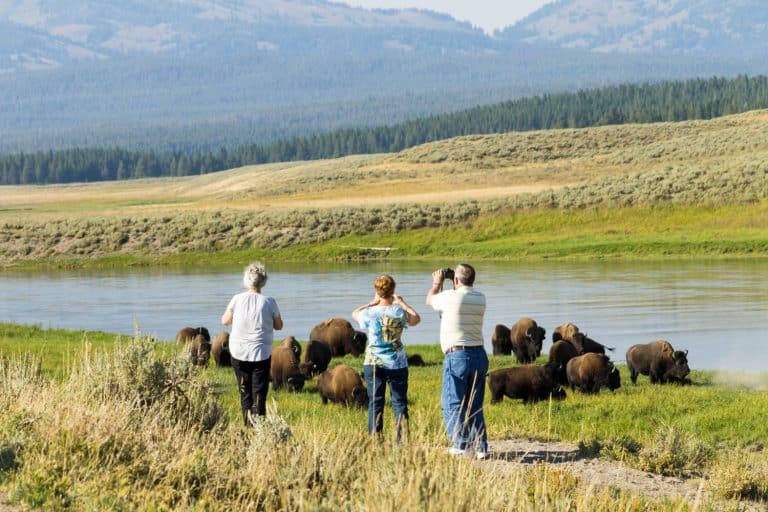
Today, Kansans do not have to imagine moving herds; they can see them on protected grasslands across the state. Konza Prairie Biological Station maintains a research herd that roams thousands of acres, while Maxwell Wildlife Refuge near Canton offers tours where visitors can watch bison and elk from trams or vehicles. At Tallgrass Prairie National Preserve in the Flint Hills, a smaller bison herd grazes restored prairie, linking conservation science with public history and tourism. These sites show that the state animal is not just a logo; it is a living presence that continues to shape Kansas landscapes and how people experience them.
From State Symbol to National Mammal
Kansas was ahead of the curve when it adopted the bison as its state animal in the 1950s, decades before the species became the national mammal of the United States in 2016. By then, conservation efforts in national parks, refuges, and tribal lands had slowly rebuilt bison numbers from the brink of extinction, turning a symbol of loss into one of recovery.
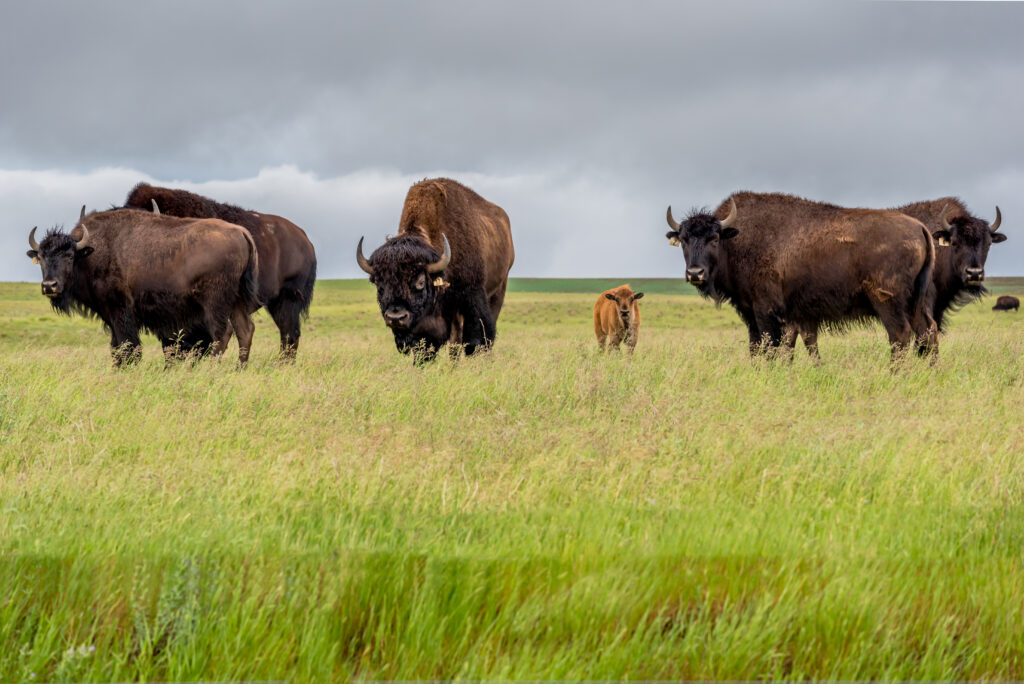
Once near extinction, bison populations have rebounded through conservation efforts that emphasize continuity and renewal.
©Nancy Anderson/Shutterstock.com
More than 60 tribes now participate in buffalo restoration efforts, reclaiming cultural connections and using bison herds to support community health and education. Kansas’ choice, rooted in prairie history and state pride, now lines up with a broader national push to recognize how important this species has always been.
Does the Symbolism Still Fit?
The bison was meant to represent frontier toughness and the wide‑open prairie, and that image still fits Kansas in many ways. Yet the meaning has expanded: today, the state animal also stands for ecological restoration, respect for Native histories, and the idea that people and landscapes can recover from damage.
Even in a modern world of highways and cities, Kansans still look to grassland preserves and fast‑moving herds as reminders that their state grew out of wind, motion, and resilient life on the Plains. Watching bison run across the Flint Hills connects present‑day Kansas to its past and to a future where healthy prairies still have room to stretch and breathe.