
Quick Take
- Achieving population restoration required surviving a historical collapse to fewer than 1,000 total bison.
- The brucellosis classification forces legal disputes over grazing access outside Yellowstone.
- The plains bison is counter-intuitively not Montana’s official state animal despite universal recognition.
- Completing veterinary screening is mandatory for the Bison Conservation Transfer Program to support sovereignty.
Across Montana’s eastern plains, few sights register as strongly as a bison herd navigating open grassland. Although the grizzly bear is the official state animal, the plains bison has come to represent the state’s history, contested landscapes, and deep ties to Indigenous nations. Its story tracks closely with Montana’s own, shaped by extraction, displacement, recovery, and ongoing debate over land and wildlife. From tribal herds to national parks and private ranchlands, bison continue to influence how Montanans think about stewardship, sovereignty, and the future of open country.
More dangerous than a grizzly and nearly erased from history—the bison’s comeback is Montana’s greatest, most controversial survival story.
©A-Z Animals
Why Bison Carry the Big Sky Story
Montana’s official state animal remains the grizzly bear, selected by schoolchildren in the early 1980s. Grizzlies represent mountain wilderness, but they inhabit only parts of the state and remain difficult to see. Bison once ranged across most of Montana’s plains, making them familiar to a wider range of communities. Their presence in tourism, ranching debates, tribal life, and conservation policy explains why many residents treat the plains bison as an unofficial emblem of the state.
Meet the Plains Bison (Bison bison bison)
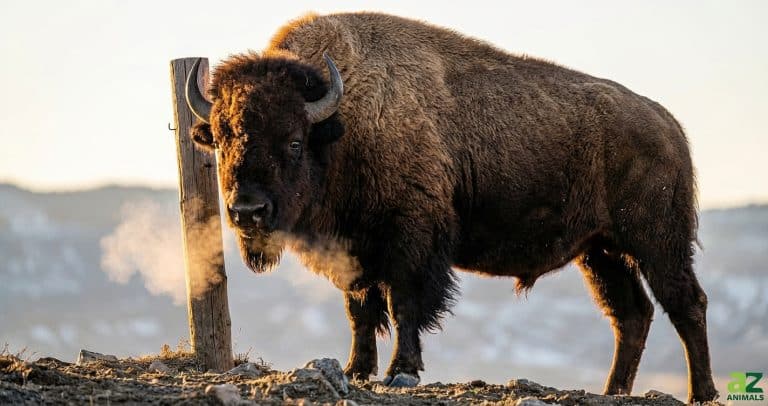
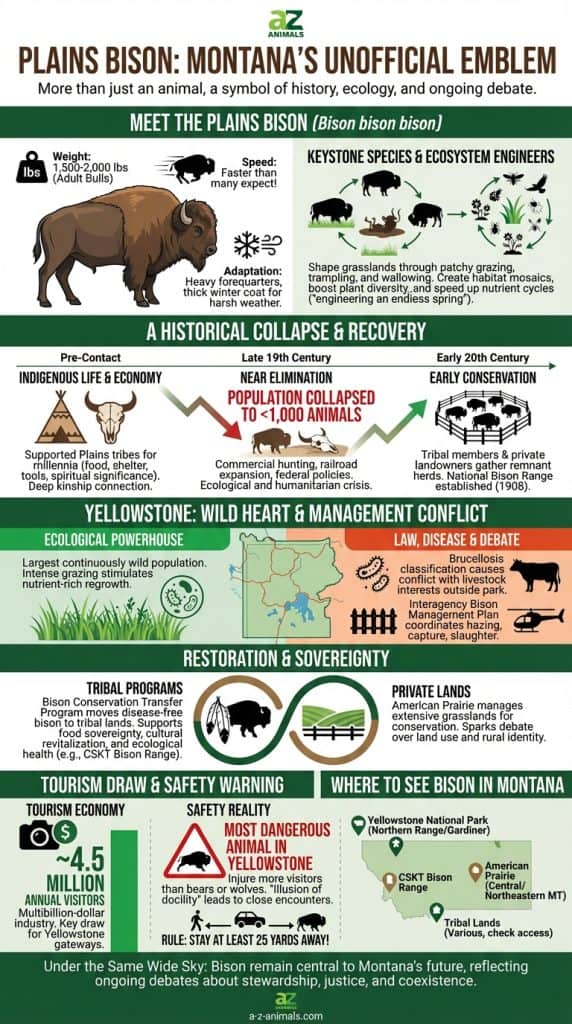
The plains bison is one of two surviving subspecies of American bison, adapted to grasslands that stretch across the northern Great Plains. Adult bulls commonly weigh between 1,500 and 2,000 pounds and can run faster than many people expect. Heavy forequarters, curved horns, and a thick winter coat allow the animal to withstand Montana’s wind and cold.
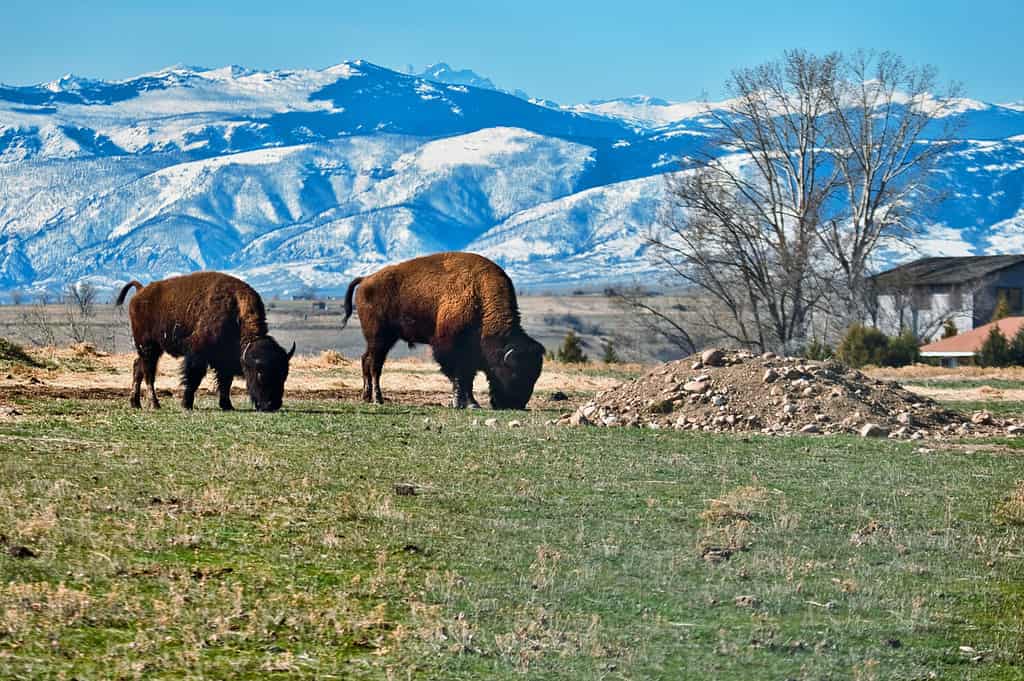
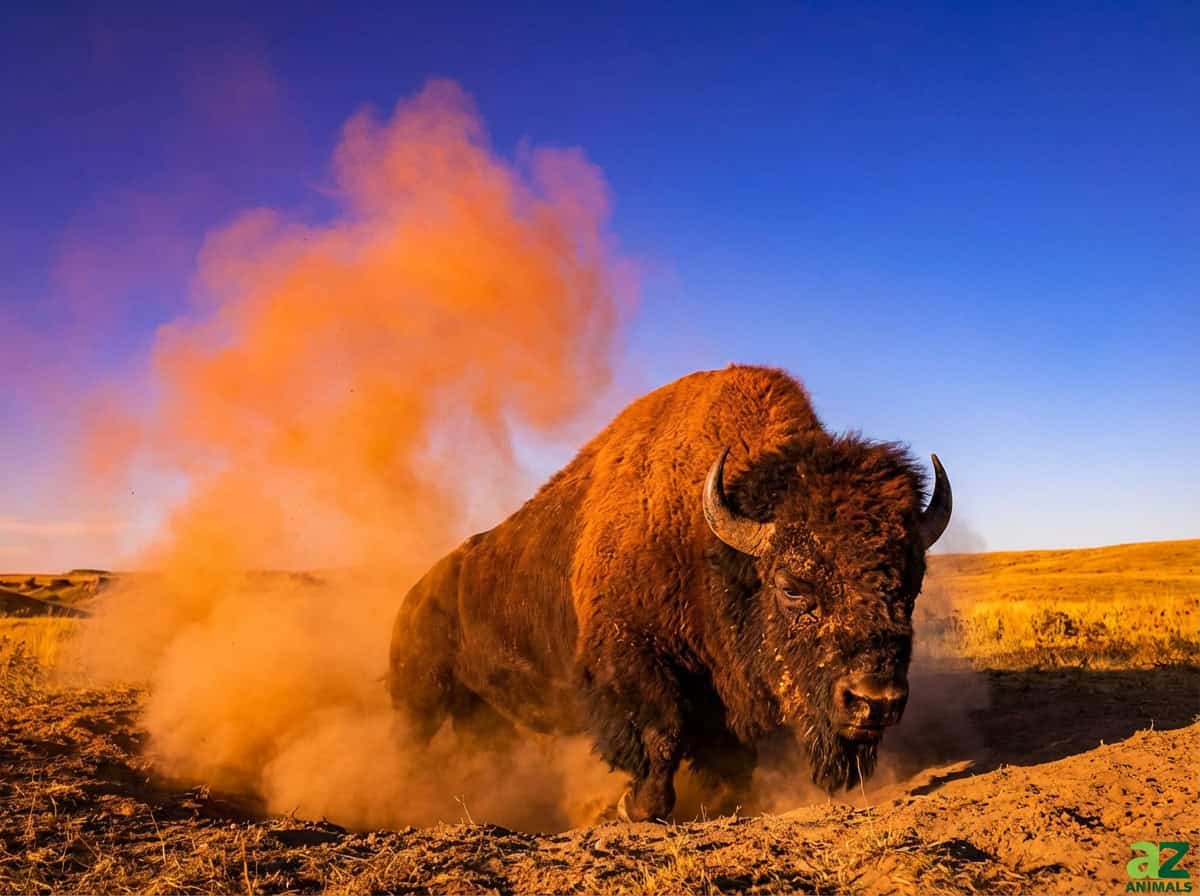
Plains bison shape prairie ecosystems through grazing, movement, and wallowing.
©Steve Creek/Shutterstock.com
Bison shape grasslands through patchy grazing, trampling, and wallowing, which helps maintain plant diversity and habitat for insects and birds. Their movement patterns once structured entire prairie ecosystems, giving the species lasting ecological importance in the state.
Bison and Indigenous Life Before Statehood
For thousands of years, bison supported the economies and cultures of Plains tribes such as the Blackfeet, Assiniboine, Sioux, and Salish and Kootenai peoples. Meat provided food, hides became shelter and clothing, and bones and sinew were shaped into tools. Hunting practices reflected deep environmental knowledge and careful use of seasonal landscapes. Beyond material use, bison held spiritual and social meaning, appearing in stories, ceremonies, and kinship systems. That long relationship remains central to modern tribal restoration programs, which often describe bison as relatives rather than resources.
Near Elimination on the Plains
During the late nineteenth century, bison populations collapsed due to commercial hide hunting, railroad expansion, and federal policies aimed at undermining Native resistance. Herds that once numbered in the tens of millions across North America fell to fewer than one thousand animals.
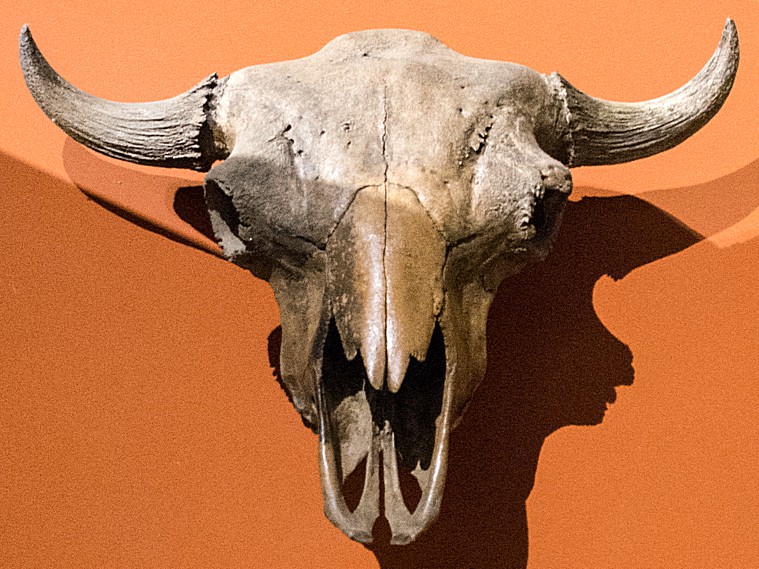
By the late nineteenth century, commercial hunting and expansion had reduced bison populations to near extinction.
©Tim Evanson from Cleveland Heights, Ohio, USA / CC BY-SA 2.0 – Original / License
In Montana, mass kills left prairies scattered with carcasses, and trainloads of bones were shipped east for industrial use. The loss disrupted ecosystems and devastated tribal food systems, turning ecological destruction into a humanitarian crisis. The species’ survival into the twentieth century depended on a handful of remnant herds.
Early Conservation and the National Bison Range
At the start of the twentieth century, tribal members and private landowners helped gather surviving bison into protected herds. In 1908, the National Bison Range was established on land taken from the Flathead Reservation, creating one of the first wildlife refuges in the country. While the range contributed to population recovery, its creation displaced the Confederated Salish and Kootenai Tribes from land they had long used. In 2020, federal management of the site was formally transferred back to the Tribes, marking a shift toward tribal stewardship and acknowledging that conservation and justice are often intertwined.
Yellowstone Bison
Yellowstone National Park, which extends from Wyoming into southern Montana, supports the largest continuously wild bison population in the United States. As a keystone species and “ecosystem engineers,” bison exert a profound influence on Yellowstone by actively manipulating the park’s grasslands and nutrient cycles. Through a phenomenon known as “engineering an endless spring,” massive herds intensely graze emerging vegetation, which prevents plants from maturing and instead stimulates the constant regrowth of young, nutrient-rich shoots that can be up to 150% more nutritious than ungrazed forage. This heavy grazing, combined with the deposition of nitrogen-rich manure and urine, speeds up the nitrogen cycle and boosts soil microbial activity without depleting nutrient storage.
Beyond the soil, bison shape the physical landscape by wallowing—creating depressions that catch rainwater and serve as micro-habitats for specialized plants and insects—and by “horning” or rubbing against trees, which helps maintain open grasslands by suppressing forest encroachment. These activities create a heterogeneous “mosaic” of habitats that increases overall biodiversity, supporting everything from pollinators and grassland birds to large predators and scavengers.
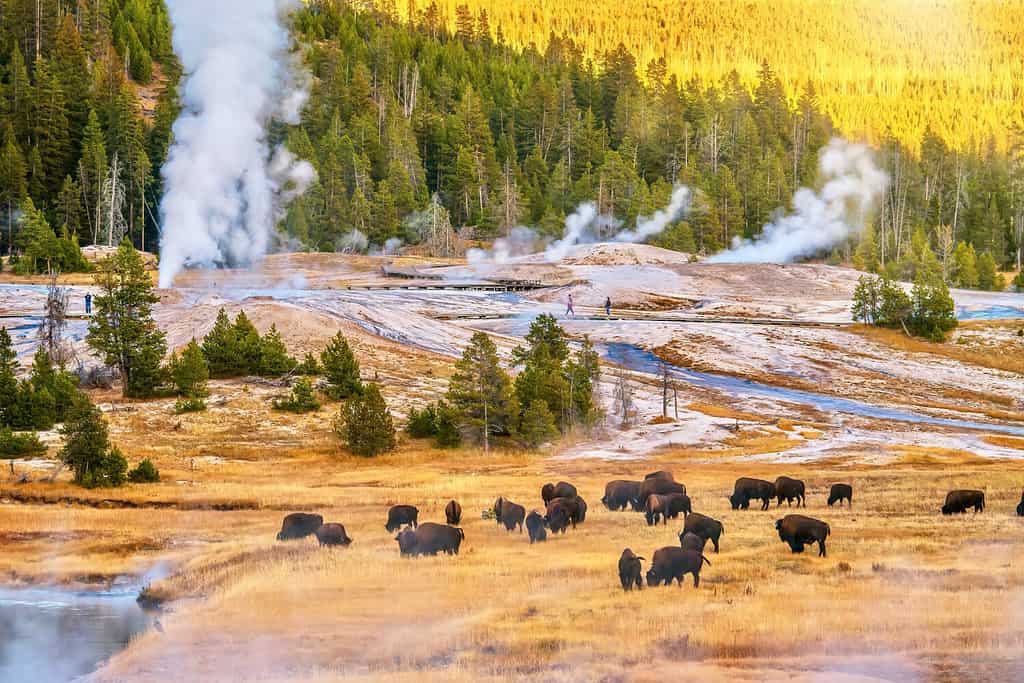
Yellowstone bison remain fully wild while living at the center of tourism, conservation, and political debate.
©CherylRamalho/Shutterstock.com
A Tourist Draw
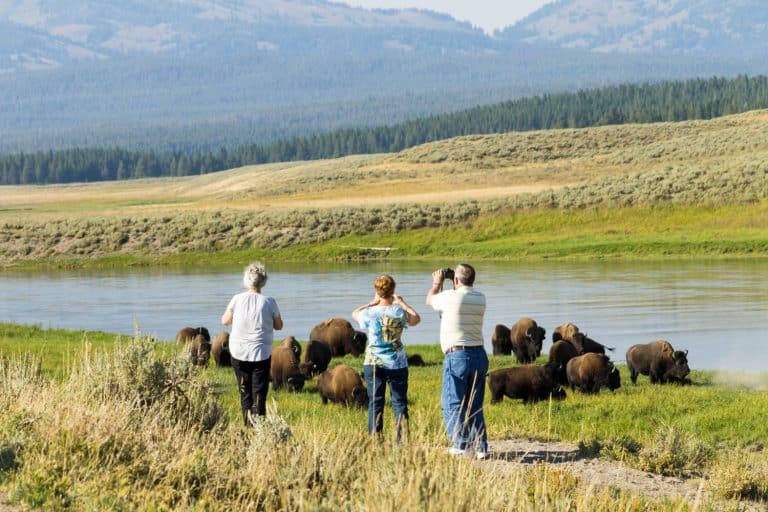
Bison serve as a cornerstone of Montana’s multibillion-dollar tourism industry, acting as one of the most significant wildlife draws for the millions of visitors who flock to the region each year. At sites like the CSKT Bison Range and the Montana gateway entrances to Yellowstone National Park, these “iconic mammals” attract nearly 4.5 million annual visitors who contribute hundreds of millions of dollars to local economies through guided tours, photography, and lodging. However, the proximity of these 2,000-pound animals to popular roads and parking lots often creates a dangerous “illusion of docility” for tourists.
Statistically, bison are the most dangerous animals in Yellowstone, injuring more visitors than bears or wolves; since 1980, they have caused dozens of injuries, with incidents often peaking during the summer months when travelers ignore the 25-yard safety regulation to take photos. While the annual average remains relatively low—typically between one and five gorings per year—the severity of these encounters is high, frequently resulting in significant trauma for those who mistake these unpredictable wild animals for slow-moving cattle.
Law, Disease, and Management Debates
Montana’s approach to bison reflects long standing tension between wildlife conservation and livestock interests. State policy classifies plains bison under special management categories tied to disease control, particularly brucellosis. The Interagency Bison Management Plan coordinates state, federal, and tribal responses to bison movements beyond park boundaries. Measures have included hazing, capture, slaughter, and relocation. Supporters argue these controls protect ranching livelihoods, while critics contend they reduce a native species to the status of nuisance livestock. The debate remains one of the most contested wildlife issues in the state.
Tribal Bison Programs Across Montana
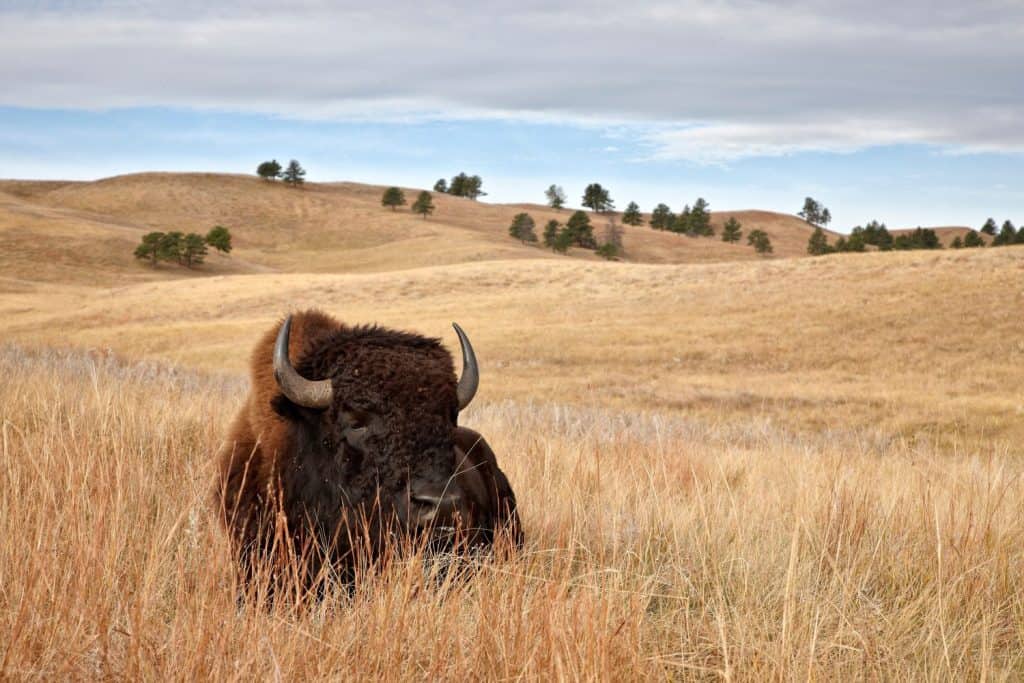
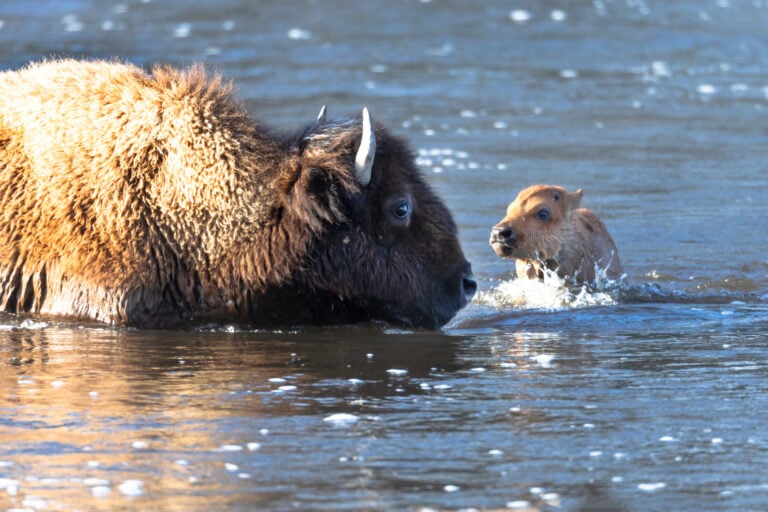
Conservation programs managed in cooperation with tribal nations is helping restore the species to more of its historic range.
©Robert Harding Video/Shutterstock.com
Tribal nations have taken leading roles in restoring bison to Native lands. Programs such as the Bison Conservation Transfer Program move disease free Yellowstone bison to tribal herds, combining veterinary screening with cultural goals. On the Flathead Reservation, the CSKT Bison Range now operates under tribal management, welcoming visitors while prioritizing ecological health and cultural education. For many tribal communities, bison restoration supports language revitalization, youth education, and food sovereignty alongside habitat recovery.
Private Lands and Prairie Restoration
Bison have also returned to private landscapes through large scale conservation efforts. American Prairie, operating in central and northeastern Montana, manages extensive grasslands where bison graze under wildlife-oriented management.
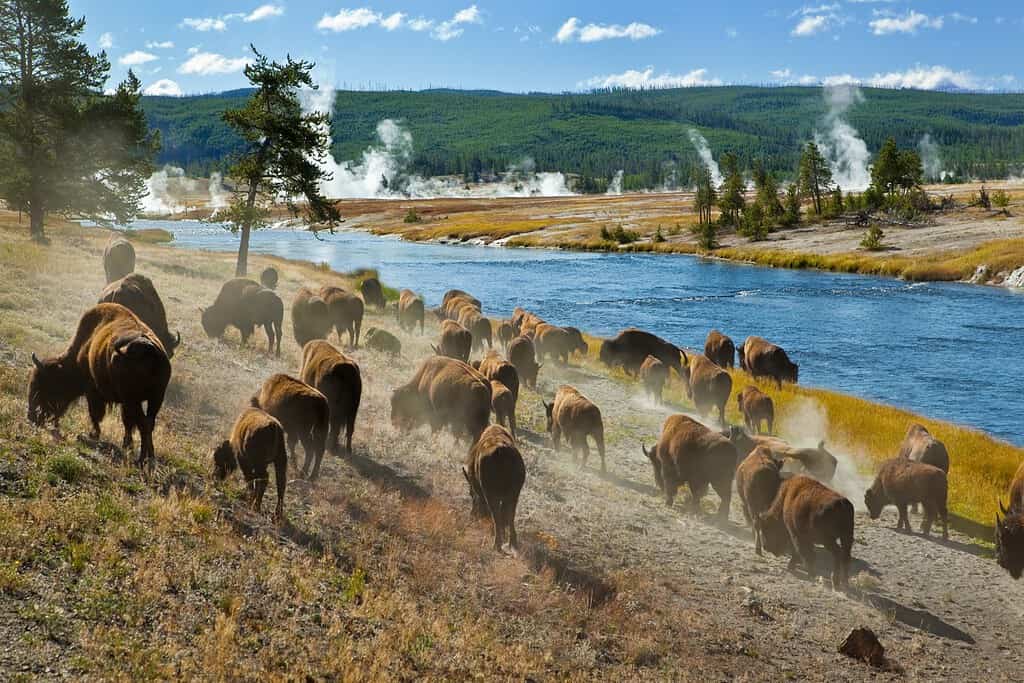
A moving bison herd on privately managed grasslands operated by American Prairie illustrates both restoration goals and ongoing land-use debate in Montana.
©YegoroV/Shutterstock.com
The project aims to restore prairie processes while coexisting with surrounding ranches. Supporters view it as ecological repair, while critics raise concerns about land ownership, fencing, and local economies. County meetings and legislative hearings reflect how bison continue to spark debate over property rights and rural identity.
Where to See Bison in Montana
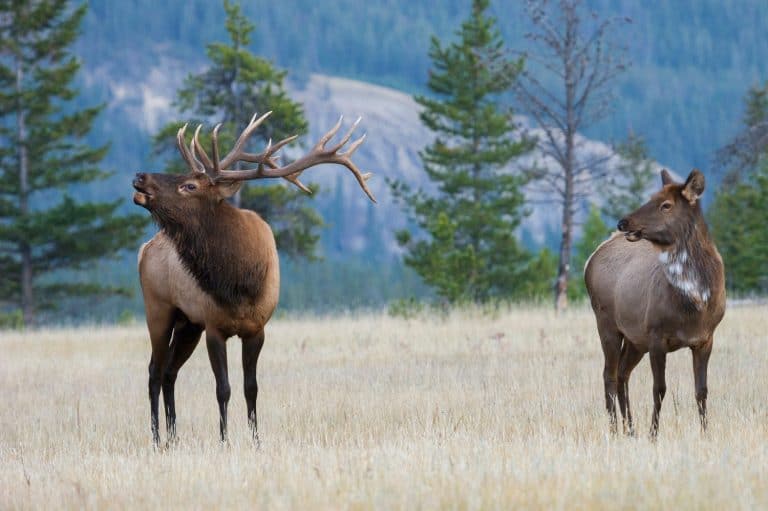
Visitors can observe bison in several regions of Montana. Yellowstone’s northern range offers regular sightings, especially during seasonal movements near Gardiner. The CSKT Bison Range allows self-guided driving routes where bison share habitat with elk and deer. Additional viewing opportunities exist on tribal lands and conservation properties in central and northeastern Montana, though access rules vary by site.
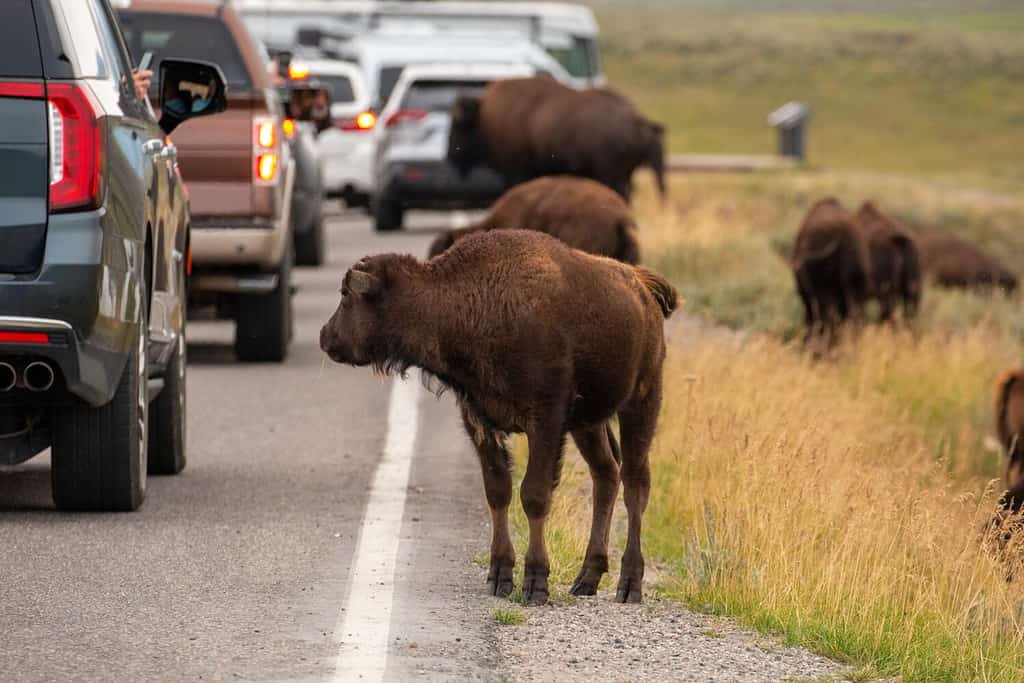
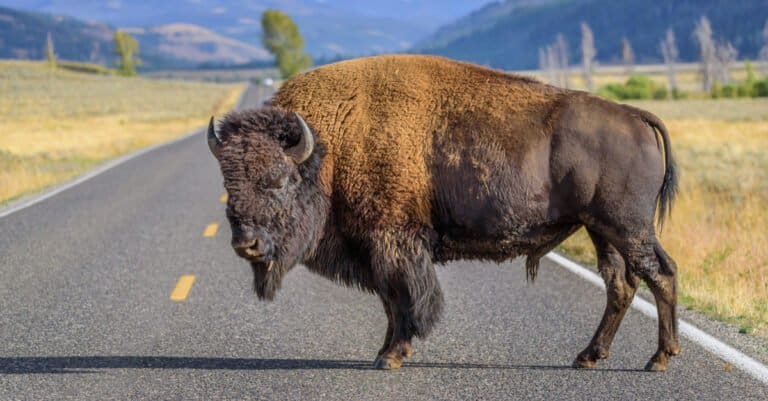
Bison frequently slow traffic in places such as Yellowstone’s northern range, reminding visitors to observe wildlife with patience and respect.
©Haofei Xu/Shutterstock.com
Seeing bison in Montana often involves patience and respect for distance. People tend to put them mentally in the category of slow-moving, docile, cow-like creatures; an impression reinforced by how they might behave when casually walking near cars. However, once a person gets out of the car, the danger level spikes. Wildlife managers emphasize staying in vehicles and remembering an agitated bison (or a whole herd of them) can move fast if they feel they need to flee or attack a threat.
Under the Same Wide Sky
Montana has yet to designate the plains bison as its state animal, yet the species occupies that role in public imagination. Across parks, reservations, and working lands, bison remain central to debates about conservation, justice, and coexistence. Their continued movement across the plains keeps important questions visible, reminding residents that the state’s future, like its past, remains tied to how people choose to live alongside wildlife.