
The world is in the midst of another mass extinction. Numerous mass extinctions have occurred in the past, the most notable of which was the extinction of at least most of the dinosaurs 65 million years ago, thanks, archaeologists believe, to a well-aimed meteor. Though extinctions were once nature’s way of creating conditions for new species to emerge and thrive, the most recent ones are the consequences of human behavior.
Once they appeared, humans hunted many species to extinction for their flesh, fur, and feathers. Now, species are likely to be affected by habitat destruction, pollution, poaching, and climate change. Despite the efforts of conservationists and environmentalists, animal species continue to fade away. Continue reading to learn about 12 animals that have recently become extinct.
Ivory-Billed Woodpecker: 2021
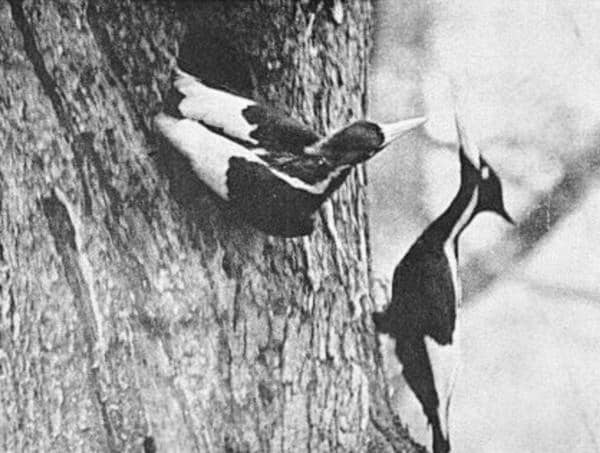
The largest of all woodpecker species, this bird was declared extinct in 2021.
©Arthur A. Allen, Public domain, via Wikimedia Commons – Original / License
Though the last universally accepted sighting of an ivory-billed woodpecker (Campephilus principalis) was in Cuba in 1987, there continue to be undocumented claims of the birds in the Southern United States. While they continue to monitor and assess the validity of the claims, the U.S. Game and Fish Commission declared the ivory-billed woodpecker proposed to be extinct in 2021. Native to the Gulf and Southern Atlantic Coasts of North America, this magnificent bird was the largest woodpecker species, ranging from 18-20 inches long. Their diet consisted of beetle larvae found in tree bark, which these stunning birds accessed by stripping the bark away with their powerful beak. Their body was black and it sported two white stripes down its neck, with an impressive tuft of red feathers atop its head.
Formosan Clouded Leopard: 2013

For the Rukai people it was taboo to hunt the Formosan clouded leopard.
©Joseph Wolf, Public domain, via Wikimedia Commons – Original / License
The beautiful Formosan clouded leopard (Neofelis nebulosa) was classified as extinct in 2013, even though the areas where it was last seen were protected, and the Rukai people of the area considered hunting the cat taboo. There have been no sightings of this spectacular specimen since 1983. However, it was only declared extinct after a 13-year-long study provided no evidence of any extant Formosan clouded leopards. Formosan clouded leopards were found only in Taiwan, formerly Formosa.
The color of the leopard’s fur was pale or tawny brown, with markings on its sides and shoulders that resembled dark clouds. Its tail was shorter than those of other clouded leopards The reason for its disappearance was most likely habitat destruction from logging.
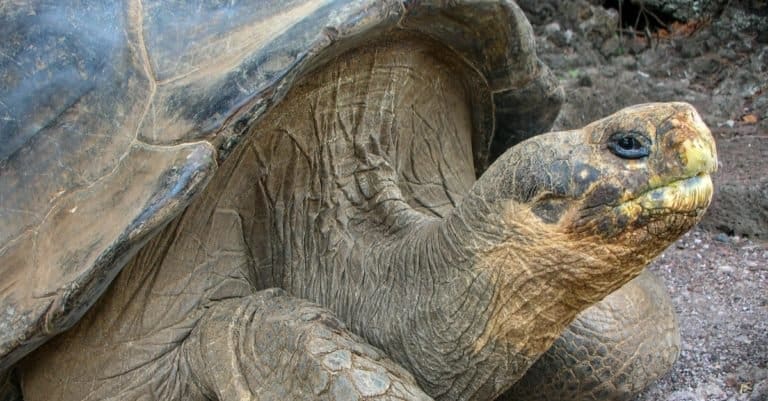
Pinta Giant Tortoise: 2012
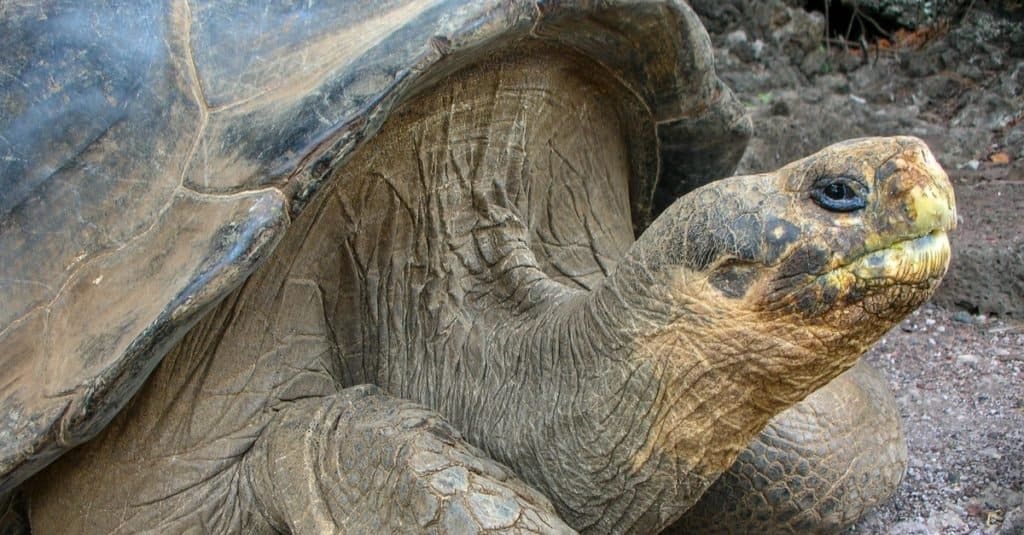
Lonesome George was a male Pinta Island tortoise and the last known individual of the species on the Galapagos Islands, Ecuador.
©evenfh/Shutterstock.com
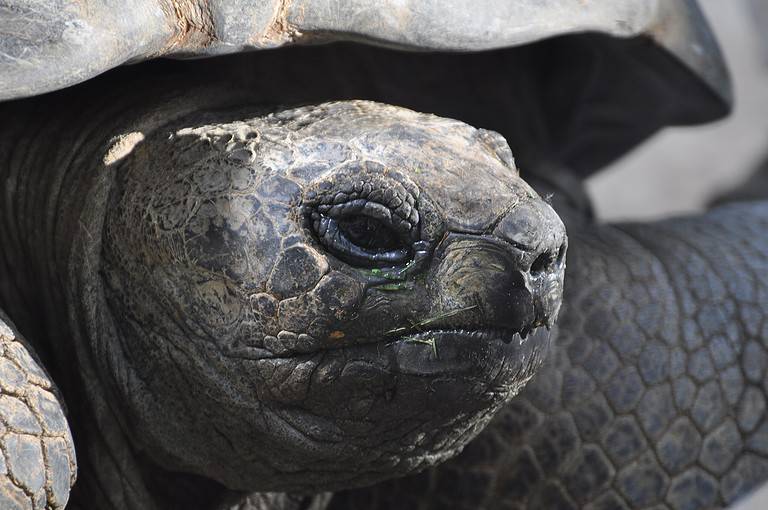
The Pinta Giant tortoise, or Pinta Island tortoise (Chelonoidis abingdonii), became extinct in 2012, with the death of Lonesome George, the last of his kind. They were native to Pinta Island, a volcanic archipelago in the Eastern Pacific Ocean. This species was wiped out through subsistence hunting, by whalers and fishermen who relied on the tortoises for food, and the goats that, when introduced, decimated the island’s vegetation. The carapace was distinctive because it was shaped like a saddle, and the tortoise had an unusually long neck.
The last Pinta Island tortoise, Lonesome George, died on June 24, 2012. Biologists tried to mate him with females of related species, but nothing worked. His age was estimated to be between 101 and 102 years. His taxidermied body is now displayed at the Galapagos Islands’ Fausto Llerena Breeding Center.
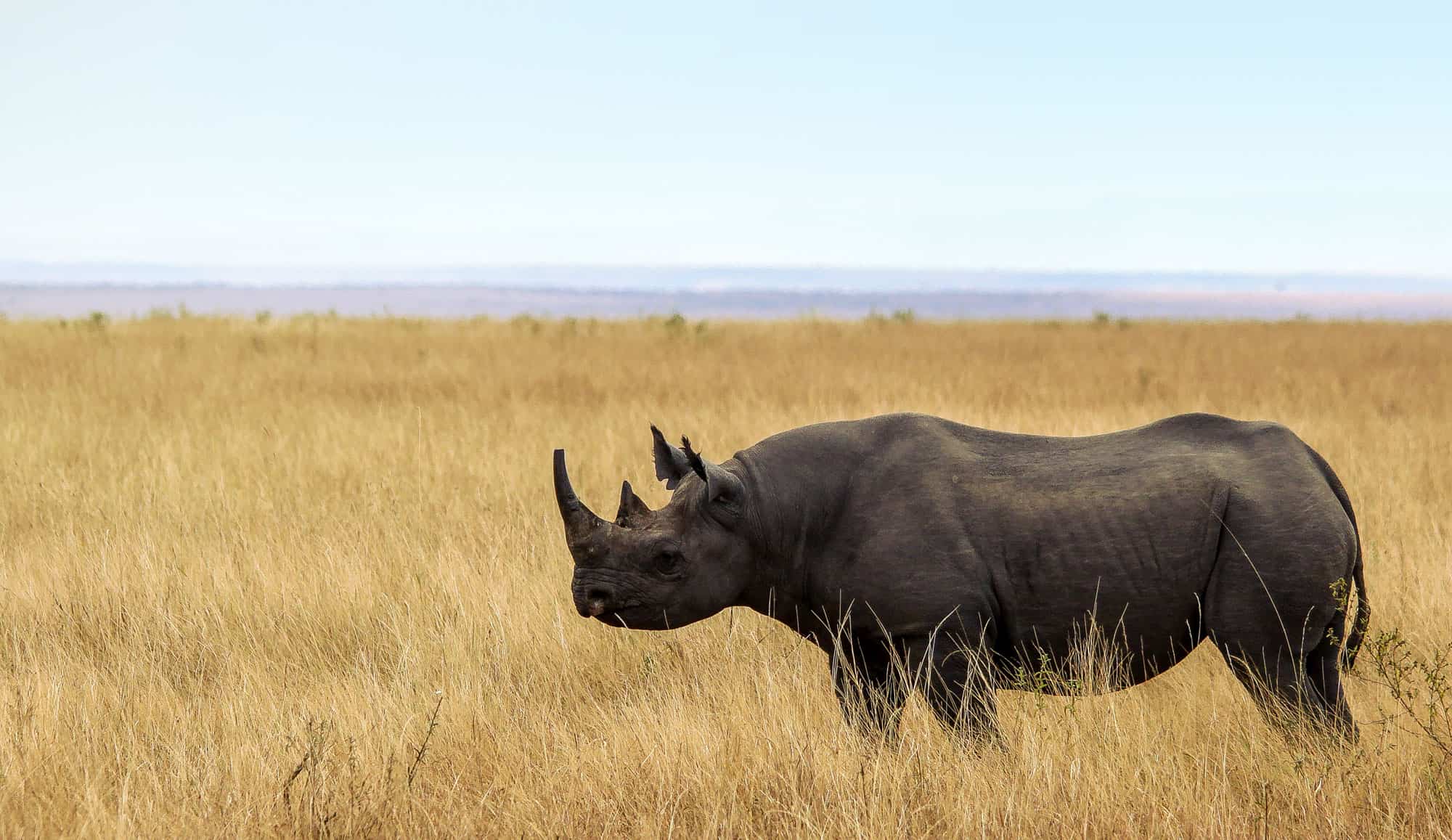
West African Black Rhinoceros: 2011
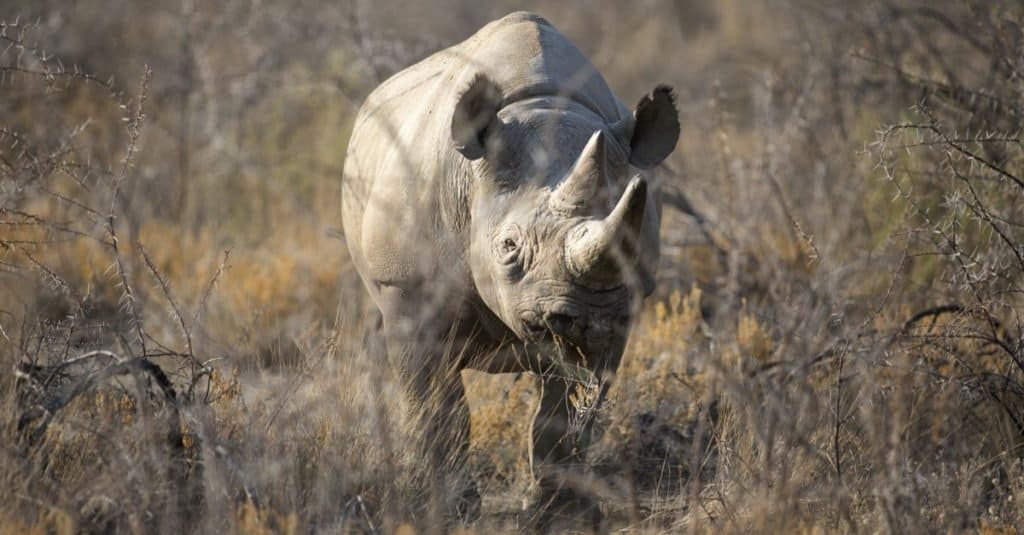
West African Black Rhinoceros were killed for their horns, which are used in Eastern medicine and as decoration in the Middle East.
©2630ben/Shutterstock.com
The West African black rhinoceros (Diceros bicornis longipes) was declared extinct in 2011 by the International Union for Conservation of Nature (IUCN) due to habitat destruction, trophy hunting, and poaching for their horns. A subspecies of the black rhino, the West African black rhinoceros was once abundant in sub-Saharan Africa, West Africa before being poached to extinction for their horns, which are believed to have medicinal value in some Eastern cultures. The western black rhinoceros was between 9.8 and 12.3 feet long, 4.6 and 5.9 inches at the shoulder, and could weigh as much as 3090 pounds. It also had two horns, the longer of which could be as long as 4.6 feet.
Christmas Island Pipistrelle: 2009/2017
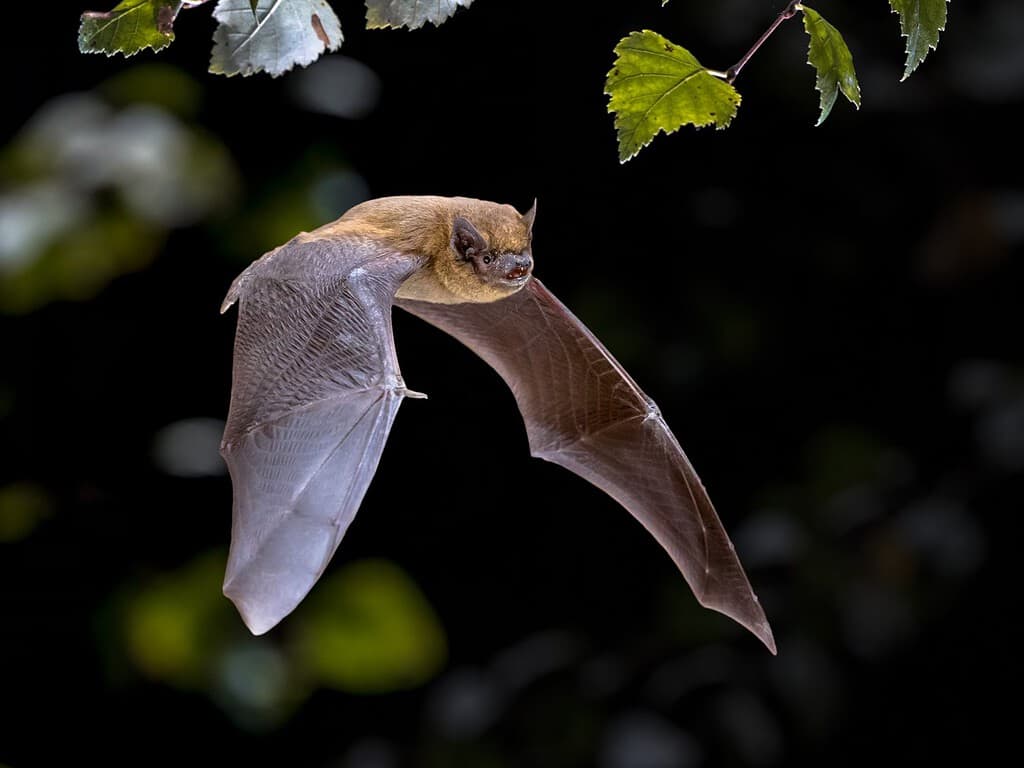
The Christmas Island pipistrelle (Pipistrellus murrayi) resembled the common pipistrelle (Pipistrellus pipistrellus), only smaller.
©Rudmer Zwerver/Shutterstock.com
Though it was not officially declared extinct until 2017, the last echolocation calls of the Christmas Island pipistrelle (Pipistrellus murrayi) were recorded in 2009. Australia’s smallest bat was endemic to Christmas Island, a remote Australian territory in the Indian Ocean. The Christmas Island pipistrelle had brownish, yellow-tipped hair, triangular ears, and a small tail. The length of its body was between 1.4 and 1.6 inches long, while its tail was 1.2 inches long. These tiny mammals ate insects and spent their days sheltering in tree cavities and rotting vegetation. The reason for the demise of this species remains a mystery.
Yangtze River Dolphin: 2002/2006
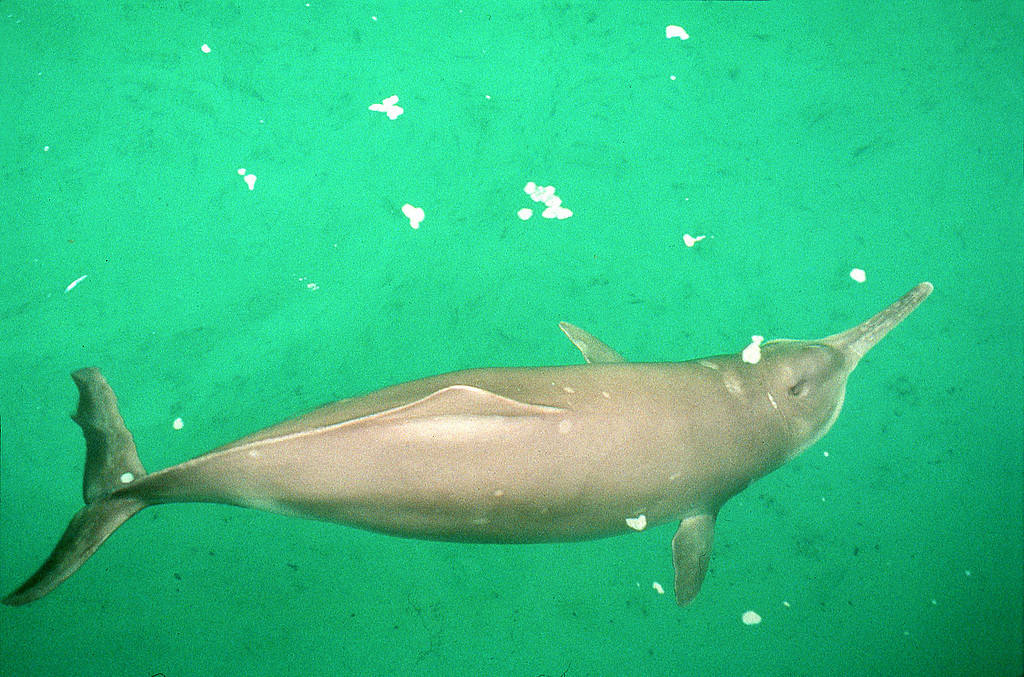
The mighty Yangtze River in China was home to the baiji’s for 20 million years., but it took less than 50 years for humans to wipe them out.
©iStock.com/EarthViews Productions
Though the last captive specimen died in 2002, the Yangtze River dolphin or the baiji (Lipotes vexillifer) wasn’t declared extinct until 2006. Its demise is blamed on overfishing, becoming entangled in commercial fishing nets, collisions with vessels, habitat degradation from water pollution, and the devastating effects on its environment from the building of the Three Gorges Dam.
Males of the species were 7.5 feet long, while females were over 8 feet long. Their backs were gray or pale blue, and they had a white belly and a long, narrow beak full of cone-shaped teeth.
Saudi Gazelle: 1970/2008
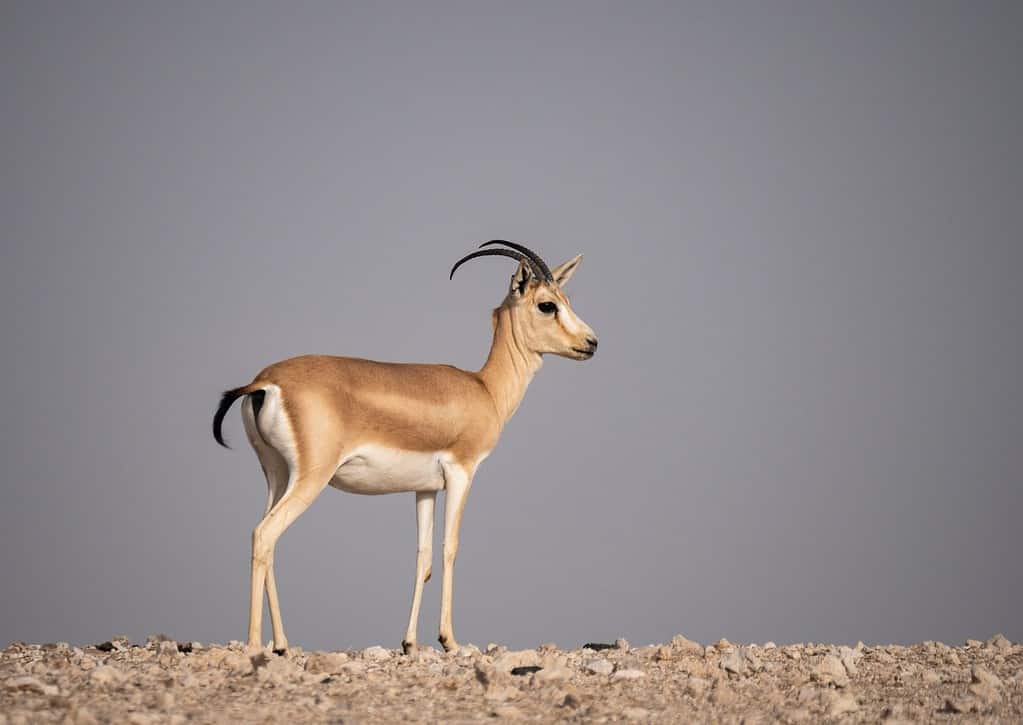
The Saudi gazelle was similar to the Arabian sand gazelle, pictured
©Matt Starling Photography/Shutterstock.com
This graceful animal that once roamed the Arabian Peninsula was declared extinct in the wild in 1980, and officially extinct by the IUCN in 2008. However, no Saudi gazelle (Gazella saudiya) has been documented in the wild since 1970. Overhunting and habitat degradation are considered the primary factors in the Saudi gazelle’s demise.
Pyrenean Ibex: 2000
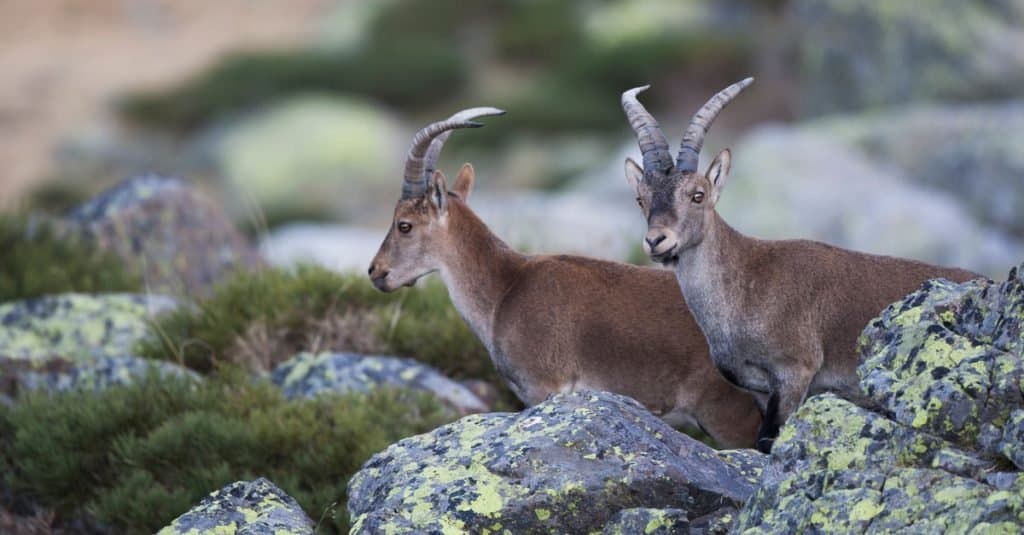
An attempt to clone the Pyrenean ibex was attempted in 2009, marking it the first species to undergo de-extinction, but the clone died soon after birth.
©Alexandre Boudet/Shutterstock.com
The Pyrenean Ibex (Capra pyrenaica pyrenaica) was famous for the fantastic ridged horns sported by the male. This wild goat lived in the Pyrenees mountains between Spain and France. It was called bucardo or herc in Spain and bouquetin in France.
Besides its horns, the male had a gray or grayish-brown coat with black markings that grew out in the winter. The female had a mostly brown coat, and her horns were short and curved backward. The species was migratory and would move up the mountains to mate. Females came down the mountain in the spring to give birth. In the winter, the ibex moved to valleys that were clear of snow and provided food. The Pyrenean ibex was declared extinct in 2000, when Celia, the last known remaining Pyrenean Ibex was killed by a falling tree in Ordesa y Monte Perdido National Park in Spain.
Javan Tiger: 1979
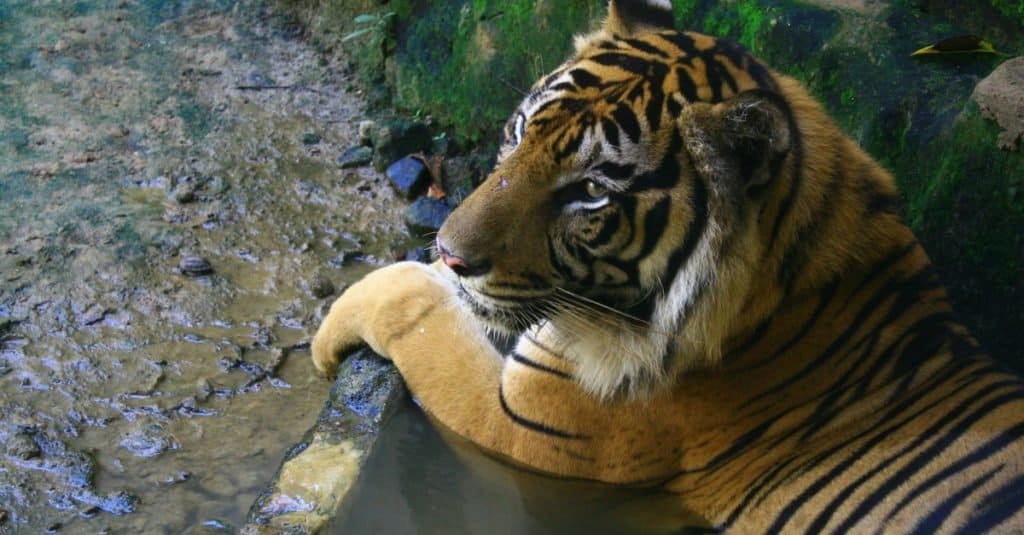
Panthera tigris sondaica, the Javan Tiger, lived on the Indonesian island of Java until the mid-1970s.
©Sigit Adhi Wibowo/Shutterstock.com
The Javan tiger (Panthera tigris sondaica) was declared extinct in 1979, though it had not been spotted in the wild since 1976. As its name implies, this beautiful beast was found on the island of Java in Indonesia. Hunting, poisoning, and deforestation are the culprits behind the Javan tiger’s extinction.
Guam Flying Fox: 1968
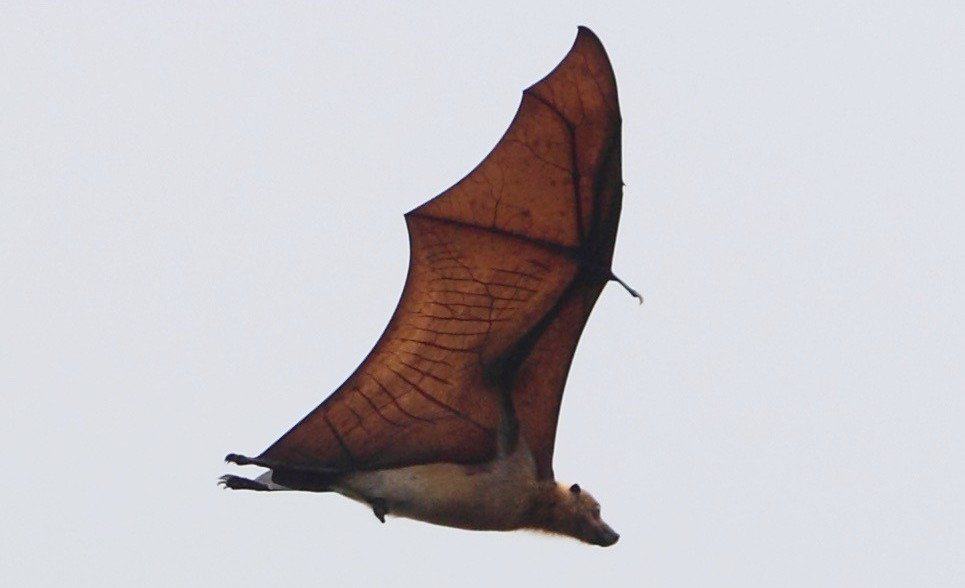
The Guam flying fox, also known as the little Marianas fruit bat, was a tiny megabat from Guam in Micronesia.
The Guam flying fox (Pteropus tokudae), a little fruit bat native to Guam, was last officially documented in the wild in 1967, though unofficial reports continued to trickle in throughout the 1970s. This adorable little critter was only about 6 inches long, had a 28-inch wingspan, and weighed no more than 5.4 ounces. It was grayish on the top of its head, golden brown at the neck, and brown everywhere else. The Guam flying fox became extinct from overhunting by humans as a food source. They also became prey for the invasive brown tree snake(Boiga irregulars) which not only accelerated the flying fox’s extinction but caused the extirpation of all Guam’s native birds.
Crescent Nail-Tail Wallaby: 1956
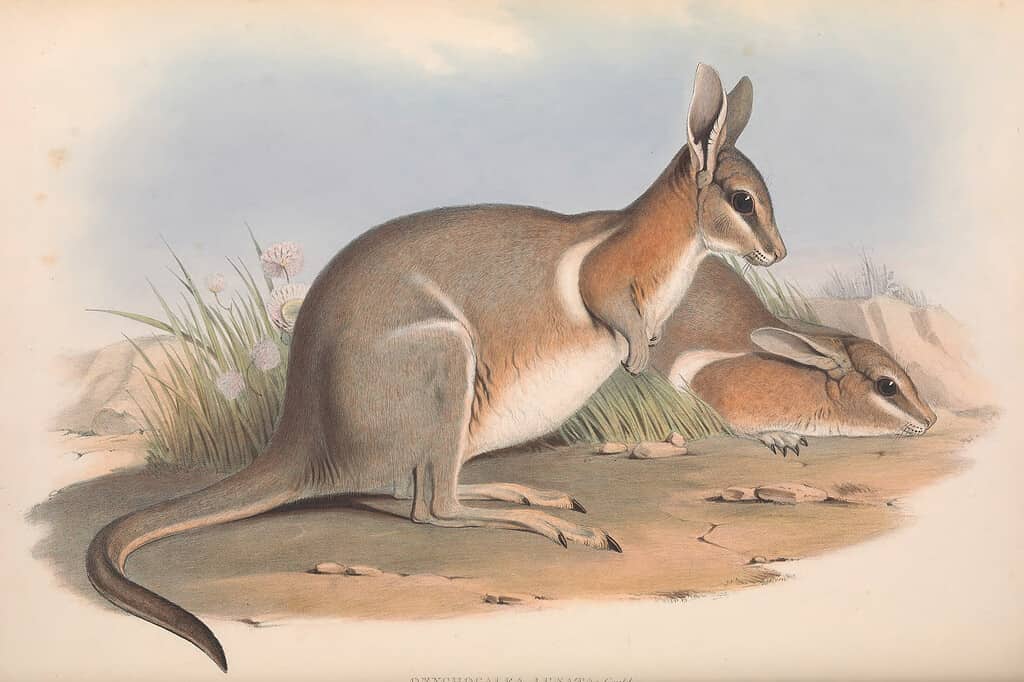
This little wallaby was hunted for food which contributed to its end.
©John Gould, Henry Richter, Public domain, via Wikimedia Commons – Original / License
The crescent nail-tail wallaby, a little marsupial also called the worong (Onychogalea lunata), was believed to have become extinct circa 1956. Native to Australia, the crescent nail-tail got its name because the tip of its tail bore a structure that resembled a nail or a claw. This little hopper was an attractive wallaby with soft fur and a white crescent that swept around their body to just above its legs. Crescent nail-tail wallabies weighed about 7.7 pounds and were between 14.5 and 20 inches long, with a tail between 5.9 and 13 inches. Predation by the red fox contributed to its end.
Xerces Blue: 1943
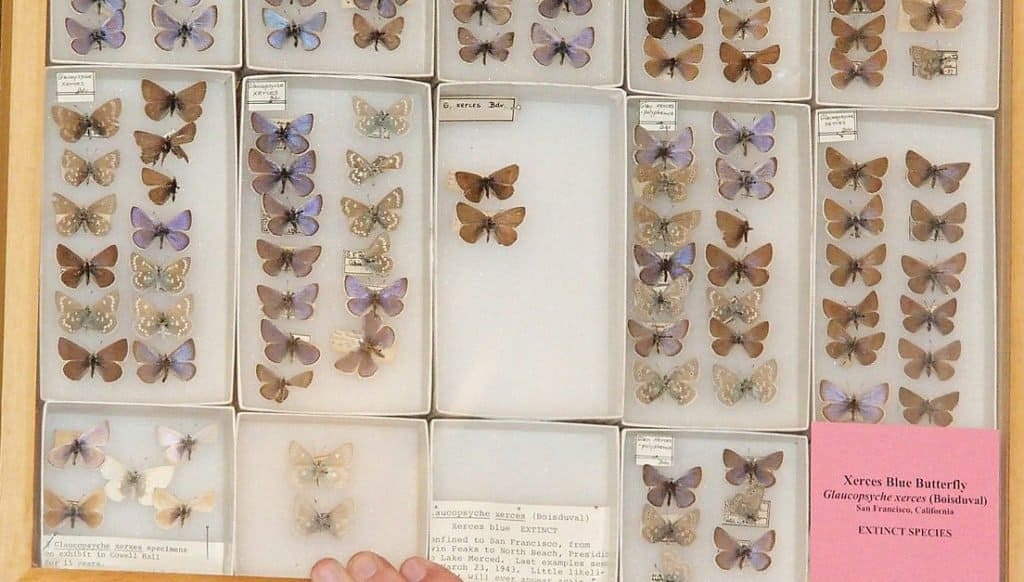
Xerces blue butterflies, native to the San Francisco Bay area were among the first American butterflies to become extinct from habitat loss caused by urban development.
©Edward Rooks from San Jose, CA, USA, CC BY-SA 2.0, via Wikimedia Commons – Original / License
A powder blue butterfly, the Xerces blue was native to the San Francisco Bay area. It was among the first American butterflies to become extinct. First documented in 1852, the last sighting of a Xerces was in 1943. The butterfly foraged on lupine and lotus flowers. Habitat destruction, as well as the introduction of the invasive Argentine ant, led to its extinction.
Schomburgk’s Deer: 1938
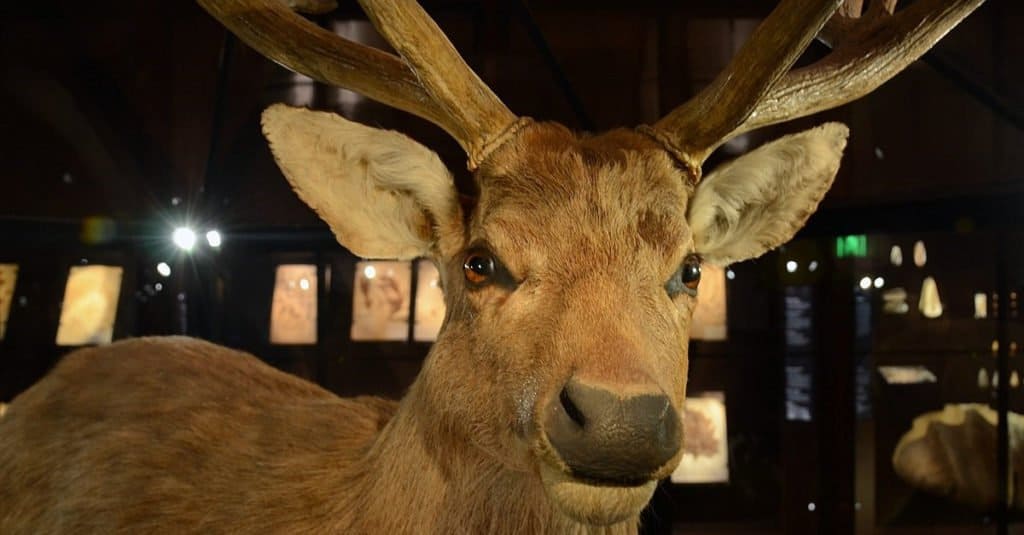
This deer which was extinct by 1938, was native to Thailand. Schomburgk’s deer (Rucervus schomburgki) had a dark brown body with a white underbelly. The underside of its tail was also white, and the male had graceful antlers with as many as 33 points. Females lacked antlers. The deer lived around swamps and formed groups containing one male, and numerous females and fawns. These swamp dwellers were vulnerable to flooding which forced them to higher ground, making them easy targets for hunters. Besides hunting, habitat destruction sealed the deer’s fate when swamps were converted to rice paddies.