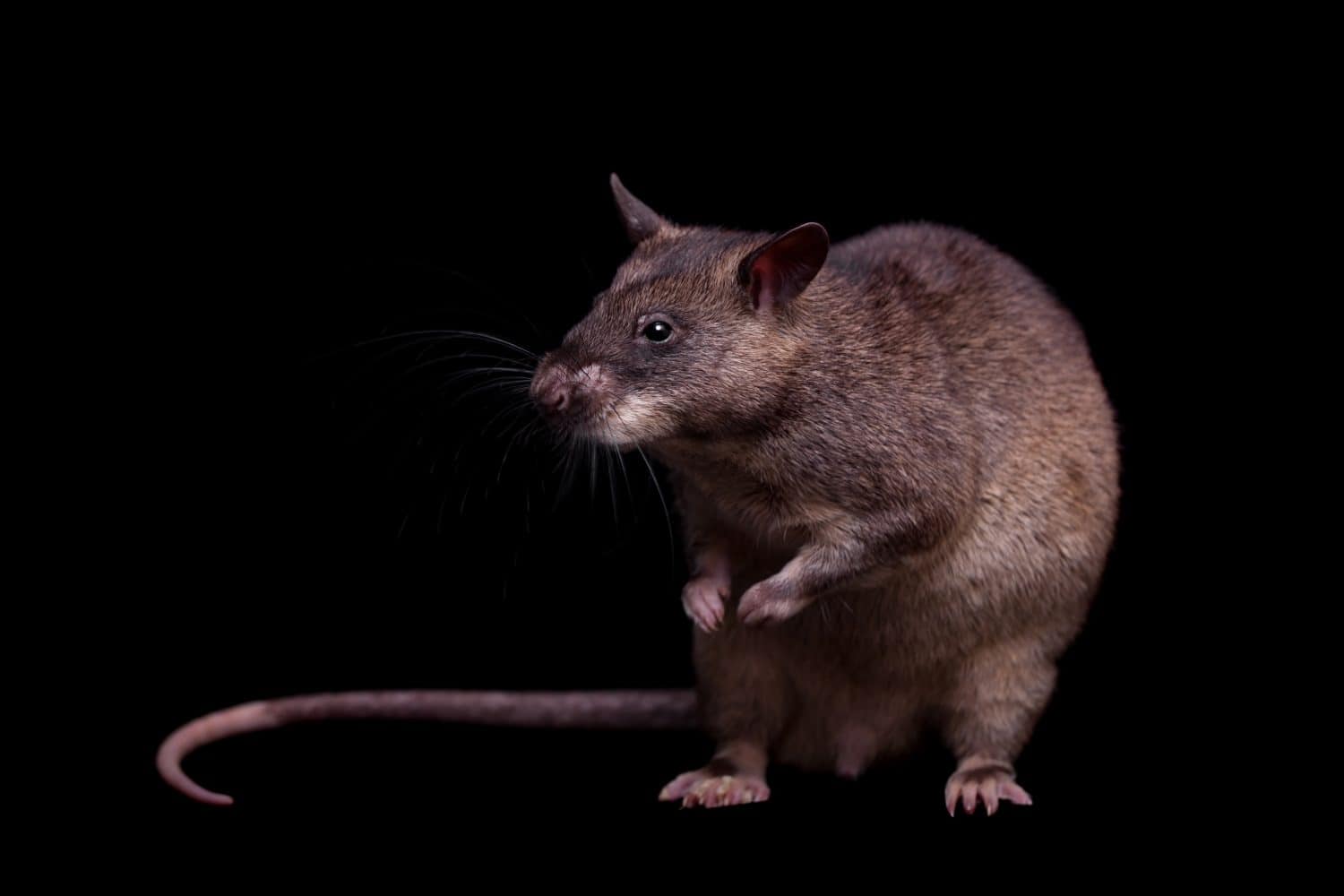

Rats are often seen as little more than small pests scurrying through city streets, but this common image misrepresents the amazing variety of the world’s many species. Many rats are incredibly intelligent, affectionate, and far from being small. In fact, the largest rat in the world can grow over 3 feet long and weigh up to 9 pounds. Here are the 10 largest rats on Earth!
10. Luzon Bushy-Tailed Cloud Rat (Crateromys schadenbergi)
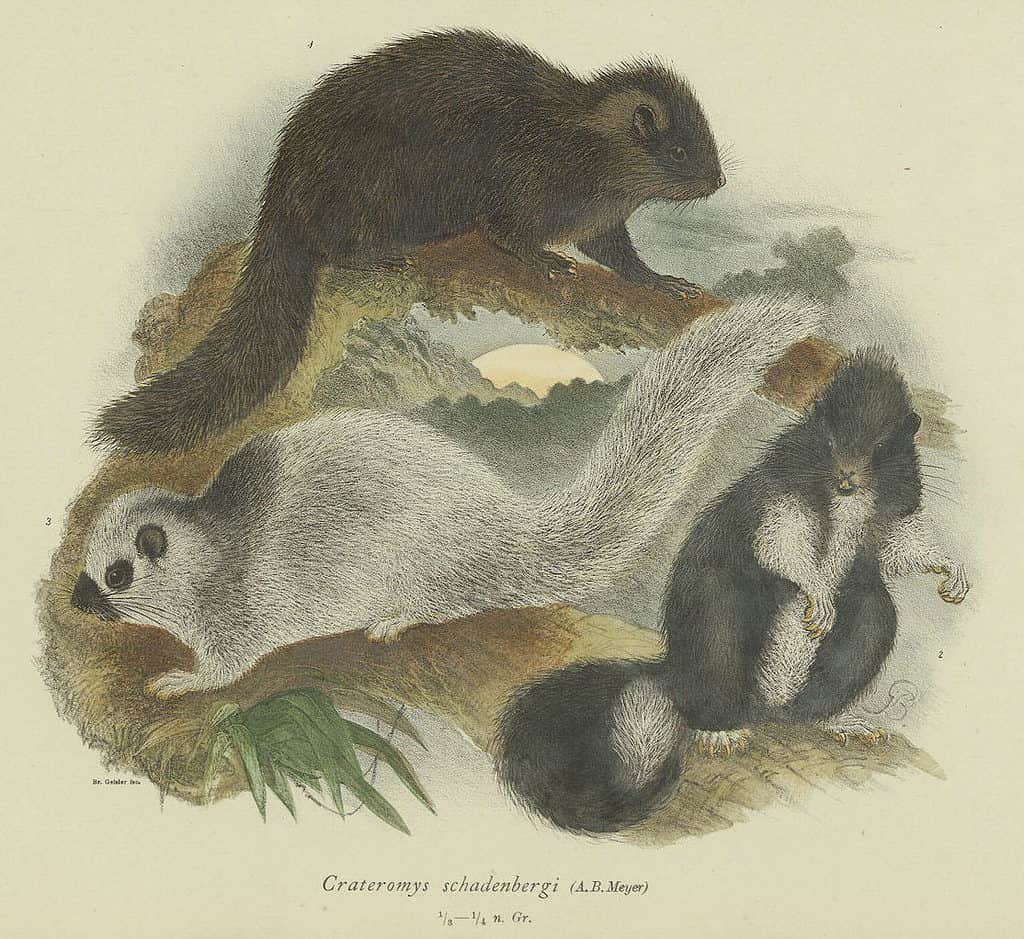
Luzon bushy-tailed cloud rats are excellent climbers and spend most of their time in trees.
©Adolph Bernhard Meyer from Abhandlungen und Berichte des Koenigl. Zoologischen und Anthropologisch Etnographischen Museums zu Dresden year 1896 – no.6, Public domain, via Wikimedia Commons – Original / License
The Luzon bushy-tailed cloud rat is the largest of its genus, growing up to 2.5 feet long and weighing between 3 and 3.3 pounds — about the weight of a 3-pound bag of apples from the grocery store. Its long, thick fur is soft and comes in a variety of colors. Some rats are solid black or white, while others have unique patches of black, brown, and white. Although they are rats, Luzon bushy-tailed cloud rats don’t look like other common rats because of their fur-covered tails and small, fur-covered ears.
These large rodents live in the mountain forests of the Philippines, specifically in Luzon’s Central Cordillera at elevations of 6,600 to 8,200 feet. They are nocturnal, sleeping in tree holes or among roots during the day and coming out at night to eat buds and tender plants. Unfortunately, they are Endangered, primarily due to habitat loss and hunting.
9. Bosavi Woolly Rat (Mallomys sp.)
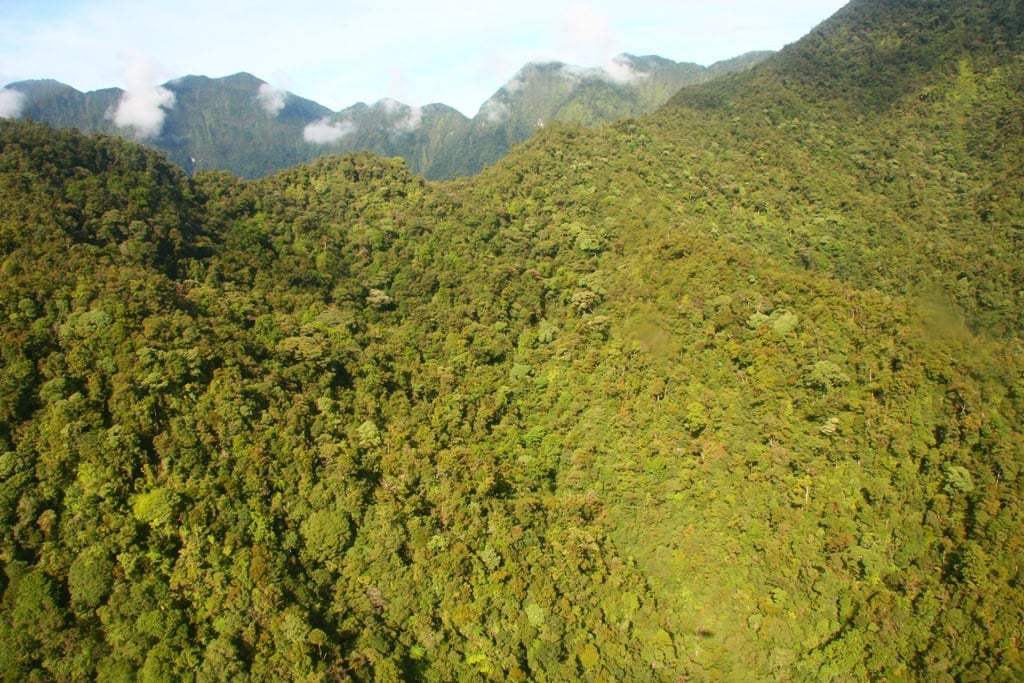
Mount Bosavi’s crater is bordered by half-mile-tall walls.
©panvorax / CC BY 2.0 / Wikimedia Commons – Original / License
In the Southern Highlands province of Papua New Guinea, Mount Bosavi’s 2.5-mile-wide crater is quite isolated from the rest of the world. However, this extinct volcano is home to dozens of incredible creatures, including the newly discovered Bosavi woolly rat. These crater-dwelling rodents measure just over 2 feet long from nose to tail and weigh about 3.5 pounds — roughly the weight of a half-gallon of milk. They are covered in thick, silver-gray fur. Despite their enormous size, they survive on a simple diet of roots and leaves.
8. De Vis’s Woolly Rat (Mallomys aroaensis)

There are more than 60 species of rodents in Papua New Guinea
©MICHAEL WORKMAN/iStock via Getty Images
The De Vis’s woolly rat is a large rodent found in Papua New Guinea. It lives at high elevations between 3,600 and 8,900 feet in old gardens, tropical moist forests, and regrown woodlands. These woolly rodents weigh between 3.1 and 4.4 pounds, similar to a standard bag of sugar. Their bodies are 13 to 16 inches long, with a tail that’s about the same length. They have a white belly and long, dark fur with blackish-gray speckles.
De Vis’s woolly rats are most active at night and divide their time between the ground and the trees. They build their nests in burrows, dens, and among rocks, but they spend much of their time climbing trees to find leaves and shoots to eat.
7. Alpine Woolly Rat (Mallomys gunung)
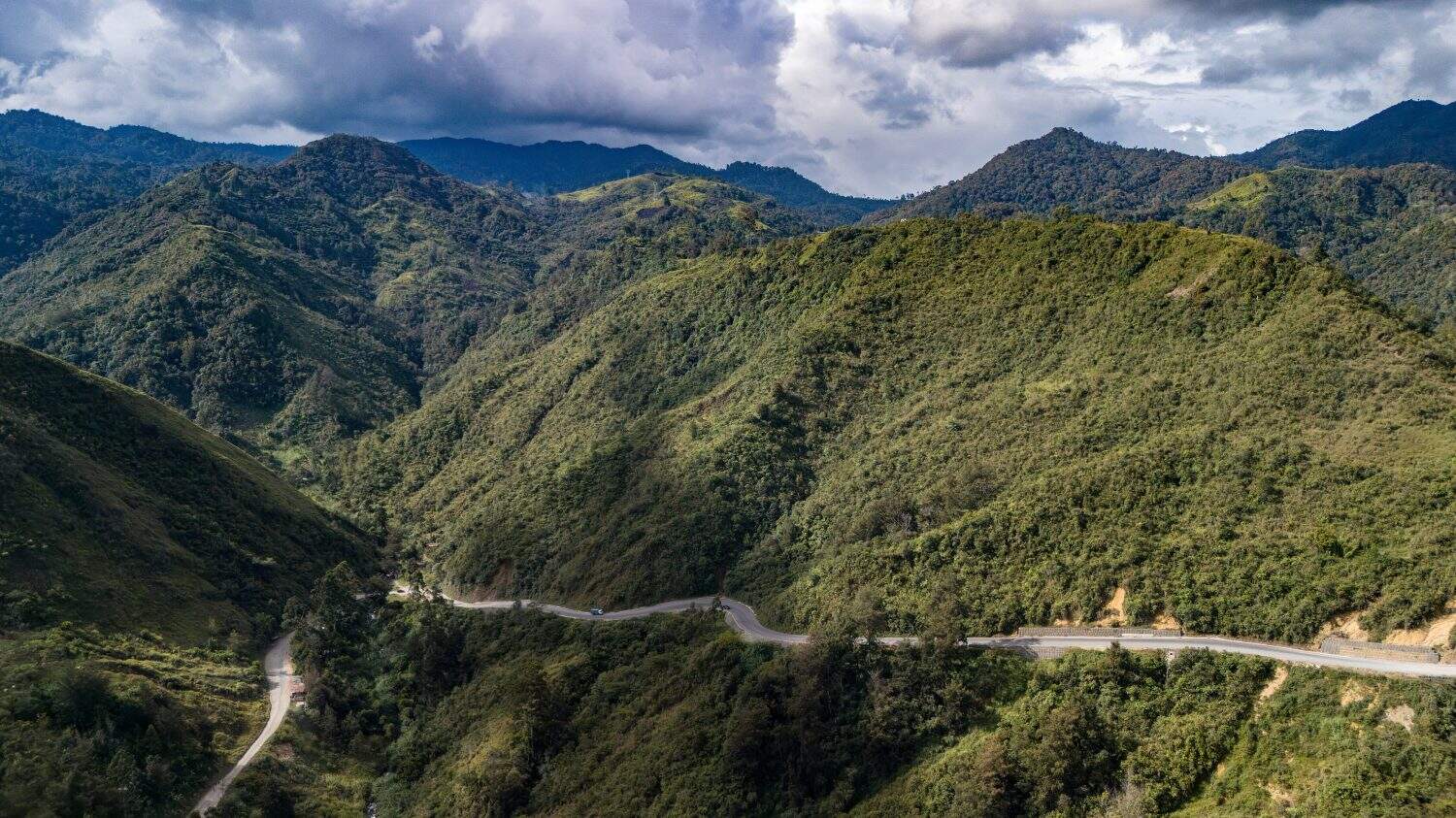
Alpine woolly rats live at high elevations of 11,500 to 13,300 feet in the New Guinea Highlands.
©Gilmore Tana/Shutterstock.com
Found in the mountains of New Guinea, the alpine woolly rat weighs about 4.4 pounds and can grow 16 to 18 inches long. Its long, woolly fur is gray and very thick, with white-tipped guard hairs and a yellowish-white belly. Unlike many of its orange-toothed relatives, this giant rodent has teeth covered in white enamel.
These large rodents are terrestrial, spending their lives on the ground and building nests in dens among rocks. Very little is known about them, as they have only been found in two locations in western New Guinea’s Central Range. Unfortunately, alpine woolly rats are considered an Endangered species due to hunting, wild dogs, and climate change.
6. Subalpine Woolly Rat (Mallomys istapantap)
The subalpine woolly rat is the largest rat in Australia and Oceania. Found on Papua New Guinea’s Mount Wilhelm, this elusive creature can grow over 2.5 feet long from nose to tail and weigh more than 4 pounds. It lives in remote, rugged terrain at high elevations from 10,500 to 12,140 feet above sea level.
Because they are only active at night and spend their days hiding in tree canopies or underground burrows, very little is known about the subalpine woolly rat. In fact, the subalpine woolly rat was photographed and filmed alive in the wild for the very first time in 2025.
5. Southern Luzon Giant Cloud Rat (Phloeomys cumingi)
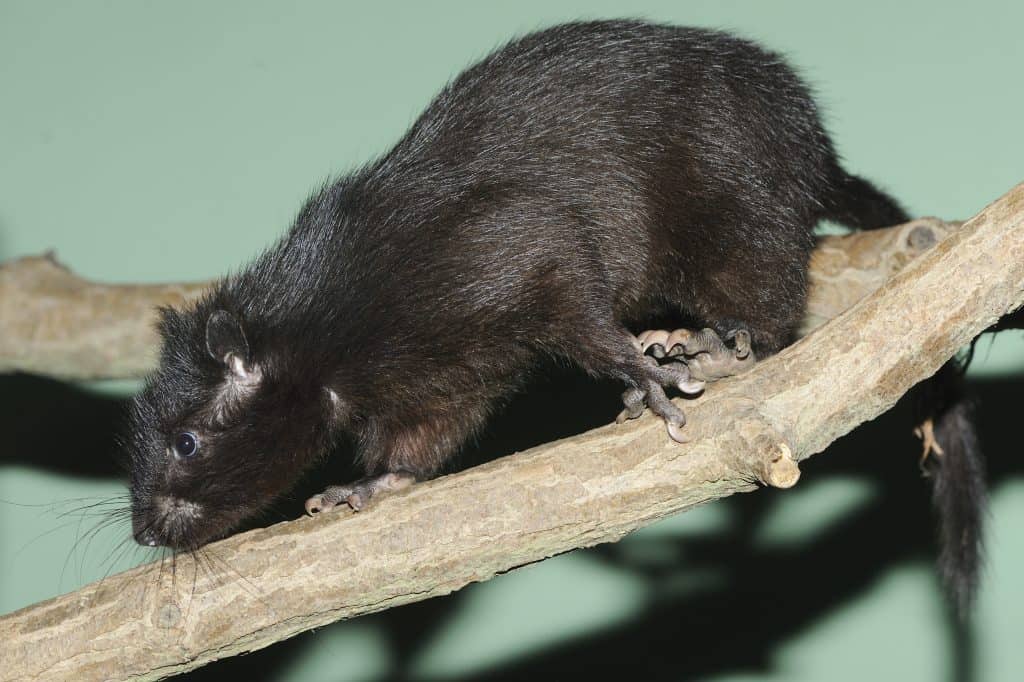
Southern Luzon giant cloud rats have short, dark brown fur that often has a reddish tint.
©Jaroslav Vogeltanz / CC BY-SA 3.0 / Wikimedia Commons – License
Only slightly smaller than its northern cousin, the Southern Luzon giant cloud rat grows 2 to 2.5 feet long and weighs between 3.2 and 4.6 pounds (about the weight of a pineapple). It has small ears, small eyes, and a tail completely covered in fur.
Southern Luzon giant cloud rats are slow-moving animals and only active at night, climbing through trees to find fruit and young leaves. They make their nests in hollow trees on the offshore Philippine island of Catanduanes in southern Luzon.
4. Flores Giant Rat (Papagomys armandvillei)

The Flores rat lives on the island of Flores in Indonesia.
©Thrithot/Shutterstock.com
Found only on the Indonesian island of Flores, the Flores giant rat is a chunky rodent with a small tail, thick dark fur, and tiny round ears. Living in such an isolated place, these rats have grown much larger than their mainland relatives. Scientists have not yet measured the rats’ exact weight, but based on their size — 16 to 17.5 inches long with a tail that can measure over 2 feet — they are estimated to weigh between 2.5 and 5.5 pounds.
Flores giant rats are elusive and spend most of their time on the ground or digging in burrows. Unfortunately, they are listed as Near Threatened on the IUCN Red List due to hunting, their small habitat, and harassment by cats and dogs.
3. Northern Luzon Giant Cloud Rat (Phloeomys pallidus)
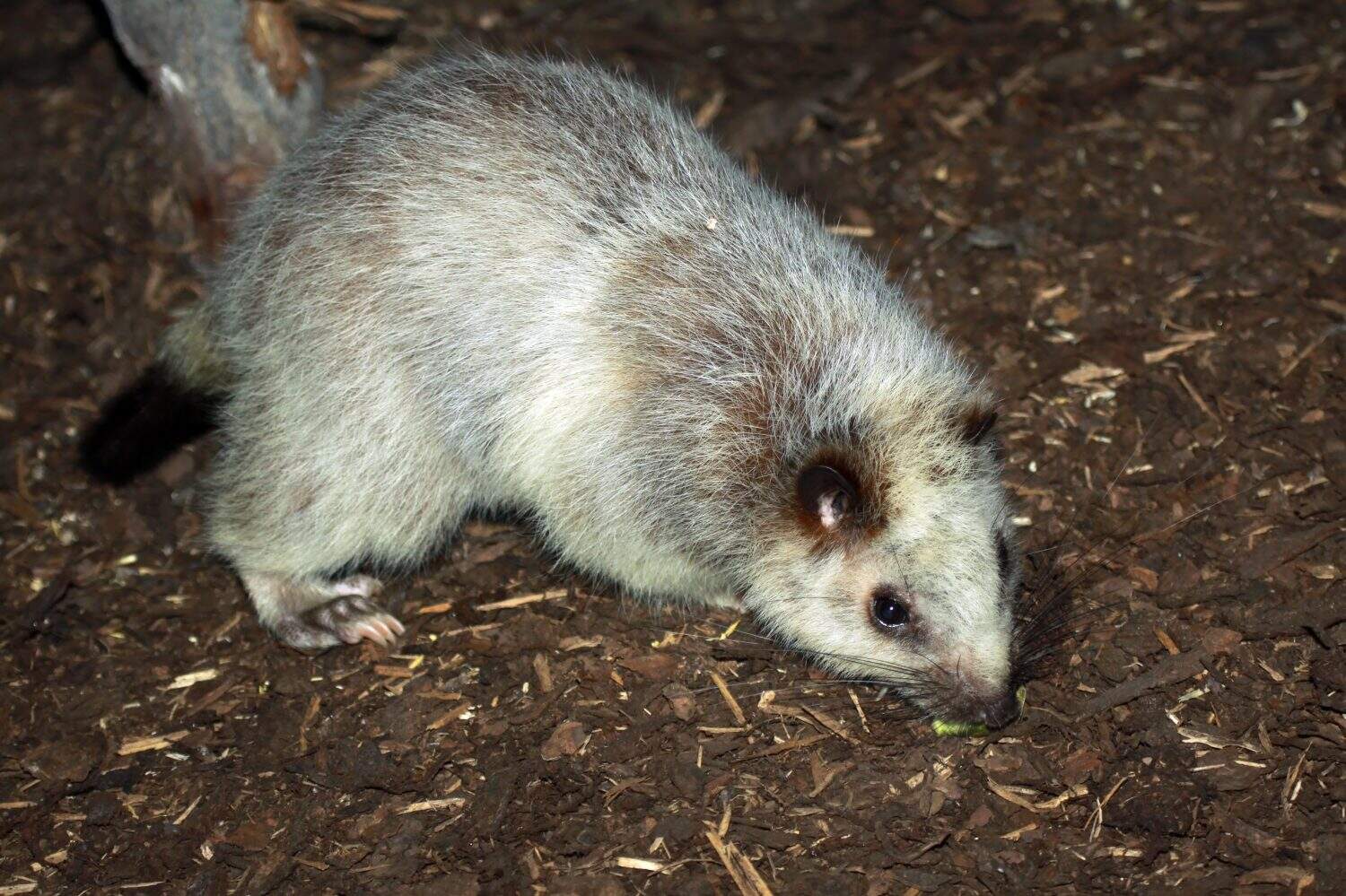
Researchers believe northern Luzon giant cloud rats mainly eat fruit and young leaves.
©Michal Sloviak/Shutterstock.com
Endemic to the island of Luzon in the Philippines, the northern Luzon giant cloud rat spends most of its time high in the trees. It weighs between 4.2 and 5.7 pounds — about as much as a 2-liter bottle of soda — and measures 2.5 feet long. Its rough coat is long, with pale gray or white fur and dark markings. Like their southern cousins, these cloud rats have long, thin, fur-covered tails, as well as small eyes and ears.
Because northern Luzon giant cloud rats are elusive and timid, scientists are still learning about their behavior. However, it is known that they are exceptional climbers with large back feet and long claws.
2. Sumatran Bamboo Rat (Rhizomys sumatrensis)
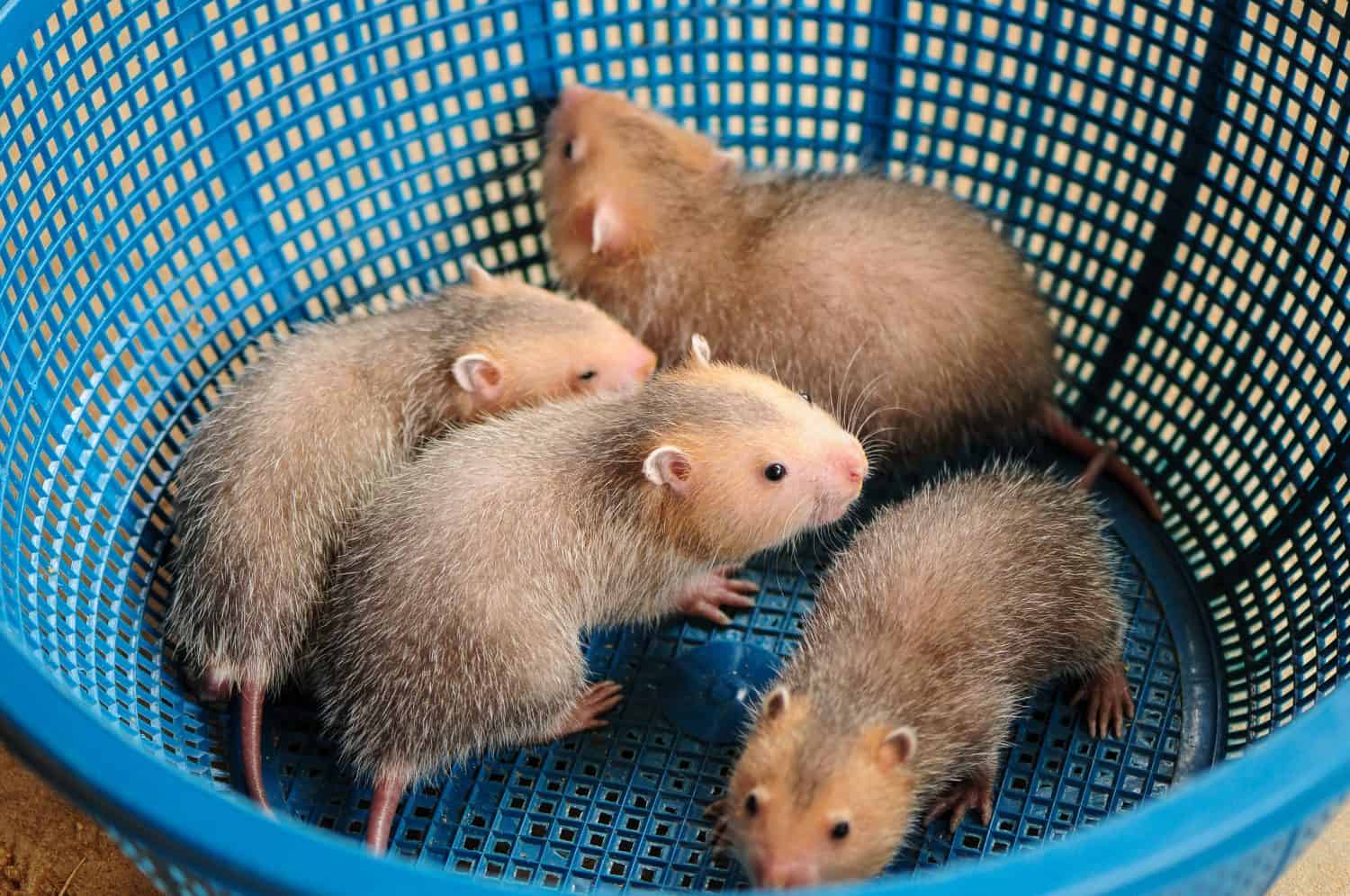
Sumatran bamboo rats dig complex burrow systems.
©Chattraphas Pongcharoen/Shutterstock.com
The Sumatran bamboo rat is another heavyweight of the rat world, weighing between 4.5 and 8.75 pounds. These light brown, shaggy rodents live in the mountainous forests of Sumatra, the Malay Peninsula, and Indochina. As their name suggests, their main food source is bamboo roots, though they also eat sugarcane and tapioca roots, seeds, and fruit.
1. Gambian Pouched Rat (Cricetomys gambianus)
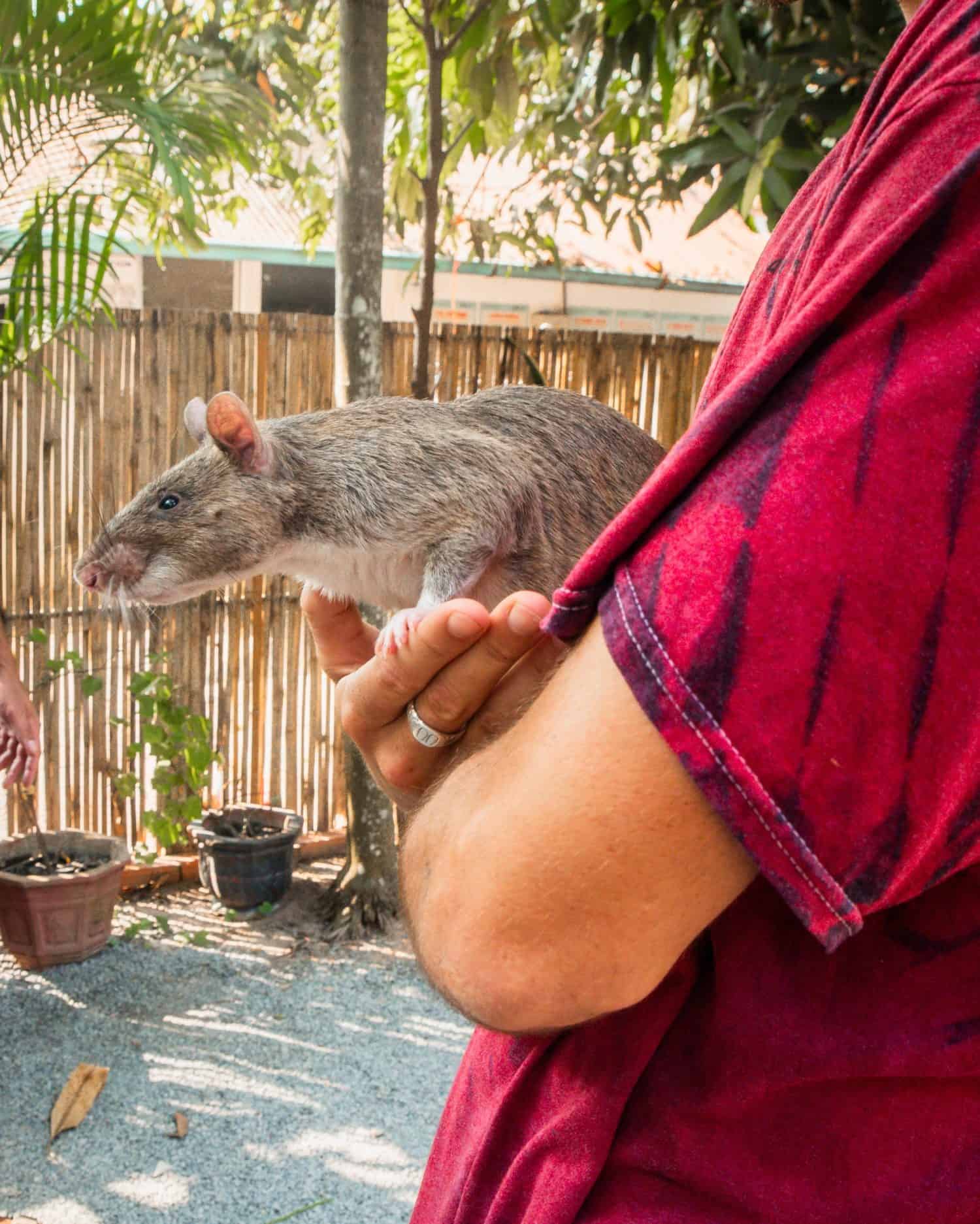
The Gambian pouched rat’s sense of smell is as strong as that of many dogs.
©EvaL Miko/Shutterstock.com
The Gambian pouched rat, also known as the African pouched rat, is the largest rat in the world. These rodents typically weigh around 3 pounds, but some can grow to an impressive 9 pounds — the size of a housecat and heavier than a gallon of milk! From head to tip of tail, they can stretch over 3 feet long, with the tail itself making up more than half of that length. Their name comes from their large, hamster-like cheek pouches, which they use to store food.
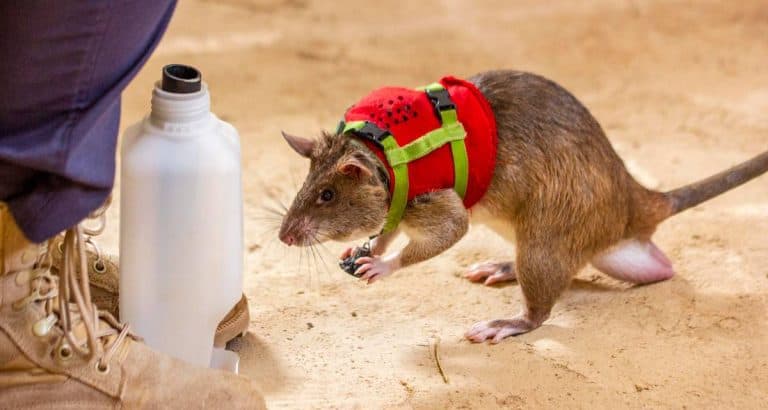
Beyond their size, these rats are highly intelligent with an amazing sense of smell. In fact, APOPO (Anti-Personnel Landmines Detection Product Development) trains Gambian pouched rats to sniff out landmines, tuberculosis, and even disaster victims. Because of their impressive size, smarts, and powerful noses, a single rat can inspect a tennis-court-sized area in just 30 minutes!