
Quick Take
- A species believed extinct was rediscovered by a scientist who wasn't even looking for it, and what he stumbled onto would go on to change conservation history. The rediscovery story →
- Three goats triggered a chain of events that sealed the fate of an entire tortoise species, and it all happened faster than anyone thought possible. How goats sealed their fate →
- Lonesome George's death was supposed to be the end, but a discovery made shortly after raises a question scientists are still trying to answer. The discovery after George →
- An animal can be declared extinct twice, and the story of how that happens is stranger and sadder than most people realize. Two extinctions explained →
Each day, 200 species of flora and fauna go extinct. Despite these numbers, it is rare to watch a species cease to exist in real time.
In 2012, the world watched as a species took its last breath. The death of Lonesome George was the end of an era; as the last of the Pinta Island tortoises, the species’ extinction had been inevitable for decades. However, when George passed, having this knowledge did not make the loss any easier. In fact, it made it harder.
Who Was Lonesome George?
Initially, it was believed that Pinta Island tortoises had gone extinct in the mid-20th century. The once-abundant tortoises were exploited for too long, and eventually the population ceased to exist. The tortoises had become another cautionary tale in conservation.
This changed in 1971. József Vágvölgyi, a Hungarian scientist, was visiting Pinta Island to study snails. While there, he stumbled on an incredible discovery. He discovered a single, surviving Pinta Island tortoise.
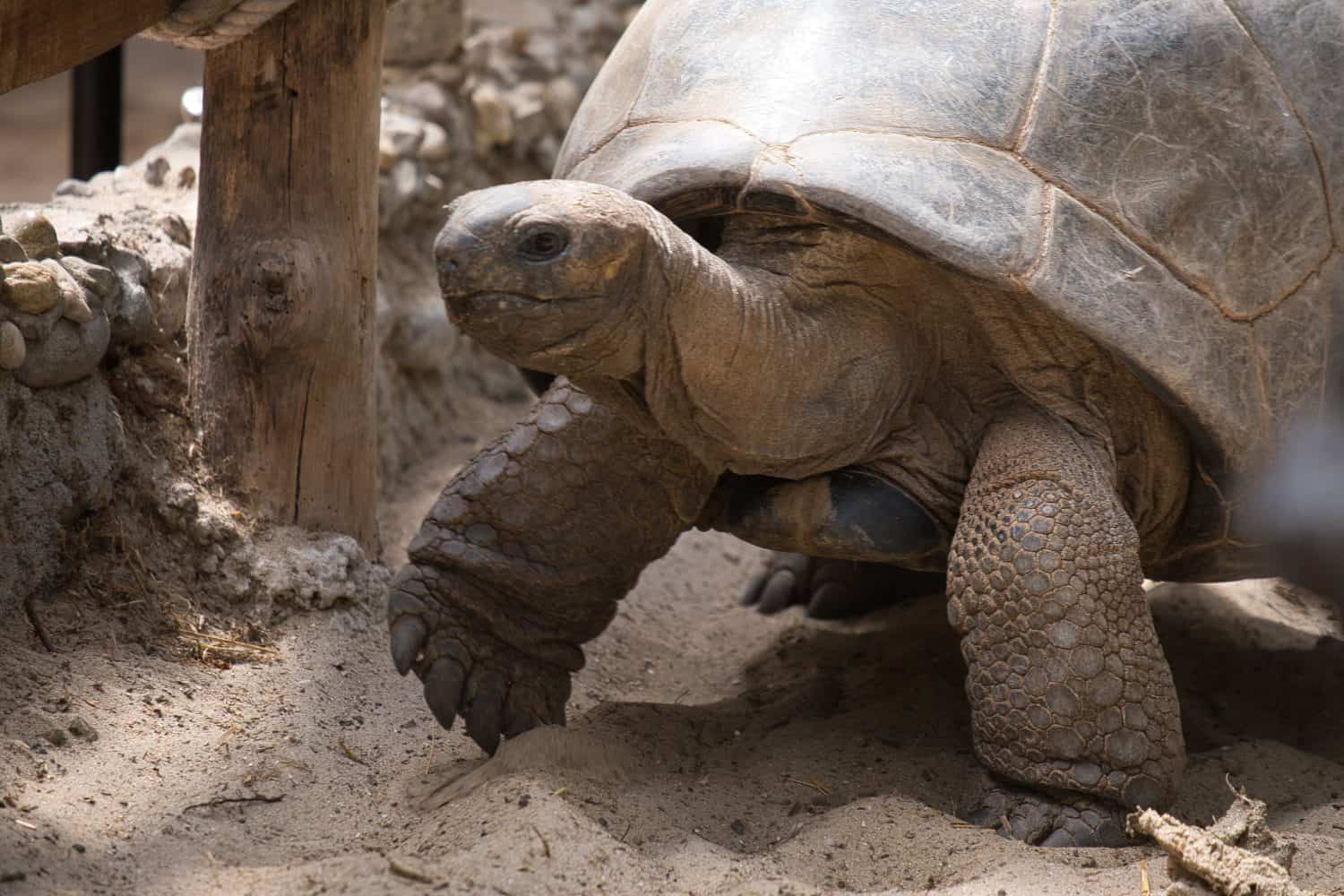
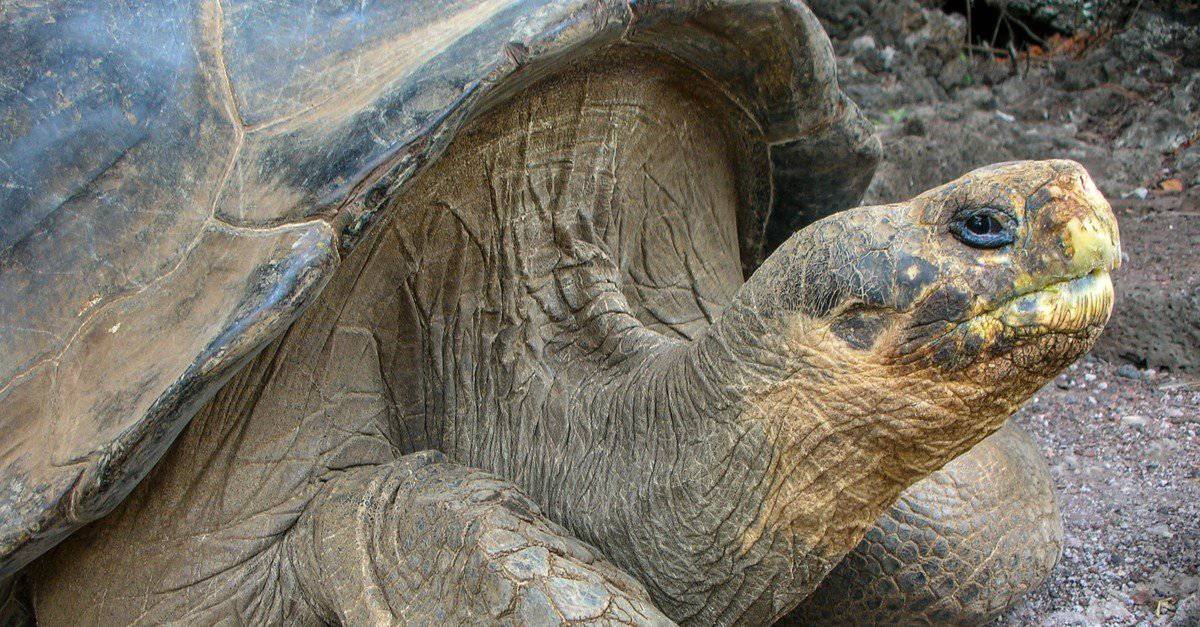
Lonesome George was the last of the Pinta Island tortoises. He passed away in 2012.
©Wirestock Creators/Shutterstock.com
The tortoise was affectionately named Lonesome George.
It was believed that Lonesome George was born around 1910. To help protect George, scientists moved him from Pinta Island to the Tortoise Breeding and Rearing Center in Puerto Ayora, Santa Cruz Island, part of the Galapagos Islands chain.
Lonesome George lived on Santa Cruz Island for another forty years. During that time, scientists attempted to find another Pinta Island tortoise for George to mate with. None were ever found. Lonesome George was truly the last of his species.
The last Pinta Island tortoise passed away in 2012. Lonesome George was found deceased in his pen, having reached over 100 years old. The Pinta Island tortoise was officially declared extinct in 2015, after being rediscovered decades earlier following an earlier presumed extinction.
Why Lonesome George Became a Conservation Symbol of Loss
It is rare to watch a species go extinct. However, as the years ticked by and Lonesome George grew older, it became clear that extinction would be witnessed in real time. George was an endling, meaning that after his death, the Pinta Island tortoise would cease to exist.
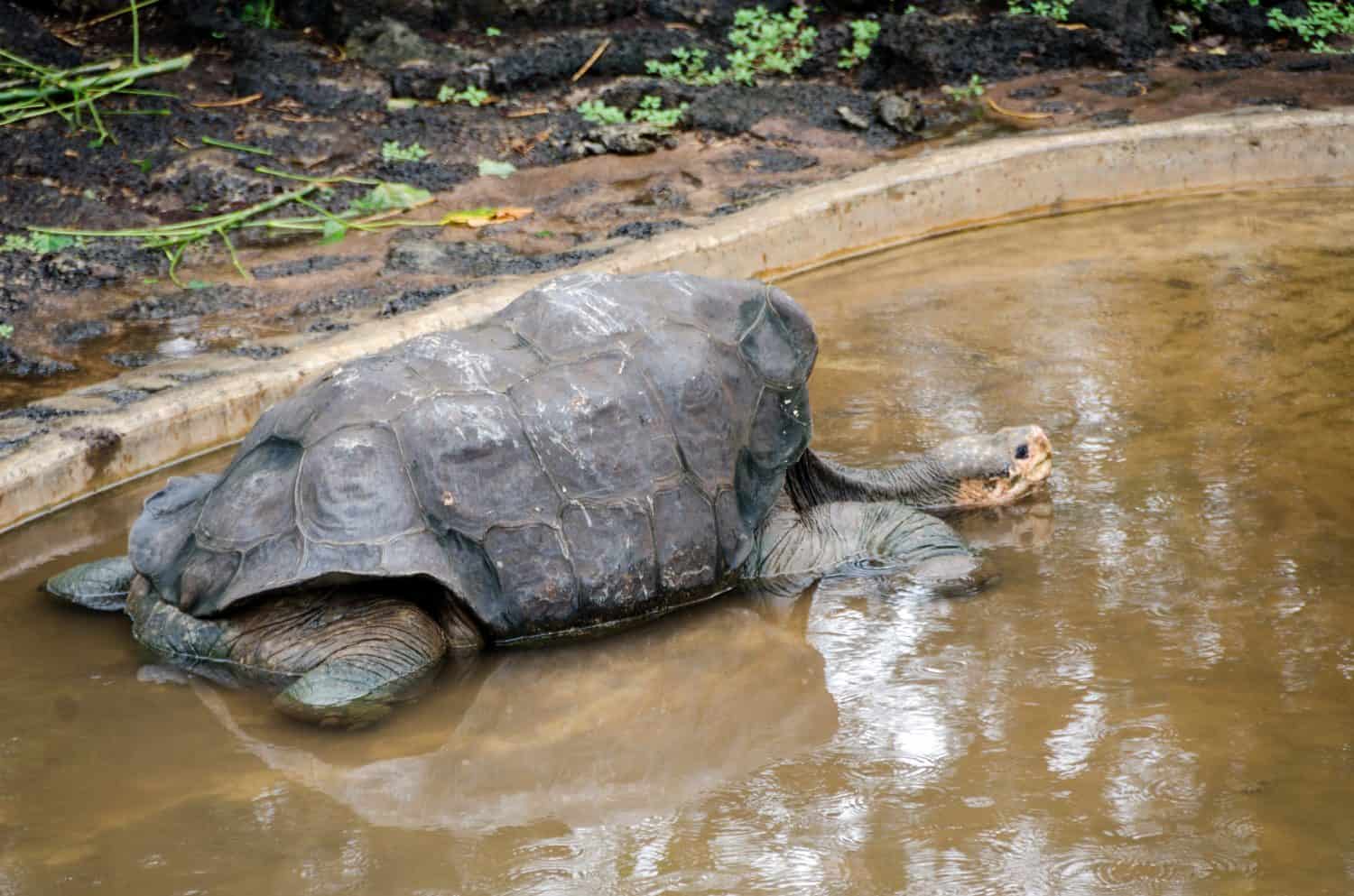
After his death, Lonesome George became a symbol and emblem of biodiversity loss.
©Andreas Wolochow/Shutterstock.com
After his passing in 2012, Lonesome George became a conservation symbol of loss. From a symbolism standpoint alone, Lonesome George embodied the following:
- Extinction is irreversible
- Conservation is key to keeping species from extinction
- Invasive species are a threat to habitats worldwide
From a global viewpoint, according to The Institute for Environmental Research and Education, Lonesome George became the emblem of biodiversity loss. As the island’s ecosystem was altered over a few decades, the Pinta Island tortoises that survived exploitation could not escape the collapse of their habitat. Consequently, the death of Lonesome George represented the end of the Pinta Island tortoises, which went extinct at the hands of humans.
Pinta Island Tortoises Were Not Always Rare
Pinta Island tortoises were a part of the Galapagos ecosystem for millions of years. These tortoises, with a lifespan of approximately 100 years, were once abundant not only on Pinta Island but also on the surrounding islands.
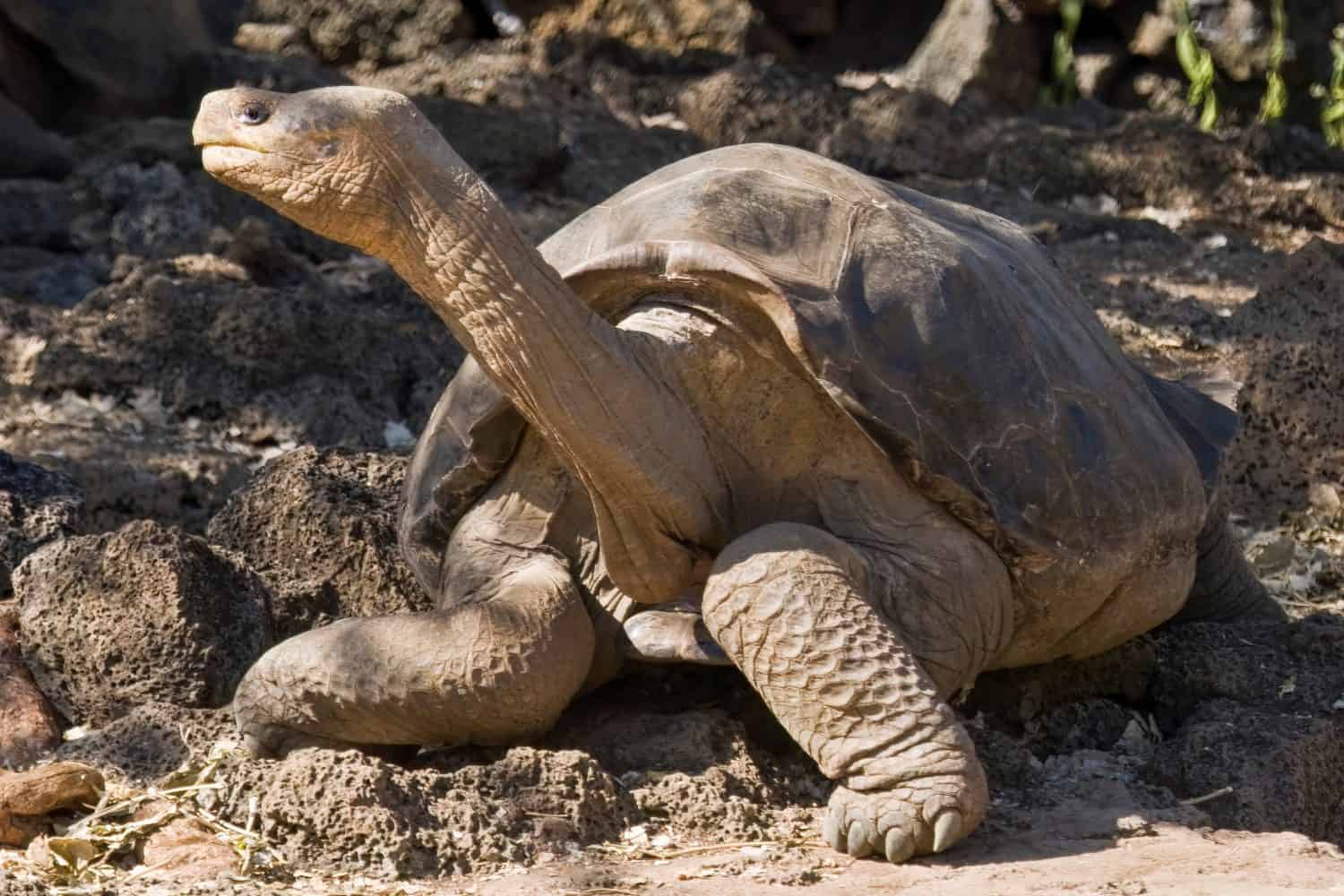
Pinta Island tortoises once thrived in the Galapagos Archipelago.
©Mark_Kostich/Shutterstock.com
What made Pinta Island tortoises different from other large tortoises was that they spent much of their time on land. Consequently, they relied on vegetation from Pinta Island, specifically cactus, to survive.
Despite being land-dwelling tortoises, the Pinta Island tortoises flourished. While there are no historical records of the exact population, it was noted that between 1831 and 1868, over 460 tortoises were taken from the island. This marked the beginning of the end for the Pinta Island tortoises. They would eventually go extinct, but no one imagined how tragic the story of the Pinta Island tortoises would become.
What Led to the Demise of Pinta Island Tortoises
Pinta Island tortoises were a keystone species. They had a significant impact on the vegetation that grew on the island through grazing and seed dispersal. Other species became reliant on the tortoises’ role in controlling vegetation and thrived as a result.
This changed in the 18th and 19th centuries when whalers and buccaneers sailed through the Galapagos Archipelago. As the only land tortoise on the island, the Pinta Island tortoise was easy to spot. They were rounded up by the hundreds for both meat and oil. This left a gap in the island’s ecosystem and decimated the tortoise population.
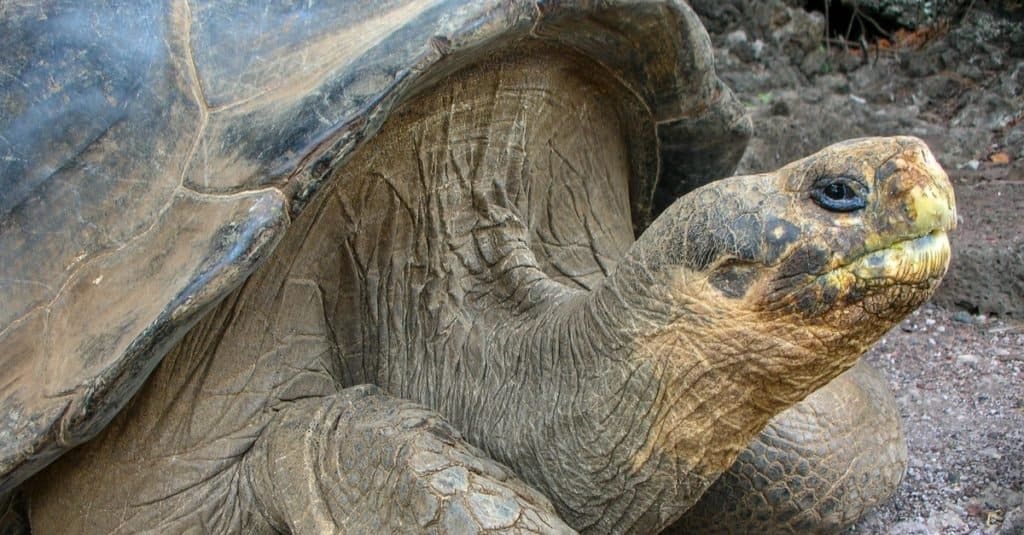
Overhunting and loss of suitable habitat led to the extinction of Pinta Island tortoises.
©evenfh/Shutterstock.com
In 1959, there were only a few Pinta Island tortoises remaining on the island. To supplement their meat supplies when fishing, fishermen brought three goats to Pinta Island. The population of goats exploded. By the 1970s, there were an estimated 40,000 goats living on the island. Not only was the island incapable of supporting that many goats, but it could also no longer support the Pinta Island tortoises. The vegetation, especially the cactus, had been eaten down to the ground by the goats. With no food sources available, the Pinta Island tortoises vanished.
Pure Pinta Island Tortoises Are Extinct, But Hybrids May Not Be
True Pinta Island tortoises are extinct. In a twist on the sad story of Lonesome George and the tortoises, hybrid Pinta Island tortoises are alive and well.
Shortly after Lonesome George passed away in 2012, a group of 17 tortoises discovered on Wolf Volcano piqued scientists’ curiosity. These tortoises were first-generation hybrids found to have Pinta Island ancestry. Because they were juveniles, it was believed that their parents might still be alive. This initiated the search for tortoises with the Pinta Island genome.
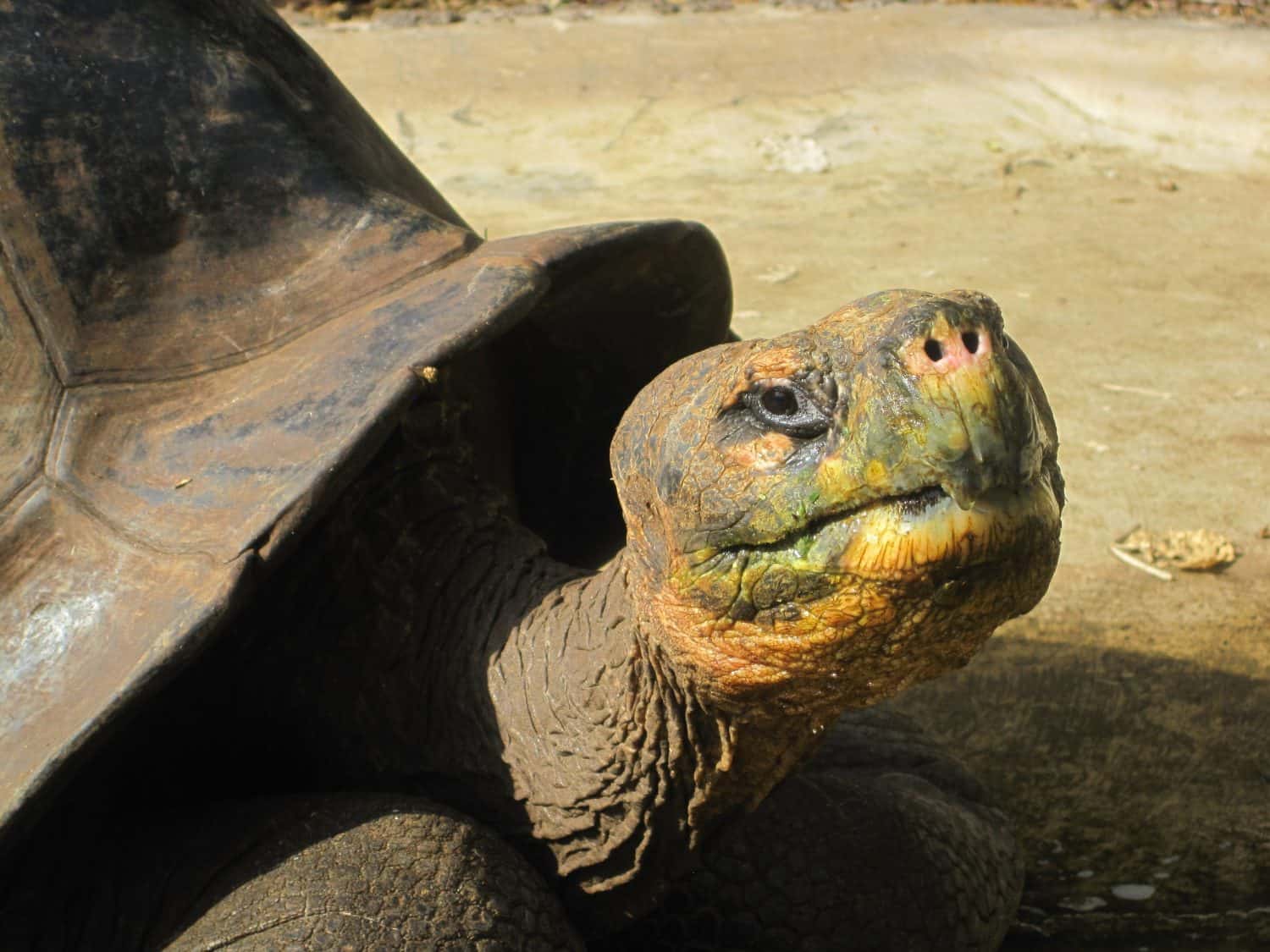
Hybrids of the Pinta Island tortoise may prove to be the key to bringing back tortoises like Lonesome George.
©Discodollydiva/Shutterstock.com
Eventually, the search paid off. In 2020, another 31 tortoises on Wolf Volcano were found to have genomes from not only Pinta Island tortoises but also the extinct Floreana Island tortoise. One rare specimen, a female tortoise, was sequenced and found to have 16% of the Pinta Island genome. This could mean that there is a live Pinta Island tortoise waiting to be discovered in the wild.
Currently, the hybrids are being studied and bred to keep the lineage of the Pinta Island tortoise alive. While it is unlikely that a pure Pinta Island tortoise will be born, the possibility exists that it could happen. If it does, the species that has gone extinct not once but twice may yet again rise from the ashes.