
Quick Take
- Surviving 20 U.S. presidencies and 2 global pandemics is the baseline for Gramma’s century-long conservation status.
- The Espanola giant tortoise population once dwindled to just 15 individuals, but thanks to conservation efforts, it has now rebounded to over 2,000.
- The natural isolation that once fueled evolution has counterintuitively become the primary driver of species decline.
- Sending Galapagos tortoises, including Gramma, to zoos across the United States was part of early efforts to preserve the species and prevent their extinction
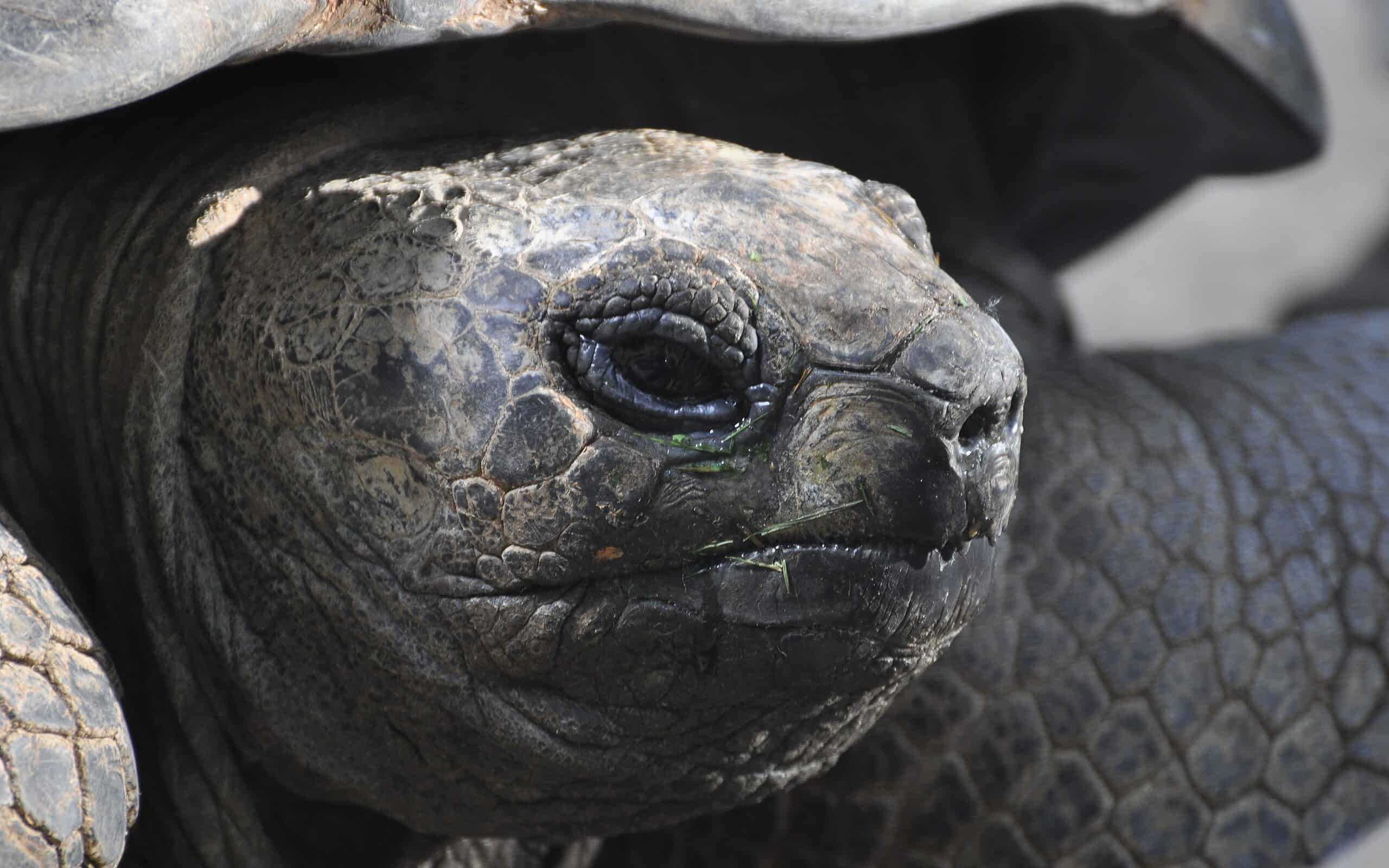
Located at the San Diego Zoo, Gramma, the resident tortoise, was born in the Galapagos Islands around 1884. Those at the zoo referred to her as “the queen,” which only makes sense, as she survived two world wars, over 20 U.S. presidencies, and two global pandemics. At the ripe age of 141, her life spanned more than a century of human intervention. Gramma’s story of survival challenges the simple ideas we have about care and control.
Removing an Animal to Save It
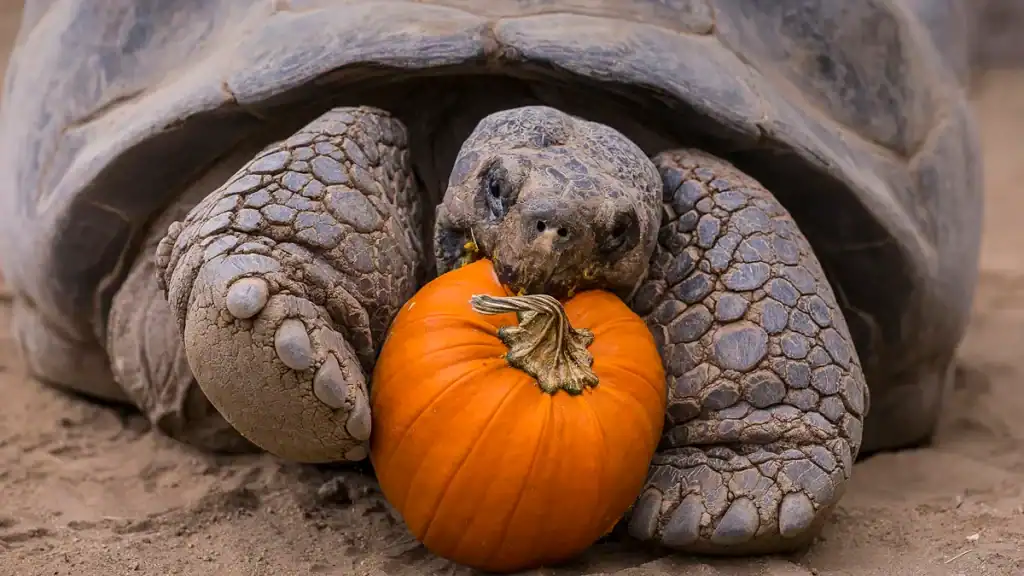
Gramma was an estimated 141 years old.
© – License
Gramma was born on the Galapagos Islands during a time of intense human exploitation. The intrinsic quality of these giant tortoises is how they adapted to different environments on each island. Some tortoises developed features such as saddleback or dome-shaped shells. The isolation of the islands showed the resilience of the tortoises to change, with natural selection at work. While the isolation of the Galapagos Islands contributed to speciation, isolation also drove part of their decline, such as slower reproduction and a lack of defenses. Isolation made the tortoises extremely vulnerable to hunting, invasive species, and competition. In time, the same islands that shaped Darwin’s thinking about the theories of evolution later became sites of overexploitation. The story of resilience in these tortoises became a complicated tale of survival, with some species’ numbers, like the Espanola giant tortoise, dropping to just 15 individuals before rebounding to 2,000 in recent years.
The human exploitation of tortoises was the primary driver of the Galapagos tortoise decline. Tortoises provided food for sailors on long voyages. Besides providing food, people also harvested tortoises for their oil. On the island, invasive species competed with them for food, and other species preyed on many hatchlings. As the number of the Galapagos tortoise species dwindled, some even to extinction, conservationists intervened to save Gramma’s species and many others.
Where Gramma’s Life Changed
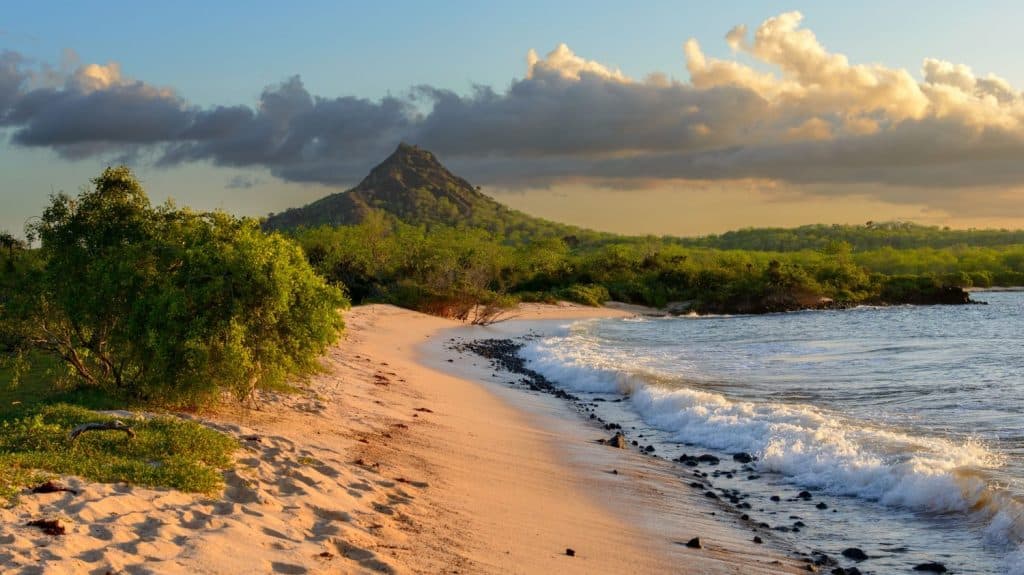
The Galapagos Islands were first discovered on March 10th, 1835.
©Michal Hamet/Shutterstock.com
During the early 1900s, zoos nationwide became homes for Gramma and other tortoises as a conservation project. The aim was to bring Galapagos tortoises into managed care. Following her removal from her native habitat, Gramma first arrived at the Bronx Zoo in New York and later moved to the San Diego Zoo around the late 1920s. Gramma was among the first Galapagos tortoises at the San Diego Zoo, with some species arriving much earlier than Gramma.
With a story like Gramma’s, she easily became the ambassador for reptile conservation at the San Diego Zoo. As an ambassador, she was the face of many zoo pictures and social media posts for decades. The land tortoise has one of the longest lifespans, with some reaching close to 200 years of age. For example, Speedy, another Galapagos tortoise at the San Diego Zoo, reached around 151 at the time of his passing.
The original founder of the San Diego Zoo, Dr. Harry Wegeforth, welcomed Gramma to the Zoo. Dr. Wegeforth, born in Baltimore, Maryland, also founded the Zoological Society of San Diego after worrying about the fate of animals after seeing them on display for the Panama-California Exposition in Balboa Park. This worry helped jumpstart a society of individuals dedicated to protecting wildlife, Gramma included.
The Cost of Safety

Zoos remove endangered or vulnerable organisms from their natural environment predominantly for conservation efforts. These include breeding programs, education opportunities, and scientific research. Historically, however, zoos are intrinsically for entertainment. Placing an animal within a zoo simply cannot replicate a natural habitat. Captivity itself disrupts the psychological and physiological well-being of an animal. Without proper enrichment, animals held captive exhibit chronic stress and abnormal repetitive behaviors. Restricted environments promote behaviors leading to zoochosis stemming from poor welfare from confinement.
So, at what point does a zoo become a safer place for a tortoise than the islands it came from? For the Galapagos tortoise, that question required an urgent answer in the 1920s. Populations were plummeting, and protections were limited, making extinction no longer a distant possibility. Part of an “insurance” population, Gramma, along with several other tortoise species, left the Galapagos behind. Lonesome George, the last known tortoise from Pinta Island, and Diego, a male Espanola tortoise (later credited with fathering hundreds of offspring), became emblematic of this strategy. Their lives in captivity became a way to preserve the species long enough for recovery, instead of a replacement for home.
This is the critical point where zoos can become a safe haven—when an animal’s natural home becomes so threatening that survival is no longer possible. At that point, it becomes necessary to rescue these species—often the last of their kind—and place them into breeding conservation programs, which may be their last chance at survival.
Besides Gramma, Lonesome George—the last of his kind from Pinta Island—and Diego, a male Española tortoise who fathered hundreds of offspring to save his subspecies from extinction, also lived out their lives in captivity. Many others were taken for breeding programs to save their species. Eventually, some of these species’ offspring were returned to their native islands, helping to restore ecological balance. Through efforts like these, zoos became places of last resort. One example of successful intervention is the birth of two Amur leopards at the Saint Louis Zoo, named Vasilia and Domovoi. Listed as critically endangered, the Amur leopard is considered one of the world’s rarest big cats.
A Pattern Beyond One Tortoise
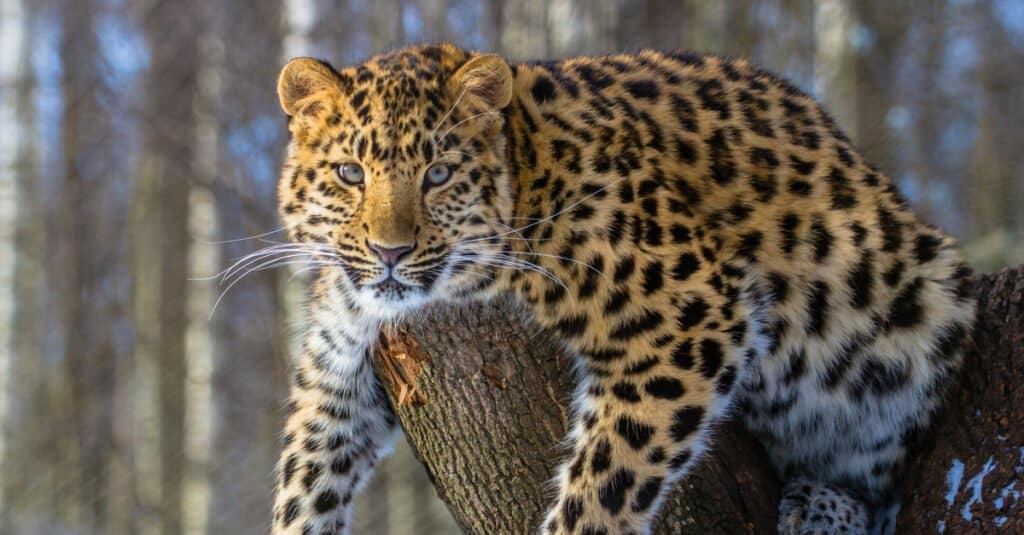
The Amur leopard is one of the rarest big cats on Earth.
©Dmitri Gomon/Shutterstock.com
San Diego Zoo is not the only zoo to bring forth a conservation effort to save a species. One example of successful intervention is the birth of two Amur leopards at the Saint Louis Zoo, named Vasilia and Domovoi. Listed as critically endangered, the Amur leopard is considered one of the world’s rarest big cats. With fewer than 200 individuals left in the wild, the Saint Louis Zoo put together a Species Survival Plan (SSP) to save threatened or endangered species from extinction. SSP is a cooperative breeding program that helps to ensure a healthy population of animals.
At the Oklahoma City Zoo, the animal might be different, but the story is the same. A Sumatran tiger cub was born in December 2025 as part of efforts to support this critically endangered subspecies. This tiger was part of the AZA species survival plan, another breeding program aimed at maintaining genetically diverse populations of endangered species. One birth at a time, these programs are part of a slow strategy to give threatened populations a chance.
What Gramma Left Behind
After a life over a century long, age-related bone conditions that affected her quality of life ultimately led to euthanasia. Gramma lived a long life under human care and outlasted generations of keepers. During her life, she witnessed changes in conservation practices, including the development of the Galapagos Conservancy.
The death of Gramma marked the end of a life shaped by human intervention. Though Gramma did not leave behind direct offspring, she is part of a lineage that continues through other long-lived Galapagos tortoises. Tortoises take a long time to reach adulthood, typically ranging from 5 to 20 years or more. Individuals like Mommy, a nearly 100-year-old Galapagos tortoise at the Philadelphia Zoo, had her first hatchlings in April 2025, with 16 babies by August 2025, reflecting the success of managed breeding programs.