









G
Species Profile

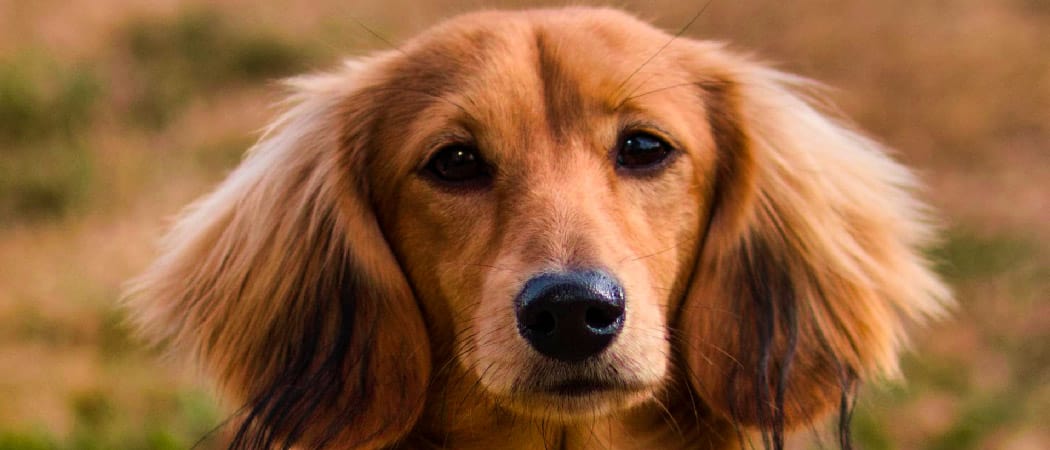
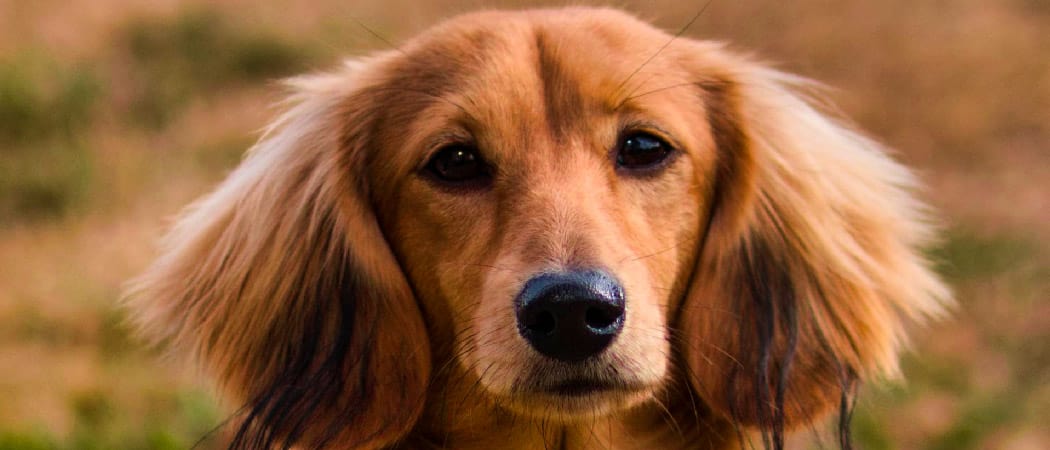
Golden Dox

Canis lupus familiaris

Big heart, long body, bright mind
iStock.com/Wirestock

Golden Dox Distribution

Domesticated Species

Found Worldwide

Size Comparison

Human 5'8"
Golden Dox 1 ft 4 in

Golden Dox stands at 23% of average human height.

Dachshund, Long Hair, Outdoors, Animal, Beauty

At a Glance

Domesticated
Also Known As Goldendox, Goldendoxie, Golden Doxie, Goldenweenie, Doxie Mix
Diet Omnivore
Activity Diurnal+
Lifespan 4.5 years
Weight 30 lbs
Status Not Evaluated
Did You Know?

A Golden Dox isn't a standardized breed - litters can look and act very different depending on which parent they take after.

Scientific Classification

Golden Dox is a hybrid (designer) domestic dog produced by crossing a Golden Retriever with a Dachshund. As a mixed-breed, appearance and temperament can vary widely by parentage and individual genetics.

Kingdom
Animalia
Phylum
Chordata
Class
Mammalia
Order
Carnivora
Family
Canidae
Genus
Canis
Species
Canis lupus

Distinguishing Features

  • Mixed-breed cross: Golden Retriever × Dachshund
  • Often medium-to-small body size relative to Golden Retriever, sometimes with shorter legs
  • Coat can range from short to medium length; may show golden/tan coloration
  • Body proportions can vary from Dachshund-like elongation to more retriever-like build

Physical Measurements

Males and females differ in size

Height
♂ 1 ft 5 in (11 in – 1 ft 10 in)
♀ 1 ft 2 in (10 in – 1 ft 6 in)
Length
♂ 3 ft 3 in (2 ft 3 in – 3 ft 11 in)
♀ 2 ft 9 in (2 ft 2 in – 3 ft 5 in)
Weight
♂ 49 lbs (24 lbs – 71 lbs)
♀ 29 lbs (15 lbs – 44 lbs)
Tail Length
♂ 11 in (7 in – 1 ft 3 in)
♀ 11 in (8 in – 1 ft 2 in)
Top Speed
25 mph
Medium speed, varies with build

Appearance

Primary Colors
Secondary Colors
Skin Type Skin often has a double coat (if Golden traits dominate); coat ranges from short and smooth to medium/long and feathered. Some get dry skin or allergies; grooming and flea/tick control help.
Distinctive Features
  • Designer (hybrid) domestic dog mix: Golden Retriever × Dachshund (Canis lupus familiaris), not a distinct species and not a standardized kennel-club pure breed; appearance and temperament can vary widely by litter and individual genetics.
  • Unlike the gray wolf (Canis lupus), Golden Dox (Canis lupus familiaris) have strong domesticated dog traits: wide coat color/length, shorter snouts, lighter skulls, and very varied bodies, some elongated like Dachshunds.
  • Body proportions often reflect Dachshund influence: elongated back with comparatively shorter legs is possible; however some individuals are more retriever-proportioned-expect broad variability.
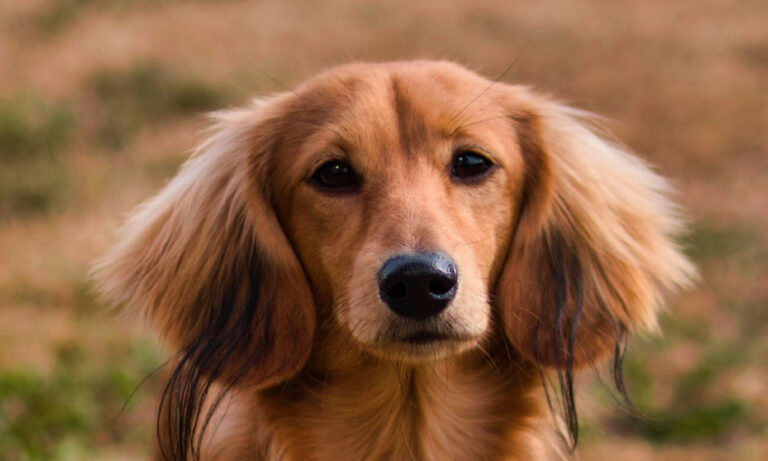
  • Head/face may range from retriever-like (broader skull, softer stop) to dachshund-like (narrower muzzle); ears often floppy, sometimes longer and more pendulous.
  • Coat may be smooth/short (lower grooming) or medium-long with feathering (more shedding and mat risk); seasonal shedding can be significant when double-coat traits are present.
  • Gait/structure considerations: if the dog inherits a long back and short legs, avoid excessive jumping (furniture/vehicles) and manage activities to reduce spinal strain.
  • Watch for health issues: intervertebral disc disease (IVDD)/back problems, hip and elbow dysplasia, obesity (worsens joint/back stress), ear infections, skin allergies/hot spots, and dental crowding.
  • Keep Golden Dox lean with gentle exercise. Use ramps or steps if long-backed to avoid jumping. Clean and dry ears, do dental care, groom coat—brush more if feathered and check for mats or hot spots.

Sexual Dimorphism

As with many domestic dogs, sexual dimorphism is typically mild to moderate and highly variable in a mixed breed; males often average somewhat larger/heavier with broader head/neck, while females may be slightly smaller and more refined.

♂
  • Often slightly larger frame and heavier bone (variable).
  • May show broader head/neck and more pronounced musculature if retriever traits dominate.
♀
  • Often slightly lighter build with a narrower head/neck (variable).
  • May appear more refined in overall proportions, though size overlap with males is common.

Did You Know?

A Golden Dox isn't a standardized breed - litters can look and act very different depending on which parent they take after.

They may inherit the Dachshund's long body and shorter legs, or a more balanced "small retriever" build.

Coats can range from sleek to medium/feathered, and colors often echo Golden Retriever golds or Dachshund reds/blacks/tans.

Many show a "retriever carry," gently picking up toys, while also having Dachshund-style scent-tracking focus.

Because both parent breeds were developed for working roles (retrieving and badger hunting), Golden Doxes often enjoy jobs: fetch, nose-work, puzzle toys.

Size is unpredictable: the Dachshund parent may be miniature or standard, which strongly affects adult weight and height.

They are domestic dogs (Canis lupus familiaris), the domesticated form of the gray wolf, and they have been selectively bred to live closely with people.

Unique Adaptations

  • From the base species context (Canis lupus familiaris): heightened sensitivity to human cues and training compared with wild canids, shaped by domestication.
  • Dachshund-influenced body plan (when inherited): shorter limbs and longer spine suited historically to going to ground after quarry-cute, but it increases back-care needs.
  • Retriever-influenced "soft mouth" tendency (variable): gentler carrying of objects, useful for fetch and reward-based training.
  • Coat variability can support comfort across climates: some inherit denser undercoat from the Golden side, others a lighter coat from Dachshund lines.
  • High olfactory drive (often): a strong sense of smell and persistence at scent tasks, useful for nose-work enrichment.

Interesting Behaviors

  • "Nose-to-ground" walks: many follow scent trails intensely, pausing to investigate like a hound.
  • May combine a Golden Retriever's tendency to carry and retrieve objects with a Dachshund's scent-driven and digging or burrowing instincts, so play may include fetching followed by intensive sniffing or hiding toys in bedding.
  • Alert announcing: some inherit the Dachshund tendency to vocalize at novel sounds or visitors.
  • Digging and den-making: pawing at beds/sofas or blankets to make a "burrow," reflecting Dachshund roots.
  • Shadowing family members: many are people-oriented and may track their person from room to room.
  • Carrying objects gently and digging or burrowing; may sometimes hide toys or chews in bedding or corners.

Cultural Significance

The Golden Dox (Golden Retriever × Dachshund mix, Canis lupus familiaris) is a designer dog that mixes the friendly, helpful nature of Golden Retrievers with the small, bold Dachshund, tying to therapy roles and quirky hunting-dog charm.

Myths & Legends

Dachshunds have a long-running European folk reputation as fearless badger-hunting dogs, celebrated in hunting stories for entering burrows and confronting quarry larger than themselves; the breed name literally means "badger dog" in German.

In German-speaking regions, dachshund lore often praises the "small but brave" earthdog that will not yield underground - an archetypal story of courage outweighing size.

A long-told, mostly unproven story says a British nobleman got golden circus dogs and started the Golden Retriever breed. Early dog tales repeat this, though later records show the real breeding history.

Across many cultures, domestic dogs (Canis lupus familiaris) are seen as guardians and guides. Household dogs are treated as protectors, so mixes like the Golden Dox are loved as home sentinels and bringers of luck.

Conservation Status

NE Not Evaluated

Has not yet been evaluated against the criteria.

Population Stable

Life Cycle

Birth 5 pups
Lifespan 5 years

Lifespan

In the Wild
3–7 years
In Captivity
10–15 years

Reproduction

Mating System Polygynandry
Social Structure Managed Domestic
Breeding Pattern Transient
Fertilization Managed Selective
Birth Type Internal_fertilization

Golden Dox (Canis lupus familiaris): Like other dogs, mating is polygynandrous and usually managed by owners/breeders. Fertilization is internal; artificial insemination is sometimes used. No long-term pair bonds. Size mismatch can cause birthing problems and need for C-section.

Behavior & Ecology

Social Pack Group: 4
Activity Diurnal, Crepuscular, Cathemeral
Diet Omnivore Meat-forward complete dog diet (e.g., chicken or beef-based kibble/wet food) with high-value lean meat treats

Temperament

Golden Dox (Canis lupus familiaris) are usually very social with people, fairly social with other dogs; traits vary—Golden Retriever influence makes them friendly and easy to train, Dachshund adds stubbornness, independence, and alert barking.
Affectionate/companionable; commonly seeks physical contact and follows family members from room to room.
Playful and food-motivated; often enjoys retrieving games but may prefer scent-based searching or digging behaviors (Dachshund influence).
Trainability: usually good with positive reinforcement, but can show "selective hearing"/stubborn streak; consistent reward-based training and early socialization reduce reactivity and barking.
Stranger response: often friendly, but some individuals are cautious or vocal at doors/windows; watchfulness is more common than true aggression.
Prey drive: variable to moderate; may chase small animals or track scents on walks-secure leash handling is important.
Health-linked behavior considerations: risk of obesity (both lines) can increase irritability and reduce social tolerance; potential IVDD/back sensitivity (Dachshund influence) can cause handling discomfort-teach consent-based handling and avoid forced positions.
Golden Dox needs daily moderate exercise and mental play. Avoid repeated high jumps or stairs if long-backed. Do regular grooming, check floppy ears for infections, and watch dental health.

Communication

Alert barking Often frequent; can be more pronounced with Dachshund influence
Whining/whimpering to solicit attention or during anticipation
Growling as a distance-increasing signal Often tied to resource guarding or pain/discomfort
Play barks and yips during social play
Howling or "talking" in some individuals Variable
Sighs/grumbles during settling or mild frustration
Body language: tail carriage/wag style, ear position, weight shift/backing away; Golden Retriever-like loose wags are common, but some individuals show Dachshund-like forward posture during alerting.
Facial signals: lip licking, yawning, head turns (appeasement/stress); soft eyes vs hard stare in arousal.
Contact-seeking: pawing, leaning, nudging, licking; often used to initiate interaction with humans.
Scent communication: urine marking on walks; intensive ground sniffing and tracking (often strong), used to gather social information about other dogs.
Play signals: play bow, exaggerated side steps, bouncy approach; may prefer chase/tug or scent games depending on individual build and confidence.
Resource/space management: blocking doorways, hovering near valued people/items; manage with training to prevent guarding escalation.

Habitat

Biomes:
Temperate Forest Temperate Grassland Mediterranean Boreal Forest (Taiga) Tundra Alpine Desert Hot Desert Cold Savanna Tropical Dry Forest Freshwater Wetland +6
Terrain:
Plains Hilly Valley Coastal
Elevation: Up to 16404 ft 3 in

Ecological Role

Domesticated companion canid; in free-roaming/feral settings functions as an opportunistic omnivorous mesopredator and scavenger.

Companionship and social support to humans Motivation for human physical activity (walking) Pest deterrence and occasional rodent control (often stronger in individuals expressing Dachshund hunting traits) Sentinel role (alert barking) that can reduce nuisance wildlife intrusions In some households, participation in therapy/assistance work (individual-dependent)

Diet Details

Main Prey:
Rodents Rabbits and small lagomorphs Small birds and eggs Squirrels and other small mammals Carrion and food waste
Other Foods:
Grasses Fruit Vegetables Starches and grains Plant-based dog food ingredients

Human Interaction

Domestication Status

Domesticated

Canis lupus familiaris (domestic dog) came from gray wolves and were shaped by people. The Golden Dox is a cross of a Golden Retriever and a Dachshund. They vary in size, coat, and behavior. Often family pets with a retriever-like nature, they may have back problems. Human care includes adoption, vet care for spine and weight, training, grooming, and exercise.

Danger Level

Low
  • Bites or nips typically associated with fear, pain, resource guarding, or inadequate socialization (risk can increase if a dog has back pain).
  • Knock-down risk is generally low to moderate depending on the individual's size/enthusiasm; some may be energetic and jumpy like a retriever.
  • Zoonotic risks are similar to other domestic dogs (parasites, ringworm) and are mitigated with routine veterinary prevention and hygiene.

As a Pet

Suitable as Pet

Legality: Generally legal to own as a domestic dog in most jurisdictions. Restrictions, if any, typically relate to local dog ordinances (licensing, leash laws, limits on number of pets, HOA rules) rather than the mix itself.

Care Level: Moderate

Purchase Cost: $300 - $2,000
Lifetime Cost: $15,000 - $45,000

Economic Value

Uses:
Companion animal market (family pets) Breeding/retail of designer mixes (non-kennel-club standardized) Veterinary services (preventive care; orthopedic/spinal and weight-related care) Pet services (training, grooming, daycare/boarding) Pet products (food, harnesses, ramps/steps, crates)
Products:
  • puppies (sale/adoption fees)
  • stud services (where practiced)
  • training classes (basic obedience, impulse control, recall)
  • grooming (especially if longer/denser coat is inherited)
  • specialty items for back protection (ramps/steps, supportive harnesses)

Relationships

Golden doxes are a rare designer dachshund crossbreed that has gained some attention among dog enthusiasts. A golden dox is created by mixing a dachshund with a golden retriever. These pups have great temperaments and are rarely found in rescues, and are more commonly available through breeders, often at a higher price. Whether you’re looking to get one of these dogs through adoption or want to buy them directly from a breeder, you’ll love taking home a fluffy golden doxie to call your own.

Owning a Golden Dox: 3 Pros and Cons

ProsCons
Golden coat: Golden dachshunds have some of the most beautiful coats of fur among designer dog breeds. Adopting this mix is a great way to show off to your neighbors.Extra grooming: That thick coat of golden fur needs to be brushed regularly to stay shiny. Expect multiple yearly trips to the groomer and plenty of daily maintenance.
Friendly personality: Golden doxies are sweet, friendly, and great to hang out with. Many families love having a golden dox as their main lap dog.Short attention span: Doxies get distracted easily and are difficult to train. Don’t expect your new dog to learn more than the basic set of commands.
Tiny size: Whether they’re mini or not, doxie hybrids are small enough to be picked up and have an easy time living in small environments. Just remember that these dogs need access to a yard so they have room to run.Separation anxiety: Doxies don’t do well when left on their own. Expect to always need to supervise your dog, and consider taking them with you between locations.

Golden Dox Size and Weight

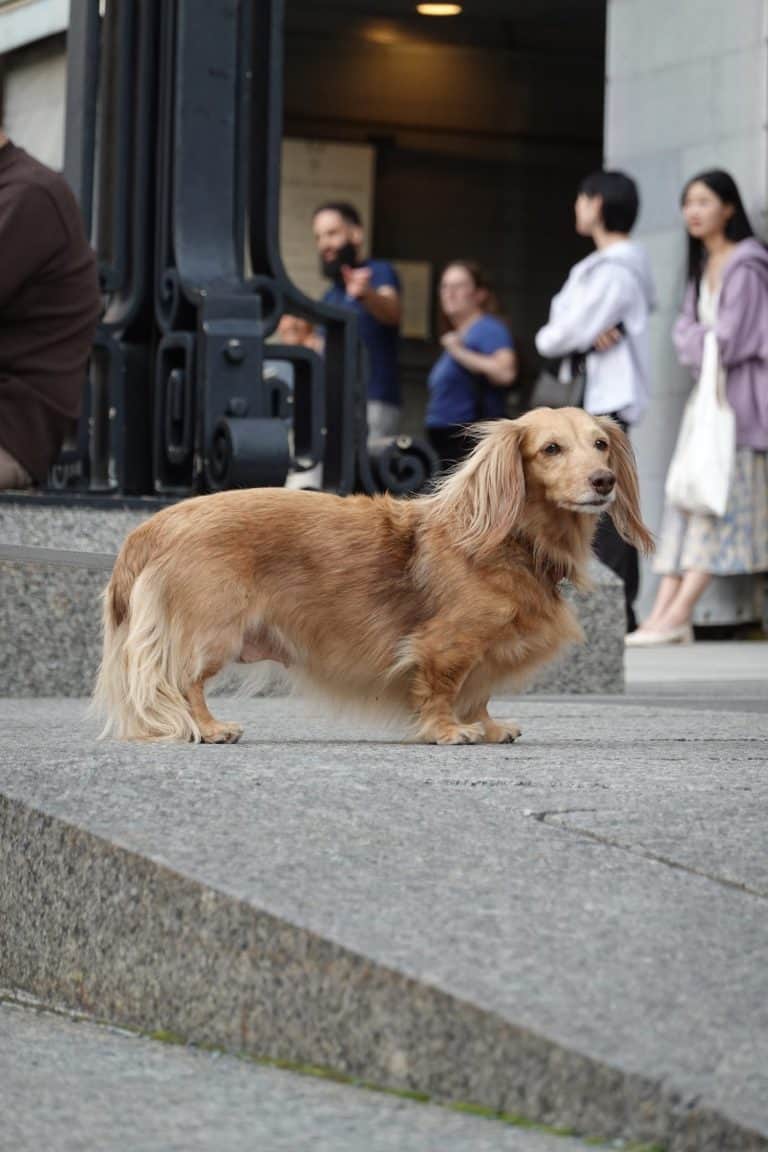
Golden doxes are small to medium-sized dogs with short legs, long torsos, and floppy ears. The most notable feature of this particular crossbreed is the long coat of fluffy golden fur. Most golden doxes weigh between 30 and 60 pounds and stand between 10 to 23 inches tall. These dogs often look drastically more like either their dachshund or golden retriever parent, and the size is usually apparent.

Sad dog waiting for owner, Golden Dox, dog life, long-haired dog

The Golden Dox is a medium-sized dog.

Golden Dox Common Health Issues

Golden doxes carry the same genetic concerns as their dachshund ancestors. In particular, your vet should look out for back problems, especially if the dog takes more after the dachshund side of the family. Other common issues include joint dysplasia, canine epilepsy, skin allergies, and liver concerns.

Golden Dox Temperament

Golden doxes are sweet dogs with some of the best personalities available for lap pets. These dogs are curious, playful, and heavily involved with social interaction. However, because these dogs are small, they get tired easily and may need to be removed from the situation when they start to get irritated. When you can respect their limits, these dogs are very affectionate and are wonderful to have around the house.

If they take too much after their golden retriever parent, these pups may start to engage in destructive behaviors like chewing and scratching. You can solve this problem by providing extra toys and a clean, empty space to run around. Don’t forget to remove floor-level cords to make sure that your golden dox don’t accidentally shock themselves.

How to Take Care of a Golden Dox

Golden doxies need a little extra maintenance to keep them in good condition. In addition to regular brushing and upkeep, you’ll need to pay more attention to your golden dox to keep them happy and entertained. When you get this dog, plan on spending a lot of time with them and taking them with you to different locations.

The Best Dog Food for the Golden Dox

Golden doxes have small, sensitive stomachs and do not need to eat a lot of food. Look for a high-quality kibble intended for small dogs, and make sure to feed appropriately small portions throughout the day. If you feed your dog too much, you can expect them to have too much energy and engage in destructive behaviors throughout the day. Don’t feed these dogs scraps, as there is a good chance of them developing stomach or liver problems and experiencing a shorter lifespan as a result.
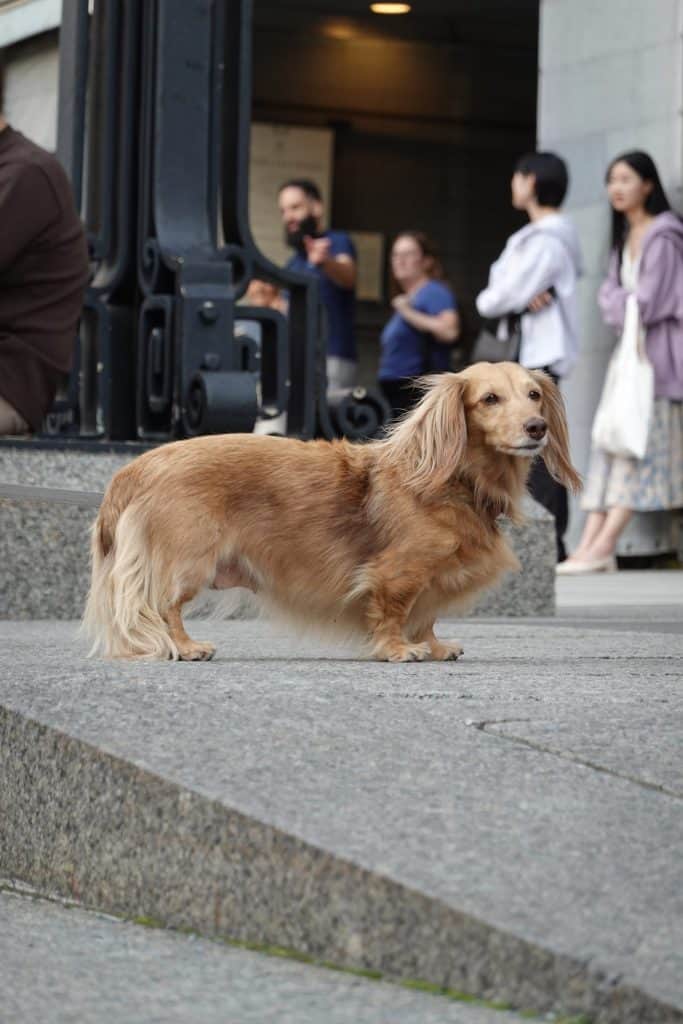
Adorable Golden Dox dog, a unique mix of Golden Retriever and Dachshund, captured in a playful and joyful pose.

Adorable Golden Dox dog, a unique mix of Golden Retriever and Dachshund, captured in a playful and joyful pose.

Golden Dox Maintenance and Grooming

The hair of a golden dox is fluffy and needs to be brushed regularly to stay in good condition. For best results, get in the habit of brushing your dog’s hair once every few days, if not daily. You also need to bathe them twice a month, brush their teeth, and trim their nails.

Golden doxes all have unique coats and likely need to visit the groomer regularly to stay in top shape. Avoid shaving or excessively trimming your pup’s coat in the summer, as their fur helps regulate body temperature and protects their skin.

Golden Dox Training

Golden doxes are finicky creatures that are surprisingly difficult to train. Although they love spending time with their owners, they don’t necessarily like taking commands. Try starting with short training sessions that last around 10 to 15 minutes; stop the exercise when you notice that your dog is no longer paying attention. Once your puppy is trained, remember to do refresher exercises at least once or twice a week. Extra training also gives you a great excuse to spend more time with your dog.

Golden Dox Exercise

Although dachshunds are relatively sedentary, golden retrievers need a lot of exercise. As a result, golden doxies need a yard to run around in. These dogs are also small and may not necessarily be a good fit for pure apartment living unless you’re prepared to take them to the bathroom once every few hours. Otherwise, provide plenty of toys and clear roaming space on the floor to make sure that your low-riding dog doesn’t get lost, confused, or injured while roaming around the house.

Golden Dox Puppies

Golden dox puppies are incredibly small and fragile, so make sure to supervise them constantly. It’s usually a good idea to carry the puppies around to make sure that they’re used to being handled as adults; don’t forget to start inspecting their nails and ears early for the same reason.

Golden Doxies and Children

Golden doxes are playful and fun dogs, but they are a little too short-tempered to get along well with children. These dogs are best kept under adult supervision, especially when they are interacting with kids of any age. If you notice that the dog is starting to get tired, make sure to remove them from the social interaction.

Dogs Similar to Golden Dox

Dog owners who enjoy having a golden dox as a pet will probably also enjoy owning other types of dachshund and mini dachshund hybrids. Some of the best choices include

  • Doxle: A cross between the beagle and the dachshund, doxles are sweet and friendly pups with strong prey drives.
  • Doxiepoo: Doxiepoos are a great choice for a hypoallergenic lap dog.
  • Dachsador: Dachsadors are a little larger than normal dachshunds and more capable of playing with their owners.

View all 261 animals that start with G

Sources

  1. Petkeen / Accessed May 27, 2021
  2. 101 Dog Breeds / Accessed May 27, 2021
  3. Wagwalking / Accessed May 27, 2021
A-Z Animals Staff

About the Author

A-Z Animals Staff

AZ Animals is a growing team of animals experts, researchers, farmers, conservationists, writers, editors, and -- of course -- pet owners who have come together to help you better understand the animal kingdom and how we interact.
Connect:

Thank you for reading! Have some feedback for us?


Golden Dox FAQs (Frequently Asked Questions)

A golden dox is a designer hybrid dog made by crossing a dachshund with a golden retriever. The result is a friendly and playful dog with an adorable coat of golden fur over the distinctive physique of a dachshund. These dogs are usually available from a breeder or for adoption from animal rescues.