
Quick Take
- These 4-foot lizards have a diet that'll make you do a double-take, and it goes well beyond chicken eggs or small reptiles. Explore their surprising diet →
- Once a tegu population takes hold, the math behind its spread is genuinely alarming, and the southern US has more suitable territory than most people realize. See how far they've spread →
A large South American lizard is causing concern to wildlife officials in the state of Georgia. The Argentine black and white tegu has been named by the Georgia Department of Natural Resources (DNR) (Wildlife Resources Division) as an invasive animal that’s threatening the native wildlife. We explore why authorities are so worried about this reptile.
About the Argentine Black and White Tegu
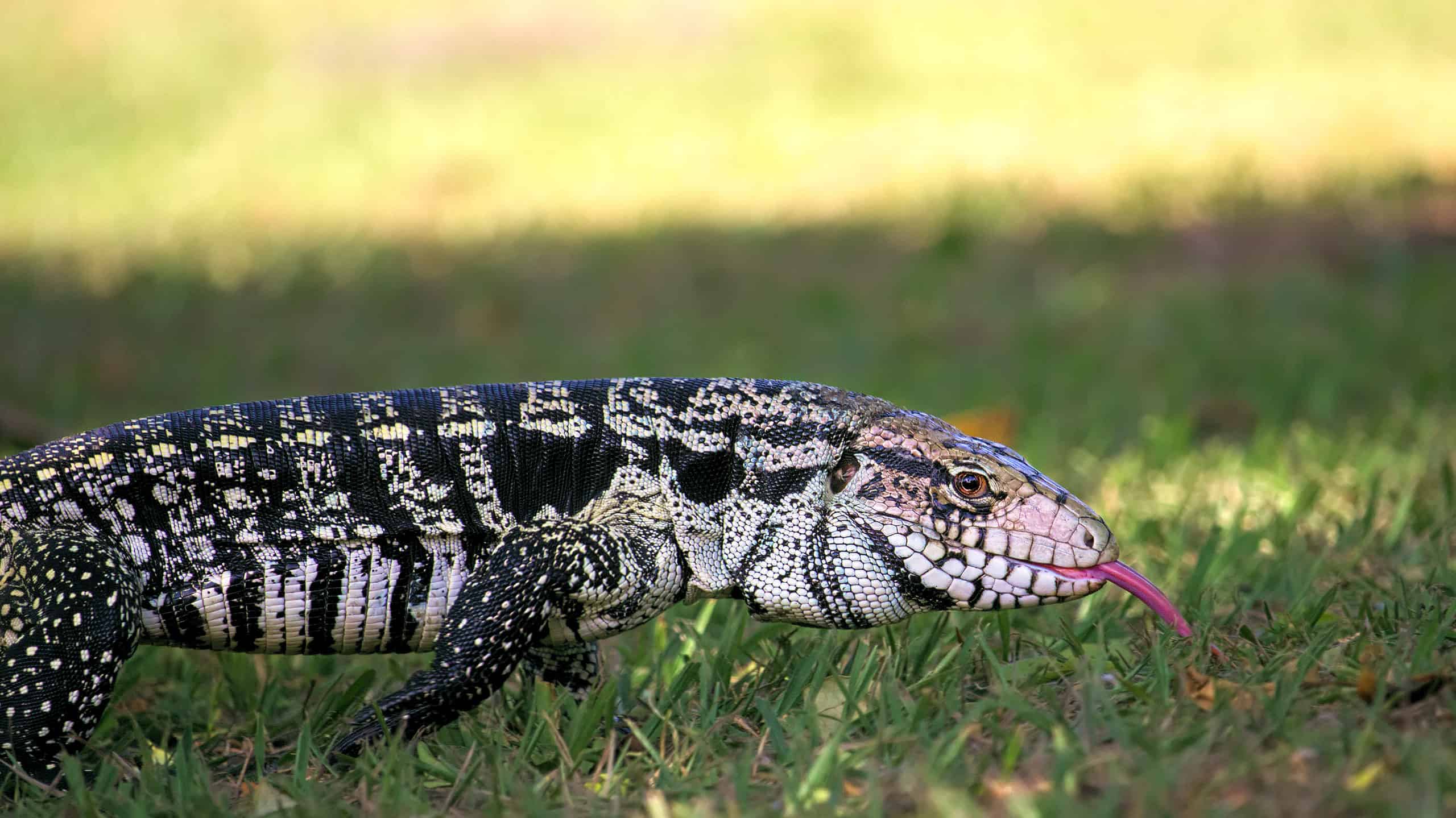
The Argentine black and white tegu (Salvator merianae) is the largest of all the tegu species. Adults can grow to around 4 feet long, but the individuals seen so far in Georgia have been closer to 2 feet in length. They can weigh over 10 pounds. These reptiles have a distinctive appearance with black to dark gray skin and white speckled bands across their back and tail. Some people have confused them with juvenile alligators, broadhead skinks, and eastern fence lizards.
Argentine black and white tegu have a distinctive appearance.
©Daniel Lamborn/Shutterstock.com
This lizard is a native species of Brazil, Paraguay, Uruguay, and Argentina. They are active during the day and like to spend their time in mixed grassland/woodlands and disturbed habitats such as forest clearings, fence rows, and roadsides. Even though they are terrestrial lizards that can move fast on land, they are also strong swimmers and can stay submerged under water for extended periods.
How Do Argentine Black and White Tegu Behave?
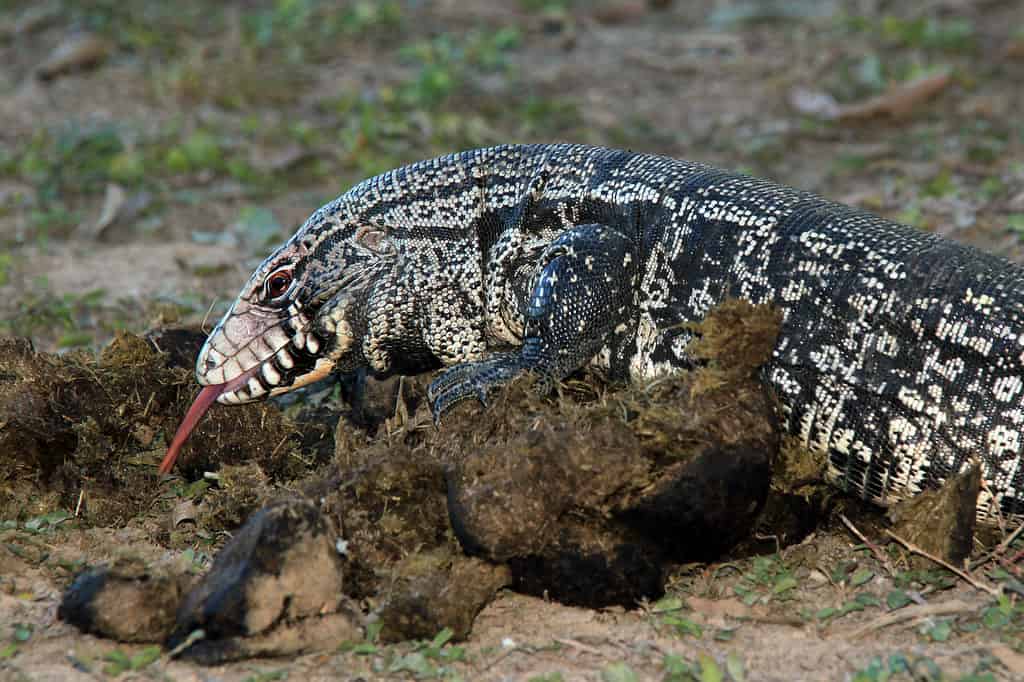
These lizards are active during the day and have big appetites! They eat the eggs of ground-nesting birds such as quail and turkeys. They will also eat other reptiles such as alligators and gopher tortoises. Larger meals are supplemented with fruit, vegetables, and smaller animals, including grasshoppers. Near human settlements, they will happily feed on chicken eggs, carrion, and even pet food! These are fast-moving lizards who do not find it hard to secure a meal.
Invasive Lizard in Georgia
No one is sure exactly how these lizards got to Georgia from their native range. However, they are popular in the pet trade. Therefore, it’s likely that several captive individuals escaped or were intentionally released.
The primary established wild population in Georgia is in Toombs and Tattnall counties, though there have been additional sightings elsewhere in the state. The Georgia DNR first began investigating reports of Argentine black and white tegus in Georgia in 2018, starting in eastern Toombs and western Tattnall counties. Incidentally, breeding populations of Argentine black and white tegus have been established in multiple counties in Florida, including but not limited to Hillsborough, St. Lucie, Charlotte, and Miami-Dade counties.
For a non-native animal to establish a breeding population in a new location, the environment must be suitable for them. These lizards are flexible when it comes to diet, so food has not been an issue for them. Also, research has indicated that much of the southern United States may contain suitable temperature regimes for this species.
These large lizards have few predators and can multiply quickly. The females reach reproductive age at about 12 inches long or after their second season of brumation. They can lay about 35 eggs a year, and at that rate, it does not take long for a population to increase.
Concerns About the Black and White Tegu
These lizards are causing concern because of their impact on native Georgia wildlife. They eat the eggs of native species (including alligators) and hatchling gopher tortoises. Their cold tolerance gives them the potential for further spread.
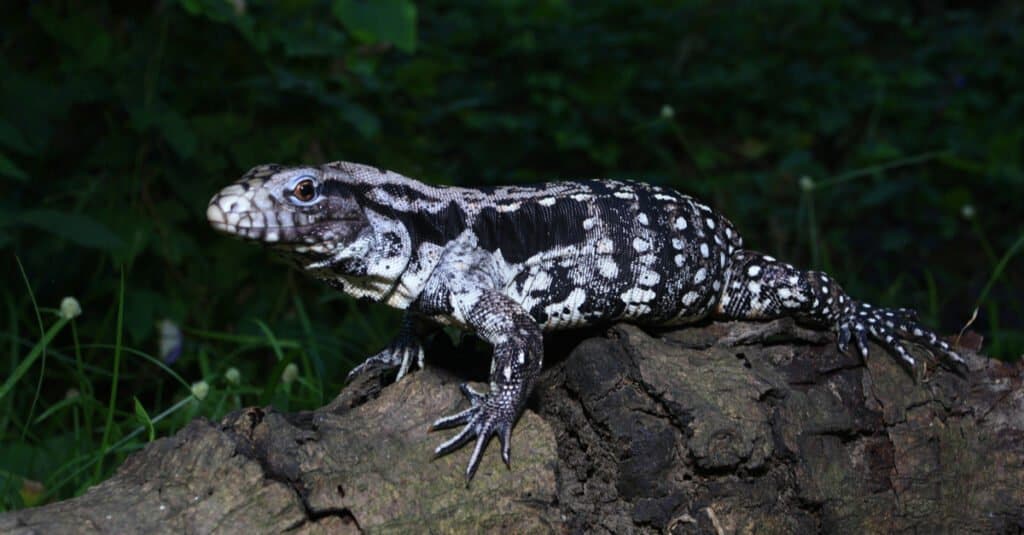
The black and white tegu is a popular pet, but wild breeding populations are bad news.
©dwi putra stock/Shutterstock.com
It’s also possible that they could spread exotic parasites to native wildlife. They may even be able to cause bacterial contamination of crops. Research on other black and white tegu populations has shown that they can carry strains of Salmonella bacteria. Salmonella infection is a major source of gastrointestinal disease in humans, especially children, older people, and immunosuppressed individuals. Reptiles often carry it but do not suffer any symptoms themselves.
Even though they are quite large, these lizards are not considered aggressive toward people. Occasionally, they will lash out with their tails, and this, together with their speed, sharp teeth, and sharp claws, means that we need to respect them but not fear them. Also, they are not considered a threat to pet cats and dogs.
Controlling the Invasive Lizard
Argentine black and white tegus cannot be imported or bred in Georgia. The Department of Natural Resources (DNR) is working with partners to trap tegus. The trapped individuals are humanely euthanized, and their diet and reproductive status are documented.
Elsewhere in the state, however, they ask the public to report sightings. If possible, DNR will attend and provide a live trap and trapping instructions with the landowner’s permission. As they are a non-native species, you can also kill them humanely on private property with the landowner’s permission and using legal methods in accordance with local ordinances and safety precautions.
Spotted a black and white tegu in Georgia? You can take a photo and report the sighting online or on (478) 994-1438 or [email protected].