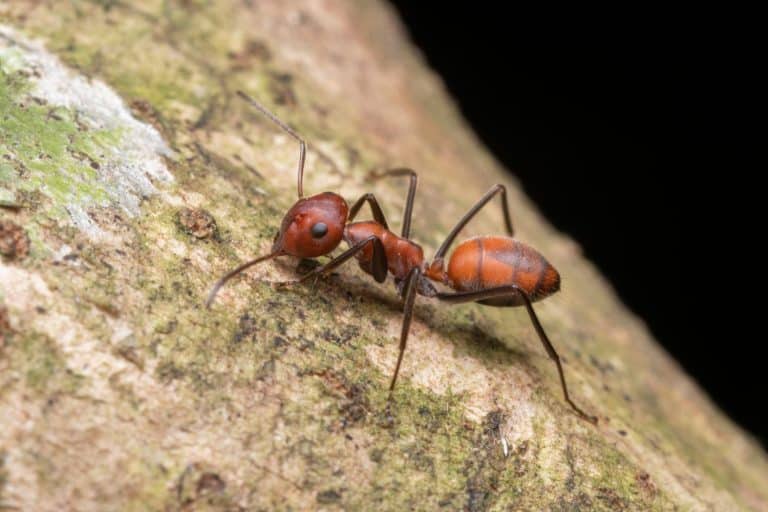
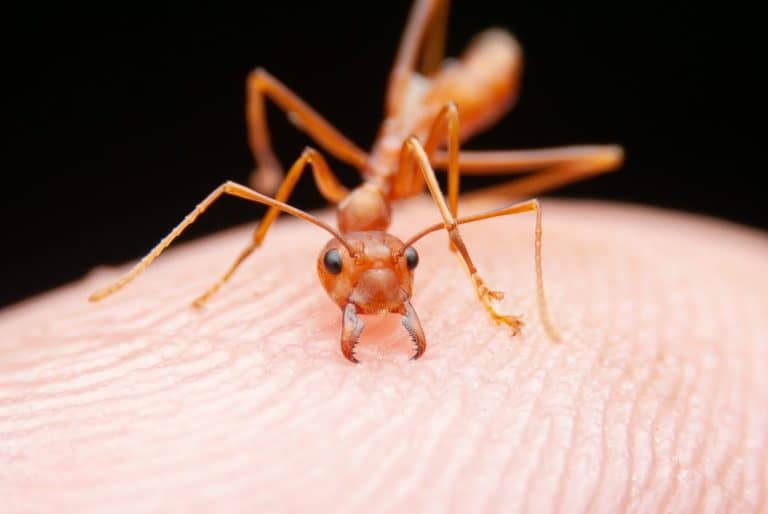
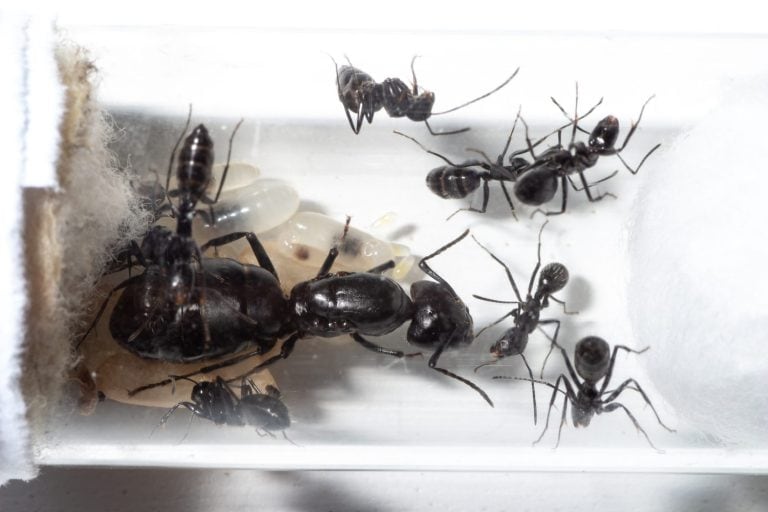
There are over 12,500 known ant species in the world, with new ant species still being discovered by scientists to this day. You’ve probably come across several ant species without even realizing it. After all, scientists and researchers hypothesize that dozens of ant species from the family Formicidae could be living in your backyard at any given time. However, the Asian needle ant (Brachyponera chinensis) is one species you do not want to encounter.
Asian needle ants are an invasive ant species with a painful and medically significant sting. More than that, these ants can cause ecological disruption and threaten biodiversity by competing with native ants and other creatures. It’s important to understand where these ants are found and the impact they have or could have. Hopefully, this will encourage more research into managing and controlling Asian needle ant populations to protect forest ecosystems nationwide.
What Are Asian Needle Ants?
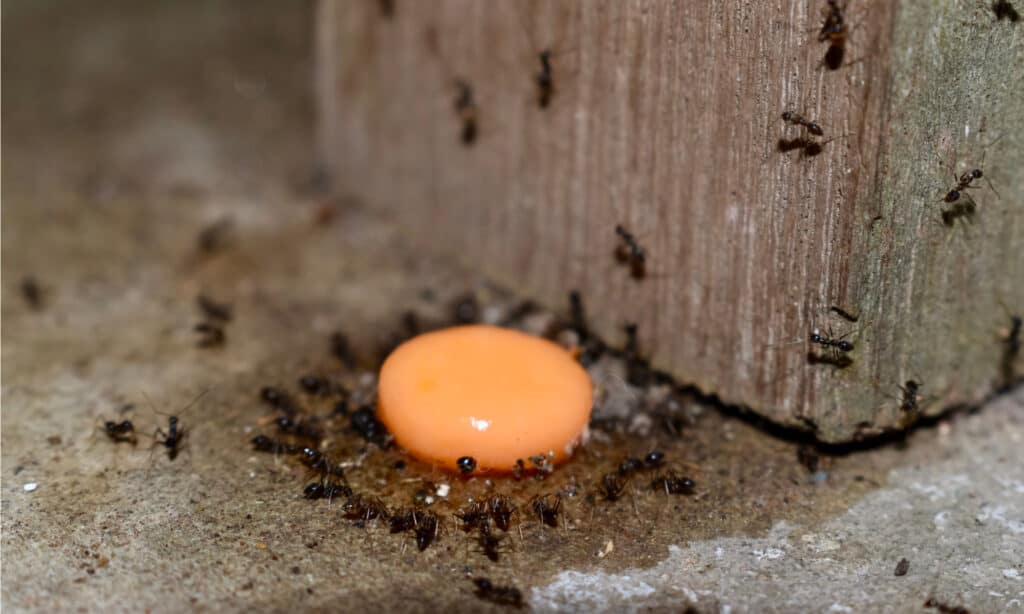
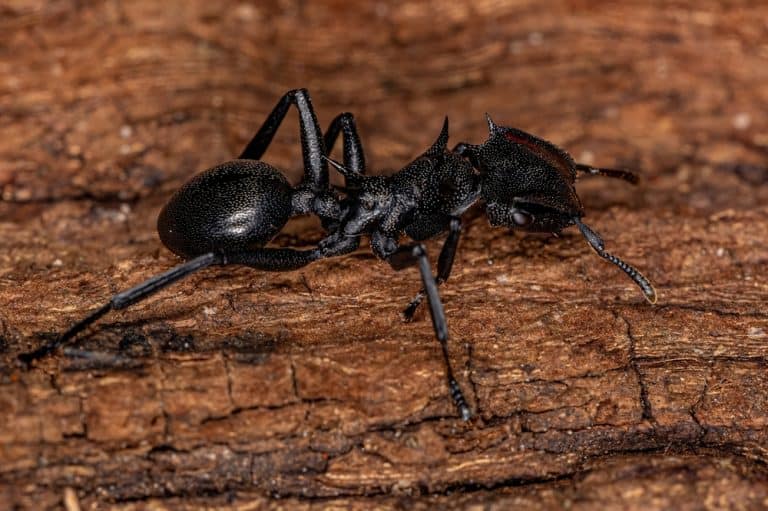
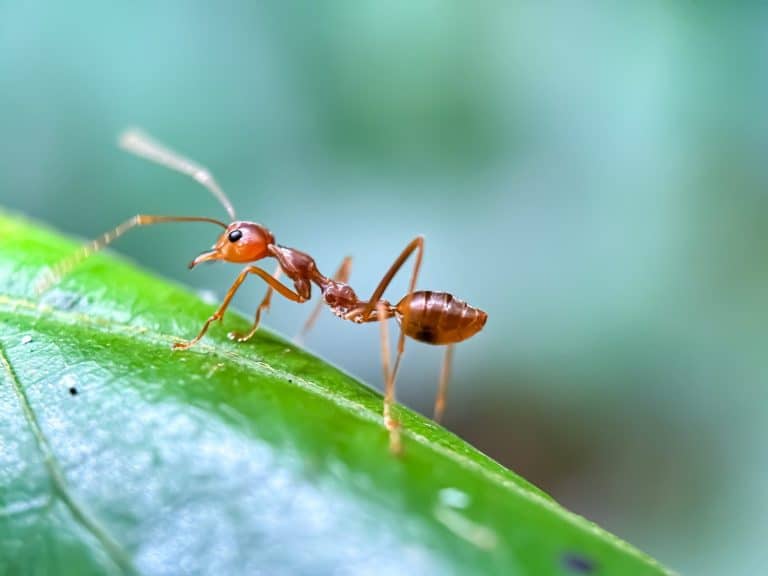
Asian needle ants are relatively small in size, but you can identify the workers from their dark brown or black bodies and lighter legs.
©Zay Nyi Nyi/Shutterstock.com
Asian needle ants are, as their name suggests, native to Asia. More specifically, these ants are typically found in China, North Korea, South Korea, and Japan. However, the U.S. Forest Service describes Asian needle ants as “the most successful and widespread invasive species worldwide.” Invasive species often arrive in the country unintentionally, through international trade or travel. As a result, they frequently first appear near shorelines or ports of entry.
When Did Asian Needle Ants Come to the United States?
According to Dr. Dan Suiter, University of Georgia Orkin Professor of Urban Entomology, Asian needle ants were first detected in the United States in Decatur, Georgia, in 1932. “Some research suggests that Asian needle ants were also present in other states at that time. If the population was already that widespread, it suggests that the Asian needle ants first made their way into the country before 1932,” he shares.
Dr. Andrea Lucky, an evolutionary biologist and biodiversity scientist who currently operates within the Entomology and Nematology Department at the University of Florida, agrees. Based on her research focus on insect evolution and biodiversity, Dr. Lucky believes that Asian needle ant populations could have come into the country earlier than many people expect.

Dr. Andrea Lucky started her career with a fascination in biodiversity and has since questioned what threats to biodiversity exist today.
©Dr. Andrea Lucky
“Invasive species don’t usually arrive and take over immediately,” she explains. “A species might arrive, get established, and be successful in a small area. But it takes time for them to expand beyond that local area. The fact that these ants became established and went unnoticed is a big part of why they’ve been so successful today.”
However, it was not until the 1990s that Asian needle ant colonies exploded in size.
What Do Asian Needle Ants Look Like?
How an Asian needle ant looks depends on what “caste” of ant it comes from. Joe A. MacGown, an entomologist, researcher, and scientific illustrator at the Mississippi Entomological Museum at Mississippi State University, explains that Asian needle ants have three specific castes:
- Non-reproductive workers
- Queens (reproductive females)
- Males

After officially retiring in 2020, Joe MacGown returned to work part-time on the Formicidae collection and developed a website for ants of the Southeast.
©Joe MacGown
Queens, he shares, “are winged before mating (alate form) and wingless after mating (dealate)” and males are also winged. Most people who come in contact with Asian needle ants usually encounter the worker ants, since they are the ones that carry out the tasks of colony building, searching for food, and protecting the colony.”

Unlike queens and reproductive males, the worker caste of Asian needle ants does not have wings.
©Joe A. MacGown
If you happen to find Asian needle ants, you can also differentiate between the different castes based on size and coloring:
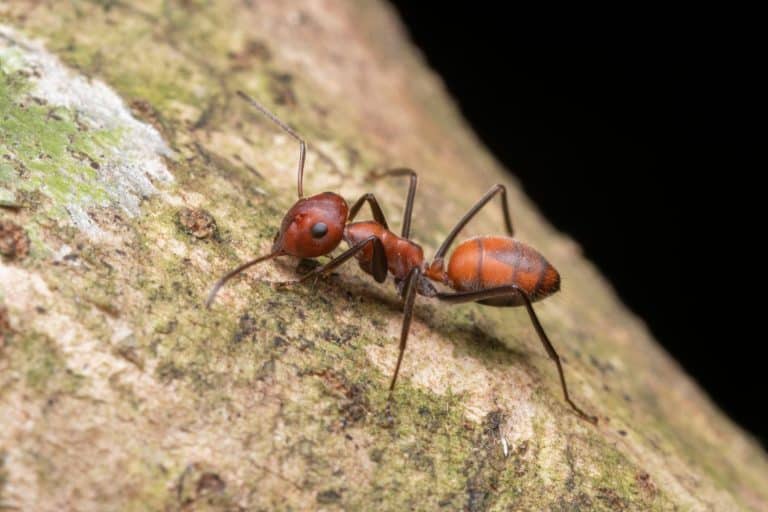
- Workers: 4.0–5.0 mm (one-fifth of an inch) in length with a shiny, black body and red-brown legs and antennae; “a single erect and rounded node separating the mesosome (a major section of the body that includes the thorax and first abdominal segment) and the gaster (the remaining abdominal segments)”; a clear and obvious stinger
- Queens: Similar in appearance to workers but larger in size; have a stinger and wings
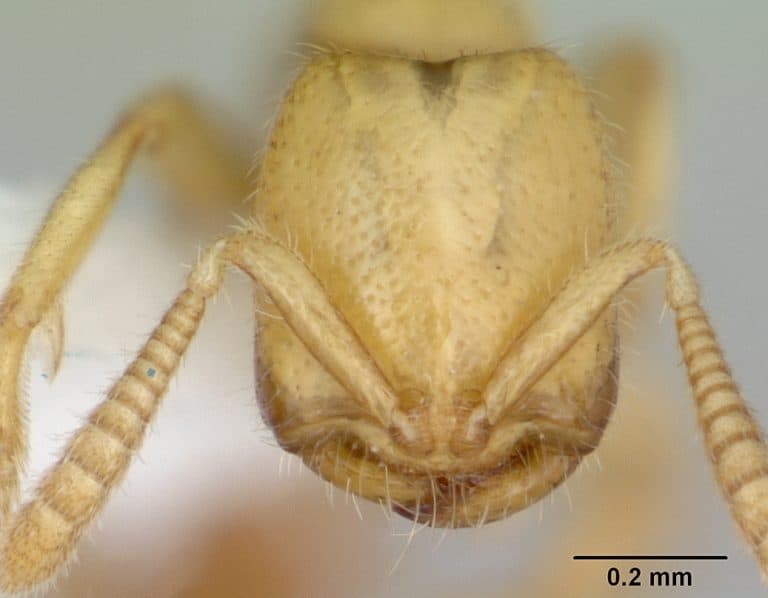
- Males: The size of workers; yellow-brown in color; no stinger; “wasp-like with extremely large eyes”
If you find an ant that you believe could be an Asian needle ant, MacGown suggests sending dead specimens or photographs to entomology departments or Extension agents for accurate identification.
Where Are Asian Needle Ants Found?

You might find Asian needle ants, like this male ant, in forests or heavily wooded areas.
©Joe A. MacGown
Asian needle ants can be found in hardwood forests across the East Coast but have also spread to southern states and into the Midwest, with populations noted in:
- New England
- North Carolina
- Florida
- Georgia
- Arkansas
- Mississippi
- South Carolina
- Virginia
- Tennessee
Asian needle ants are tricky to deal with because of their adaptability. Most invasive ant species, MacGown says, “are found in urban and otherwise disturbed habitats. Asian needle ants differ significantly in that, in addition to forming colonies in urban areas where habitats are manipulated and disturbed by humans, they also colonize natural wooded areas. Being able to nest in both urban and natural habitats potentially allows the needle ant almost unlimited resources and areas to spread.”
Is Your Home at Risk?
While MacGown notes that Asian needle ants are unlikely to enter homes, they can typically be found in areas that people might spend time in, such as the woods or the garden. Asian needle ants often establish their colonies:
- In rotting wood or leaf litter
- Under mulch, rocks, or patio stones
- In potted plants
If you see ants outside, you can identify whether they are Asian needle ants by whether they’re trailing. “They don’t follow each other like other species, such as invasive Argentine ants might,” says Dr. Suiter. “When you spot Asian needle ants, they may be inches apart, meandering and looking lost.”
Researchers and scientists have already seen the effect on biodiversity when present in or around cities. Biodiversity is low in urbanized city areas, like sidewalks or traffic islands. But Dr. Clint Penick, who studies the impacts of urbanization on biodiversity in the Penick Lab at Auburn University, notes that parks and urban preserves have high biodiversity. “When needle ants are present, biodiversity dramatically declines,” he says.
People Are Worried About Asian Needle Ants
The spread has many people concerned, especially as Asian needle ants are medically significant. “When it stings people, a certain percentage of people react adversely and end up in the hospital,” says Dr. Suiter. “This is a legitimate medical threat that can be life-changing if it happens to you. Last year, I fielded three calls from people who had been stung by this ant and wound up in the hospital. One lady almost died. I currently have four emails about people who were stung.”
At the same time, Asian needle ants can be more docile and will often not bite without provocation. Dr. Penick shares, “Like fire ants, they have a potent sting, but they aren’t particularly aggressive—you really have to provoke them to get stung.”

Dr. Penick and his students search for ants under logs in the Arboretum. http://www.penicklab.com
©Clint Penick | David Caselli
MacGown agrees, stating, “Asian needle ants are not particularly aggressive towards humans. Stings from workers usually result when an individual disturbs a colony and sticks their hand in. Even when colonies are disturbed, most workers retreat. Stings are more likely to occur from winged queens during mating flights, when they land on someone. If trapped beneath clothing, they may sting.”
Signs of Asian Needle Ant Stings
If you or a loved one is especially sensitive to insect stings or bites, you should be aware of the signs of anaphylaxis and when to seek help. Signs of an Asian needle ant sting may include:
- Sharp, burning pain
- Nausea or vomiting
- Redness and swelling around the sting
- Itching or a rash/hives
- Difficulty breathing
- Low blood pressure
- Dizziness
- A feeling of impending doom
If you believe you have been stung by an Asian needle ant and are experiencing any of the above symptoms, please seek medical care right away.
The Ecological Damage from Asian Needle Ants Could Be Severe

Although many people are concerned about the Asian needle ant’s sting, its detrimental environmental impact cannot be overstated.
©Joe A. MacGown
Normally, ants in a given environment are seed dispersers. As Dr. Suiter describes, “They eat the seeds and take them below ground, eventually allowing them to grow into plants. In fact, there are plants that can only be dispersed by certain ant species.”
This process is called myrmecochory. The Aphaenogaster species of ants are significantly involved in seed dispersal. When invasive ant species enter an area, they can drive these native species to extinction “by competitive exclusion: they eat up all the food in an area,” says Dr. Suiter.
A 2012 study published in Biological Invasions found that the absence of native ants due to Asian needle ants had negative long-term effects on forests. Asian needle ants may also have a competitive advantage in finding food, MacGown shares. Studies have found that Asian needle ants become active earlier in the year than other species, letting them control the food supply.
The Impact of Asian Needle Ants’ Appetite
Their behavior and appetite are, as Dr. Penick simply describes, weird. “They are voracious and seem to consume anything they encounter. This includes adult ants of other species, which are rarely eaten by anything else in nature. They have even been found to walk directly into Argentine ant colonies to carry away adults without eliciting any sense of alarm,” he explains.
He continues, “It turns out that needle ants take on the same odor as the ants they consume, so Argentine ants seemed to be unable to detect when a wolf is in their midst. Needle ants also don’t lay pheromone trails like other ant species. When they need to recruit back-up for a good food source, they simply pick up a nestmate and carry them to where they need help.”

Dr. Penick’s research has found that Asian needle ants can destroy biodiversity, especially in city environments.
©Clint Penick | David Caselli
One of the challenges with these ants’ appetite is that they significantly disrupt the local ecosystem. By eating termites, Asian needle ants eliminate a key food source for many native ant species. If they consume other ants, those native ants can no longer perform essential roles such as seed dispersal or nutrient cycling. “Needle ants are the biggest threat to ant diversity I’ve seen,” Dr. Penick explains.
“Pupating moths and butterflies, spiders, larval beetles: these are all being eaten and taken out of the ecosystem. We have to remember that this is the basis of the food chain for other animals too: what birds are eating, and lizards, frogs, and larger predators. However, it is difficult to demonstrate these correlations. By the time the effects become obvious, these invasive species are already well established,” says Dr. Lucky.
Colony Sizes: An Additional Challenge
Another reason why Asian needle ants are so hard to control, and why they cause such widespread damage, is that they are not constrained to small colonies. Many ants have a maximum size that the colony will reach with only one queen. But Asian needle ants may have “dozens of queens,” says Dr. Penick, and can “break off to form new sub-colonies,” says Dr. Lucky.
They are voracious and seem to consume anything they encounter.
Dr. Clint Penick, Auburn University
Theoretically, this means that Asian needle ant populations can grow and spread relatively unchecked. These ants are also considered to be “somewhat supercolonial,” says Dr. Penick, which means that Asian needle ants “live in large, diffuse colonies made up of many cooperating nests.”
These polydomous colonies (colonies that are geographically separate but socially connected) make managing Asian needle ants difficult. The colonies are often too large for baits, making baits ineffective. As MacGown explains, pesticides or insecticides could also harm native species, especially if these chemicals had to be spread on large swathes of public land.
We Can’t Fully Manage Asian Needle Ants Yet
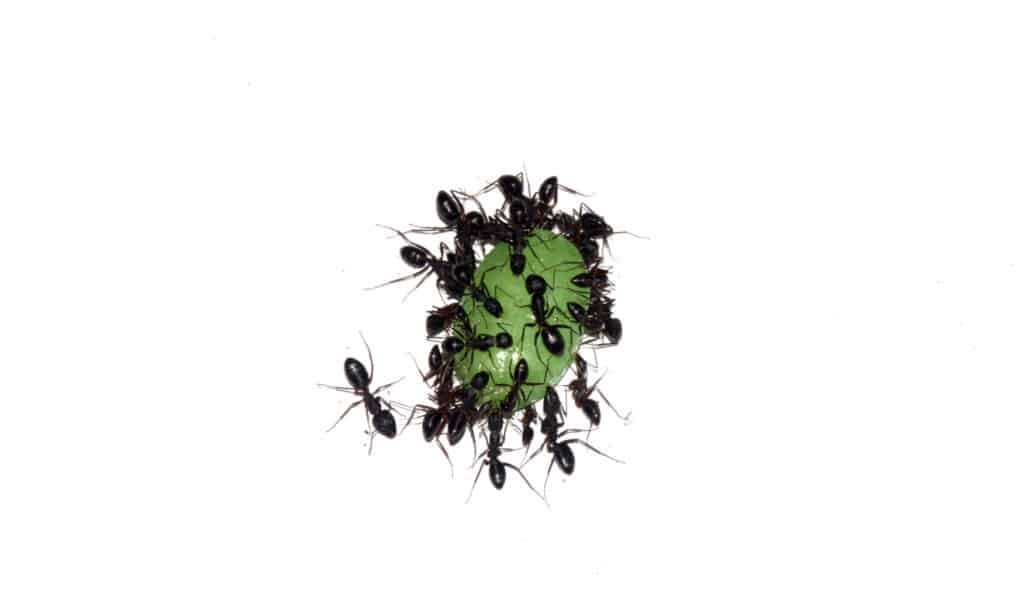
Most scientists agree that eradication is not possible for Asian needle ants, so other interventions are needed.
©Raj Nirala Art/Shutterstock.com
MacGown explains that insecticides and baits can be effective in controlling small colonies. But what other options exist for larger-scale Asian needle ant management? As it turns out, there are surprisingly few.
One option to stifle the spread would be to control urban populations. This could be done through smaller-scale ant treatments and keeping mulch or plants away from certain structures. In these cases, MacGown also suggests knowing how to recognize and avoid Asian needle ants and wearing gloves in yards where these ants are present.
Parasitoid Research
Parasitoids also present promise in addressing Asian needle ants. Dr. Suiter points to research into Pseudacteon flies (“decapitating flies”), a type of fly used to control fire ant populations. “Researchers found this fly that lays an egg behind the fire ant’s head,” he explains. “The larva hatches, burrows into the ant’s body, and pupates in the head.”
But before researchers could use this parasitoid, they needed to answer a big question. Would this fly attack native ants? Once they discovered it would not, a program started to address invasive fire ants. If a similar parasitoid were found, it could be used to control Asian needle ant populations.
MacGown, Dr. Lucky, and Dr. Penick all agree that more research and public awareness are urgently needed. For MacGown, studying “the foraging and mating behavior of the needle ant could be helpful in managing this species, especially looking for ways to disrupt mating. The ant is unusual in that workers do not appear to follow pheromone-based foraging trails, which may be problematic for certain bait formulations and treatment methods.”
Dr. Penick also believes that there needs to be a stronger investment in treatment and control methods, but there’s one problem: funding. As of yet, there has not been enough funding focused specifically on Asian needle ants.
“Hopefully, this recent media attention will get people to see we need solutions to mitigate this problem,” Dr. Lucky says.