
Quick Take
- Gray whales are stopping off to forage in San Francisco Bay because their traditional food sources are being depleted by climate change.
- This puts the whales at risk of vessel strikes.
- Between 2018 and 2025, 70 gray whales were found dead in the local area, and others were injured.
- Dynamic or presence-induced slow speed zones can be valuable in reducing vessel strike mortality.
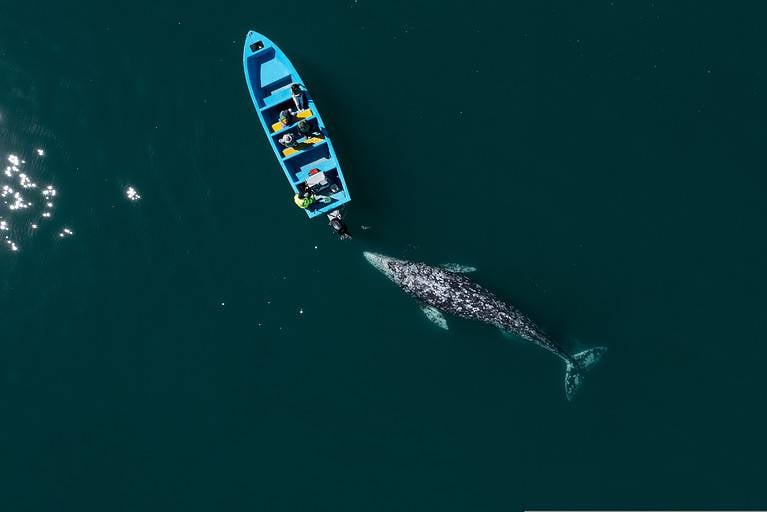
When traditional feeding grounds are depleted, animals must improvise. They go in search of new feeding areas, but that can bring a whole load of new risks. Gray whales are facing that issue right now. Climate change is driving them to forage in the waters of San Francisco Bay, an area full of maritime traffic and the associated risks of vessel strikes. A new study has quantified just how deadly this is proving for the hungry whales.
Climate Change and Gray Whale Migration
Climate change is warming the planet, and nowhere is this being more keenly felt than in the Arctic. These icy waters are warming at a faster rate than mid-latitude habitats. This presents the Eastern North Pacific (ENP) gray whales (Eschrichtius robustus) with a problem.
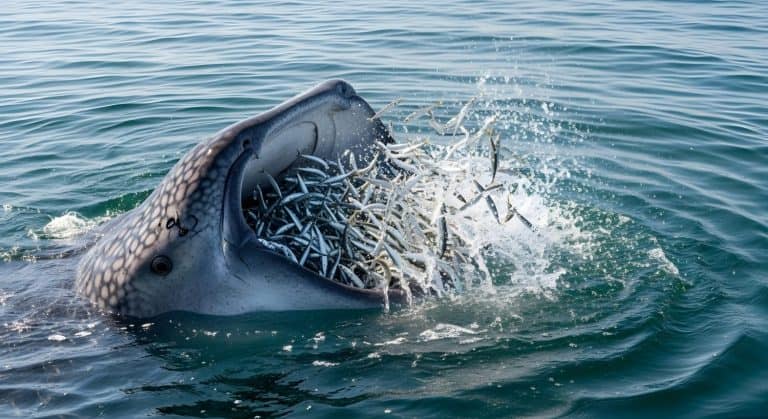
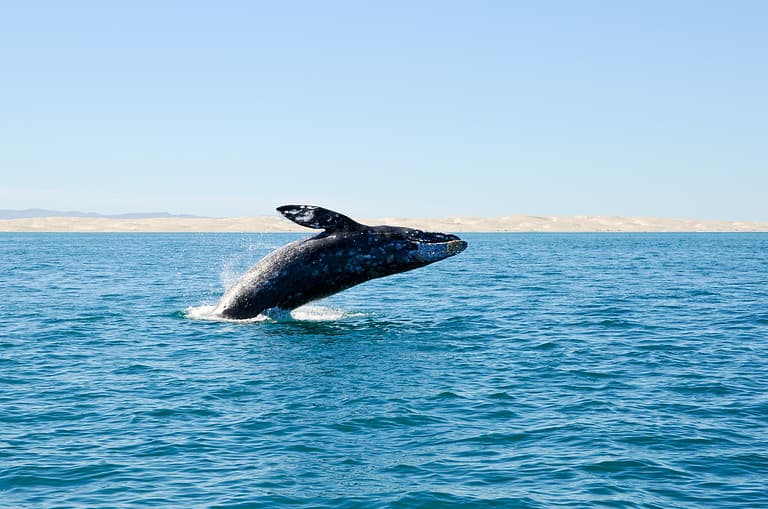
These whales spend their time near coasts and feed primarily on amphipod species (small crustaceans) in the Arctic. Their migration route is one of the longest of any mammal. From the Arctic, they make a 12,000-mile round trip to calve in the warm lagoons in Baja California, Mexico. Migration is physically demanding and uses up a lot of energy. It is unusual for them to feed while traveling, and they rely on built-up fat stores.
What Are Gray Whales Doing in San Francisco Bay?
The physical condition of these gray whales is deteriorating, and more of them are perishing. Changes in sea temperatures in the North Pacific are robbing them of their traditional food sources. Hungry whales will forage for unique prey such as ghost shrimp and herring roe as they migrate if they need to. One potential stopover is San Francisco Bay.
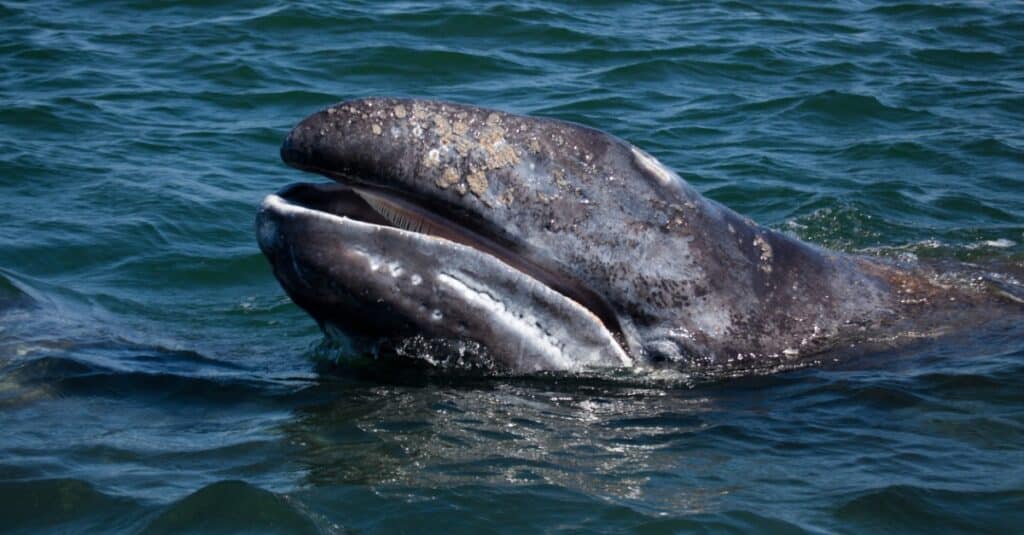
Gray whales can become malnourished during migration.
©Mogens Trolle/Shutterstock.com
Against this backdrop of reduced food sources and malnutrition, the gray whale population has experienced several unusual mortality events (UMEs) with declines of up to 46 percent of their numbers. During the 1999–2000 UME, live gray whales entered the San Francisco Bay and seemed to stay for a longer time than before. Sadly, there were also more carcasses reported at this time.
Between 2001 and 2018, both sightings and strandings of gray whales in the bay were rare, with only around four spotted each year. Another UME was declared between 2019 and 2023, and very few calves were being spotted. A study was conducted during this time to develop a photo-identification catalog of gray whales sighted in the bay, both alive and dead.
Cataloging the San Francisco Bay Whales
During the study period (2018 – 2023), 114 gray whales entered San Francisco Bay. The resighting rate (3.5 percent), however, suggests that most visit only once and do not return. There was a peak in 2019, but this coincided with a rise in gray whale strandings across their migratory corridor. This suggests that the whales enter the bay when there are limited resources in their historic feeding grounds. Some whales stayed for 40 days, while others remained for just a day or two. Previous research has shown that nutritionally stressed whales tend to forage in such habitats for longer. Therefore, both body condition and feeding opportunities likely determine how long they remain in the bay.
Who Are the ‘Bay Grays’?
We know that gray whales are willing to be flexible about feeding when they are short of food, thanks to previous reports from along the northern California coastline.
The gray whales in the San Francisco Bay have been dubbed the ‘Bay Grays’. However, there is no evidence that they are a recognized population subgroup. Rather, they are simply individuals seeking out new resources in response to changing environmental conditions—they are improvising!
The Dark Side of Feeding in the Bay
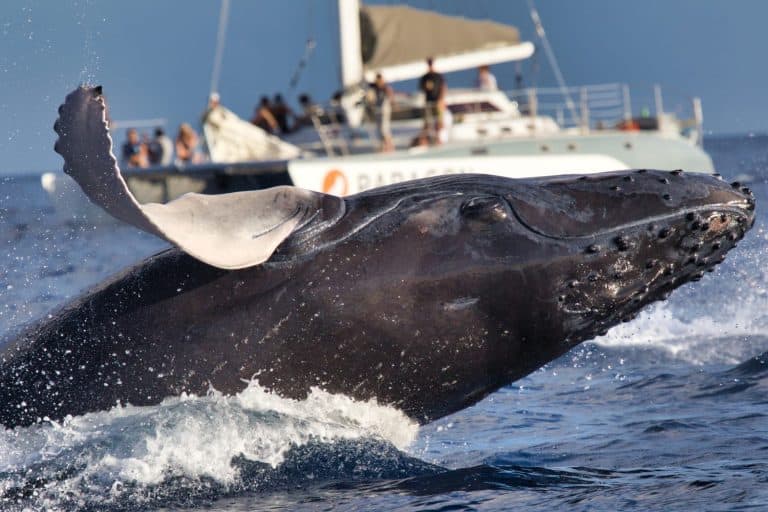
Sadly, improvisation carries risks. Between 2018 and 2025, 70 gray whales were found dead in the local area, and 21 of these could be matched to the scientist’s catalog. Of these, 30 had evidence of blunt or sharp force trauma consistent with being struck by a vessel. Others had died of malnutrition. This means that at least 18 percent of the gray whales entering the bay died there, though this is believed to be an underestimate. Many whale carcasses sink and will not be spotted.
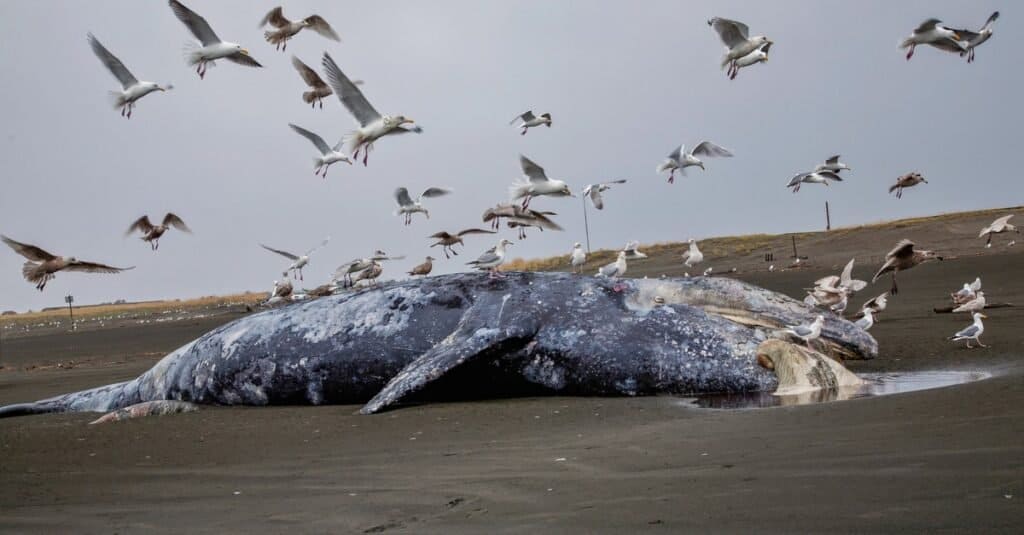
Some whales perish due to vessel strikes.
©Bob Pool/Shutterstock.com
The injuries are brutal. One deceased whale had suffered hemorrhaging and multiple fractures of its ribs, skull, and vertebrae. Even the live whales had evidence of impacts with vessels. One likely remained in the bay because its mobility was impaired by a vessel strike.
Research is urgently needed to establish the risk factors for vessel strikes on gray whales in San Francisco Bay. Malnourished whales may be more vulnerable; conversely, whales that get used to intense human activity may learn how to dodge boats!
Ultimately, the study shows that vessels are striking, injuring, and killing gray whales in San Francisco Bay. Management strategies, such as dynamic or presence-induced slow speed zones, can be valuable in reducing vessel strike mortality and could be critical for helping these whales recover from their latest decline. Some voluntary controls are already in place.