
Quick Take
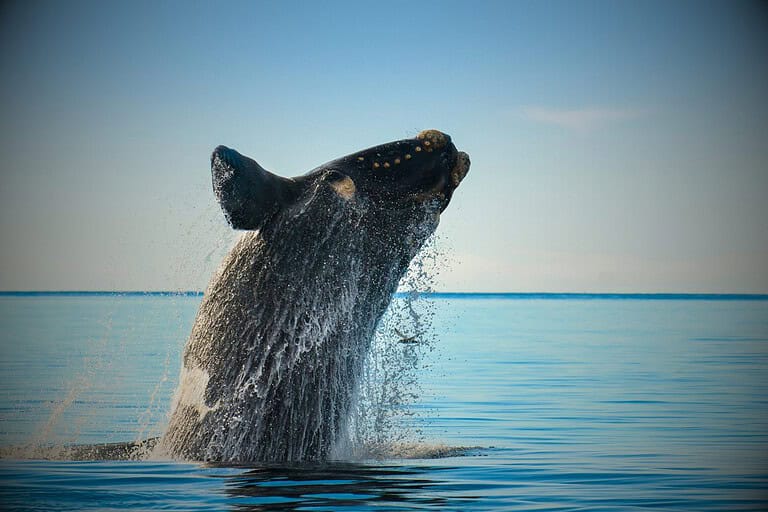
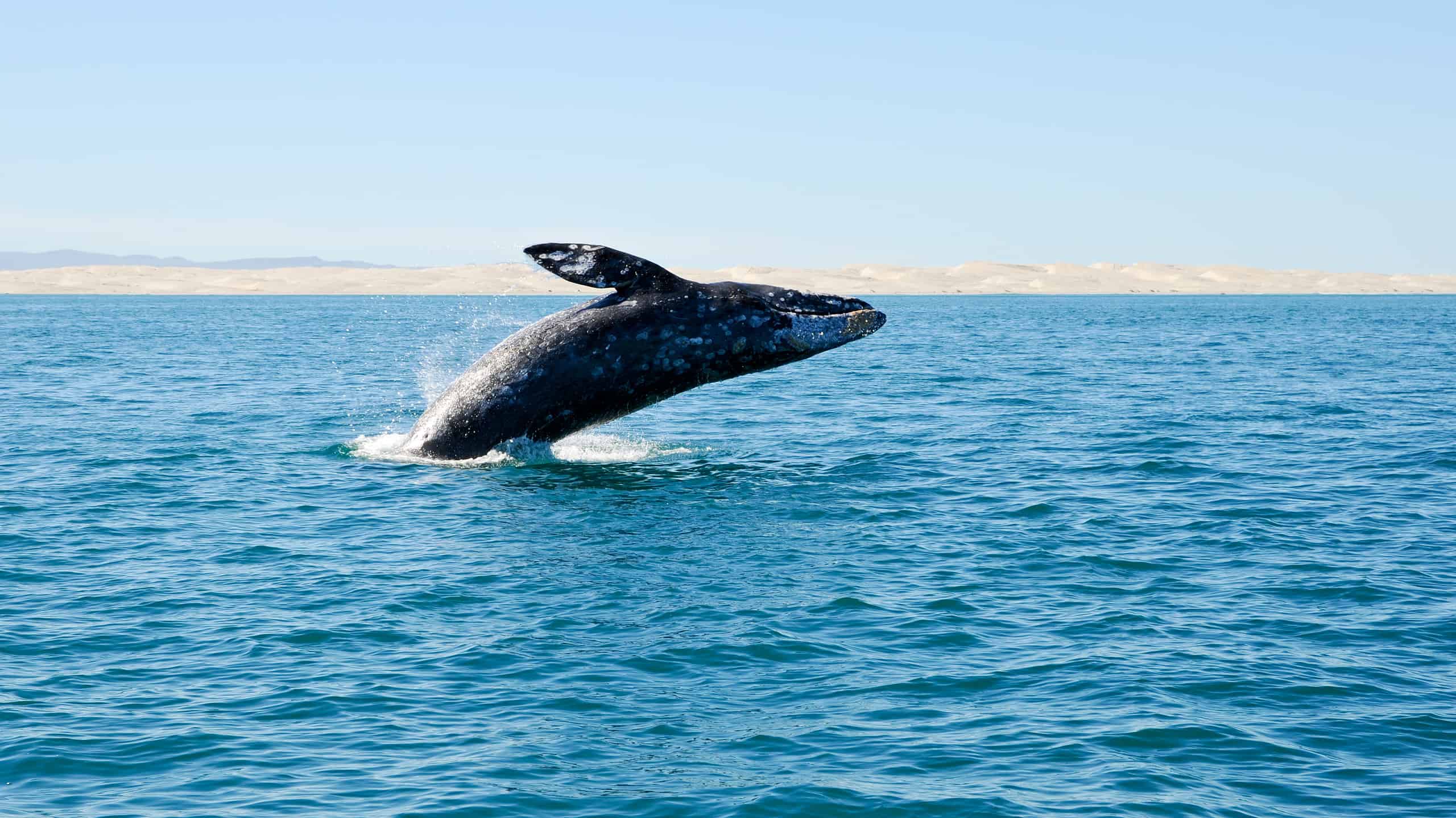
- Gray whales pass the U.S. West Coast each spring during one of the longest mammal migrations on Earth as they travel from Baja California to Arctic feeding grounds.
- Whale watchers can spot gray whales by scanning the water for low bushy spouts or smooth “whale footprints” left behind when the animals dive.
- Because mothers and newborn calves migrate close to shore in spring, maintaining a respectful distance helps protect whales during this critical journey.
March is a blissful month, a month when gray whale watching can begin in earnest. The eastern North Pacific gray whale population winters in the warm lagoons off Baja California, then begins moving north toward feeding grounds in the Bering and Chukchi seas and other northern waters as the temperatures rise, allowing the West Coast ample opportunity to view them firsthand.
According to NOAA’s gray whale overview, this migration follows the North American coast and is one of the longest migrations made by any mammal. Northbound migration typically begins in mid-February and continues through May, with mothers and newborn calves moving along the West Coast between March and May. What are some of the best spots for whale watching during this time, and how can you improve your whale watching skills to spot them in person?
We’ve compiled a practical guide to whale watching along the U.S. West Coast, highlighting the best spots to see gray whales. Plus, we offer tips on what you can expect to see from shore versus on a whale watching tour. It’s time to celebrate the gray whale migration of March!
What You Can See From Shore: Maintaining Realistic Whale Watching Expectations
If you’re planning to go whale watching along the West Coast, what can you realistically expect to see, and how can you be sure you’re spotting a gray whale? A gray whale’s spout—one of the first signs of any passing whale—is low and bushy rather than tall and column-like. It often appears as a quick white burst above the water that disappears within a second.
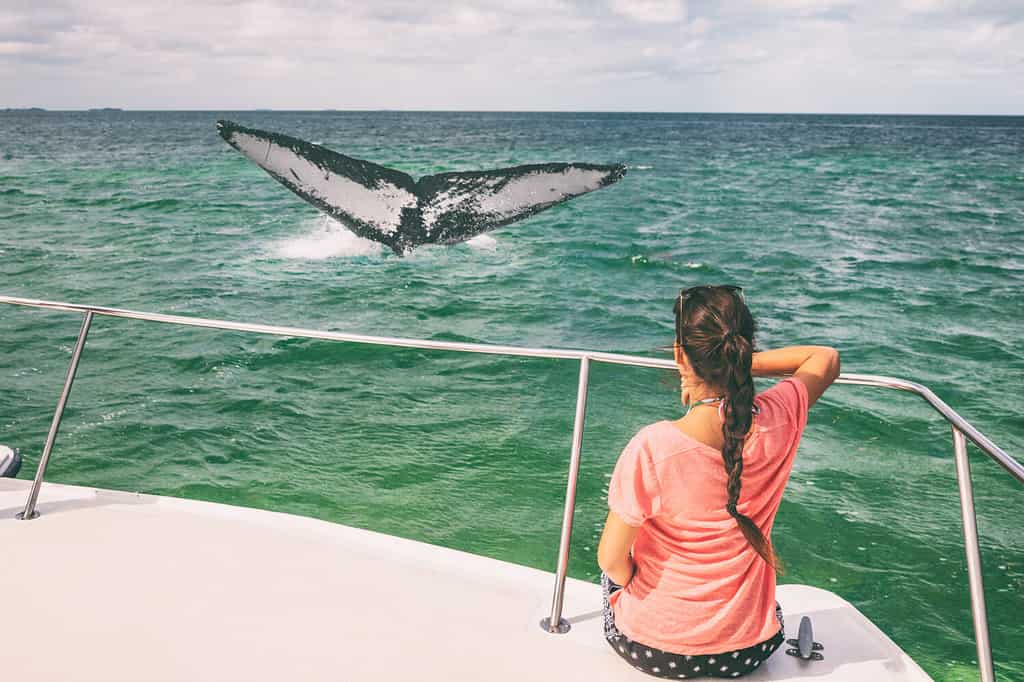
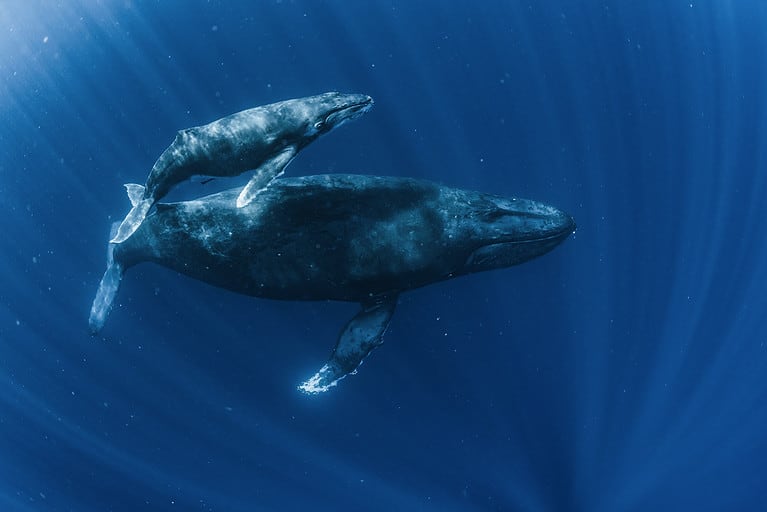
Gray whales migrate north for thousands of miles, completing one of the longest migrations of any mammal.
©Maridav/Shutterstock.com
The easiest way to find whales from land involves scanning for those brief puffs first, then waiting for a darker back to surface in that same patch of water. Whale-watching overlook areas can be valuable for this, as the whales are often close enough to shore during their northbound migration for blows to be a dead giveaway that they’re passing through.
Tail flukes are possible to see, but they’re rarer than you might think. Gray whales sometimes show their tails before a deeper dive, but you’re more likely to witness their backs and a small dorsal hump before they slip under again. Unlike humpback whale watching, spotting gray whales requires patience and careful scanning for subtle signs at the surface.
A good rule of thumb for whale watching is to move to a headland or bluff rather than staying at beach level. Use binoculars, but be sure to scan with your naked eye first, as a wider field of view is necessary. Give each patch of water a minute or two; gray whales often surface in a steady rhythm, offering you the chance to see multiple whales in a given area. Plus, clear mornings with calmer seas tend to be much easier than windy afternoons, and keeping the sun at your back rather than in your eyes is a must.
What Are Whale Footprints?
Despite the name, whale footprints are not marks that you’ll be able to see on sand. They are smooth, glassy-looking patches on the ocean’s surface that can appear after a whale dives or moves forward with its tail flukes, leaving behind a temporary circle, one where the water looks different from the surf around it.
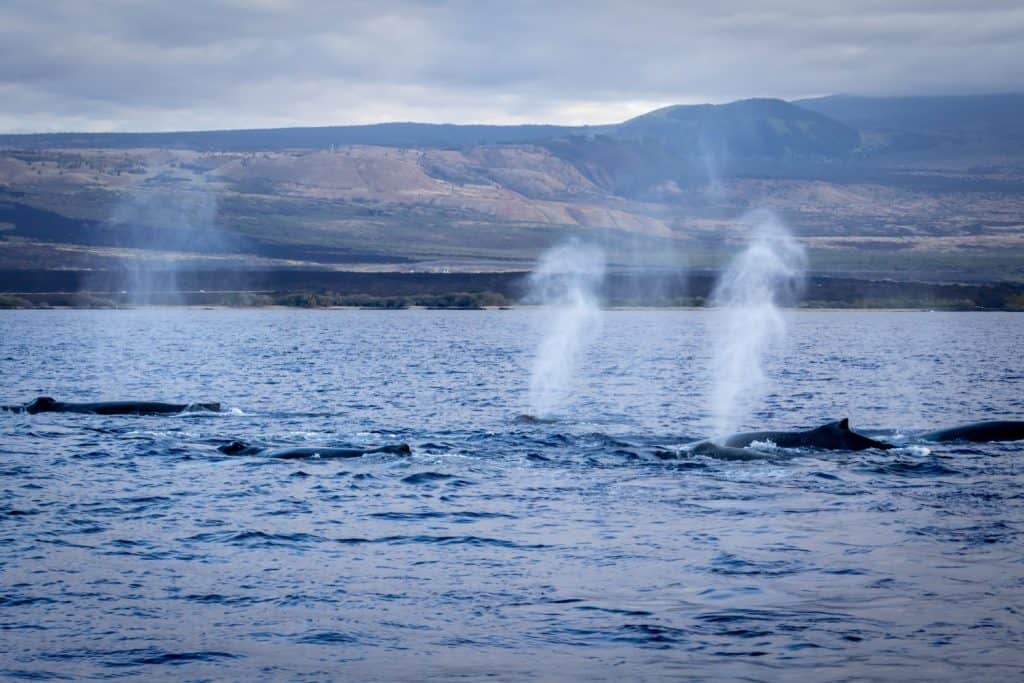
While whale spouts are reliable tells, watching for whale footprints can also help you spot a gray whale in March.
©RS Smith Photography/Shutterstock.com
Whale watchers often use footprints as a clue that a whale has just gone under and may resurface nearby, creating predictable surface disturbances thanks to the whale’s fluke motion and the vortex it leaves behind. For shore viewers, a whale footprint can be worth learning and keeping an eye out for, as it lingers a little longer than a gray whale’s blow spout. While not always easy to spot, especially in windier conditions, it becomes one more useful tell you can use during the gray whale watching season.
Why March Is Such a Good Month for Whale Watching
In March, the gray whale migration is in full swing along a long stretch of the coast. California whale watching often labels mid-March as their peak viewing, with mothers and calves often passing very close to shore in April. Farther north, Oregon tends to have an initial spring surge around the end of March, and northbound whales continue passing by into the month of June.
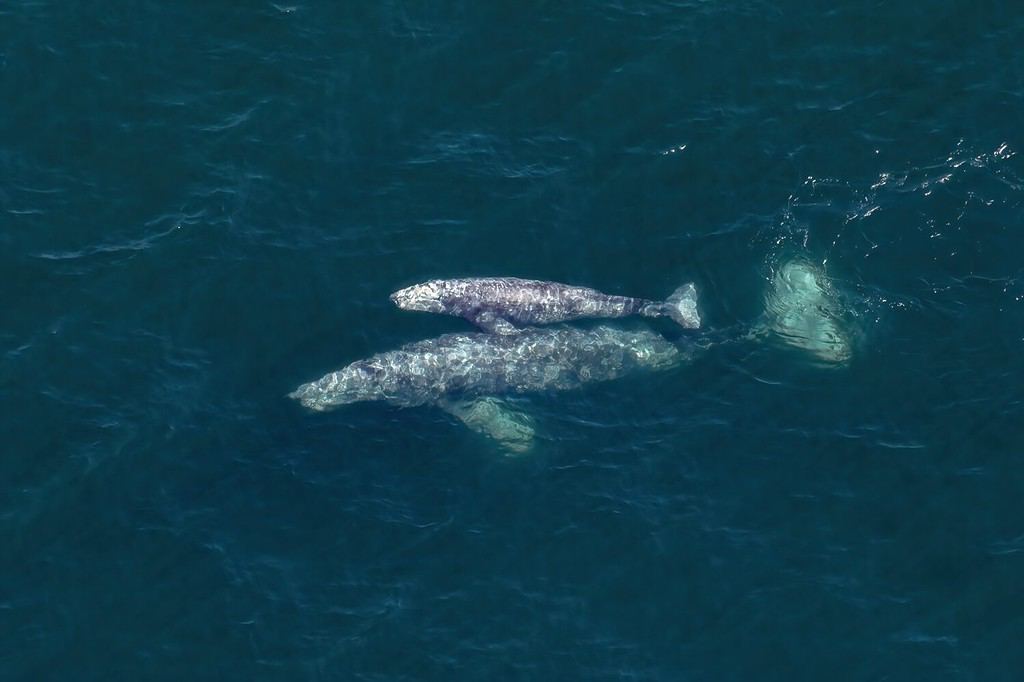
Gray whales can be seen from California to Washington during the month of March, if you know where to look.
©Travis Potter/Shutterstock.com
Washington also benefits from later timing, though some coastal locations have whales more frequently and earlier than others. March through May is ideal in this state, which makes it a less crowded northern location once the migration has already become active farther south. Regardless of where you choose to watch, know that the migration works its way north, so plan accordingly.
The Best West Coast Locations for Viewing the Gray Whale Migration
Speaking of plans, where should you head in order to witness the gray whale migration? Anywhere along the coast can be a good spot, but some spots are better than others. Here are some state parks and whale watching viewing points to consider, up and down the West Coast.
Ecola State Park, Cannon Beach
One of the best Oregon spots for gray whales, Ecola State Park gives avid whale watchers exactly what they need most: height and a broad sweep of ocean you can scan for hours. The Cannon Beach visitor guide to whale watching says gray whales can often be spotted just off the shoreline within town, and it specifically points to Ecola Point and the viewpoint near the top of the Clatsop Loop Trail as strong places to look during any migration.
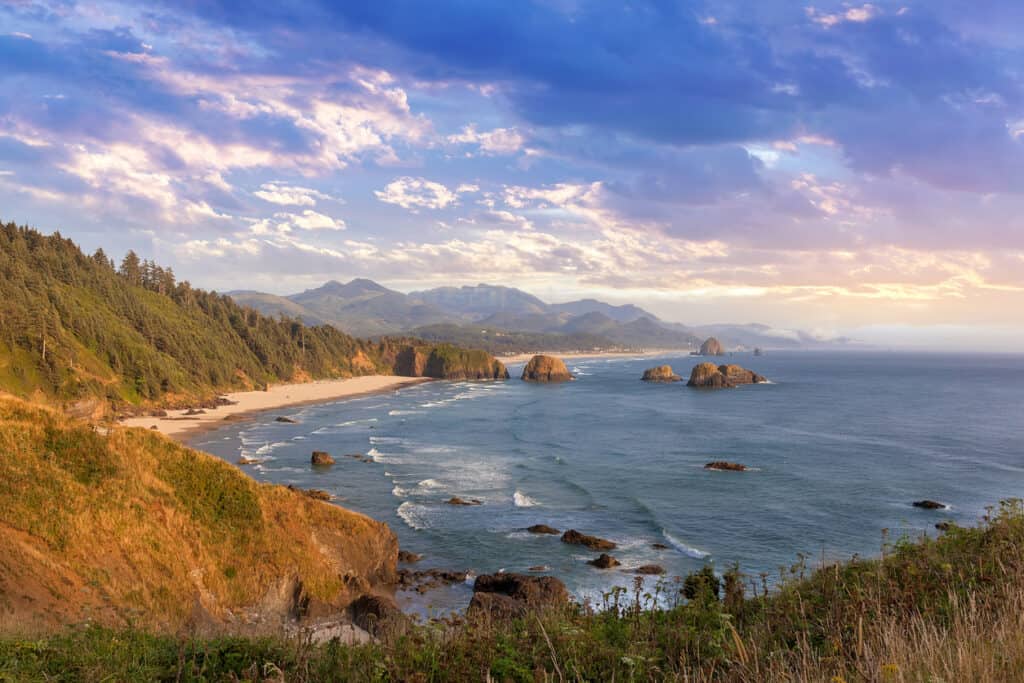
Ecola State Park has multiple potential spots for whale watching.
©iStock.com/JPLDesigns
Ecola is ideal for people who are still learning what to watch for when it comes to whale watching. From the bluff, you can often catch a blow offshore before you can make out the body, and the elevation helps you notice repeated surfacing over long distances. Additionally, this state park has plenty of easy hikes and a rich movie history, with many films shot here, so spend some time enjoying all it has to offer.
Depoe Bay Whale Watching Center
Another Oregon whale watching mainstay, Depoe Bay has built much of its reputation around whales, and the town’s Whale Watching Center is one of the easiest places on the coast for new viewers to get oriented. Oregon State Parks says the site offers a large viewing deck and staff or volunteers who help visitors spot whales and understand what they are seeing.
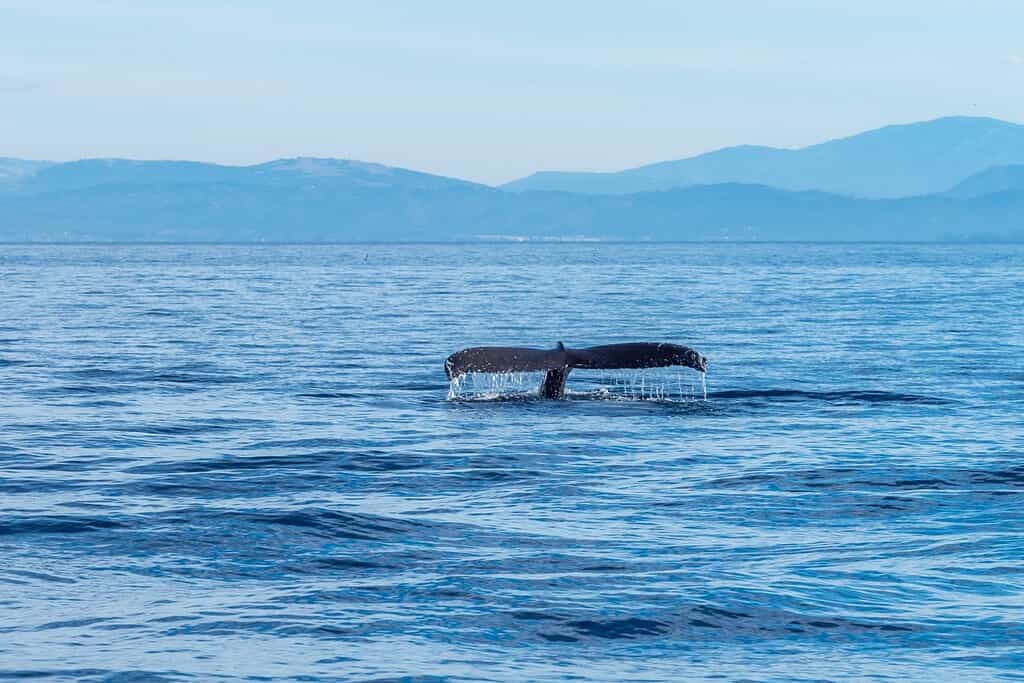
There’s a whale watching center in Depoe Bay, making it a popular town in the month of March.
©MightyPix/Shutterstock.com
Timing also helps Depoe Bay, as it is further south compared to some locations. Oregon State Parks notes that spring watching typically begins in late March, with the first northbound surge arriving around the end of the month and continuing through May. Because the center is built around the migration itself, it is one of the best places to go if you want an almost guaranteed sighting, complete with expert advice should you need it.
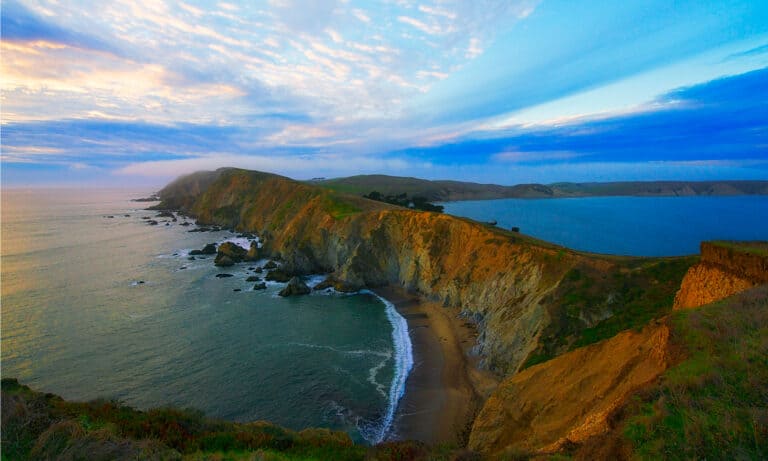
Point Reyes National Seashore
Point Reyes is one of California’s classic gray whale sites because the peninsula pushes you out into the Pacific, giving shore viewers a much better angle on whales moving along the coast. The National Park Service’s gray whale page for Point Reyes says sightings begin increasing in March as the whales head north, and that most northbound gray whales there are within a mile of shore.
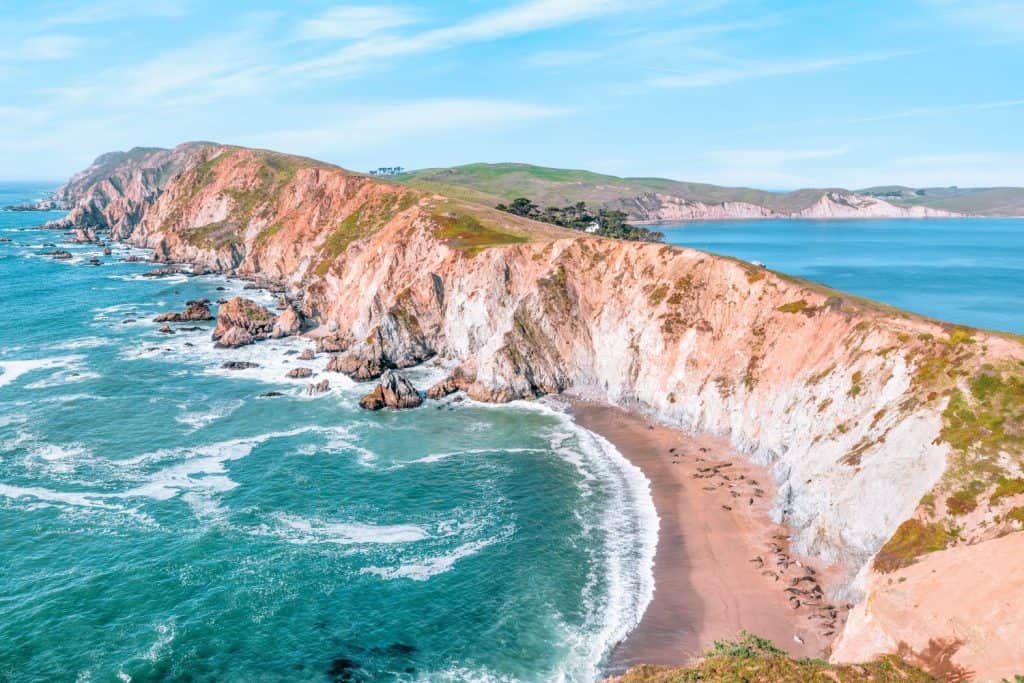
The views of both whales and scenery at Point Reyes can be breathtaking.
©UVL/Shutterstock.com
Sightings here are especially good because the peninsula extends into the ocean, providing excellent vantage points. A whale at Point Reyes can often be followed along the contour of the coast for multiple surfacings, which makes its behavior all the easier to recognize. February is typically peak viewing for the northern migration at Point Reyes, with March marking the tail end of the main migration season, but you may still get lucky at this beautiful spot.
Point Dume And Point Vicente
Southern California gives March whale migration viewers a useful head start, especially if you know where to look. Point Dume State Beach is known for its multiple cliffside vantage points and a long migration season, making it a practical place to catch northbound whales while Oregon is still ramping up later in the month.
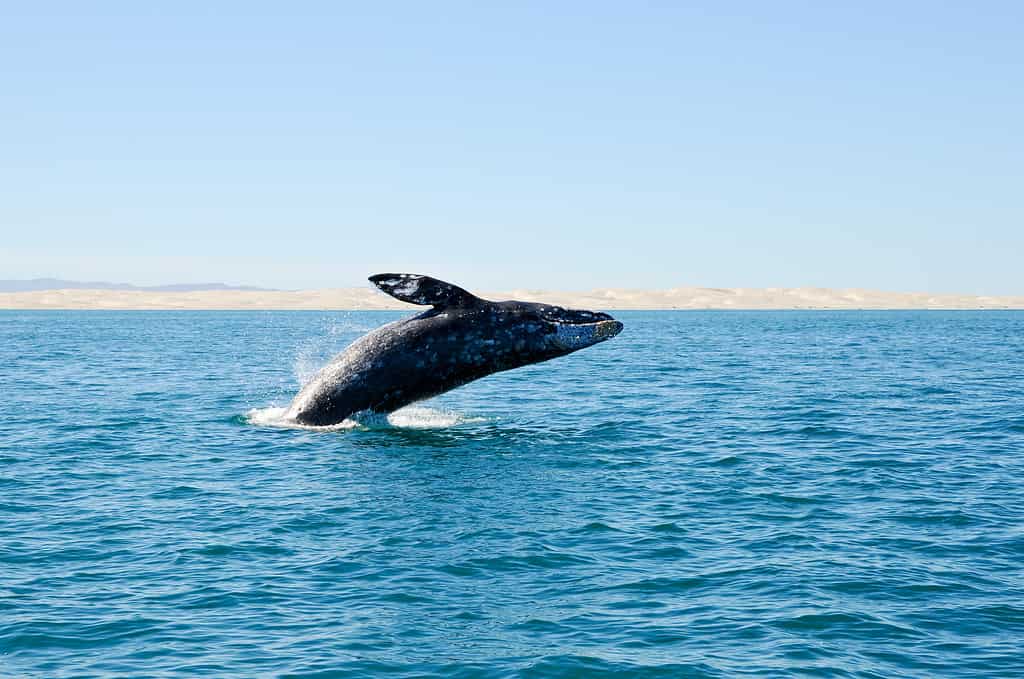
California has many unique locations for viewing the gray whale migration.
©Jan-Dirk Hansen/Shutterstock.com
Point Vicente Interpretive Center is also one of the best-known dedicated gray whale overlooks in Southern California. The city describes it as a premier whale-watch site with opportunities to view the annual Pacific gray whale migration from December through mid-May, a much longer window than any other northern location.
Westport Light State Park
For Washington viewers, Westport Light State Park is one of the few shore sites worth remembering once the migration pushes farther north. The Whale Trail includes it as a public site for marine mammal viewing, and Washington tourism guidance says it is one of the places where visitors can best glimpse gray whales from late March through May. Charming Westport also sits where Grays Harbor opens to the Pacific, which gives watchers wide water views and a good chance at seeing whales moving through open coastal habitat.
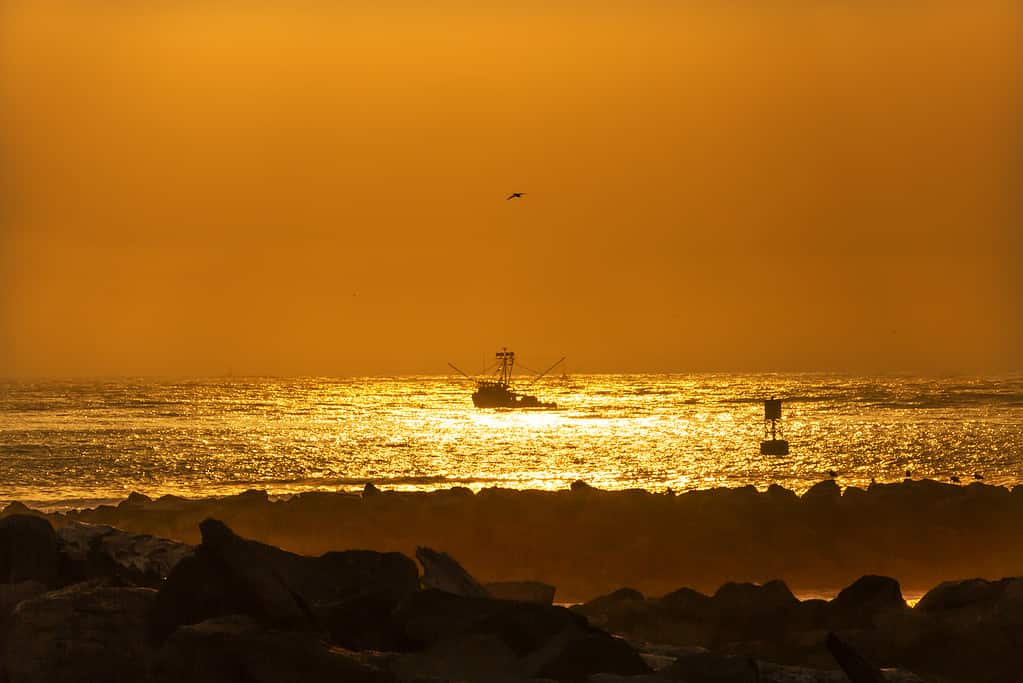
Westport is a small town, but it’s a great place to go whale watching.
©iStock.com/bpperry
Plus, by the time whales reach Washington, shore viewers are seeing the same northbound migration continue up the coast, but with far fewer crowds. Westport is not as widely known as Point Reyes or Depoe Bay, but that is part of its charm. If you’re worried about feeling overwhelmed or claustrophobic while whale watching, the farther north you go, the better.
Why Respectful Distance Matters While Whale Watching
Ultimately, these are animals traveling thousands of miles, often with calves, along one of the busiest coastlines in North America. Gray whales and all other whale species are protected under the Marine Mammal Protection Act, which advises people on the water to stay at least 100 yards away. While whale watching tours should be respectful and aware of this, that isn’t always the case.
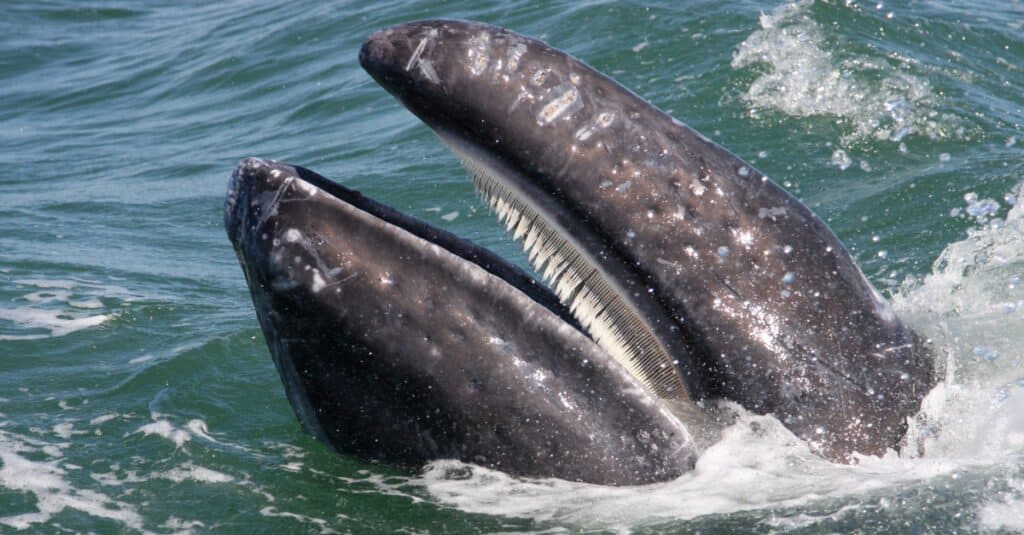
Gray whales are taking on a huge journey, which is why it’s important to be respectful of their space.
©jo Crebbin/Shutterstock.com
Maintaining a safe distance is especially important in spring, as mothers and calves are a large part of the migration stream. A whale calf does not have the energy reserves or experience of an adult, and a mother traveling close to shore is often doing so for a reason. Maintaining your distance and staying near designated overlooks—even when using drones or boats—helps the migration continue safely and protects the whales during this challenging journey.