
Quick Take
- These whales don't just vocalize. They have a role during birth that no one predicted until researchers got close enough to listen. Discover their birth role →
- The way sperm whales physically position themselves to communicate challenges everything we assumed about how sound works underwater. Explore how they position to communicate →
- When sperm whales close in on prey, their language doesn't just get louder. It fundamentally changes in a way that mirrors human vocal shifts. See the hunting vocal shifts →
- This dialect has been evolving far longer than modern humans have existed, a timeline that reframes what we think we know about animal intelligence. Trace the dialect's ancient timeline →
Our closest living ancestors descended from primates, but does this mean we don’t share any commonalities with other, non-primate species? A recent discovery is challenging the extent to which we are similar to other animals. New details have emerged from Project Ceti (Cetacean Translation Initiative) that are reshaping our understanding of communication within a species.
Scientists have long suspected that sperm whales have unique ways of “speaking” with one another. But now, scientists are making strides to analyze their communication structure. What once seemed like random sound frequencies now seems to have structural similarities to human speech. Incredibly, this speech may even have inflections similar to those of Mandarin, Latin, and Slovenian.
Sperm Whales Use An “Alphabet” System
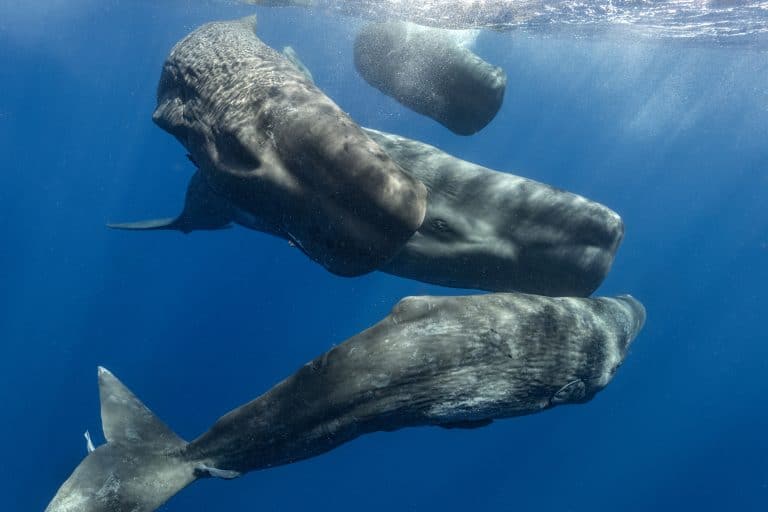
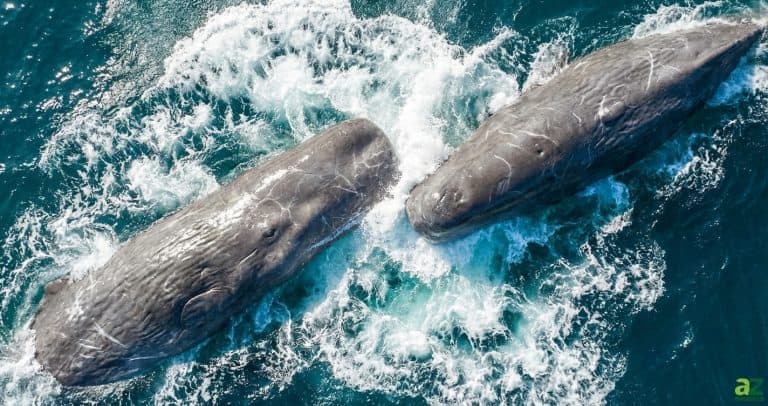
It makes sense that the largest animal on earth is also one of the loudest. It’s difficult to hear underwater, but sperm whales have been recorded making sounds that reach 230 decibels. This noise is significant and capable of spanning miles. What’s interesting is that when sperm whales talk, they don’t do so at a distance. Instead, they place their heads against one another. This act is similar to a human leaning in to have an intimate conversation. What Project Ceti learned is nothing short of fascinating.
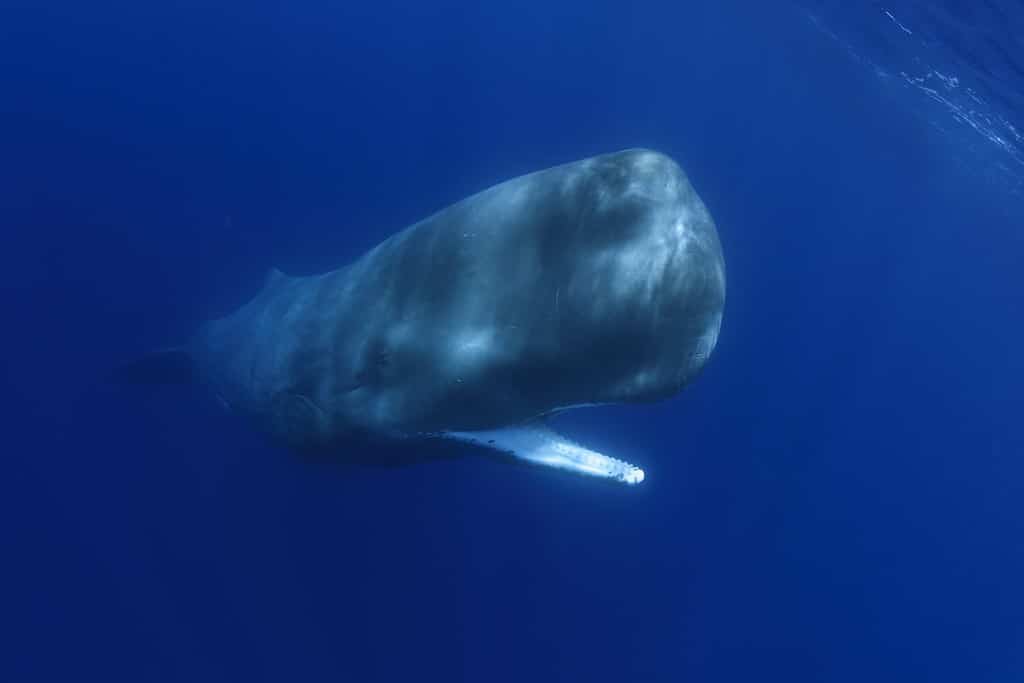
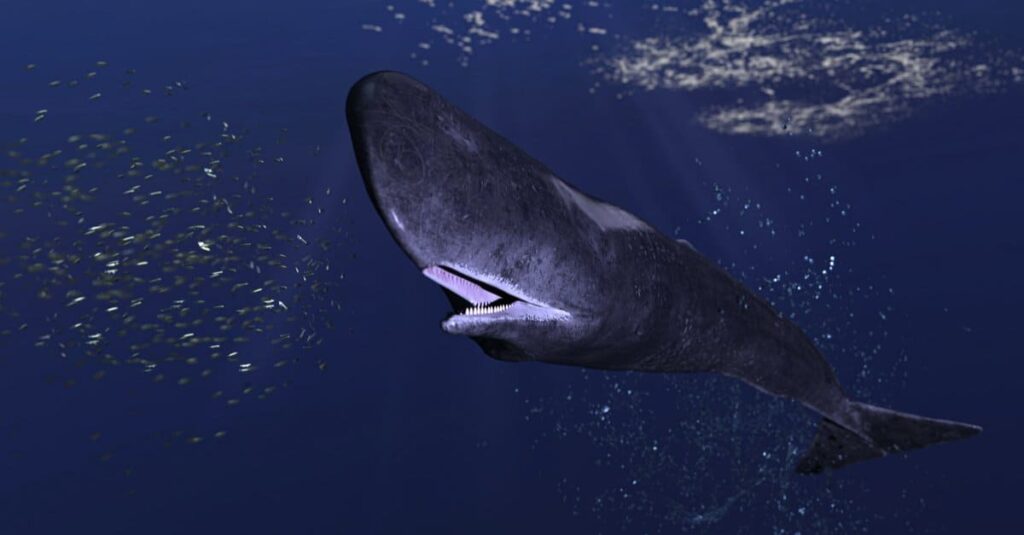
Sperm whale vocalizations can be heard from miles away.
©Thierry Eidenweil/Shutterstock.com
Within the speech of a sperm whale, there are sounds similar to vowels. This “alphabet” of sounds functions similarly to human speech. When we emphasize the annunciation of a vowel, we stress a specific sound to match the word. As it turns out, sperm whales have a similar process for “speaking.”
The dialect of a sperm whale comes in a series of clicks. Each has a different tone, called a coda. As sperm whales use these codas, they change each pattern and pitch. This conveys a message that implies a higher level of dialect than previously thought. While humans can’t understand this language, we know it’s a highly evolved form of communication. And, what’s even more mind-blowing is that sperm whales have been communicating this way for centuries.
Codas Imply Emotional Intelligence
The study, published in Proceedings B, reports that sperm whales exhibit notable structural and acoustic parallels with human phonology. On an intrinsic level, sperm whales have been evolving with this dialect for the last 90 million years. Project Ceti’s discovery not only changes the way we view sperm whales but also what we thought we knew about their history.
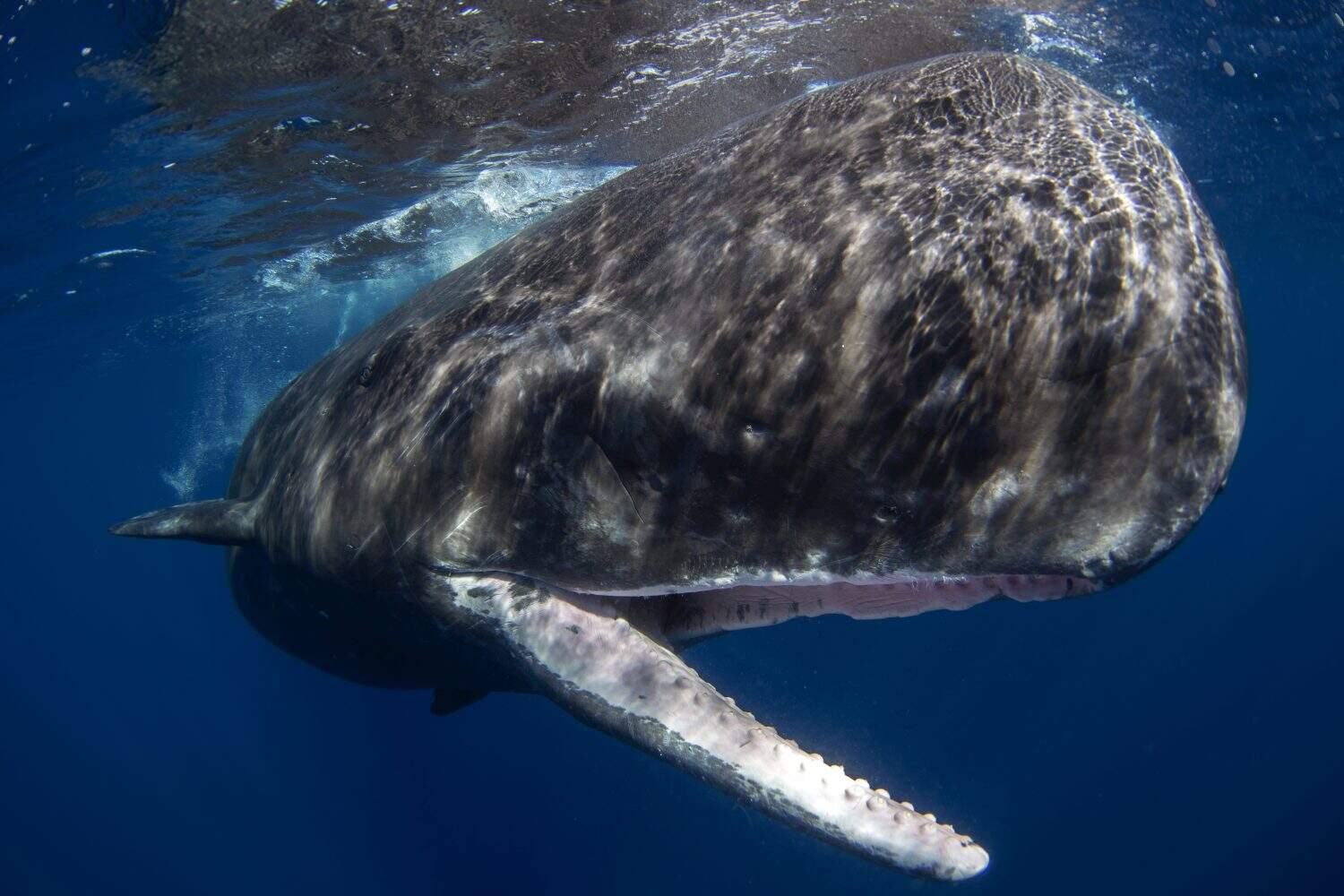
Diving even deeper, the results of this study also support the emotional intelligence of sperm whales. It’s been documented that sperm whales form deep bonds with others. It’s not uncommon for whales to bond with one another within their pods, an empathetic act that is rare among most marine species. They express joy upon reuniting with their families and grief following a loss. This implies that sperm whales are highly evolved and capable of experiencing emotions similar to those of humans.
As a social species, sperm whales display a high level of emotional intelligence.
©bekirevren/Shutterstock.com
While giving birth, sperm whales are also as vocal as humans. Their codas, or clicks, become louder, while the surrounding pod members sound off in their own ways. This chorus of communication further points to an advanced language that has grown and evolved. After calves are born, researchers have recorded specific coda patterns. These may imply that sperm whales communicate with their mothers after birth or share messages once the calf is born healthy. Some scientists have also identified “midwife” whales, who remain near the birthing whale and communicate through a specific series of codas.
Advanced Communication While Hunting
Codas aren’t only used to bond and bring new life into the world. Sperm whales also communicate while hunting. Project Ceti’s study proves that this advanced communication is expansive and used by sperm whales in numerous ways. While being hunted, sperm whales have been recorded relaying warnings to others. These frantic, rapid clicks sound off the alarm so pod members can swim to safety.
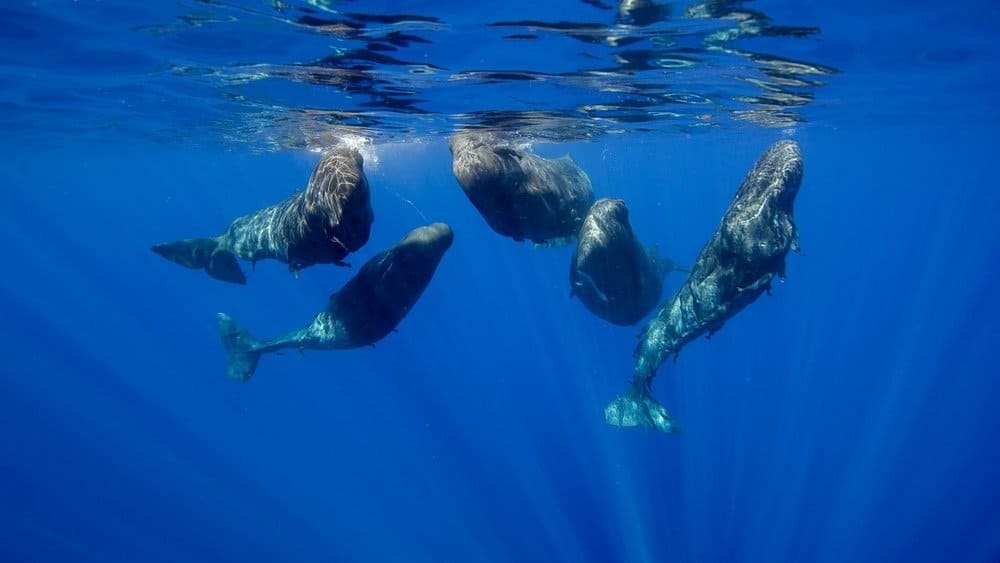
Communication within sperm whale pods is highly evolved, with a complex clicking system.
©wildestanimal/Shutterstock.com
The whales may also have specific codas for homing in on prey. They use echolocation to locate their target, typically emitting 3 to 30 clicks at a time to signal to others that food is nearby. Pods work as a group to move in as one unit, implying there’s a coordinated effort that begins with vocal communication. As sperm whales move in, their clicks become “creaks,” another example of how tone shifts to convey a different meaning.