Whether you have a farm or a homestead, having some type of ground-feeding landfowl (Galliformes) is a good idea. Not only are they great at providing eggs and meat, but they also control pests, such as ticks. Two common backyard birds are the guinea fowl (Numididae) and the chicken (Gallus gallus domesticus). The choice between them depends on whether you want a guard animal that can free-range and control pests (guinea fowl) or a more docile and predictable egg-layer (chicken). Continue reading to learn more about these two birds to determine which one is right for you.
Size
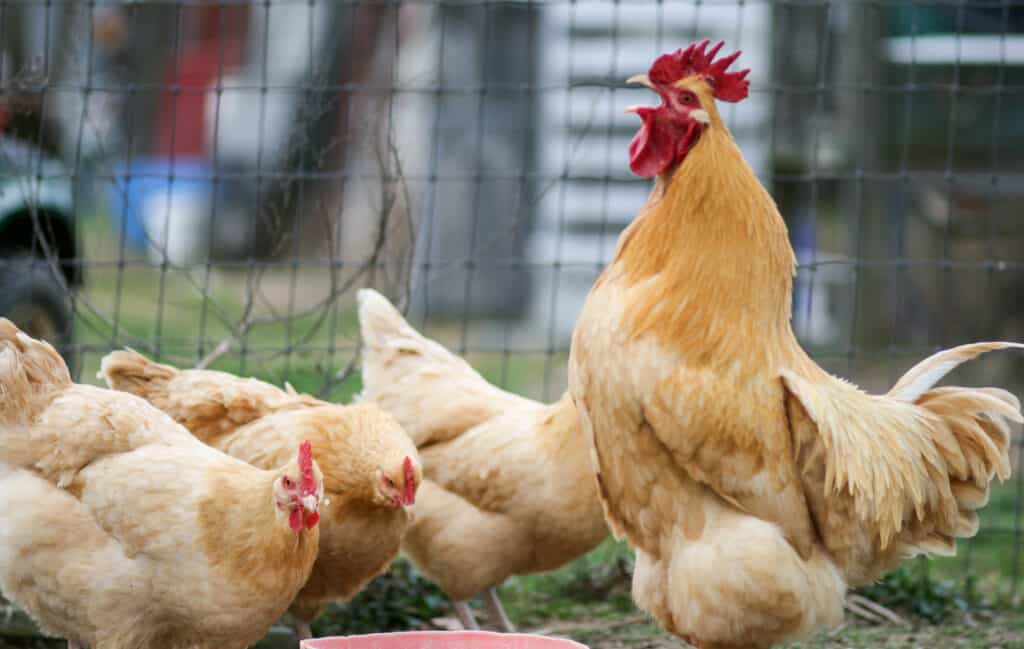
Chickens tend to be taller and heavier than guinea fowl.
©Racheal Carpenter/Shutterstock.com
Guinea fowl and chickens differ in size. Chickens are heavier and taller than guinea fowl, although guinea fowl are significantly longer than chickens. Chickens can weigh up to 6.6 pounds, stand 2.5 feet tall, and measure 17 inches in length. Guinea fowl can weigh up to 3.5 pounds, stand 1.9 feet tall, and reach up to 28 inches in length, making them longer than the average chicken.
Because chickens have been bred specifically for egg and meat production, it is natural that they are larger than a species that is not as widely farmed or selectively bred.
Egg Size
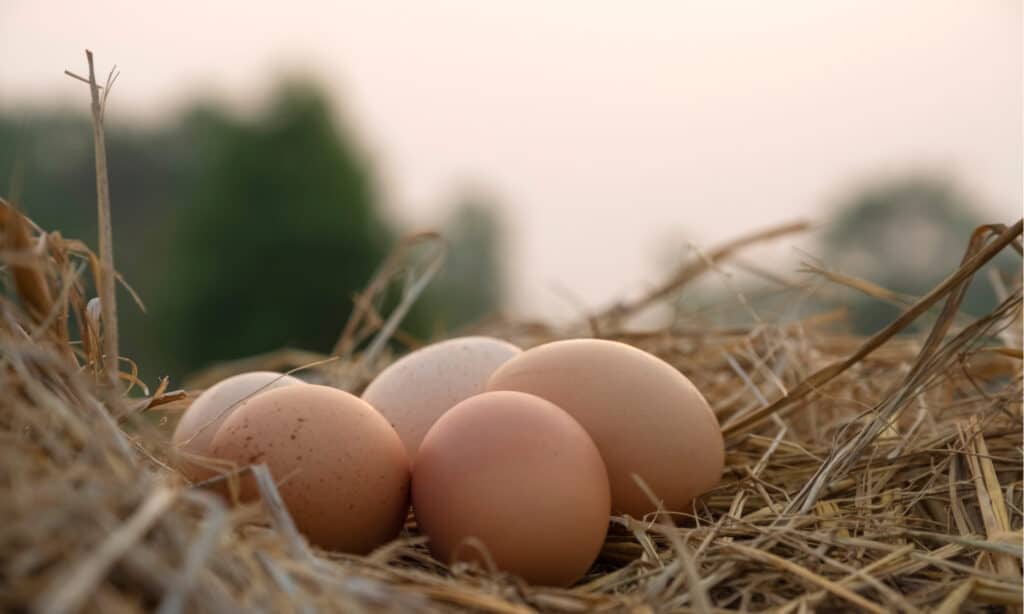
Although chicken eggs have the same yolk size as guinea fowl eggs, the egg itself is larger.
©ANEK SANGKAMANEE/Shutterstock.com
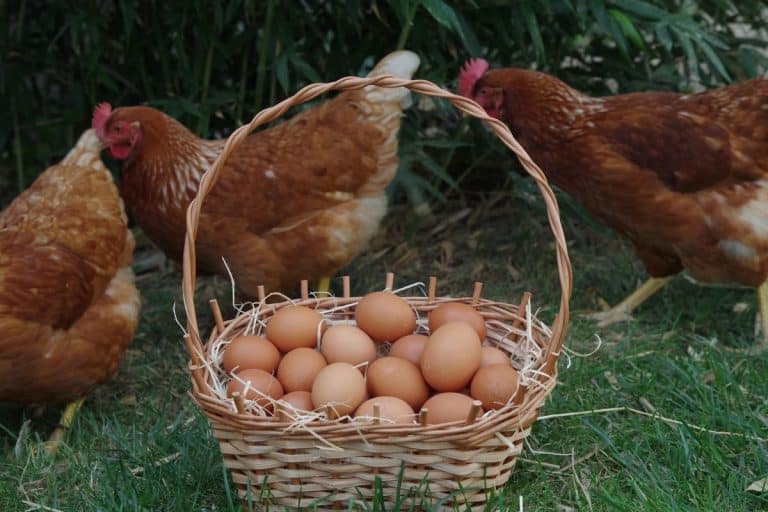
Chicken eggs are larger than guinea fowl eggs. An average chicken egg is about two inches in length, 1.5 inches in diameter, and weighs about 1.7 ounces. Some high-production chicken breeds can lay close to 300 eggs annually, though most breeds typically produce between 200 and 280 eggs per year. Chicken eggs can be brown, white, or blue. Most are solid in color, but some may have freckles or spots.
The eggs of a guinea fowl are between 1.5 and 2 inches long, 1.3 inches in diameter, and about 1.48 ounces in weight. On average, they are about one-third smaller than chicken eggs. Still, the yolks in these eggs are the same size as those in chicken eggs. Guinea fowl eggshells are thicker, harder, and more pointed than chicken eggs. They are brown with freckles of color.
Domestication
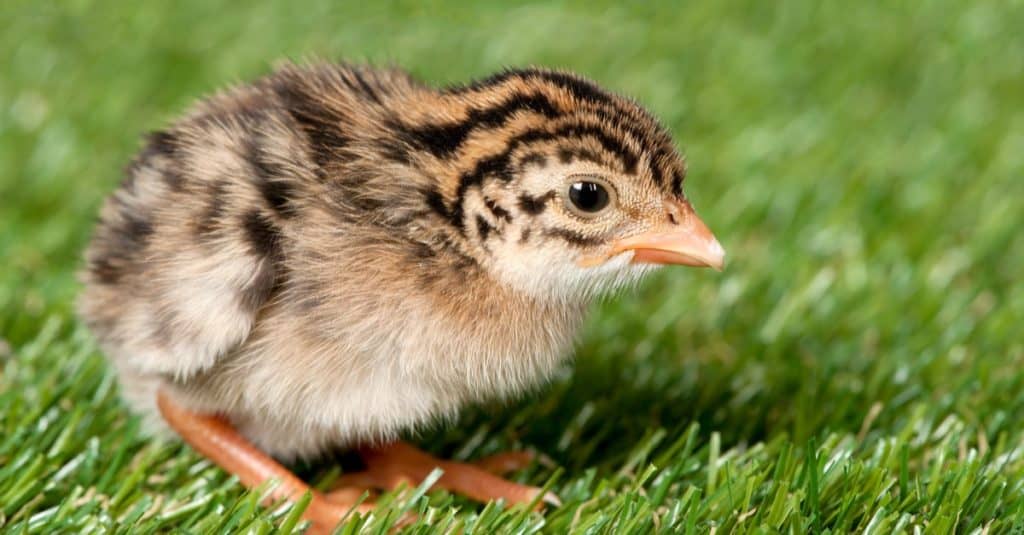
Guinea fowl chicks, called keets, are precocious and can flutter within a week of hatching.
©Howard Klaaste/Shutterstock.com
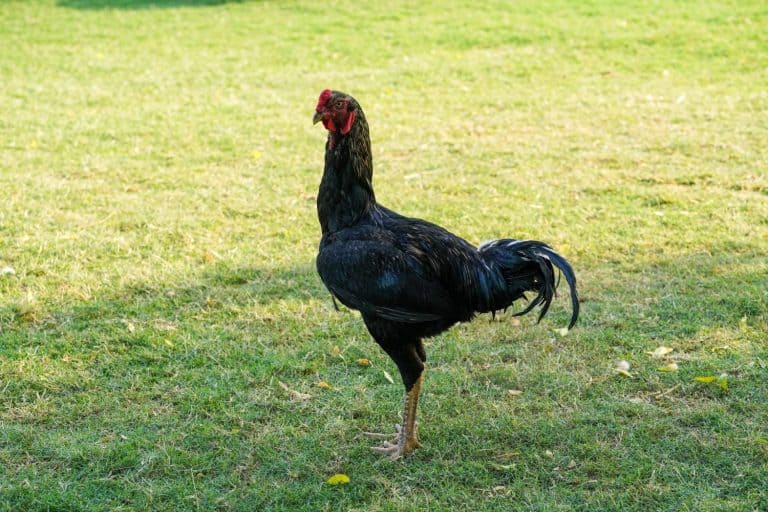
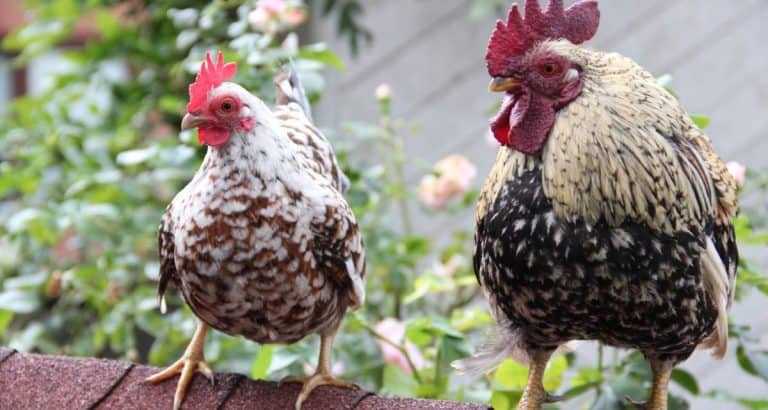
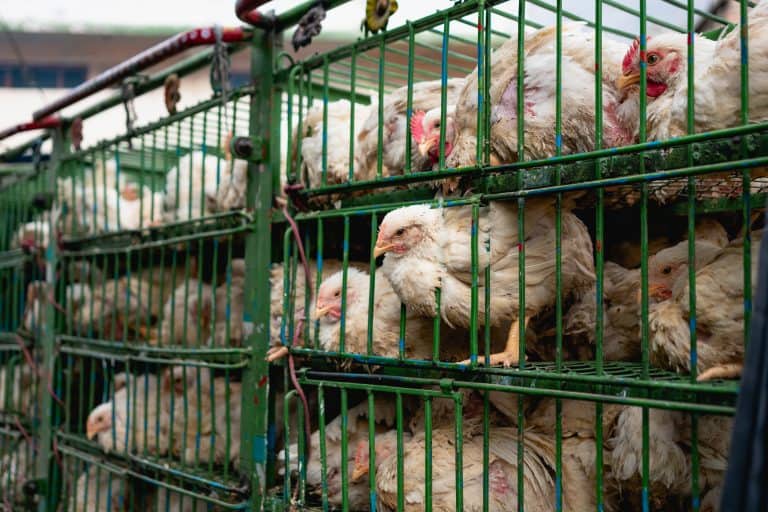
Chickens have a long history of successful domestication, which is why they are presently the most widespread domesticated bird species in the world. Chickens are not picky eaters, can thrive in numerous environments, and are dependable egg layers. Their social nature and relatively simple domestication process contributed to their global popularity.
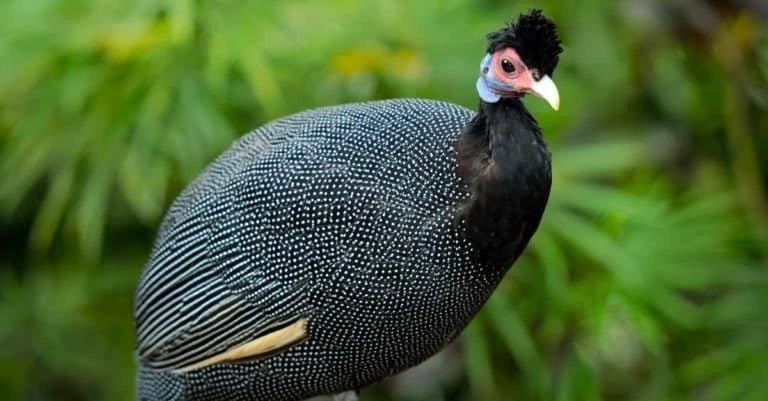
Guinea fowl tend to roam much farther than chickens, which helps with pest control. However, they are also more prone to fighting among themselves. Guinea fowl prefer to perch in a high place at night instead of going into a coop. Guinea fowl produce a loud, jarring call that is often described as shrill and harsh. Their calls are much more intense than those of chickens and can be heard from a significant distance, with some owners reporting hearing them from up to half a mile away.
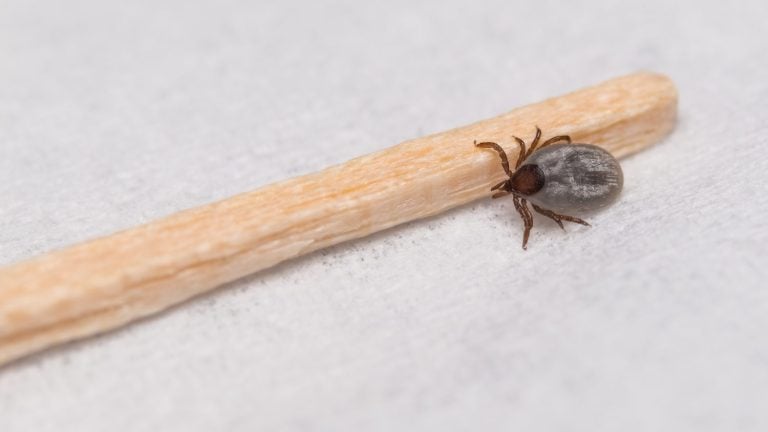
Guinea fowl are widely regarded as effective at pest control and area surveillance because they roam farther, eat ticks, and act as natural alarms against predators like foxes and snakes. While chickens also eat ticks, the guinea fowl’s wider range allows them to cover more area.
Meat
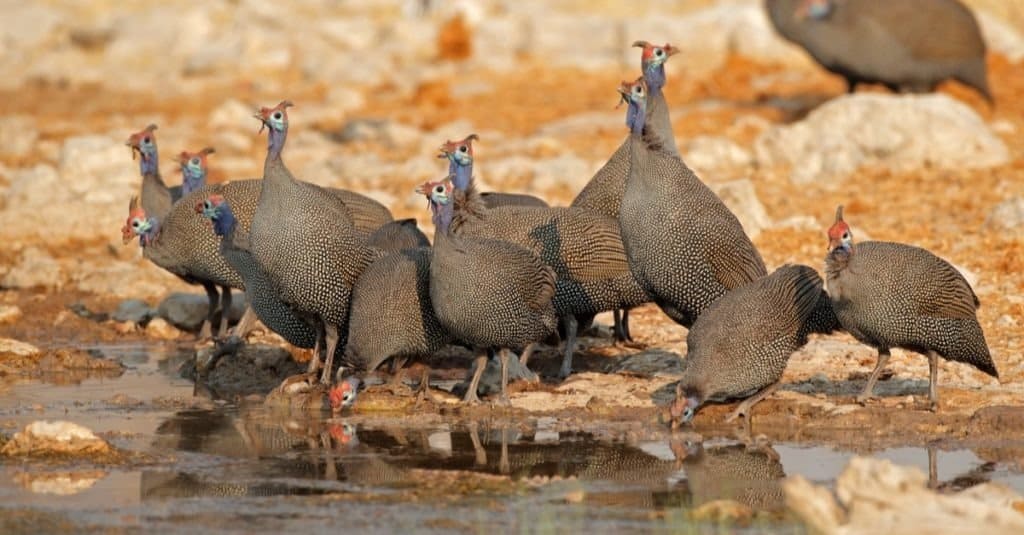
Guinea fowl meat is leaner and has a gamey flavor.
©EcoPrint/Shutterstock.com
Although chicken meat is considered lean, it is slightly fattier than guinea fowl meat. Guinea fowl meat is darker, gamier, and leaner than chicken meat, with a flavor reminiscent of pheasant. Guinea fowl meat is slightly higher in protein and lower in fat than chicken meat, though differences in cholesterol content are minimal. Because it is leaner than chicken, guinea fowl requires moist cooking methods to prevent it from drying out.