
Quick Take
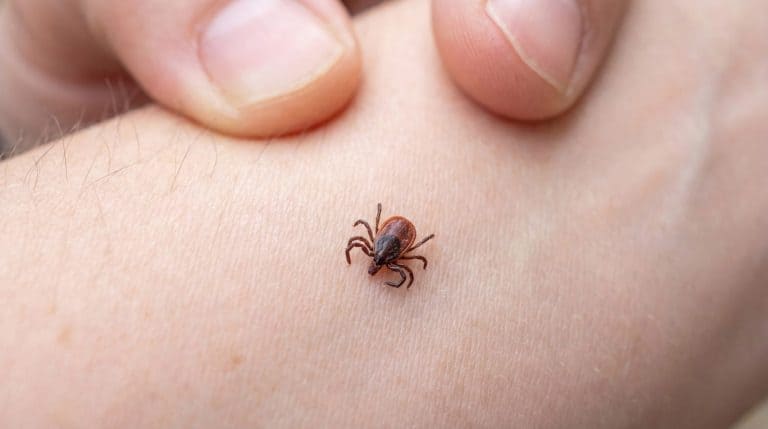
- A tick the size of a poppy seed is harder to spot than an adult, but being difficult to see is not the only reason the nymph stage is the most dangerous one in the deer tick's life cycle. Meet the nymph stage →
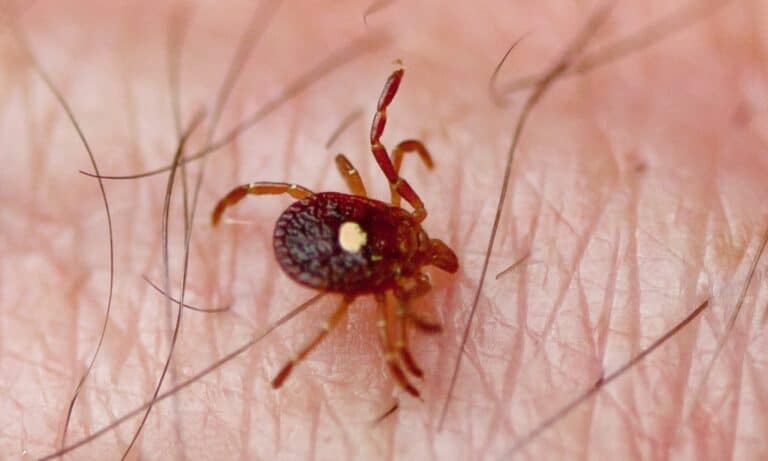
- One common tick bite doesn't just risk infection. It can permanently change what you're able to eat. See the red meat allergy risk →
- Ticks can't jump or fly, yet they still manage to find you in your own backyard. The way they do it changes where you need to check. See where ticks hide →
- Deer tick larvae pick up Lyme disease from their very first host, yet they won't pass it on until much later. How larvae acquire Lyme →
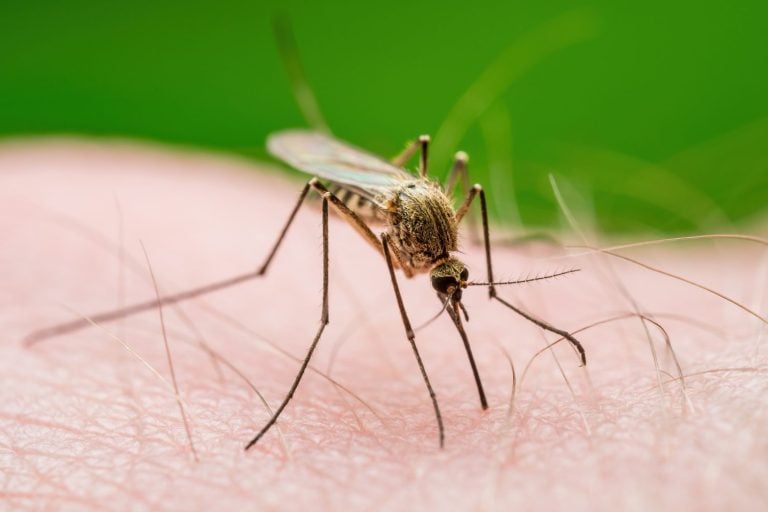
Unlike a mosquito, which quickly bites and buzzes away, a tick latches on to you and can stay put for days. With mosquito bites, you’ll notice yourself itching shortly after the bite, but you generally won’t notice a tick bite until long after the tick is gone. One of these stealthy pests, the deer tick, has a two-year feeding cycle in which it feeds on three separate hosts. It is from the first of these hosts that deer ticks pick up the dangerous bacteria that can cause Lyme disease.
The deer tick’s unique feeding cycle makes it a more dangerous health threat than the noticeable buzzing and biting insects. However, it is not the only tick in North America that can spread disease. How can you identify a deer tick from other species of ticks? Are all tick species capable of transmitting diseases? Finally, where do ticks wait in ambush for unsuspecting humans?
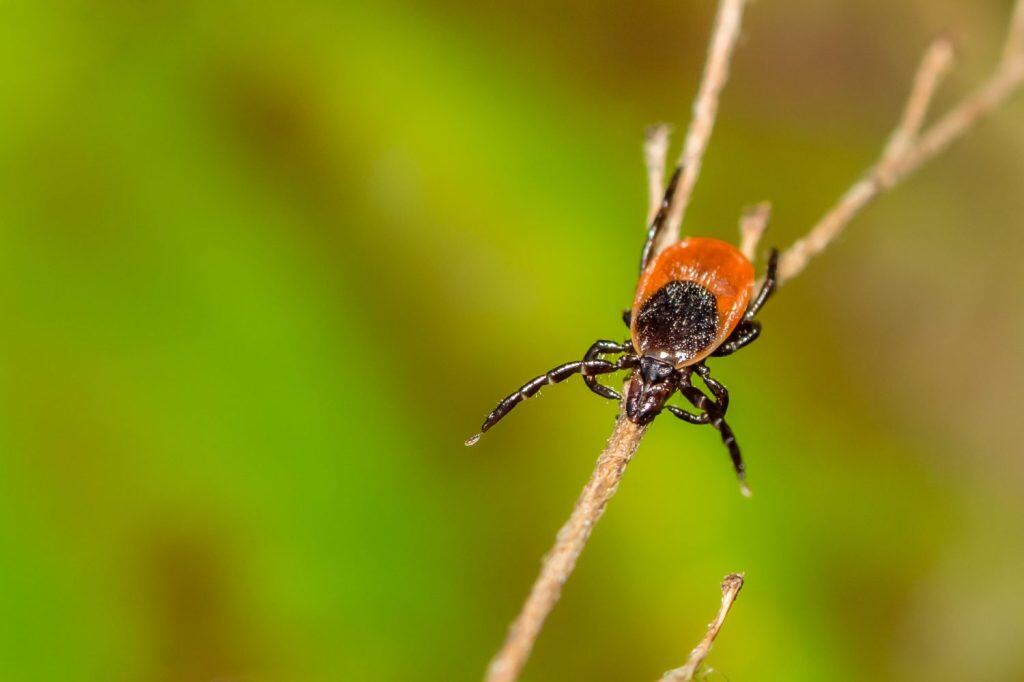
Around 500,000 Americans are diagnosed with Lyme disease, transmitted by deer ticks, each year.
©Jay Ondreicka/Shutterstock.com
The Deer Tick’s Two-Year and Three-Host Feeding Cycle
The deer tick (Ixodes scapularis), also known as the black-legged tick, is not an insect but an arachnid. As it feeds on a person’s blood, it can spread severe illnesses. The most common of these is Lyme disease. The first signs of Lyme disease are usually flu-like symptoms, but it can progress into a variety of serious health problems.
Deer ticks have a two-year feeding and life cycle that is broken into four stages: egg, larva, nymph, and adult. While some ticks have a one or two-host feeding cycle, ticks with three-host life cycles are the ones that often become public health threats.
Stage 1: Egg
Adult females feed on blood, become engorged, and then drop off their last host to lay eggs. This usually occurs in the spring.
Stage 2: Larva
In late spring or summer, the eggs on the ground hatch into six-legged larvae. The tiny larvae need their first blood meal from an animal to molt into the nymph stage. They seek out and feed on small animals such as chipmunks, mice, or birds. Ticks are not born carrying Lyme disease, but can pick up the pathogens that cause it while feeding on their first host. They won’t pass it on until they grow into nymphs or adults. Larvae are resilient. If a tick in the larval stage cannot find a host, it does not die. Instead, it goes dormant until the following spring when it searches once again for a meal.
Stage 3: Nymph
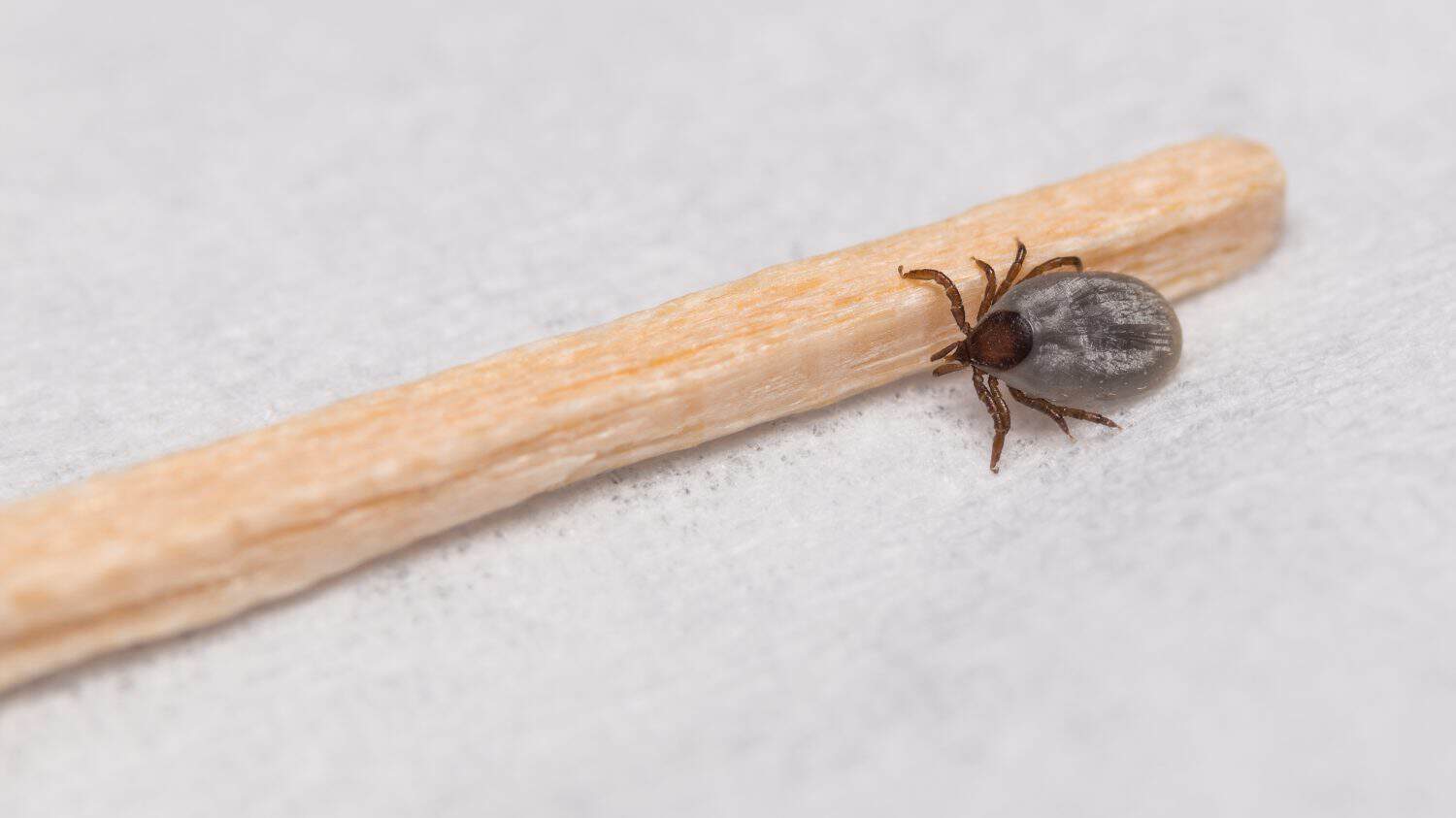
The following spring, in year two, the larvae emerge as eight-legged nymphs. At this point, the ticks seek out humans or animals to feed on. Because the nymphs are so small, about the size of a poppy seed, they are easy to overlook. They must be attached for at least 24 hours to spread Lyme disease. At this tiny stage, they may be missed, making them more likely to transmit disease to pets and humans than larger, more noticeable adults.
Stage 4: Adult
In the fall of year two, the nymphs molt and grow into adult male and female ticks. At this stage, they are about the size of a sesame seed and will often seek out white-tailed deer to feed on. They then mate, lay eggs, and the cycle begins again. If female deer ticks don’t find a male to mate with before the winter, they burrow under leaf litter and wait until the following spring to try again.
The Hidden Places Ticks Wait for Humans and Pets

Check your dog for ticks after he has spent time outdoors, especially in forests.
©ARENA Creative/Shutterstock.com
Ticks live in wooded areas, tall grasses, and shrubs. Any time you spend outdoors, even in your own backyard, you or your pets can come into contact with ticks. In addition to forests, ticks can also be found at the edges of yards, in leaf litter, and in wood piles. You may find ticks taking shelter in play structures, along stone walls, in overgrown brush, and even on lounge chairs or other outdoor furniture. Although ticks cannot fly or jump, they wait in the grass or on shrubs for a host to pass by.
The CDC recommends checking your clothing and gear when you come inside. You should also do tick checks on yourself and your pets. Finally, showering within two hours of coming inside can help wash off unattached ticks and is also an ideal way to perform a tick check.
Common Tick Species and the Diseases They Carry
Using information from the Mayo Clinic, we have listed below the tick species you may encounter in the U.S. and the diseases they can transmit.
American Dog Tick (Dermacentor variabilis)
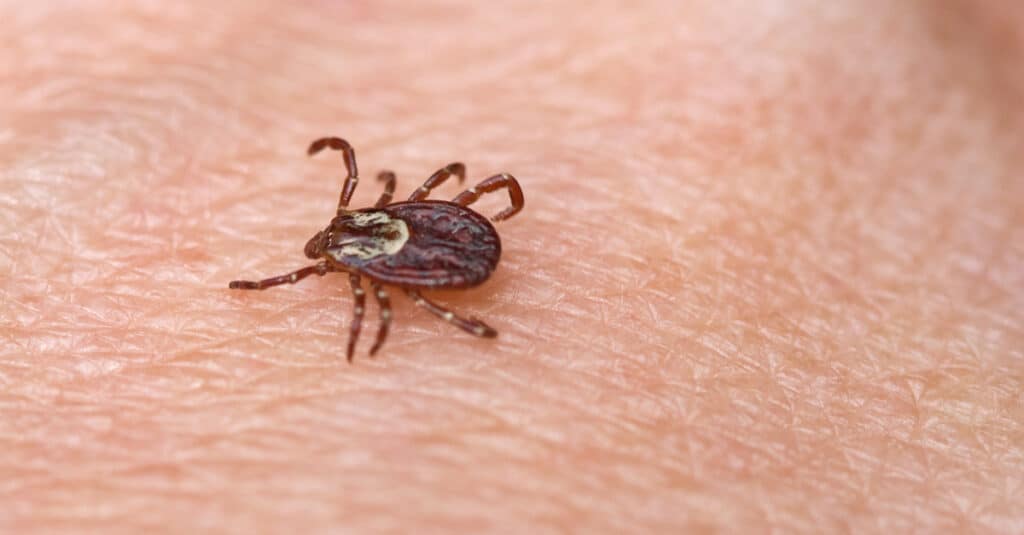
The American dog tick transmits Rocky Mountain spotted fever.
©Melinda Fawver/Shutterstock.com
- Location: East of the Rocky Mountains/Pacific Coast
- Diseases: Rocky Mountain spotted fever, tularemia
Brown Dog Tick (Rhipicephalus sanguineus)
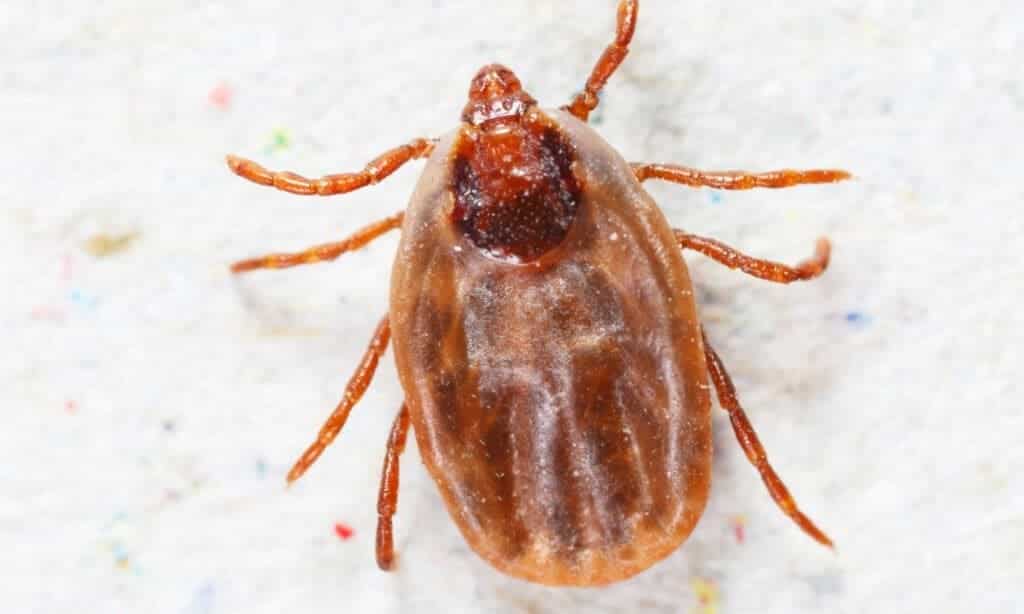
Brown dog ticks are found in every U.S. state except Alaska.
©7th Son Studio/Shutterstock.com
- Location: Entire U.S.
- Diseases: Rocky Mountain spotted fever
Deer Tick/Black-Legged Tick (Ixodes scapularis)
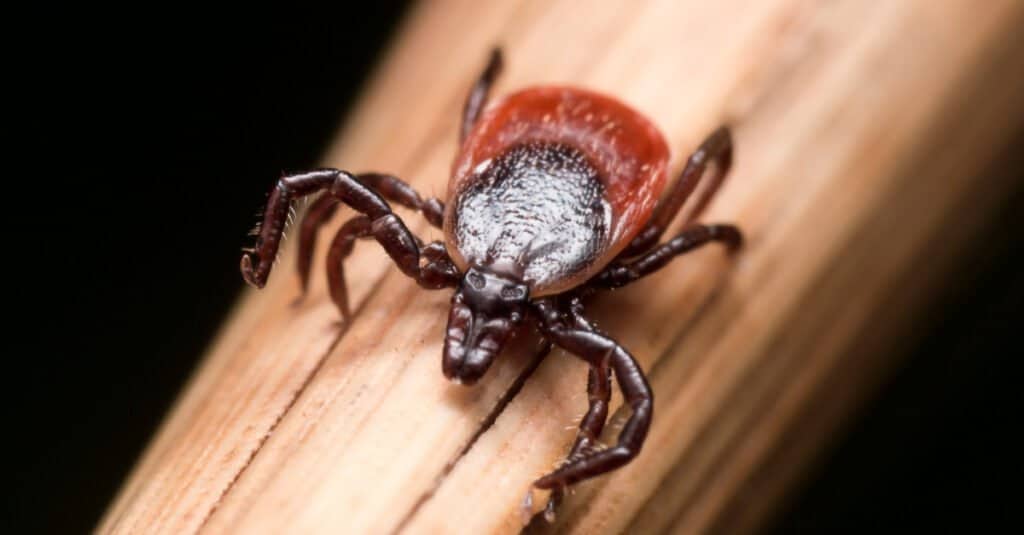
Adult female deer ticks are slightly larger than the males.
©Steven Ellingson/Shutterstock.com
- Location: Eastern half of the U.S. and the Midwest
- Diseases: Anaplasmosis, Babesiosis, Ehrlichiosis due to Ehrlichia muris eauclairensis, Lyme disease, Borrelia miyamotoi disease, Powassan virus disease
Gulf Coast Tick (Amblyomma maculatum)
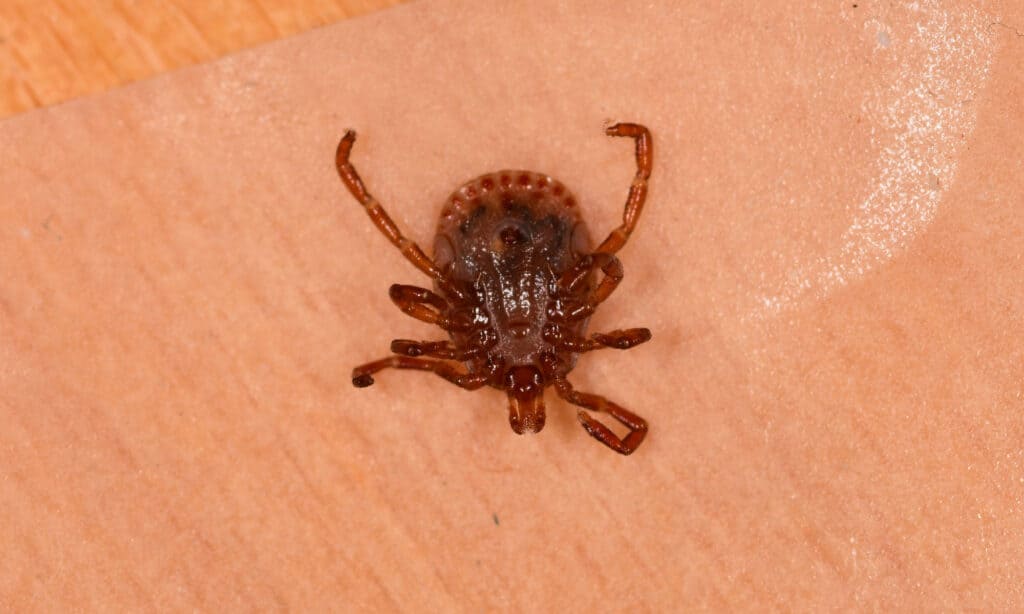
The spotted fever disease spread by the Gulf Coast tick is similar to the more well-known Rocky Mountain spotted fever.
©iStock.com/cturtletrax
- Location: Gulf States and Atlantic Coast
- Diseases: Spotted fever (Rickettsia parkeri rickettsiosis)
Lone Star Tick (Amblyomma americanum)
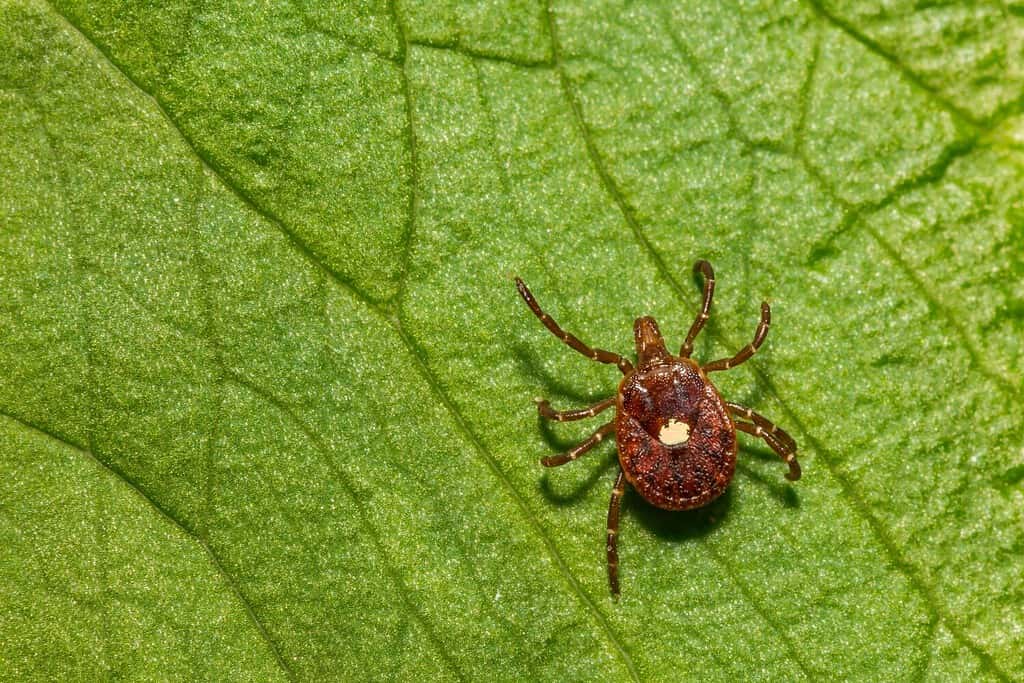
A bite from a Lone Star tick can cause people to develop a red meat allergy.
©Jay Ondreicka/Shutterstock.com
- Location: Southern and Eastern U.S.
- Diseases: Ehrlichiosis due to Ehrlichia chaffeensis and Ehrlichia ewingii, Heartland virus disease, southern tick-associated rash illness (STARI), Bourbon virus disease, tularemia
Rocky Mountain Wood Tick (Dermacentor andersoni)
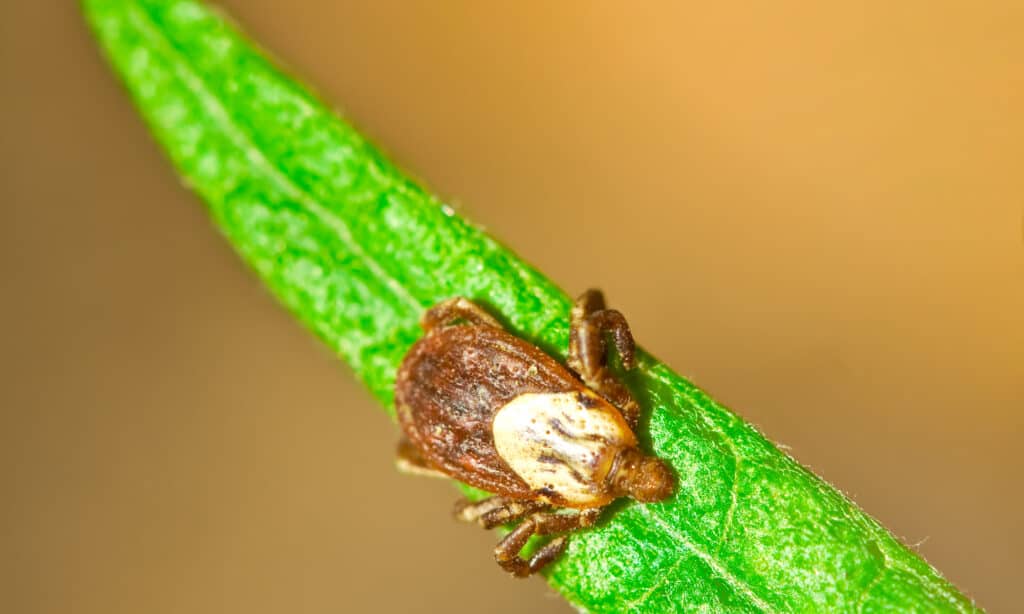
Rocky Mountain wood tick adults can survive up to two years without eating.
©South12th Photography/Shutterstock.com
- Location: Rocky Mountains
- Diseases: Colorado tick fever, Rocky Mountain spotted fever, tularemia
Western Black-Legged Tick (Ixodes pacificus)
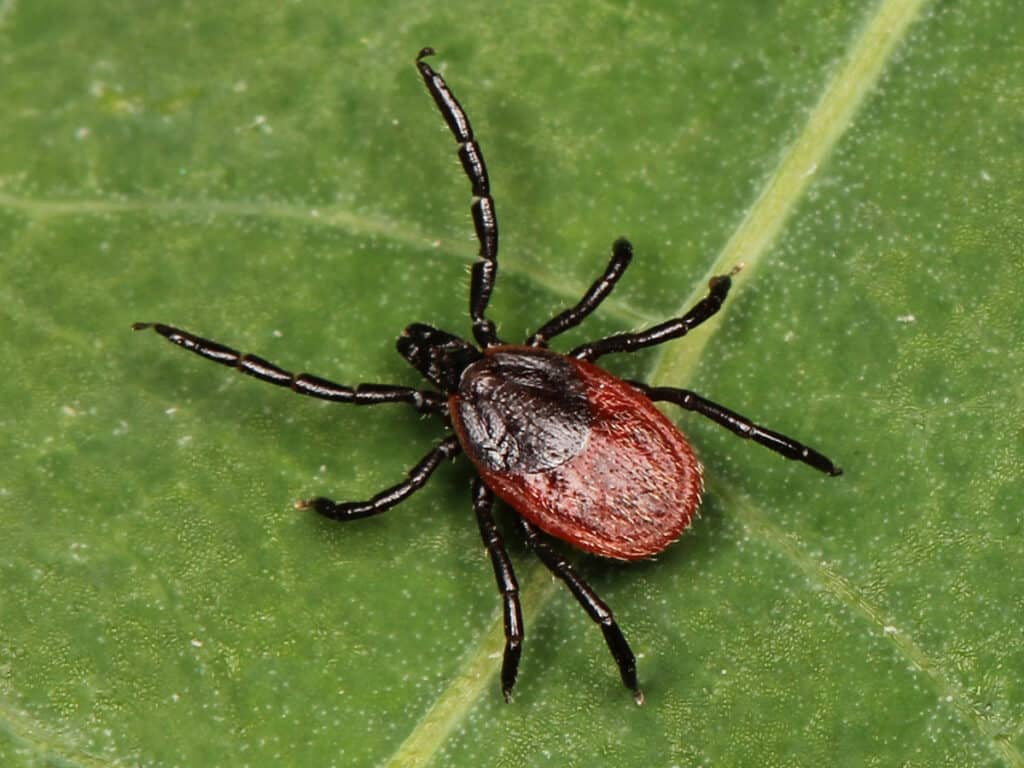
The Western black-legged tick looks nearly identical to a deer tick.
- Location: Pacific Coast
- Diseases: Anaplasmosis, babesiosis, Lyme disease