
Quick Take
- The horses once celebrated as the last truly wild horses on Earth aren't actually wild at all, a fact proven by ancient DNA. The Botai horses' true origin →
- Horses were being ridden and milked long before they had the genetics scientists use to define 'domesticated,' and this fact raises an uncomfortable question about how we define the word. Riding before full domestication →
- The language you speak today may trace back, indirectly, to a single population of horse-riders who lived 5,000 years ago. Horses and language spread →
- Three separate groups domesticated horses independently, but only one lineage survived into the modern world. Scientists are still arguing about why. Three lineages, one survivor →
Domestic horses have played a vital role in the development of human civilization. From agriculture and transport to warfare and sport, life would not be the same without them. Within the scientific literature, however, there is an intense debate about exactly when and how that domestication took place. A newly published analysis of archaeological and osteological (bone) records and ancient DNA suggests that there was no sudden breakthrough in domestication. Rather, it was a protracted process that played out in several regions. Also, it was intertwined with human mobility and social organization, linking our two species more closely than you probably realized!
Horse Domestication Genetics
Before we can delve deeper into horse domestication, we first need to take a look at horse genetics. The area now known as Eurasia was once populated by genetically distinct horse populations. Scientists have uncovered four main lineages that have existed since the last ice age (Holocene period). However, all modern domestic horses come from just one, which is named the DOM2 lineage. These horses come from an area called the Pontic-Caspian steppes, which stretches from the northern shores of the Black Sea to the northern area around the Caspian Sea.
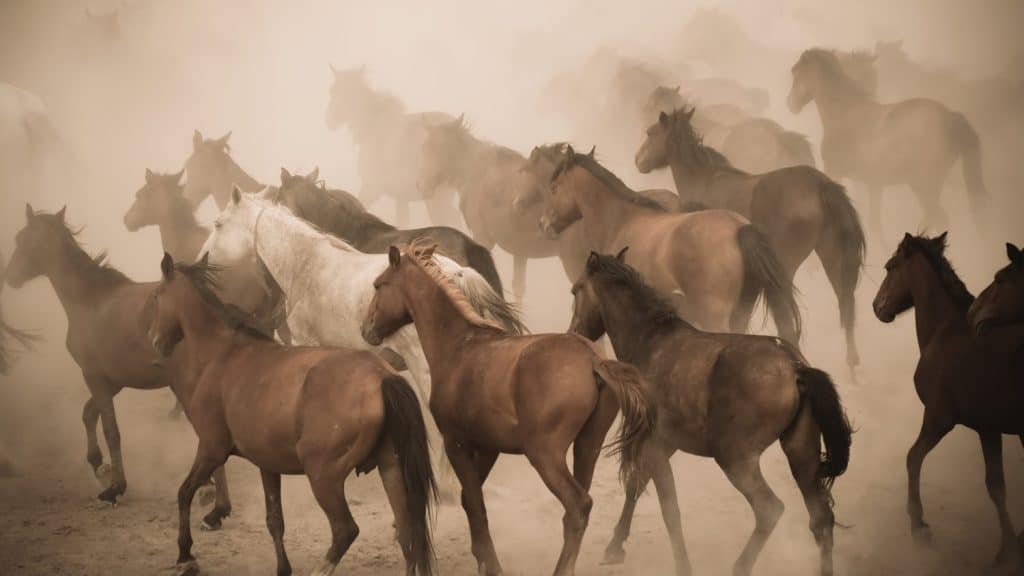
Eurasia was once populated by genetically distinct horse populations.
©yalicn/Shutterstock.com
The term ‘domesticated’ refers to horses whose genetic makeup includes certain distinct mutations. One set of genes connected with domestication is the GSDMC locus, which is associated with pain response, increased endurance, and body conformation. Another is the ZFPM1 locus, which is connected with a horse’s fear and anxiety and may make horses calmer around humans.
Horse Gene Selection
After around 2200–2100 BCE, DOM2 horses with these favorable mutations quickly spread across Europe, Anatolia, the Near East, and Central Asia, replacing horses with different genetic backgrounds. This may represent the point at which horseback riding became widespread. At this time, human populations became more mobile because they could get around using horses.
The picture, however, may not be as simple as that. The authors of the new study argue that other horse lineages, namely DOM1 and DOM3, were also managed and potentially ridden, even though they did not possess the ‘tame’ genetics of DOM2. They maintain that horse domestication was a long and protracted process. Horses were managed as far back as the fourth millennium BCE and used for riding and milking.
That said, genetic analysis of horse remains must be coupled with archaeological and cultural context if we are to fully understand how horses were domesticated.
Multiple Horse Domestication Events
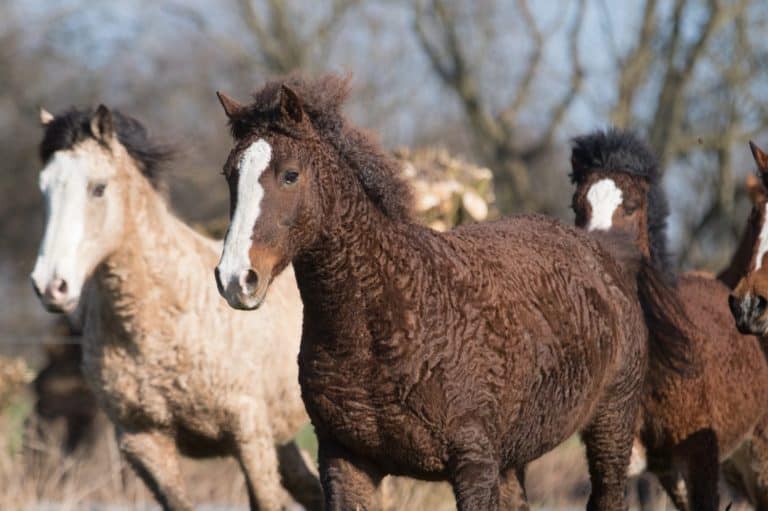
There is evidence of horse domestication in three distinct horse populations. The first is the DOM1 lineage, domesticated in the Central Asian steppes east of the Ural Mountains, by the Botai people (Central Asian hunter-gatherers). This occurred between ∼3500 and 3100 BCE, and the horses were used for meat, milk, and manure. There is a debate about whether these horses were ridden. Possible wear from rope bits has been found on their lower second premolars. Recent genetic studies have shown that Przewalski’s horses, once thought to be the last wild horses, are actually feral descendants of the horses domesticated by the Botai people. However, modern domestic horses do not descend from the Botai lineage.
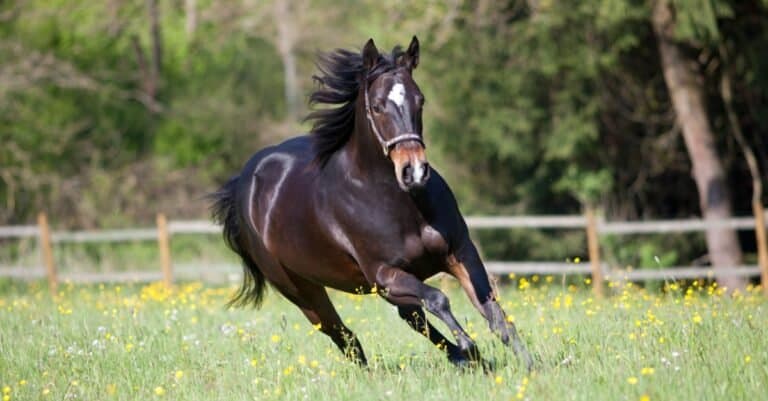
Horse domestication was likely a protracted process.
©Kwadrat/Shutterstock.com
The second is the DOM2 lineage in the European or Pontic-Caspian steppes. These include the horses of the Yamnaya culture. Finally, there is an unnamed European-Anatolian lineage called DOM3. These were indigenous European horses adapted to meadow or marsh environments. There is some evidence that some of the larger DOM3 horses were used as pack animals or for riding.
How Is Horse Domestication Linked to European History?
About 5,000 years ago, herders called the Yamnaya entered Europe from the eastern Steppe region, which is in present-day Ukraine and Russia. It’s argued that the Yamnaya culture used horse riding combined with ox-drawn wagons from around 3200 BCE. This enabled them to exploit the Eurasian steppes and invent a kind of pastoral economy that would have been impossible without horses. Other populations may well have also ridden horses, but the economic context of riding was different in each region. In the Pontic-Caspian steppes, it led to the selection of desirable traits and the selective breeding of horses.
Also, the Yamnaya population migrated over longer distances than any other Eurasian population had done before. The horses played an important role in connecting previously unconnected regions and in managing larger herds than ever before. This leap in mobility has been linked to the spread of Proto-Indo-European languages that gave rise to the widely dispersed Indo-European languages that we see today. The Yamnaya peoples also had wheeled carts and wagons for long-distance travel. As they spread through Europe, they took this technology with them. The domestication of horses profoundly shaped human societies, economies, and mobility across Eurasia, leaving a lasting legacy on the development of the modern world.