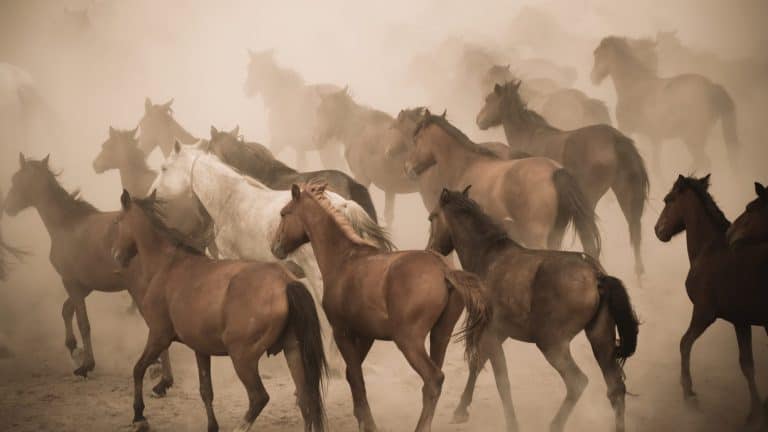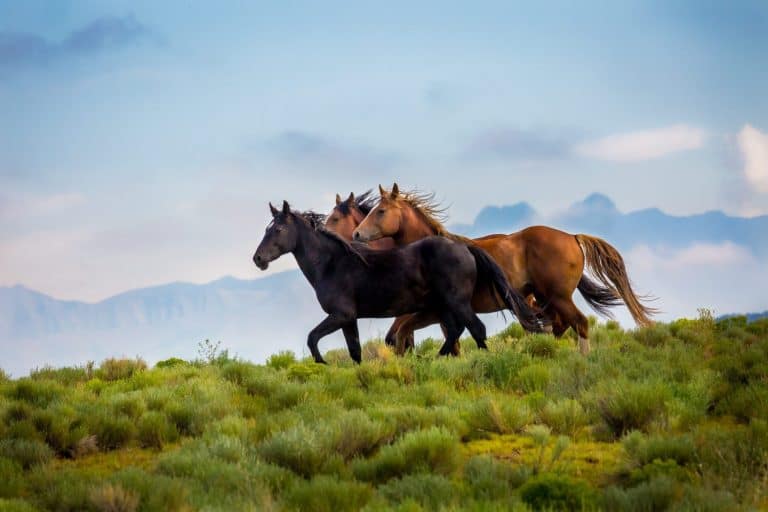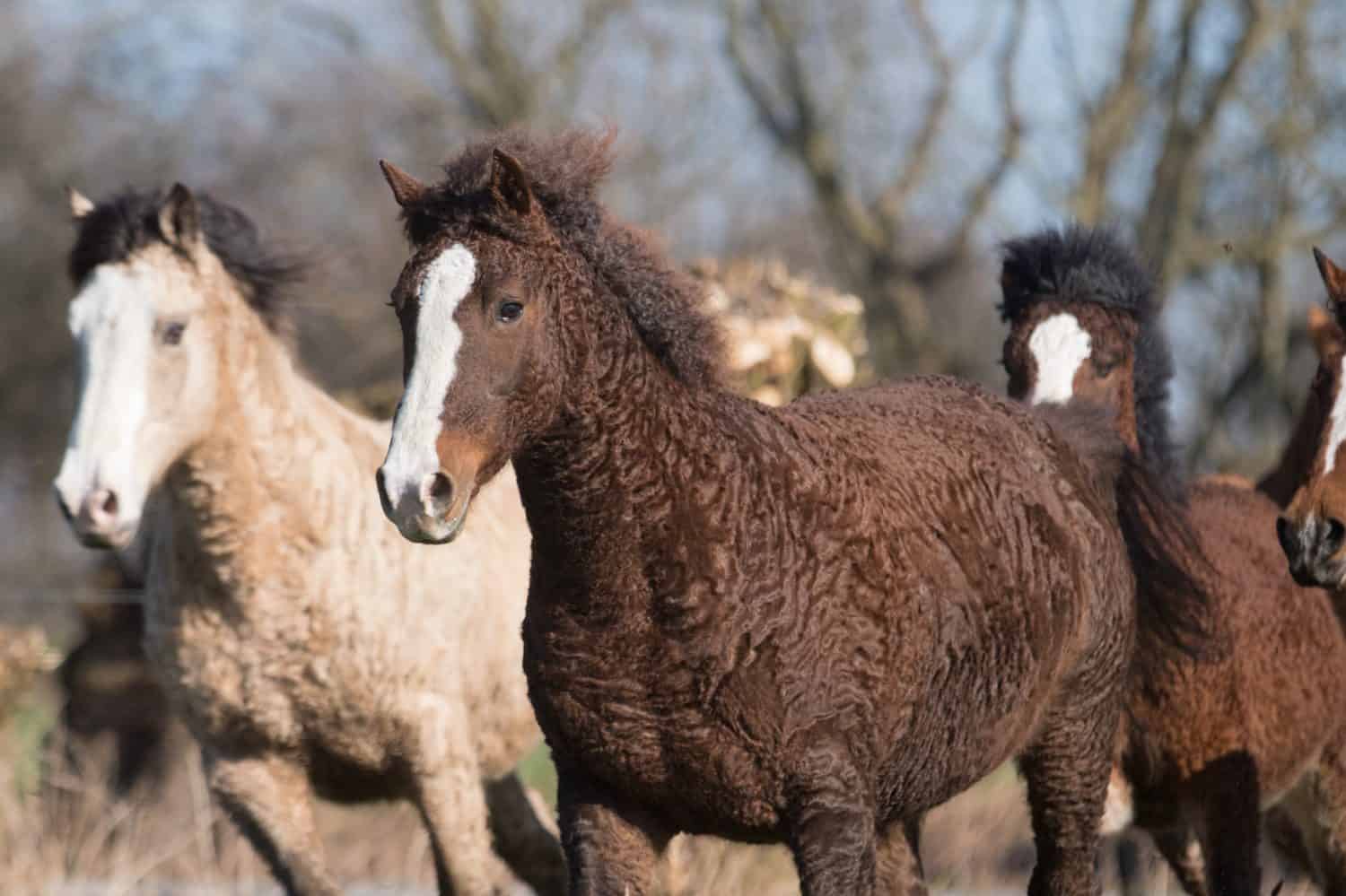

With its unique, poodle-like coat, the American Bashkir Curly Horse is a rare and enigmatic breed. Though its origins remain a mystery — with no single theory to satisfy the perspectives of scientists, tribal historians, and breeders — the horse clearly has deep roots in North America. These roots extend from indigenous horse culture to the wild herds found in the high deserts of Nevada and Wyoming. Today, the future of the last significant wild populations of curly-coated mustangs hangs in the balance, as federal agencies and conservation groups argue over their place in the modern world.
Decoding the American Curly’s Genetics
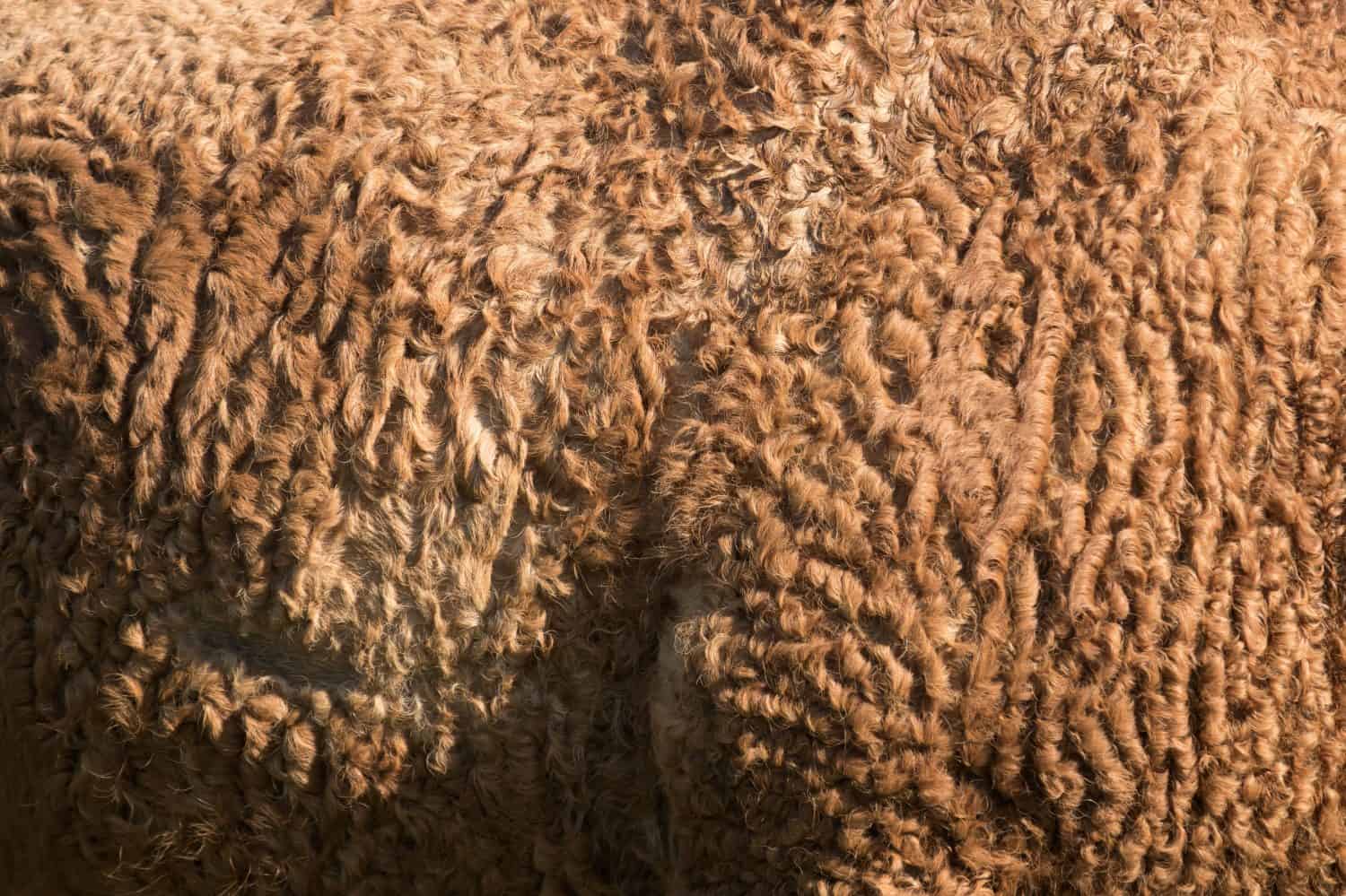
Those with allergies often find that they can work with American Curly Horses.
©juhipp/Shutterstock.com
The American Bashkir Curly Horse has a striking and intriguing coat, ranging from soft waves to tight ringlets. These horses come in all common coat colors, including pinto, bay, and appaloosa patterns. The horse’s uniquely curly coat is also one of the only hypoallergenic coats found among horses.
This unusual hair texture comes from several specific genetic mutations. The most common cause in North American horses, both wild and domestic, is a mutation in the keratin gene KRT25, which affects the hair shaft and makes the hair more brittle. Another key factor is the SP6 transcription factor mutation, which alters the shape of the hair follicle during development. Other factors — such as the Cook, Sulphur, and Unknown Curly Gene a (UCGa) mutations — are thought to contribute as well. However, the exact genes involved have not yet been identified.
Interestingly, the two primary American mutations, KRT25 and SP6, differ from those found in the Argentine Curly horse, suggesting the North American lineage evolved independently.
A Distinct Lineage
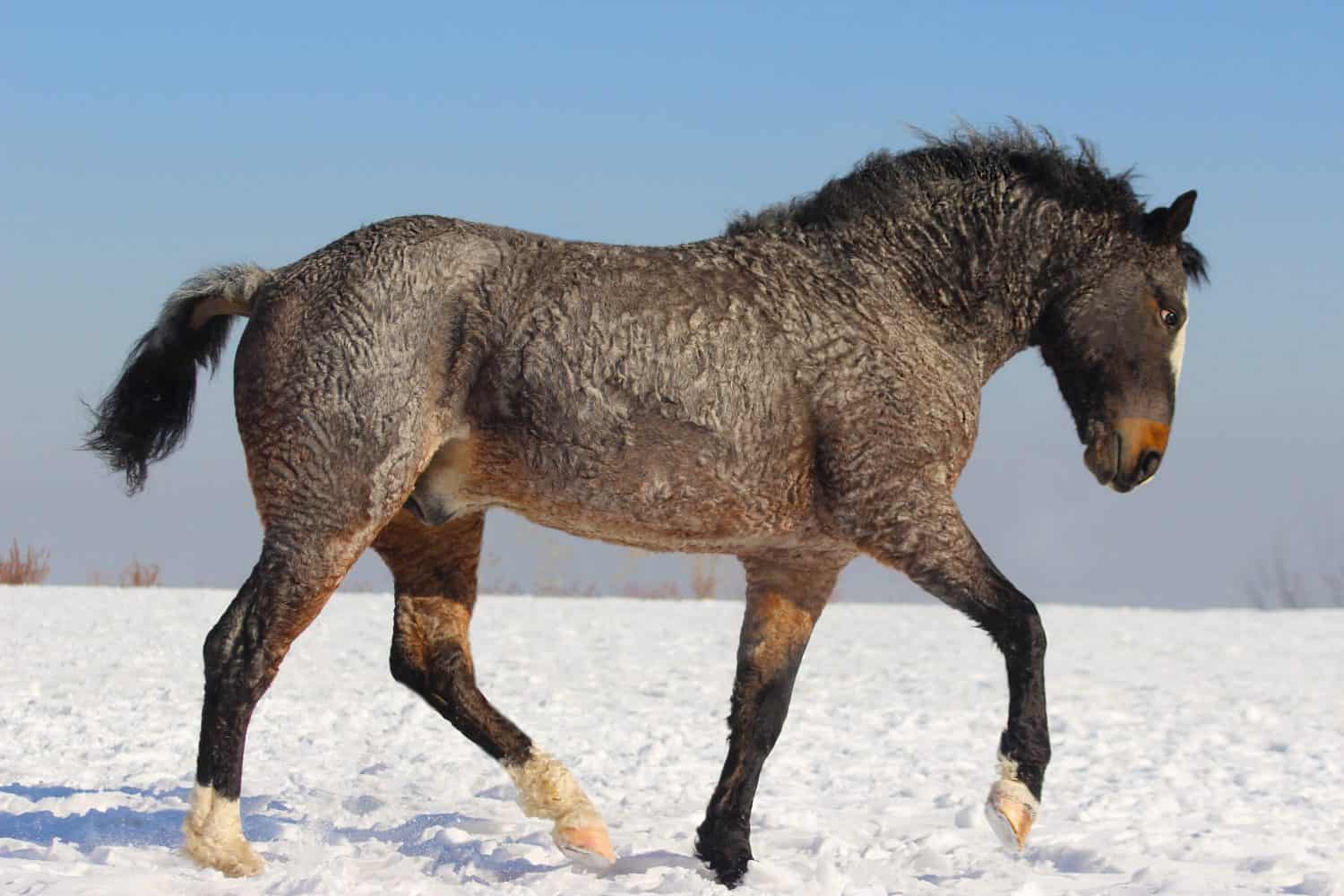
American Curly Horses are not related to the Bashkir of Russia or the Lokai of Tajikistan.
©SunnyMoon/Shutterstock.com
While horses with curly hair are not unique to North America — they appear in ancient art from China (around 161 AD) and have been described in Europe and South America — the specific genetics of the North American Curly Horse set it apart from the rest. This makes it a distinct breed whose lineage cannot be easily traced to other historical sources.
Curly horses can inherit several different mutations independently; some may even exhibit two different curly mutations at the same time, leading to the term ‘dual gene curly horse.’ However, breeders must be careful, as certain combinations of these mutations — particularly when the UCGa mutation is involved — can lead to partial or complete baldness.
American Curly Horses have dense, curly hair, which covers their bodies, manes, tails, inside their ears, and even their distinctive upward-curling eyelashes. Uniquely, these horses go through dramatic seasonal changes, shedding their entire body coat, mane, and sometimes even tail each summer. This often leaves the horses with wavy or even straight hair until their full curls return in the winter.
Early Documentation of the Curly Horse
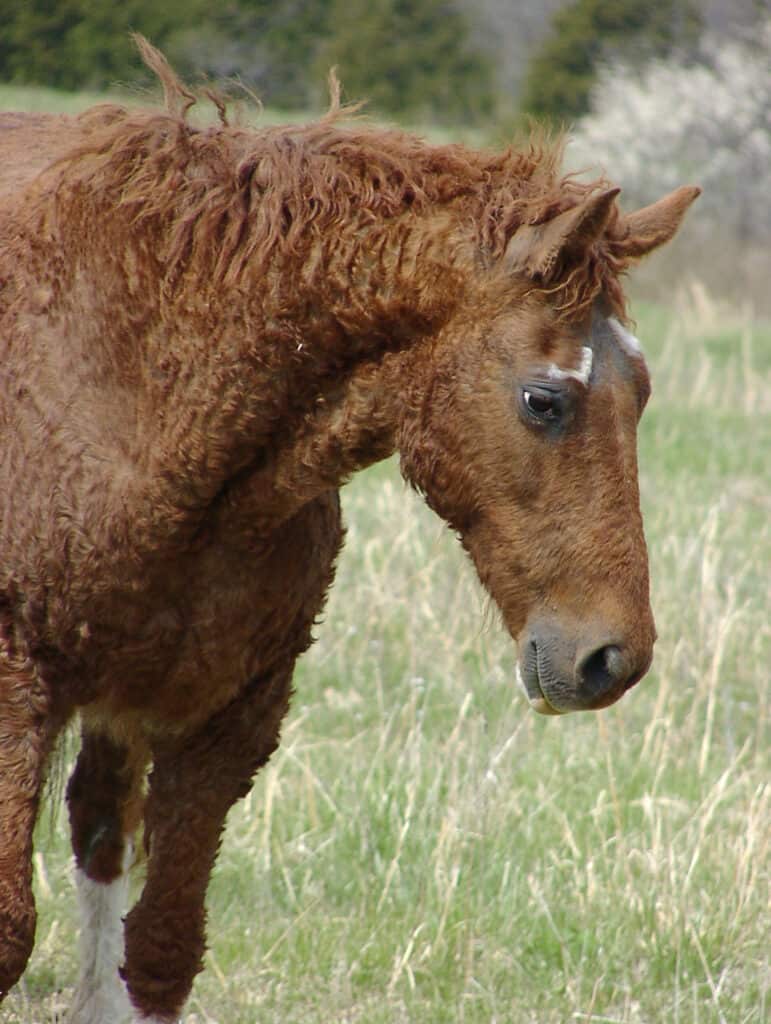
American Curly Horses are typically hardy and resilient animals.
©iStock.com/DawnYL6161
One of the most compelling early records of the North American Curly Horse comes from the winter counts of Native American tribes. Historians for the Sioux tribe documented capturing several curly-coated horses from the Crow tribe during the winter of 1801-1802.
Nearly a century later, rancher Peter Damele and his father discovered three wild horses with tight curls while riding through the remote Peter Hanson Mountains. Mesmerized by the sight, they began capturing and breeding these horses. Over the next few decades, the Damele family became the foundational stewards of the breed. In 1971, the American Bashkir Curly Horse Registry (ABCR) was established. The ABCR works to preserve and protect the genetic pool of this rare breed.
Ironically, the modern name for this breed is based on a case of mistaken identity. The Damele family had saved a picture of a curly-coated Russian Bashkir horse from a 1938 issue of *Nature* magazine. Mistakenly believing their horses were descendants of the same Russian breed, they used the term ‘Bashkir’ in the American breed’s official name. Today, many American Bashkir Curly Horses trace their lineage directly back to the Damele herd, as well as to horses captured from wild herds and from tribal reservations in North and South Dakota.
A Head of Curls and a Heart of Gold
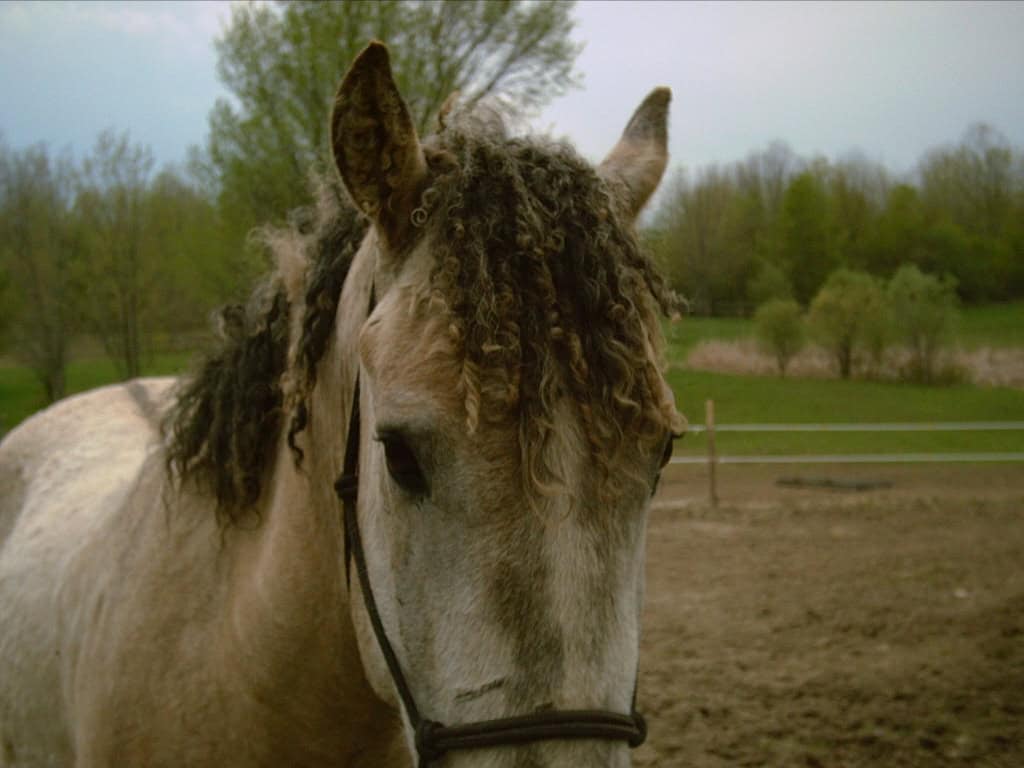
American Curly Horses have upward-curling eyelashes and curly hair inside their ears.
©Penella22 / CC BY 3.0 / Wikimedia Commons – Original / License
While the American Bashkir Curly is well-known for its striking coat, much of what makes this breed a favorite is its exceptional temperament. American curlies are full of personality, and yet they are typically gentle and remarkably composed.
Unlike most horses, American curlies rarely flee when frightened; instead, they face threats and the unknown head-on. They are highly intelligent and curious, and prefer to calmly assess the danger before deciding on their next move. Their impressive logic makes them less prone to injury and often much easier to work with than other breeds.
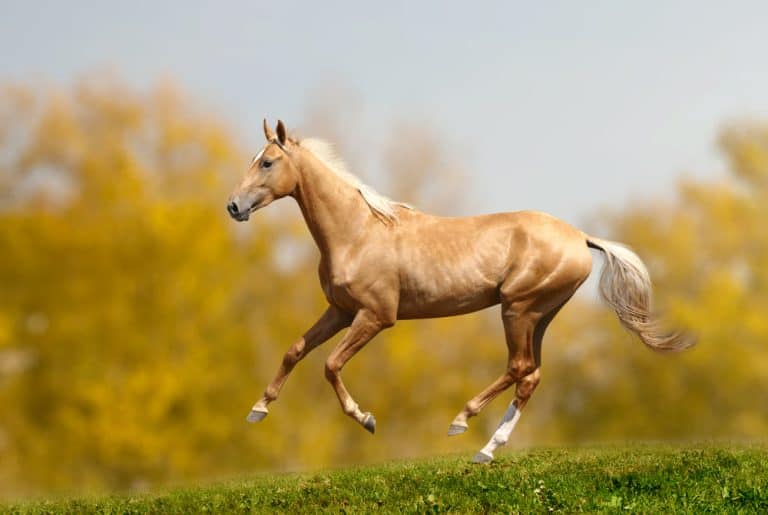
The horses’ soft eyes have a slight slant, contributing to their gentle appearance and often giving them a sleepy look. However, this unique eye shape actually provides them with a wider range of rear vision. Despite their gentle nature, these horses are far from lazy. Many Curlies move with a sense of pride and often display a naturally animated running gait. Horse lovers with allergies appreciate American curlies for their hypoallergenic qualities, as well as their affectionate and people-oriented temperaments.
The Battle for the Last Wild Curlies
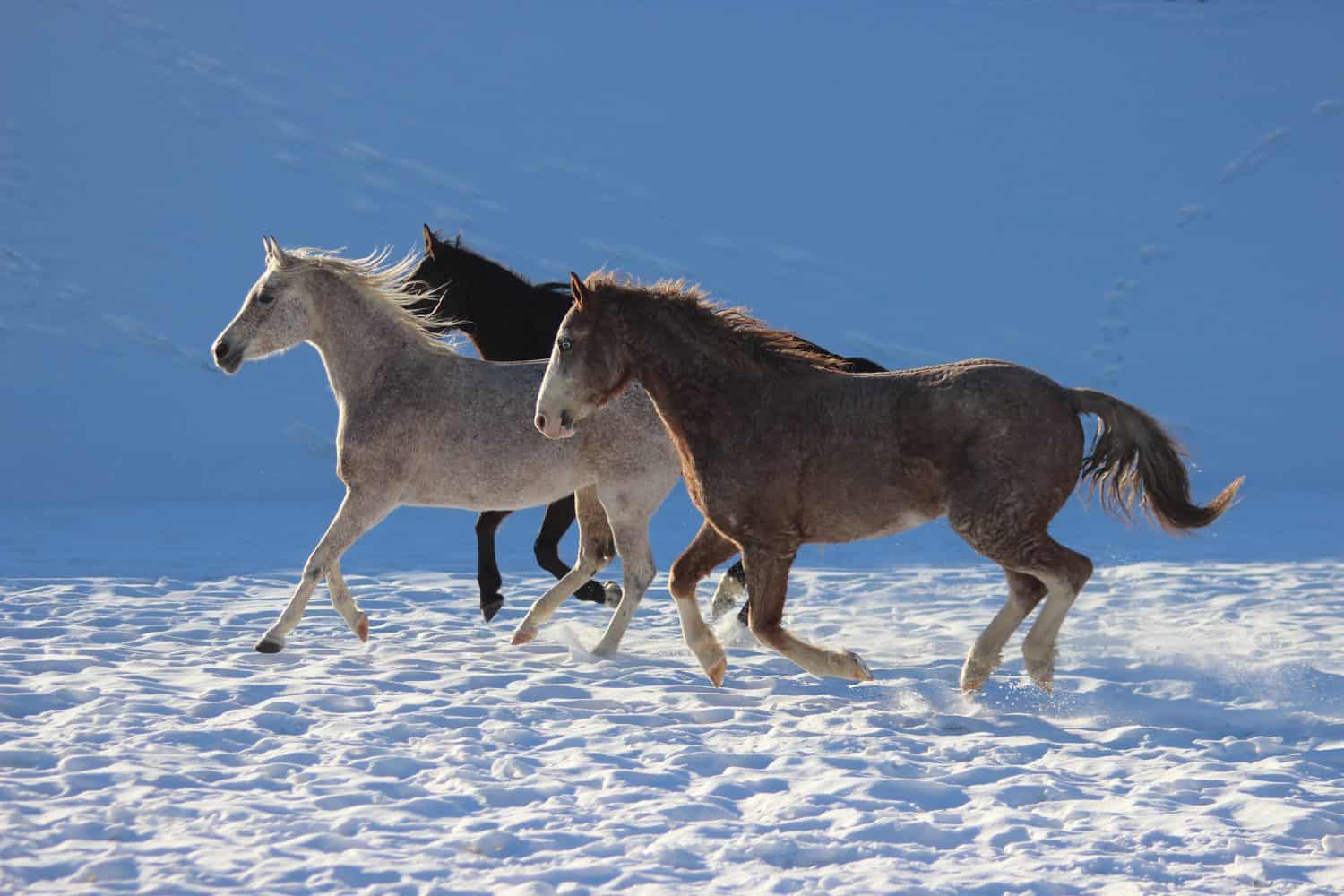
Experts are still researching and learning how genetics cause curly hair in horses.
©SunnyMoon/Shutterstock.com
While many American Bashkir curly horses live on ranches today, some of the rarest still roam wild in Wyoming’s Salt Wells Creek, Adobe Town, and Great Divide Basin herds near Rock Springs. The Salt Wells Creek herd is thought to be the largest known wild population in the world, with an estimated 100 curly-coated mustangs within its ranks. Unfortunately, in 2025, these horses became the focus of a high-stakes legal battle.
The conflict stems from the Bureau of Land Management (BLM), which recently announced plans to remove nearly all wild horses from Wyoming’s Salt Wells Creek, Adobe Town, and Great Divide Basin herds and reduce the land available to mustangs. The BLM argues that the herds have grown too large and could endanger the fragile desert ecosystem.
The situation is further complicated by the horses roaming in ‘checkerboard’ areas, where alternating parcels of BLM and private ranch land have led to disputes over horses encroaching on private property. The BLM’s proposed plan would ‘zero out’ the Salt Wells Creek herd, resulting in the permanent removal of every horse.
Legal Challenges and Future Outlook
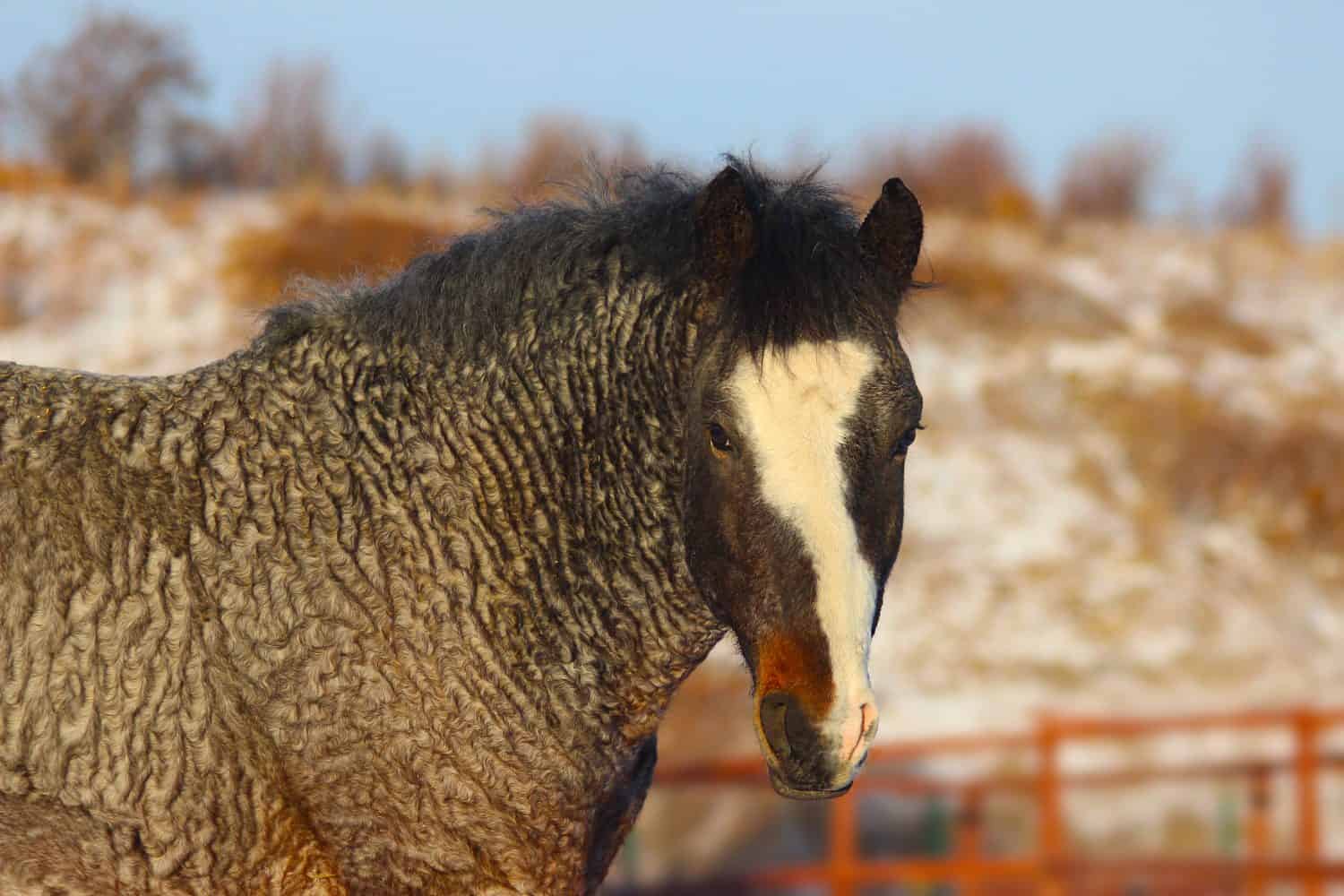
Even wild American Curly Horses tend to be calmer than most breeds.
©SunnyMoon/Shutterstock.com
Wild horse advocates fiercely opposed this decision, arguing that the BLM failed to demonstrate how its plan would maintain a natural ecological balance, as required by the Wild Horse Act.
A 2003 genetic analysis by Dr. Gus Cothran showed that the Adobe Town and Salt Wells Creek wild horse herds possess high genetic variability and healthy gene flow. Removing horses from these genetically robust and interconnected populations could undermine the herds’ long-term ability to survive and thrive. Maintaining natural population dynamics is crucial for preserving the horses’ rare genetic resources, including Iberian-lineage markers that are significant to their historical importance.
In 2025, the U.S. 10th Circuit Court of Appeals ruled against the BLM’s plan and sent the case back to the district court. For now, the BLM’s plan is on hold, and the Salt Wells Creek mustangs remain wild and free. However, the fight is far from over. New federal actions and court proceedings are likely through 2026. Many experts warn that if the horses are left unprotected, the last wild stronghold of Curly Horse genetics may disappear.