
Quick Take
- Researchers identified an exact bonding threshold that changes how horses should be managed, something most owners never account for. See the bonding timeline →
- Introducing horses with a shared history into a new group produces an outcome that surprises most barn managers. Discover the surprising outcome →
- Repeatedly rotating horses between groups can trigger a negative condition, and reversing it turns out to be harder than it seems. Learn about buddy sour →
- When a horse is separated from its companion, its body doesn't just register loneliness. It activates something primal. Explore the fight-or-flight response →
We often anthropomorphize animals, specifically those we care for. Recent research suggests that horses can form strong bonds not only with humans but also with other animals, including other quadrupeds.
When established groups of horses are split up, they can show strong emotional responses. The study shows that this manifests in various ways, including a horse’s mood. As it turns out, horse friendships are not all that different from human relationships.
Horses Build Trust Slowly
Depending on the horse, it can take months to establish trust with another herd member. While the initial meet-and-greet may appear friendly, this only serves as a baseline. It takes time for horses to develop deep, long-standing foundations with one another. Each horse has a unique personality, and if it’s entering a new herd, relationship-building must follow the pecking order.
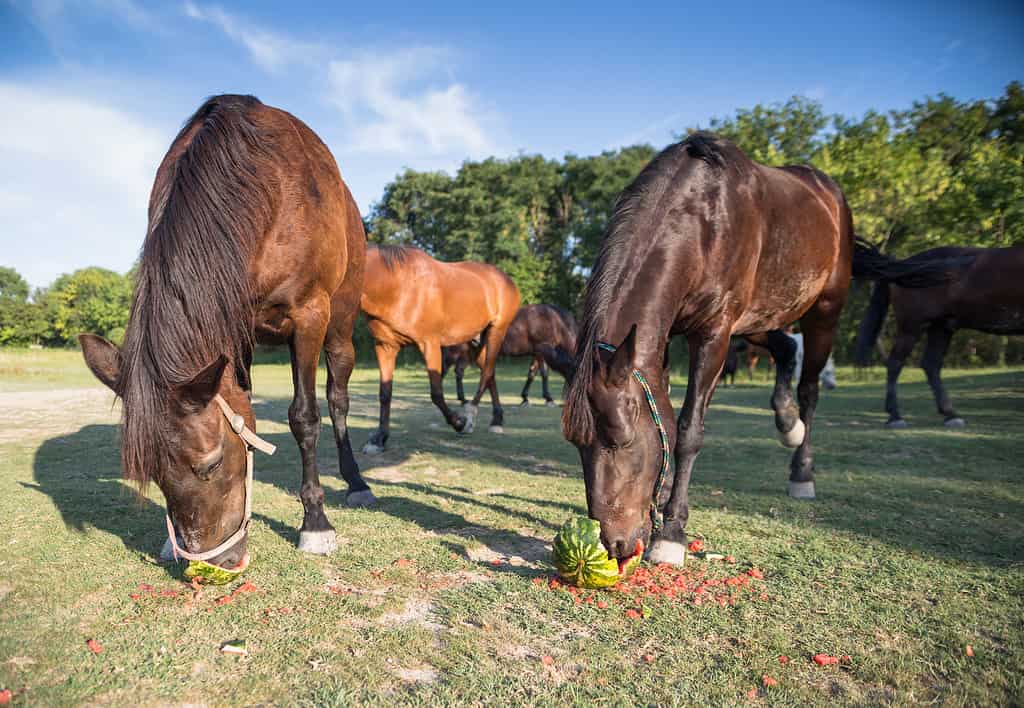
Horses that are bonded typically remain within close proximity to one another, even while eating.
©AleksandarDickov/iStock via Getty Images
Studies from European veterinary research centers have observed that horses take time to build trust and relationships within herds, with changes in behavior and temperament. Two groups of equines were studied over 1 to 12 months. During this time, researchers observed each horse’s activity levels, noting day-to-day differences.
By the two-month mark, the distance between many of the horses decreased significantly. Researchers noted a change in inter-individual distances from 1.2 to 27.3%, supporting the idea of a minimum bonding time of 2 months. Another surprising result came when horses with pre-existing bonds were introduced into the same group.
Prior Friendships Created Peaceful Integrations
The study results deviated when horses with prior companionship were added to the same mix. These horses integrated at a much faster rate. Doing this reduced hostility and territoriality, lowering the overall stress of introducing multiple horses into the same group. This research supports that horses remain true to their companions.
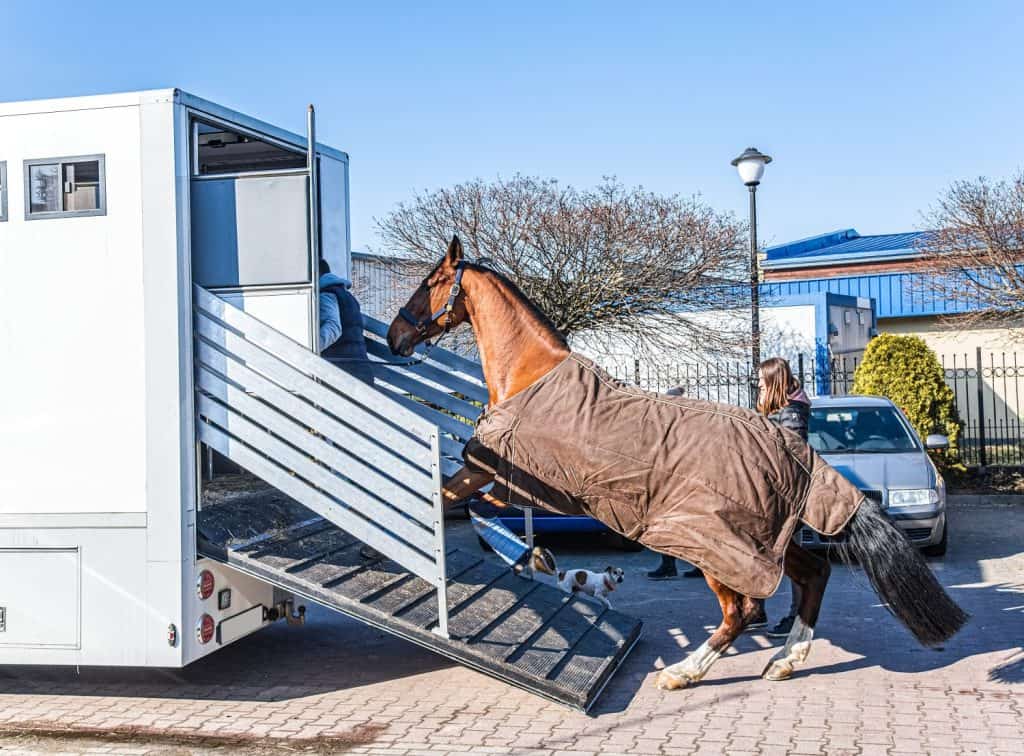
Separating a horse from its herd mates causes unnecessary stress and anxiety.
©yaalan/Shutterstock.com
In some commercial barn settings, horses may be moved between groups based on management needs, which affects how relationships are formed and maintained. This leaves uncertainty about which horses reside next to one another, how bonds are formed, and how long they’ll be grouped together. Researchers also observed that horses gathered more around hay bales or during feeding, specifically those that had bonded prior.
While the study underscores the importance of keeping bonded horses together, it also reveals a hidden world few people see. Horses are capable of building lifelong friendships, and those companions do a great deal to minimize their stress levels.
A Highly Social Herd
Some animals are solitary creatures, but horses don’t fit this mold. They’re highly social, requiring the compassion and safety gained from forming bonds with their herd. In the wild, these bonds protect them from predators. The more trustworthy eyes that are around, the better. While the dangers are fewer in domestic settings, the same rule applies.
Bonded horses display several behaviors when they finally trust one another, including:
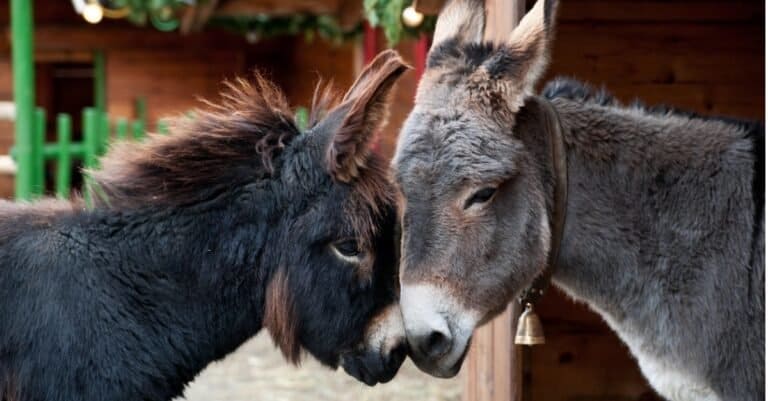
- Allogrooming: Ear-nibbling and neck-scratching are ways to show affection and clean one another.
- Whinnying: If bonded horses are separated, they often whinny or call until they find each other.
- Sharing Space: Bonded horses often sleep together and rarely venture far from one another.
- Greeting: When companions greet one another, they do so by blowing air through their nostrils in the other’s face.
Herd Separation Causes Significant Anxiety
Bonded horses often mirror one another’s emotions, as well. Therefore, if the herd feels overwhelmed or stressed, this will be reflected in most of the bonded horses. This is another argument for keeping companions together, rather than splitting them up to form new groups.
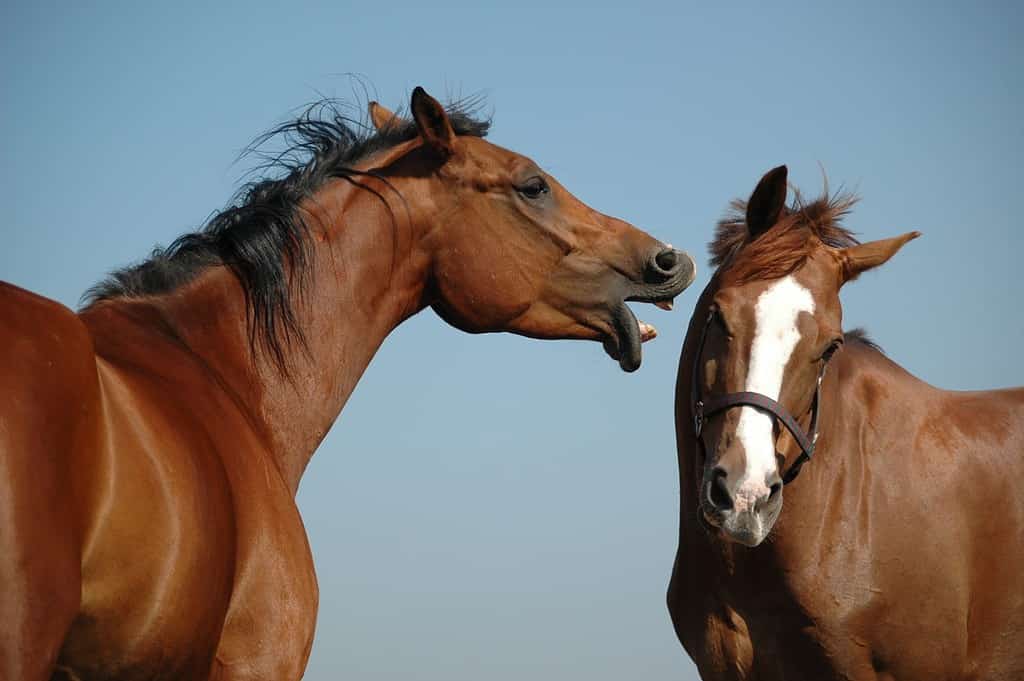
When horses are bonded, they display playful behavior, such as huffing at one another.
©Nadine Cardinaels/Shutterstock.com
When a horse is separated from its herd mates, it can also exhibit signs of stress. Separation anxiety stems from feeling isolated or unprotected. When a horse is split from its companion, it can trigger a fight-or-flight response. Since horses form tight-knit communities, these feelings of anxiety and frustration can be reflected by the entire herd.
In the long run, this separation is detrimental to a horse’s health. The resulting condition is known as “buddy sour,” and often happens when horses are constantly rotated between groups. The latest research shows that not only are bonded groups crucial to the health of the horses involved, but they can also be lifesaving.