
Quick Take
- Keeping honey bees to help pollinators is a bit like getting chickens to save songbirds, and an expert explains exactly why that logic backfires. See why the logic backfires →
- A single honey bee apiary can consume resources at a scale that staggers most people, and the stakes grow even higher for native species in urban environments. Explore the resource competition →
- Flowers aren't just food sources for bees. They can also act as something far more dangerous, and this is quietly reshaping native pollinator populations. Discover the hidden danger →
- The most effective thing you can do for bee conservation costs nothing and requires no hive, yet most people reaching for a solution never consider it. Find the free solution →
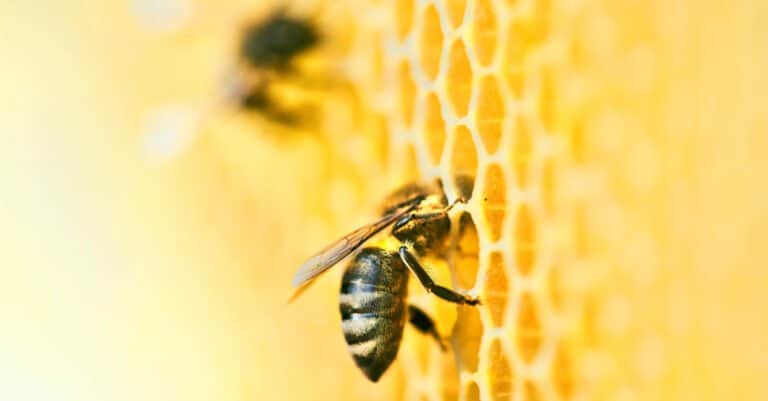
For centuries, honey bees have remained a fundamental sustainer of agriculture worldwide, pollinating more than 130 types of fruits, nuts, and vegetables and more than $15 billion worth of U.S. crops per year, according to the USDA. They also produce honey, supplements like bee bread and royal jelly, and the alternative medicine propolis.
In the past, crops were pollinated by wild pollinators, but as farmers had to meet the demand of larger-scale agriculture by the early to mid-20th century, honey bees became the leading pollinators, helping to feed the country.
First introduced to the United States by British colonists in 1622 for the production of honey (used for food preservation and as a sweetener) and beeswax (used for candles in homes and churches), the honey bee population multiplied to nearly 5.9 million colonies by the end of World War II. Since then, honey bee colonies have halved due partly to a drop in honey prices and demand, along with other human-induced and environmental factors.
Predominantly used for commercially contracted pollination of crops and honey production, honey bees continue to support mass agricultural systems while experiencing further declines—62 percent, or 1.6 million commercial colonies, were lost between June 2024 and March 2025, according to the Honey Bee Health Coalition. Over the entire year from April 2024 to April 2025, total losses were estimated at 55.6 percent.
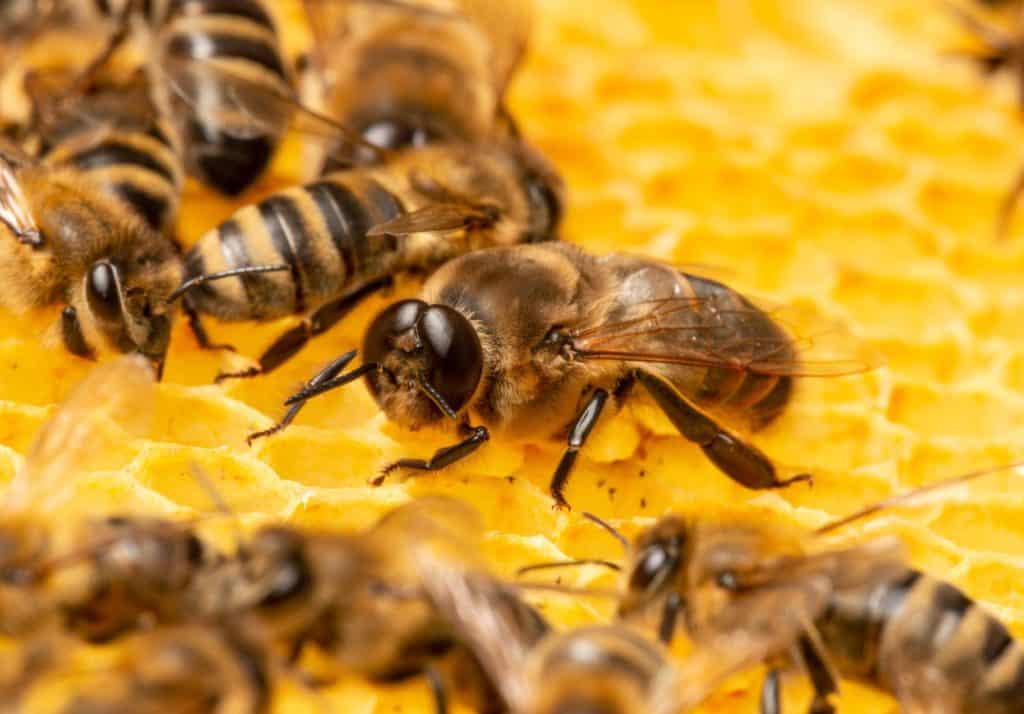
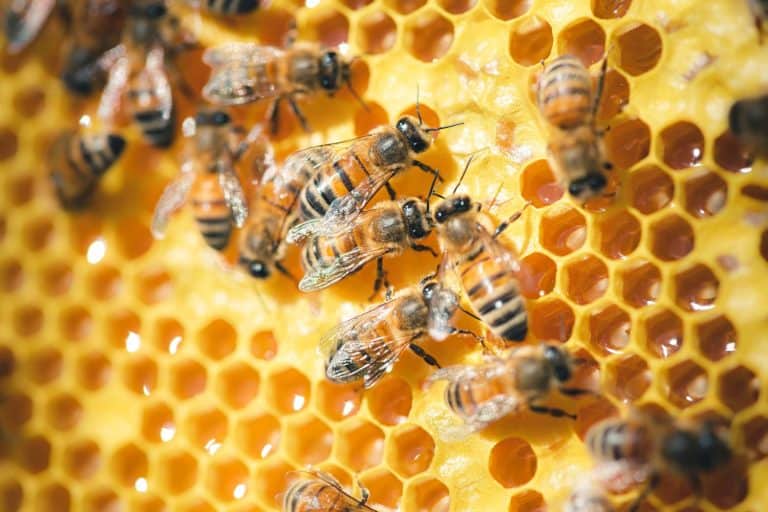
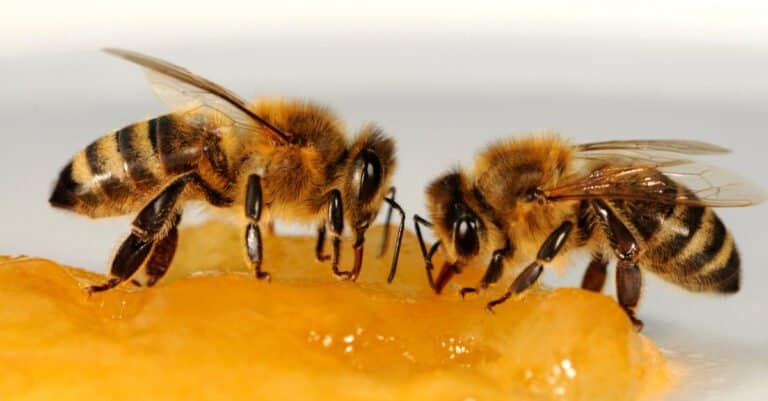
According to the Honey Bee Health Coalition, between June 2024 and March 2025, 1.6 million commercial colonies were lost.
©Kuttelvaserova Stuchelova/Shutterstock.com
The Human Imprint
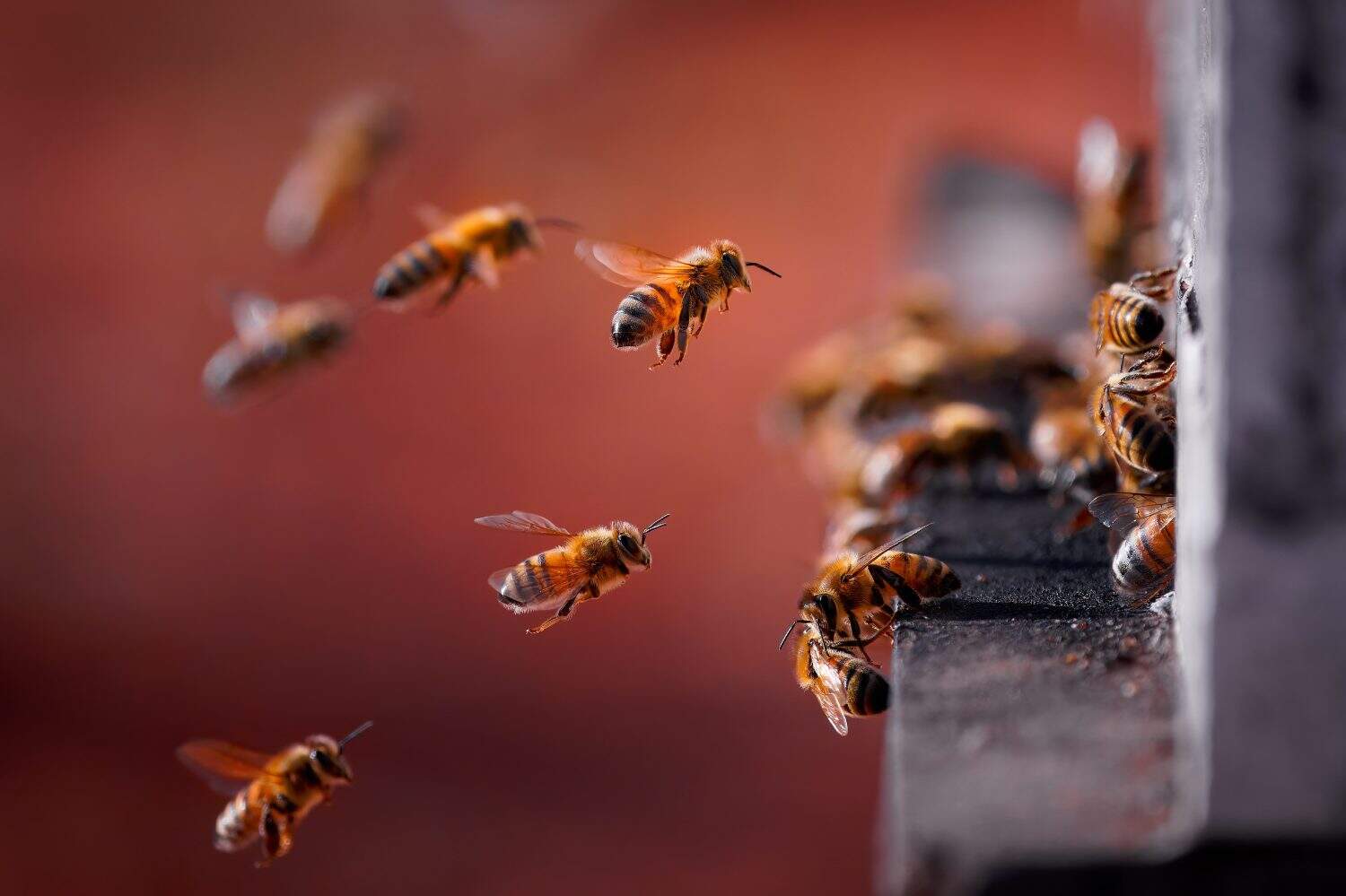
Pesticide exposure, habitat destruction, disease, poor nutrition, and other stresses caused by poor management of colonies are leading some individuals to take conservation efforts into their own hands by introducing honey bee populations into more urban environments.
Though well-intentioned, an increase in managed beehives—particularly within cities where resources are already scarce—may do more harm than good, adding more stress to native pollinators.
“We have a lot of people keeping honey bees because they think they’re doing something good for conservation, and they’re not,” says Lora Morandin, Ph.D., Associate Director at the Pollinator Partnership. “People think, ‘Oh, I should get honey bees and help the pollination crisis.’ I often liken this to: ‘If there’s an issue with songbirds, I’m going to go get chickens in my backyard.’ It’s totally disconnected. They’re two very separate things, and there can be some detrimental effects to the native pollinators from people keeping honey bees.”
The issue is often debated among conservationists, says Morandin, since there is no clearly defined research showing the specific effects honey bees have on native pollinators. Most studies are correlative because there’s naturally a larger honey bee population than any single native bee species, which makes it appear like the former has caused the lower number of wild pollinators.
While there were twice as many honey bees in the past, there are fewer managed colonies now. However, habitat loss and a lack of flora, pollen, and nectar during the summer months can also limit native bees, as both compete for resources. More than 22 percent of native North American pollinators are at risk of extinction, according to a study led by NatureServe.
“We’re turning over land, whether for industrial development or resource extraction, and removing their habitat,” says Morandin. “There may be places where there’s enough for the honey bees and enough for the native bees, but other things are limiting native bees, like a lack of nesting sites. Some people will interpret this as ‘Honeybees are causing the decline of the native bees,’ but we don’t have that cause-and-effect data. We can’t say that the cause of the fewer native bees is the honeybees, because it’s difficult to set up experiments this way.”
We have a lot of people keeping honey bees because they think they’re doing something good for conservation, and they’re not.
Lora Morandin, Ph.D., Associate Director at the Pollinator Partnership
When it comes to food, honey bees outnumber wild solitary species and can deplete floral resources, removing up to 80 percent of the pollen in a flower on the first day of bloom. A honey bee apiary of 40 colonies can remove the same amount of resources that would sustain around seven million native bees, says Morandin.
“It’s not as simple as if you have this many honey bees and this many native bees, the honey bees are going to hurt the native bees,” says Morandin. “In some situations, there is competition for resources where the native bees are going to lose out, which could potentially decrease the populations. They’ve got a lot of pressures on them—loss of habitat, pesticide exposure, climate change, invasive species, pests, and diseases are increasing.”
Disease and Mismanagement
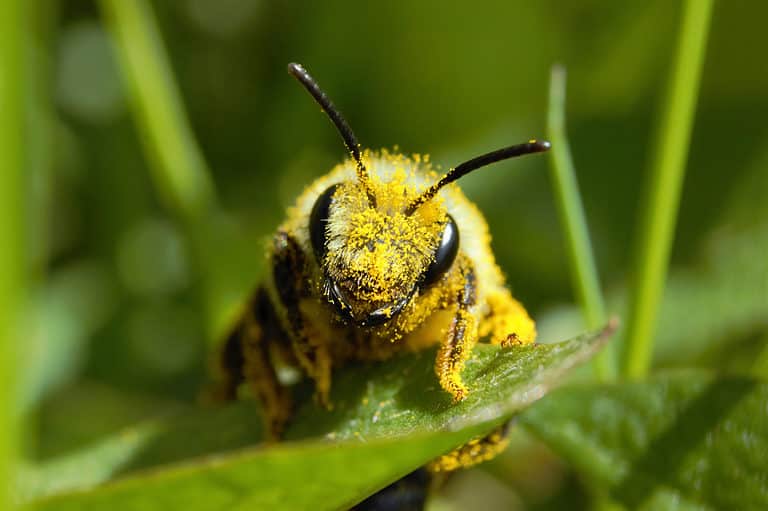
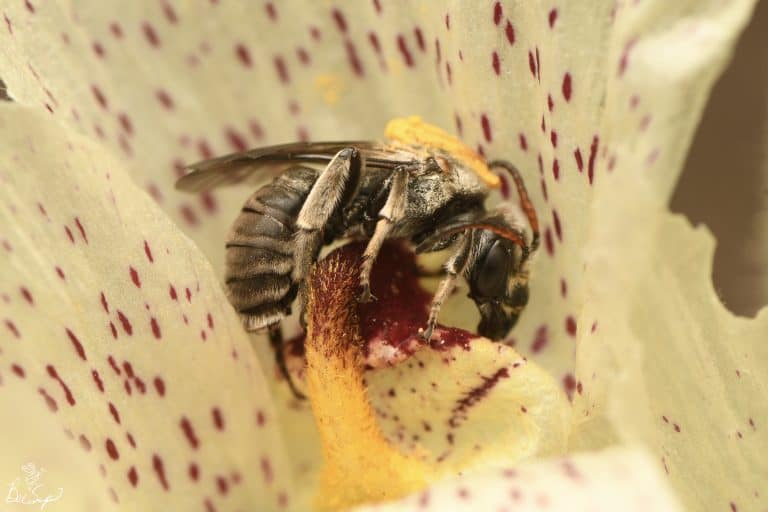
Various parasites and viruses, including mites and deformed wing virus, can be transmitted between honey and native bees. “Flowers are major sources, but they can also be like dirty doorknobs,” says Morandin. “Disease can be left on there; another bee can come and pick it up.”
However, Morandin says the exact impact of disease spread from honey bees to native bees is not clear. “We’ve documented it happening, but don’t really know what the impact is,” she adds.
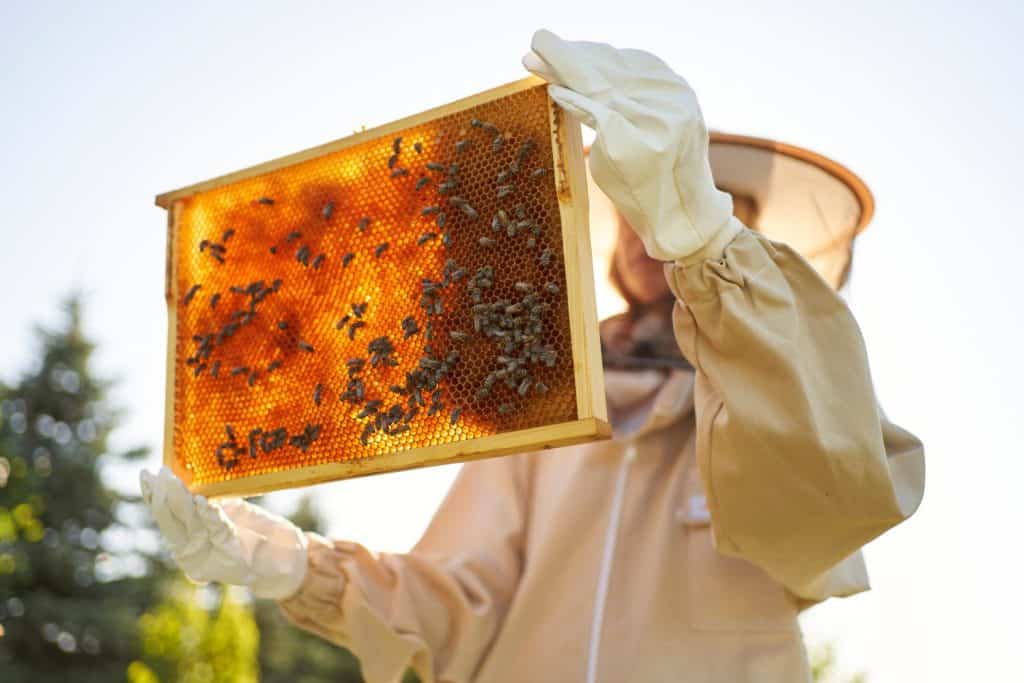
Contrary to popular belief, people keeping honey bees often thing they’re helping the pollinator conservation, but they’re actually not.
©Hakim Graphy/Shutterstock.com
Another factor to take into account is the diversity of managed bees used in pollination, including bumble bees, blue orchard/mason bees for pollinating orchard fruits, alfalfa leafcutter bees for some cucurbit and greenhouse crops, and squash bees. Some managed groups of bumblebees, for example, have spread diseases to wild bumblebees, causing population declines.
Human error also factors into the cohabitation issues between bees and humans. Beekeepers have the responsibility of splitting or importing colonies to prevent overcrowding, since a queen bee can often lay up to 2,000 eggs per day during the spring and summer. Mismanagement often results in some honey bees eventually breaking off as a swarm to find new homes, often in buildings and other local infrastructure where they’re unwanted.
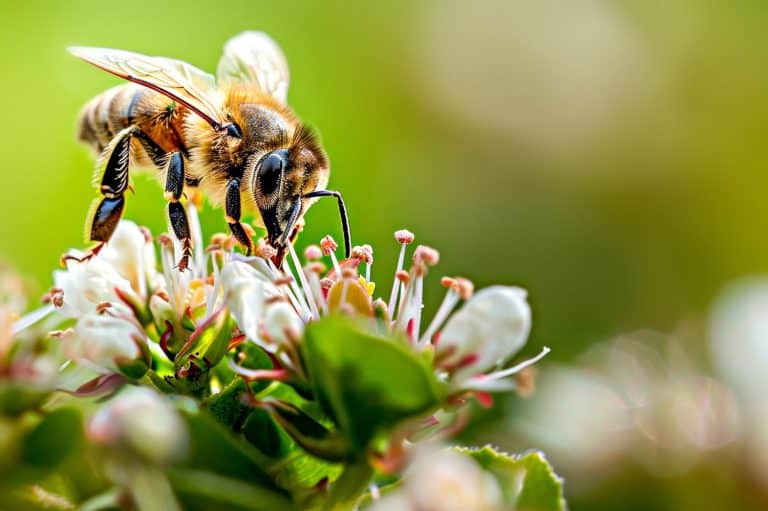
The most beneficial bee conservation, suggests Morandin, is planting a diversity of native plants that can help sustain the honey and native populations instead of introducing new hives. Early spring blooms such as willow and hyacinth, along with wild bergamot, purple coneflowers, milkweed, and sunflowers in summer, and goldenrod and aster in fall, are enjoyed by both honey bees and native bee species.
“Urban areas are an amazing opportunity for putting in some great habitat and really supporting a diverse number of native bees, and it makes a difference right away. Even if you’re surrounded by what seems like a concrete jungle, if you put in a patch of native plants, you’ll find native pollinators coming in and being supported, so it really is something that allows people to take action and make a difference.”
Having researched bees and pollination since 1997, Morandin has witnessed the decline of bees, and finding ways for bees to thrive and coexist within human development remains a personal journey.
“I want to find ways that humans can live comfortable, happy lives while also sustaining our ecosystems,” she said. “My work and my personal life center around finding ways that humans can live in the environment while also supporting it, because the environment supports us.”
She continues, “We’re integrated in it. We’re not external to nature. We are part of nature.”