
Quick Take
- The pistol shrimp's massive claw never touches its prey, and that is precisely what makes it the deadlier of its two weapons. How the claw works →
- When this two-inch shrimp snaps its claw, the surrounding water briefly reaches a temperature that makes the sun look cool. See the temperature extremes →
- The same shockwave that kills prey outright leaves the shrimp completely unharmed, thanks to a biological trick that makes it immune to its own weapon. How the shrimp stays safe →
- Prey don't need to be struck to lose all motor control. What the shockwave does to the nervous system is more precise than it looks. See the neural disruption effect →
Marine creatures use different strategies to capture prey. Some ambush, while others rely on brute strength. The pistol shrimp creates a massive shockwave with its cavitation claw to stun or kill prey, needing to touch its prey only after it can no longer fight back.
Continue reading
Pistol Shrimp’s Large Cavitation Claw Does Not Capture Prey
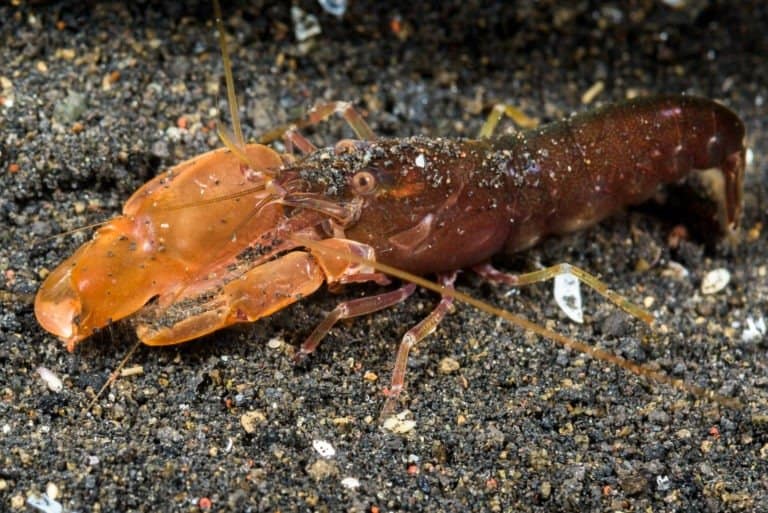
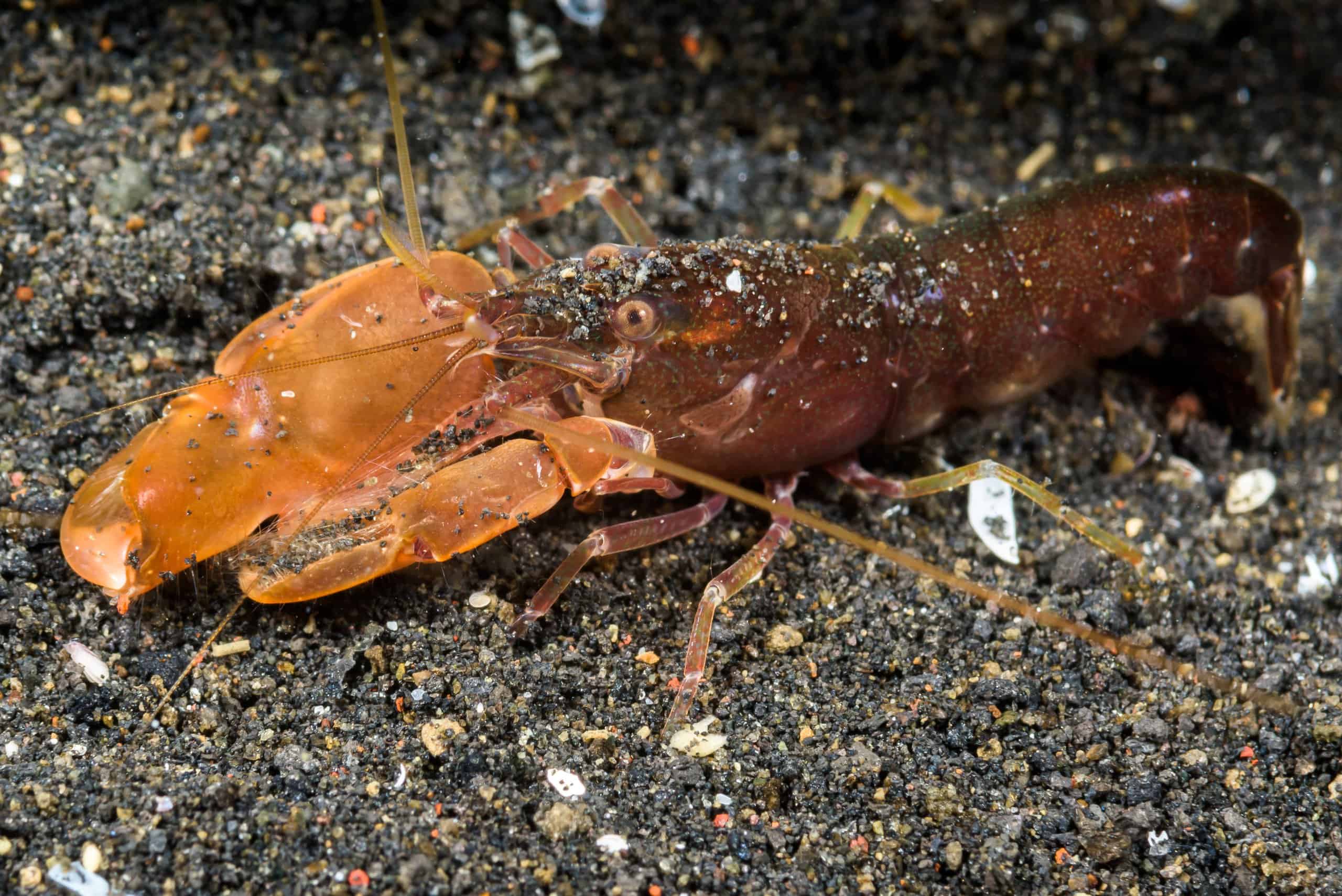
Pistol shrimp have asymmetrical claws. The smaller claw is used to grasp and capture prey, while the larger claw is modified for a very specific purpose.
A pistol shrimp’s body is between 1.2 inches and two inches long. The larger claw of the pistol shrimp can be up to half the length of its body. This massive claw is not used to grab anything. Instead, it contains a dactyl, also known as the “hammer,” and a propus, known as the “socket.” The muscles in the claw control these structures.
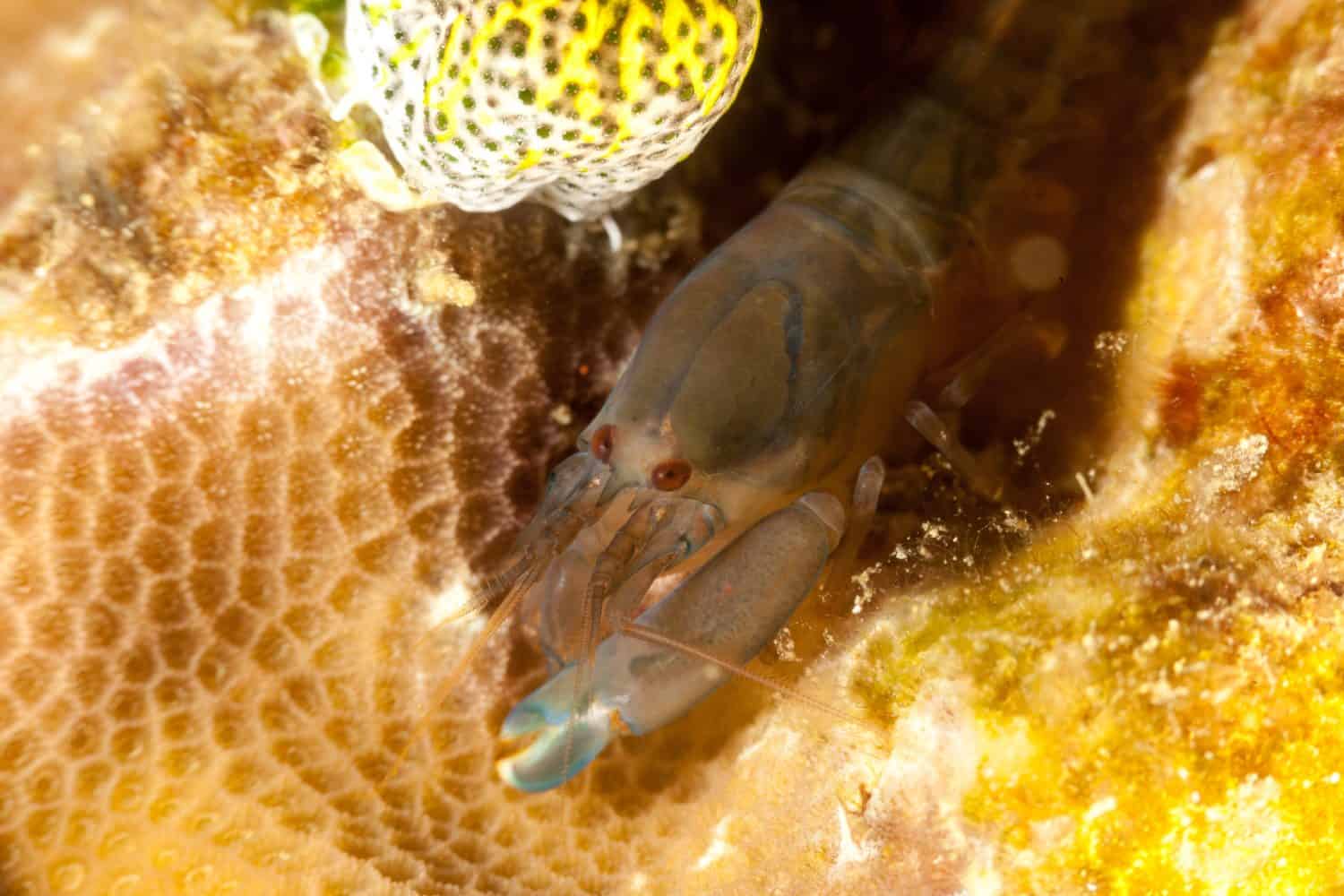
Pistol shrimp have asymmetrical claws, each used for a different purpose.
©Gerald Robert Fischer/Shutterstock.com
The muscles pull the hammer back, storing energy. When prey comes close, the muscle releases the hammer, causing it to slam into the socket. This action fires a high-speed jet of water, much like an underwater cannon, initiating the process of cavitation.
How Does the Pistol Shrimp’s Cavitation Claw Work?
The larger of the pistol shrimp’s two claws is not used to crush its prey. Instead, it creates cavitation, a process that changes the pressure dramatically in the ocean directly in front of the pistol shrimp.
Cavitation occurs in the ocean when the “local pressure… drops below its vapor pressure.” To do this, the pistol shrimp snaps its large claw shut at about 60 miles per hour, forcing a fast-moving jet of water through the claw and creating a bubble.
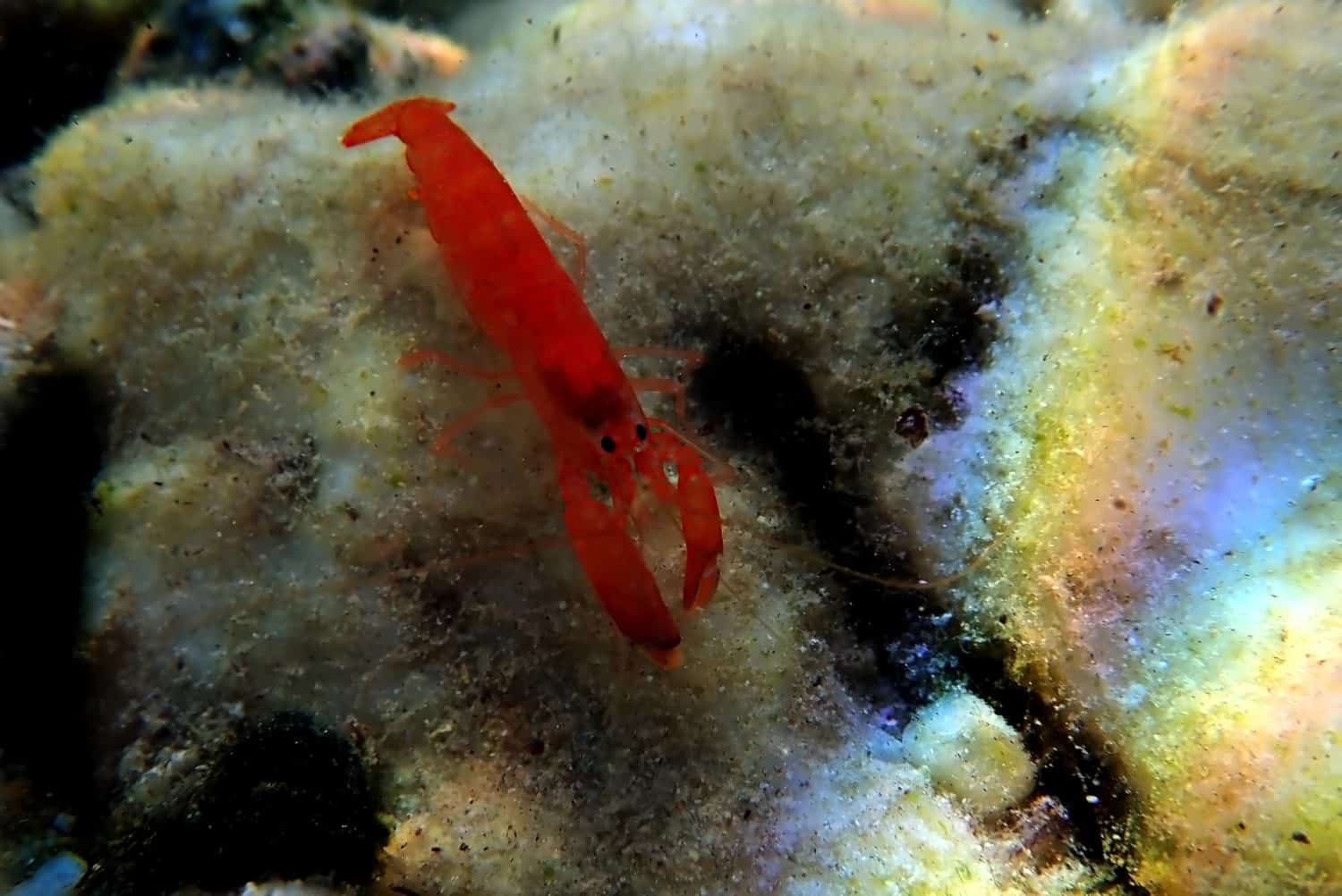
Pistol shrimp create an unstable bubble with their larger claw, which creates a shockwave and extreme water temperatures when it pops.
©Vojce/Shutterstock.com
The bubble is at lower pressure than the water that surrounds it. The bubble is also very unstable. Without warning, it pops, creating a shockwave. The shockwave can be as high as 210 decibels.
The loud sound of the bubble, said to be louder than a gunshot, is not the only thing it produces. As the bubble pops, the water around it temporarily climbs to 8,000°F, a temperature hotter than the sun.
The combination of the shockwave and intense heat is the key to the pistol shrimp’s effective hunting strategy, instantly stopping prey in their tracks.
What Causes Prey to be Stunned or Killed Instantly
The pistol shrimp’s imploding, superheated bubble has the power to maim or kill thanks to the shockwaves instantly and temporarily stressing the neurons in the prey’s body. If the prey does not die, it experiences paralysis or confusion, which is all the pistol shrimp needs to successfully strike.
As a result of cavitation, pistol shrimp prey experience the following symptoms:
- Disorientation
- Loss of motor control
- Intense light and sound make prey incapable of determining how, or even whether, they should try to flee
- Membranes can rupture, leading to death
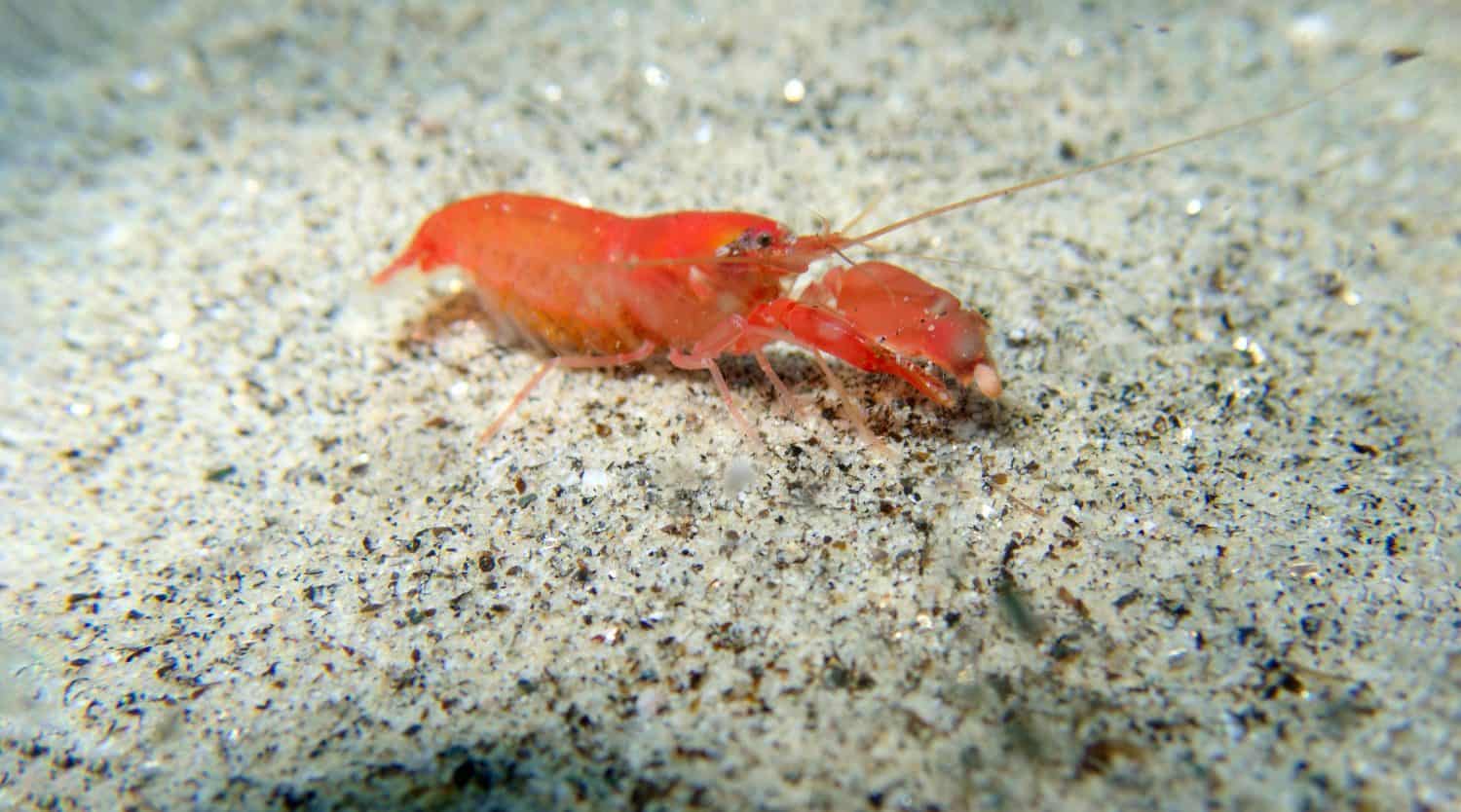
Pistol shrimp shockwave bubbles cause prey to be disoriented, lose motor control, or even die after being subjected to them.
©Vojce/Shutterstock.com
More interesting still, pistol shrimp are not affected by the shockwaves they create. This is because the shrimp have an orbital hood that expels water away from their head via an anterior opening. Therefore, while prey absorb the shockwave created by the process of cavitation, the pistol shrimp remain unharmed.
The pistol shrimp does not need to chase its prey. It simply snaps its enlarged claw and waits while its biological weapon does the work. Once the prey is incapacitated, the shrimp uses its smaller claw to grab and consume it—a small creature with a powerful punch.