
Quick Take
- A tiny bird on one of Earth's most isolated islands evolved a survival trick so extreme it sounds like fiction, and the story begins with something completely unrelated to blood. Meet the vampire finch →
- The vampire ground finch doesn't just drink blood. Its entire biology changed to make it possible, right down to what lives in its gut. See how biology adapted →
- The seabirds being fed on don't flee, and understanding why reveals something counterintuitive about how predator-prey relationships can work. Discover the seabird's role →
Famously studied by Charles Darwin, the Galápagos Islands lie in the Pacific Ocean 600 miles west of Ecuador. They are rich in biodiversity and home to some extraordinary animals that have evolved in isolation, resulting in unusual appearances and behaviors. One such animal is the Galápagos finch, otherwise known as Darwin’s finch. Although these birds appear fairly unremarkable, they have a surprising ability: they can suck blood! Read on to discover more about the so-called ‘vampire finches’.
What Are the Galápagos Finches?
There are 17 species of Darwin’s finches endemic to the Galápagos Islands. However, despite their name, they are not true finches. Instead, they belong to the tanager family and likely evolved from the grassquit, a bird found on mainland South America. When their ancestor arrived on the islands, it likely diversified to exploit the various habitats. Most notably, the species have beaks of different shapes depending on their diet. The cactus finch, for example, has a long, thin bill to access nectar from cactus flowers.
Which Is the Blood-Drinking Finch?
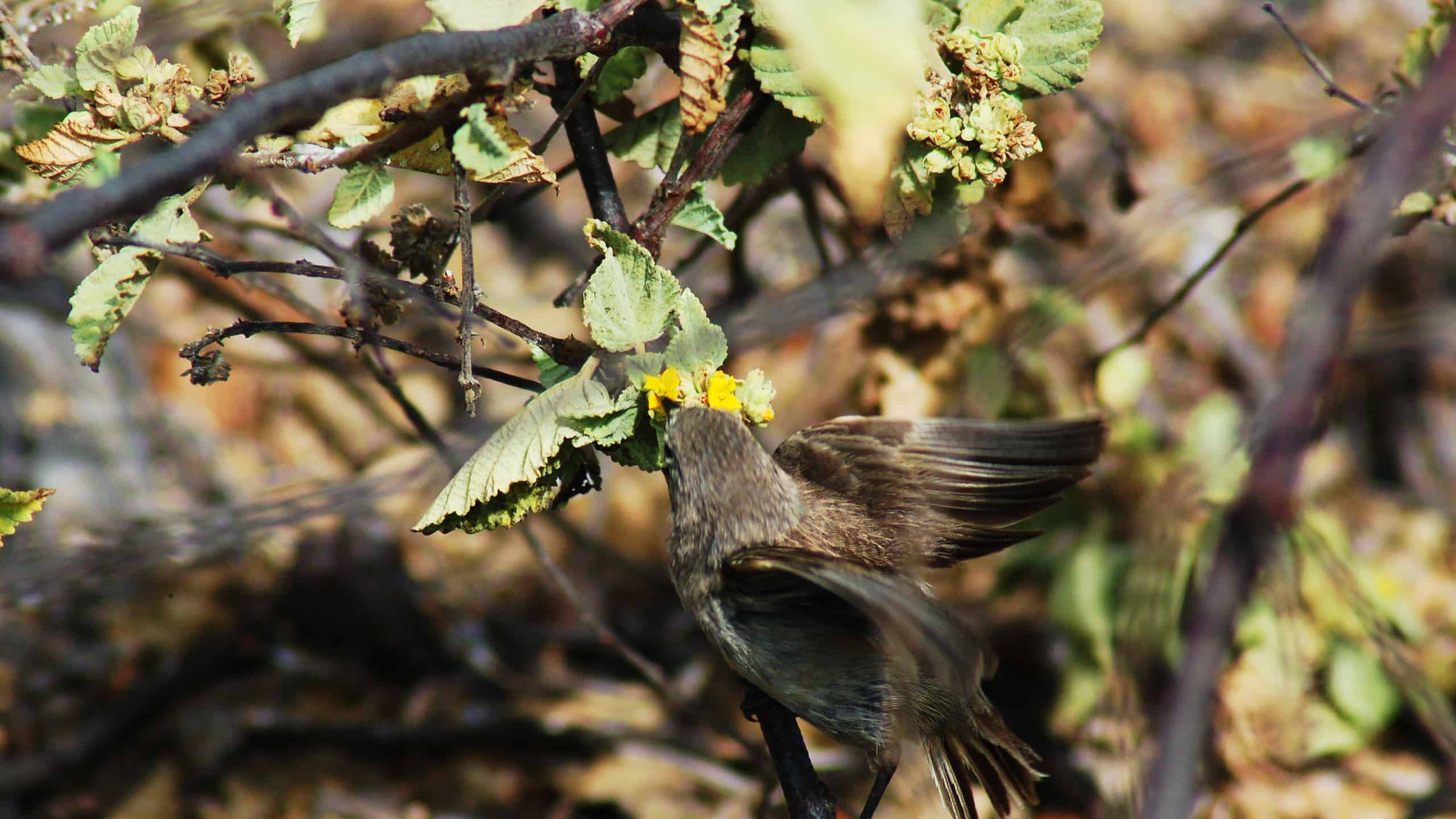
The aptly named vampire ground finch (Geospiza septentrionalis) is the species with an unusual way of obtaining a drink: it drinks blood. They are found on Wolf Island (also known as Wenman Island) and Darwin Island (one of the smallest and the most northwesterly of the islands), in the Galápagos Archipelago.
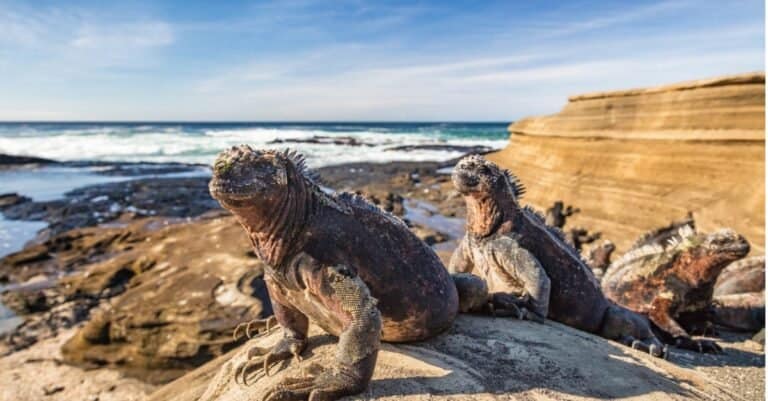
These islands are tough places for a bird to live! There is no permanent freshwater supply, and it seldom rains. The islands are extremely isolated, separated from the larger islands by about 100 miles of open ocean. They are often shrouded in mist, and their cliffs are very steep. The first landing on Wolf Island occurred in 1964, and only with the help of a helicopter!
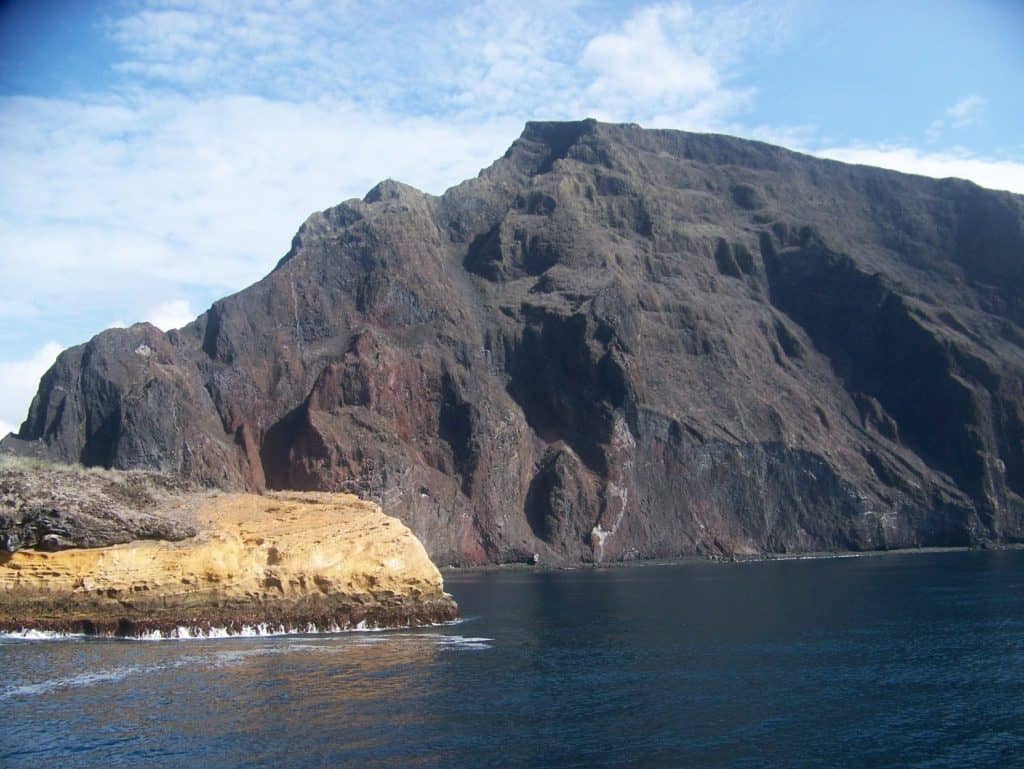
Vampire finches live on very remote islands.
©mikluha_maklai/Shutterstock.com
Seabirds live on the island but can leave to seek food and water elsewhere. The finches, however, are unable to leave and must survive with the resources available on the island. Most of the time, they feed on seeds and insects, but during the dry season, these food sources can become scarce. As a result, these remarkable birds evolved to exploit a novel food source: blood.
They have developed a long, pointed beak that is perfect for piercing skin and sucking blood. Additionally, their gut bacteria are very different from those of other finches, suggesting that their intestinal flora have also evolved to digest blood. When examined, these finches have been found with stomachs full of blood, confirming their unusual feeding behavior.
Nazca Booby Blood Banquet
Sharing the remote islands with the finches are seabirds called Nazca boobies (Sula granti), which nest on Wolf Island. These are the largest of the three booby species found in the Galápagos Islands. Their name comes from the Spanish for clown (bobo) because of the clumsy way they move around land.
Nazca boobies are predominantly white but have black feathers on their tails. These are large seabirds, growing to a weight of up to 5 pounds and having a wingspan of 5 feet. They feed on fish, which they catch by plunging into the sea from heights of up to 90 feet.
Seabirds are long-lived, gather in dense colonies, and travel long distances, so their exposure to parasites is greater. It is not unusual for them to be infected with small creatures such as ticks and mites. Both are potential sources of food for a hungry finch.
How Did Finches Evolve to Drink Blood?
The finches arrived on the islands around half a million years ago. It’s likely that they initially hopped onto the backs of Nazca boobies to feed on the parasites living in the seabirds’ feathers. The seabirds breed on the island and nest on the ground amongst the dense cactus thickets. Parents take turns incubating their eggs, a process that takes about 40 days. During this time, they are very vulnerable—a perfect target for a bird that feeds on mites. This relationship can be described as mutualism: the seabird benefits from pest control, while the finch gets a meal.
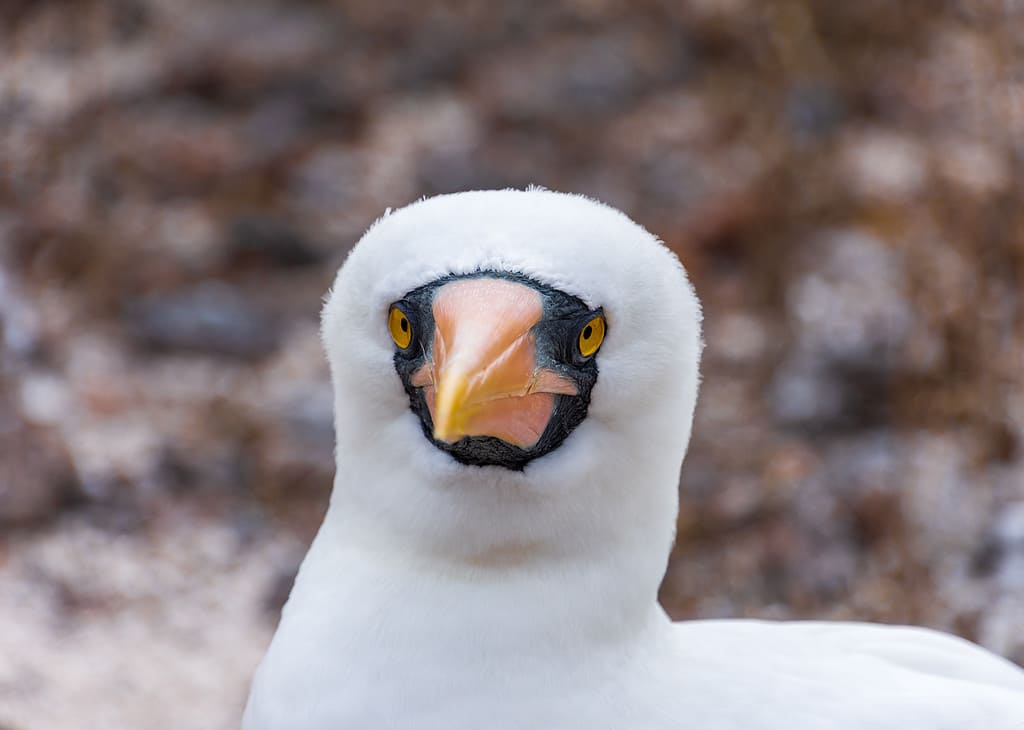
Nazca boobies have parasites in their plumage, which the finches feed on.
©Bradley Smith/iStock via Getty Images
Eventually, however, some overenthusiastic finches likely pecked too hard and drew blood. The birds that did this received both hydration and nourishment, making them more likely to survive and reproduce. As a result, this behavior became widespread among the population.
The finch has now learned how to pierce the skin at the base of new feathers to directly access a rich blood supply on the boobies’ backs. Once the blood starts to flow, they drink it. The seabirds do not appear to mind and do not seem to suffer any significant harm from the arrangement, even though the finches can create quite nasty wounds. Nevertheless, sometimes the finches’ feeding becomes too much, and the boobies are forced to fly away.