



Quick Take
- The booby's name comes from a Spanish insult, and the reason sailors gave it that label is more embarrassing than you'd expect. Origin of the name →
- Blue-footed boobies don't actually start out blue. Something has to happen first, and it doubles as a health signal. How feet turn blue →
- These birds dive from staggering heights at 60 mph, surviving thanks to two built-in physical adaptations their bodies have developed. Their diving adaptations →
- Blue-footed boobies helped spark one of history's most famous scientific theories, yet almost nothing is known about their own ancient past. Darwin's connection explained →
The booby is a seabird that lives in tropical and subtropical oceans worldwide, including the Pacific, Atlantic, and Indian Oceans. Boobies are carnivorous birds that eat anchovies, mackerel, sardines, and squid. These feathered creatures appear awkward while walking on land but are excellent fliers and divers. They can live up to 17 years in the wild.

An Incredible Bird: 5 Booby Facts
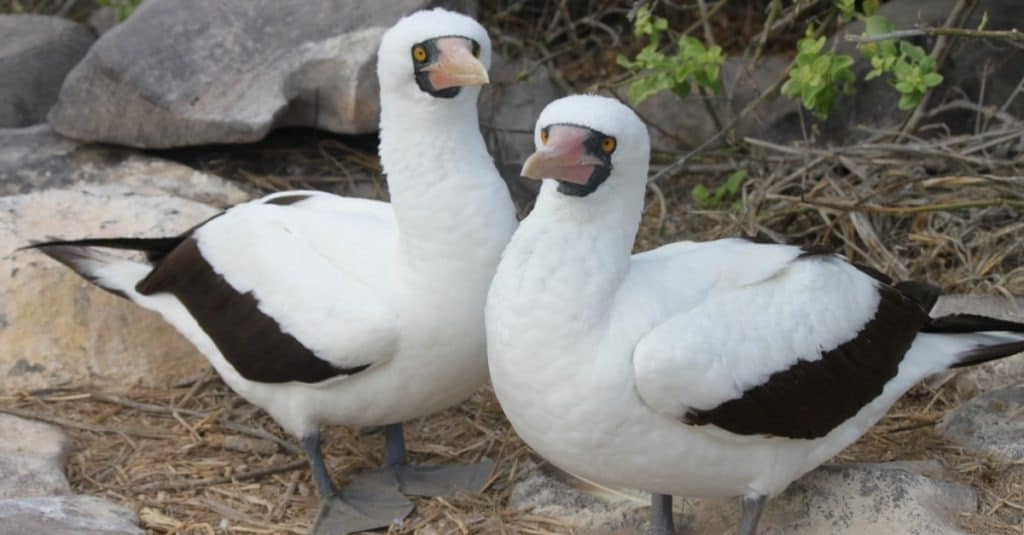
Boobies mate for life.
©Jill L. Ferguson/Shutterstock.com
- The booby stays with the same partner for life.
- A group, or colony, can include as many as 200 boobies.
- A booby that spots a fish in the ocean can dive from a height of 80 feet or more in the air.
- The booby is similar in appearance to the gannet.
- When this bird is getting enough vitamins and other nutrients, its feet remain deep blue or even purple in color.
Evolution
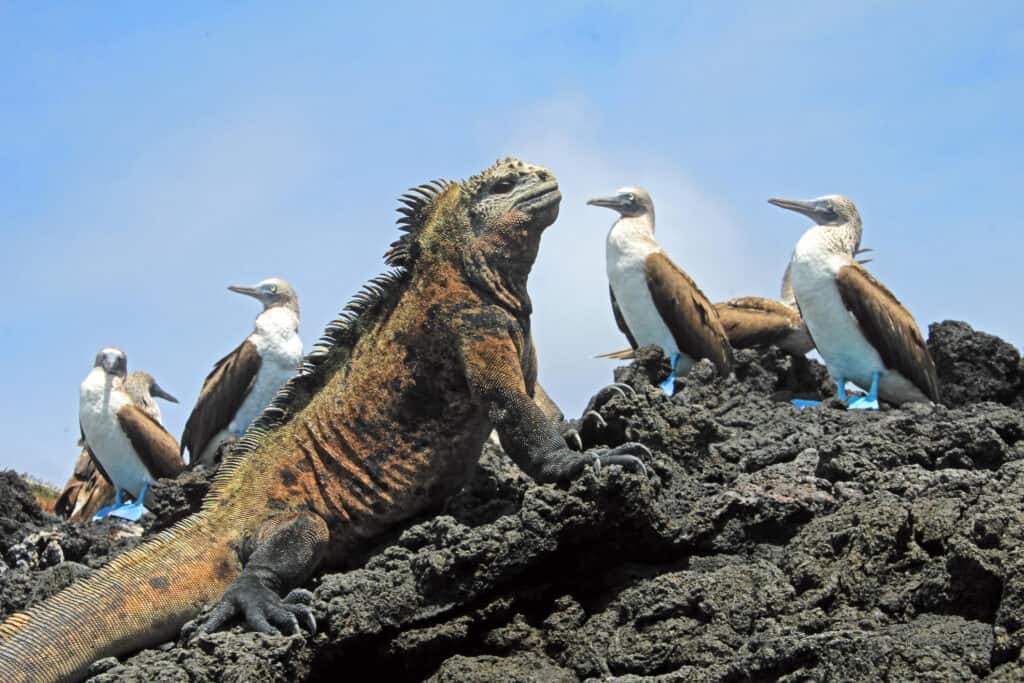
The blue-footed booby is found in large numbers on the Galapagos Islands.
©iStock.com/cicloco
Finches, mockingbirds, and tortoises were among the animals that helped spark Charles Darwin’s initial investigations into the theory of evolution during his trip to the Galapagos Islands in 1835. The blue-footed booby’s vibrant periwinkle feet and exquisite diving techniques would be sure to dazzle anyone with a passion for animals. Blue-footed boobies, which were once synonymous with the Galapagos Islands, have seen declining numbers at the birthplace of evolution in recent years.
Since boobies are what are known as bioindicator species, they will change their diet and habitat based on changing factors in their environment. While the blue-footed booby once had little interference from humans on the Galapagos, populations of people have been steadily increasing on the island since the 1970s, driving the birds away simultaneously. Even though these birds were instrumental in inspiring the theory of evolution, little is known about their ancient history beyond the fact that they diverged from a common ancestor approximately 200,000 years ago in Peru.
Classification and Scientific Name
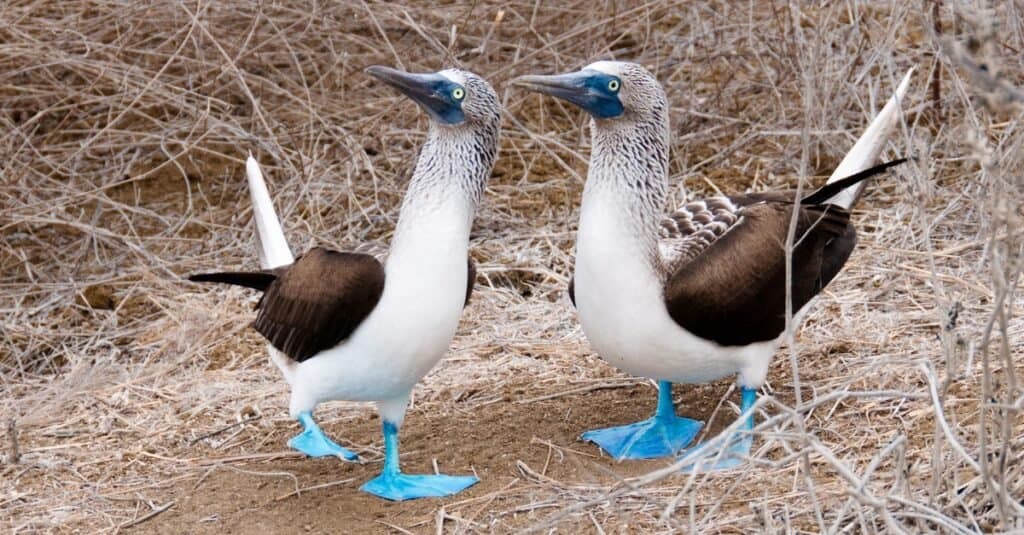
Boobies get their name from their clumsy, awkward behavior.
©tamara bizjak/Shutterstock.com
The scientific name of the blue-footed booby is Sula nebouxii. Its name comes from the Spanish slang term bobo. Bobo means foolish or clownish. When Spanish sailors observed the awkward way these feathered creatures walked and moved around on land, they called them bobos. Adding to their reputation for foolishness, these animals would land on Spanish ships, making it easy for sailors to catch and eat them.
They belong to the Sulidae family and the class Aves.
There are six to seven species of this seabird, depending on the taxonomy used. They all belong to the Sula genus. These include:
| Common Name | Scientific Name |
|---|---|
| Blue-footed booby | Sula nebouxii |
| Brown booby | Sula leucogaster |
| Masked booby | Sula dactylatra |
| Nazca booby | Sula granti |
| Peruvian booby | Sula variegata |
| Red-footed booby | Sula sula |
Appearance & Behavior
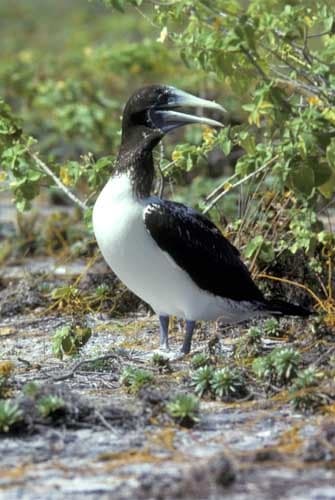
The Masked Booby is easily mistaken for a gannet.
©Angela K. Kepler – Public Domain
A booby is 32 to 34 inches long with a wingspan of approximately 5 feet. Picture two and a half bowling pins stacked on top of one another, and you have the same length as a 34-inch-long booby. These birds weigh a little over 3 pounds. A 3-pound booby is equal in weight to half a brick.
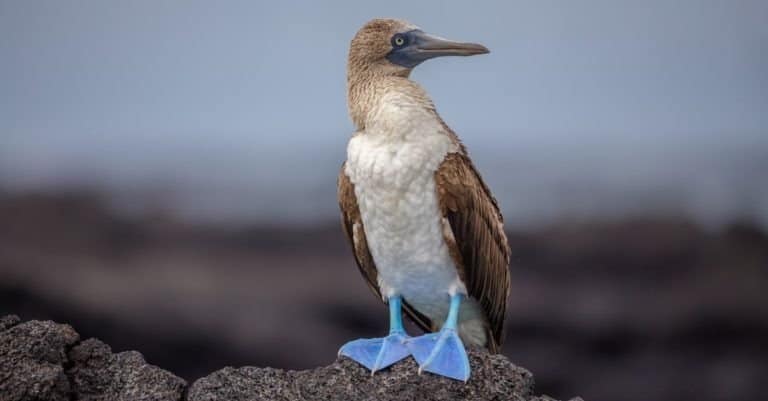
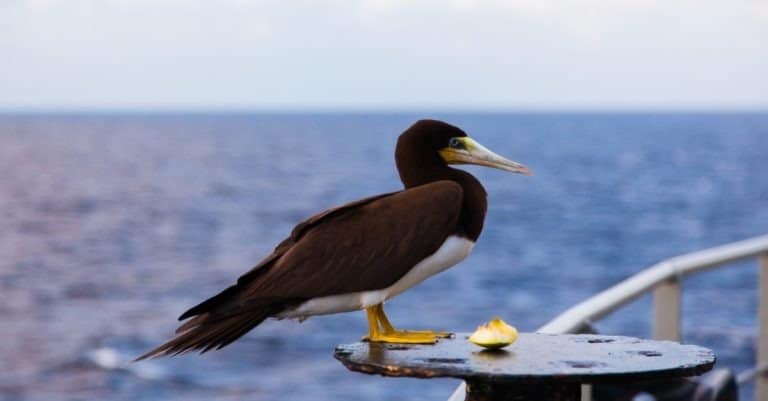
The appearance of this feathered creature differs according to its species. Of course, the blue-footed booby is known for its brightly colored feet. This species doesn’t start out with blue or purple feet from birth. The babies, or chicks, are born with white feet. Their feet don’t turn blue until they’re six months old. A brown booby doesn’t have blue feet. Instead, it’s known for the dark brown feathers on its back and head.
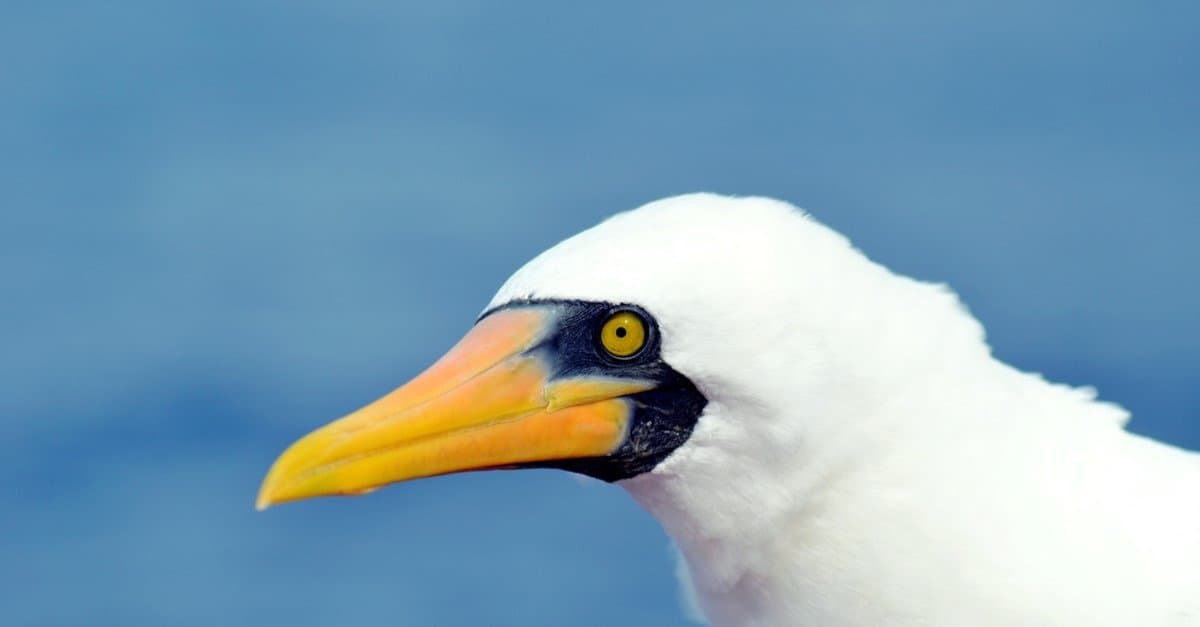
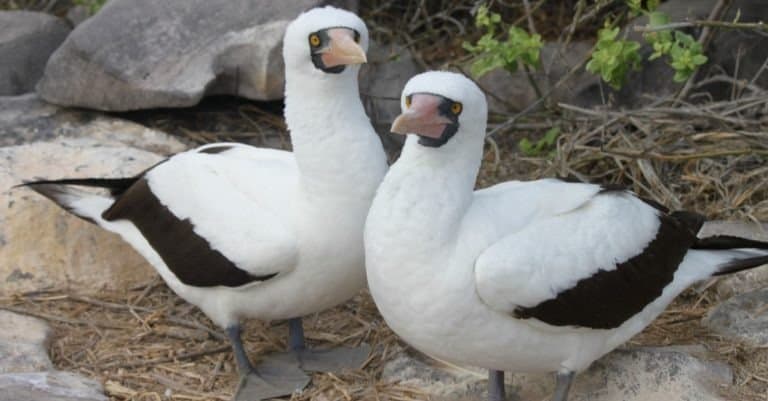
The masked booby is also called the masked gannet because it looks a lot like a gannet. Both have mostly white feathers with brown on their wings and tail. The masked booby gets its name because its dark feathers form a mask around its face.
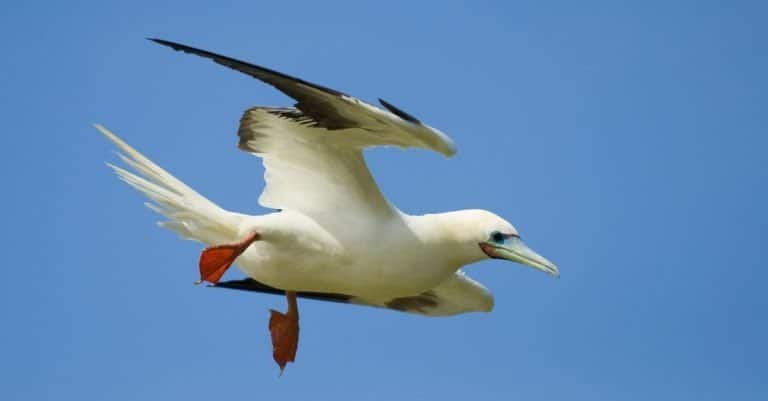
The red-footed booby is known for its bright red feet. It also has a pink and blue bill that sets it apart from other species of boobies.
The Peruvian booby has brown feathers on its back and wings and a white underside. Alternatively, the Nazca booby has white feathers on its back and some brown on its wings. Its beak is a combination of orange and pink.
This bird has two intense yellow eyes and a serrated beak. The rough, sharp edges of its beak help this animal to grab onto the slippery fish that make up its diet.
The feet of a booby, whether it’s the blue-footed, red-footed booby, or another species, serve a purpose (other than walking). Male blue-footed boobies show off their feet to attract a mate. Also, both males and females use their feet to cover their chicks in the nest.
The largest species is the masked booby. Its wingspan can be as much as 5 feet, 7 inches, and it can weigh up to 4.9 pounds.
This animal is social and lives in a colony. There can be a dozen to hundreds of birds in a colony. A large number of birds in a colony can discourage predators from entering the area to try to steal from nests.
These creatures can make a lot of noise in the form of grunting, honking, and whistling. So, as you might guess, a colony of these animals is a very loud place to visit.
One of the most notable qualities of a blue-footed, red-footed, masked, or another type of booby is curiosity. If a human approaches this seabird, it’s not likely to be frightened. In fact, they have a reputation for landing on boats or other types of watercraft to check out the activity of the humans aboard.
These animals can be aggressive during mating season. For instance, if two males are competing for the attention of a female, then there may be some aggressive behavior between them. Otherwise, they are mostly non-aggressive animals with a curious nature.
Habitat
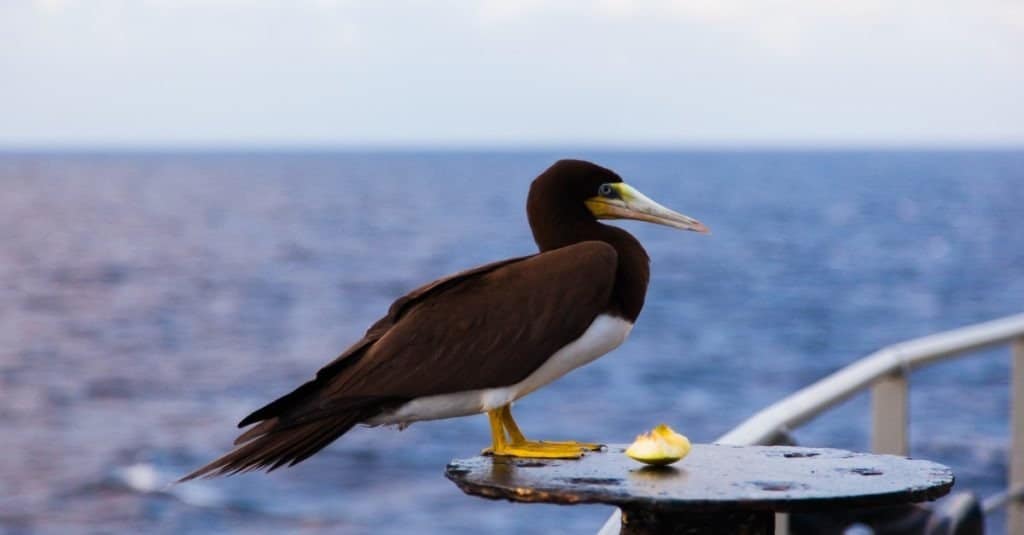
Boobies are known to be incredibly curious.
©ZHMURCHAK/Shutterstock.com
These are tropical creatures; the blue-footed booby lives in Central and South America, specifically on the western coasts. This species is abundant on the Galapagos Islands. The habitat of the brown booby includes the Gulf of Mexico, the Caribbean, Indian, and Pacific Oceans. The masked booby bird’s habitat includes large stretches of the Pacific Ocean.
This seabird stays in its colony on land throughout the night. During the day, it takes flight to hunt for fish in the ocean. Though these seabirds move in an awkward, unsteady way on land, they are expert fliers. When they spot a fish, they pull their wings flat against their body as they begin a dive from 80 feet or higher in the air. Furthermore, they can travel as deep as 65 feet beneath the surface of the water.
This animal’s nostrils are covered with a flap of skin that allows it to dive without water flowing up its nose. These seabirds also have what’s called a third eyelid that closes before the animal hits the surface of the water. Think of a booby as a champion diver equipped with a natural nose plug and goggles. When you learn that the booby bird can be traveling at 60 mph when it hits the water, it makes sense that it has these adaptations to make the dive safely.
These animals don’t migrate. But they do move within the range of their habitat to a nesting area. The breeding season of this animal goes from June to August.
Diet
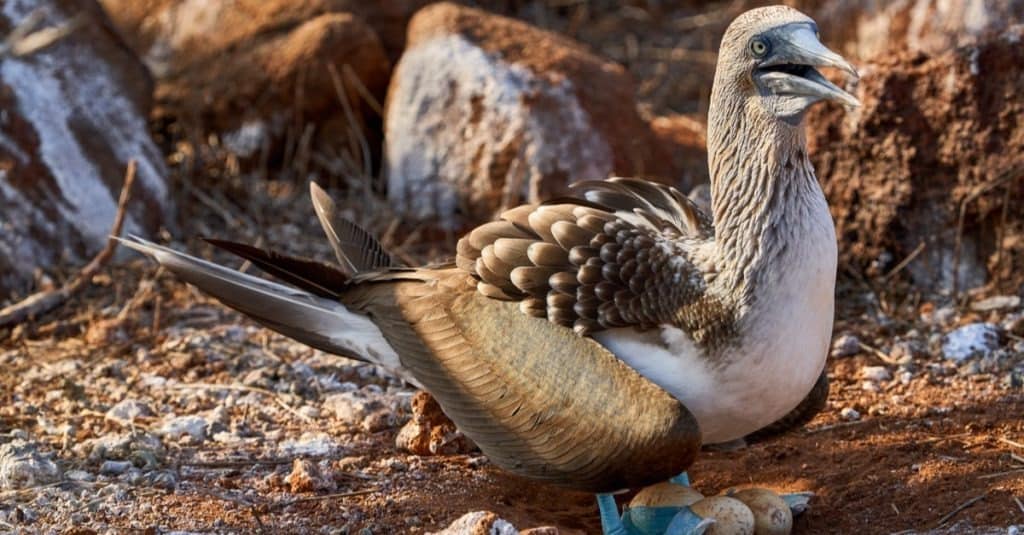
Boobies must protect their eggs diligently from potential threats.
©OSTILL is Franck Camhi/Shutterstock.com
This feathered creature is a carnivore that hunts in groups; when one spots a school of fish, the others all get something to eat.
What eats booby birds?
Adult booby birds don’t have any natural predators. However, the chicks and eggs of this bird may be eaten by snakes, owls, and other larger birds.
What does the booby bird eat?
This bird eats fish including anchovies, sardines, and mackerel as well as squid. Female boobies can dive deeper into the ocean than males. So, they may eat fish that are larger than the ones that males capture.
Predators and Threats
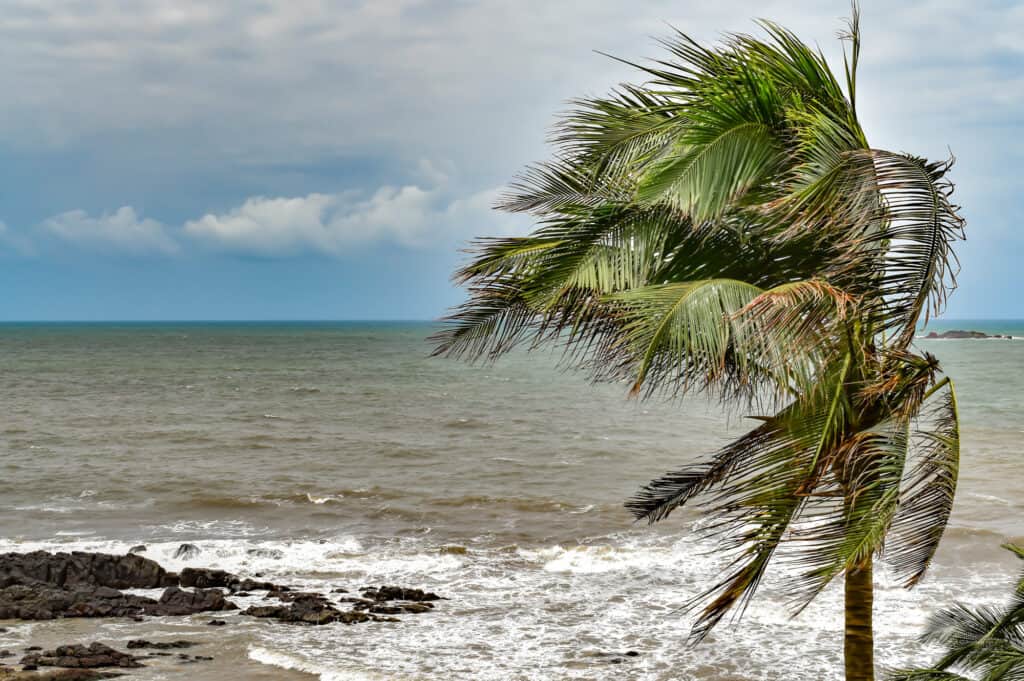
Tropical storms can adversely affect the booby bird.
©iStock.com/Ashish Kumar
While adult booby birds are mostly safe from predators, their young chicks and eggs are vulnerable. Snakes, owls, and other large birds sometimes steal young from a nest and eat them.
Water pollution created by humans is a threat to these creatures. Also, weather events such as El Niño have reduced the population of the clupeid fish. This fish is the main part of the diet of booby birds living on the Galapagos Islands.
The conservation status of the blue-footed booby is Least Concern with a stable population.
Reproduction, Babies, and Lifespan
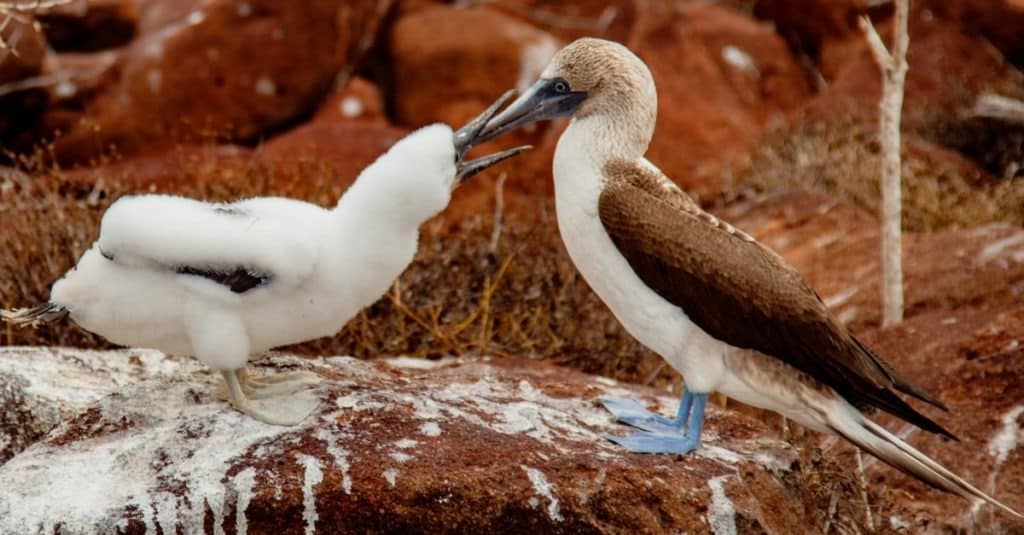
Baby blue-footed boobies do not yet display their namesake trait.
©MindStorm/Shutterstock.com
The mating season of the blue-footed booby runs from June to August. The male blue-footed booby struts around to attract a potential mate. He is sure to show off his bright blue feet! Bright blue feet, or even feet that border on purple in color, are a sign the bird is healthy and, therefore, a good partner. Males may also make a whistling sound for more attention. Once a female and male pair up, they stay with one another for life.
These feathered creatures make a nest on rocky ground or on a sandy spot along the coast. The nest is made in the shape of a bowl. By the time the eggs hatch, the nest is surrounded by a border of feces, because the females and males relieve themselves there while watching over their young.
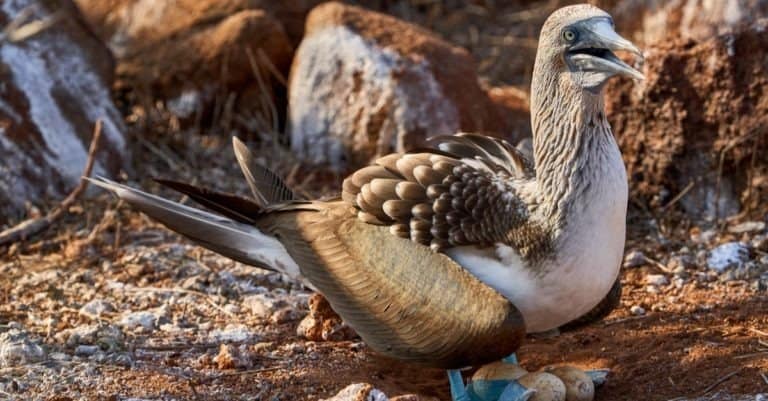
The incubation period of these birds is 41 to 45 days. This is similar to the incubation period of the gannet, which is 42 to 46 days. They usually have 2 or 3 eggs in a clutch. The eggs are pale blue in color and are usually not the same size. The mother and father take turns sitting on the nest and protecting their eggs with their colorful feet. One member of the pair finds food for the other that is guarding the nest.
Once the eggs hatch, the featherless chicks are fed by both their mother and father. They are completely dependent on their parents. Since they don’t have feathers, the chicks are vulnerable to burns from the powerful sun of the tropical environment. The parent birds use their feet to cool and protect their young. The chicks stay in the nest for 2 months. After leaving their parents, the young birds are likely to live in the same general area as their parents.
These animals can live to be around 17 years old in the wild. The record for the oldest individual goes to a masked booby that lived to be 25 years old. It lived in the Pacific Ocean region.
Population
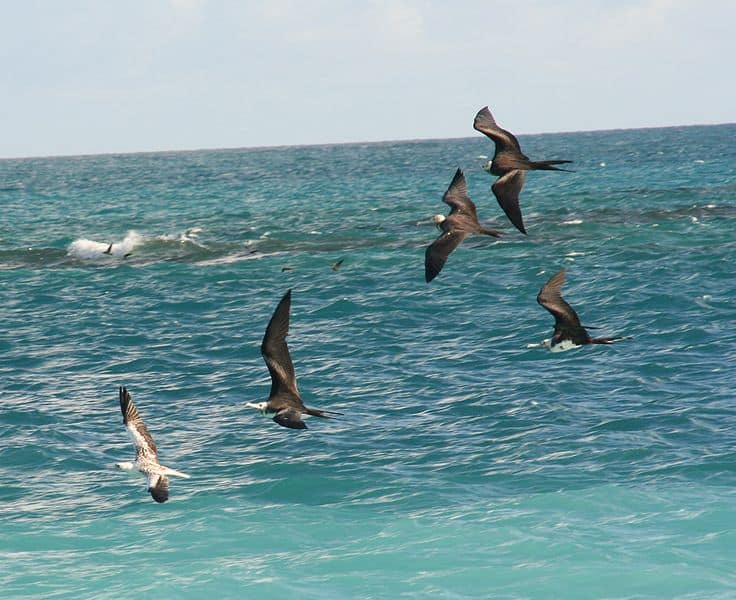
Most booby populations worldwide are in stable condition.
©Duncan Wright – Public Domain
Scientists have estimated there are 6,000 to 10,000 blue-footed boobies living on the Galapagos Islands. There are believed to be approximately 2,000 masked booby birds on the Galapagos Islands.
Though in some areas the population of this seabird has decreased, its population is stable overall. The official conservation status of the blue-footed booby is Least Concern.
Booby Pictures
View all of our Booby pictures in the gallery.

Mariusz Bugno/Shutterstock.com
How to say Booby in ...
Sources
- Oceana / Accessed January 15, 2021
- Wikipedia / Accessed January 15, 2021
- Aurora Expeditions / Accessed January 15, 2021