
Quick Take
- This snake was already considered large at six feet, so what does it take to hit 12 feet? And what does that tell you about what's living on your property?
- North Carolina has 38 native snake species, but only a small handful pose any real danger.
- Despite its name, this snake has a second nickname that hints at a much more unsettling diet than rats. See their unsettling diet →
- These snakes don't just live in forests. The list of places they've been found inside human homes will make you look twice at your own house. See where they turn up →
- Wildlife experts have a clear recommendation for what to do if you come face-to-face with one, though most people's instinct is exactly wrong. What experts say about encounters →
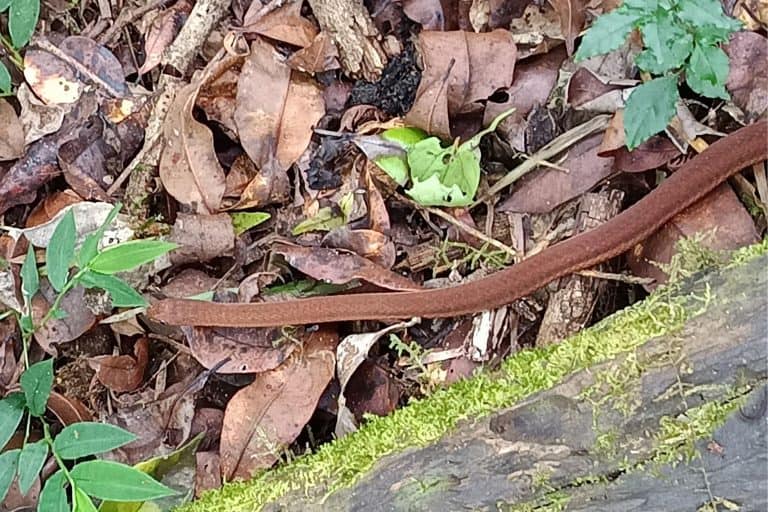
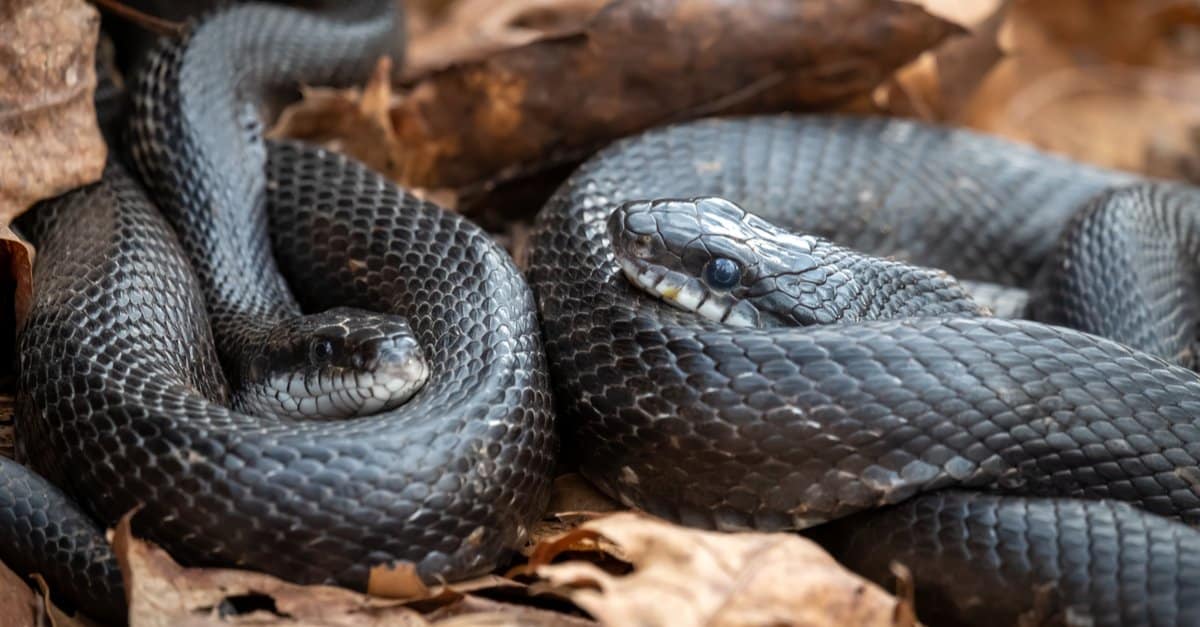
This North Carolina resident found something he wasn’t expecting in his backyard! As a relative newcomer to the area, Scott Jensen found the presence of this giant reptile near his property even more startling. He didn’t realize that his three-acre property in Gaston County was also the home of a giant rat snake. This snake was between 12 and 14 feet long. North Carolina has 38 native snake species, so it is not unusual to spot them, especially as the weather gets warmer. However, just six of them are venomous, so most of them will do you no harm at all. That said, snakes of this size are unusual, and it is understandable that people are frightened by them. However, wildlife experts advise that if you see a snake in the wild, you should just leave it alone.
Where Are Rat Snakes Normally Found?
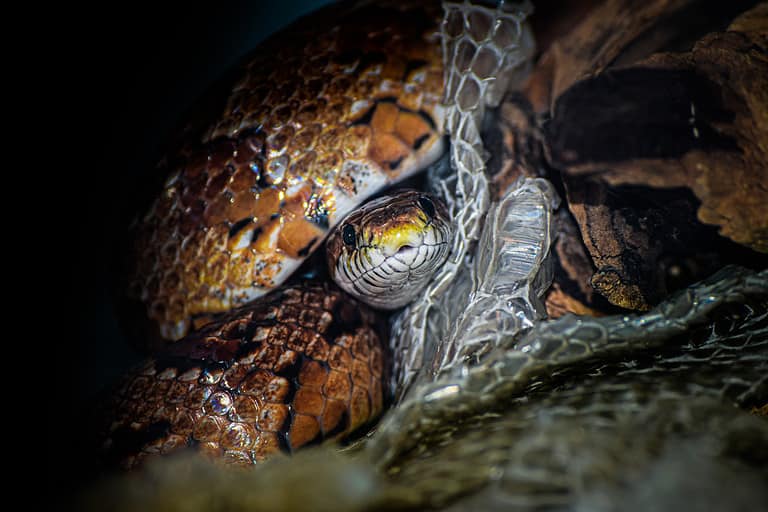
Pantherophis obsoletus are also called rat snakes, but some herpetologists classify rat snakes into separate subspecies. The snake found throughout North Carolina is often known as the Eastern rat snake with the scientific name Pantherophis alleghaniensis. The western rat snake (Pantherophis obsoletus) is a wide-ranging snake found throughout the central US, occurring west of the Mississippi River from as far north as Minnesota, south through states such as Arkansas, Missouri, and Louisiana, to the Gulf Coast. They are also found as far west as the southern extent of Nebraska and the eastern parts of Kansas, Oklahoma, and Texas. They are the most commonly encountered large snake in most parts of North Carolina.
When it comes to habitat, the snakes can be found in a variety of environments. You can spot them on rocky hillsides and in canyons, but they are also found in scrubland and shrub fields, as well as on prairie farmlands. They can also be found in deciduous forests and swamps, as well as on sandy prairies. Humans often come across them in abandoned farm buildings, old oil fields, and caves. They have even been found in chimneys, attics, and basements. It’s not unusual for them to be over six feet in length but the individual in this clip was exceptionally large!
What Do Rat Snakes Normally Eat?
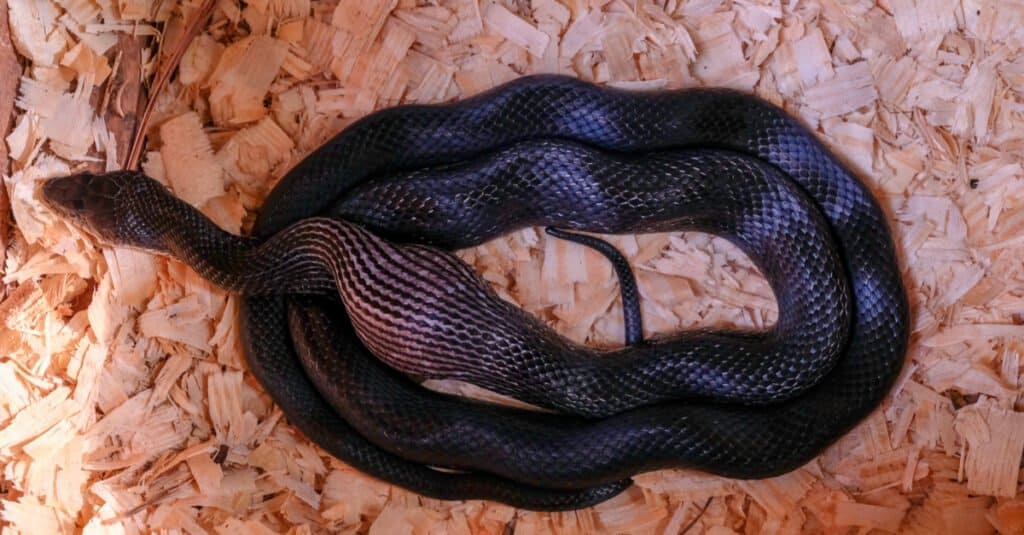
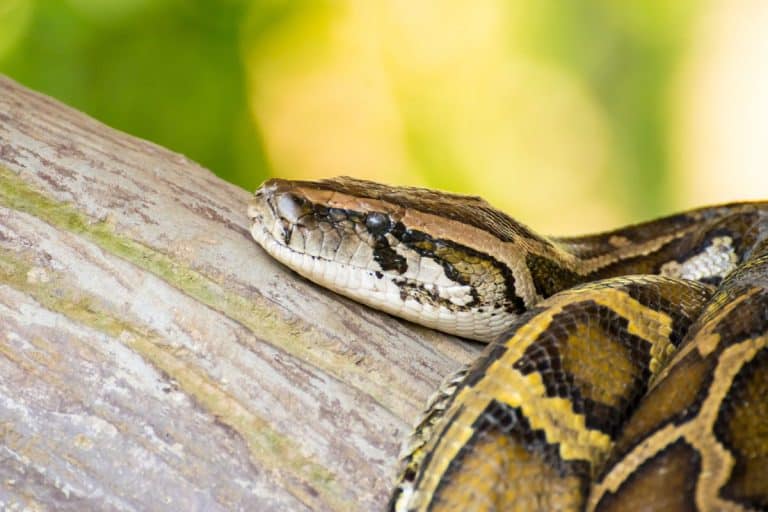
Chicken snakes swallow chicken eggs whole!
©samray/Shutterstock.com
With a name like rat snake, it’s no surprise that these snakes eat mice and rats! They kill their prey by constricting it and then swallow it whole. They are sometimes called chicken snakes because they also eat chickens and their eggs. Overall, over half of their diet is made up of mammals, with the rest being made up of birds, amphibians, and reptiles. Whilst these snakes are not venomous, they will bite when they feel threatened. Given their size, that bite can be painful, but it is not dangerous to humans — simply clean the wound thoroughly to reduce the risk of infection. The best thing is to keep away from them and leave them in peace.