
Quick Take
- Families improve animal safety by planning ahead, preparing go‑bags, and practicing fire drills with pets.
- People should never reenter burning buildings, because fast-growing fires and smoke make conditions deadly within minutes.
- Firefighters put human life first but may rescue animals when conditions and policies allow it.
- Some departments receive specific training and tools for animal behavior, pet care, and large livestock rescue.
When flames and smoke fill a home or barn, animals often panic due to fear. They hide, bolt, or fight against people trying to help them. Firefighters are trained to understand that fear; they learn how to work safely around animals while protecting people first. When every second counts, clear thinking and calm handling can save animal and human lives.
What the Fire Marshal Says

For experienced insight into this issue, we interviewed Randall Johnson, the Deputy Director/Fire Marshal for Campbell County, Virginia. Randall oversees the daily operations and administration of the fire division, coordinating eight volunteer fire departments in the county. He is also in charge of code enforcement and fire investigations.
What To Do Before an Emergency
Protecting your animals in the event of a fire starts with planning. Johnson recommends, “Put a pet alert sticker on the door closest to where the animals are in the house and another on the window of the room they will most likely be in. This will help the firefighters save time looking for your pet.” This is also important for firefighter safety, as a large dog could see firefighters as a threat and try to defend against them.
Fire safety experts also recommend keeping collars on pets at home whenever possible. Keep leashes, pet carriers, and muzzles beside main exits so they are easy to grab during escape. You should also include pets in family fire drills, so they learn the escape routine. Practice calling them from the yard with a firm, calm voice and reward them for coming to you.
Get Out and Stay Out
During family fire drills, prioritize getting out of the home without stopping to look for pets, and never reenter a burning building to rescue an animal. This is especially important to emphasize with children. Johnson explains why:
“Due to the fuels present in a modern home—i.e. more synthetic and less natural material—fire grows much more rapidly. Back when more natural materials were present in our homes we had 15-17 minutes to escape a house fire. With today’s fuels we have 3-5 minutes. There is no time for pets with this tight time frame. And going back in almost always results in a human fatality due to the rapidly changing conditions. One breath of those hot gasses can overcome someone.”
Think of it this way: you are the person who best knows your pet, where it might be, and how to call it so it responds. You need to get that vital information outside to the firefighters who have the gear and the training to navigate a smoky, burning house. So, the safest plan is to get out, stay out, tell firefighters about your animal, and call your pet to come to you from the safety of the yard.
Do Firefighters Enter Burning Homes to Save Animals?
Fire departments teach that human life always comes first. That rule stays firm, even when families beg rescuers to save pets. Standard guidelines say firefighters cannot delay rescuing people or controlling the fire to search for animals. After priority objectives are met, further action depends on the circumstances. Johnson explains:
“Nothing while fighting a fire is absolute. A lot of factors have to be examined upon arrival: the fire conditions, the percent of the home that is burning, whether or not the roof has collapsed, and whether there is a possibility of human victims. Most animal saves are made while firefighters are searching for human victims or for the source of the fire. A specific search for animals comes after protecting human life and controlling the fire, in the priority list.”
Once crews confirm no people are trapped and interior conditions appear relatively safe, many departments allow pet searches during regular sweeps. Firefighters may call for animals and check likely hiding places, such as beds and closets. But in dangerous rooms, they move quickly and grab animals as they pass instead of lingering to coax them out. The fire department may contact animal control officers to help with loose or aggressive animals outside the structure.

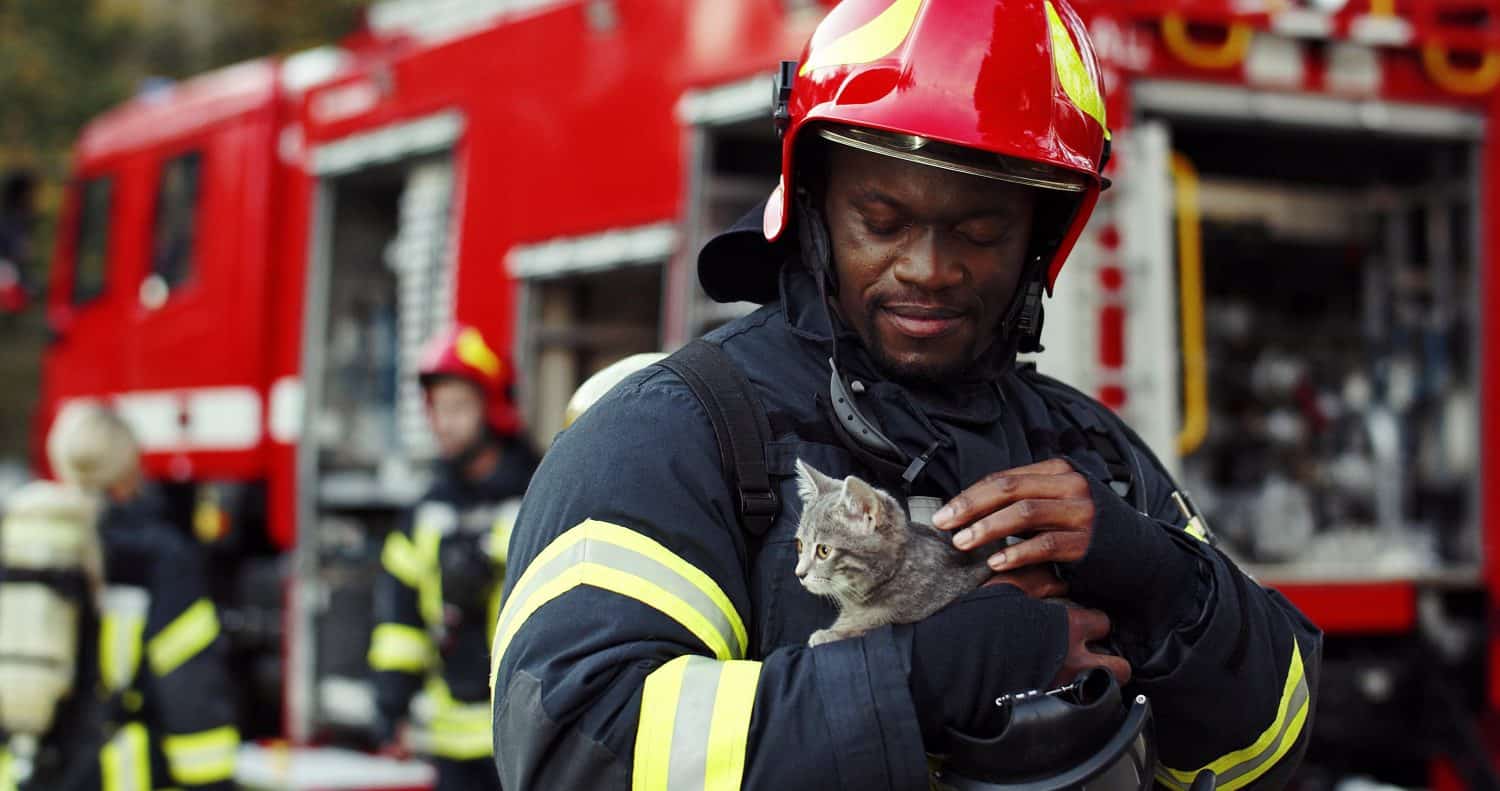
Firefighters are trained to prioritize human life, but may save animals as they sweep through a house.
©SritanaN/Shutterstock.com
A specific search for animals comes after protecting human life and controlling the fire, in the priority list.
Randall Johnson, the Deputy Director/Fire Marshal for Campbell County, Virginia.
Training for Animal Behavior in Emergencies
In some departments, firefighter training includes specific lessons about animal behavior during emergencies. For example, Johnson says that the volunteer firefighters in his department learn that “most animals escape or hide during stressful situations. If they have a safe place they normally hide in the home, there is a good chance they will go there during a fire.”
Some departmental training programs cover things like how fear and pain can cause even gentle pets to be reactive. Instructors teach calm, low voices and slow, clear movements near frightened animals. Crews also learn safe restraint using leads, towels, or leashes. Many departments partner with veterinarians, animal welfare groups, or animal control officers for additional training.
Handling Pets During and After Rescue
When firefighters find a dog or cat in a smoky home, they keep it restrained. They can treat smoke inhalation and injuries until owners, veterinarians, or animal control officers take over care. Some departments carry animal first‑aid kits with basic bandages and soft muzzles, but this varies greatly region-to-region. “We have oxygen masks for dogs and cats,” Johnson says, “The best we can do is give oxygen therapy and urge the owner to get the animal attention from an emergency vet.” Even if a pet looks normal after a fire, owners should seek veterinary care quickly. Some smoke injuries appear hours after the event.
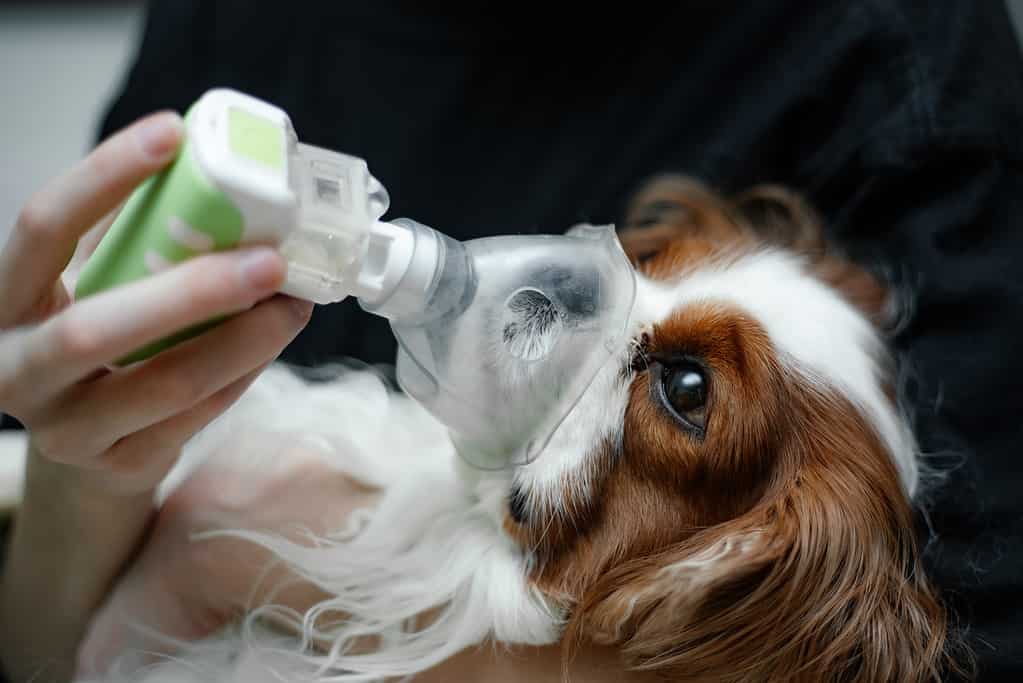
Dogs may receive oxygen from fire departments equipped with pet rescue gear.
©Tatsiana Volkava/iStock via Getty Images
Large Animal Rescue Training
Rescuing horses, cattle, or other livestock requires very different skills and tools. Johnson explains: “To rescue livestock from fires, it’s a matter of getting there in time to open doors and gates so the animals can self-rescue. But if we’re talking about horses that have fallen into pools, mud holes, etc., there are large animal rescue classes some firefighters attend to learn specific skills to safely lift large livestock.”
In these types of courses, firefighters learn about kick zones, crush dangers, and the strength of panicked animals. They practice using wide webbing straps, slings, and rescue glides to move heavy animals without damaging the spine or internal organs. They also coordinate with veterinarians, farriers, and livestock handlers who help decide when rescue is safe or too risky.
Working Together to Protect Animals
Animal safety during fires depends on teamwork. Families should prepare ahead of time through informational stickers, fire drills, and clear priorities about evacuating and not going back for pets. Firefighters will follow their training in the correct priorities to save human life first but will do their best to rescue and treat pets in the process. Emergency vets are the go-to for any treatment beyond oxygen therapy and temporary first aid. Clear plans, calm handling, and respect for the speed and deadliness of fire can improve the odds of survival, for both people and their pets.