
Quick Take
- The salt glands that lizards use to survive deserts play a distinct role in marine iguanas, a role that makes ocean living possible.
- Because of their ocean diets, marine iguanas ingest salt loads that would be lethal to virtually any other lizard. See the sneezing mechanism →
- Marine iguanas sneeze constantly, and the fact that their colonies are coated in a crusty white substance is no coincidence. Explore the nasal salt glands →
- A single weather pattern can erase the majority of a marine iguana population. Climate change is making that pattern more common. See the El Niño threat →
Lizards are largely land animals, adapted to live in a range of terrestrial habitats. Because they have specialized glands for actively excreting salts, lizards can tolerate deserts and other dry places. Their ability to reduce their metabolic rates to lower levels also confers environmental resilience; during a low metabolic state (torpor), lizards need less water and food. Still, the only seafaring lizards known on Earth – marine iguanas – stand out for their exceptional adaptations.
The Galápagos Marine Iguanas
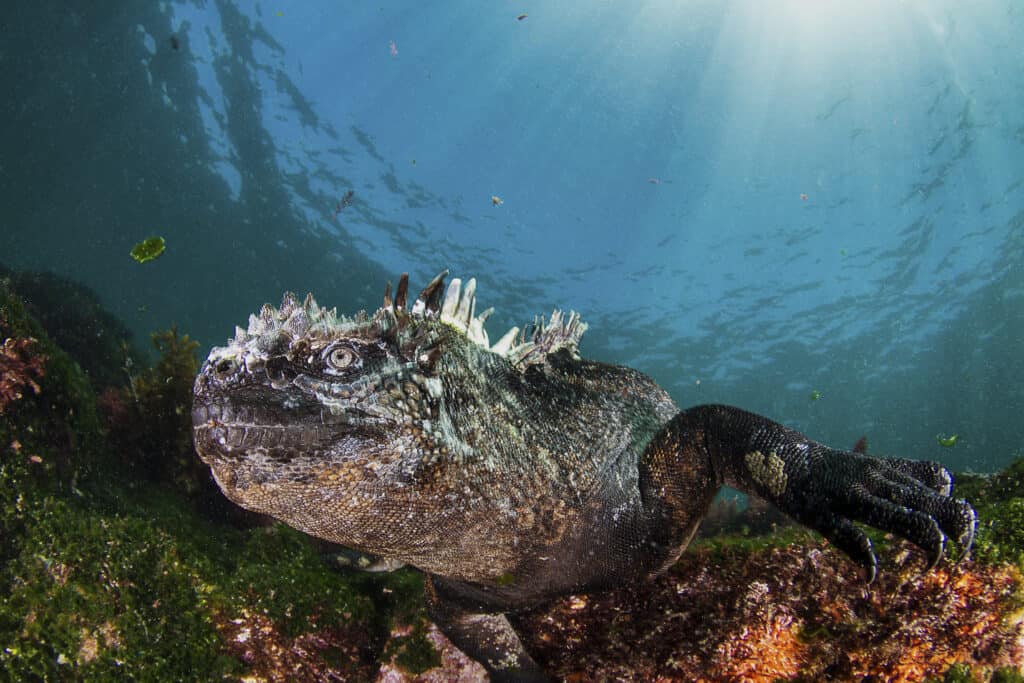
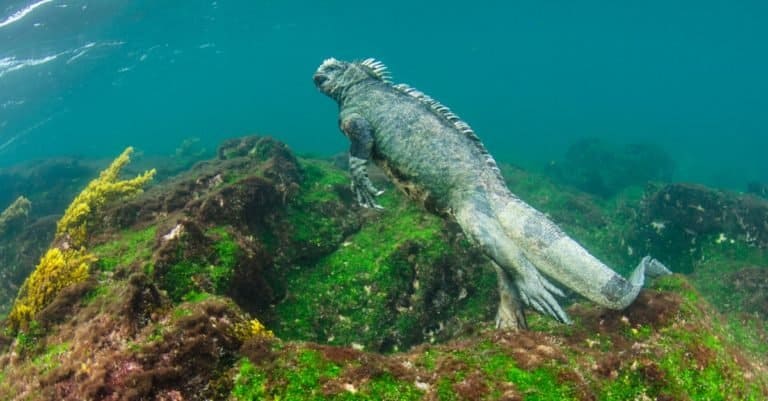
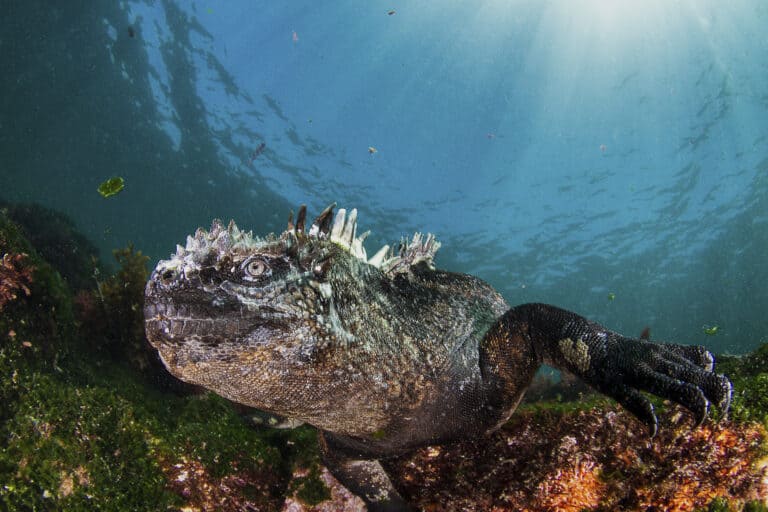
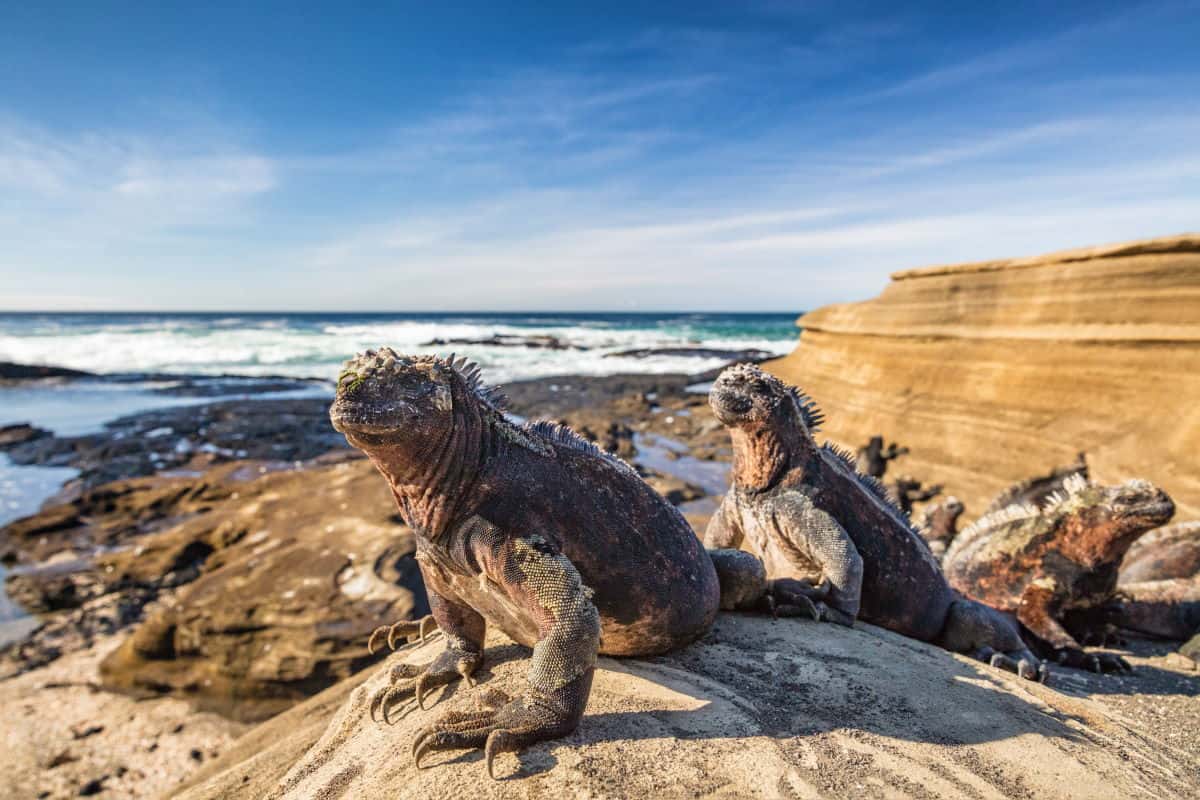
Marine Iguanas are herbivores that graze underwater by cropping algae off rocks.
©Andy Deitsch/Shutterstock.com
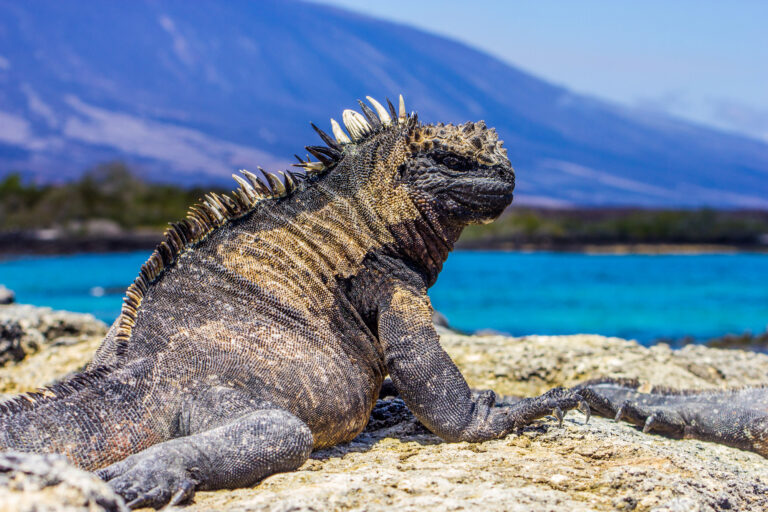
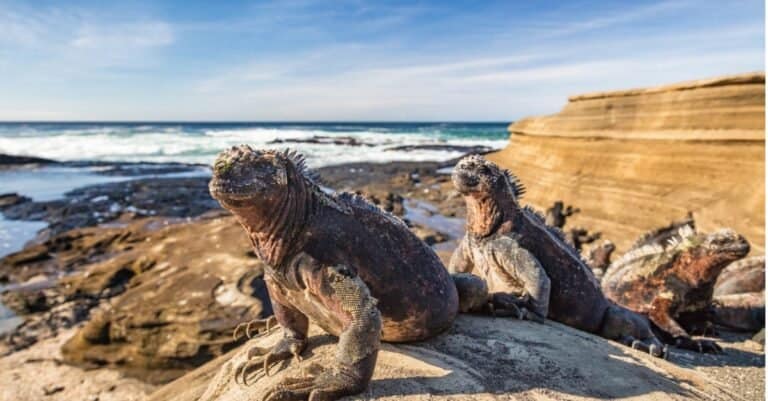
Marine iguanas (Amblyrhynchus cristatus spp.) forage at sea, coming onto land to bask in the sun and lay eggs. As the only iguana that can swim, marine iguanas navigate the currents of the Pacific Ocean around the Galápagos Islands to graze on red and green algae, scraping and tearing it with their sharp teeth. In the process, the iguanas ingest lots of salts, both from the algae and the seawater that comes with it.
A study published in Physiological Zoology provided captive marine iguanas with a diet similar to what they would eat in the wild—algae and seawater. In measuring concentrations of electrolytes (salts), the researchers found that in just one day, an iguana consumed 0.33 grams of sodium, 0.14 grams of potassium, and 0.56 grams of chloride. That’s a significant amount of salt for an animal that averages about 17 pounds (for comparison, the recommended maximum sodium intake for an adult human is 2.3 grams).
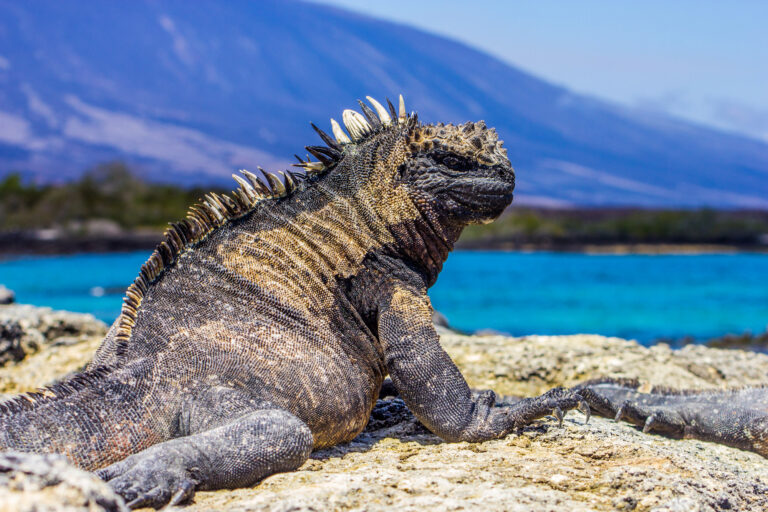
In a recent study in the Zoological Journal of the Linnean Society, evolutionary biologists named a total of 11 subspecies of marine iguana, with distinct iguana populations associated with different islands. Despite their differences in size and appearance, all marine iguanas share the ability to eliminate these salts from their bodies—an accumulation that would otherwise be deadly without a mechanism for regular excretion.
How Marine Iguanas Handle Salt
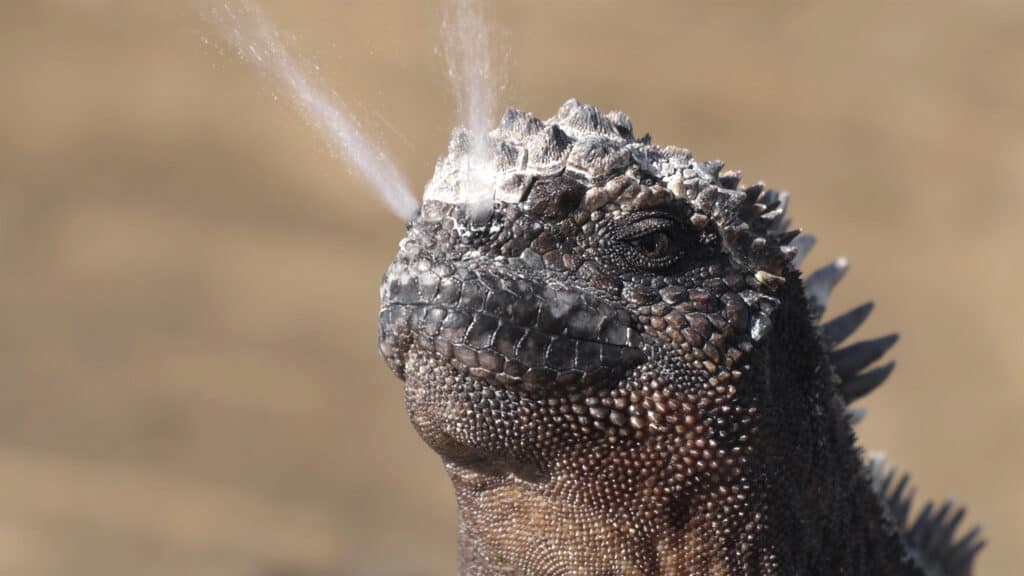
Marine iguanas squirt concentrated salt water out through their nostrils.
©Maridav/Shutterstock.com
In marine iguanas, the typical lizard salt glands have evolved to act as super salt-removers. A study published in the American Association for Anatomy found that the extra-large salt glands of marine iguanas sit in concave areas between the nose and the roof of the skull, from where they filter salts from the bloodstream. These “exocrine” glands remove sodium, potassium, and chloride ions. From the glands, the concentrated salty liquid moves into the nasal passages.
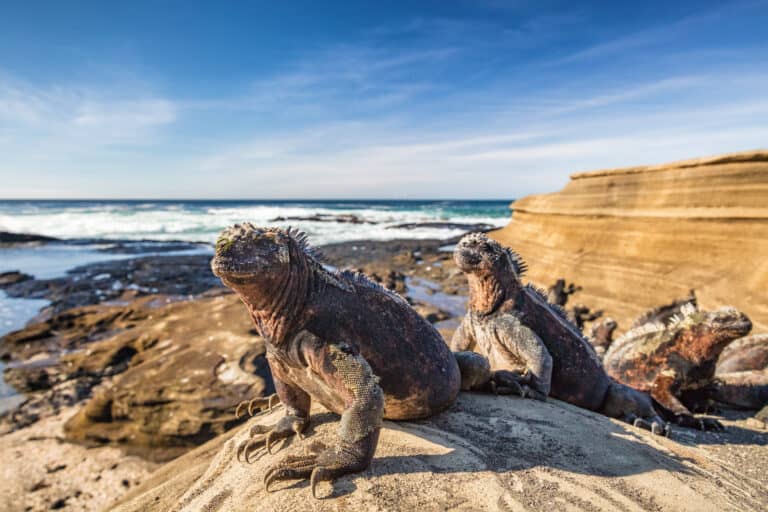
When a marine iguana sneezes, it’s forcefully clearing out the salty liquid. With a sharp exhalation, an iguana can expel a spray of salty liquid from its nose, sometimes reaching several feet. Since marine iguanas are colonial, they all spray themselves and their neighbors with salty “snot,” resulting in the iguanas being coated in crusty white salt. About 95 percent of their ingested sodium and chloride, and about 80 percent of ingested potassium, is eliminated through the nasal secretions while minimizing water loss, according to a study in Physiological Zoology.
An undergraduate research study analyzed salt discharges of marine iguanas on San Cristóbal Island and found that larger iguanas ejected salts more frequently than smaller ones. After low tide, when feeding was concentrated in saltier waters, marine iguanas also sneezed more. The study authors concluded, “Based on our data, we suggest that the iguanas begin to process the salts they ingest as soon as they are able, and they efficiently move and excrete those salts as fast as they can so they may retain their body’s salt balance.”
Sensitivity to Weather

During El Niño events, starving marine iguanas become more vulnerable to predators. Here, a Galapagos hawk, Buteo galapagoensis, eats a small marine iguana.
©Wirestock/iStock via Getty Images
Periodic El Niño events bring warmer waters into the ocean around the Galápagos Islands. Because the red and green algae favor cool waters, they become scarce during El Niño years and get replaced by brown algae that don’t provide suitable forage for marine iguanas. Because brown algae have tough cell walls, they are hard to digest and are less nutritious. During severe El Niño events, mortality rates for marine iguanas can range from 10% to as high as 90%, depending on location and severity.
As climate change driven by carbon emissions continues, extreme El Niño events are expected to increase in frequency. This could result in more frequent and intense starvation events for marine iguanas. According to the International Union for Conservation of Nature (IUCN), the marine iguana is currently listed as “Vulnerable,” prompting conservation measures. However, addressing climate change requires action on a global scale.
The marine iguanas that survive warm ocean periods tend to be smaller ones. A study published in Nature found that marine iguanas may shrink, then regrow multiple times during their lives. But that’s another story of remarkable marine iguana adaptations!