
Quick Take
- The chuckwalla has no venom, no sharp teeth, and can't outrun a predator, yet it has one of the desert's most effective escape strategies. Meet the chuckwalla →
- Chuckwallas use a breathing technique borrowed from an unlikely source to transform their own bodies into an almost unmovable object within seconds. See the inflation technique →
- The same physical features that make the chuckwalla look slow and awkward are precisely what make it impossible to extract from its hiding spot. How bulk beats predators →
When times are good, the desert chuckwalla tends to spend its mornings and afternoons basking in the sun. Like other reptiles, chuckwallas are ectothermic, so sunlight is a must. Springtime brings sunbathing on rocks with their stomachs pressed flat to the surface; summer brings a more upright posture. While chuckwallas may seem utterly unbothered during their sunbathing hours, they won’t hesitate to flee from the open when faced with a potential threat.
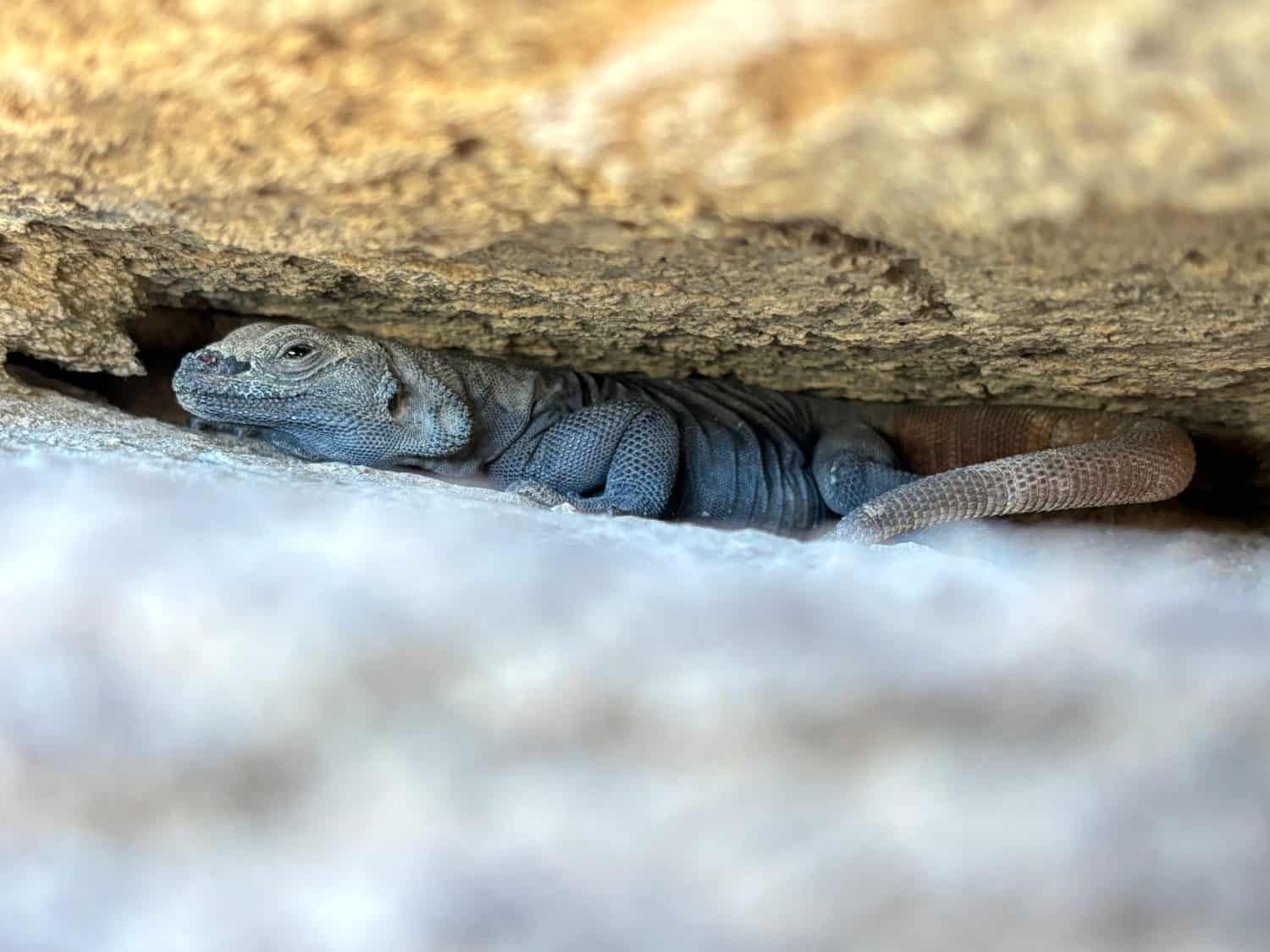
Chuckwallas are well adapted to desert conditions, but they don’t have much in the way of defense. Unlike other reptiles, chuckwallas lack venom, sharp teeth, or the athleticism required for all-out runs. Instead, chuckwallas will flee into rock crevices. Once situated, they inflate their flexible bodies to fill the already tight crevices where they are hiding. This helps them blend into the rocks and makes it difficult for predators to find enough space to grab hold of them.
About the Chuckwalla
Chuckwallas are lizards in the Sauromalus genus. Though they are found in various spots around the southwestern region of North America, down to Baja, Mexico, the common chuckwalla (Sauromalus ater) is the most widely distributed. They have flat midsections, protruding stomachs, and thick tails that taper to stubby tips. While common chuckwallas can grow to over 15 inches long, other species, such as the San Esteban chuckwalla, can grow up to 30 inches.
These reptiles are primarily herbivores, feeding on leaves, flowers, and fruits. When in need of extra food, chuckwallas will eat insects. Such a varied diet allows them to feed throughout different seasons with ease. They prefer areas with plenty of plants and rocks. For good reason, too: chuckwallas rely on rocks to help them survive predation.
Run to the Rocks
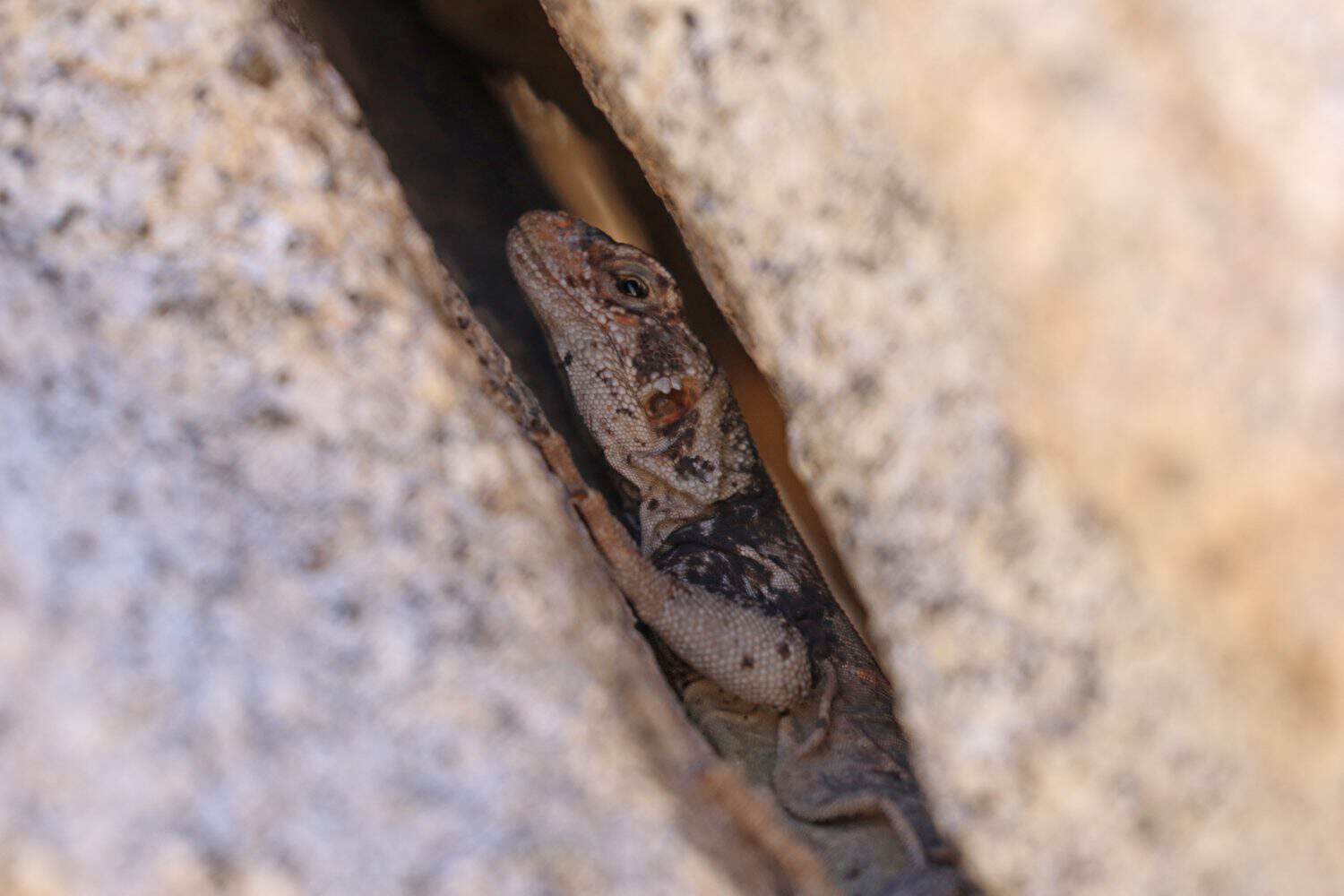
When faced with a threat, chuckwallas hide in rock crevices and expand their lungs to fill the space.
©Creeping Things/Shutterstock.com
When a chuckwalla spots a predator or a potential threat, it makes a beeline for the nearest rock outcropping. It homes in on a narrow crevice within the rocks and wedges itself inside. However, this hiding spot still leaves enough space for predators to reach inside and around the reptile. To remedy these gaps, chuckwallas undergo a remarkable breathing process called buccal pulse pumping.
Like a frog expanding its gullet, chuckwallas rapidly contract their throats to expand their lungs up to four times their normal volume. The already hefty chuckwalla can expand its body size by nearly 50% within seconds. Their baggy, flexible skin becomes taut. The gaps in its rock hiding place disappear, as this rapid breathing effectively allows chuckwallas to fill the entire space. To ensure that no predator can get a grip on their expanded bodies, chuckwallas use their backward-facing scales to slide deeper into the crevice and resist being pulled out. They also dig their recurved claws into the rock for an even tighter grip on the crevice.
Predator’s Lament
All of these maneuvers, performed in quick succession, transform chuckwallas from vulnerable prey into fixtures of the rock formations. Their bodies expand so deeply into the random dimensions of a rock crevice that they effectively become immovable. This leaves hardly a centimeter of space for hungry predators like coyotes or red-tailed hawks to reach in and pull them out.
When they get the sense that the predator has moved on, and the coast is clear, chuckwallas deflate their lungs. Within seconds, they are back to their normal size. They leave their rock hiding places and return to the sun to bask once more.