
Quick Take
- This lizard can shrink its own skeleton to survive, which goes beyond simply losing weight. Discover the bone-shrinking survival →
- It can stay submerged for up to an hour, but getting out of the water puts it in serious danger. Explore their diving limits →
- Its method of expelling ocean salt is as strange as the creature itself. See the salt-expulsion method →
- El Niño can wipe out up to 90% of a population, but these iguanas have evolved a genius response to it. Learn how El Niño shapes survival →
The Galapagos Islands are home to some extraordinary creatures and the one featured in this Instagram post is right up there with the strangest: an iguana that feeds in the ocean! The unique lizard’s body is perfectly adapted for its unusual lifestyle and has the ability to shrink! Meet the incredible marine iguana.
An Iguana That Feeds in the Sea
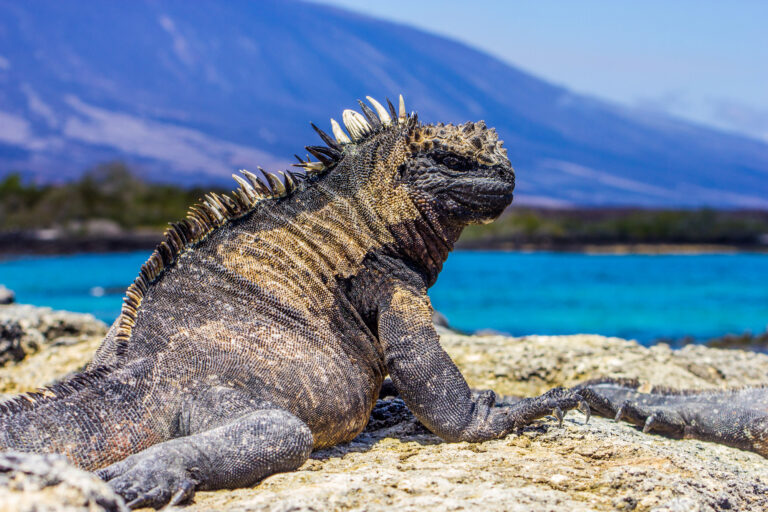
The marine iguana (Amblyrhynchus cristatus) is the only lizard on the planet that can live and forage in the ocean. They are found only in the Galapagos Archipelago and include 11 very similar subspecies. Each subspecies is found on a different island. Those found on Isabela and Fernandina islands are the largest.
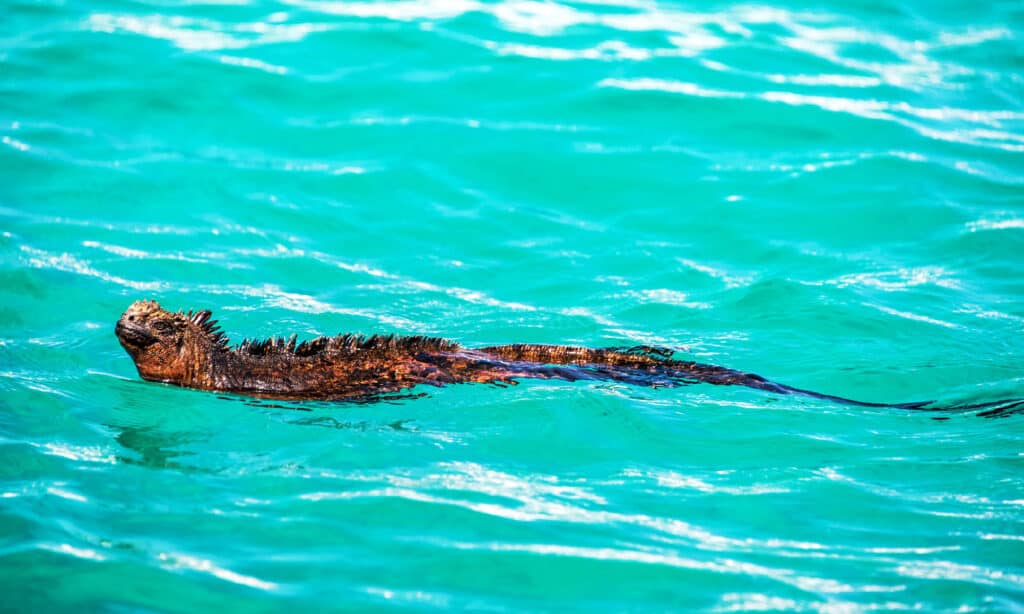
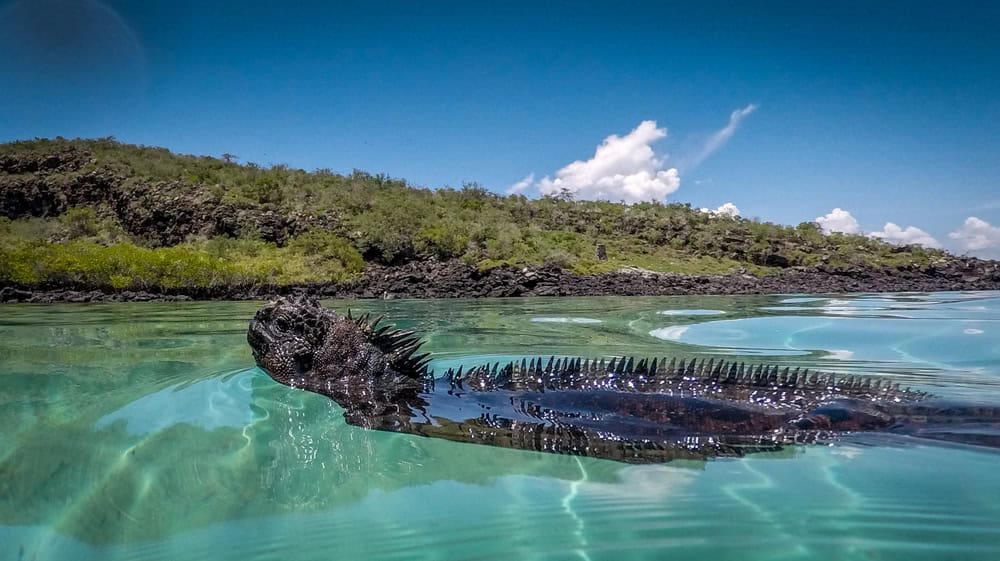
Marine iguanas have tails adapted for swimming.
©iStock.com/DC_Colombia
Most of the time, these iguanas are a grey-black color with pyramid-shaped dorsal (upper) scales. During the mating season, however, the males feature a variety of colors depending on the subspecies. You can tell them apart from land-based (terrestrial) iguanas because they have a shorter, blunter snout and a slightly laterally compressed tail. This tail helps them move either on the surface of the water or just below it. They swim with their legs fixed to their sides and look a bit like an eel.
How Are Marine Iguanas Adapted for Ocean Life?
The iguanas have exploited a marine source of food, namely red and green marine algae. It’s likely that these lizards originated in South America but became stranded on the islands where they evolved in isolation. They live in an area where they have very few predators, but some are hunted by hawks and crabs.
Feeding under the ocean is challenging when you are an ectotherm. These reptiles can lose up to 10 degrees C of body temperature when under the water! Their dark coloring helps them absorb heat from the sun, and they spend a lot of time basking out of the water. They need their body temperature to be between 35 and 37 degrees C before they can enter the water.
Larger adults typically dive into the water to feed at high tide, with most dives shallower than 16 feet under the surface. However, some have reached 98 feet and have stayed underwater for up to an hour! Younger and smaller iguanas only feed in the intertidal zone during low tide.
Their blunt noses and sharp teeth allow them to rip the algae off surfaces with ease. However, they occasionally also feed on grasshoppers, crustaceans, and plants on land.
The Challenges of Life in Salt Water
Marine iguanas have evolved mechanisms to allow them to cope with extended periods in salt water. Special glands remove all the extra salt that their bodies absorb. Then, they expel it through their nostrils using a sneeze-like action. They can be very sluggish when they come out of the water, and this makes them vulnerable to attack by predators. Therefore, they are highly aggressive to scare off attackers. They also have sharp claws that help them grip onto underwater rocks when feeding. The combination of sharp claws and aggressive personality means that humans should always stay a few feet away from them. However, they are not able to cause serious injury to humans in most circumstances.
Despite their ability to feed and move in the water, these iguanas mate and nest on land. Their breeding season is between December and March. Females lay up to 6 eggs in burrows dug around 300 yards inland.
Marine Iguana Conservation Status
Marine iguanas are classed as Vulnerable by the International Union for Conservation of Nature (IUCN). They suffer significant population fluctuations caused by El Niño events, which bring warmer temperatures to the Galapagos region.
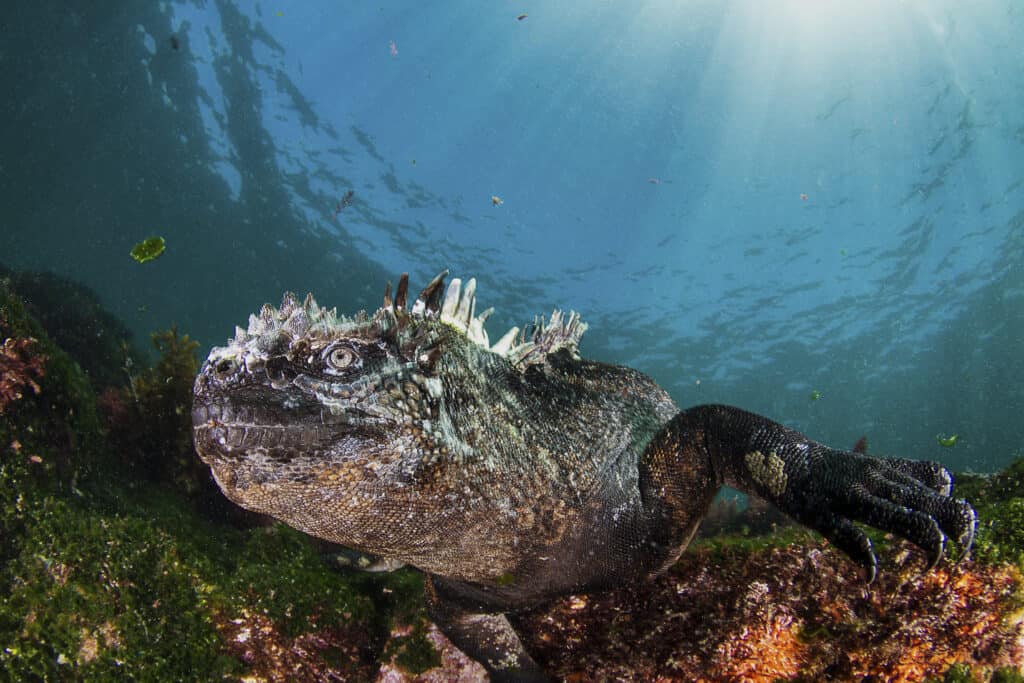
Marine iguanas need red and green algae to thrive.
©Andy Deitsch/Shutterstock.com
Warmer temperatures destroy the red and green marine algae that these creatures rely on. At the same time, brown algae increase, but they cannot digest this very well. Up to 90 percent of the iguanas can perish during an El Niño event. Yet, these creatures have a genius solution: they shrink!
The iguanas do not just lose body weight; they also lose length. They can become up to 20 percent shorter, and experts suspect that they can even reabsorb their own bone matter. Small (shrunken) iguanas can survive longer than larger ones. They can forage more efficiently for food and use up less energy. When temperatures fall, the iguanas can grow again, with the ‘shrunken’ phase of their life lasting months or even years.
Amazingly, this can happen several times during a marine iguana’s lifespan, which can reach 12 years. Some have even lived for several decades.
Shrinking, however, will not help them evade the non-native predators that now hunt them, including rats, cats and dogs. Increased tourism in the area also needs to be carefully controlled to prevent it from impacting the delicate ecosystems.