
Recognized by their bright colors, iguanas are reptiles in the order Squamata. There are approximately 10 recognized species of iguanas in the subfamily Iguaninae, native to various tropical and desert regions of the Americas, as well as Fiji and Tonga in the South Pacific. Iguanas have also been introduced to other areas, including Florida, Hawaii, and other Pacific islands, through the pet trade and accidental releases. While harmless to humans, these reptiles can be a nuisance when they find their way into homes and hide under furniture. How large are the largest iguanas? Listed below are the seven genera containing the largest iguanas (and the specific species of the largest specimen), measured from the tip of the head to the end of the tail.
7. Sauromalus
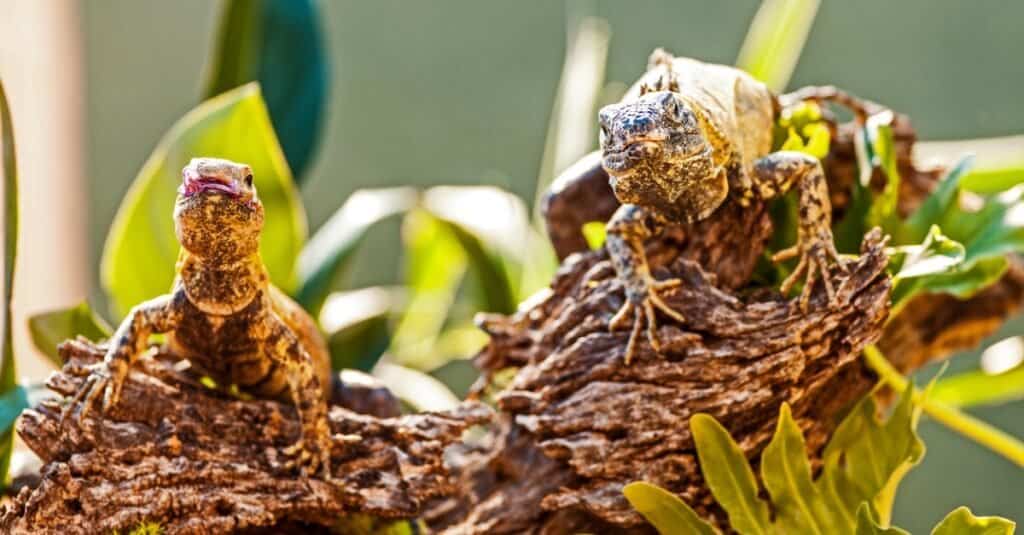
The chuckwalla lives mostly in the Southwestern United States and Mexico.
©iStock.com/adogslifephoto
- 5 species
- Largest: San Esteban chuckwalla (Sauromalus varius)
- Measures: 2.5 ft.
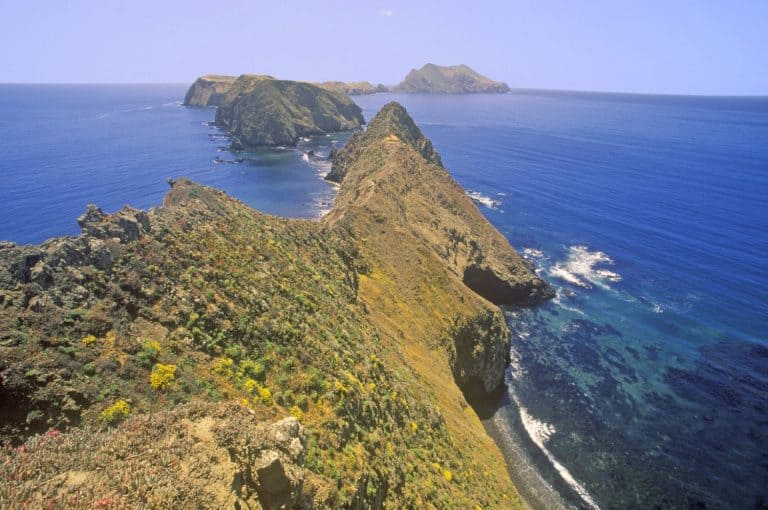
Chuckwallas (Sauromalus) look like small komodo dragons (Varanus komodoensis) with loose folds of tough skin covered in small scales. They are stocky, wide-bodied, and can be reddish-pink, orange, yellow, or light gray. There are six extant chuckwalla species in the Southwestern United States and Mexico. Some are endemic to islands like Angel Island (Sauromalus hispidus) and Santa Catalina (Sauromalus klauberi) chuckwallas. Chuckwallas prefer warm, dry environments, lava flows, and rocky areas. They are primarily herbivores, but occasionally eat insects. Chuckwallas hibernate during winter, unlike their tropical kin. The name chuckwalla is Native American in origin. It was transcribed from Shoshone to Spanish as chacahuala.
6. Brachylophus
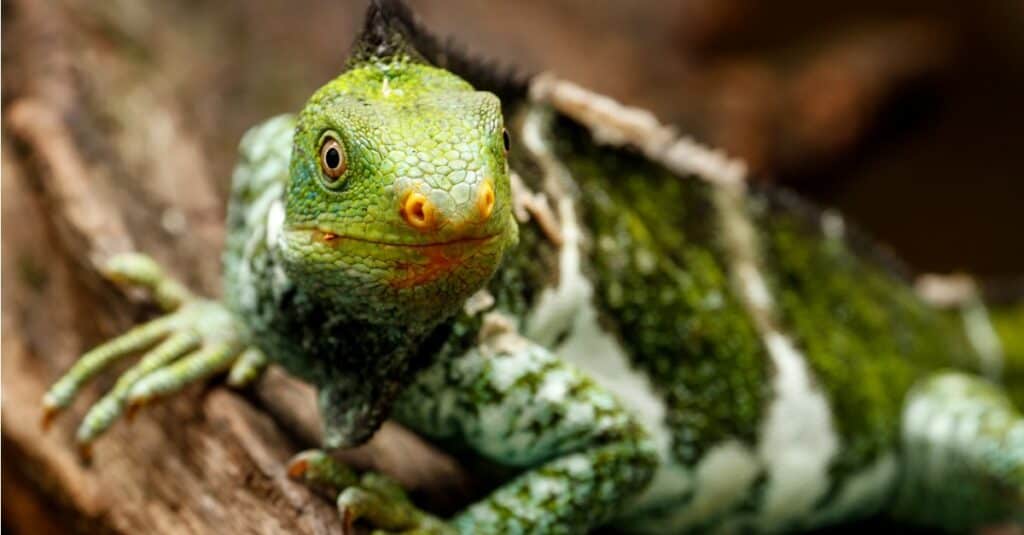
The Fiji crested iguana, which lives in the Southwest Pacific, is critically endangered.
©iStock.com/Donyanedomam
- 4 species
- Largest: Fiji crested iguana (Brachylophus vitiensis)
- Measures: 2.6 ft.
Similar in size to chuckwallas, the genus Brachylophus consists of four separate species, the largest being the Fiji crested iguana (Brachylophus vitiensis). The five living Brachylophus species are listed by the IUCN as Endangered, Critically Endangered, or Vulnerable, depending on the species. Many populations are limited to one or two islands in the Southwest Pacific. Since 2008, multiple iguana species recovery plans have been implemented in Fiji to varying degrees of success. Increased funding has allowed scientists to better understand existing threats and population numbers. The scientific name Brachylophus comes from Greek, with brachys meaning short, and lophos meaning crest or plume, referencing the genus’s spiny crests.
5. Amblyrhynchus
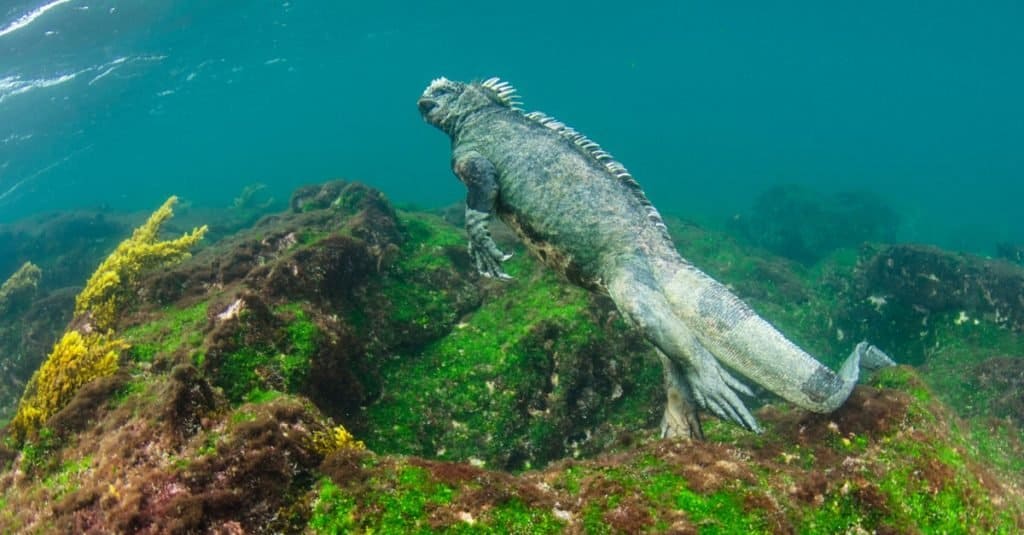
The marine iguana as seen underwater off Fernandina Island, Galapagos Islands, Ecuador.
©Danita Delimont/Shutterstock.com
- 1 species
- Measures: 3.9 ft.
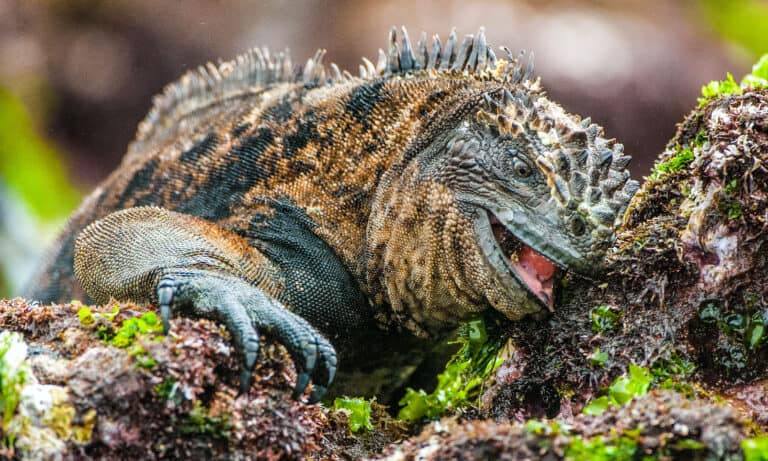
Marine iguanas (Amblyrhynchus cristatus) are proficient swimmers capable of diving to depths of 65 feet. These iguanas swim to satisfy their diet of marine algae. Despite feeding in the water, marine iguanas spend most of their time on land and have been observed sunbathing. They are also known for their salt glands, which expel salt ingested while eating underwater.
Marine iguanas are endemic to the Galapagos Islands, and while there are a few identified subspecies, marine iguanas are the only official species in the genus Amblyrhynchus. They have a thickset body with short, powerful limbs and a flat tail, which is great for swimming. Marine iguanas are black and gray, allowing their body to rapidly absorb heat after a cold swim. Despite conservation protections, the IUCN lists them as Vulnerable. Marine iguanas depend on algal growth, which varies year to year.
4. Ctenosaura
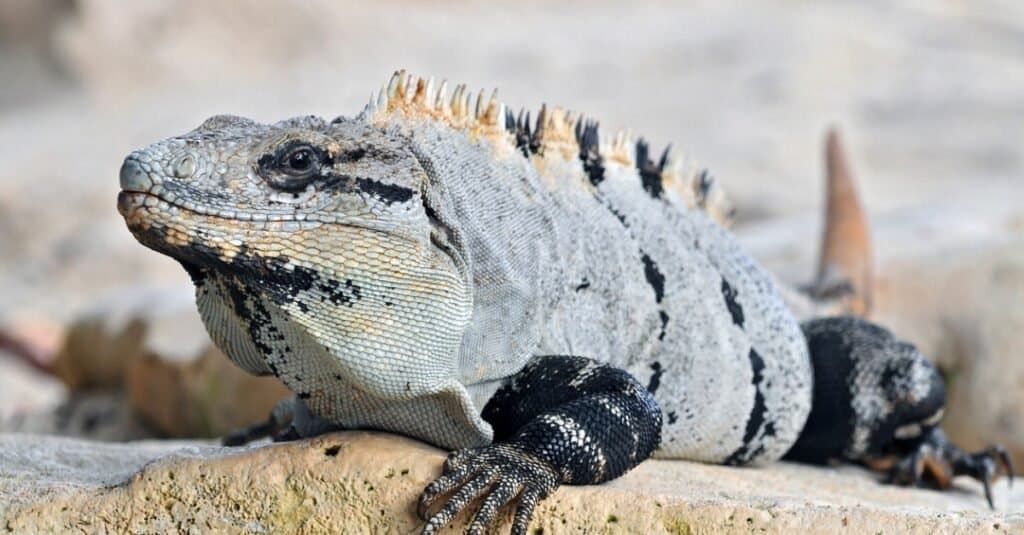
A Mexican spiny-tailed iguana can grow to lengths surpassing 4 feet.
©iStock.com/Cezary Wojtkowski
- 15 species
- Largest: Mexican spiny-tailed iguana (Ctenosaura acanthura)
- Measures: 4 ft. 7 in.
Ctenosaura is a large genus native to Mexico and Central America. Species of this genus have enlarged, spiny scales on their tails, hence the genus’s common name, spinytail. Unlike some of the iguanas listed above, spinytails are omnivorous, eating small fruits, flowers, and small animals. Spiny-tailed iguanas inhabit dry coastal forests below 3,900 feet in elevation.
Able to grow to more than five feet in length, the black spiny-tailed iguana (Ctenosaura similis) is the largest species of the group. Another spinytail member, the black spiny-tailed (Ctenosaura similis), previously held the Guinness World Record for fastest lizard at 21.5 mph. It has since been surpassed by the green iguana (Iguana iguana) at 22 mph and the perentie (Varanus giganteus), a monitor lizard that can reach speeds of 25 mph.
3. Conolophus
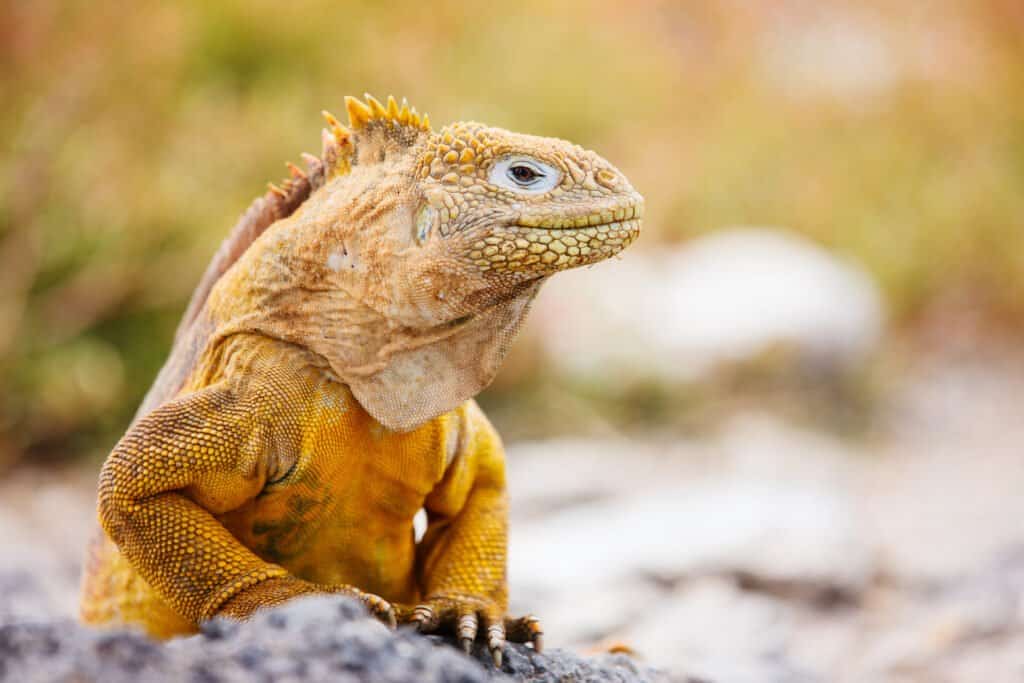
A Galapagos land iguana is slightly larger than its marine peers.
©BlueOrange Studio/Shutterstock.com
- 3 species
- Largest: Galapagos land iguana (Conolophus subcristatus)
- Measures: 5 ft.
Like marine iguanas, all three Conolophus species are endemic to the Galapagos Islands. Their conservation status ranges from Vulnerable, Galapagos land iguana and Santa Fe land iguana (Conolophus pallidus), to Critically Endangered, Galapagos pink land iguana (Conolophus marthae). The Galapagos pink land iguana has a limited habitat of only the Wolf Volcano in Northern Isabella Island; scientists estimate there are only 200 left in the wild.
There is a controversy around the Galapagos land iguana and the Santa Fe land iguana, with doubts over whether they are two distinct species. They are quite similar, but the Santa Fe is more of a paler yellow, has a long, tapered snout, and more obvious dorsal spines. One of the more interesting things about land iguanas is their symbiotic relationship with island finches. The finches remove parasites and ticks from the iguana, providing relief to the lizard and easy food for the birds.
2. Cyclura
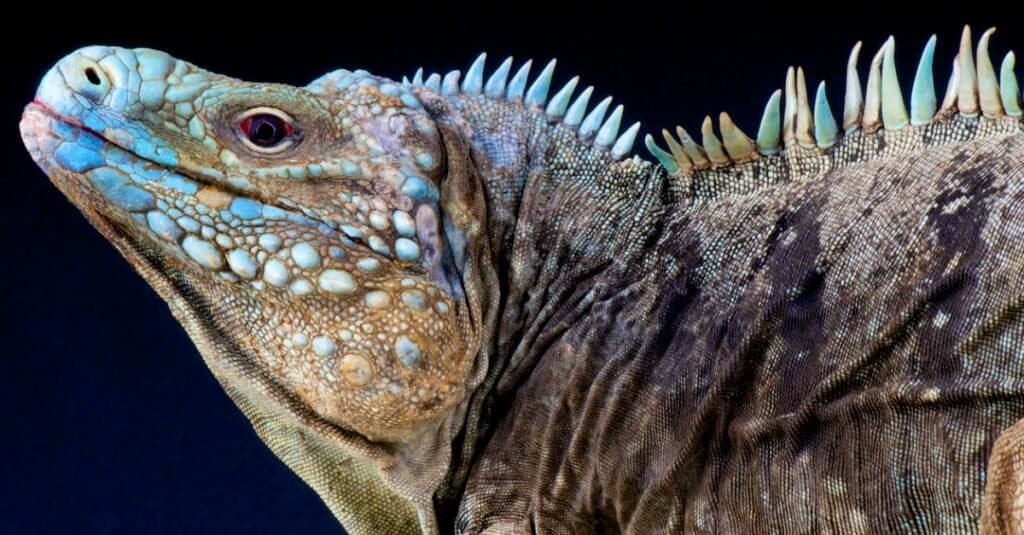
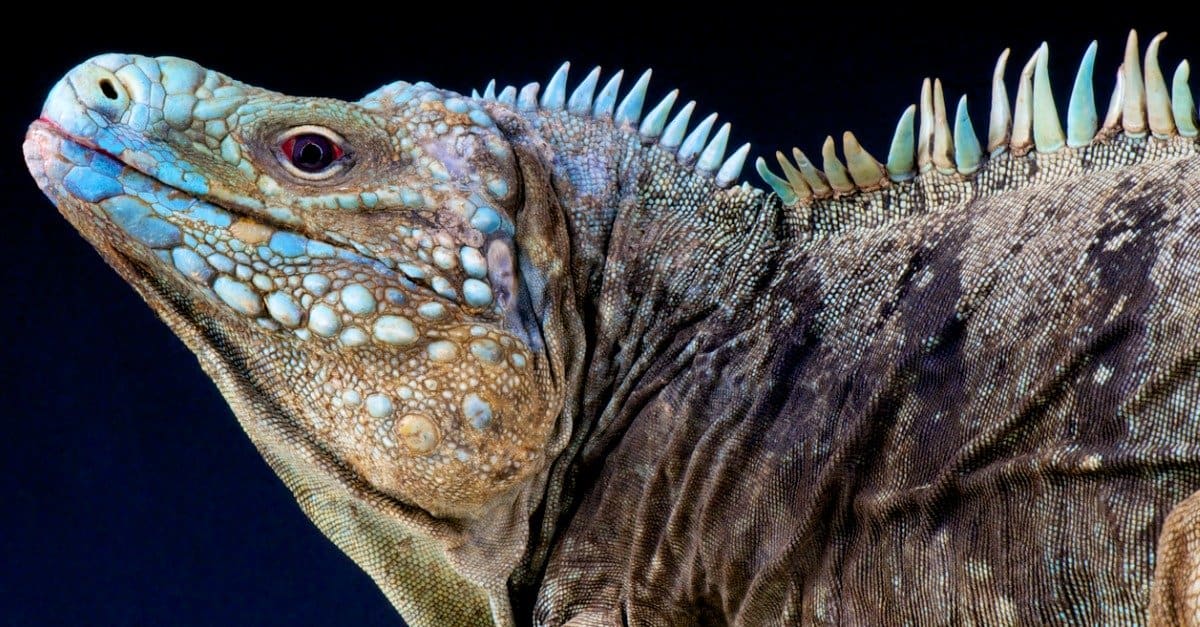
The blue rock iguana is one of the most endangered iguana species in the world.
©iStock.com/reptiles4all
- 10 species
- Largest: Cuban rock iguana (Cyclura nubila)
- Measures: 5 ft. 2 in.
Endemic to islands in the West Indies, the Cyclura genus encompasses several species and subspecies noted for their longevity. One blue iguana (Cyclura lewisi) was 69 years old at the time of its death, which would make it the world’s longest-living recorded lizard. The current record for the longest captive-born rock iguana is 41 years and belongs to a rhinoceros iguana (Cyclura cornuta) named Rhino at the Australia Zoo.
Rock iguanas prefer dry forested areas with eroded limestone and sparse vegetation, feeding on leaves, flowers, and berries. Size varies with each species, with the largest rock iguana measured being 5.2 feet long. Of the ten recognized species, three are Critically Endangered, three are Endangered, and the rest are Vulnerable or Near Threatened.
1. Iguana
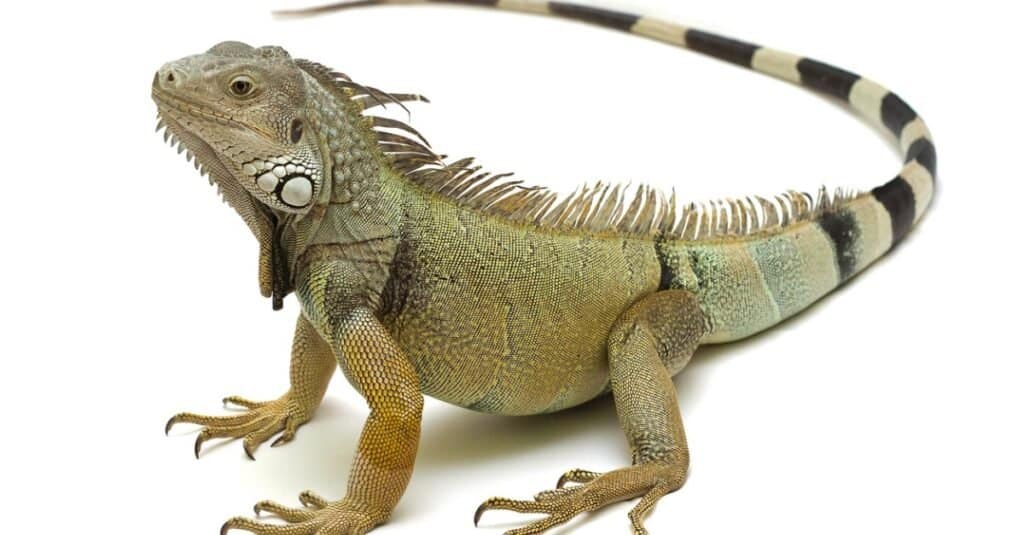
The green iguana is one of the largest iguana species on Earth.
©iStock.com/Che_Tina_Plant
- 2 species
- Largest: Green iguana (Iguana iguana)
- Measures: (6.6 ft.)
This genus contains two species, the Lesser Antillean iguana (Iguana delicatissima) and the green iguana (Iguana iguana). The green iguana is the biggest iguana species. They are everywhere, from Brazil to Mexico to Florida. Colloquially known as chicken of the trees, in Puerto Rico, green iguanas are the most likely iguana to be a pet. The average size for a green iguana is nearly five feet, although a few have grown to over six and a half feet long!
Green iguanas are primarily herbivores. They are also agile tree climbers and proficient burrowers. They are considered an invasive species in several locations, most notably Hawaii and Florida, where they are responsible for ecological damage. One of the stranger events involving the green iguana occurred in Florida in 2008, 2010, 2018, and 2020, when strong cold fronts plummeted local temperatures. The iguanas entered into a torpor and lost control of their grip on branches, dropping from trees.