
When you think of creatures that like water, I’m sure iguanas are not what first comes to mind. Iguanas are large lizards that have many different species, each with its own affinity for water. This YouTube Short shows an iguana going for a swim in a pool! Read here to learn about iguanas that like to go for swims!
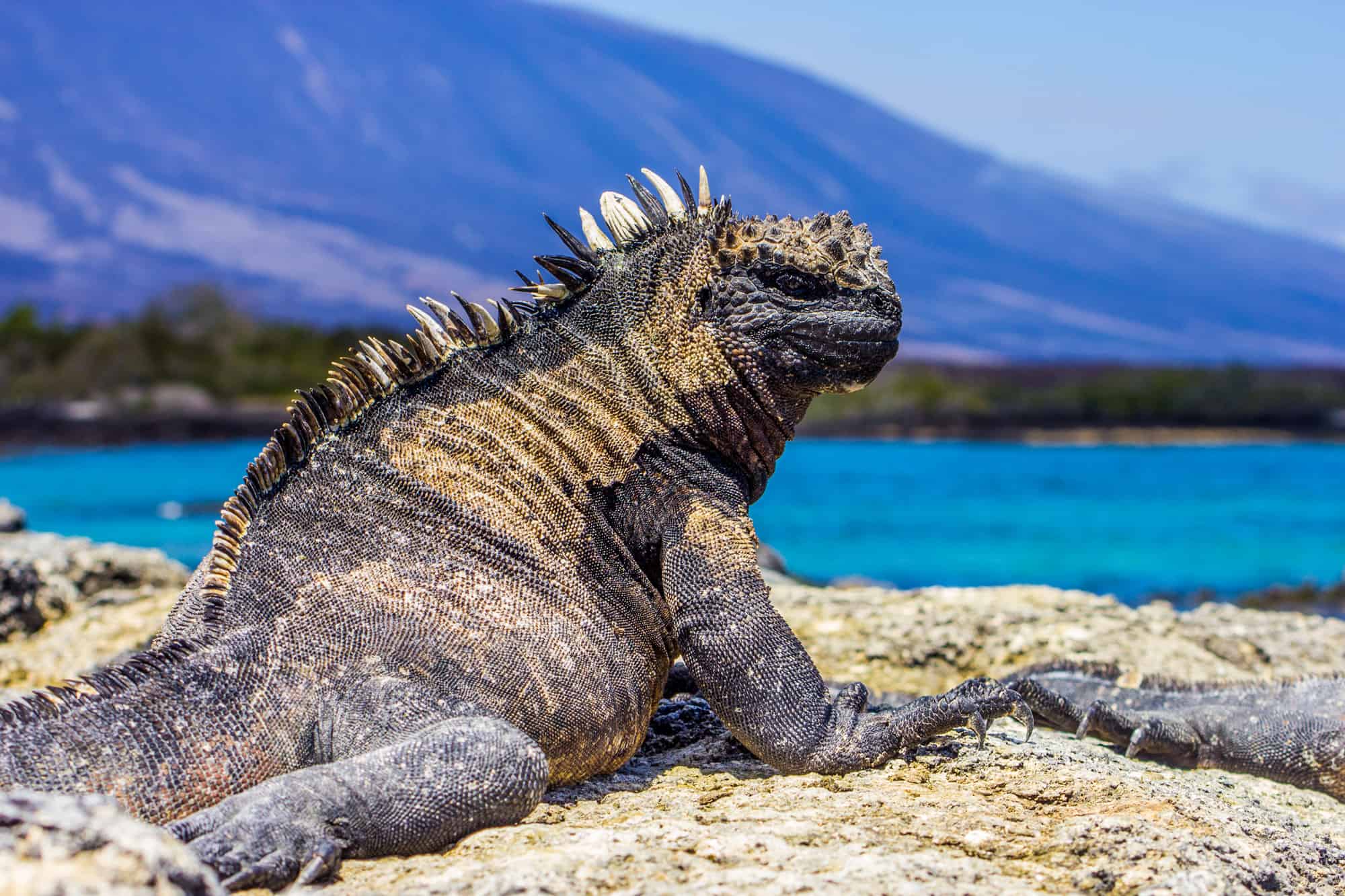
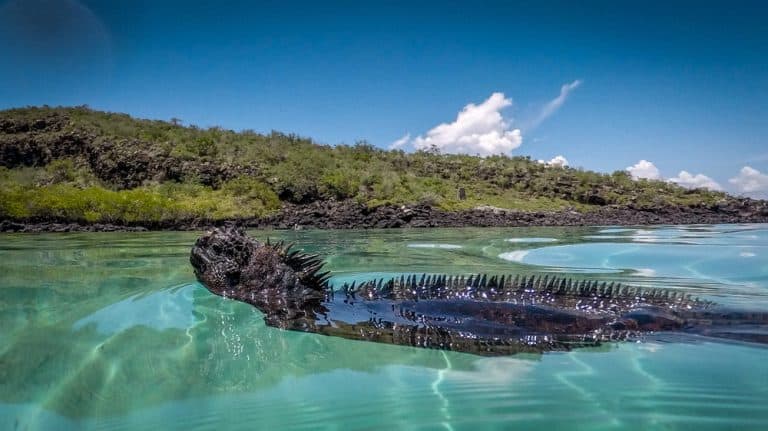
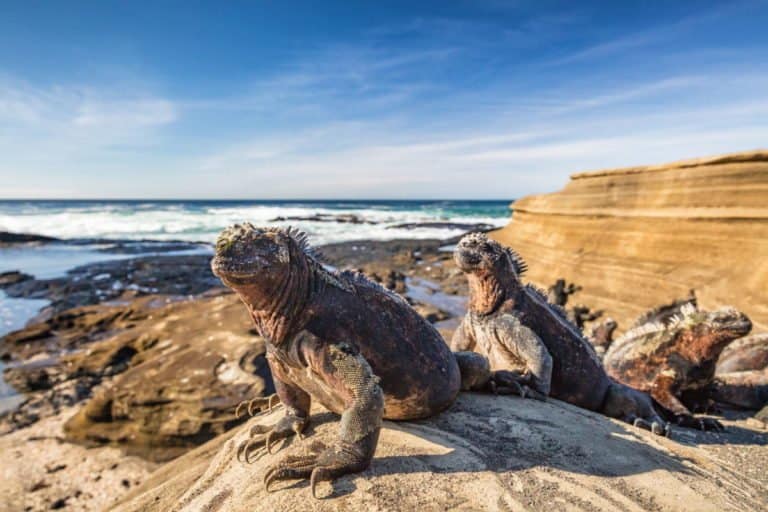
Marine iguana Amblyrhyncus cristatus in the Galapagos Islands
©iStock.com/Fred Chaveton
About Iguanas
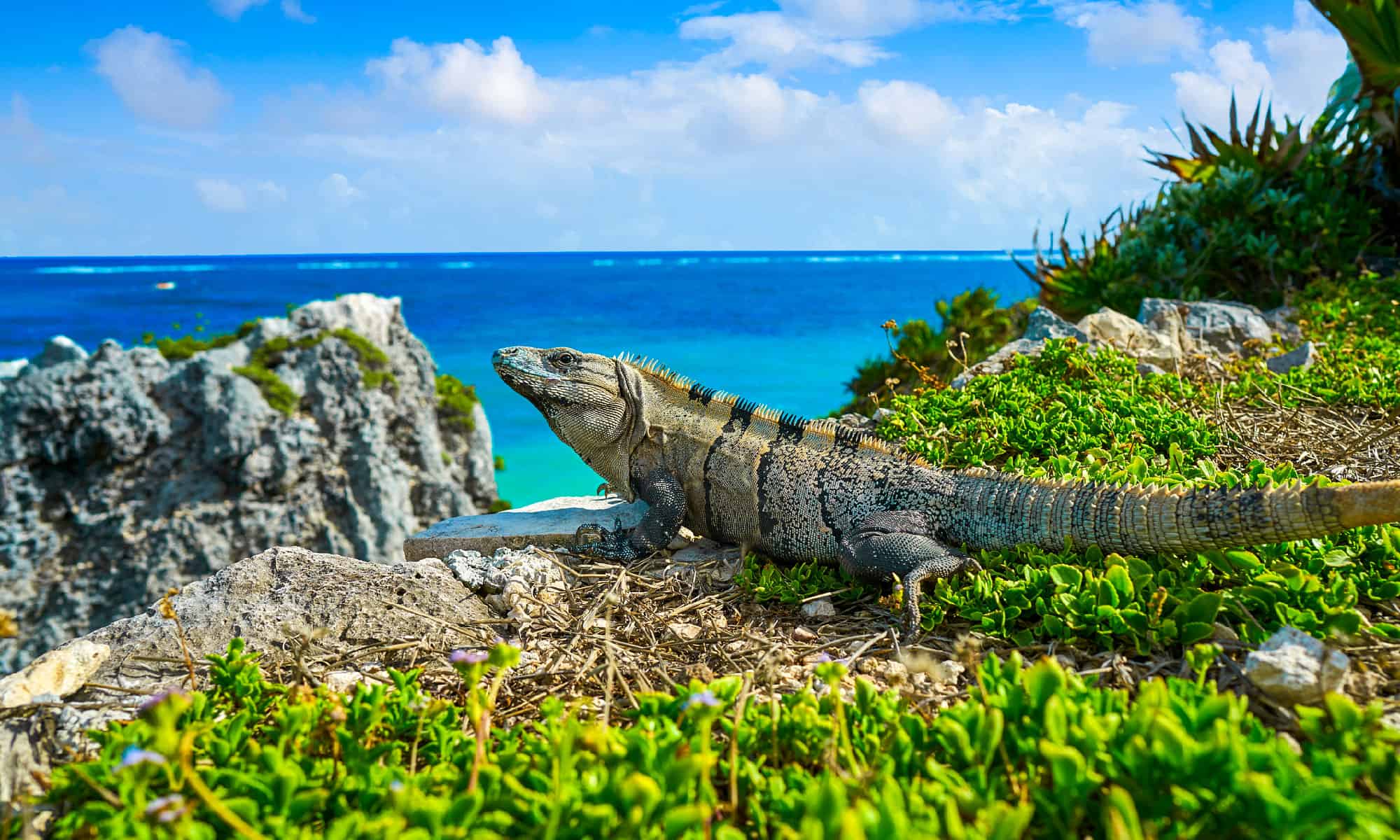
Iguanas are large herbivorous lizards. These giant lizards are found mostly in Central and South America, as well as on the Caribbean Islands. Like other reptiles, iguanas are cold-blooded, meaning that they love warmer environments. Due to their cold-bloodedness, they rely on external heat to regulate their body temperature. This is called thermoregulation, and without the heat of the sun, iguanas can become sluggish. Some of the habitats they are found in are rainforests, beaches, and deserts.
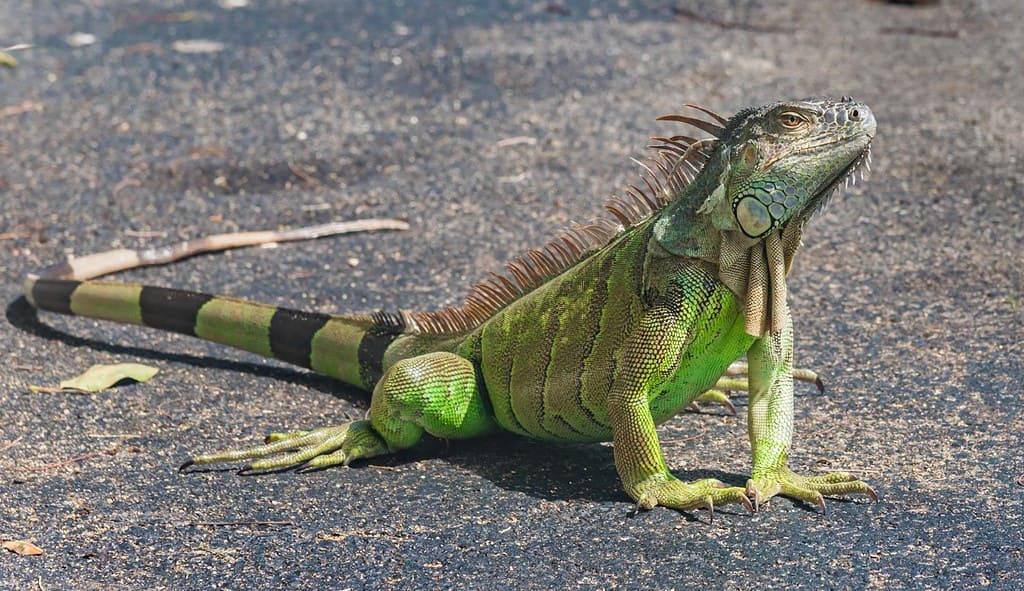
There are different species of iguanas, each with its own quirks. Out of all the species, there are two that people are most familiar with. These are green iguanas and marine iguanas. Green iguanas are tree-dwelling lizards that are more often found in tropical rainforests and urban areas. Marine iguanas, on the other hand, are known as sea-foraging lizards. These iguanas are native to the Galápagos Islands, making it important that they know how to hunt in the water. So, do iguanas like to swim?
©David A Litman/Shutterstock.com
Do Iguanas Swim?
The most concise answer to whether iguanas like to swim or not is yes, but it depends on the species. Both of the two most common species mentioned above are excellent swimmers. Green iguanas are strong swimmers, which is essential for escaping predators. While they live in rainforests, they position themselves close to rivers, lakes, and coasts. Because of their strong swimming skills, they can stay underwater for up to 15 to 20 minutes without breathing. Marine iguanas, which are the species in the video above, are aquatic in nature. These iguanas dive into the water to eat algae and seaweed as they forage for plants. As they have evolved more towards aquatic ability than the green iguana, these amazing lizards can hold their breath for up to 30 minutes underwater in rare cases, and can dive to depths of up to 65 feet (20 meters)!
IIguanas have evolved and adapted to become good swimmers in several ways. Marine iguanas have flat tails that can help propel them through the water quickly, as well as sharp claws to grip onto slippery surfaces. Their nostrils actually expel salt because of their high-sodium diet of seaweed and algae. While eating is the main purpose of being able to swim, it also allows the iguanas to escape from predators or excess heat. The iguana in the video likely jumped into the water to escape the humans. Iguanas generally avoid human interaction and will only bite if they feel cornered or threatened. Their amazing swimming ability allowed the iguana to escape unharmed.