
Quick Take
- A shark that walks on land sounds like a mistake, but epaulette sharks do it deliberately, and their reason might surprise you. See how they walk →
- How a non-air-breathing animal survives out of water for up to an hour defies basic marine biology, at least until you understand what their body does the moment they step onto dry reef. Discover their oxygen trick →
- Their fins weren't built for walking, yet they outperform legs on exposed reef terrain in a way most locomotion research doesn't predict. Check the fin facts →
- Stranding on dry reef is not bad luck for the epaulette shark but rather a calculated move that comes with real survival stakes. Learn why they strand →
Nature is full of amazing wonders that make you question how animals evolved to be what they are now. The epaulette shark is a great example, as it can do what most fish can’t. For short periods of time, they can walk on land and survive without oxygen for up to an hour! This YouTube video from Nature on PBS shows this happening. Continue reading to learn more.
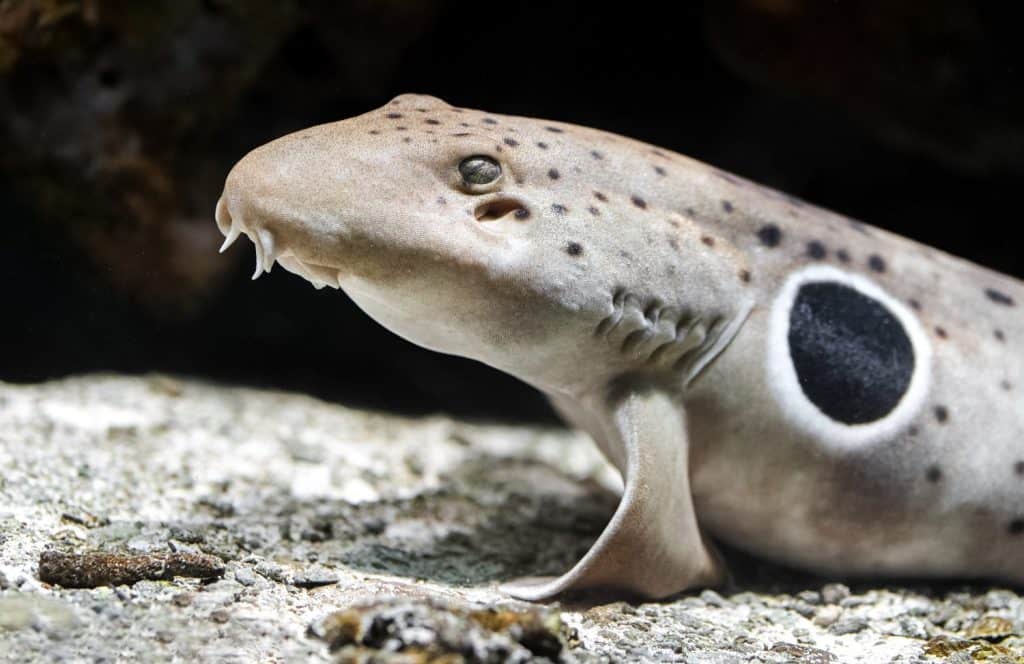
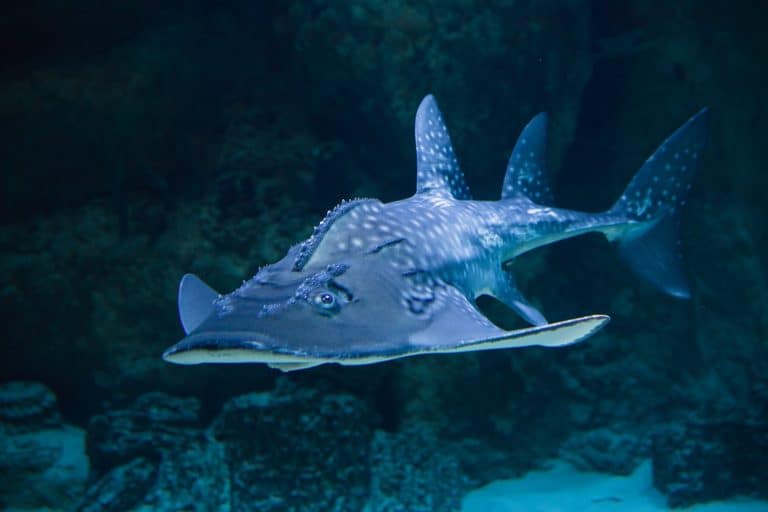
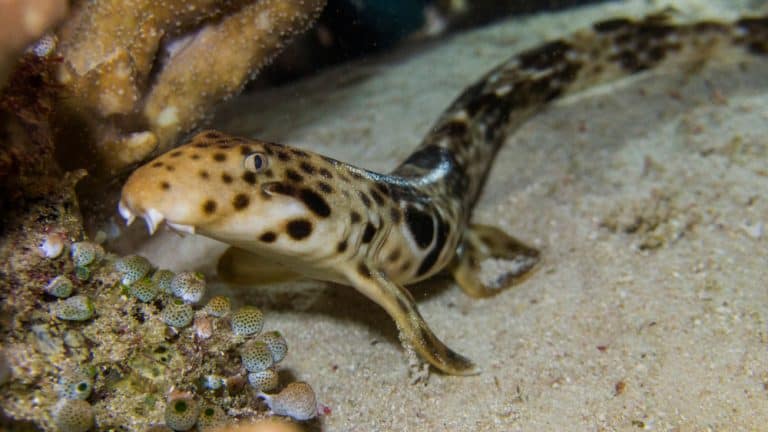
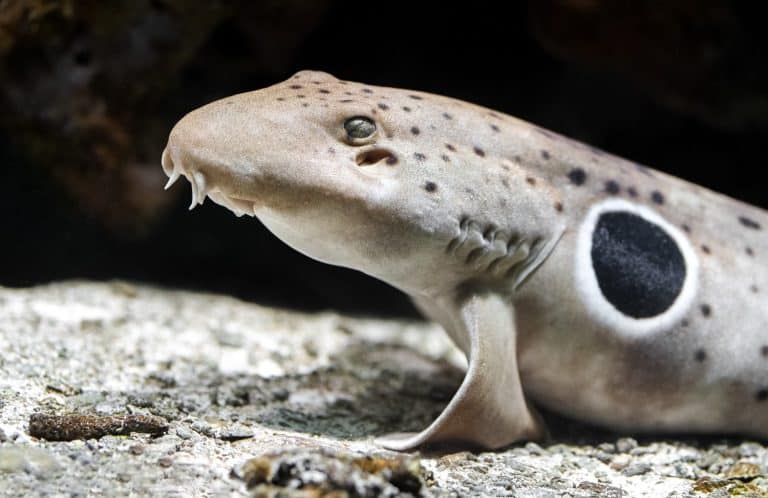
The epaulette shark has earned the nickname “walking shark.”
©jindrich_pavelka/Shutterstock.com
How Epaulette Sharks Walk on Land
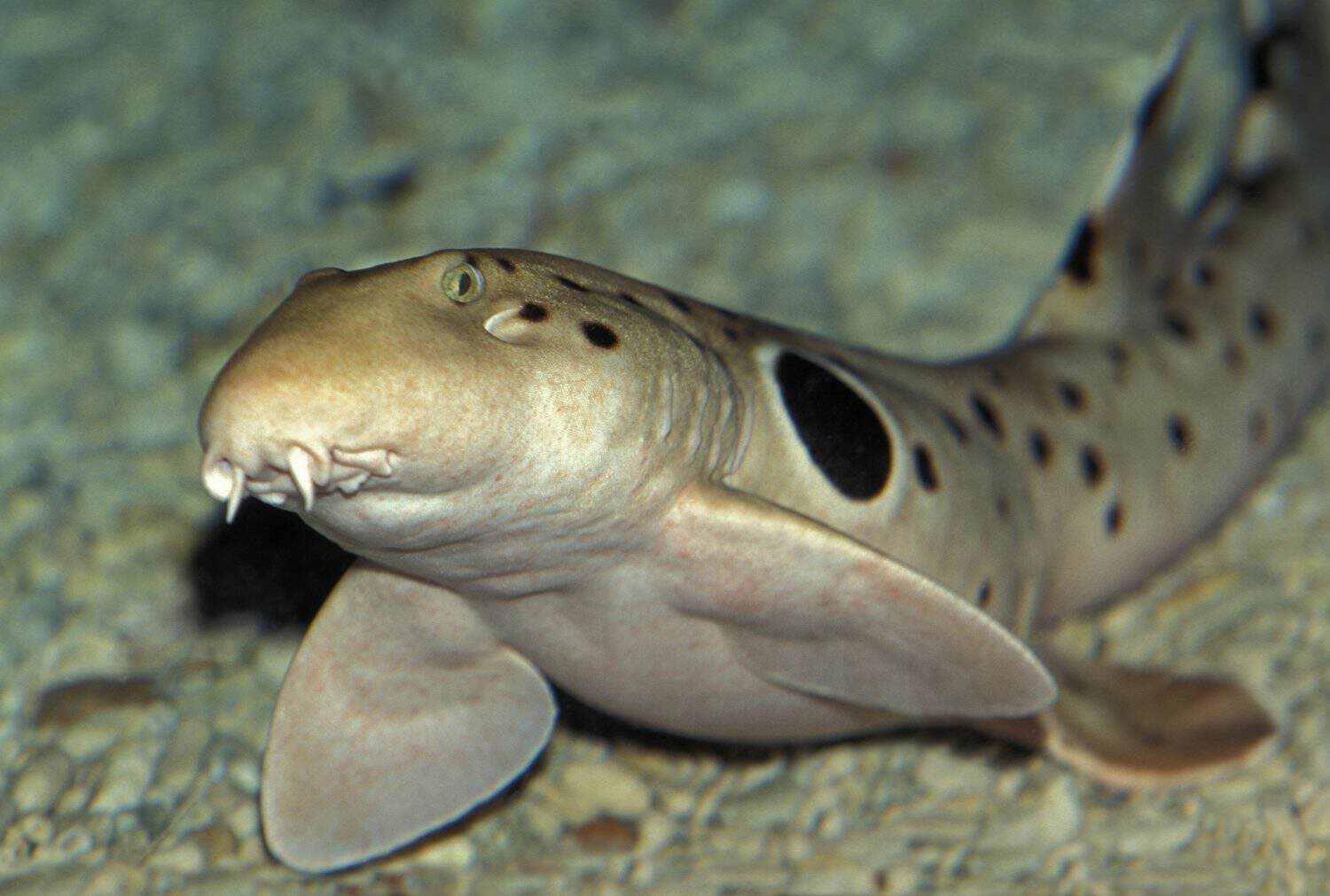
The epaulette shark is one of the most fascinating sharks in the world. These sharks got the nickname “walking shark,” and for good reason. They have been observed crawling across the seafloor by pushing themselves forward with their fins. What makes them truly remarkable, however, is how they traverse on land. When necessary, epaulette sharks may crawl over exposed reef surfaces to travel between tide pools.
While it’s incredible enough to watch a fish travel on land, it’s even more impressive because these sharks do not breathe air. Instead, they rely on oxygen already stored in their blood and drastically slow their metabolism and heart rate while on land. In doing so, they efficiently use the limited oxygen stored in their body until they reach another pool of water. They can survive on a single breath for up to an hour at a time! So why do they travel on land in the first place?
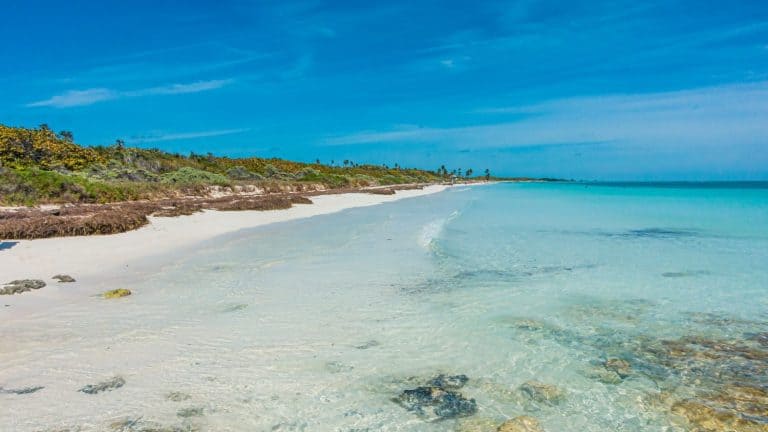
Epaulette sharks spend the majority of their time underwater, but being out of the water is inevitable thanks to their habitat. These sharks are found in reefs and tide pools in northern Australia and southern New Guinea. These reefs are shallow and flat, and as the tide retreats, they become exposed, and water becomes trapped in isolated pools. Any animal that is exposed quickly dies from the intense heat of the sun or lack of oxygen, but the epaulette shark’s adaptability keeps it alive. Thanks to their efficient use of oxygen and ability to crawl, they can reach the safety of water.