Quick Take
- The red-nosed cuxiu survives on hard, unripe fruits by targeting natural weak points rather than using brute force.
- This precision feeding strategy helps the monkeys conserve energy and protect their teeth from damage.
- Researchers confirmed the behaviour by analysing bite marks on more than 800 fruit husks across many tree species.
- Understanding their feeding behaviour helps conservationists identify which habitats and trees are most critical to protect.
The Amazon rainforest is one of the most diverse yet challenging habitats in the world. It is home to thousands of different species, which have adapted to meet these challenges. One of the most fascinating is the red-nosed cuxiu, a monkey that has developed a clever strategy that allows it to eat some of the toughest fruits in the rainforest. Surprisingly, this doesn’t involve massive teeth or extreme power—instead, it’s about precision and smart decisions. Keep reading to learn more!
Meet the Red-Nosed Cuxiu
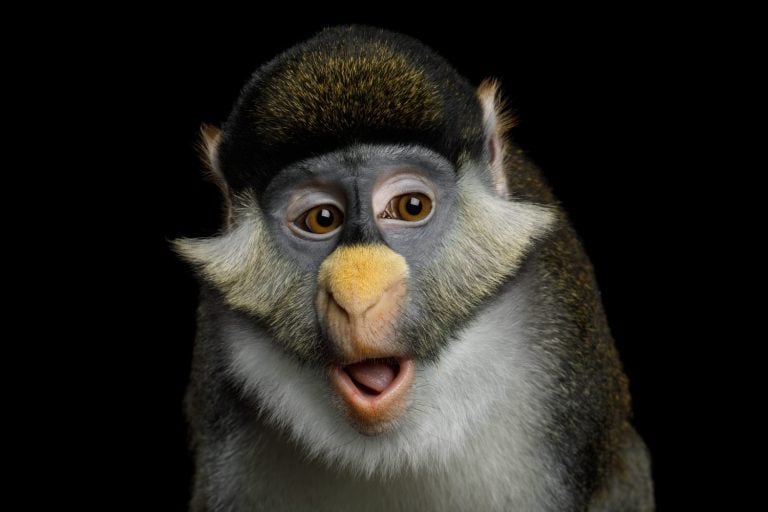
The red-nosed cuxiu (Chiropotes albinasus) is a small New World monkey that is named for its unusual pink-colored nose. It is also known as the white-nosed saki because of the fine white hairs on its nose, which are mixed with red and pink. The rest of its body is black, and it also has a bushy tail and two distinctive tufts of hair on its head. Red-nosed cuxius typically measure around 15 inches in length and weigh between 5.5 and 6.8 pounds. Females are typically slightly smaller than males.
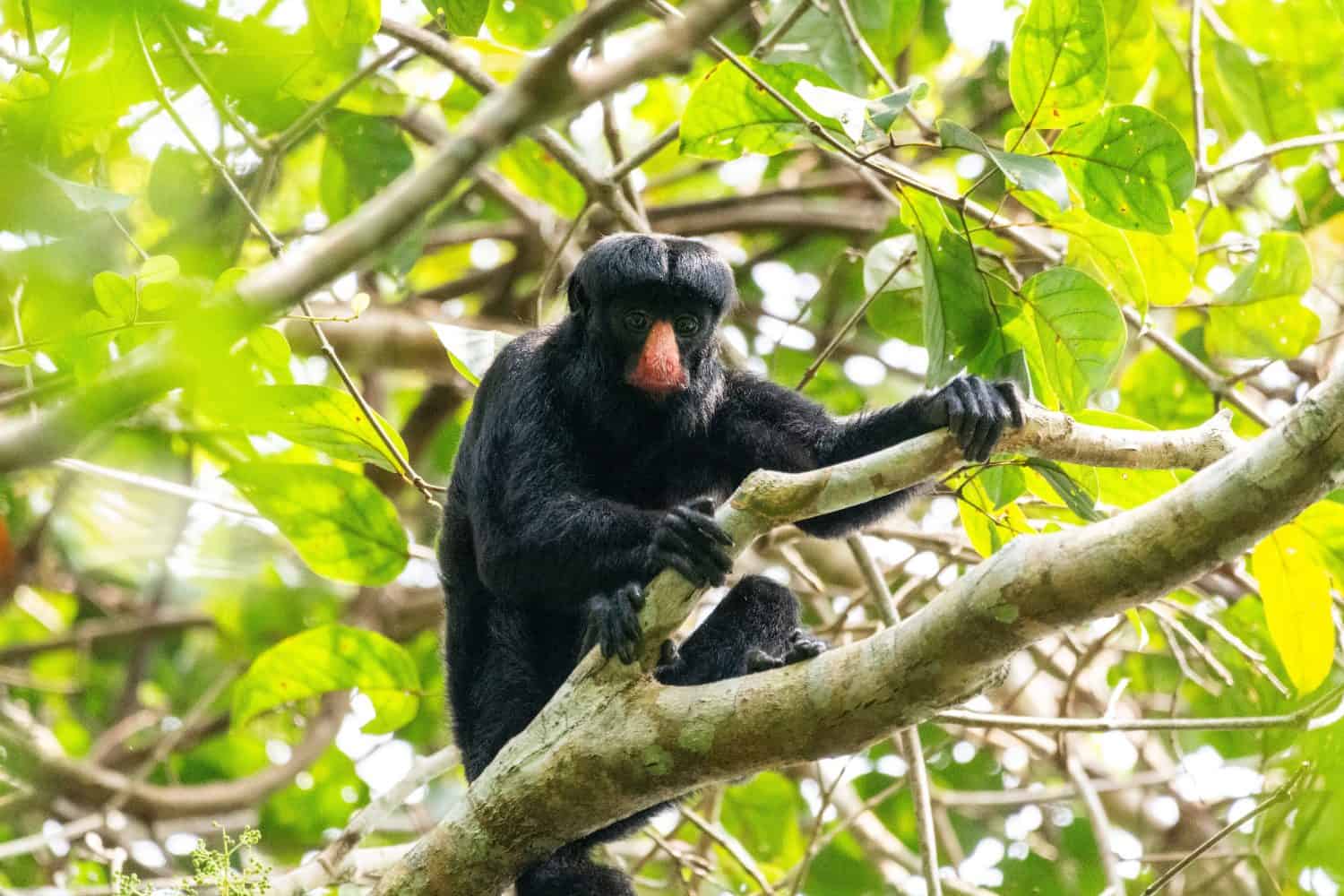
Red-nosed cuxius are endemic to a small area of the Amazon rainforest.
©Cavan-Images/Shutterstock.com
Red-nosed cuxius are found only in the Amazon rainforest in Brazil, mainly in a section of forest between the Madeira and Xingu rivers. They live high up in the canopy of the forest in groups of up to 30 individuals. Because red-nosed cuxius have such a limited range, they are especially vulnerable to habitat loss from logging. Their population is decreasing, and they are classified as a vulnerable species by the IUCN.
The Red-Nosed Cuxiu’s Unusual Feeding Behavior
One of the most fascinating things about these monkeys is their unique approach to obtaining food. Red-nosed cuxius eat a mix of seeds and fruits. Surprisingly, they tend to prefer unripe fruit over ripe fruit. Although unripe fruit is harder to eat, it is more abundant and faces less competition from other primates—essentially giving cuxius access to an underused food source. However, unripe fruits often have hard outer husks, which are more difficult to break open than the softer shells of ripe fruits.
Fortunately, red-nosed cuxius have a unique strategy: they bite into the fruit along the natural seams or weak points of the husks. Although red-nosed cuxius have robust, powerful teeth capable of biting through tough husks, a recent study found that they choose to target only specific points on the fruit. This approach is intentional, as these natural seams are where the fruit is more likely to split open with less force. Therefore, by biting the fruit in these places, they can access the food inside with far less effort.
Researchers discovered this unique method by studying bite marks on 800 different fruit husks, revealing that red-nosed cuxius consistently targeted the natural seams or weaker points on the fruit. This behavior was observed across many different types of fruit, not just a single species.
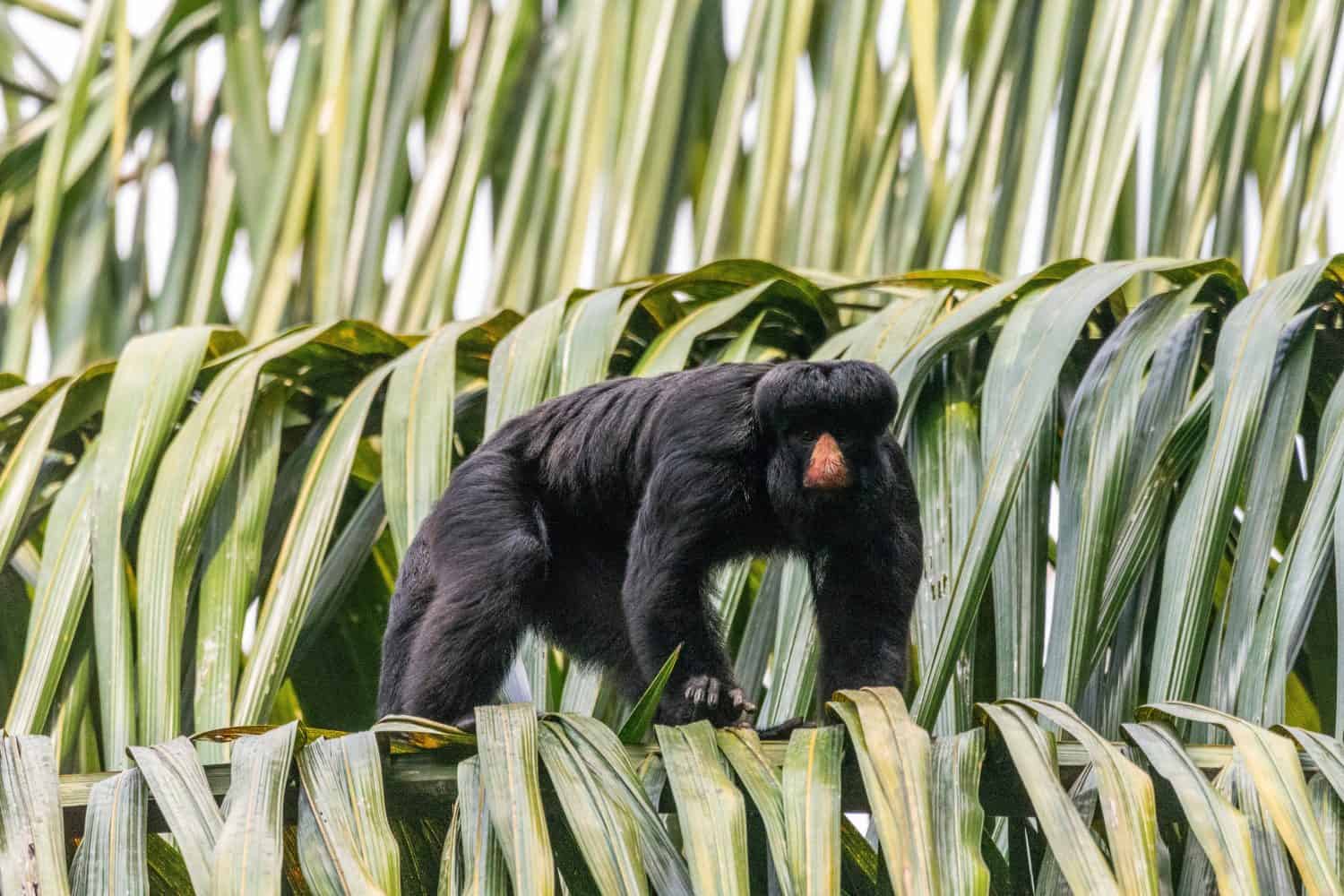
Red-nosed cuxius target weak points on fruit to avoid damaging their teeth.
©Cavan-Images/Shutterstock.com
Why Precision Matters
For wild animals, teeth are among their most important features. Damaged teeth do not heal, so any chip or crack can make eating painful, potentially leading to weight loss or even death. By targeting the weakest points of the fruit, red-nosed cuxius use less force to break them open, minimizing wear and tear on their teeth. This also allows them to conserve energy, leaving more for activities such as foraging and socializing.
Interestingly, this behavior mirrors that of big cats, such as lions and tigers, which aim to bite their prey in the most vulnerable areas, like the neck or throat. By doing so, they avoid large bones that could break or damage their teeth. This precision is a form of protection and another way these animals—and the red-nosed cuxius—have adapted to survive in a challenging environment.
What Does It Mean for Conservation?
Because red-nosed cuxius live in such a small region, they are especially vulnerable. They rely heavily on the local trees not only for shelter but also for the hard fruits that make up a major part of their diet. If these trees disappear, the red-nosed cuxius cannot easily switch to a different diet.
In addition to losing a major part of their diet, switching to different or easier fruits would bring new challenges. It would increase competition from other primates and could undermine the feeding method that has allowed these cuxius to utilize a challenging but reliable food source. Therefore, the loss of these tree species could threaten the red-nosed cuxius’s survival.
By understanding which trees the red-nosed cuxius depend on and how their unique feeding behavior has adapted to this challenging food source, conservationists can identify which habitats require the most protection. Protecting these habitats helps ensure the survival of the species as a whole.