
Quick Take
- This bat went unseen in Nigeria for decades, and what one biologist noticed in the dark during a routine trap night changed everything. Read the discovery account →
- Only 15 individuals of the species were confirmed, and just weeks after they were found, something threatened to erase them entirely. See what threatened them →
- There had been no reported sightings of the bat species anywhere around the world in the past five years. Explore the shrinking range →
- Bats are widely seen as pests or prey, but the truth is much different. See Tanshi's award-winning impact →
Conservationists are racing to save a tiny bat that weighs about as much as a teaspoon of salt and is only found in the Afi Mountain Wildlife Sanctuary within the Cross River rainforest of Nigeria. For decades, the short-tailed roundleaf bat had not been sighted in the country. That is, until 2016, when Nigerian biologist Iroro Tanshi made a remarkable discovery while on a field expedition for her Ph.D. work. The small colony of short-tailed roundleaf bats she discovered is the only confirmed roosting population in the world.

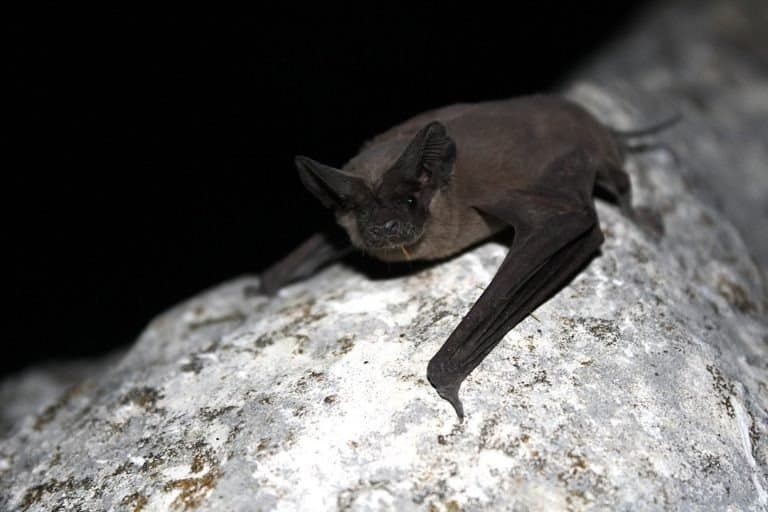
The short-tailed roundleaf bat’s only known habitat is inside the Afi Mountain Wildlife Sanctuary of Nigeria.
©Charles Emogor, CC BY-SA 4.0, via Wikimedia Commons – Original / License
A Small Cave-Dweller with a Distinctive Short Tail
The endangered short-tailed roundleaf bat (Hipposideros curtus) is in the family Hipposideridae. It lives in dark and damp environments, such as subtropical and tropical forests and caves.
First discovered in 1921, the bat can be distinguished from other members of its family by its short tail. The short-tailed roundleaf bat is also one of the smaller bats in its family. Its wing bone length is only 1.7 to 1.9 inches, and it weighs about a quarter of an ounce. It’s similar in size to the North American little brown bat (Myotis lucifugus.)
Built for the Dark with a Leaf-Shaped Nose and a Vital Ecological Role
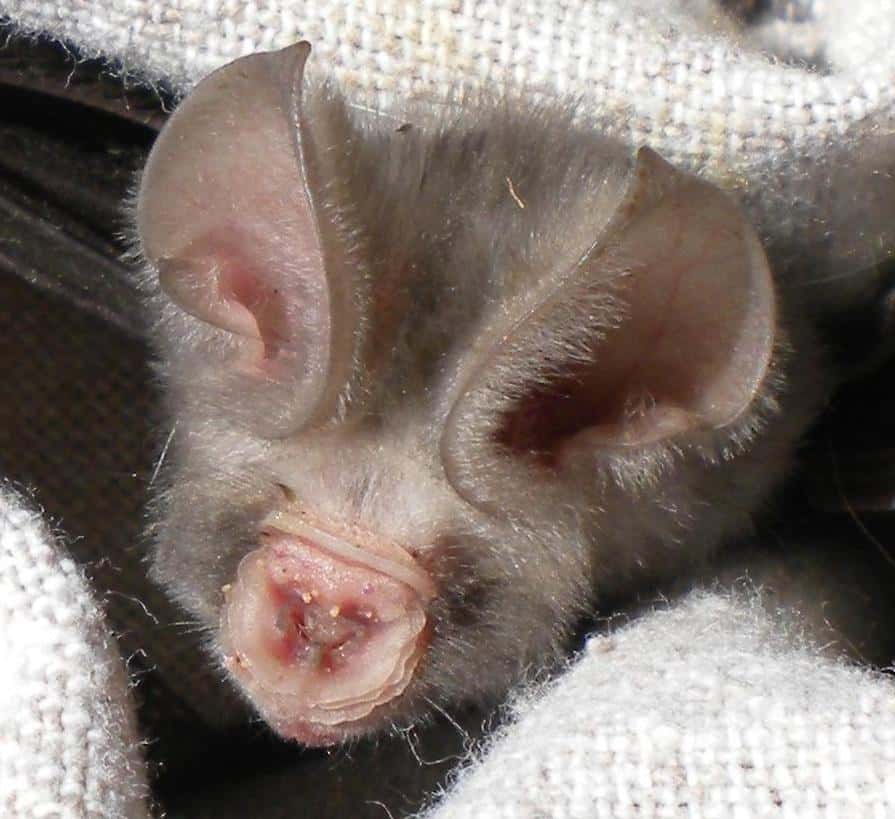
Bats in the Hipposideros family are known for their distinctly shaped noses. Also called Old World leaf-nosed bats, they have small eyes, large ears, and many intricate skin flaps on their noses that act a bit like radar dishes, giving them excellent echolocation abilities.
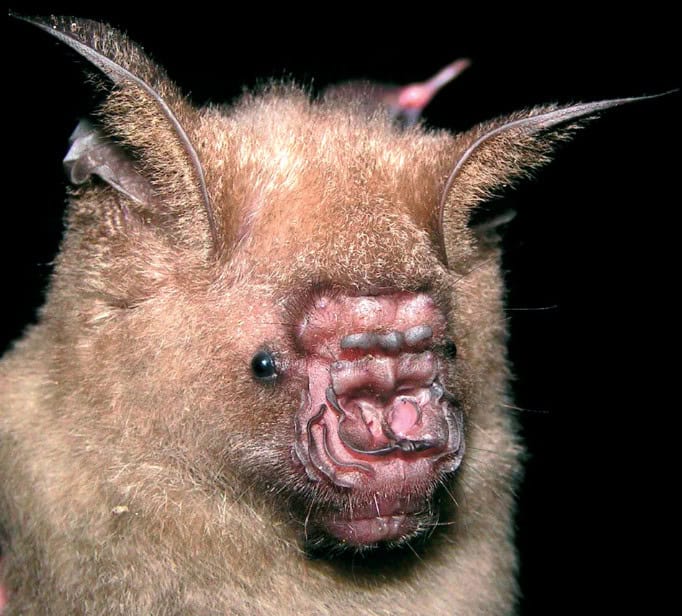
Pendlebury’s roundleaf bat is similar in appearance to the short-tailed roundleaf bat, although the Pendlebury bat lives in Thailand.
©Sébastien J. Puechmaille1,*, Pipat Soisook2, Medhi Yokubol2, Piyathip Piyapan2,Meriadeg Ar Gouilh3, 4, Khin Mie Mie5, Khin Khin Kyaw5, Iain Mackie6,Sara Bumrungsri2, Ariya Dejtaradol2, Tin Nwe5, Si Si Hla Bu7, Chutamas Satasook2,Paul J. Bates8, Emma C. Teeling1,, CC BY 4.0, via Wikimedia Commons – Original / License
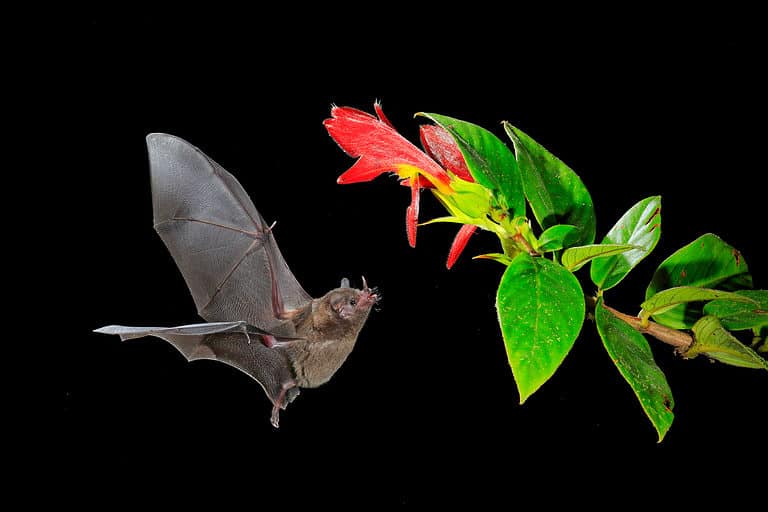
Like other bats, short-tailed roundleaf bats are incredibly beneficial to their ecosystems by acting as pollinators, dispersing seeds, and eating a diverse range of insects. They also eat fruit, nectar, and pollen.
A Surprising Discovery in the Afi Mountain Wildlife Sanctuary
Tanshi shared her experience of rediscovery with The Guardian. “We were trapping near a roost that night so, we caught a lot of bats,” she told them. “This looked very, very different. Big-eared”
Tanshi and her team were in the Afi Mountain Wildlife Sanctuary, located in south-east Nigeria. The sanctuary is home to many endangered species. Some of the animals you may encounter here include drill monkeys, Cross River gorillas, Nigeria-Cameroon chimpanzees, and the grey-necked rockfowl.
How Many Short-tailed Round Leaf Bats Are Left?
Exact population numbers of this rare bat are unknown. Tanshi and her team found 15 individuals, and that colony is the only confirmed roosting population in the world. Although short-tailed roundleaf bats are prey for many animals, such as snakes, owls, and other birds of prey, their greatest threat is from humans. Small bats in Africa face dangers from habitat loss due to deforestation and wildfires, and from hunting for their meat.
A Rare Bat with a Shrinking Known Range
In hopes of finding more specimens of the rare little bat, Tanshi set up harp traps and mist nets in the area. Overall, she and her team caught 15 individual members of the species. The elusive bat navigates through total darkness. To minimize disturbance, Tanshi told The Guardian she had to rely on observing the bats with red light.
Previously, populations of the short-tailed roundleaf bat had been found in forest caves in Cameroon and Equatorial Guinea. However, nobody has spotted the bat in those areas in five years. The species had not been seen in Nigeria since 1981.
From Ash to Action: The Birth of SMACON
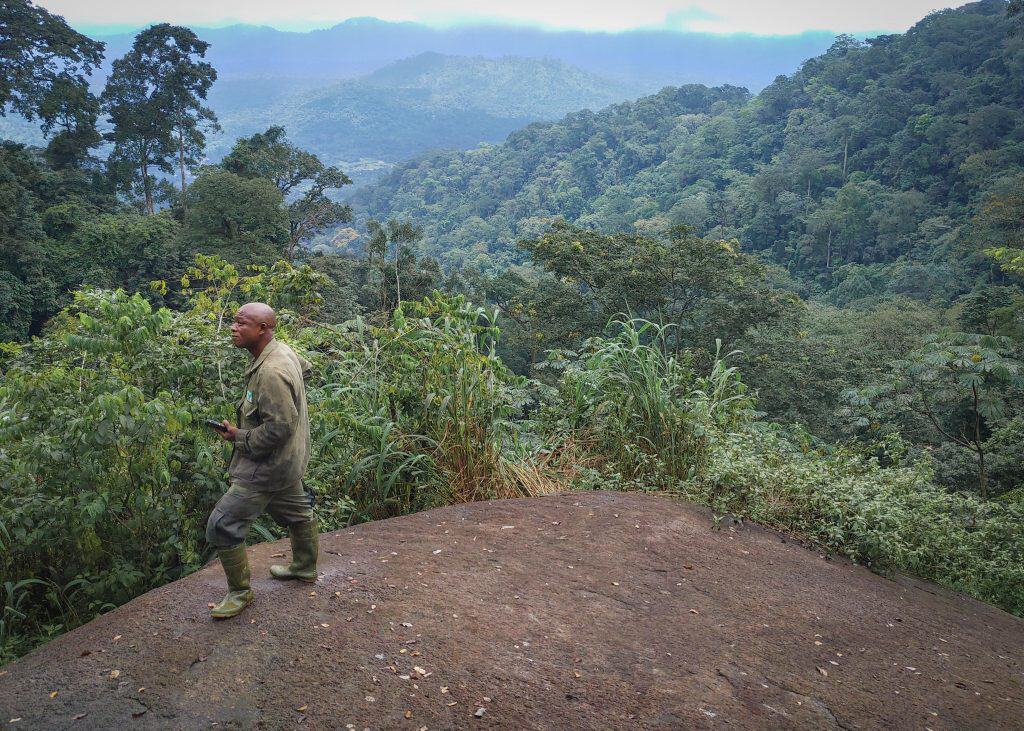
The Afi Mountain Wildlife Sanctuary is a refuge for many endangered species.
© Dotun55, CC BY-SA 4.0, via Wikimedia Commons – Original / License
Only weeks after Tanshi’s discovery, a wildfire raged through the forest, destroying precious habitat and requiring Tanshi and her team to evacuate. Since then, Tanshi has co-founded the Small Mammal Conservation Organization (SMACON) and launched the Zero Wildfire Campaign in local communities. SMACON helps fill an underserved area of conservation for small mammals in Africa.
The Global Impact of Tanshi’s Work
According to the Goldman Prize press release, bats are historically misunderstood. People often view them as either meat or pests. Tanshi’s organization involves the community in her wildfire mitigation efforts. She also works to advocate for biodiversity and to help people find sustainable living.
SMACON’s Wildfire Prevention and Response Model has successfully protected the short-tailed roundleaf bat’s only known habitat. An area of about 38 square miles (close to the size of Walt Disney World in Orlando) has been free of dry-season wildfires since 2022.
For these and other conservation efforts, Tanshi was awarded the 2026 Goldman environmental award, making her one of only six women in history to win the global honor.
Why Saving the Short-Tailed Bat Matters
There are 1,400 species of bats in the world, and only 25% of them have been identified in the past two decades. In 2020, four new species of African leaf-nosed bats in the family Hipposideridae were discovered in regions around Africa. These discoveries, along with the recent rediscovery of the short-tailed leaf-nosed bat, emphasize the vital importance of conservation to protect Earth’s most vulnerable, biodiverse habitats from human-made destruction.