
Quick Take
- Owls are nocturnal, sleeping during the day and hunting at night.
- Owls typically sleep roughly 10 to 12 hours (varies by species) a day, and somehow, they manage to get this shuteye in broad daylight.
- Owls engage in a unique form of sleep called unihemispheric sleep, during which one half of the brain sleeps while the other half stays awake.
- Owls show signs of drifting off similar to humans, like blinking slowly or closing their eyes slightly.
We all know that owls are nocturnal creatures. Sleeping during the day and hunting at night, these birds live vastly different lives from humans. Have you ever wondered how and when owls sleep? This question was raised after seeing this Instagram reel by @beastline.media, which shows a baby owl about to fall asleep. If you’re curious to learn more about the slumbering habits of owls, keep reading below!
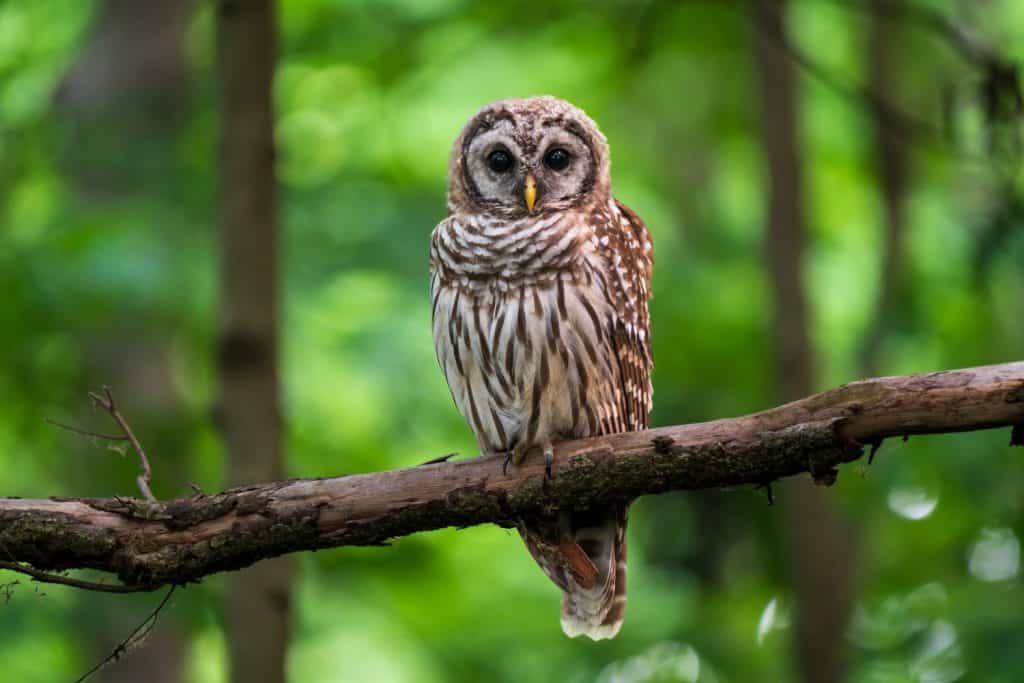
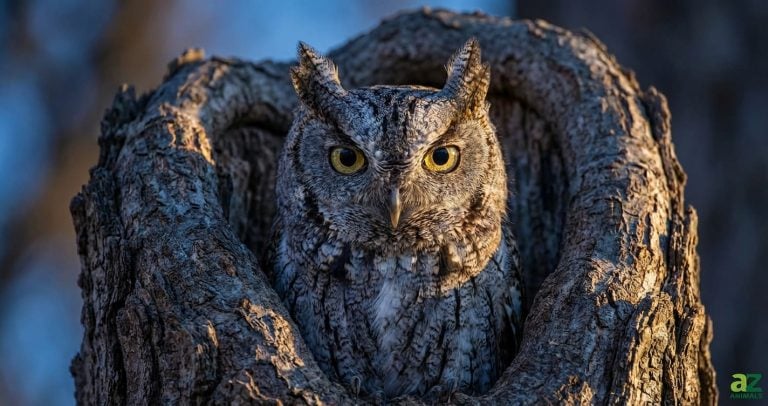
Owls often sleep standing upright because they are still partially conscious.
©KJ Quraish/Shutterstock.com
When Owls Get Sleepy.
Owls are pretty amazing animals, and they have vastly different sleep practices than humans. Unlike our recommended eight hours of sleep, owls typically sleep roughly 10 to 12 hours (varies by species), and somehow, they manage to get this shuteye during the day. This amount of sleep gives them the energy they need to hunt at night. Depending on the species, owls roost in different spots. For some, it’s high up in the trees. Species like the barred owl or great horned owl often sleep in branches high in the foliage. The dense covering of leaves and branches is ideal for blocking the daylight. Other species may burrow underground, like the burrowing owl. Finally, some owls may just tuck themselves into cavities in standing structures. They can often be found in barns and abandoned buildings, as they are less likely to be visible to predators and humans.
Owls are relatively solitary creatures, unlike other social birds. Rather than roosting as a group, they do it alone. As owlets, they will roost with other owls, specifically their siblings or parents. As they get older, they grow to roost alone. However, it’s been observed that they may roost together in cold weather to stay warm, but it is rare to see. Owls engage in a unique form of sleep called unihemispheric sleep, during which one half of the brain sleeps while the other half stays awake. This allows them to rest while still maintaining awareness of their surroundings. This blurs the lines between sleep and wakefulness; sometimes, an owl may show signs of resting while also looking alert, a very strange appearance.
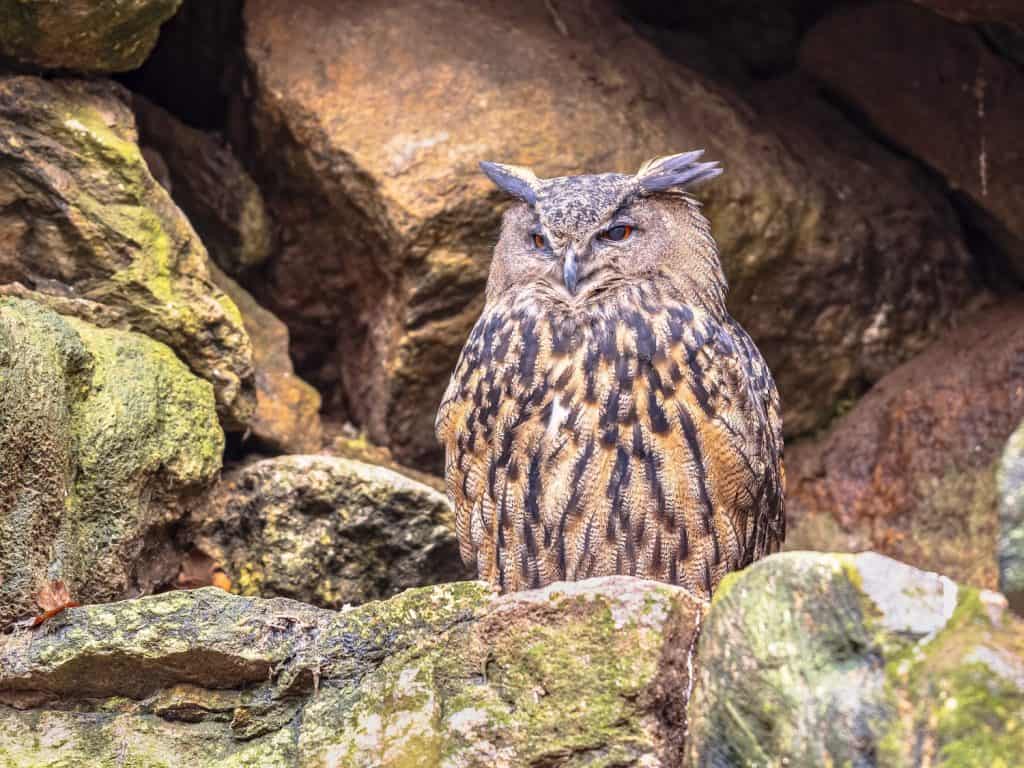
Owls have multiple eyelids that help them filter out light while still being aware of their surroundings.
©Rudmer Zwerver/Shutterstock.com
What Do Owls Look Like While Sleeping?
Owls show signs of drifting off similar to humans. For one, they often start blinking their eyes slowly or closing them slightly. While owls already show minimal movement when perched, a relaxed and sleepy owl may droop its head. But one of the cutest ways to tell if an owl is sleepy is by looking at their feathers. When owls are comfortable, they fluff their feathers up for insulation and coziness, creating a sort of adorable, feathery blanket.