
Quick Take
- Field reports have documented 10 or more Eastern Bluebirds occupying a single nesting cavity during peak cold events
- Extremely cold temperatures can trigger a metabolic crisis in solitary roosting Eastern Bluebirds, making communal roosting essential for survival during severe cold snaps
- The territorial aggression of Eastern Bluebirds completely vanishes under specific environmental pressures.
- A rapid morning exit is required for bluebirds to immediately address overnight calorie depletion.
When I was growing up, my grandparents’ farm had a fence post that housed eastern bluebirds. These gorgeous little birds were not very common where we lived. In fact, to this day, that one fencepost is the only place I’ve seen them in the wild. Because I associate them so closely with carefree days of childhood, they truly are “bluebirds of happiness” to me. So when I got the chance to research what happens to them in the winter, I jumped at the opportunity. Because honestly, when you think about it, isn’t it a little bit of a mystery how any fragile, gentle little songbirds can survive freezing temperatures?
A Winter Survival Strategy
While some people are cozying up in the winter with their dogs or the people they love, bluebirds are literally doing the same thing. As insects disappear and temperatures plunge, many linger nearby, adapting their behavior to survive freezing nights and limited food. One of their most effective winter strategies is communal roosting, a practice that looks surprising given how territorial these birds have become during the breeding season. On cold nights when the temperature reaches freezing, several bluebirds will crowd into a single cavity or nest box, pressing together to conserve heat and reduce energy loss.
This shift from solitary nesting to shared shelter highlights how flexible bluebird behavior can be. During the summer, competition for space dominates their lives. In winter, survival outweighs rivalry. Understanding how and why bluebirds roost together offers insight into how small birds endure harsh weather and why human-provided nest boxes can play an important role during cold months.
Seasonal Behavior of Eastern Bluebirds
Eastern bluebirds behave very differently depending on the time of year. During spring and summer, pairs defend nesting cavities with intensity. They chase away other bluebirds and many competing cavity nesters. This behavior ensures there is enough space and food for raising young. Warm-season diets rely heavily on insects, so bluebirds spend much of the day perched low, scanning the ground before dropping down to capture beetles, caterpillars, and grasshoppers.
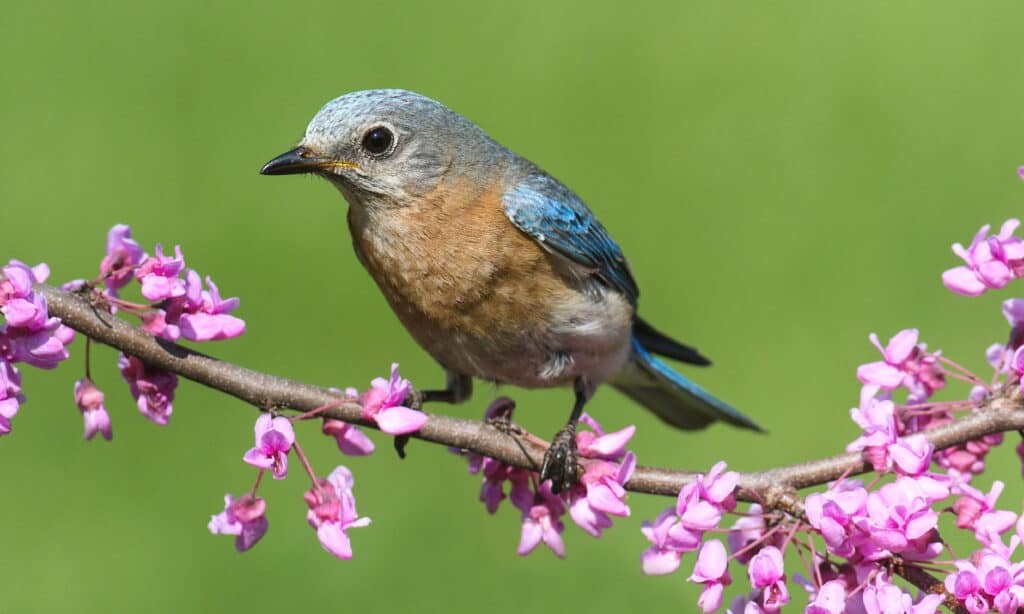
An Eastern bluebird rests on a low branch, scanning the ground for insects as it prepares for the busy spring and summer nesting season.
©Steve Byland/Shutterstock.com
As temperatures fall, that strategy no longer works. Insects become scarce, and defending a fixed territory brings little benefit. Bluebirds begin to roam more widely, forming loose flocks that follow fruiting plants and open ground. These winter groups remain flexible, breaking apart and re-forming as food availability changes. At night, the birds change their behavior again, seeking shelter together rather than remaining isolated.
What Does Communal Roosting Mean?
Communal roosting occurs when multiple birds sleep together in the same protected space. For bluebirds, this usually means a tree cavity or nest box with a single entrance hole. The structure limits airflow and helps retain heat. Inside, birds press close together, often touching along their sides and backs.

Two Eastern bluebirds use a nest box that can also serve as a shared nighttime shelter, where close quarters help conserve warmth and protect them from wind and predators.
©Chase D'animulls/Shutterstock.com
This arrangement dramatically reduces heat loss. It can raise the temperature inside the nesting box by 20–30°F warmer than outside. Each bird benefits from the warmth produced by its neighbors, lowering the amount of energy needed to stay alive through the night. For small birds with high metabolisms, energy savings can determine whether they survive until morning. Communal roosting also reduces exposure to wind and offers protection from nocturnal predators.
How Bluebirds Arrange Themselves Inside a Roost
Inside a roosting cavity, bluebirds do not sit randomly. Observations suggest they pack tightly, often angling their bodies downward with heads tucked and feathers fluffed. Tails may overlap, and birds press against the walls or floor where warm air collects. The goal is to maximize insulation rather than comfort.
This dense clustering helps trap heat generated by breathing and muscle activity. The combined warmth can raise the temperature inside the cavity well above the surrounding air. By morning, birds leave quickly, often emerging one after another within seconds. Once outside, they begin feeding almost immediately to replace calories spent overnight.
How Many Bluebirds Can Fit in One Box?
The number of bluebirds that share a roost can be surprising. Standard nest boxes built for breeding pairs have been found holding six to eight birds on cold nights. Larger boxes or natural cavities may hold even more. In some documented cases, more than ten eastern bluebirds roosted together in a single enclosure.
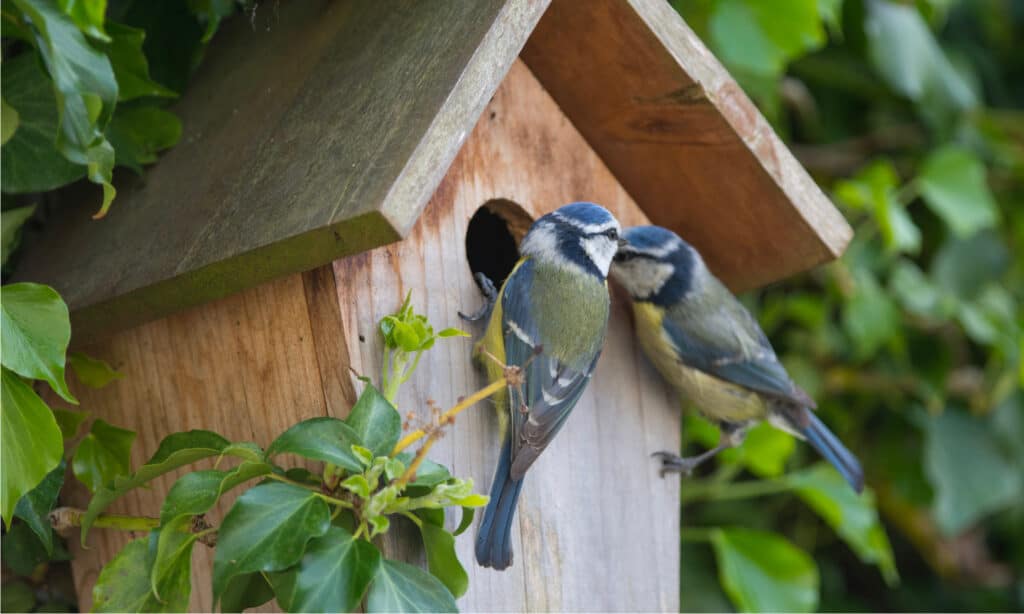
An Eastern bluebird pauses at the entrance of a nest box, a common shelter where pairs raise young and may later gather for warmth during colder nights.
©stefbennett/Shutterstock.com
Scientific observations have recorded communal roosts containing up to 10 individuals. These large groups tend to form during severe cold, when survival pressures peak. The birds tightly wedge together, creating a compact mass of feathers and bodies. Although the space may appear cramped, the energy savings outweigh any discomfort.
Temperature Thresholds That Trigger Roosting
Communal roosting becomes most common during extended periods of cold weather. Clear, calm nights often present the greatest challenge, since heat radiates away quickly without cloud cover or wind mixing warmer air. Anecdotal reports suggest that communal roosting by bluebirds during severe cold may raise the temperature inside nest boxes by 15 or more degrees above the outside temperature.
At these temperatures, solitary roosting in the open would require far more energy than most birds could sustain. By sharing space, bluebirds reduce overnight calorie use and increase their chances of surviving until daylight. Milder winter nights may still see communal roosting, but the behavior becomes far more frequent and consistent as temperatures drop.
Energy Conservation Beyond Shared Shelter
Communal roosting is only one part of a broader winter survival strategy. Eastern bluebirds also reduce nighttime body temperature slightly, a controlled response that lowers energy demand. This adjustment allows them to conserve fuel when food is limited.
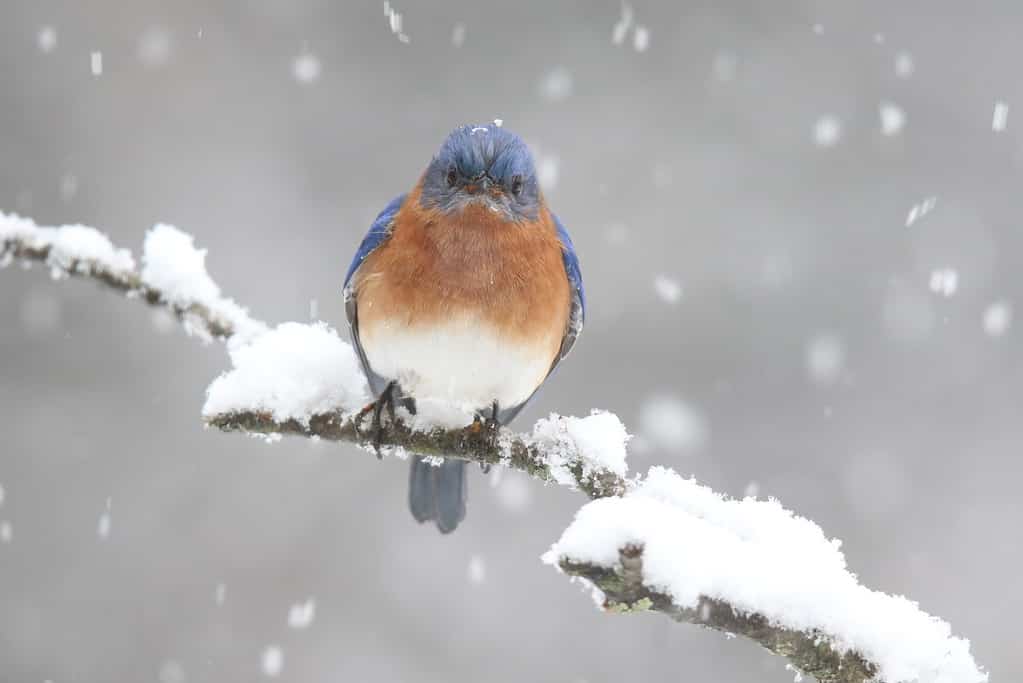
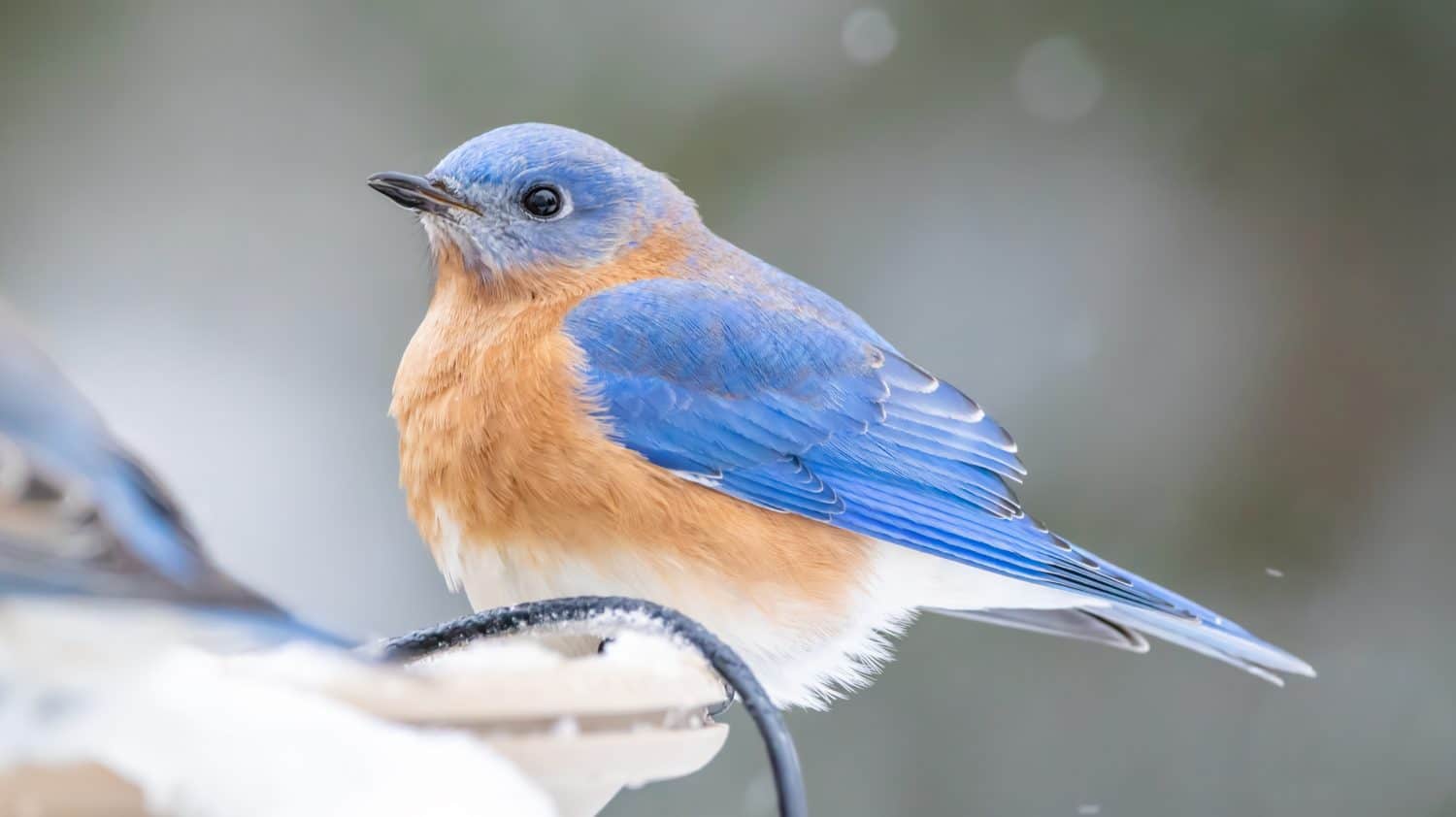
An Eastern bluebird fluffs its feathers against falling snow, conserving body heat and energy to survive the challenges of winter.
©iStock.com/suefeldberg
Roosting inside a cavity amplifies this benefit. A bird sheltered from wind and precipitation loses less heat than one perched in the open. Combined with flocking behavior during the day, berry-based diets, and flexible movement patterns, communal roosting helps bluebirds navigate winter conditions that would otherwise prove lethal.
Other Birds That Share Winter Roosts
Eastern bluebirds are far from alone in using communal roosting. Many small cavity-nesting birds rely on the same strategy. Carolina chickadees and tufted titmice often roost in groups of two to eight birds during cold weather. These species use tree cavities, nest boxes, and dense vegetation as night shelters.
Wrens show some of the most extreme examples. Winter wrens and Carolina wrens have been observed entering roost sites in large numbers. One well-documented case recorded up to 61 winter wrens using a single roost cavity. These events highlight how powerful shared warmth can be for small-bodied birds. In other parts of the world, species such as crag martins form enormous winter roosts inside caves, with thousands of individuals packed together overnight.
These birds may fiercely defend their territories during the breeding season. In winter, those boundaries relax. The pattern suggests communal roosting evolved repeatedly because the survival advantages are so strong. Shared warmth, predator protection, and reduced energy costs provide benefits that outweigh social tension.

Two bluebirds rest side by side, reflecting the group behavior many bird species adopt to conserve warmth and improve survival during colder seasons.
©Bonnie Taylor Barry/Shutterstock.com
Nest Boxes as Winter Shelters
Nest boxes play a critical role during winter, even when breeding has ended. For bluebirds and similar species, a box can serve as a refuge during freezing nights. Conservation groups recommend leaving boxes in place year-round rather than removing them after nesting season.
Simple adjustments can improve winter use. Ensuring the box does not leak, sealing unnecessary gaps, and adding a thin layer of wood shavings to the floor help retain warmth. Winter air tends to stay dry, so limited ventilation is sufficient without risking overheating.
Placement and Protection of Winter Boxes
Where a box is placed affects how well it functions as a roost. Boxes exposed to strong winds lose heat quickly. Those mounted in sheltered locations, facing away from prevailing winter winds, provide better protection. Smooth poles and predator guards reduce the risk of nocturnal attacks from raccoons, snakes, or domestic animals.
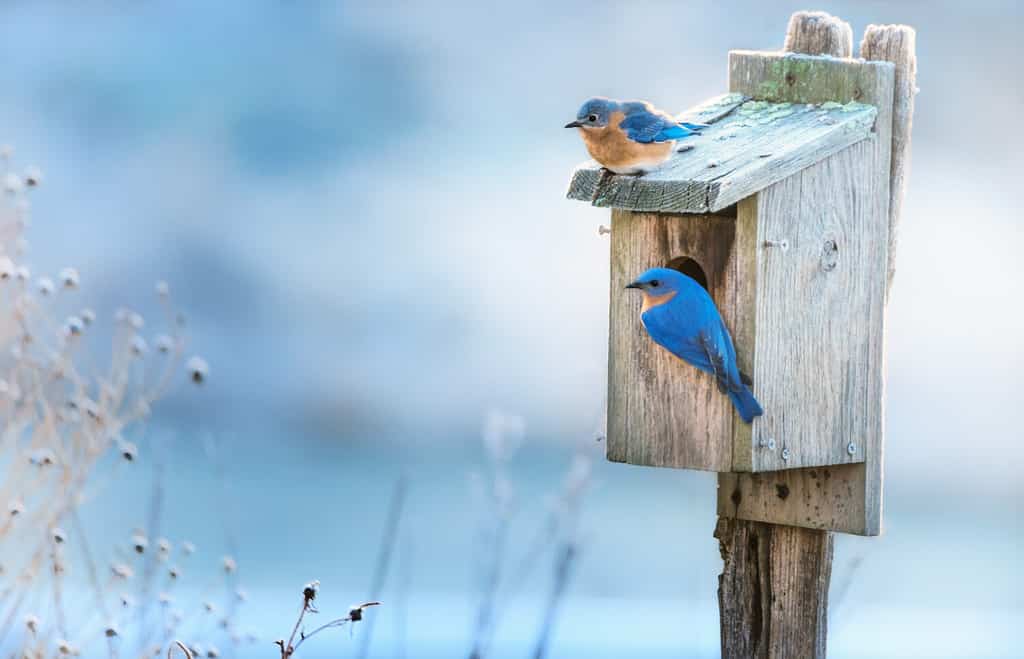
Two Eastern bluebirds use a mounted nest box for shelter, showing how proper placement and sturdy construction help protect birds during colder months.
©Heather L. Hubbard/Shutterstock.com
Cleaning boxes in the fall removes damp nesting material and parasites. A dry interior reduces heat loss and improves comfort for roosting birds. In areas with harsh winters, providing several boxes close together allows flocks to choose the most suitable shelter each night.
A Quiet Lesson From Winter Nights
On the coldest nights, a nest box may hold more life than expected. Inside, bluebirds huddle together, conserving warmth and energy until daylight returns. By morning, they emerge quickly and resume their search for food, having made it through another winter night.
This behavior offers a reminder that survival often depends on adaptability. Small changes, whether in behavior or habitat support, can make a meaningful difference. For bluebirds, shared shelter transforms isolation into resilience when conditions demand it.