Quick Take
- Brown long-eared bats’ hearing is so sensitive that they can hear a ladybug crawl on a leaf.
- Brown long-eared bats’ ears are about the same length as their bodies.
- Brown long-eared bats are called “whispering bats” for how silent they are in the sky.
- Brown long-eared bats use echolocation to locate prey in the dark.
Bats are some of the most misunderstood mammals on the planet. While some do drink blood, the vast majority enjoy a diet of insects, helping keep ecosystems in check. One such bat, the brown long-eared bat, has hearing so sensitive that it can hear insects crawling on leaves. Its ears make up nearly half its body length. While it may be curious-looking, the brown long-eared bat uses its hearing not only to hunt but also to avoid being hunted, proving that large ears are a necessity for its nocturnal lifestyle.
Brown Long-Eared Bats Are Fragile Creatures
Because of horror stories, bats of all sizes get a bad rap for attacking animals and people in the middle of the night. However, brown long-eared bats are not only very docile but also fragile, as seen in an Instagram video of a rescued bat.
Kaju, who was rescued by @maid_of_bats, was attacked by a cat. His wings had holes, and one finger was broken. Fortunately, after a long rehabilitation, Kaju’s finger healed, and he was cleared to fly again.
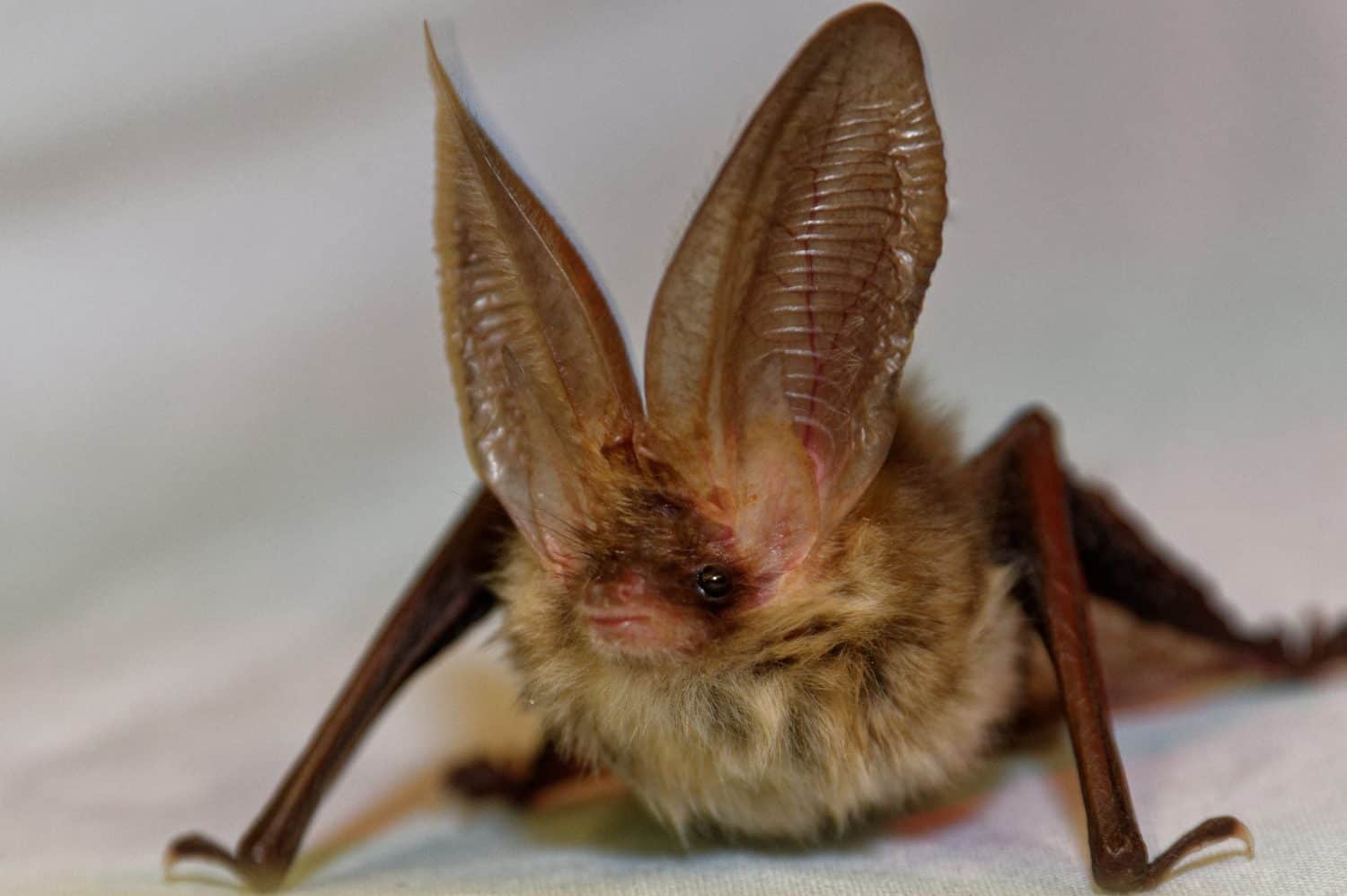
Brown long-eared bats have impressive hearing but are delicate creatures.
©Colin Seddon/Shutterstock.com
What is most striking about the video is watching Kaju be calm and very observant of his surroundings, thanks in part to his massive ears. The ears are not just for decoration. They serve a multitude of purposes, from tracking prey to avoiding predators and more.
Without the long ears, Kaju and other brown long-eared bats would be at a disadvantage compared to other, faster flying bats when going after prey. But thanks to evolution, their sensitive ears allow them to hear even the faintest sounds.
Brown Long-Eared Bats’ Ears Are as Long as Their Bodies
Brown long-eared bats may appear medium-sized. In fact, they are classified as medium-sized bats. Were it not for their ears, they would look much daintier. This is because the brown long-eared bats’ ears are nearly the same length as their bodies.
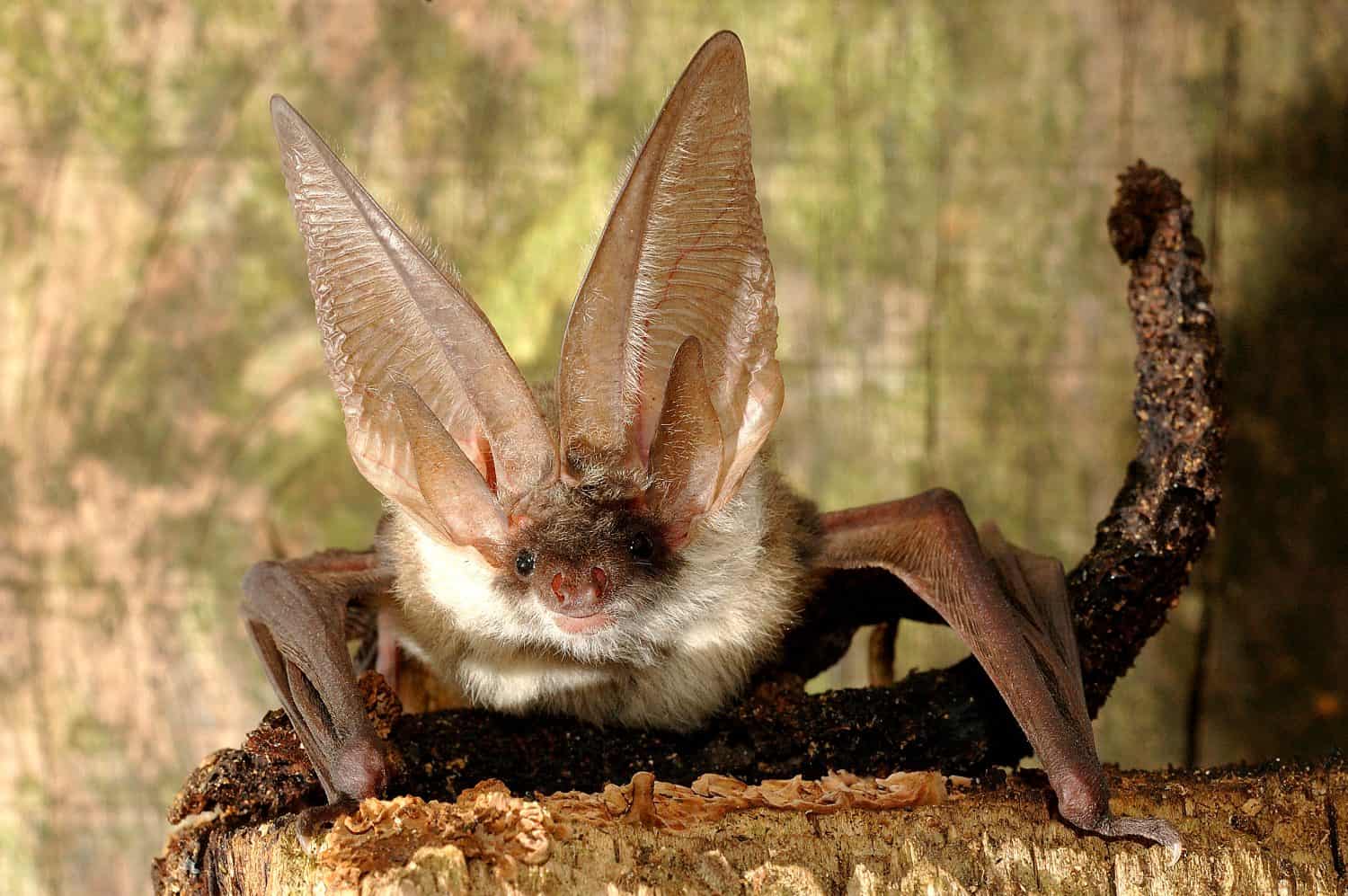
The brown long-eared bat’s ears are nearly the same length as its body.
©COULANGES/Shutterstock.com
| Body Part | Length |
| Body | 1.5 inches to 2.1 inches |
| Ears | 1.3 inches to 1.5 inches |
| Tail | 1.6 inches to 1.8 inches |
| Wingspan | 9.1 inches to 11.2 inches |
| Forearm | 1.6 inches to 1.7 inches |
While the body and tail are just as long, if not longer, than the ears, it is the brown long-eared bats’ ears that get all the attention because they are front and center. But, as the measurements show, the bat is overall very small, making it a target for cats, owls, and kestrels. This is why sensitive hearing is necessary, both to keep the bat from becoming prey and to detect prey of its own.
How Do Brown Long-Eared Bats’ Ears Help Them Detect Prey?
Brown long-eared bats have hearing so sensitive that they can detect a ladybug walking on a leaf. It is not only the size of the ears that helps the bats detect prey. Instead, it is the overall structure that makes the brown long-eared bats the successful hunters they are.
All bats have the capability of hearing very high frequencies. This ability is crucial to successful echolocation. Without echolocation, bats would not be able to navigate the night sky and find prey under the cover of darkness.
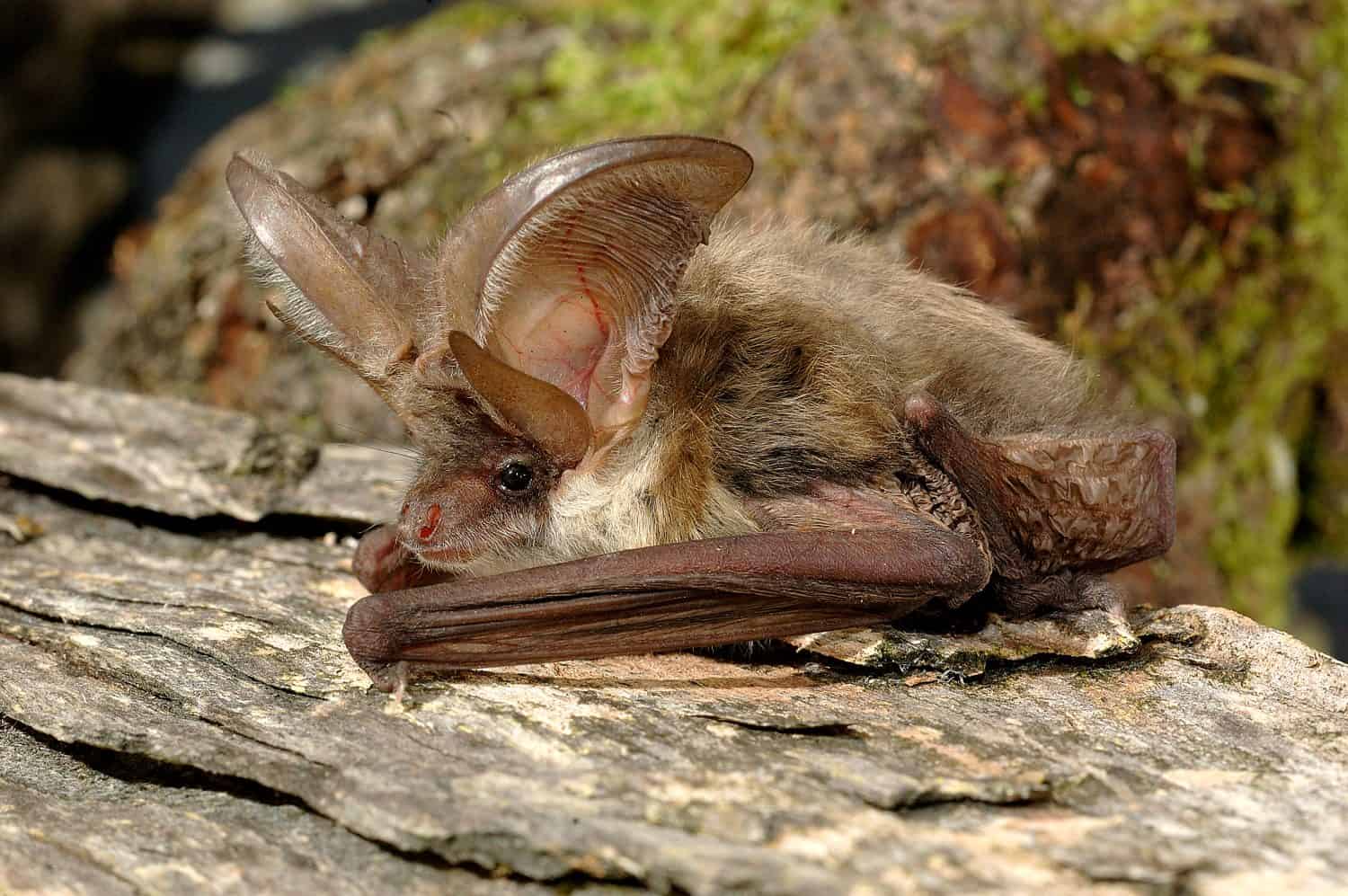
Brown long-eared bats use echolocation to detect prey.
©COULANGES/Shutterstock.com
Echolocation works as follows:
- The bat sends out a high-frequency call.
- It waits for the echo to return.
- It interprets the returned echo to understand its surroundings.
For bats, this helps them navigate through trees and brush as they look for insects both in flight and on the ground. In addition, brown long-eared bats’ larger ears help them to capture not just more, but more intricate sounds. Even the faintest sounds can be detected by the bats. Once something of interest is located via echolocation, brown long-eared bats can fine-tune the sound by changing the shape of their ears. This brings the sound waves into the ear canal, turning them into information about what the object is, how far away it is, and whether there are obstacles in the way.
Brown Long-Eared Bats Can Tuck Their Ears Away
When sleeping, it can be difficult to identify brown long-eared bats by sight alone. This is because the bats want to escape detection, hiding their signature ears as they slumber.
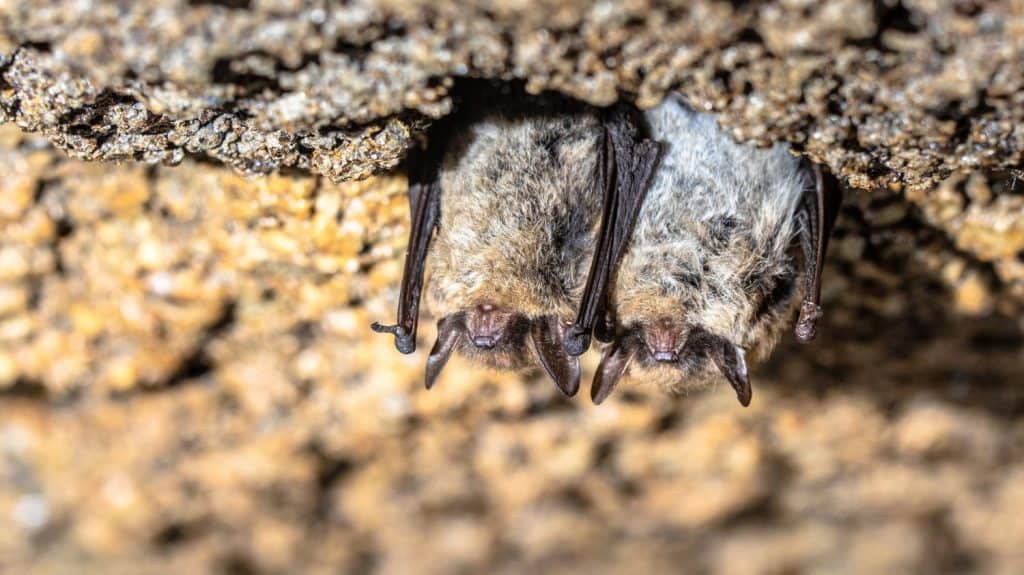
Brown long-eared bats can tuck their ears back while they sleep.
©Rudmer Zwerver/Shutterstock.com
As important as the brown long-eared bats’ ears are for detecting sound while awake, the long ears can be problematic as they sleep or even as they hibernate. This is because, as the brown long-eared bats roost, their ears give away their location.
To combat this, brown long-eared bats can either roll their ears back to look like ram horns or cover all but the tips of their ears with their wings. This keeps them camouflaged as they rest during the day. Additionally, it helps bats conserve energy by reducing the amount of heat lost. The less energy expended at rest, the more the bats have when it is time to wake up just after sunset and begin a night of hunting.
Baby Brown Long-Eared Bats Look Similar to Their Parents
Given the size of adult brown long-eared bats’ ears, a common question is whether their babies, or pups, have the same large ears. The answer is yes.

Brown long-eared pups have the same long ears as their parents.
©zdenek_macat/Shutterstock.com
Brown long-eared bat pups have both large ears and large feet. Just like their parents, the large ears help them to hear even the smallest of sounds. Large feet are a necessity, as the pups cling to their mothers from birth to three weeks of age while nursing. Once this stage has passed, the pups are left in the roost while their mothers hunt. They become weaned at six weeks of age, at which point they will forage for food on their own.
Disadvantages of the Brown Long-Eared Bats Having Long Ears
While there are many advantages to brown long-eared bats having long ears, there is one disadvantage shared by all long-eared bats: drag when they fly.
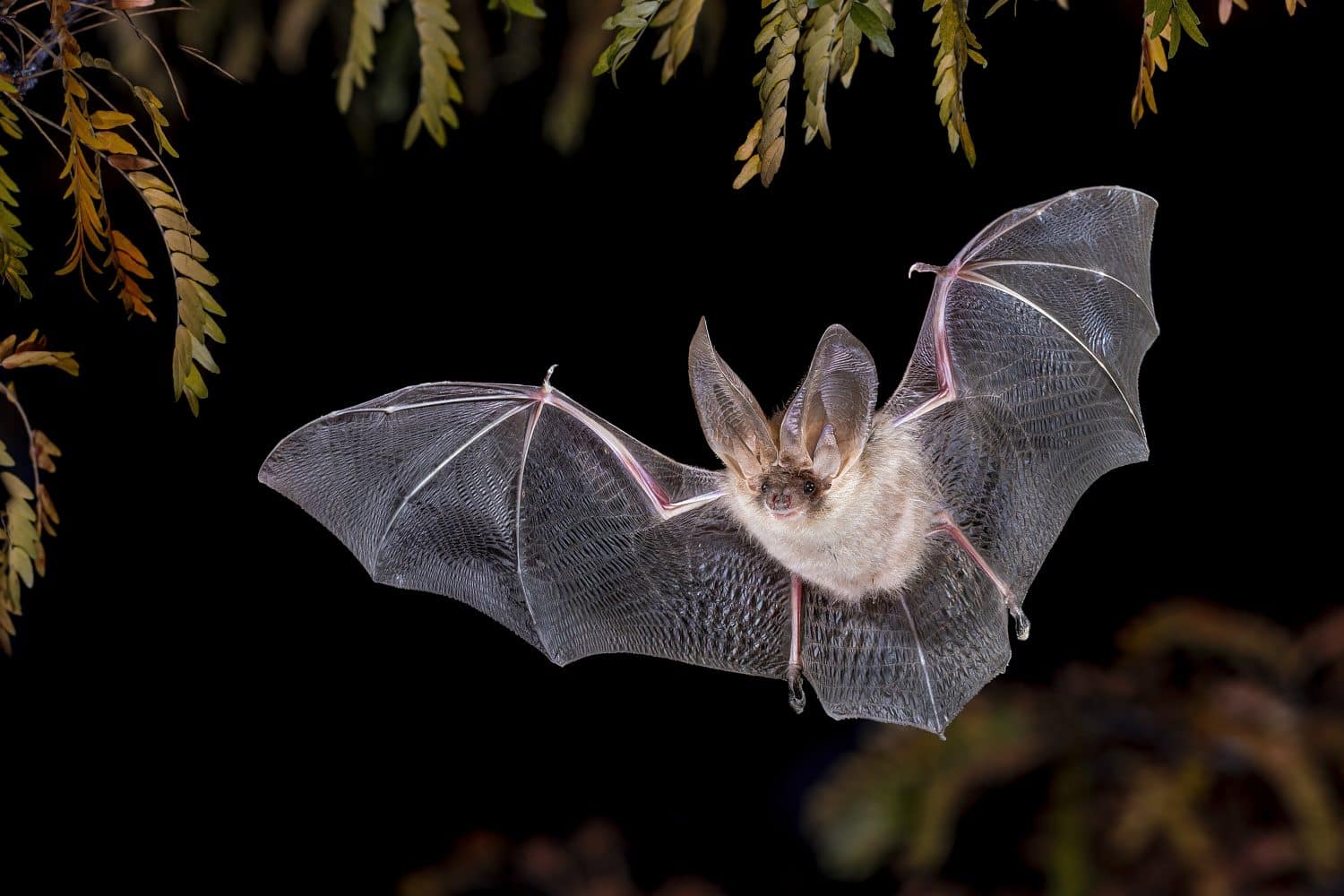
Brown long-eared bats’ ears cause drag when they fly.
©Rudmer Zwerver/Shutterstock.com
When brown long-eared bats fly, they are significantly slower than other bats that have shorter ears. This could be devastating for hunting, as insects, which are their main food source, are not only fast-flying but can also maneuver easily through the air.
Fortunately, what the brown long-eared bats lack in speed, they make up for with their sensitive hearing, making them one of the most efficient insect hunters as they fly silently through the night.
Brown Long-Eared Bats Are Silent Hunters
In addition to their nearly silent flight, brown long-eared bats produce quiet echolocation calls. Neither people nor the prey that brown long-eared bats target can hear them as they fly through the sky at night. Because of this, the bats have been given the nickname “whispering bat.”
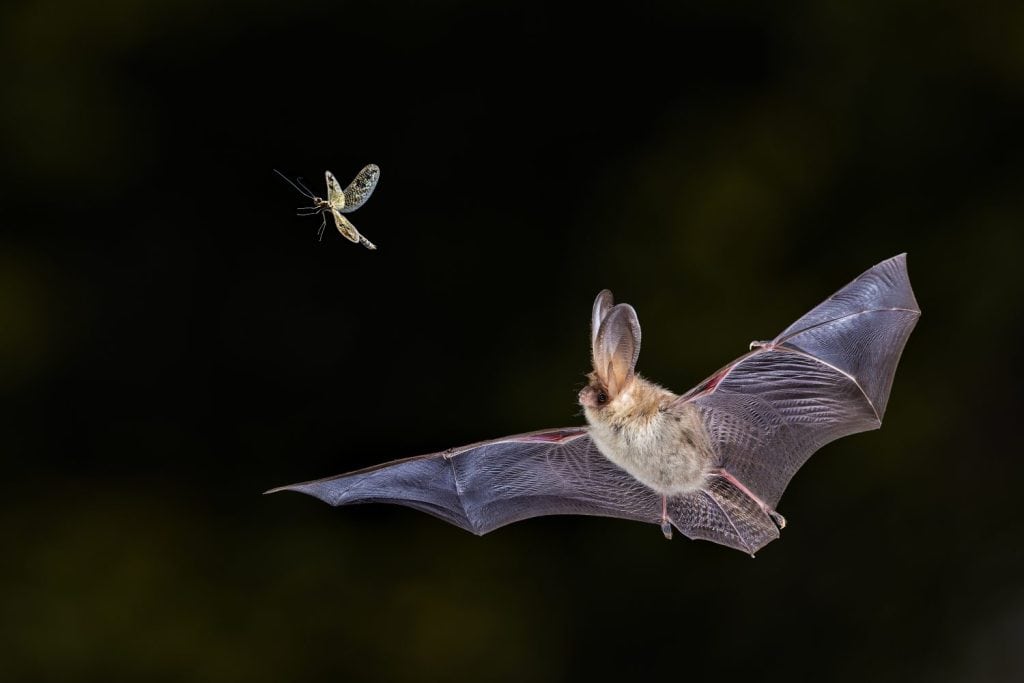
Brown long-eared bats are called “whispering bats” for how silently they fly.
©Rudmer Zwerver/Shutterstock.com
Brown long-eared bats’ echolocation calls have a peak frequency between 45kHz and 55kHz. The high-pitched nature and rapid rate of “soft ticks” produced each second make them so silent. Scientists locate bats using a bat detector. However, even then, it proves difficult to find the bats. Scientists state that once the frequency and ticks are noted, keeping an eye on the night sky is the best way to positively identify them.
Brown long-eared bats are small, winged mammals with large ears. While they may look intimidating to some, it is their ears that make up half the length of their bodies, which they use to find insects and to stay away from predators. Without these bats, the insect populations would not be kept in check. This is why, despite being a species of least concern, brown long-eared bats are protected, just as all other bat species in Europe are, having proven how important they are to their ecosystems.