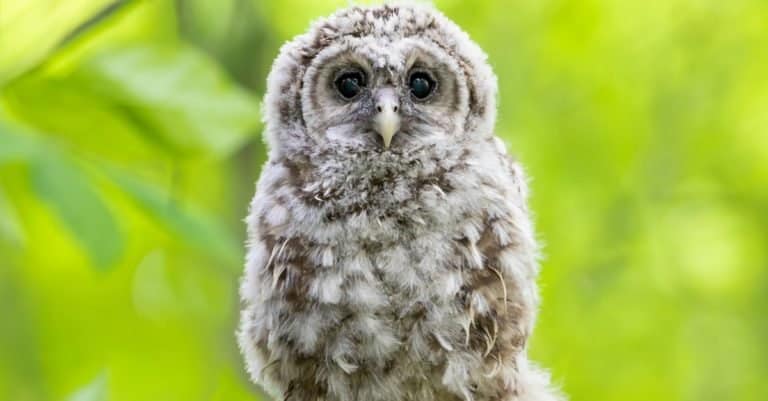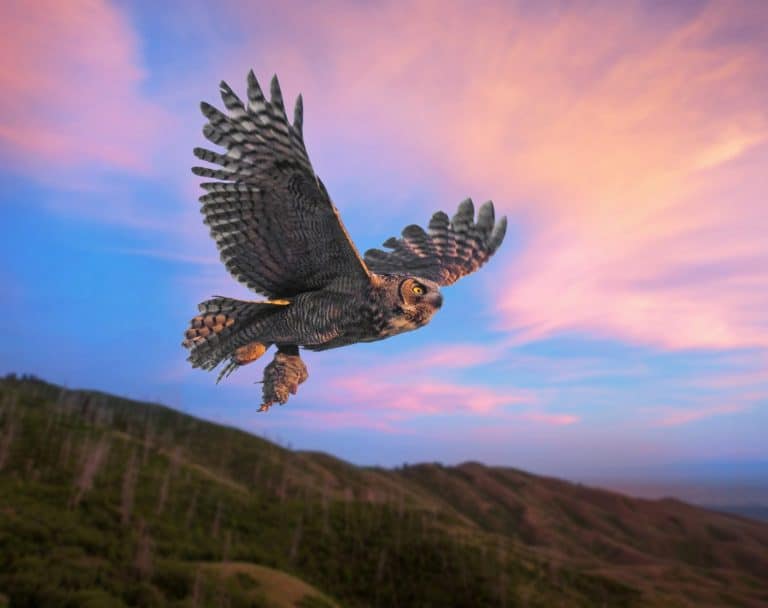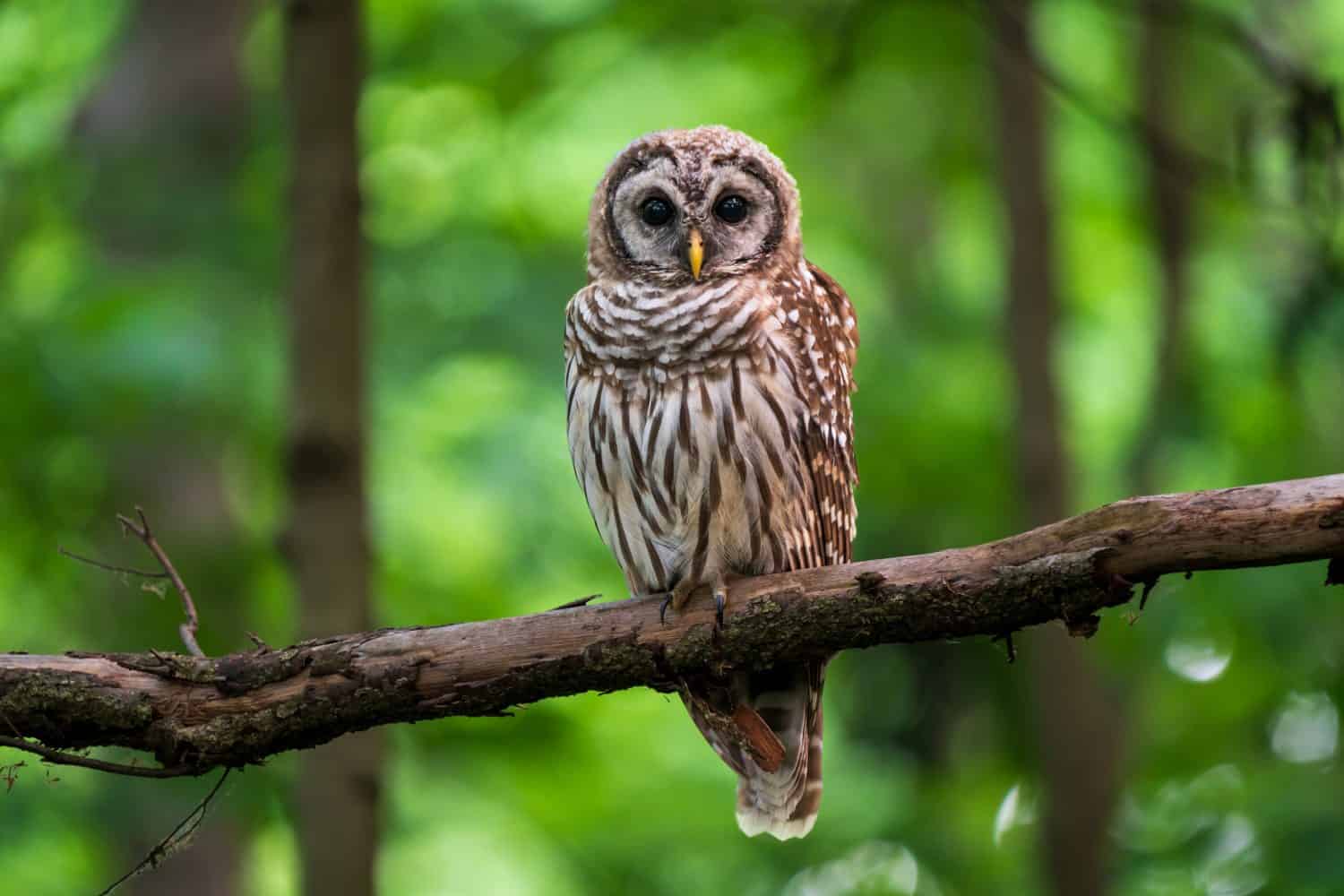

They may seem like phantom creatures of the night, but barred owls make themselves known. Also called striped owls and hoot owls, these large members of the true owl family are native to eastern North America. In recent years, however, barred owls have headed west, where they now share the western skies with northern spotted owls. This may seem like the makings of a buddy comedy movie, but it is causing northern spotted owls to disappear.
They roamed the western range for thousands of years, but have seen their numbers slowly dwindle due to the invasion of barred owls. Even so, barred owls are a native species that, due to a combination of factors, can now technically be classified as invasive in the western United States. As with many drastic environmental changes, however, the fault likely lies with humans. A new study raises challenging questions about barred owls, spotted owls, the environment, and human development.
On the surface, the problems seem pretty clear-cut: an unfamiliar species has invaded the space of an established one and begun displacing it. The only problem, however, is that barred owls are also native to the North American continent. Due to a process called range expansion, they’ve been incentivized or practically forced to set up shop beyond their usual horizon. While this displaces northern spotted owls, it also puts barred owls in a precarious position as they adapt to new environments. In recent years, the debate over whether killing one “invasive” species to save a “native” one has grown to a fever pitch. Let’s learn more about this debate and what points each side is making.
Northern Spotted Owl and Barred Owl
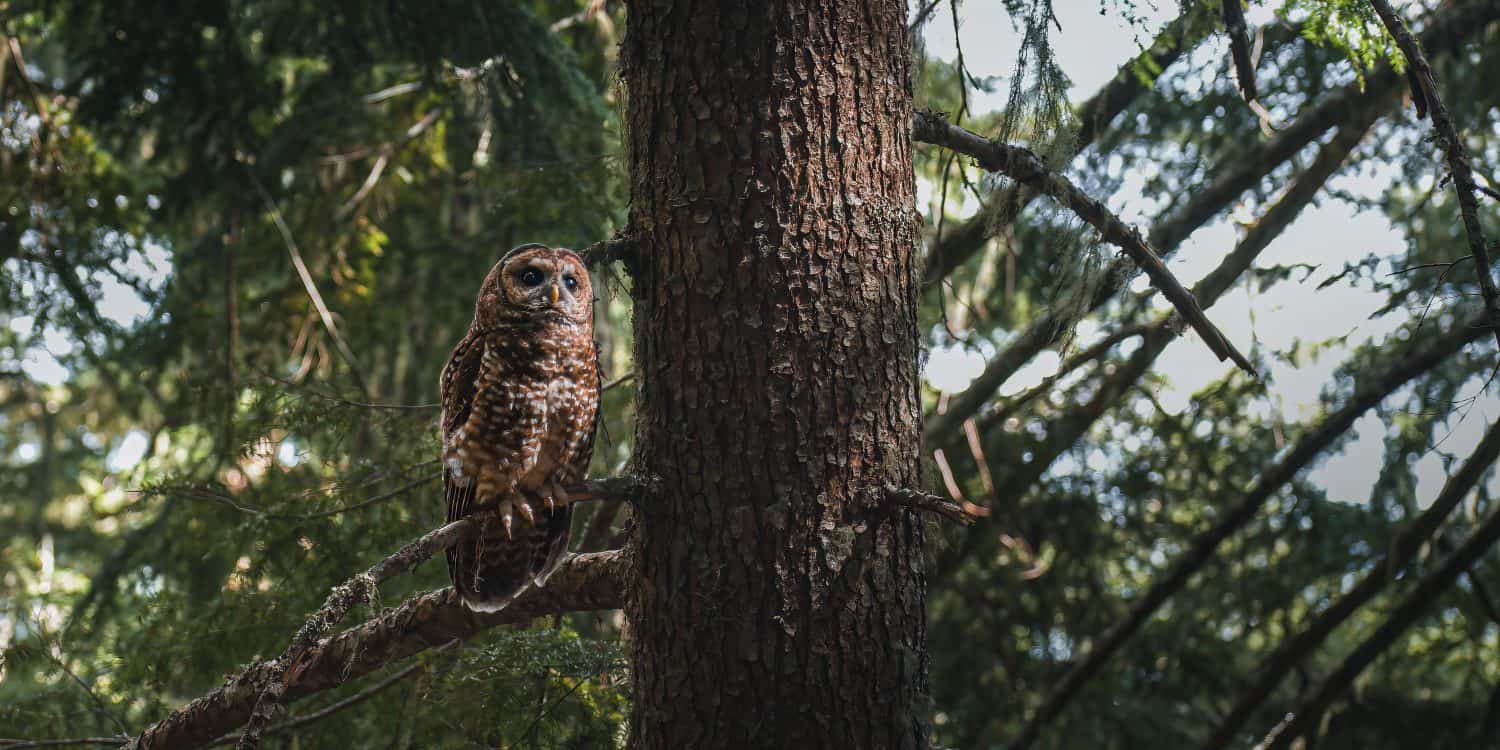
Northern spotted owls have become a potent symbol of conservation in the Pacific Northwest.
©Nick Bossenbroek/Shutterstock.com
Longtime residents of the Pacific Northwest, northern spotted owls are native to the old-growth forests that range from northern California to southwestern British Columbia. They have dark-brown feather clusters with white spots and mystical black eyes. As residents of these forests for millennia, northern spotted owls have refined their palette to several key animals, including flying squirrels and woodrats. However, this specialized type of predation has its drawbacks. For one, it makes them distinctly vulnerable to habitat loss and fragmentation. Enter the destructive hands of man. In the late 20th century, the logging industry decimated much of their habitat, reducing their population and forcing them onto the Threatened Species list under the U.S. Endangered Species Act in 1990.
Whereas northern spotted owls are highly specialized, barred owls are more adaptable. Characterized by rounded heads, dark eyes, and large frames, barred owls get in where they fit in. Though native to eastern North America, the species has branched out to more western environments in the past century. While logging hurt northern spotted owls, it seemed to provide a more continuous forest corridor for barred owls to move west. Plus, these large owls are generalist hunters. This allows them to adapt their diets to different environments, subsisting on everything from small mammals and birds to reptiles and amphibians.
It also allows barred owls to outcompete more specialized species like northern spotted owls. In the Pacific Northwest, these newcomers will even kill northern spotted owls, take over their nesting territories, and prey on them. The northern spotted owl has become a potent ecological symbol in western states, but the question remains: should this competition be left to nature or does it require further human intervention?
A Contentious Strategy
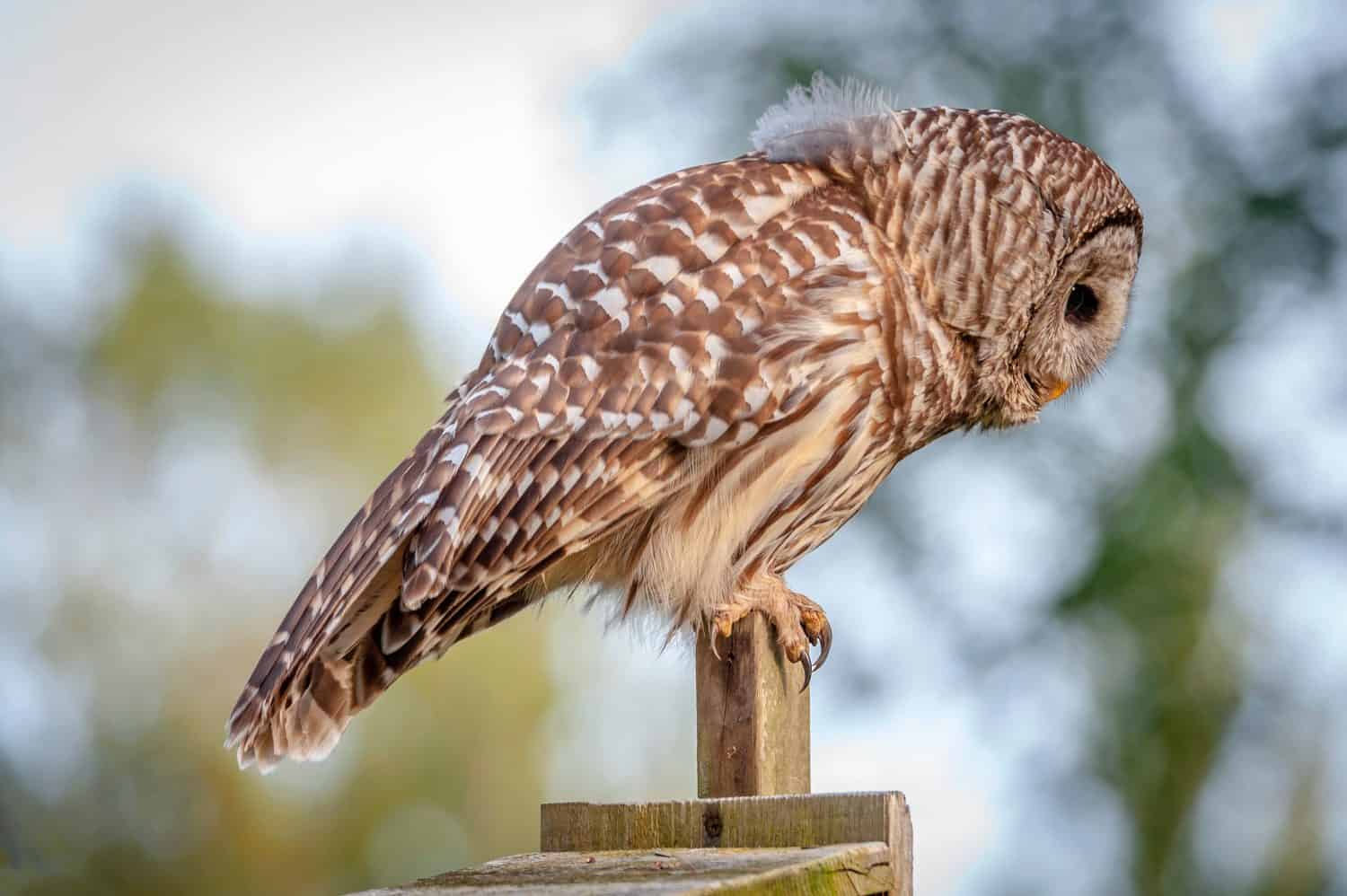
The U.S. Fish and Wildlife Service plans to cull thousands of barred owls annually.
©Edmund Lowe Photography/Shutterstock.com
The U.S. Fish and Wildlife Service (USFWS) answered that question for itself by developing a controversial new plan to kill over 450,000 barred owls over 30 years. This is equivalent to culling 15,000 of them annually. This process “would result in the annual removal of less than one-half of one percent of the current North American barred owl population.” The management strategy was finalized in 2024, and its announcement and public comment period sparked immediate outcry and controversy. It also stimulated debate between various environmental, conservation, and ecology groups.
Warring Factions
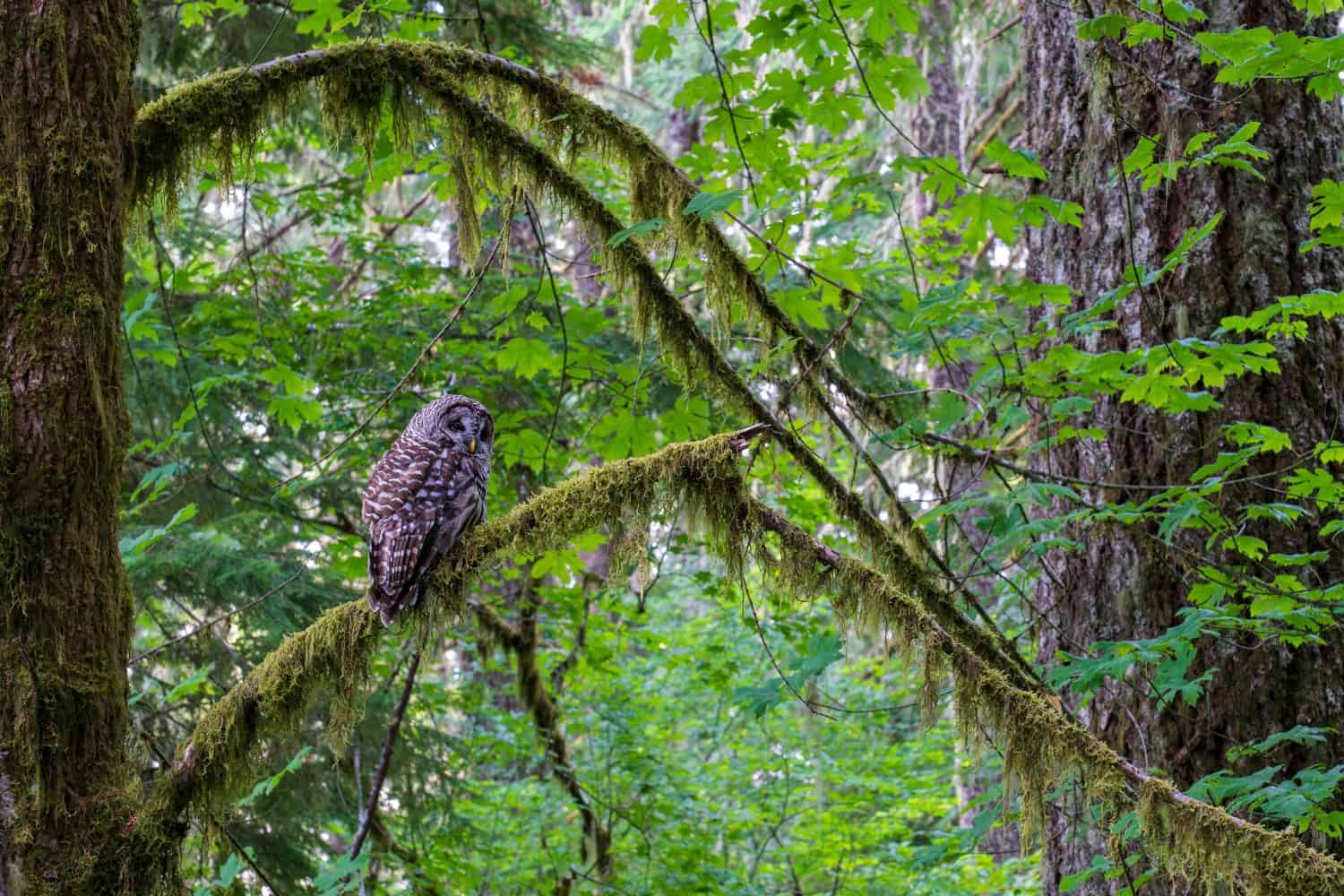
Some conservation groups support the culling plan while others disavow it.
©Peter K. Ziminski/Shutterstock.com
It makes sense that the public couldn’t reconcile the culling of one species to save another one, especially since they are both related and native to North America. But even the experts can’t agree. According to an article from Outside.com, several conservation groups formed a coalition to support the management strategy. Tom Wheeler, the executive director of the California-based nonprofit Environmental Protection Information Center, pointed to a letter signed by groups such as the Center for Biological Diversity, Earthjustice, and the Sierra Club. In the letter, these groups endorse the plan because it “is a necessary conservation action to stop the extinction of the northern spotted owl and to protect other native species impacted by the barred owl’s invasion.”
On the other side of the debate, however, some conservation groups implicitly disagreed with the plan. Indeed, both Animal Wellness Action and the Center for a Humane Economy filed lawsuits against USFWS in 2024. More recently, the Coalition to Protect America’s National Parks (CPANP) published a letter to a Colorado official, imploring him to vote against the management strategy. Those who dissent from the strategy not only cite ethical and moral concerns but also raise a more philosophical debate about the difference between invasion and natural range expansion.
Invasion vs. Expansion
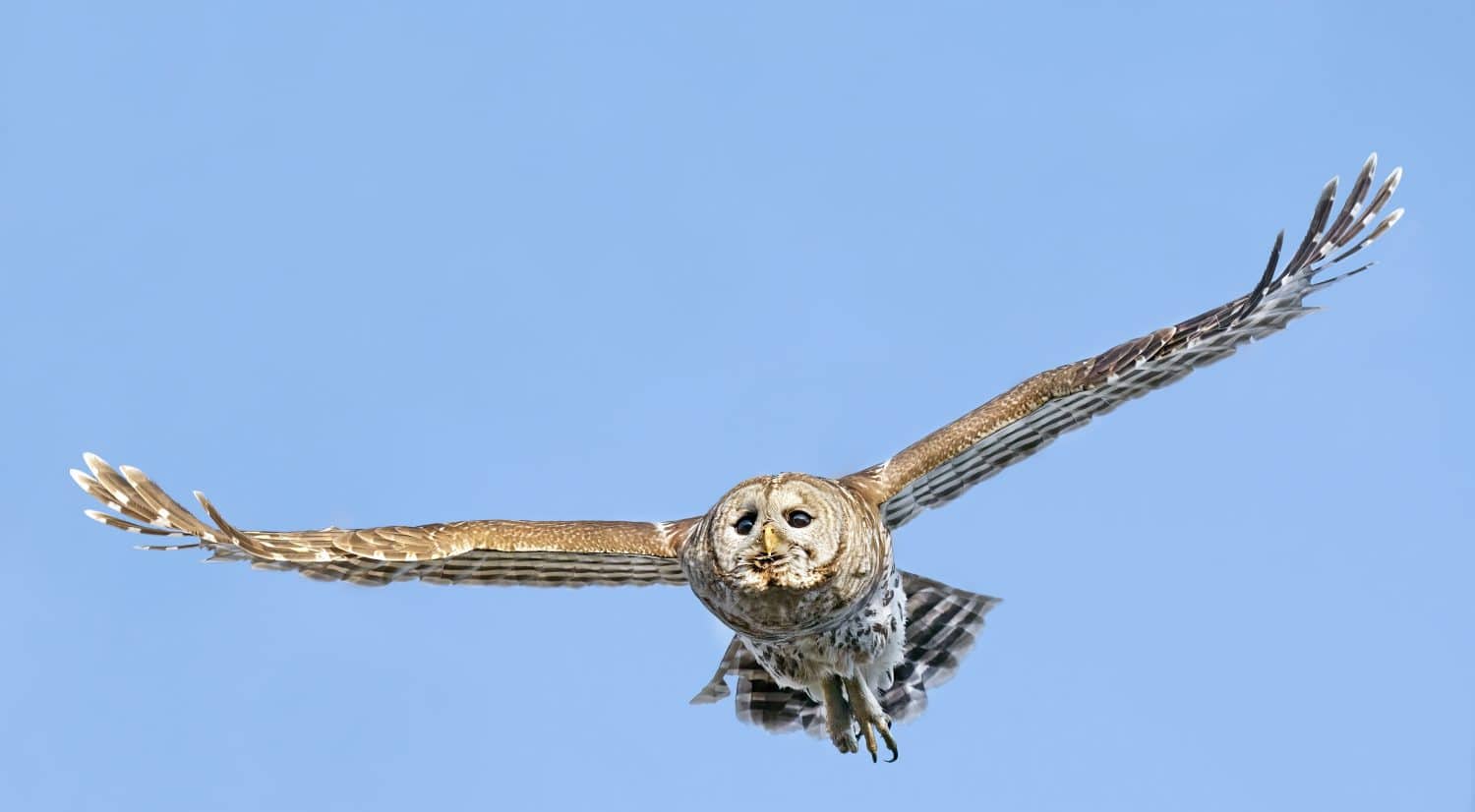
A recent study showed that barred owls in the Pacific Northwest eat over two dozen threatened or endangered species.
©FSTOPdotCOM/Shutterstock.com
These management strategy detractors suggest that range expansion is a natural process some species undergo. Considering the rate at which humans have developed the world in the past several centuries, range expansion is not a question of if but when. According to wildlife biologist Elaine Frances Leslie, this expansion is a well-documented process. She and the anti-culling coalition “agree that some of the range expansions are due to climate change, fragmentation, and other human-caused disturbance, and the rate of range expansion is inevitable.”
The recently published study cites some stunning findings regarding the barred owls’ “invasive” status. Using innovative molecular methods, researchers analyzed DNA from stomach contents and pellets from over 750 barred owls found in California, Oregon, and Washington. This research revealed that barred owls consumed more than 162 distinct species, including birds, mammals, insects, and fish. Of these 162 species, 29 were officially recognized as threatened or endangered.
What Is the Precautionary Principle?

The culling of barred owls invokes the Precautionary Principle of environmental management.
©ronstik/Shutterstock.com
These findings provide ammo to the pro-culling side of the debate, which emphasizes species impact over origin. Barred owls may be native to North America at large, but are causing untold destruction to species in the Pacific Northwest in particular. It also points toward the Precautionary Principle. This concept, widely adopted in environmental management, says that where there is credible evidence of serious harm to ecosystems or health, preventative action should be pursued, even if the science remains uncertain. It’s better to be safe than sorry, and that suggests a culling of barred owls is an ugly but necessary evil. Without some type of intervention in barred owl populations, northern spotted owls and a host of other species remain at serious risk.
What Are the Ethical Concerns?

The barred owl debate points to a growing issue: species’ adaptation to mankind’s ecosystem dominance.
©Thammanoon Khamchalee/Shutterstock.com
There may be ample evidence that barred owls are crowding out northern spotted owls in the western United States, but culling the former to save the latter still doesn’t sit right with some people. While supporters say it is a small step toward a big impact, detractors believe the strategy will also result in needless northern spotted owl deaths. That’s where the debate stands on the ground, but the barred owl-northern spotted owl battle points to a bigger problem that will continue to vex humanity.
As it stands, mankind is experiencing the Anthropocene era, one in which humans have utterly dominated Earth’s ecosystems. Our dominance over the planet solidifies with each passing day. In response, animals must dodge and weave our ecological advancements. This blurs easy categories like native and invasive. While generalist predators often outcompete specialized ones in changing environments, humanity must consider which species are more important to the planet’s overall health.