
Quick Take
- Achieving high nesting success for white storks in London by 2026 will depend on meeting key environmental requirements, but 100% success is not expected.
- Recent GPS tracking studies are being used to assess how London infrastructure may impact white stork migration and safety.
- Recent research indicates that White Storks may use landfills and some human-modified areas for feeding, but natural wetlands and grasslands remain important habitats.
- Habitat preparation, council approvals, and conservation partnerships were key steps in enabling the white stork’s return to London.
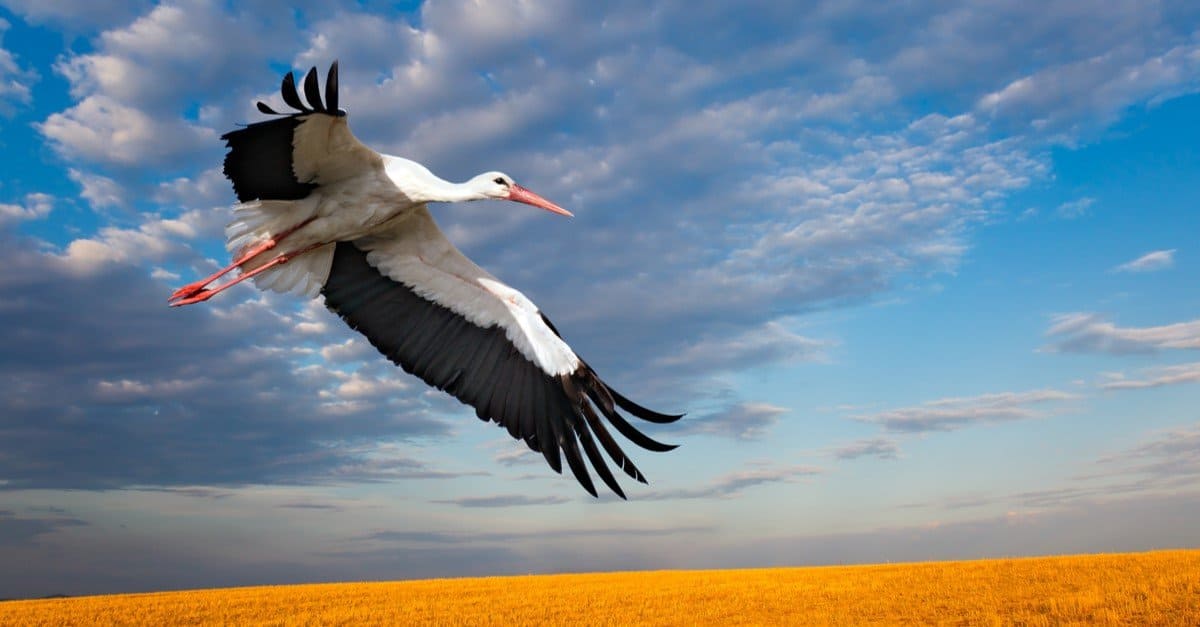
For the first time in roughly six centuries, London’s skies may again carry the long, steady wings of the white stork. These large birds once lived alongside people, nesting on rooftops and feeding in nearby wetlands. By the early fifteenth century, they had vanished from England entirely. In 2026, conservationists are preparing for the approved reintroduction of white storks to the London region, with the first releases scheduled for autumn 2026.
The approved 2026 plans represent a new phase in the species’ recovery, testing whether a dense global city can once again support a bird lost for generations. The project blends historical knowledge, modern ecology, and public participation. It also raises a larger question about whether a dense, global city can support the return of a lost species of bird not seen for generations.
A Familiar Bird in Medieval London
Long before London became a modern metropolis, white storks were part of daily life. Residents saw them nesting on tall buildings and foraging in fields and marshes near the city’s edge. Their size and calm behavior made them easy to notice. Across Europe, storks carried a strong cultural meaning. Many people associated them with household luck, family stability, and new life. Stories described them as protectors of homes and symbols of continuity.
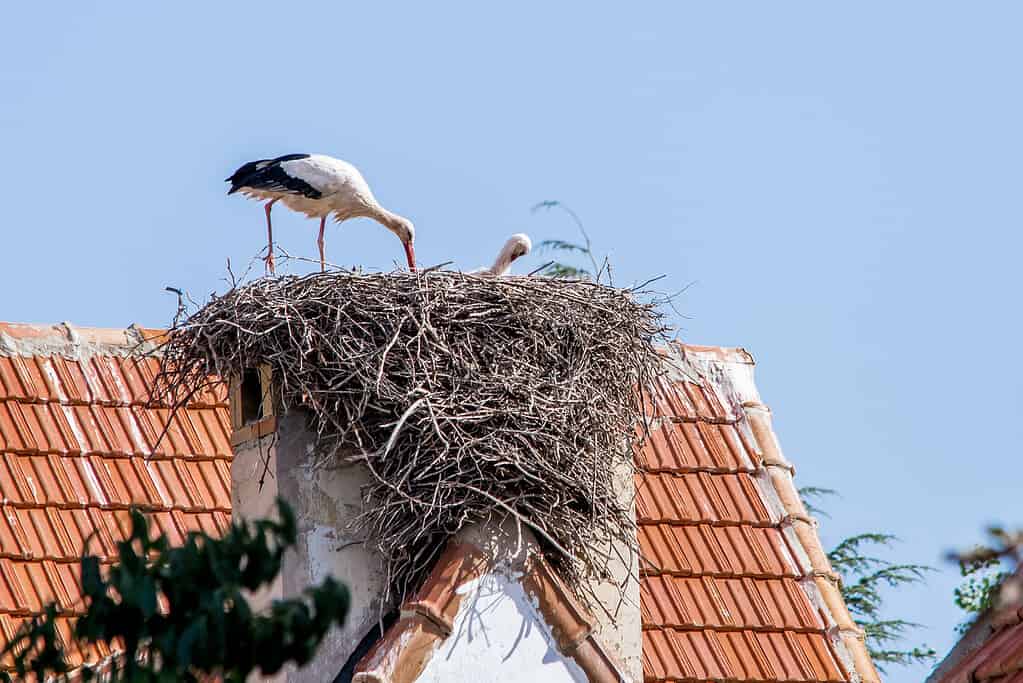
White storks once nested on buildings near cities, making them a familiar sight in daily life across Europe.
©Wirestock/iStock via Getty Images
Because storks tolerated people and reused the same nest sites year after year, their presence felt steady and reassuring. When they disappeared, the change stood out. Their absence marked a broader shift in how cities and wildlife interacted. Nature began retreating from shared spaces, replaced by expanding development and heavier land use.
The Last Recorded Nesting
Historical records often point to the year 1416 as the last confirmed nesting of a white stork in Britain. After that moment, reliable accounts fade away. The timing aligns with major changes in land use. Wetlands were drained to expand farming. Forests shrank. Hunting pressure increased, especially on large birds that provided substantial meat.
White storks depend on shallow wetlands and open ground rich in frogs, insects, and small fish. As these habitats disappeared, so did the food sources that supported breeding pairs. Hunting added another strain. Over time, the combined pressure pushed the species out of England entirely. What had once been ordinary became something remembered only through records and folklore.
Why Britain Stayed Without Storks
While storks survived in parts of continental Europe, Britain remained empty of them for centuries. Modern agriculture intensified the problem. Large fields replaced mixed farmland, hedgerows vanished, and remaining wetlands became fragmented. Urban growth added roads, buildings, and power infrastructure that increased risks for large flying birds.
Geography also played a role. Britain sits outside the main migration corridors followed by many European stork populations. Without nearby breeding colonies, natural recolonization remained unlikely. Conservation priorities focused on species that still clung to survival, leaving fully vanished animals like the white stork as a distant goal.

Power lines and modern infrastructure increased dangers for large birds like storks, making a return to Britain difficult.
©Western Area Power / CC BY 2.0, Flickr – Original / License
Rewilding as a Restoration Tool
Rewilding offers a different approach to conservation. Rather than only protecting what remains, it seeks to restore missing species and ecological processes. For white storks, this approach has already proven effective in rural England, where carefully managed reintroductions have helped establish the country’s first wild breeding pairs in centuries. These early successes now inform discussions about whether similar principles could be adapted for more urban environments.
London’s Changing Relationship With Wildlife
London may not seem like an obvious stork habitat, yet the city’s relationship with wildlife has changed in important ways. Large parks, reservoirs, river corridors, and restored wetlands form a connected network of green space across the region. Improvements in water quality and habitat management have already allowed many bird species to thrive along the Thames and its tributaries.
Building on lessons learned from rural reintroduction projects, conservationists are assessing whether these urban and suburban landscapes could support white storks on a trial basis. Rather than marking the species’ return to England, a London release would test how a bird once comfortable around people might adapt to modern city conditions.
Knepp Estate and the Return of the White Stork
The modern effort to return white storks to England began at the Knepp Estate in West Sussex, a privately owned estate that has become one of the most influential rewilding projects in Europe. Covering roughly 3,500 acres, Knepp was once intensively farmed, but poor soil and declining yields led its owners to abandon conventional agriculture in the early 2000s. Instead of managing the land for neatness or productivity, they allowed natural processes to take over, using free-roaming grazing animals to shape a shifting mix of grassland, scrub, wetlands, and woodland.
This approach created ideal conditions for species that had long disappeared from much of southern England. The varied, untidy landscape supports abundant insects and small animals, making it particularly suitable for white storks, which favor open feeding areas near wetlands. Storks were reintroduced at Knepp in 2019, and the estate soon became the first place in England in centuries where the birds successfully nested in the wild. Knepp’s success demonstrated that large, charismatic species can return not only in protected reserves but also on working land, helping reshape conservation thinking across the country.
The Stork Selection and Release Process
The white storks released at the Knepp Estate were carefully selected as part of the White Stork Project, with an emphasis on birds that could adapt to life in the wild without risking existing European populations. Most of the storks were juveniles sourced from rehabilitation centers and zoological collections across Europe, particularly individuals that could not be released back into their original locations for welfare or logistical reasons.
Genetic diversity was a priority, so birds were chosen from different lineages to help establish a healthy founding population. Before release, each stork underwent veterinary checks and was fitted with identification rings, and some were equipped with GPS tags to allow researchers to monitor movements, survival, and migration behavior.
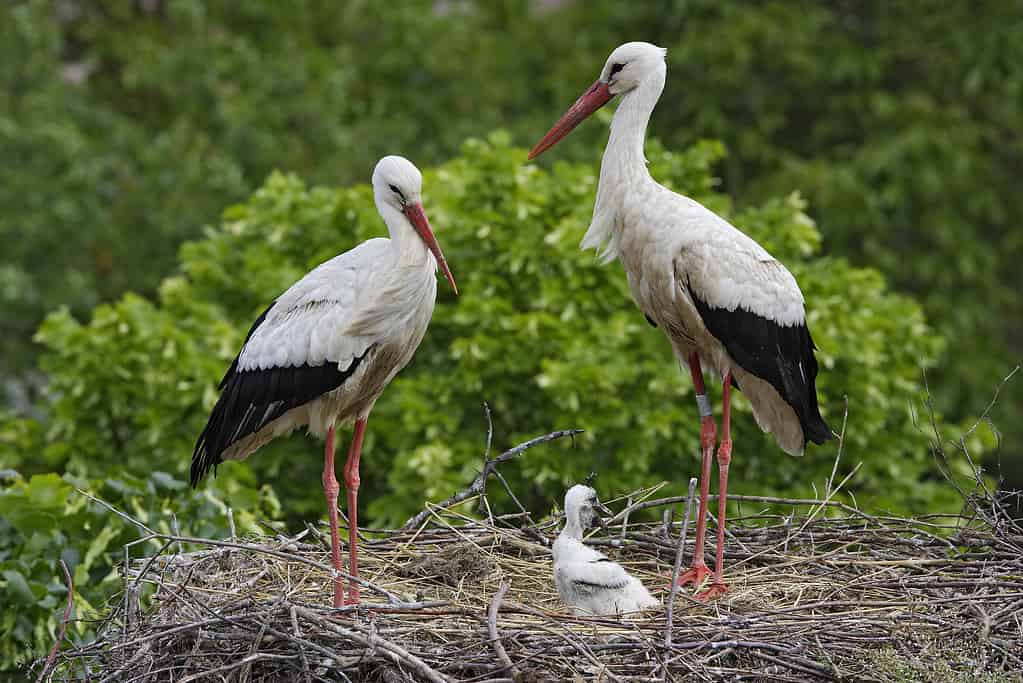
Early nesting success, including chicks like this one, showed that white storks could return to England with help. But of course, the real question we all want an answer to is: “Are baby storks delivered by a stork, or is that just for people?”
©Michel VIARD/iStock via Getty Images
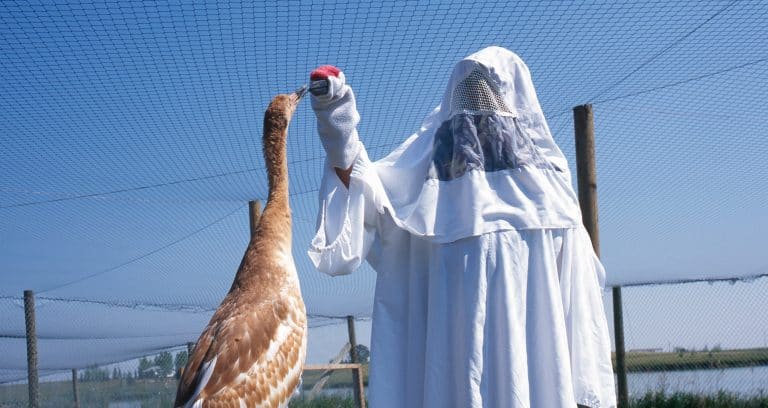
Rather than being released immediately, the storks went through a “soft release” process designed to increase their chances of staying and breeding locally. They were housed in large open enclosures at Knepp, where they could see the surrounding landscape, acclimate to local weather, and bond socially with other storks.
During this period, they were fed while gradually learning to forage in the surrounding fields and wetlands. Once the enclosure doors were opened, the birds were free to come and go, but supplemental feeding continued for a time to reduce stress and encourage site fidelity. This slow, deliberate approach proved effective, with several storks remaining in the area, forming pairs, and eventually nesting, marking a major milestone in the species’ return to England.
Preparing for the 2026 Release
As of early 2026, conservation groups are moving forward with approved plans to release white storks in the London region, with the first trial release scheduled for autumn 2026. These plans have received the necessary environmental and council approvals and will include ongoing long-term monitoring strategies. The project builds directly on the experience gained from earlier reintroductions in southern England rather than representing the species’ initial return.
Young storks considered for release would be selected to maximize survival and site familiarity. Elevated nest platforms, habitat assessments, and coordination with infrastructure managers would aim to reduce risks during the birds’ early months. Any release would be gradual and closely monitored, with the goal of evaluating whether storks can safely forage, migrate, and return within an urbanized landscape.
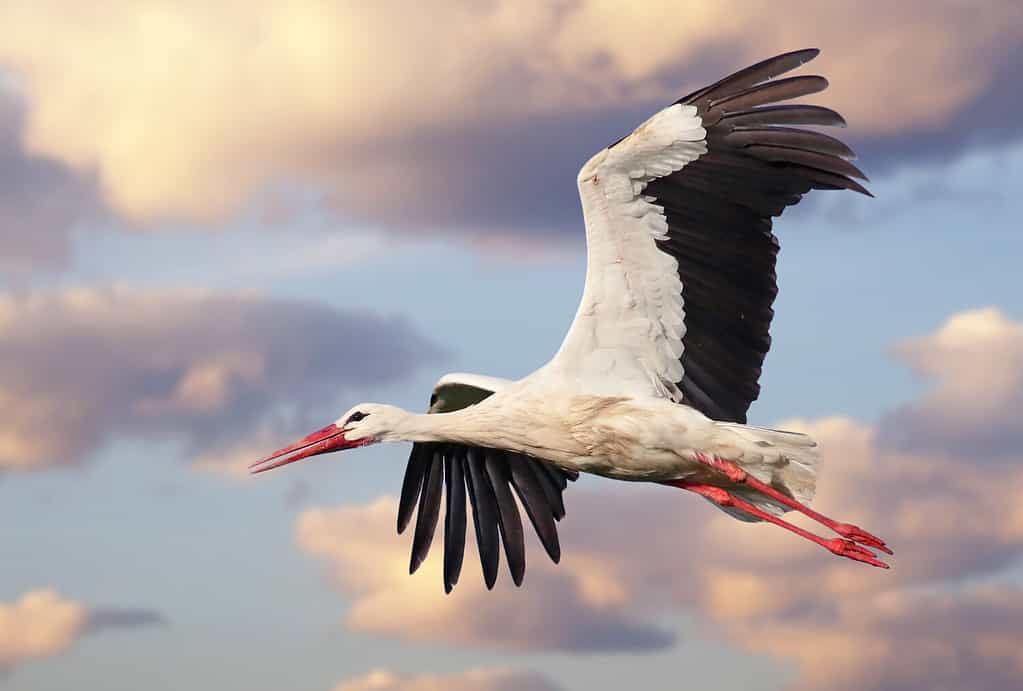
Strong flight skills help prepare storks for safe release and long-term survival in the region.
©Fercast/Shutterstock.com
Lessons From Europe’s Recoveries
Several European countries offer useful models. Germany, Poland, and Spain have seen white stork numbers rise through habitat protection and infrastructure changes. Nest platforms and safer power designs reduced mortality. Community involvement helped transform storks into local points of pride.
These examples show that success depends on social support as much as ecological planning. When residents value the birds, they protect nests and report sightings. London’s project draws on these lessons, adapting them to an urban context with greater density and complexity.
Obstacles That Remain
The project faces real uncertainty. Climate shifts may alter migration timing or food availability. Urban hazards such as glass buildings and traffic remain dangerous. Early breeding failures could affect public confidence. Conservation teams must monitor outcomes closely and adjust strategies as conditions change. International cooperation also matters. Migratory birds cross borders and face varied risks along their routes. Long-term success depends on collaboration beyond London or even Britain alone.

Changing climate conditions can affect where storks find food and safe places to rest during migration.
©Karin Jaehne/Shutterstock.com
Watching the Skies Again
If these efforts move forward, 2026 could mark an important new chapter in England’s long relationship with the white stork. While the species’ modern recovery began in rural landscapes, extending that success toward London would reconnect the city with a part of its ecological past. Rather than erasing centuries of absence, the return would reflect how conservation, patience, and planning can reopen possibilities once thought closed.