
Quick Take
- A 200-pound loggerhead sea turtle must overcome the loss of her front flipper in order to have any chance at open-ocean survival, as her mobility may prove too limited.
- Tracking this three-flippered turtle provides vital research to scientists, including differences in surfacing and feeding mechanisms in heavy currents.
- Standard rehabilitation protocols often fail to predict how three-flippered turtles adapt their movement styles for survival, as very few turtles with missing limbs have been re-released into the wild.
- Rehab specialists in Florida used a specific tank water acclimation process to bridge the gap between this turtle’s journey from Juno Beach to the sea.
The ocean can be an extremely dangerous place, even for an animal that migrates through and rides its currents for decades. That’s why a single missing limb can spell disaster, despite an animal being equipped to handle the sea otherwise.
A recent news story has captured attention, as a 200-pound sea turtle named Pyari returns to the Atlantic. After an apparent shark attack left her with deep wounds and the loss of most of her left front flipper, she spent months in rehabilitation at Florida’s Loggerhead Marinelife Center before veterinarians decided she was strong enough to return to the wild.
What happened to Pyari, and what does her story mean for other rehabilitated animals who long to return to their natural habitat? With Pyari back in the open ocean with a satellite tag attached to her shell, scientists can watch what happens next. Here’s the story of how a sea turtle ended up with three flippers after an accident, and what it means for her chances of survival.
Pyari’s Injury and Survival in the Sea
Pyari arrived in the care of Florida’s Loggerhead Marinelife Center on November 4th, 2025, after being found stranded in Port St Lucie following a predator attack that rehab staff suspected was caused by a shark. The injuries involved serious wounds to her neck, shell, and front flippers, with her left flipper ultimately and unfortunately amputated.
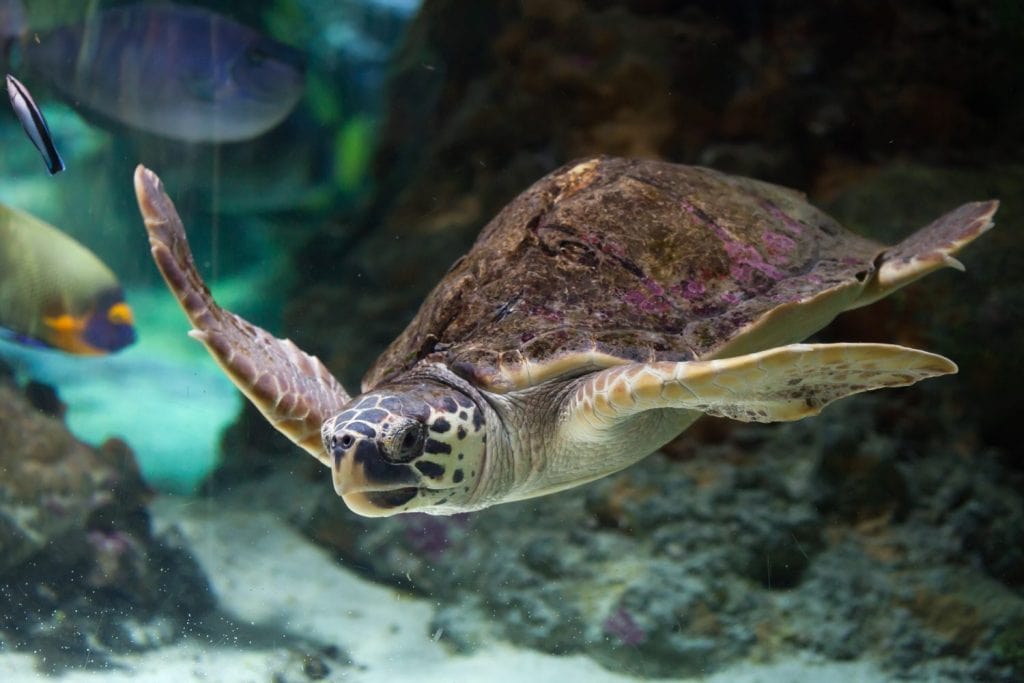
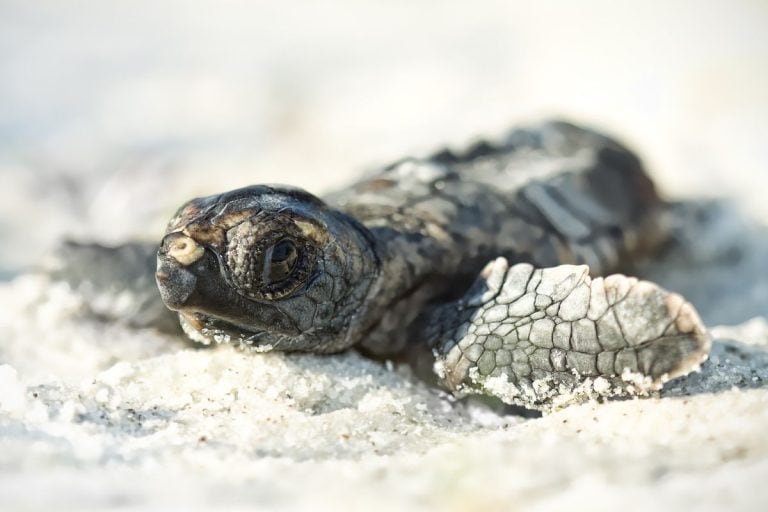
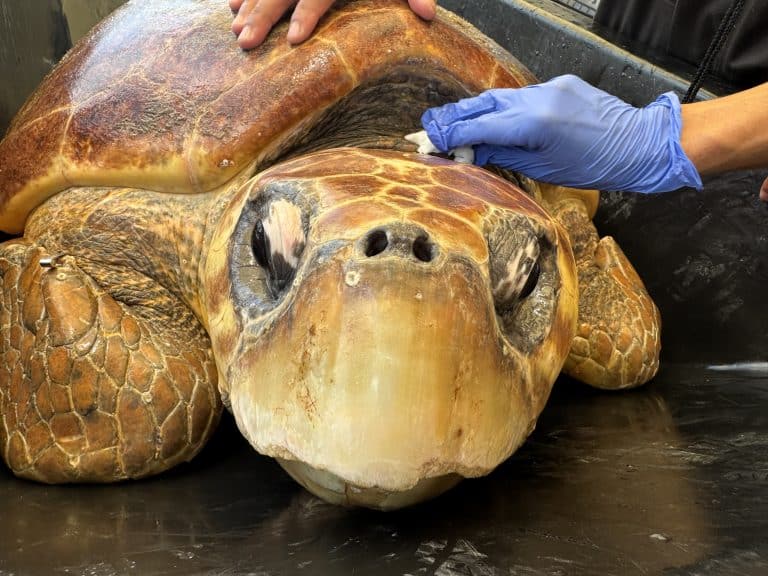
A loggerhead turtle named Pyari was rescued and rehabilitated following what rescuers suspect was a shark attack.
©Vladimir Wrangel/Shutterstock.com
While sea turtles can compensate for many types of movement, their front flippers are the main source of propulsion. Losing most of a front flipper can change how a sea turtle feeds, surfaces to breathe, handles surf and currents, and reacts to threats.
That’s why Pyari’s injury was handled with the utmost care and contemplation about what releasing her might look like for her survival. While she was ultimately released on January 28th, 2026, it wasn’t done lightly or without consideration.
What Rehabilitation Did For Pyari
Rehabilitation involves multiple steps and routines, depending on the animal. When Pyari arrived, she needed to be monitored for infection and wound management, and rebuilding her stamina was a primary concern due to her lost limb.
In Pyari’s case, the release team also had to consider the sea’s temperature and a safe transition should her release prove possible. When she recovered enough for release back into the sea, the air at Juno Beach, where she was being kept, was cold on release morning. However, the Atlantic water was much warmer, so the center acclimated her by keeping her tank water at around 80°F (27°C), similar to the ocean’s temperature.
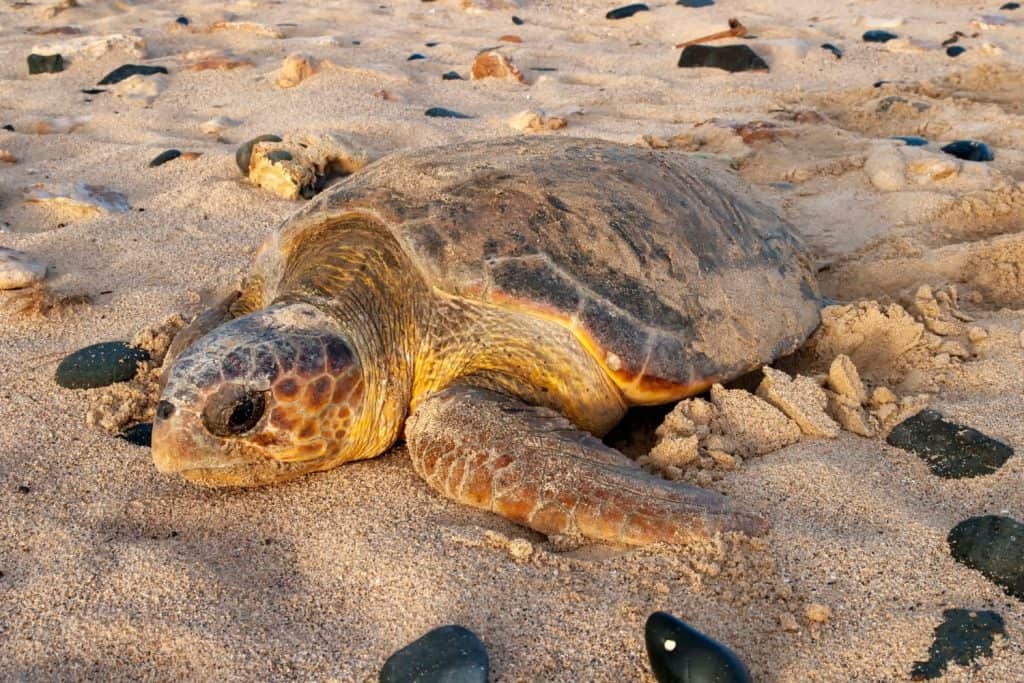
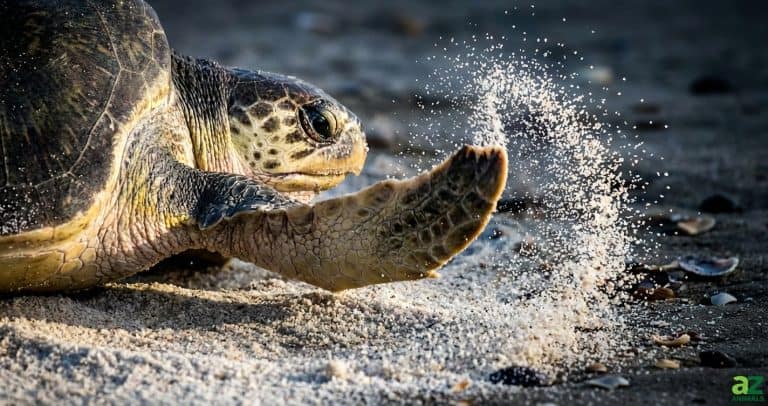
After her successful rehabilitation, Pyari was released into the sea with a vital tracker that records her progress.
©Manuel Ocen/Shutterstock.com
Her clinicians also used scans and radiographs as part of her medical monitoring, allowing veterinarians to remotely check her healing and rule out any lingering complications before her release. Her tracker is also designed to keep tabs on her, even if her rescuers cannot help her in the open ocean. However, the information received may prove vital in saving other turtles in the future.
What Satellite Tracking Can Do For Rehabilitated Animals
Satellites are capable of giving researchers a great deal of information. For example, when Pyari surfaces, her tag can transmit her location and other information that helps researchers reconstruct her travel routes and estimate her movement rates across time. This is especially valuable research for animals we can’t regularly observe, considering their preferred habitat is under the sea.
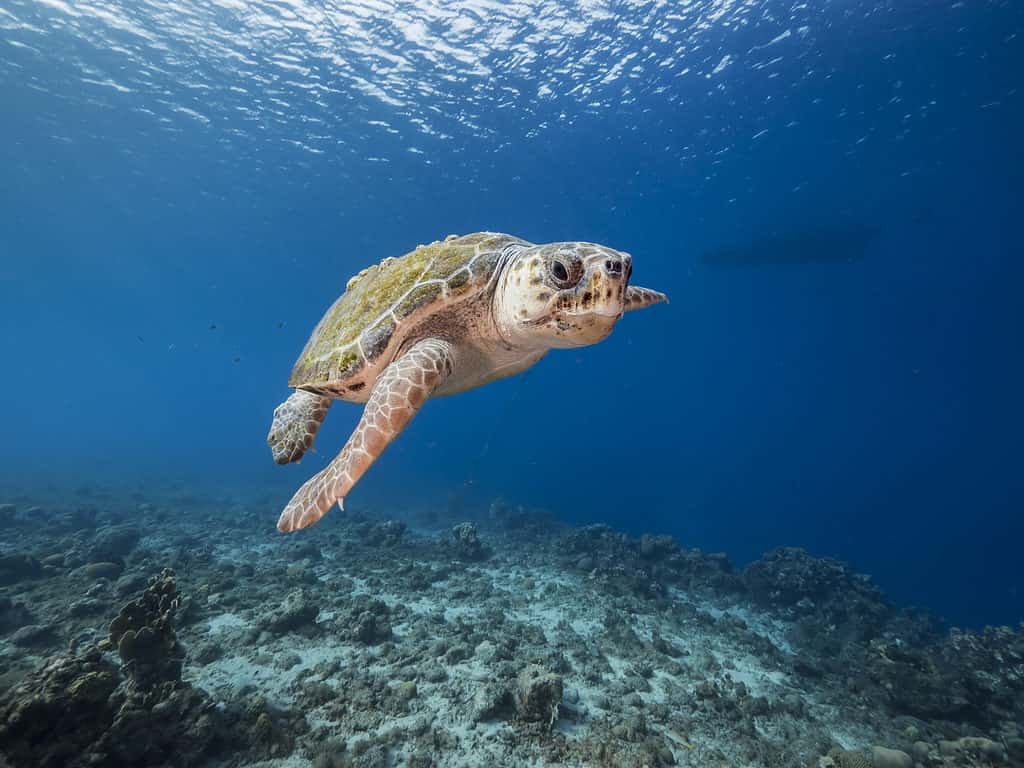
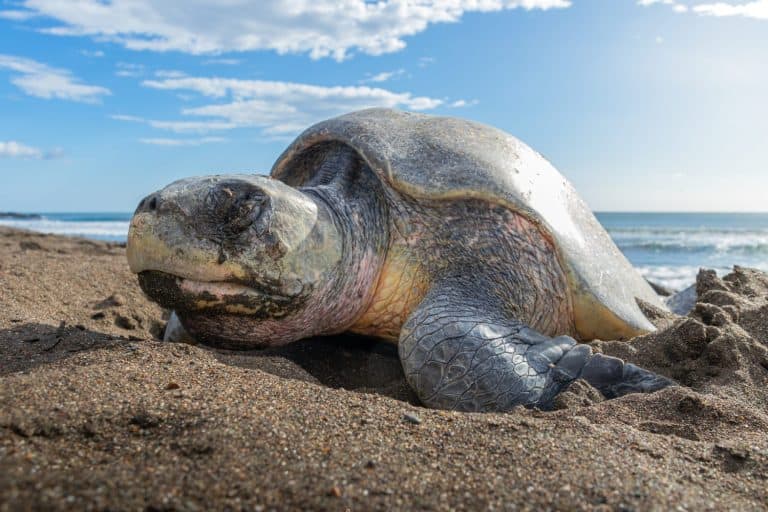
Loggerheads are a fascinating species to study, as they range incredibly far and live long lives.
©iStock.com/naturepics_li
For Pyari, researchers can ask important questions after receiving her data, such as:
- Does she travel as far as other loggerhead turtles, or do her routes stay closer to predictable foraging areas?
- Does she move differently from other turtles, suggesting a higher energy cost due to her surgery and rehabilitation?
- Does she avoid rougher water or utilize currents to do more of the swimming work for her?
- If she thrives, what does that look like compared to data gathered from non-injured turtles?
Although the tracking tag likely costs between $1,500 and $5,000, researchers still know relatively little about how three-flippered turtles fare after rehabilitation. The cost of tracking is ultimately invaluable for this reason, making Pyari an ideal research assistant and study opportunity for scientists around the world.
What Pyari Can Teach Scientists About Turtle Movement and Adaptation
A missing flipper is uncommon in sea turtles, especially among those released back into their natural habitat. This makes Pyari particularly valuable for scientists studying her species and distinctive movement style. A turtle missing a flipper might compensate by:
- Shifting to a slightly asymmetrical stroke and relying more heavily on their remaining front flipper
- Using currents more deliberately to reduce their overall effort
- Adjusting dive behavior and surfacing frequency
- Choosing different foraging habitats that require less travel
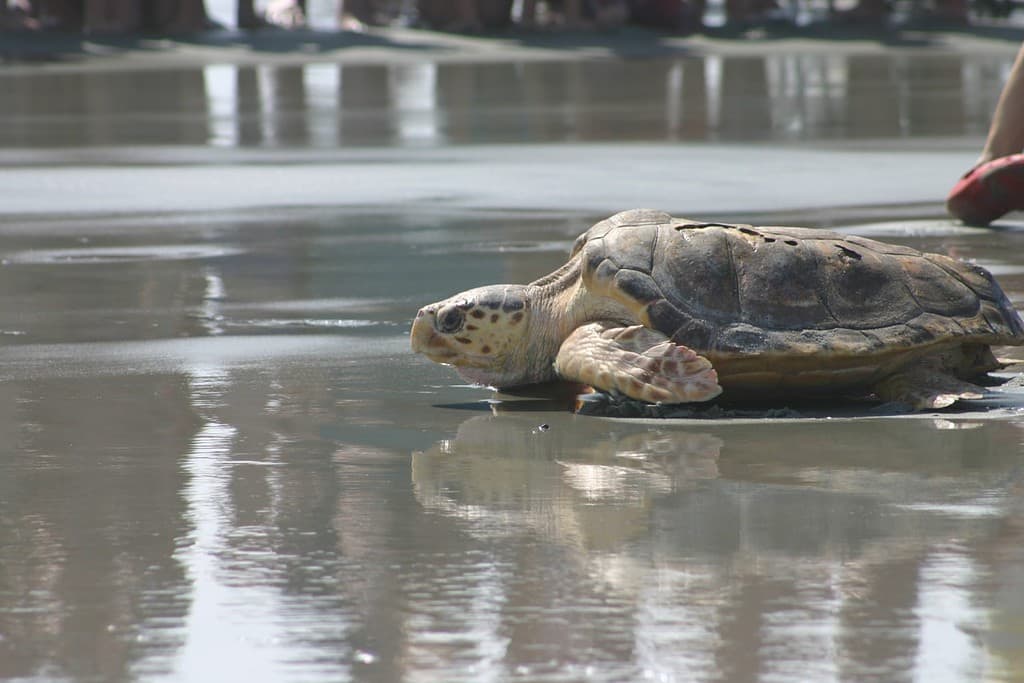
Scientists are interested in monitoring Pyari’s progress, as her movements will teach them a great deal that can be used in future rehabilitation efforts.
©Grace Thoma/Shutterstock.com
Even simple movement patterns can indicate that a turtle is feeding successfully and maintaining condition in spite of its loss of limb. Scientists monitoring Pyari are careful to note her progress and movement following her release.
This is also why Pyari’s tracking can tell us about turtles beyond her own experience. If researchers can connect her specific movement patterns with more positive outcomes, rehab centers may gain a clearer picture when it comes to deciding when an amputee turtle is genuinely ready for release, helping to protect other turtles in a similar situation to Pyari.
Loggerhead Sea Turtles and the Reason for Rehabilitation
Loggerheads, classified as Caretta caretta, are built for a life that spans great distances and many years. They are powerful swimmers and capable divers, often needing decades to reach full maturity. That’s why adult survival matters so much in this species; losing breeding-age turtles can affect their overall population for generations to come.
The threats to sea turtles are also persistent, with shark attacks only contributing to some of their troubles. For example, fishing gear entanglement, vessel strikes, increasing habitat losses on nesting beaches, and pressures from warming oceans and coastal development all affect turtles like Pyari. That’s why tracking her and collecting data is so important.
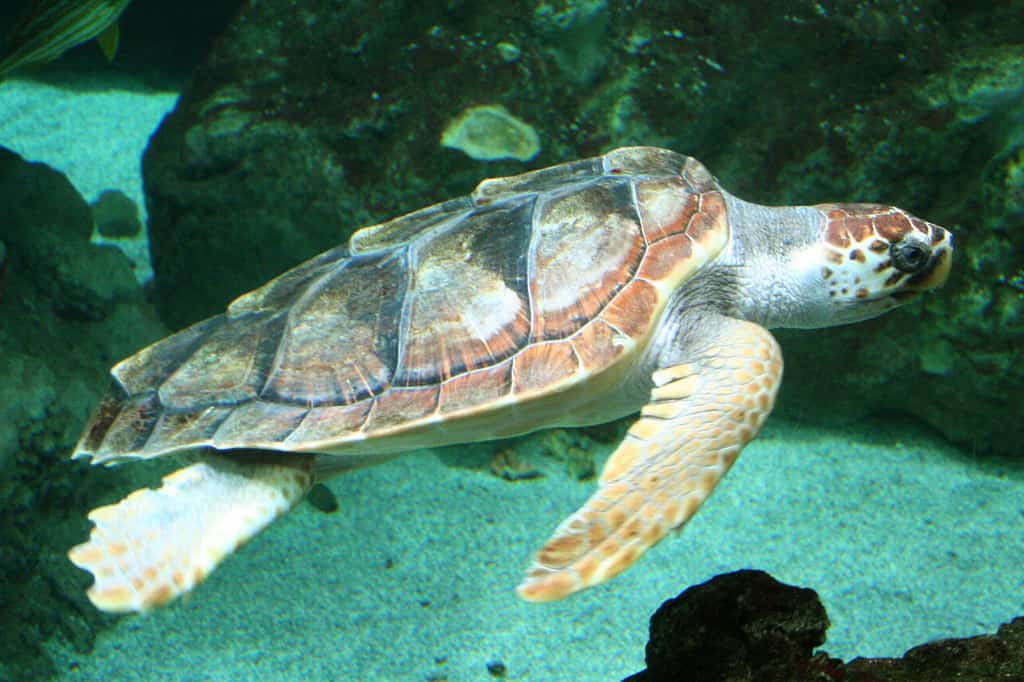
Injured sea turtles are rarely rehabilitated and returned to the sea, making Pyari a special case and vital for research.
Pyari’s release asks an important question of the researchers monitoring her progress: What does survival look like when the odds are against you, and your mobility is directly impacted? Ultimately, if Pyari succeeds, she will provide evidence that some injured sea turtles can adapt and keep living full lives. And this evidence helps lay the foundation for other sea turtles that inevitably wind up in her three-flippered situation.