
It’s hard to deny that rainforests have a pulse. In fact, it’s so alive that nearly every square inch of the forest, from floor to canopy, is jammed full of animal and vegetative life. Not only do rainforests contain between 40% to 75% of all biotic species, they are also home to two-thirds of the world’s flowering plants. The Amazon alone contains at least 10% of the world’s known biodiversity. This eye-watering variety of lifeforms creates some incredible opportunities for disguise. Only some creatures, however, are the camouflage experts of the rainforest.
A mere hectare of rainforest land contains tens of thousands of insect species, hundreds of tree species, and easily a thousand species of higher plants. Rainforests are among the most biodiverse ecosystems in the world. These environments may be constantly moving, full of motion and noise, but they are also full of danger. Some of the most adept concealers use this constantly shifting background to their advantage, whether it’s hunting for prey or keeping from ending up as food. Let’s learn about 10 of the most impressive rainforest camouflage masters.
Stick Insects
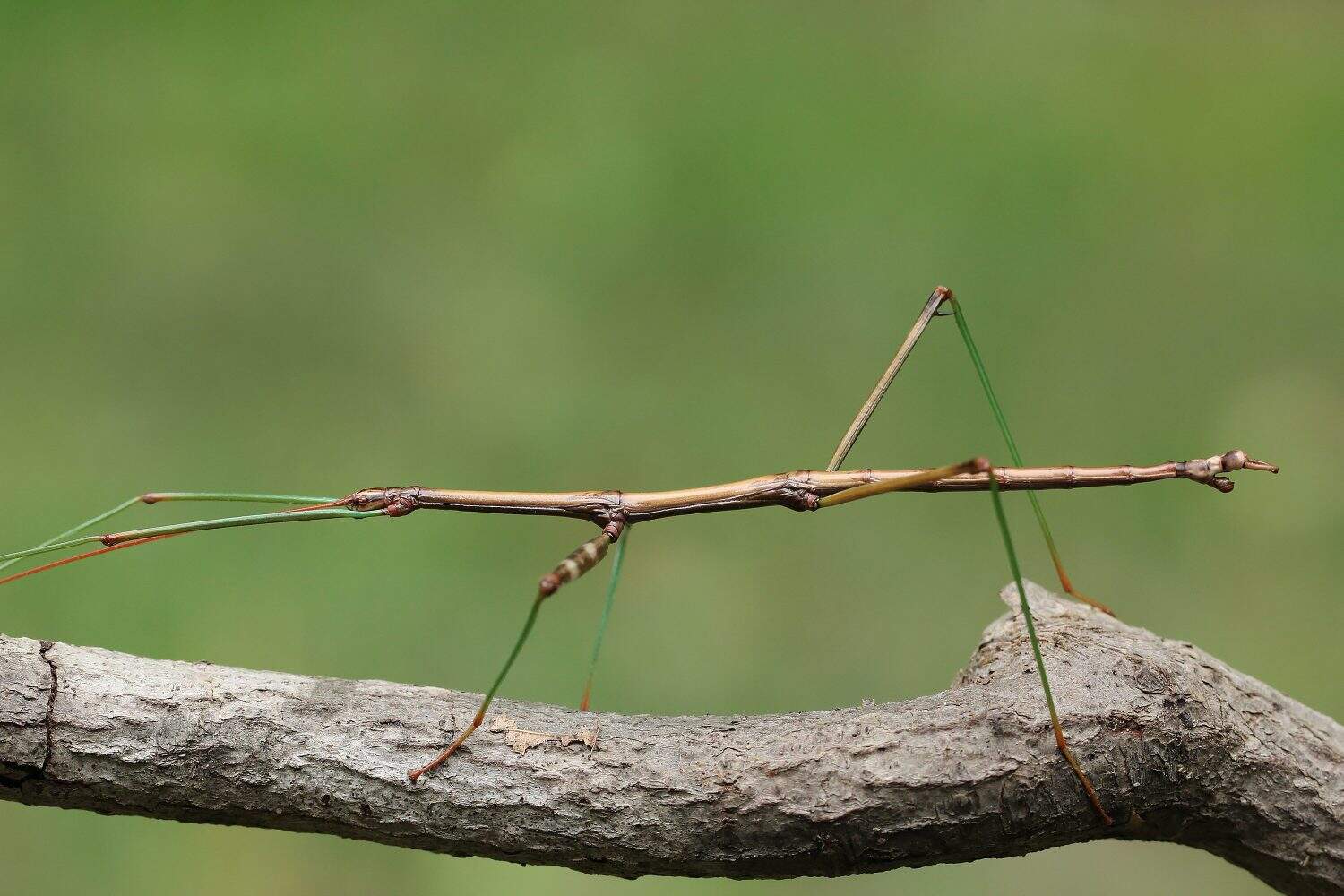
Stick Insects blend in with the best of them. When that fails, they secrete foul-smelling chemicals.
©Brian Lasenby/Shutterstock.com
The Phasmatodea order of insects is full of camouflage masters, including stick bugs, walking sticks, and stick insects. This order can be found on every continent except Antarctica. Wherever they are, they are hard to spot thanks to their incredible camouflage abilities. Birds, reptiles, and even primates technically prey upon them, but in reality, have a hard time finding them. Almost every aspect of these insects’ lives is concealed. They look like sticks, they sway with the breeze like sticks (cryptic mimicry), and they can even change their color to fit with the foliage.
The birds that eat them can detect the barest movement, so stick insects often stay still for long periods of time. Even their eggs are camouflaged; stick insects leave their eggs on the rainforest floor, where they blend in with seeds or bits of detritus remarkably well. Interestingly, stick insects have a second line of defense. When threatened, some species emit secretions that burn the eyes or mouth of approaching predators.
Caiman
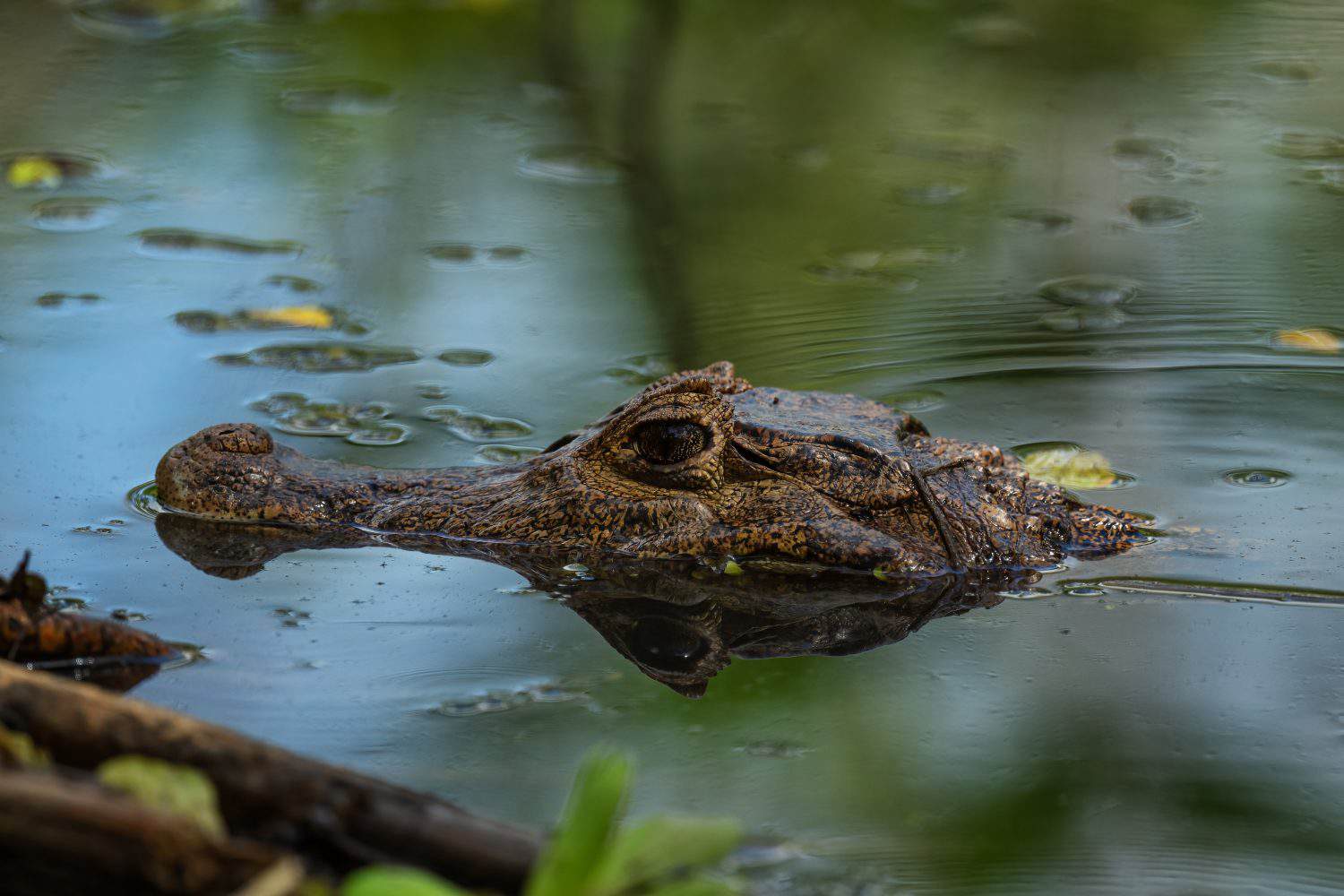
Caiman easily conceal themselves as plants and branches in rainforest rivers.
©David Havel/Shutterstock.com
Like the related alligators and crocodiles, caimans can become one with the rainforest waterways. With just two eyes and a long, flat snout above the water, caimans glide along the water, blending in with passing plants and vegetable debris. Their ridged backs look like logs or branches to passing animals. Unlike stick insects, caimans use these camouflage abilities to hunt. They wait patiently, partially submerged, until opportunity strikes and they bite. Approaching fish, birds, and primates often have no idea that a caiman is in the water next to them.
This camouflage becomes even more evident at night; caiman float down the rainforest rivers, hidden except for their reflective eyes. While adult caiman look like vegetation, juveniles use patterned bodies to blend in with reeds and brush along riverbanks. It doesn’t matter their age, however, as caimans find camouflage when and wherever they go.
Harlequin Toads
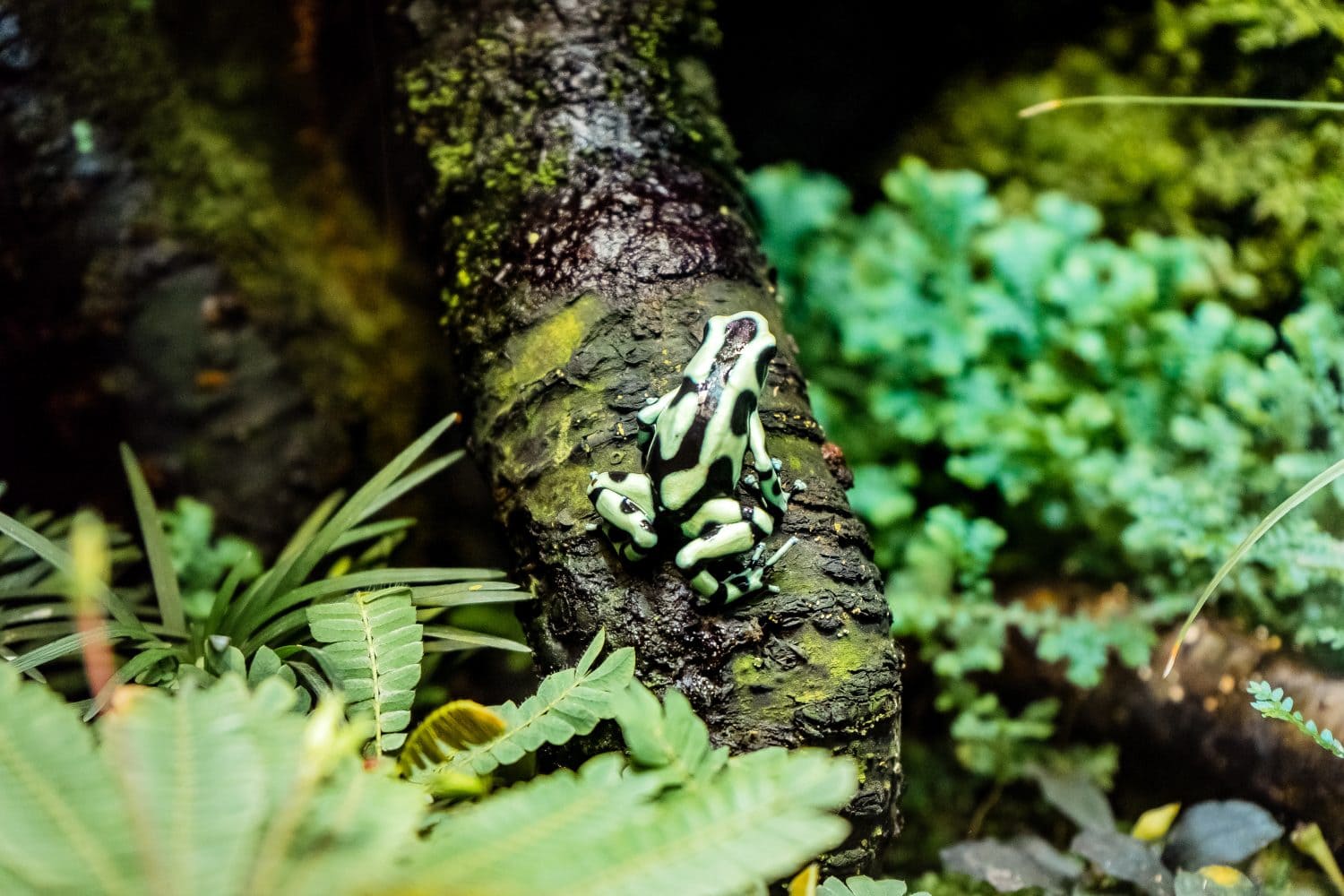
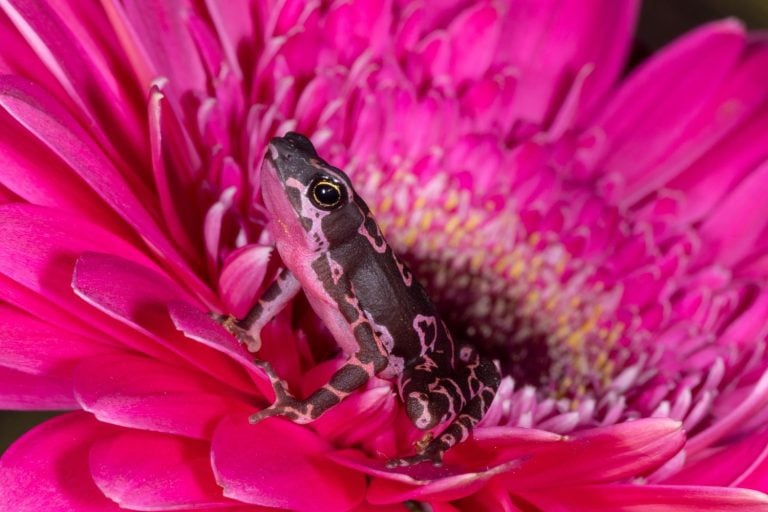
Harlequin toads contain potent neurotoxins underneath their rainforest-colored markings.
©Ekaterina Kuzovkova/Shutterstock.com
The Costa Rican variable harlequin toad, also known as the clown frog, is another master of the rainforest camouflage. This toad is small, bright, and beautiful, but also highly poisonous. While its coloring is a warning of danger to predators, it also functions as camouflage. Their clown-like markings help harlequin toads blend in with their Costa Rican rainforest surroundings. Like other brightly-colored rainforest frogs, the harlequin toad contains potent neurotoxins. You would think this would be enough of a defense, but harlequin toads improve their odds by staying still for long periods.
Even when they get to hopping, harlequin toads do so slowly. They look like the surroundings, contain enough poison to kill a large mammal, and move slowly enough as not to be noticed. Even still, these toads aren’t safe from all predators. The harlequin toad’s true nemesis comes in the form of a parasitic sarcophagid fly called Notochaeta bufonivora. This fly will place its larvae on the toad’s thigh. The larvae worm their way into the frog and literally eat it from within.
Leaf-Tailed Geckos
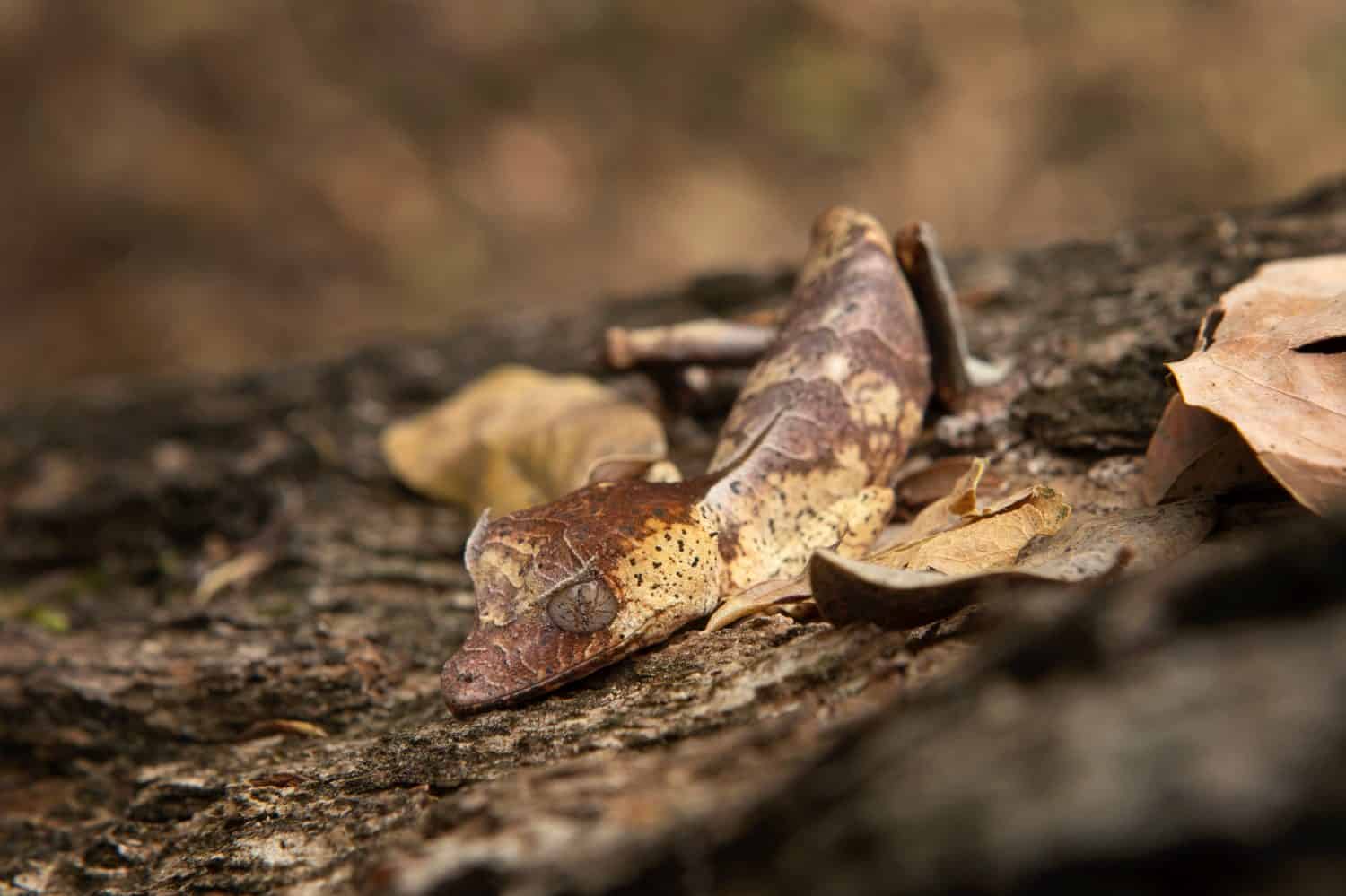
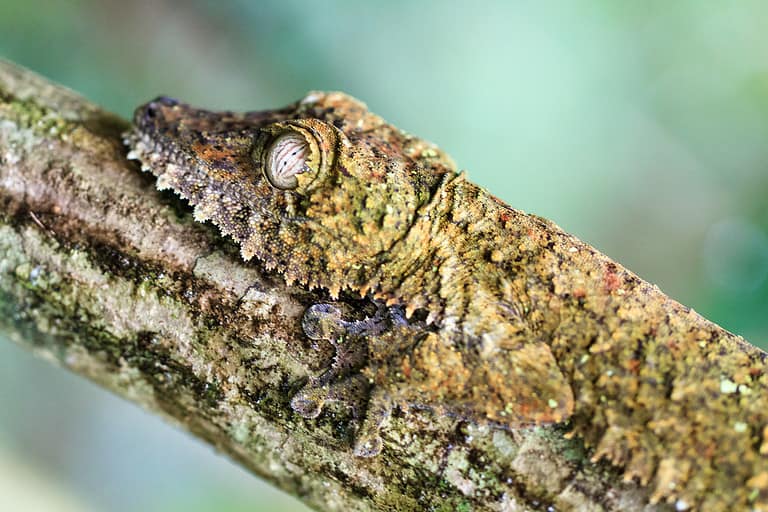
The Satanic leaf-tailed gecko easily blends in with leaves in its native Madagascar.
©Martin Prochazkacz/Shutterstock.com
Some creatures in the rainforest use their camouflage skills to hide from predators, while others use them to hunt undetected. Leaf-tailed geckos, however, get the best of both worlds: they use their uncanny leaf-like appearances to hide from bigger creatures and sneak up on smaller ones. During the day, leaf-tailed geckos stay still, pressed up against leaves and blending in. Once night falls, they start moving and looking for insects. If leaf-tailed geckos sense a predator approaching, they flatten their bodies against trees or leaves.
Even the most well-tuned eye can’t spot them once leaf-tailed geckos go full camo; their skin effortlessly combines patterns of brown, gray, and green to mimic the surrounding forest. Some leaf-tailed geckos have skin that’s reminiscent of moss or lichen. Their tails, however, are their most impressive feature and give them their name: they look so much like dead leaves, complete with veins and irregular shapes, that predators easily overlook them. This collection of leaf-tailed gecko pictures illustrates how effortlessly they blend in with all types of leaves, plants, and tree trunks.
Potoos
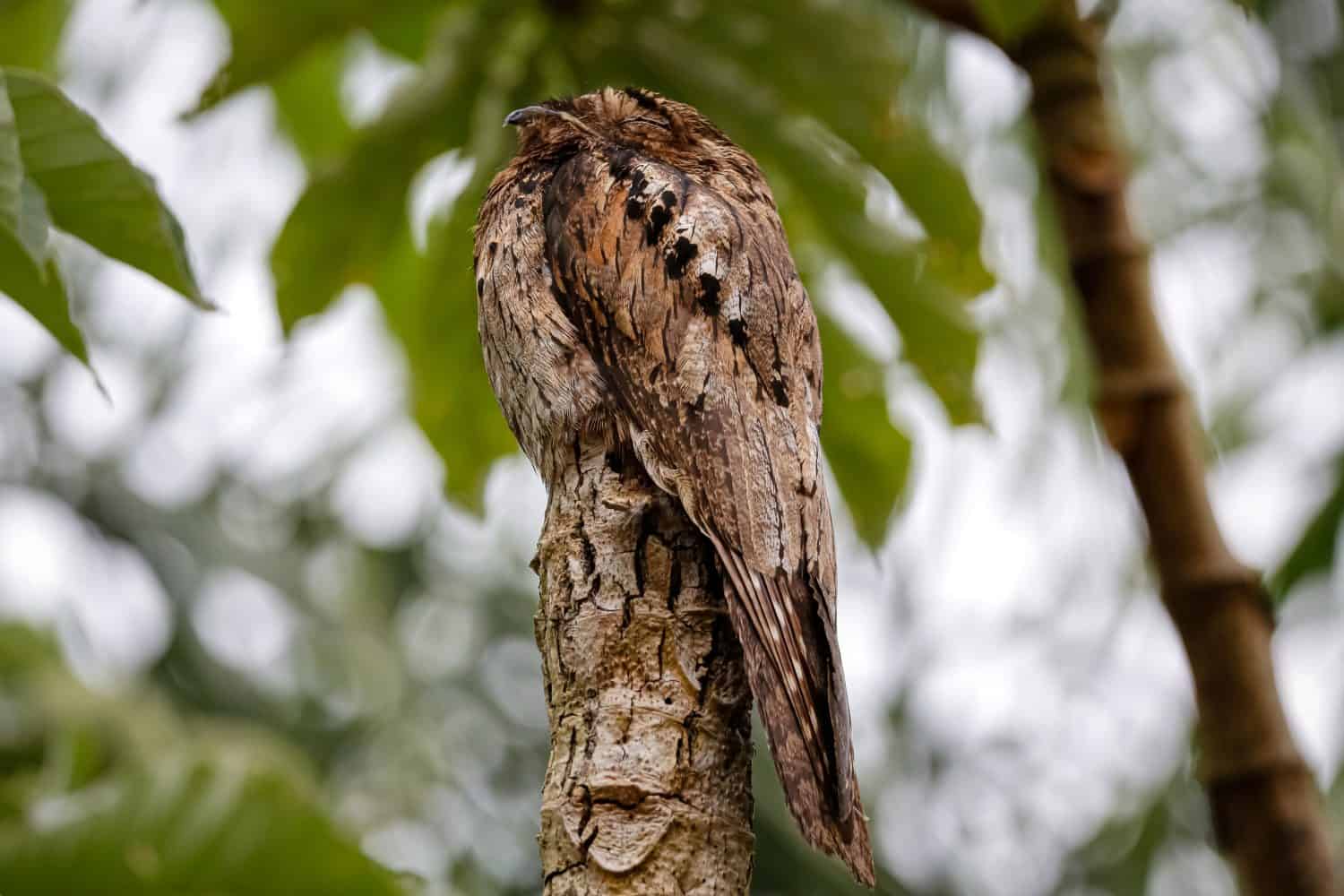
It’s hard to spot this Potoo perched on top of a tree trunk without an extended look.
©Uwe Bergwitz/Shutterstock.com
It’s hard to deny that Potoos have some funny names. These small birds from the order Nyctibiiformes are also known as poor-me-ones due to their eerie, haunting calls. Once those calls fade off, however, potoos are next to impossible to find. Using their earthy-colored features, these birds perch on the tops of tree trunks or the edges of tree branches and become one with the wood. This protects them from bigger birds that prey upon them. Even researchers have trouble spotting them once they find their camouflaged perches.
Once night falls, however, potoos spread their wings and fly out to find moths and other insects. As the sun comes up, they return to their perches and fade back into the wood. A glance at their perch shows nothing but a trunk with a somewhat misshapen top. Their brown and gray feathers are such good camouflage that potoo chicks hang out on exposed branches next to their parents. This is a no-no for other birds, but the potoo young have the utmost confidence in their parents’ camouflage for good reason.
Sloths
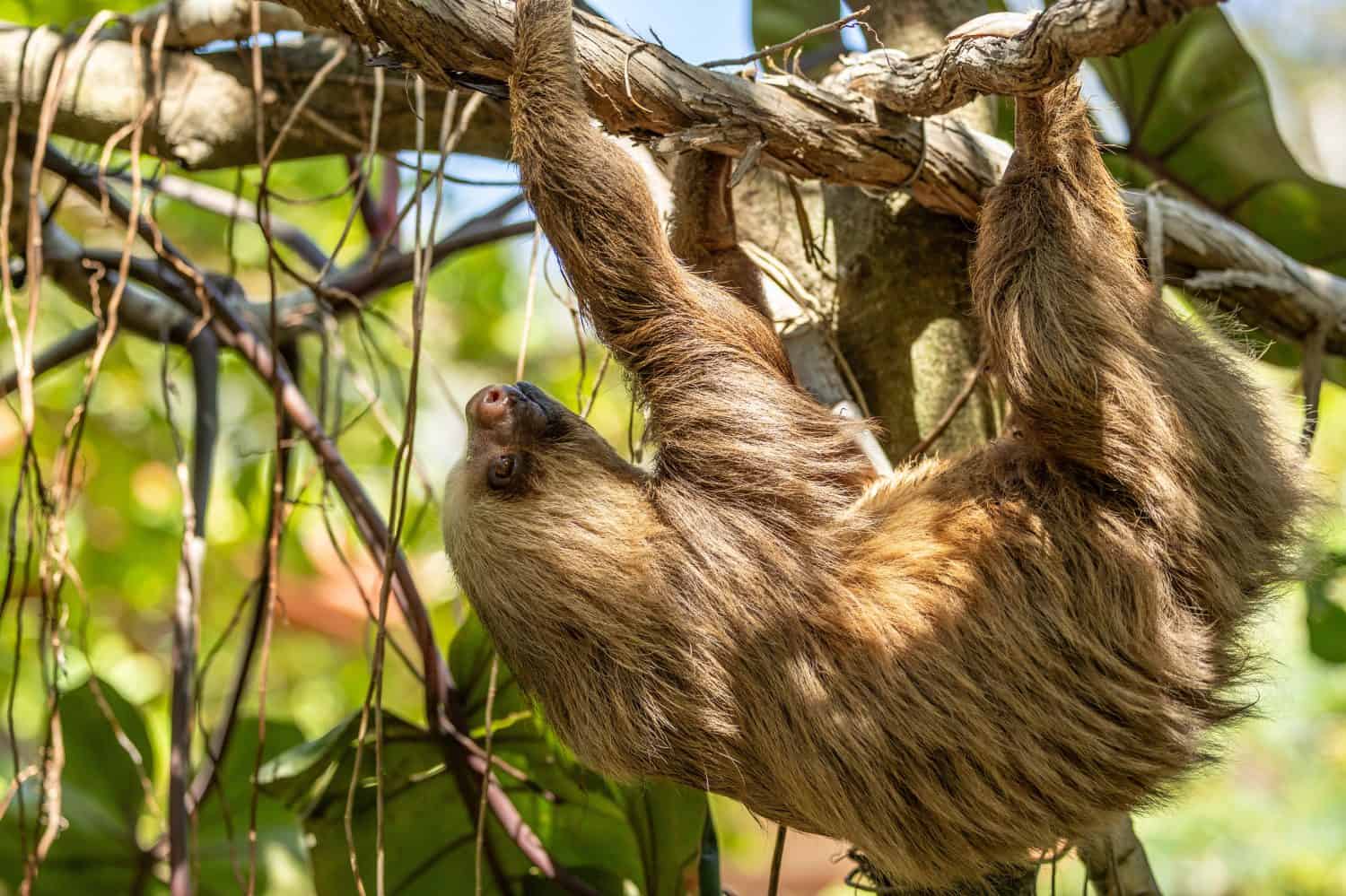
An entire ecosystem lives on the slow-moving sloth.
©Luciana Smania/Shutterstock.com
Sloths barely blend into the rainforest, but they don’t really need to. Their utter idleness works as a camouflage all by itself. Moving at a slower pace than a snail, sloths amble along the forest canopy, and their greenish-brown fur blends in with the foliage. Rainforests are known for moving pretty fast, so sloths do the opposite. To the unforgiving eye of a jaguar or harpy eagle, the sloth’s apathetic movements look like little more than canopied plants slightly swaying in the breeze. Motion is noticed quickly in the rainforest; a lack of motion simply goes unnoticed.
Sloths move so slowly that algae forms on their fur and collects bugs, beetles, and moths. Not only does this living tapestry create symbiotic relationships, but it also adds to the camouflage effect. A mini-ecosystem makes sloths look like nothing more than another piece of the rainforest. Nevertheless, sloths must risk it all when they climb down to the forest floor to excrete waste. The rest of the time, however, they are practically ghosts.
South American Leaf Fish
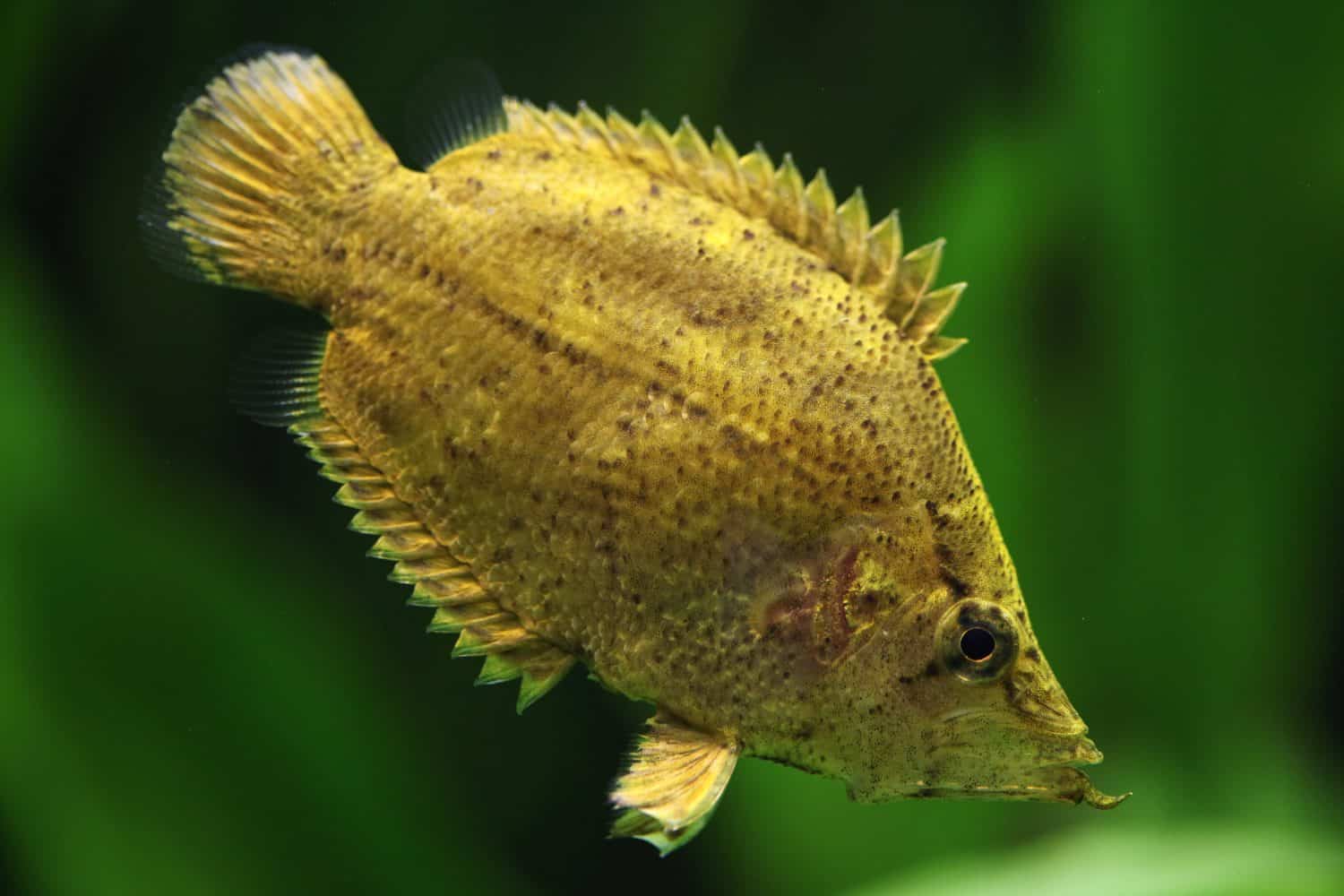
Leaf Fish act like dead leaves, floating with currents, until they eat an unsuspecting insect or fish.
©Vladimir Wrangel/Shutterstock.com
The rainforest might provide plenty of camouflage in the air, but it also offers up some prime hiding opportunities for creatures under the water. Take the South American leaf fish (Monocirrhus polyacanthus), for example. One of the many predatory fish in the Amazon basin, the leaf fish looks like, well, a leaf. It has a flat, angled, yellowish-brown body that looks uncannily like a leaf. Adding to the effect, the South American leaf fish floats along with the currents like a dead leaf. Once a yummy-looking insect or small fish gets too close, however, the leaf fish comes alive.
In a split second, the South American leaf fish extends its large mouth and swallows its prey. Once the deed is done, the fish returns to play dead, floating along with the dirty Amazon river basin currents until another unsuspecting victim gets too close. Blending in saves a lot of creatures from being eaten. For South American leaf fish, blending in brings plenty of meals.
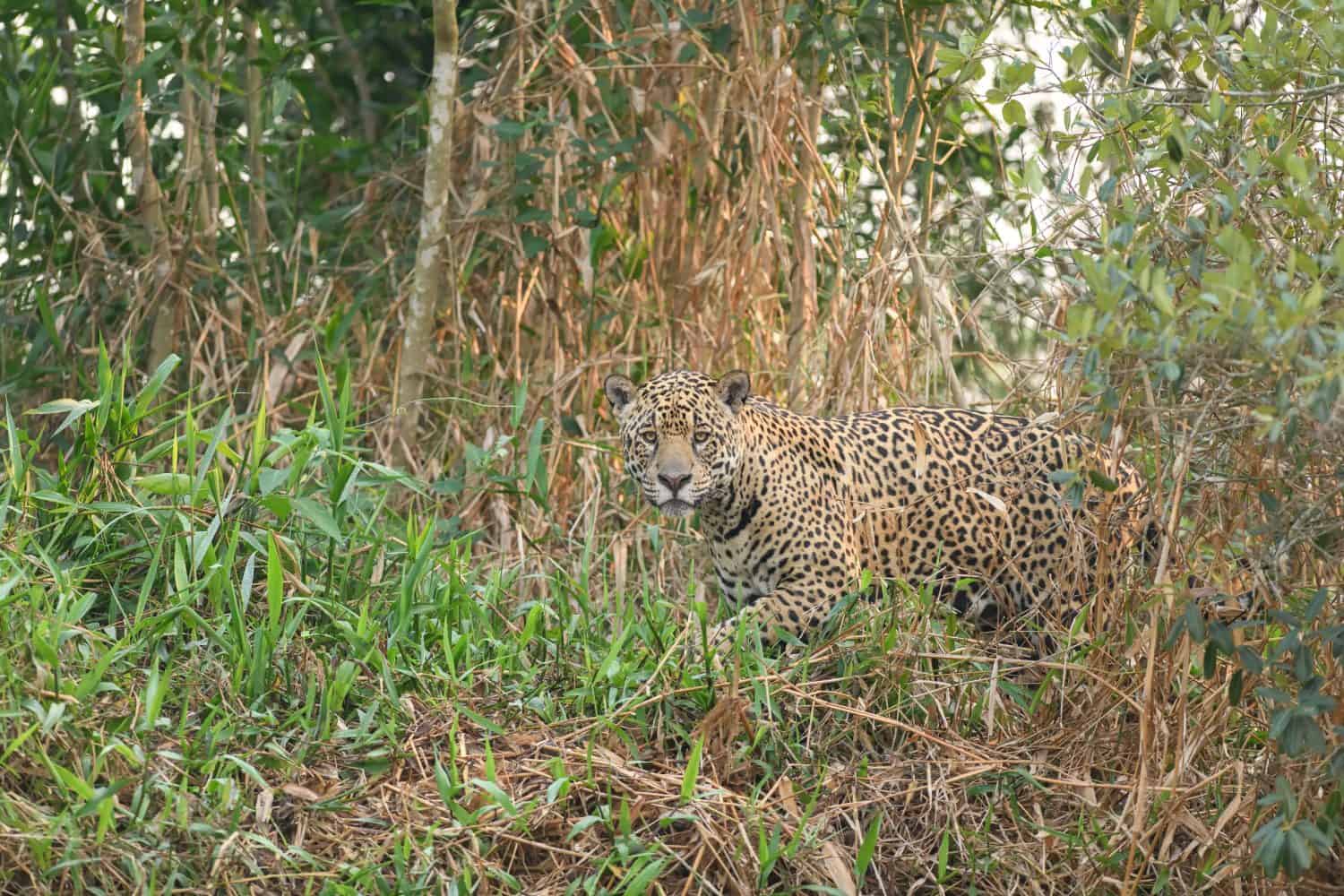
Jaguars
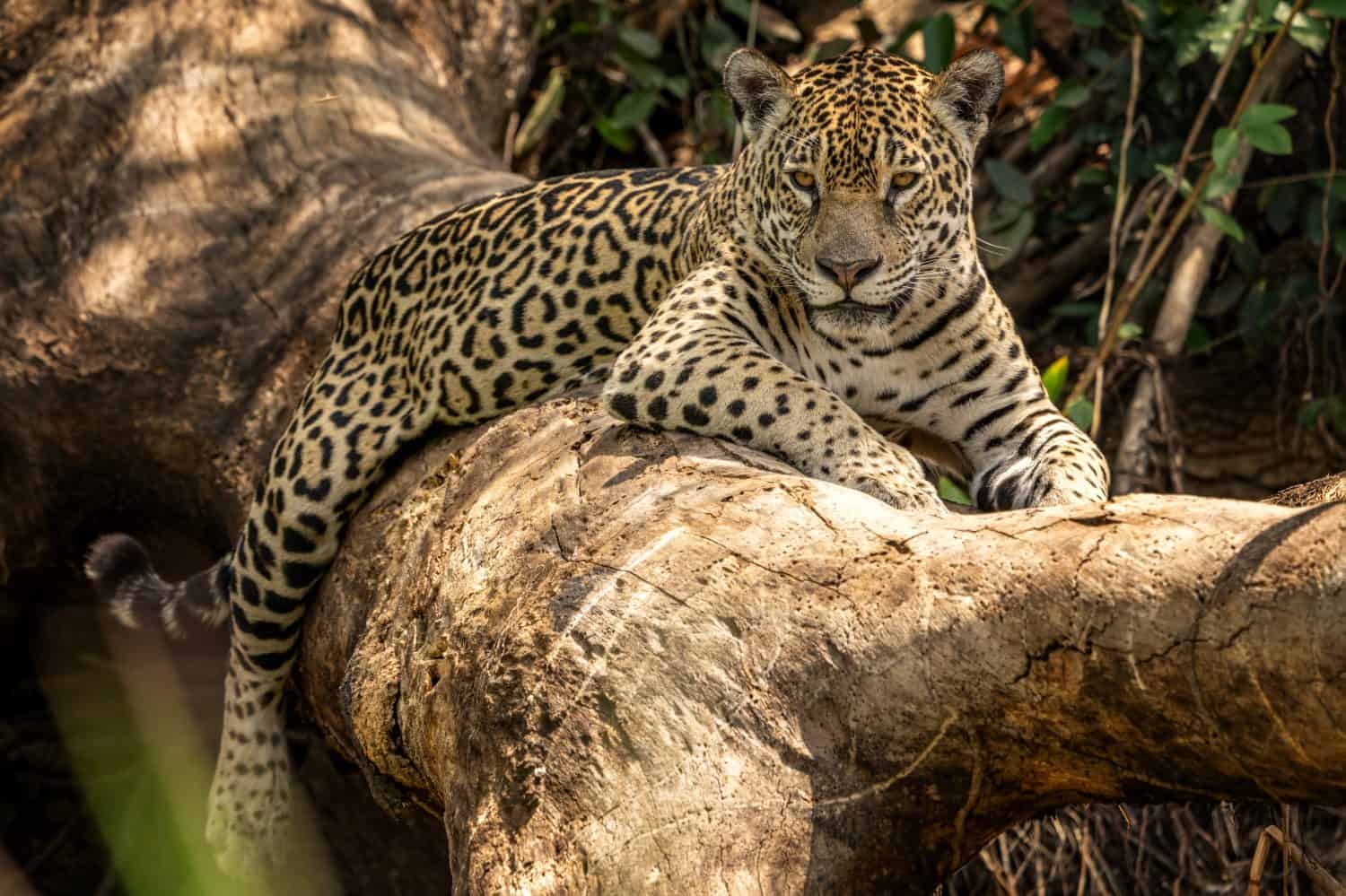
Jaguars use their blocky spots to blend in with tall grass and riverbank reeds.
©miroslav chytil/Shutterstock.com
Lions are called the kings of the jungle, but jaguars undoubtedly rule the rainforest. Big cats like jaguars and leopards have signature spotted coats, which are fashionable for humans, but serve an important purpose in the wild: they help jaguars blend in with grass, riverbank reeds, and dappled light. Other big cats hunt down their prey with spectacular chases. Jaguars, however, are a little more low-key; they prefer to sit and ambush for their meals. Pulling these kinds of waiting games requires some serious camouflage power.
Unlike leopards and their smaller spots, jaguars have blocky rosette markings with spots inside of them. This pattern lets them blend in amongst the foliage with ease. Even branches can work in a pinch. Jaguars pretty much run the rainforest, and masterful camouflage surely helps.
Boa Constrictors
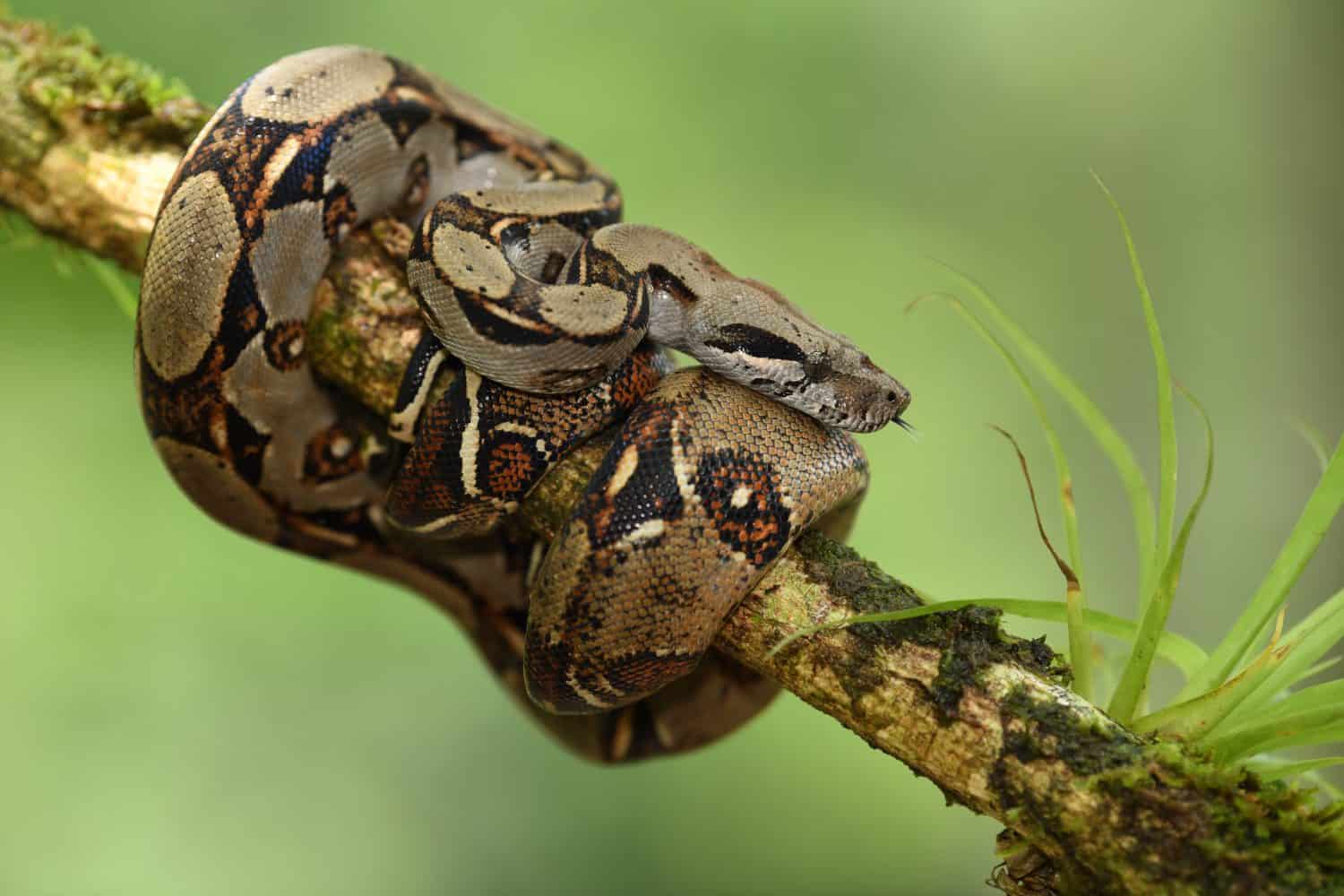
Boa Constrictors have markings that help them blend in with trees, rivers, and the ground.
©petrdd/Shutterstock.com
While some creatures are confined to one type of habitat, boa constrictors have the luxury of moving through arboreal, ground, and water environments equally. An iconic snake in the Amazon basin, the boa constrictor features impressive camouflage markings. While their appearance depends on their location, most boa constrictors feature brown, gray, and cream colored patterns that become more red closer to their tails. When they aren’t moving, boa constrictors blend in effortlessly with the rainforest. When they are on the lookout for prey like birds or monkeys, these markings keep them hidden until opportunity strikes.
While boas are rarely hunted, caimans and jaguars are known to try their chances, so a boa’s markings keep them just as protected from predators. Whether boa constrictors are in the trees, on the rainforest floor, or swimming effortlessly through the Amazon’s many waterways, their large bodies are well-hidden.
Glass Frogs
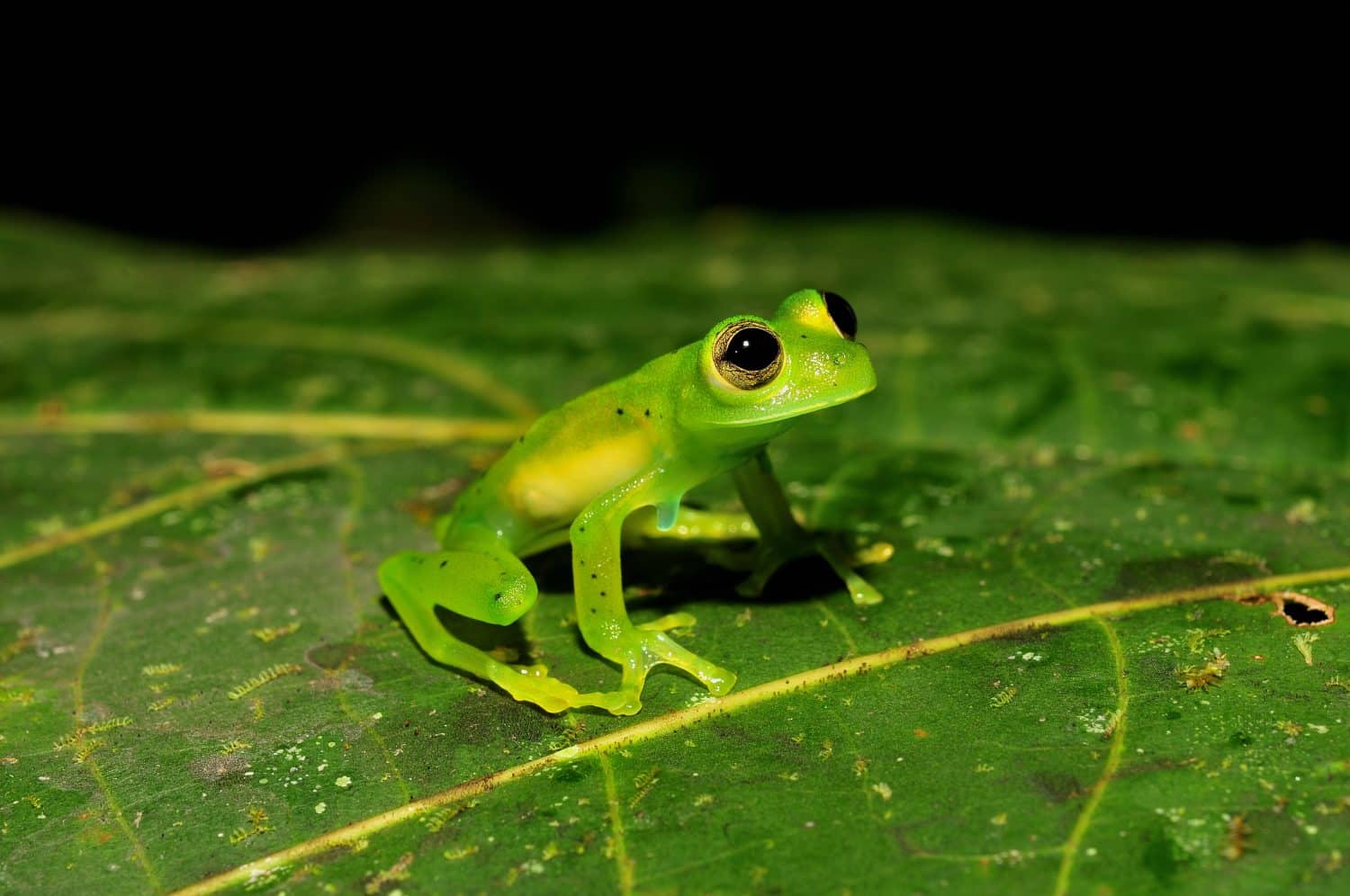
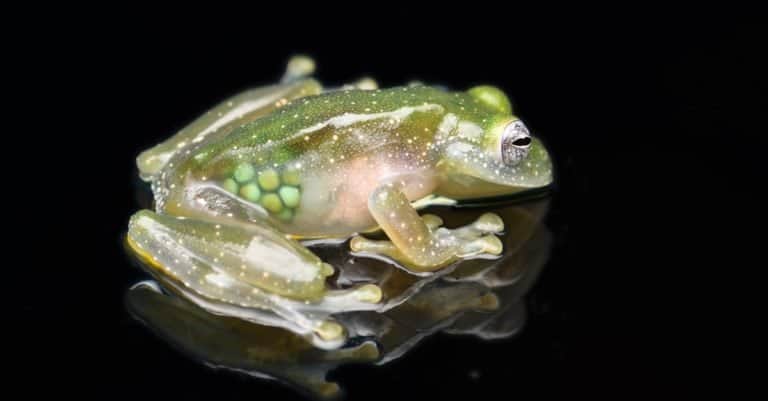
The diminutive glass frog has such translucent skin that it blends in with the rainforest.
©Sapodorado26/Shutterstock.com
Another one of the camouflage masters of the rainforest is undoubtedly the glass frog. This family of tiny amphibians from the Centrolenidae family has skin that’s so translucent they blend in with the surrounding rainforest foliage completely. Even though their internal organs are visible, glass frogs still look like the plants behind them at all times. To make it harder for predators, glass frogs prefer to stay incredibly still.
Glass frogs aren’t very big, so they are vulnerable to bigger creatures like snakes, birds, and even some small mammals. Luckily, their translucent skin keeps them camouflaged most of the time. While other creatures blend in with elaborate costumes, glass frogs let the rainforest foliage speak for itself.