
Quick Take
- Purple harlequin toads (Atelopus barbotini) are tiny, about 1 to 1.5 inches long with smooth skin and electric purple patterns.
- They occur only in French Guiana, inhabiting mid- to high-elevation rainforest streams and hiding in leaf litter.
- Their survival is threatened by chytridiomycosis, invasive species, habitat loss, and climate change.
When you first see the vibrant, neon-purple toad in this Instagram video, you will likely assume it’s just an AI-generated fake. The creature looks too smooth, too surreal, and far too colorful. However, this bright, pint-sized creature is very much real. It is a member of one of the planet’s most visually stunning families of toads. These rare amphibians practically glow with color, but the purple variant is especially jaw-dropping.
Meet the Purple Harlequin Toad
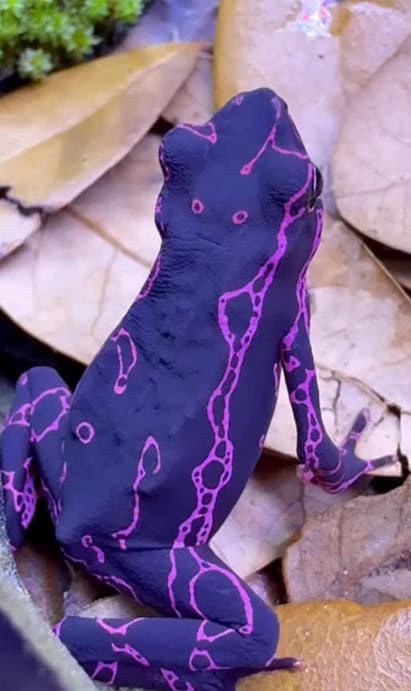
Male purple harlequin toads are typically just an inch long.
©Instagram / @thereptilereportofficial – Original
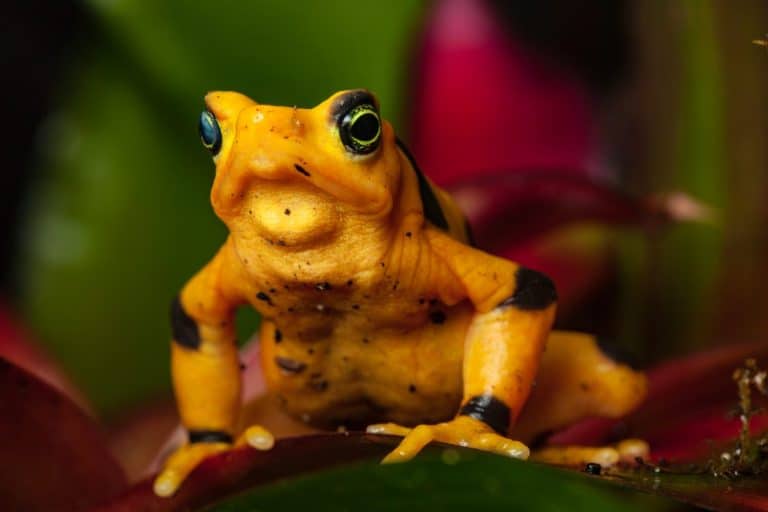
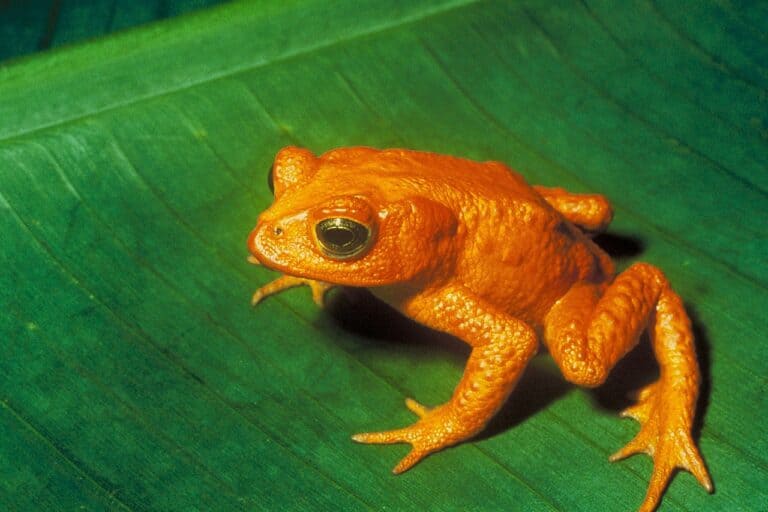
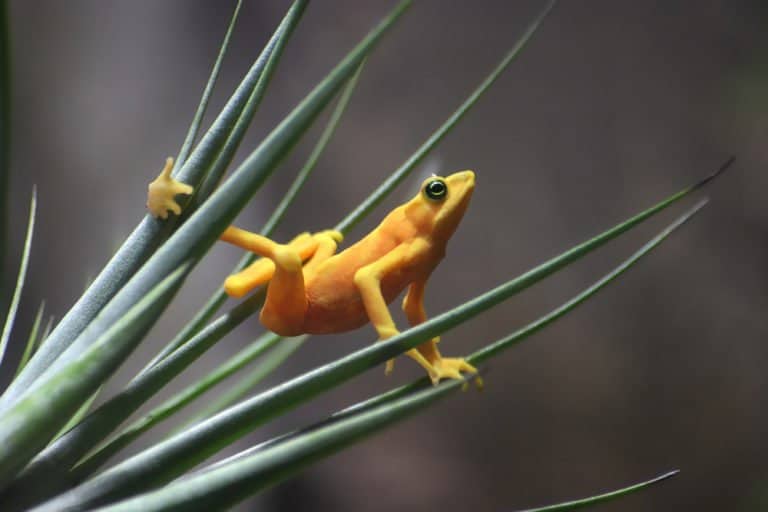
Unlike the muddy green shade people often associate with toads, the vibrant coloration of the purple harlequin toad (Atelopus barbotini) is astounding. These toads have smooth, brightly colored skin with electric purple or reddish-purple patterns. This vibrant creature belongs to the Atelopus genus, a group nicknamed “clown frogs” because of their spectacularly bold, high-contrast colors. These toads come in every shade imaginable — red, yellow, orange, black, green, brown, blue, and the especially rare purple color. They are incredibly small, with the purple harlequin toad measuring only around 1 to 1.5 inches long.
While the Atelopus genus ranges from Costa Rica through much of Central and South America, the rare purple harlequin toad is only found in French Guiana. They thrive in dense, humid environments, specifically in mid- to high-elevation rainforest streams where they spend most of their time hidden in leaf litter or mossy, rocky banks.
Despite their vibrant colors, harlequin toads are notoriously elusive and difficult to spot throughout most of the year. Scientists only reliably see them during the breeding season, when hundreds gather at the water’s edge. During this time, some species perform visual “hand-waving” or “foot-flagging” displays across noisy streams, as the loud, rushing water drowns out their calls. Male toads cling to females in a mating embrace called amplexus, which can last for weeks. The males often stop eating, losing up to 30 percent of their body weight due to their sheer dedication.
How Purple Helps Harlequin Toads Survive
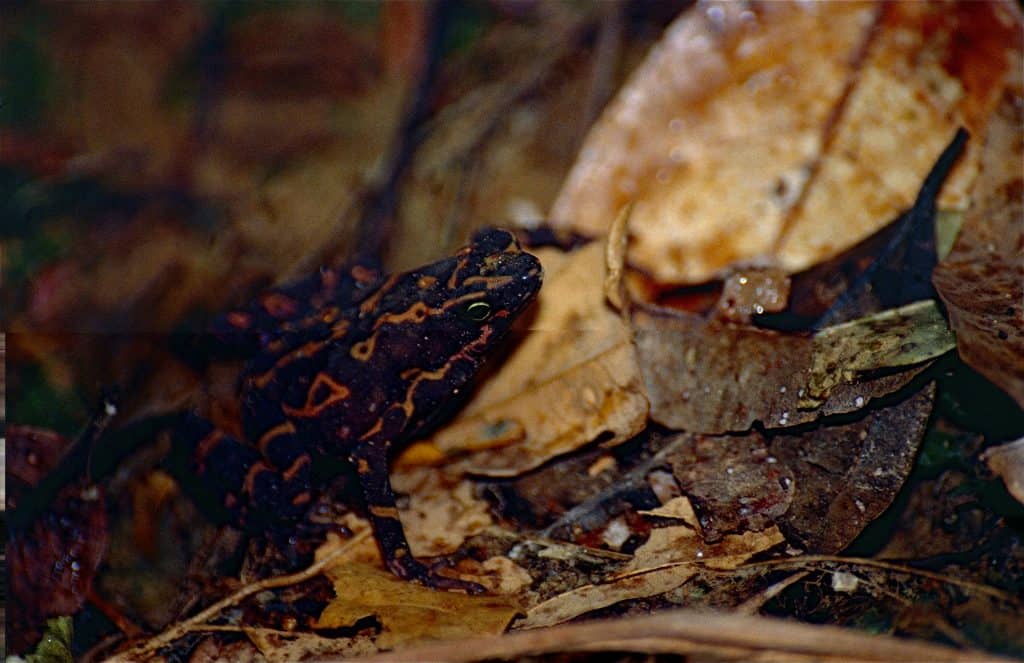
Purple harlequin toads are surprisingly good at blending into their surroundings.
© – Original
The purple harlequin toad may look like it belongs in a fantasy world, but its extreme color likely serves multiple survival purposes. The toad’s skin secretes toxins, and its bright colors are a clear signal for predators to stay away. The bright coloring may also aid in communication. Because these toads often live near loud streams where calls are difficult to hear, their vivid colors help them quickly spot potential mates or other members of their species.
In addition, their deep violet color provides surprisingly effective camouflage. Under the dense rainforest canopy, light often takes on a bluish-purplish hue, which allows the toad’s unique coloring to help them blend into the shadows.
Purple harlequin toads primarily eat small invertebrates, such as flies, mites, ants, and beetles. They prefer to spend their time near clear, pristine streams. They are very sensitive to changes in their environment, and these clean water streams are crucial for their survival. Healthy populations of these miniature amphibians are an excellent indicator of the overall health and quality of the local ecosystem and its water sources.
Threatened by Extinction
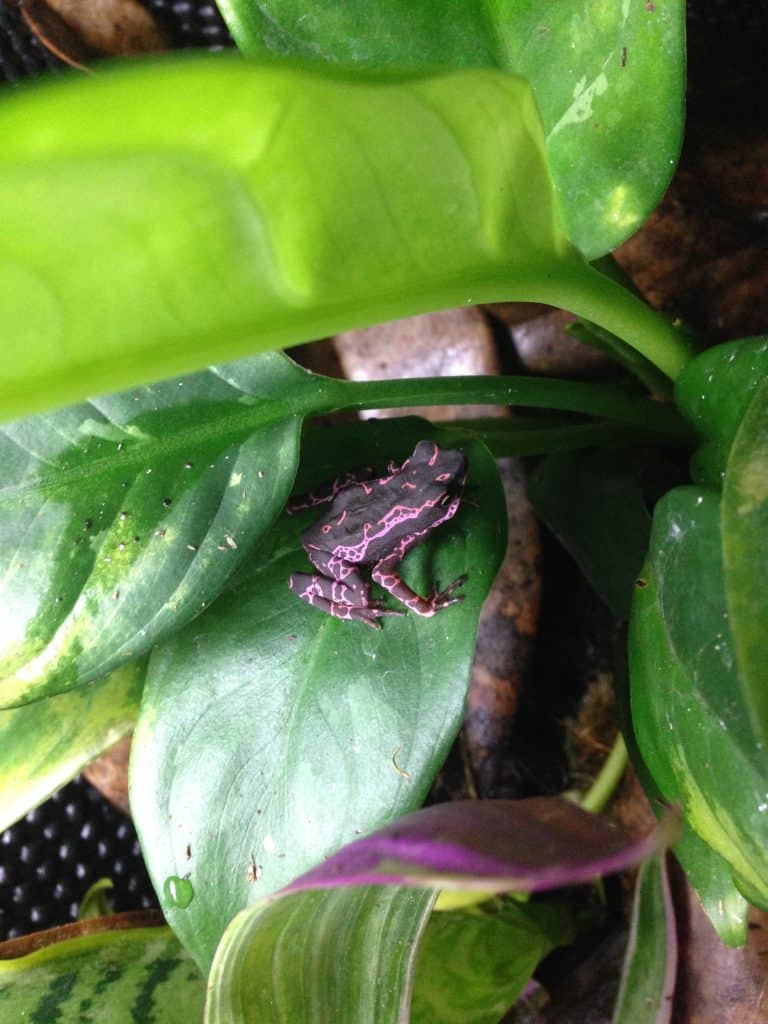
Female purple harlequin toads are larger than males, typically measuring 1.3 to 1.4 inches long.
©Christopher McHale / CC BY-SA 3.0 / Wikimedia Commons – Original / License
Harlequin toads are tragically one of the most threatened amphibians on the planet. Their populations are collapsing due to a combination of severe factors. Chytridiomycosis (Chytrid Fungus), for instance, is a deadly disease that causes skin failure and cardiac arrest in these toads. This threat is compounded by predation by invasive species (such as rainbow trout), habitat loss from deforestation, and the disruption of their sensitive mountain streams due to climate change.
An estimated 83 percent of assessed Atelopus species are currently threatened with extinction, and almost 40 percent of all species have vanished in the past several decades.
Although harlequin toads are small, they are essential. They serve as indicators of clean water, play key roles in tropical ecosystems, and hold immense cultural and evolutionary value. Saving the Atelopus family is also crucial for protecting some of the world’s most precious habitats and ensuring these breathtaking amphibians continue to exist.
Purple Harlequin Toads in Captivity
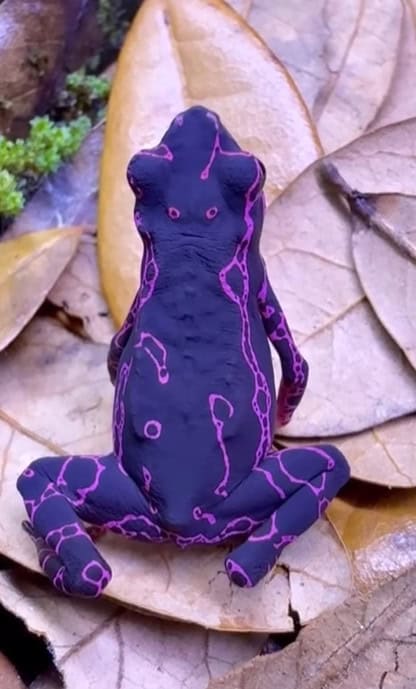
Harlequin toads are very high-maintenance animals.
©Instagram / @thereptilereportofficial – Original
Some purple harlequin toads, such as the individual in the Instagram video, are cared for in highly specialized amphibian husbandry programs. Harlequin toads are notoriously sensitive; they are extremely difficult to keep alive and breed in captivity, which is why they are managed only by highly experienced amphibian keepers and specialists.
Historically, these toads were collected directly from the wild. Fortunately, however, successful captive-breeding programs have been established. Utilizing captive-bred individuals ensures healthier populations under human care and simultaneously helps to relieve pressure on the wild toads, whose populations are severely declining.