
Rainforests are unique biological habitats that support millions of animals. In fact, they are home to more than half of our planet’s terrestrial biodiversity. New rainforest species are being discovered all the time, and many of them are very small. However, the forests provide a stable and fertile environment for all animals to thrive, and some of them grow to large sizes! Here you will get to meet some of the largest animals roaming our rainforests.
Gorilla
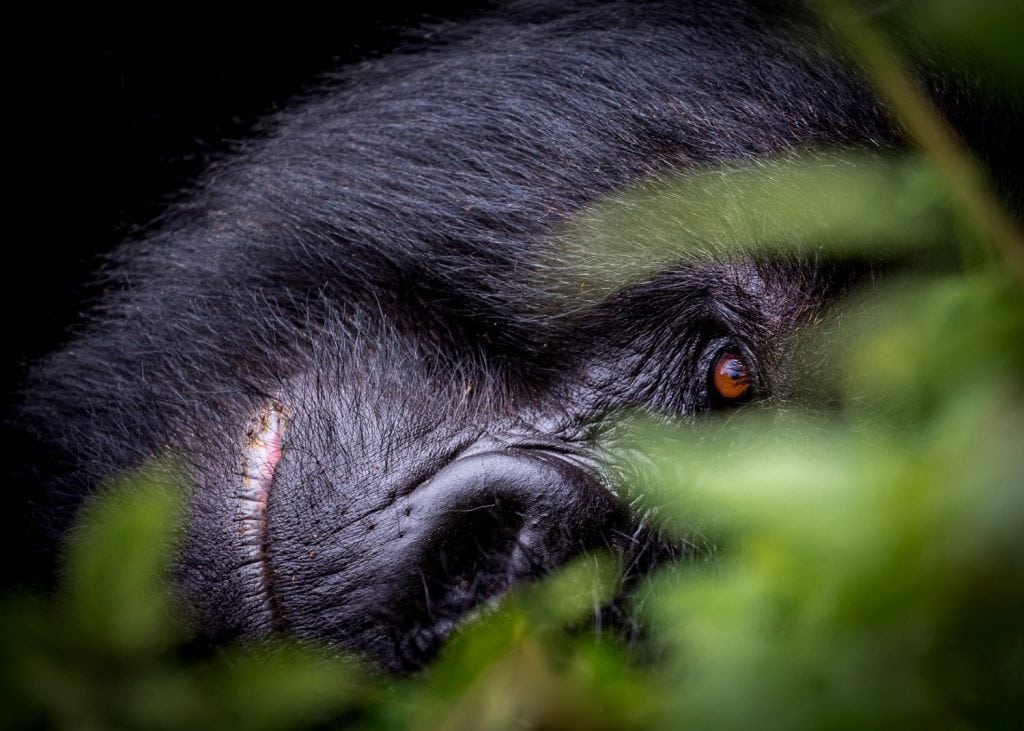
Gorillas live in groups.
©Holger Metzger/Shutterstock.com
Gorillas are the largest primates living in the tropical forests of equatorial Africa. Eastern gorillas (Gorilla beringei) are the largest and are found in the Virunga volcano region, which separates the Democratic Republic of Congo from Rwanda and Uganda. Specifically, they live in an area of forest called the montane cloud forest. Mature males can weigh up to 430-485 pounds in the wild, and even more in captivity. They have robust bodies, long, muscular arms, and massive heads. Mature males have silver hair on their back, hence their name – silverbacks.
These primates live as a group. There is one male with a harem of females and their offspring. They spend about 30 percent of their day feeding on roots, leaves, and stems of vines and other plants. They will also eat bark, flowers, fruit, and occasionally invertebrates if they can catch them.
Jaguar
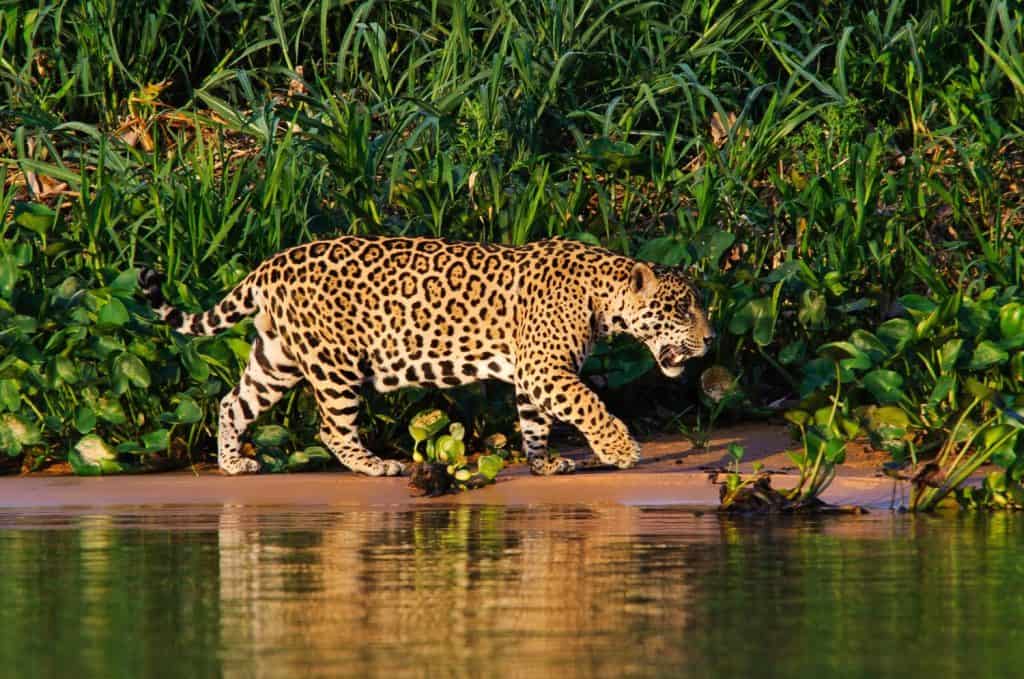
Jaguars like to live near water.
©Marcos Vergueiro/Shutterstock.com
The magnificent jaguar (Panthera onca) likes to live in dense, lowland rainforests with plenty of cover to help their hunting technique. They are excellent swimmers and are often found close to water, such as rivers, lagoons, and swamps. Some of the largest jaguar populations are found in the Amazon Basin. Jaguars are the largest cat species in the Americas and can weigh up to 250 pounds with a length of up to nearly 6 feet. Their bodies are powerfully built but lean, giving them a powerful, athletic appearance.
When it comes to hunting, they lie in wait and then pounce on unsuspecting prey. This is a solitary activity and is carried out most often near dusk and dawn. That said, they can be seen hunting at any time of day. These obligate carnivores feed on large animals such as tapirs and deer. The carcass is then dragged to a quiet spot where it can be enjoyed in peace.
Green Anaconda
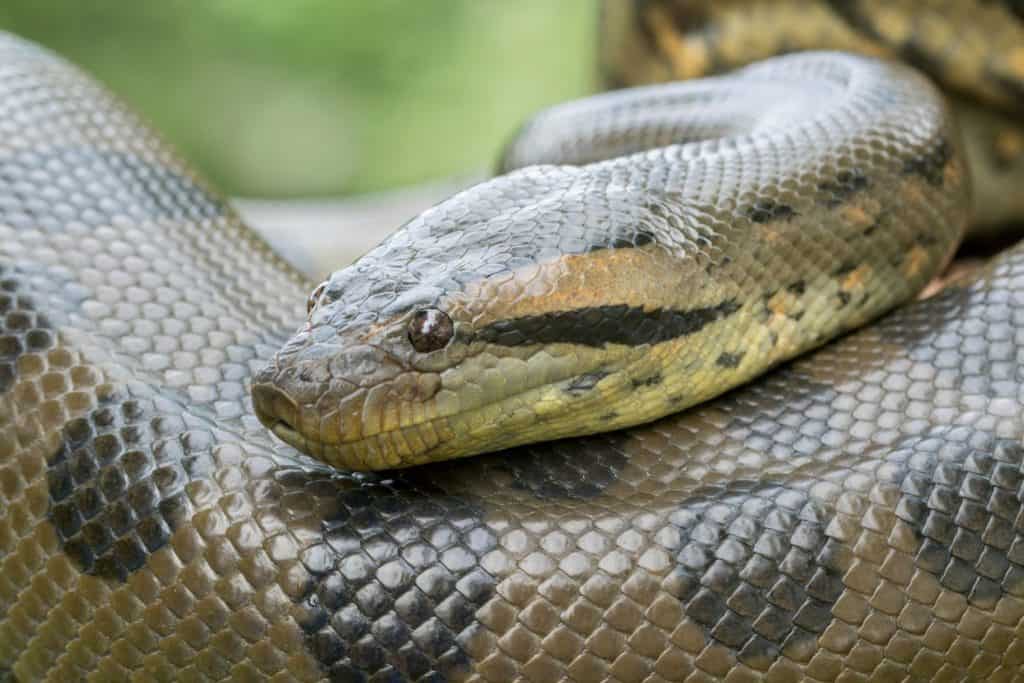
Green anacondas can reach 39 feet.
©Mark_Kostich/Shutterstock.com
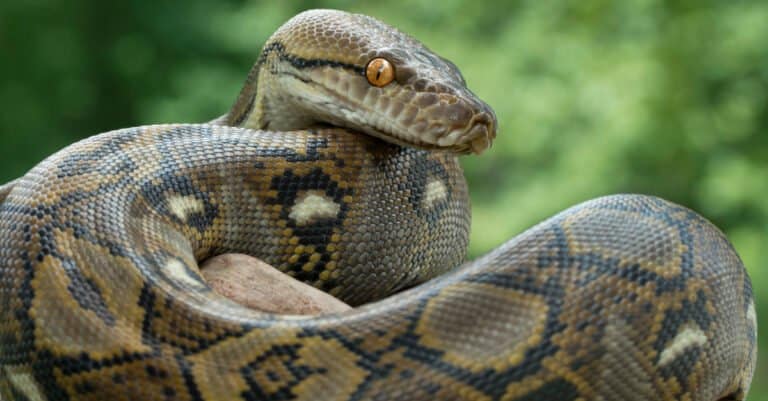
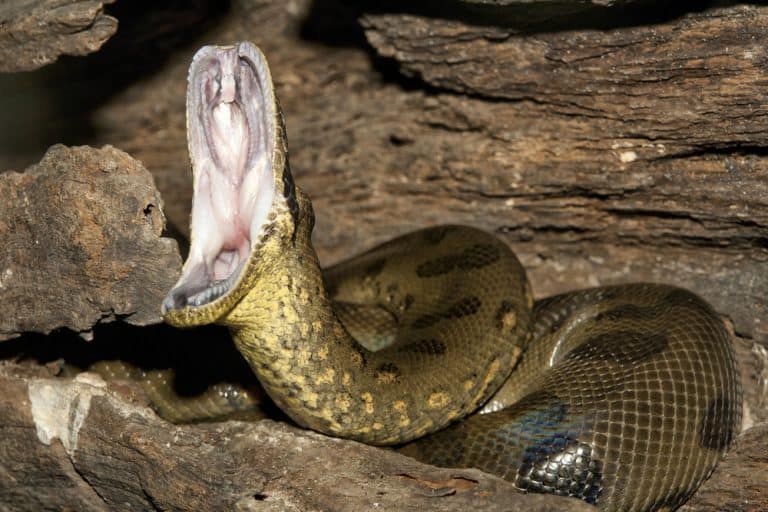
As semi-aquatic snakes, the green anaconda (Eunectes murinus) is often seen in shallow and slow-moving water in rainforests. For example, they can be found in the Orinoco basin of eastern Colombia, the Amazon River basin of Brazil, and the seasonally flooded Llanos grasslands of Venezuela. They are the largest snakes in the world and are hard to miss. The longest reliably measured green anacondas have reached about 29 feet. Females are typically longer than males.
Most of their activity takes place in the early evening, but they will hunt at any time of day using a stealth and ambush technique. Green anacondas are opportunistic predators and will eat just about anything that they are able to kill and swallow. Larger individuals have eaten tapirs, caimans, and turtles. However, the anaconda takes a risk when it attempts to swallow large prey. Some have been injured or have died while attempting to swallow large prey.
Amazonian Manatee
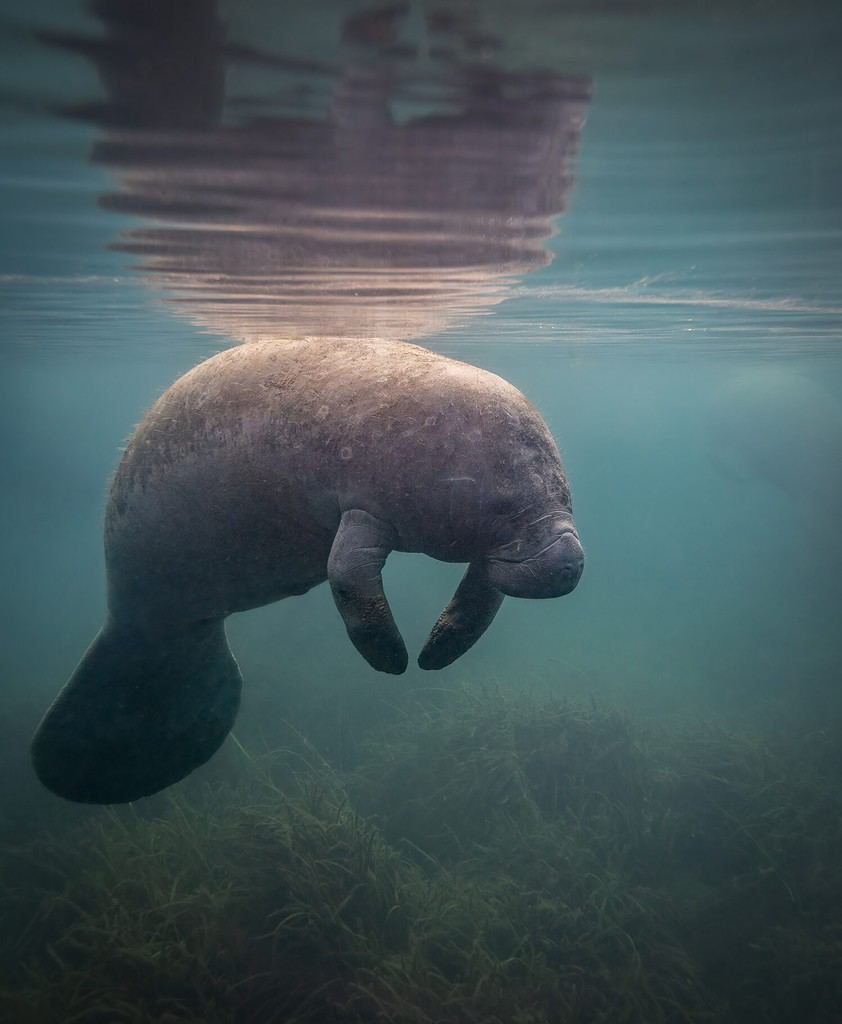
Manatees are big eaters.
©Harry Collins Photography/Shutterstock.com
As you have probably guessed from their name, the Amazonian manatee (Trichechus inunguis) is a species of manatee that lives in the Amazon Basin of Brazil, Colombia, Ecuador, Guyana, and Peru. Their habitat is dense vegetation in blackwater lakes, oxbows, and lagoons. These aquatic mammals reach a maximum of about 9 feet with robust bodies covered in thick bristles. They are a gregarious species and are found in groups of 8 or 10. Most of their time is spent underwater with their nostrils sticking above the surface. These are big eaters! They can consume 33 pounds of aquatic vegetation (grasses and water lettuce) each day!
Harpy Eagle
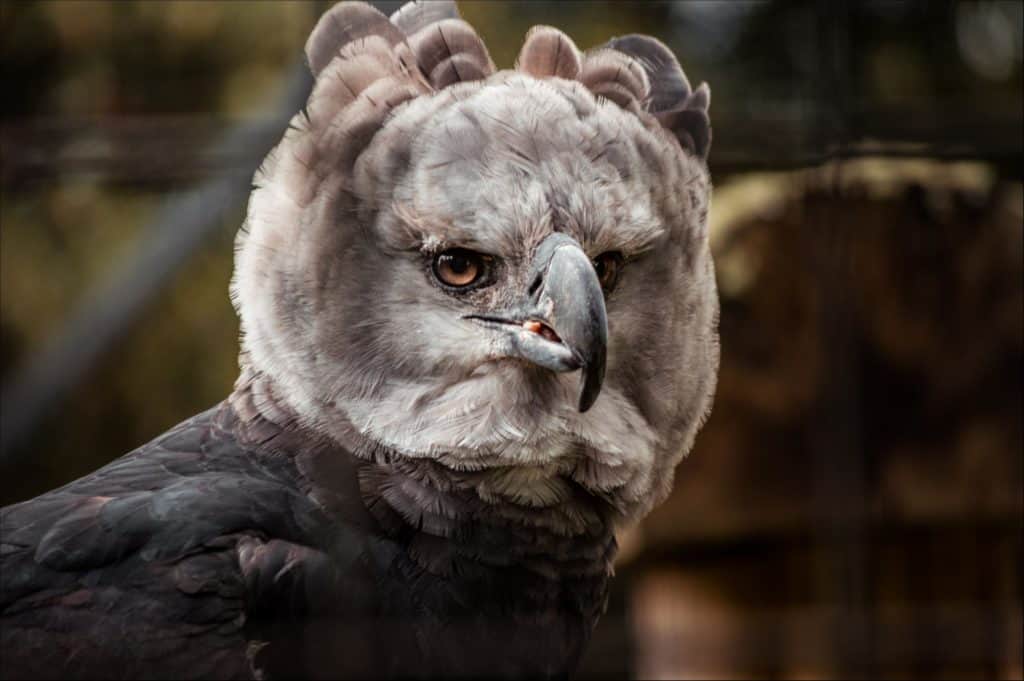
Harpy eagles perch in trees.
©Beker Yepez/Shutterstock.com
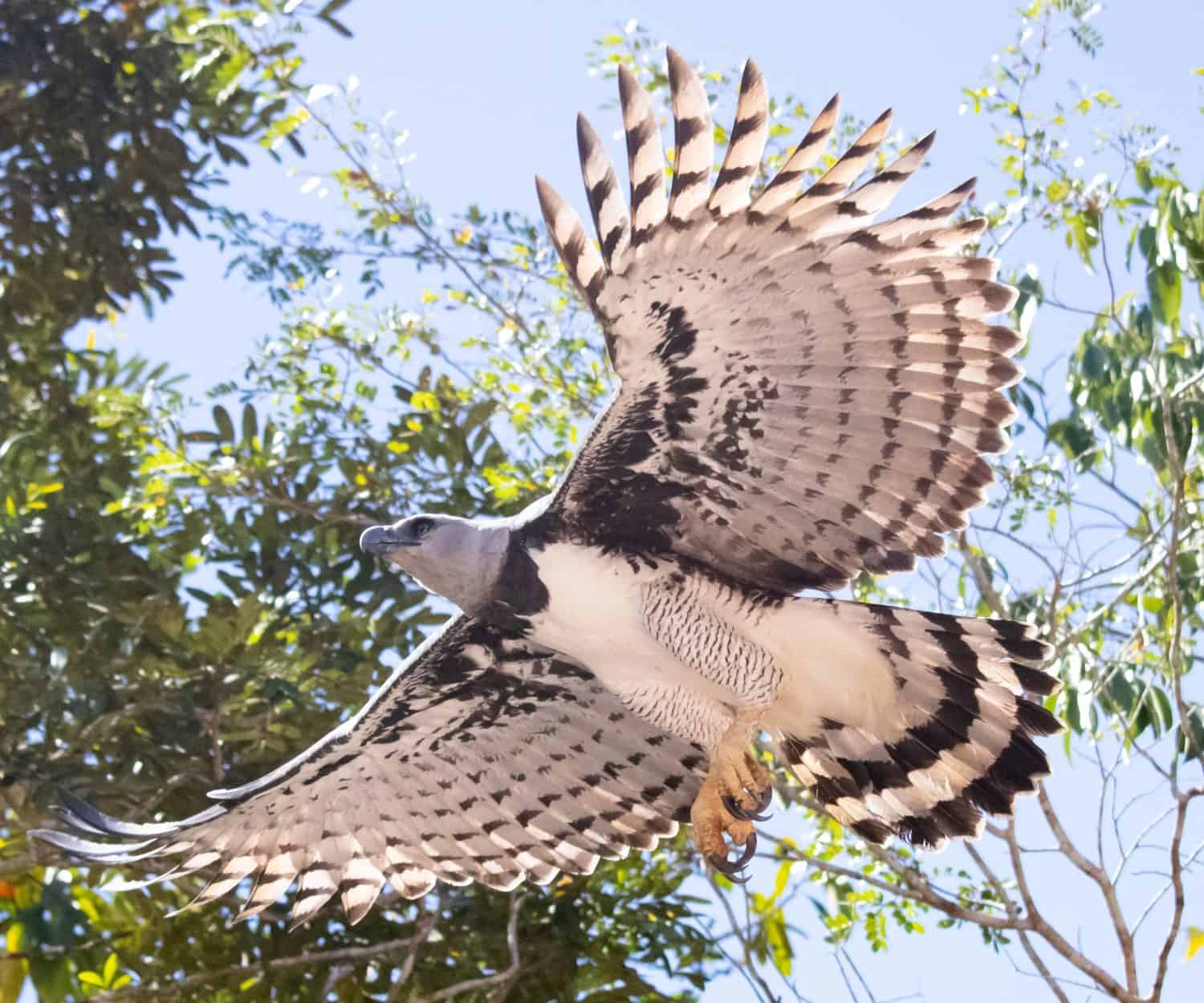
The harpy eagle (Harpia harpyja) is the largest bird in the rainforest, and they are huge! An adult can stand at 3.3 feet tall with a wingspan of over 6 feet! A female harpy eagle is larger than a male and can weigh up to 19 pounds. Their talons alone can be 5 inches long. They are mainly found in the mid to upper levels of rainforest canopies throughout Central and South America. Their range extends from southern Mexico through Central America to eastern Bolivia, southern Brazil, and northern Argentina.
Because they mate for life, they spend most of their time as monogamous pairs. The couple builds nests together in large, tall trees. When they hunt, however, they do so alone. They will perch for 23 hours at a time, scanning for prey, but hunt mainly during the day using their exceptional eyesight. These giant birds will not tolerate other harpies in their hunting territory and will see them off! Despite their size, they are surprisingly skilled at flying through the dense vegetation of the rainforest. They mainly catch sloths and primates, supplemented by lizards and rodents. Prey is snatched from the rainforest canopy with their powerful talons and carried to a perch where they feed.
Amazonian Tapir
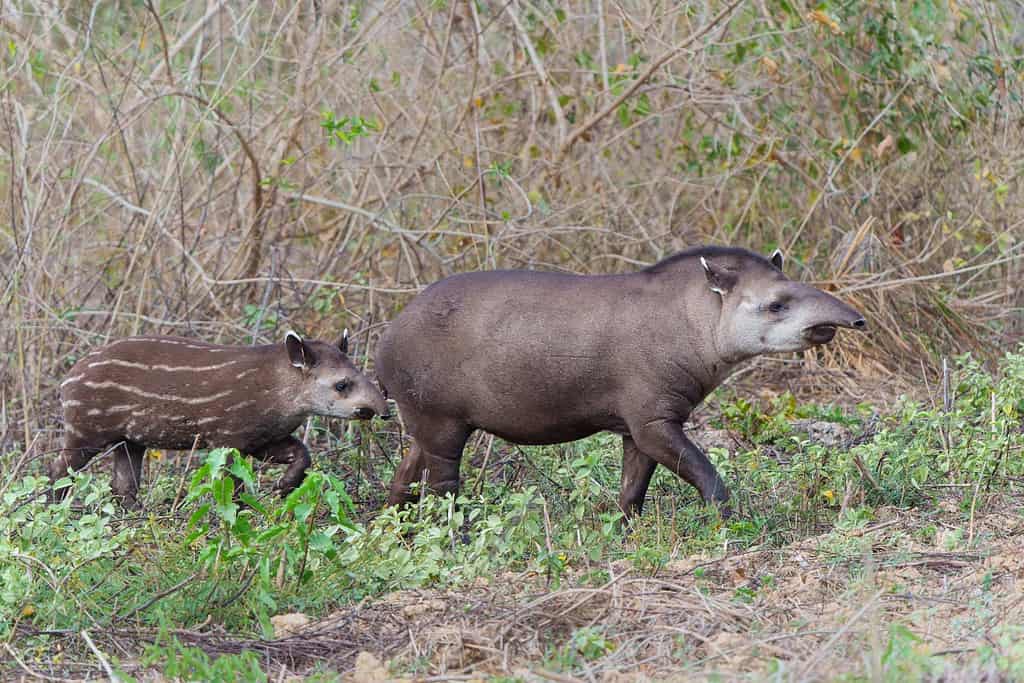
Tapirs wander around the rainforests.
©Henk Bogaard/Shutterstock.com
Also known as the Brazilian tapir or the South American tapir (Tapirus terrestris), these gentle creatures roam around the rainforests of Brazil. They can also be found from northern Argentina to Venezuela, but are absent from Chile and areas west of the Andean Cordillera. They have a preference for tropical montane forests but can also be found in swamps and lowland forests. Their ideal habitat is near a river with lush vegetation. The largest Amazonian tapirs can weigh up to 550 pounds with a solid body and short legs.
As solitary and somewhat nocturnal animals, they hide during the day and generally come out to feed at night. Their diet is made up of fruit, leaves, and other plants. Their main predator is one of the other rainforest giants, the jaguar! If a tapir spots one, they will head for water or hide in a bush. They primarily detect predators by smell because they have very poor eyesight. Chemical communication is very important to them, and they mark their territories using urine and scents from their facial glands.
Black Caiman
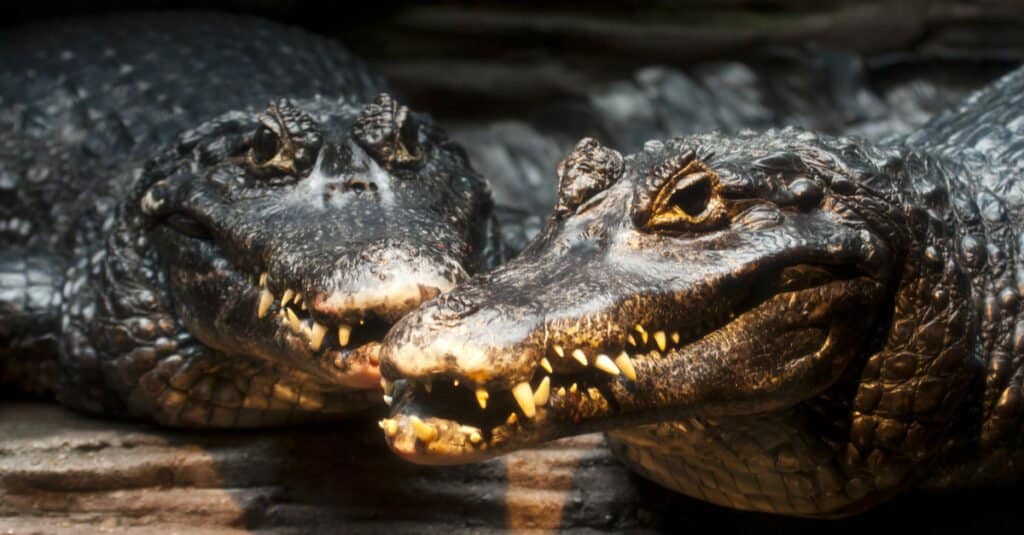
Black caiman mainly hunt in water.
©Glenn Young/Shutterstock.com
Peep into the waters of the Amazon basin, and one of the largest animals you will see is the black caiman (Melanosuchus niger). Their range covers much of the Amazon basin as well as most of northern and central South America. They prefer rivers with steep banks and slow-moving water, but are also found in lakes, wetlands, and blackwater swamps. This reptile is one of the largest predators in the rainforest and can reach lengths of more than 19 feet. Their body shape is very similar to that of an American alligator, but they have grey or brown banding on the lower jaw, and white or yellowish bands on the sides of the body.
During the wet season, when the Amazon floods, black caimans spread out across a wide range. In the dry season, however, there are fewer suitable aquatic habitats, and so they are forced to live close together. They are carnivores and hunters, but their diet varies with their age, size, habitat, and what happens to be available at the time! In general, the larger the caiman, the larger the prey it will tackle. A large part of their diet is made up of animals that live in the water, including piranhas, catfish, and mollusks. However, they will also emerge from the water to prey on terrestrial animals, including mammals such as capybaras.