We’ve all heard of state birds, like Virginia’s northern cardinal or Michigan’s American robin. But a state reptile? About half of the U.S. states have claimed a designated state reptile. Now, California has gone a step further in naming a “state snake.” California Governor Gavin Newsom recently signed a bill officially designating the giant garter snake (Thamnophis gigas) as California’s state snake.
State Senator Roger Niello (Republican, Fair Oaks) introduced SB 765 to designate the state snake. The bill passed the California Assembly with no dissenting votes in July 2025, passed the Senate in September 2025, and was signed into law by Governor Newsom on October 9, 2025. No one objected to the giant garter snake receiving the honor. So, let’s look at this snake that has earned special attention.
Characteristics of Giant Garter Snakes
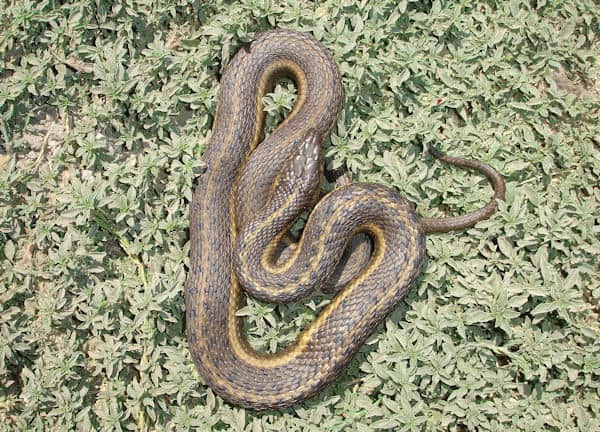
You can see the characteristic yellow stripes and dark blotches on this giant garter snake.
As its scientific name suggests (“thamno” meaning shrub and “ophis” meaning snake in Greek, and “gigas” meaning giant in Latin), this is a big garter snake that is found near shrubby shorelines. It has a brownish-black body with several yellow stripes running the length of its body, punctuated by dark blotches. In certain populations within its range, giant garter snakes have such faint stripes that their body pattern looks more checkered than striped.
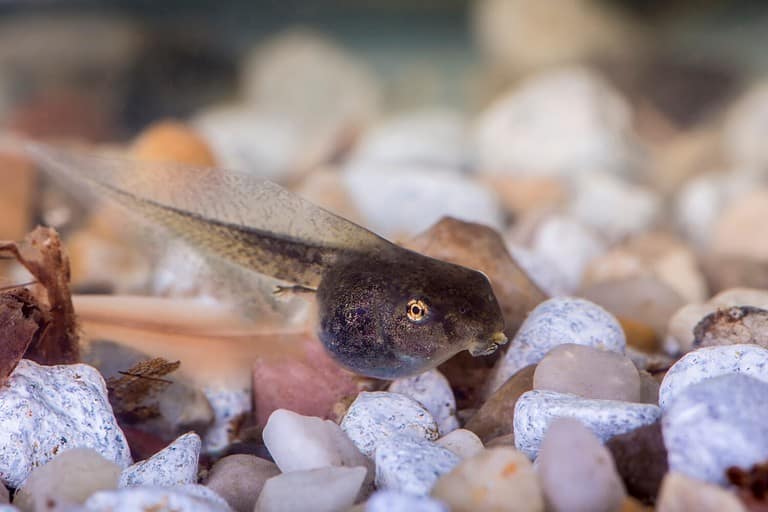
Reaching a maximum length of more than five feet, giant garter snakes hunt freshwater animals like tadpoles, frogs, and fishes. They ambush prey underwater and, in some instances, drag it onto land to eat it. Like other garter snakes, this species uses venom to immobilize its prey. Although the venom harms small animals, it has a mild effect on humans, typically no more than swelling and irritation around the wound. If you try to pick one up (which is ill-advised and illegal), it’s likely to spray you with stinky excretions from its cloaca (the opening above its tail).
Natural Habitats

This giant garter snake was observed in Butte County, California.
The giant garter snake is endemic to California, living nowhere else. Historically, it inhabited most of the floor of the Central Valley (which includes both the Sacramento and San Joaquin Valleys), ranging from Butte County southward to Kern County.
As one of the most aquatic of the garter snakes, giant garter snakes favor freshwater marshes and sloughs with muddy bottoms, which historically were ample. Before it became an agricultural hub, the Central Valley was a vast network of waterways draining into the massive Tulare Lake. The snakes lived along shallow edges of river tributaries, flood basins, and marshes, seldom venturing more than a few meters from the water during their active season, which typically occurs when water temperatures are 68 °F or higher.
The cattails and tule vegetation of the Central Valley waterways provided cover for garter snakes, as well as basking sites where they could sun themselves but rapidly escape into the water if needed. Most giant water snake predators are terrestrial, and the snakes have evolved to quickly dive down below the water surface when a predator approaches. Juvenile giant garter snakes, however, may be eaten by bullfrogs. A study of the Colusa National Wildlife Refuge published in the California Department of Fish and Game found that bullfrogs consumed about 22 percent of the newborn giant water snakes every year.
The habitat needs of giant water snakes can be summarized as: 1) water during their active season; 2) wetland vegetation anchored in the water; 3) waterside vegetation with openings; and 4) upland areas to take cover and avoid floodwaters.
Habitat Changes
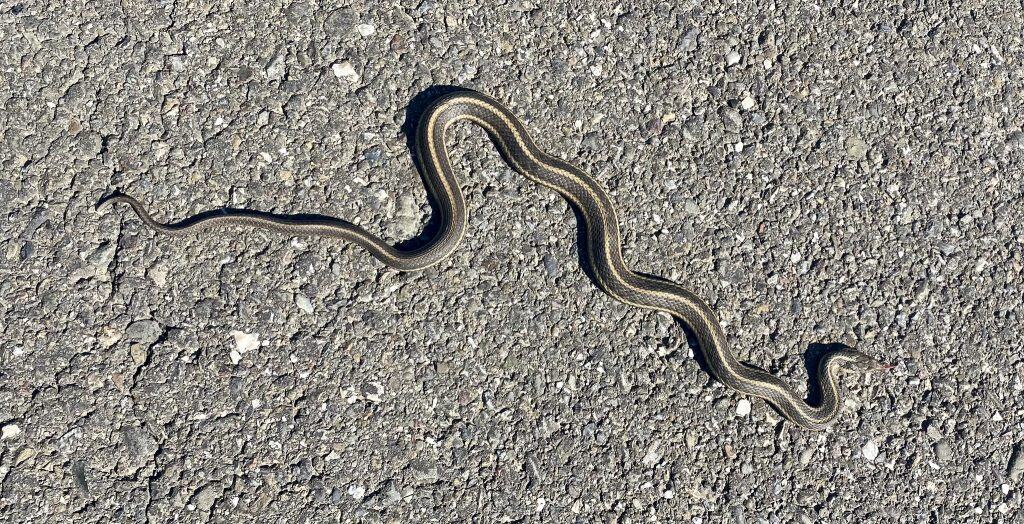
Giant garter snakes may cross roads and trails, risking injury.
By the 1980s, giant garter snakes had been eradicated from most of their range. The remaining populations faced a shortage of suitable habitats. Natural wetlands were largely drained for farm irrigation in the Central Valley, leaving the snakes dependent on agricultural ponds, irrigation ditches, drainage canals, and other artificial waterways. Agricultural habitats can be dangerous for them because of mowing, draining, rodent control, pesticide use, and conversion to other uses. But, with a loss of more than 90 percent of their historical wetlands, giant garter snakes are limited to these human-managed environments.
Some manmade environments are better than others for giant garter snakes. Today, giant garter snakes are most often found in and around rice fields, which serve as important population strongholds due to the limited availability of suitable aquatic habitat. Their diets have also shifted, as habitat alterations have reduced the availability of giant garter snakes’ natural prey, such as red-legged frogs. Giant garter snakes now hunt introduced species, such as carp, western mosquitofish, and American bullfrogs (Lithobates catesbeianus), which are abundant in agricultural areas.
Introduced plants, including water primrose, tend to grow vigorously, choking up the open water that giant garter snakes require. There is also some concern that the rampant, introduced floating plants, such as water hyacinth, create a mass of shade that changes water temperature and chemistry from what the snakes require.
Terrestrial Life
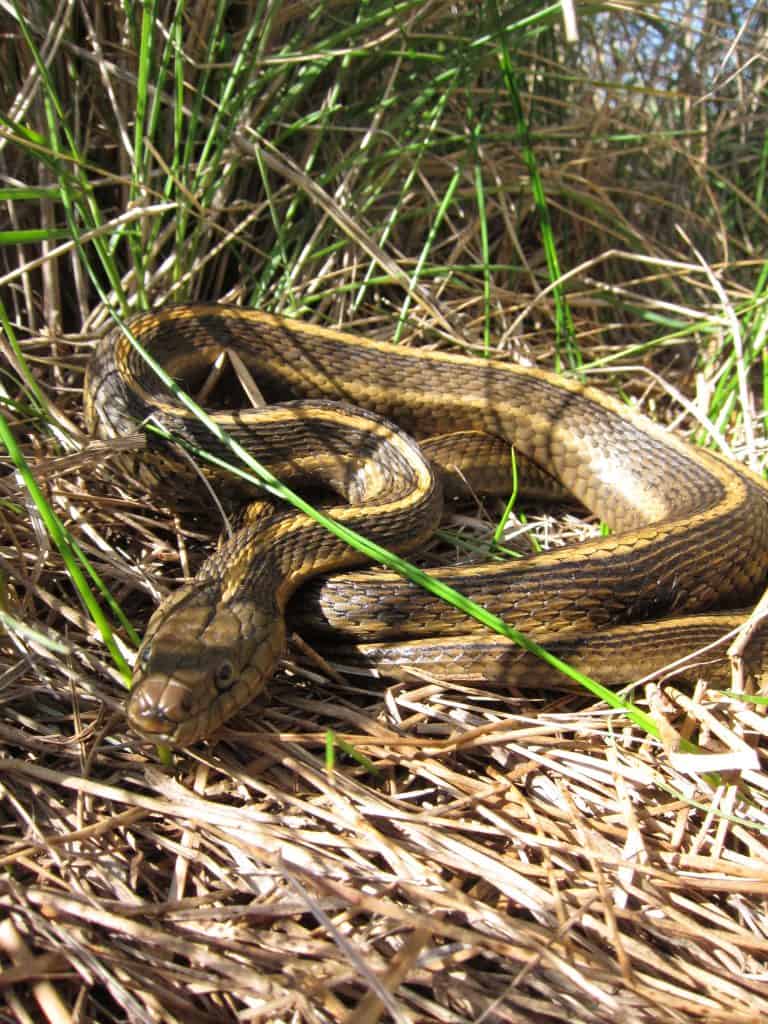
This giant garter snake is warming itself by basking on streamside grasses.
©U.S. Geological Survey, public domain – Original
Keeping in mind that giant garter snakes (indeed, all snakes) must breathe air and are not adapted to extract oxygen from water, it’s not surprising that their lifestyles are partially terrestrial. During the colder months, typically November through March, giant garter snakes hibernate on land. During active months, they retreat underground to sleep at night, using rock crevices or burrows excavated by mammals such as ground squirrels. After spring mating, females give birth to large litters of young—from 10 to 46 at a time—in streamside vegetation or other hidden spots. The young are immediately independent, first surviving off their attached yolk sac (provisioned by the mother’s body), then beginning to forage in the water.
When their wetland habitats flood, giant garter snakes move upland, sometimes as far as 600 feet from waterways, to avoid drowning. Floods have been known to bury snakes under debris or trap them in burrows while they are hibernating. While on land, giant garter snakes face a suite of hazards, such as vehicle traffic, heavy livestock, and introduced predators such as house cats and dogs. Their natural predators—which include raccoons, skunks, opossums, foxes, hawks, egrets, and herons—have gained easier access to giant garter snakes as dense streamside vegetation is diminished.
State Snake!
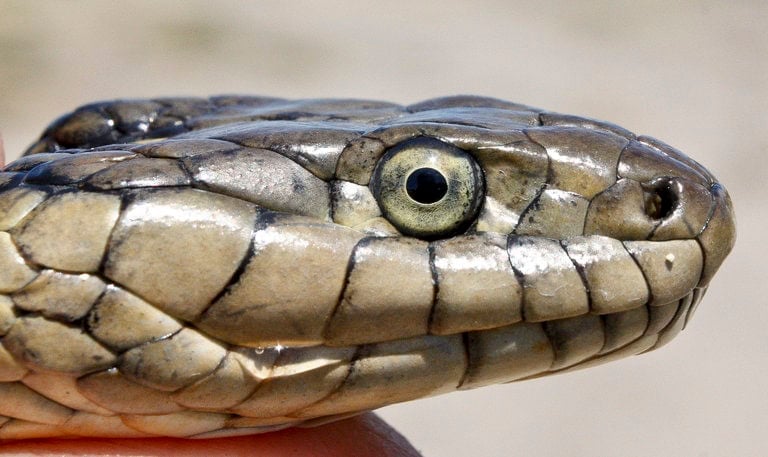
This Thamnophis gigas in Sutter County, California, has an intense gaze.
Their new title of State Snake may give giant garter snakes the attention they’ll need for survival. Thamnophis gigas was listed as a threatened species by the state of California in 1971 and was federally listed as threatened under the Endangered Species Act on October 20, 1993. The snake’s continued presence, despite the radical changes in the Central Valley, is a testimony to its resilience.
The snake’s persistence is also due to conservation initiatives over the past few decades. For example, the 2010 approval by the U.S. Fish and Wildlife to protect 2,400 acres abutting the Colusa Basin Drainage Canal provided much-needed habitat for giant garter snakes. This Ridge Cut Giant Snake Conservation Bank is “a mosaic of open water, perennial marsh, and upland habitat components.” Concerted efforts to preserve and restore their habitats must continue if giant garter snakes are to bounce back from more than a century of change.
Studies to estimate the density of giant garter snakes in waterways have found that, regardless of sampling method, they thrive in natural marshes; their densities range from 7.6 to 9.0 individuals per hectare. In contrast, their densities are only 0.6 to 1.5 individuals per hectare in wetlands managed for overwintering waterfowl. Agricultural rice fields support giant garter snakes at medium densities (2.2 to 4.9 individuals per hectare), demonstrating their relative habitat value.
In an article published by the Western Ecological Research Center, experts note that “Although listing as threatened under both state and federal ESAs has not yet achieved recovery of giant garter snakes, the increased knowledge gained and mechanisms for protecting giant garter snake habitat on private and public lands developed over the past 50 years have improved conservation of this endemic California snake.”