
Millipedes come in one basic shape but many sizes. When they aren’t curled into a tight ball, millipedes are easily recognizable thanks to their long, cylindrical bodies and dozens, sometimes hundreds, of pairs of little legs. They can’t move very fast or well, so millipedes often curl up into balls to protect their delicate legs. Other types of millipedes, however, have a smelly, if not deadly, defense mechanism.
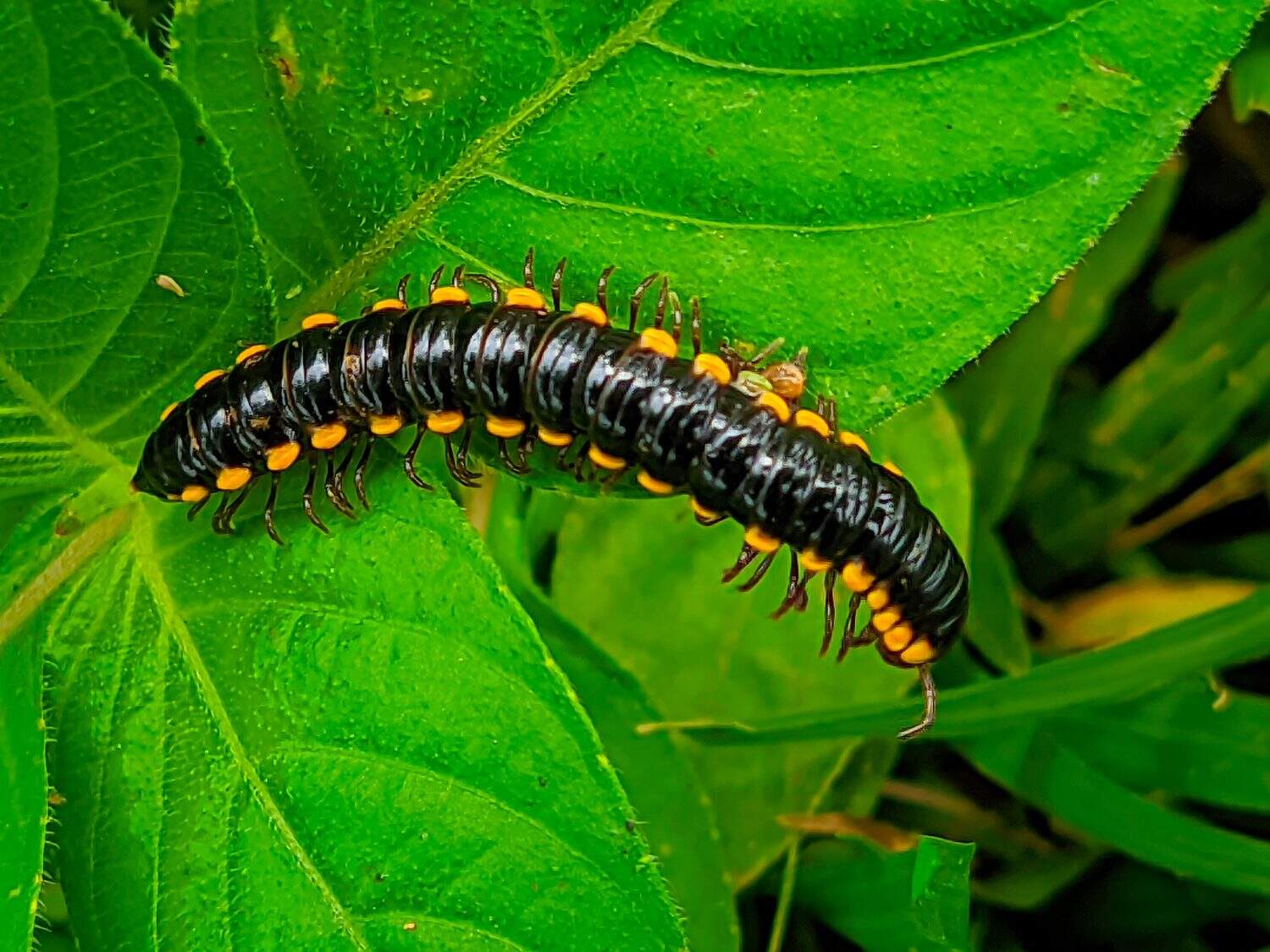
If you’re walking along a trail in the Pacific Northwest, you might spot a millipede with bright yellow dots on its exterior. You’ve just encountered a yellow-spotted millipede. It’s also called the almond-scented millipede because it oozes cyanide, which smells like almonds, when threatened. How can these invertebrates release such poisonous gas and crawl away safely? Let’s explore the smelly mechanism behind these creatures’ defense, but first, let’s learn a bit more about millipedes in general.
Millipede Background
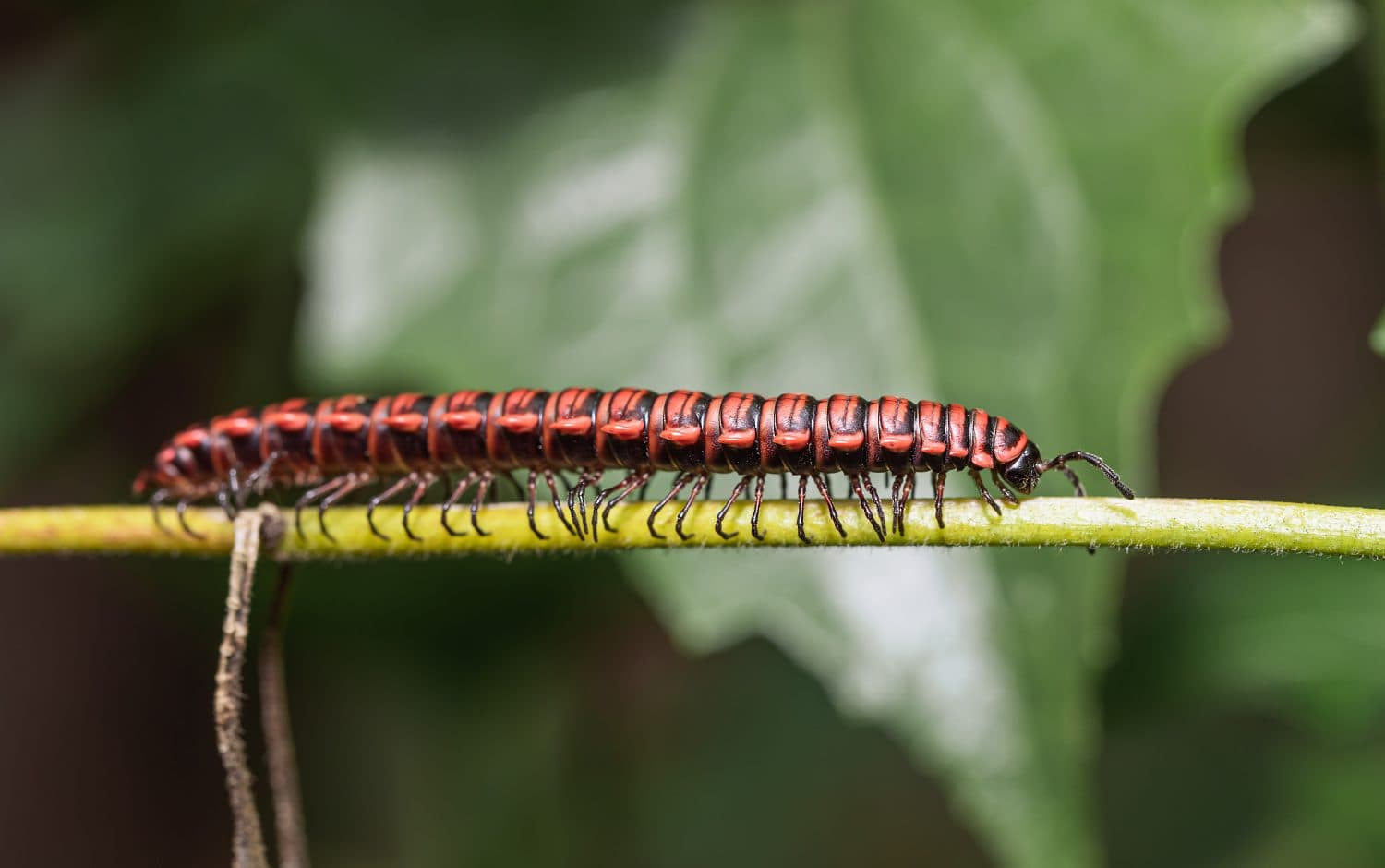
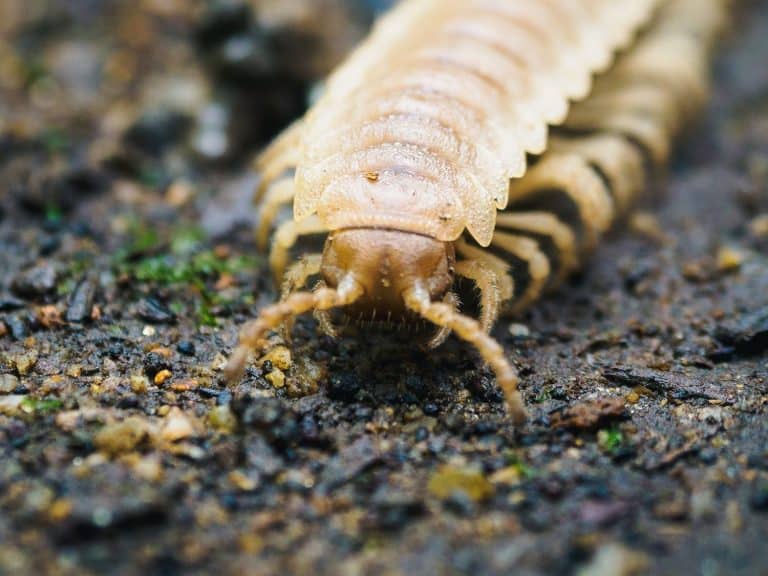
Millipedes are characterized by cylindrical bodies with pairs of jointed legs.
©HTWE/Shutterstock.com
Millipede is the group name for arthropods that have two pairs of jointed legs per body segment. More specifically, they are known as the class Diplopoda. This class contains over 12,000 named species, among 16 orders and some 140 families. That said, there are probably many more millipede species that have yet to be discovered. In a way, the name millipede is a misnomer because most of them have far fewer than one thousand legs. It took until 2021 for scientists to discover a species with over 1,300 legs, Eumillipes persephone.
In general, however, millipedes have slow, plodding, cylindrical bodies that range in size between a few millimeters (no pun intended) and nearly a foot long. These arthropods are detritivores, which means they feed on decaying vegetation. This makes them incredibly important to ecosystems because they break down remnant plant material, recycling nutrients and refreshing soil health. As such, they can often be found in the moistest environments, including under logs, in the soil, within leaf litter, and other places with plenty of rotting foliage.
They may seem like unassuming creatures nowadays, but millipedes once rivaled humans in size. They are also one of the oldest known land animals, first appearing on Earth during the Silurian period nearly 450 million years ago. Back then, members of prehistoric groups like Arthropleura grew over six feet long. They are distantly related to centipedes, which move more quickly, have fewer pairs of legs, and are venomous. Some millipedes, however, give their relative, the centipede, a run for its money when it comes to dangerous defense mechanisms.
Almond-Scented Danger
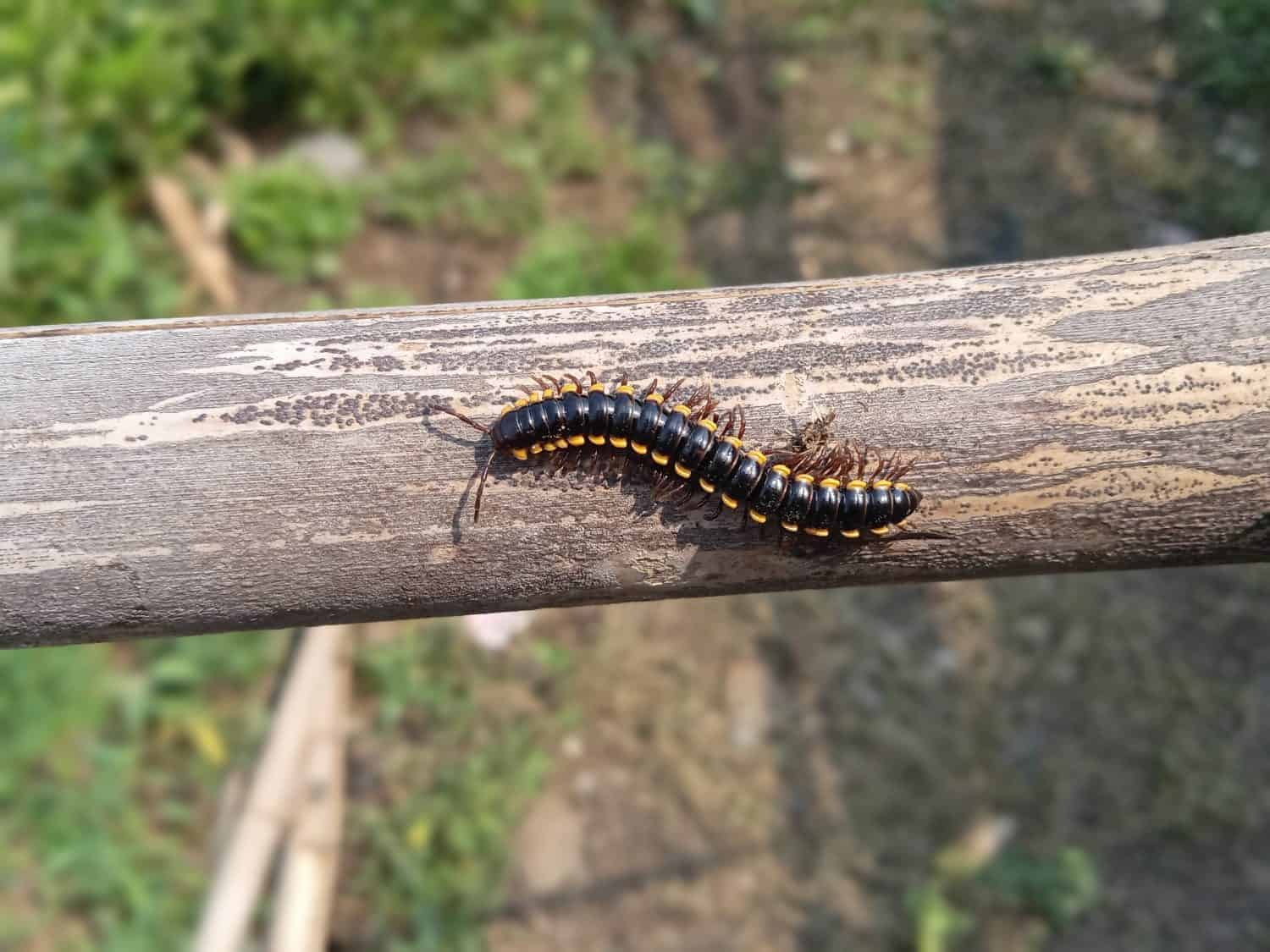
This species of creepy crawler found in the Pacific Northwest curls into a ball and emits poisonous gas when threatened.
©Bakulane Ripki/Shutterstock.com
In the Pacific Northwest lives a species of millipede that can emit hydrogen cyanide, a toxic chemical compound, as a defense mechanism. The yellow-spotted millipede, Harpaphe haydeniana, is about two inches long and has a dark, almost black body with large yellow spots running its length on either side. Remarkably, when threatened, yellow-spotted millipedes will curl up into a ball and release hydrogen cyanide. This gave it its other name, the almond-scented millipede, because cyanide has a distinctly almond-like smell.
Fortunately for humans, this creature can’t release enough cyanide to kill a human. It can leave a blister or burn on the skin. If it gets into your eyes, it can definitely cause irritation, so be sure to wash any affected areas promptly and thoroughly. The amount of dangerous gas they release, however, is enough to kill a bird or rodent. In fact, a type of millipede that lives in the Appalachian mountains releases 18 times the amount of cyanide needed to kill a pigeon. Both of these species are considered aposematic. Like similar creatures, including monarch butterflies, these critters warn would-be predators with bright, colorful, almost neon markings on their bodies. It would seem that these poison-producing creatures would be in just as much danger as the animals they are defending themselves against. How do they manage to survive their own noxious releases?
Helpful Immunity
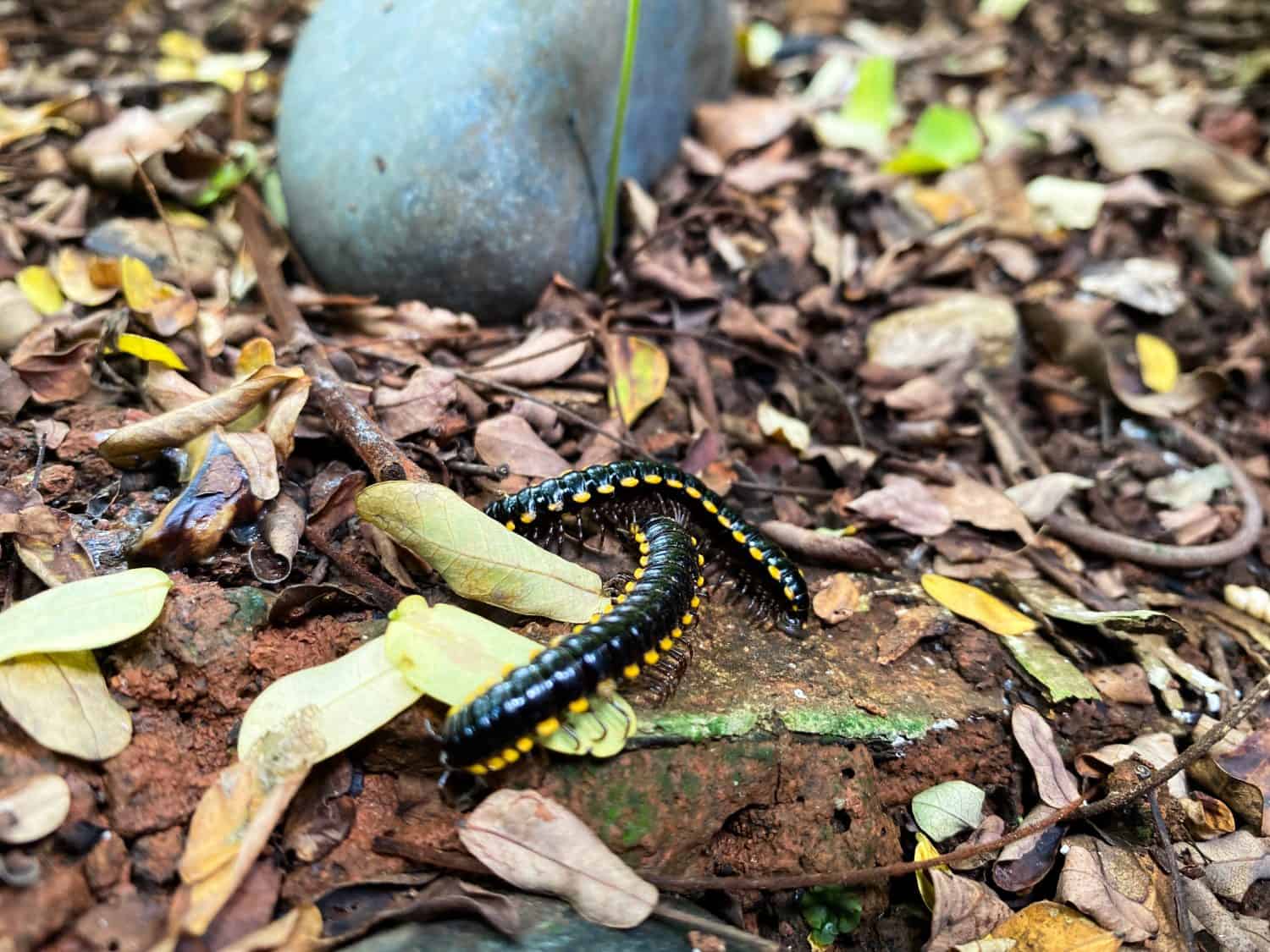
As decayed plant eaters, millipedes are vital parts of forest ecosystems.
©Dentjes/Shutterstock.com
These little crawlers have a remarkable ability to dish it out and take it too. Instead of being affected by the cyanide they release as a defense mechanism, the millipedes are immune to it. Any cyanide they ingest is converted to harmless chemicals. These yellow-spotted critters then crawl away unscathed.
This defense mechanism may seem a little overpowered for such an unassuming creature, but it serves an important purpose. Millipedes, as dead plant eaters, are vital members of their ecosystem. In the Pacific Northwest, their poisonous defense keeps them from being eaten, so they live in abundance. In turn, they consume massive helpings of leaf litter in the form of fir and spruce trees. That, plus a symbiotic relationship with fungi, allows leaf litter to be broken down into smaller and smaller pieces. This not only increases its nutrient availability for the fungi, but also clears out the forest floor so new things can grow.
Cyanide may seem like overkill, but it equips creatures like the yellow-spotted millipede with a defense mechanism that allows them to perform their essential ecosystem-cleaning role without fear of predation. With their help, the forest ecosystem can truly say ‘out with the old and in with the new.’