Quick Take
- Goliath stick insects (Eurycnema goliath) are among the largest and heaviest insects in Australia, with females reaching 7 inches long and up to 2 ounces in weight.
- Their signature defensive behavior involves curling and thrusting their abdomen to deter predators while staying camouflaged; sharp leg spines can cause injury to small animals.
- Strict herbivores, they feed mainly on eucalyptus leaves at night, relying on slow movement and camouflage to survive in their subtropical forest habitats.
Bugs are scary. But at least we can take solace in the fact that they’re small, right? Well, the goliath stick insect might have something to say about that assumption. Watch this video, if you dare. Wow! That creepy-crawly is longer than my hand. What is that thing? And why is it jabbing angrily at the air like that? Meet the goliath stick insect, one of the largest insects on Earth. And that dramatic jabbing motion is a defensive warning that says, very clearly, “Back off.” Message received!
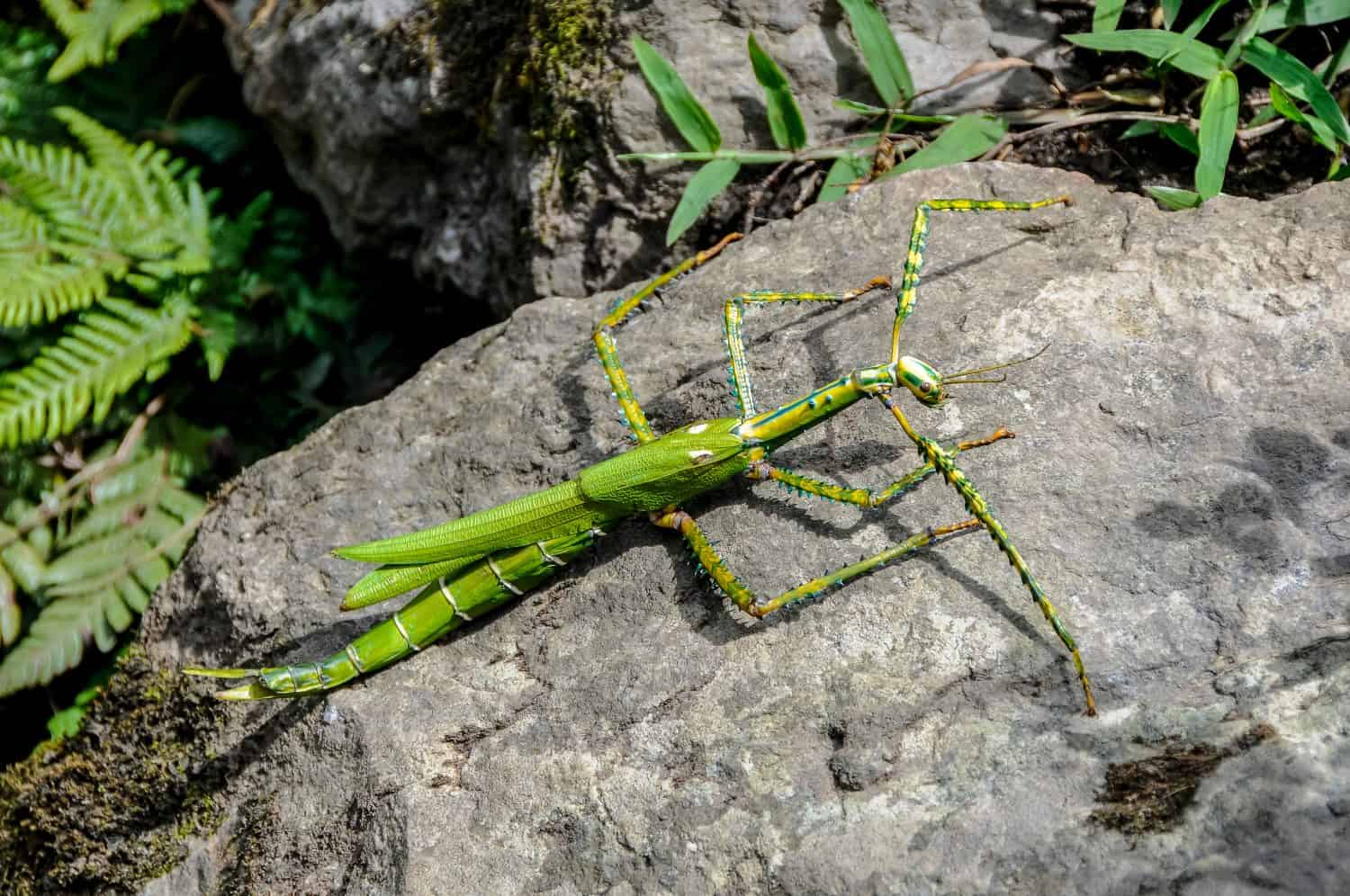
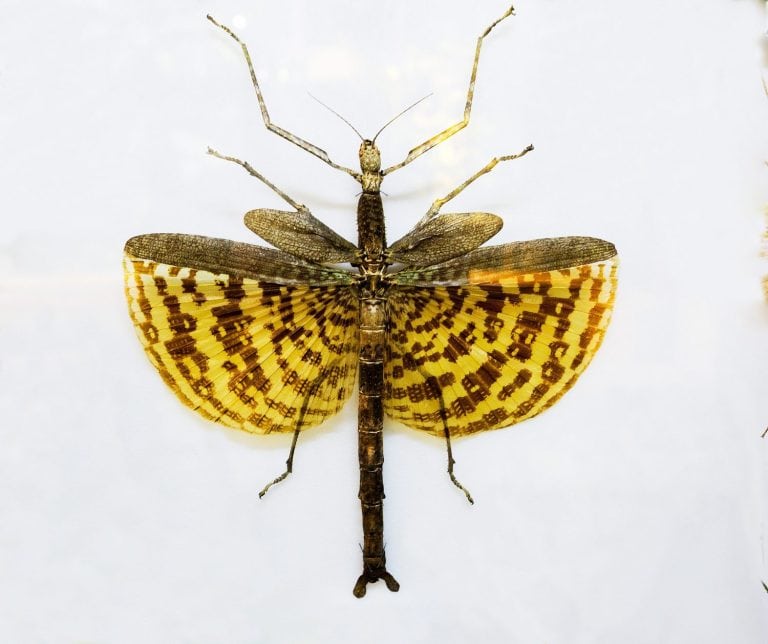
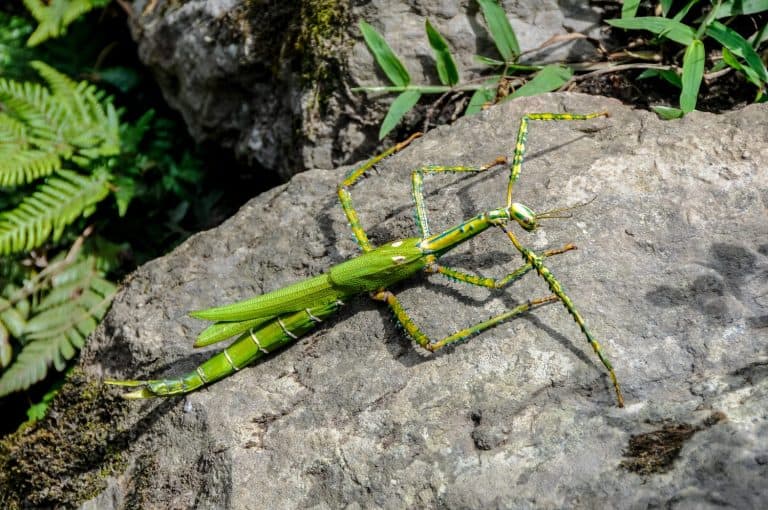
This insect’s thick, rugged body looks more like weathered wood than a living animal does, making it a master of camouflage in Australian forests.
©Steve Barze/Shutterstock.com
What Is a Goliath Stick Insect?
The goliath stick insect is the common name for Eurycnema goliath, a species belonging to the order Phasmatodea, a group known for their uncanny resemblance to sticks, twigs, or leaves. The goliath stick insect is one of the most extreme examples.
Its body is thick, rugged, and uneven in texture, often resembling a chunk of weathered wood more than a living animal. The coloration ranges from grayish-brown to dark bark tones, helping it disappear against tree branches during the day.
Despite how menacing that bug in the video looked, goliath stick insects aren’t predators and are not naturally aggressive. Their size and behavior are about survival, not combat. Goliath stick insects are native to northeastern Australia, particularly Queensland. They inhabit subtropical and tropical forests, where tall trees and dense foliage provide both food and concealment.
They’re primarily arboreal, meaning they spend most of their lives in trees. During daylight hours, they remain almost completely still, relying on camouflage to avoid detection. At night, they become active, climbing through branches in search of food. This lifestyle reduces their exposure to birds, which are among their most significant predators.
Compared to many other insects, they have relatively long lifespans. From hatching to death, a goliath stick insect typically lives for 12 to 18 months. During that time, it will molt several times, shedding its exoskeleton as it grows.
What Do Goliath Stick Insects Eat?
Goliath stick insects are plant-eaters. Their diet consists mainly of eucalyptus leaves, which are abundant in their native habitat. Eucalyptus leaves are tough and contain chemical compounds that deter many animals, but stick insects are well-adapted to digest them.
Feeding usually occurs at night. The insect grips a branch and slowly chews through leaves using strong mandibles designed for grinding plant material. Because eucalyptus leaves are relatively low in nutrients, goliath stick insects compensate by eating steadily and conserving energy through slow movement and long rest periods.
How Big Do Goliath Stick Insects Get?
This species is aptly named. They are unmistakably insects, and as we’ve discussed, they resemble sticks. As for the ‘Goliath’ part of their name—that’s accurate, too. These insects can get BIG.
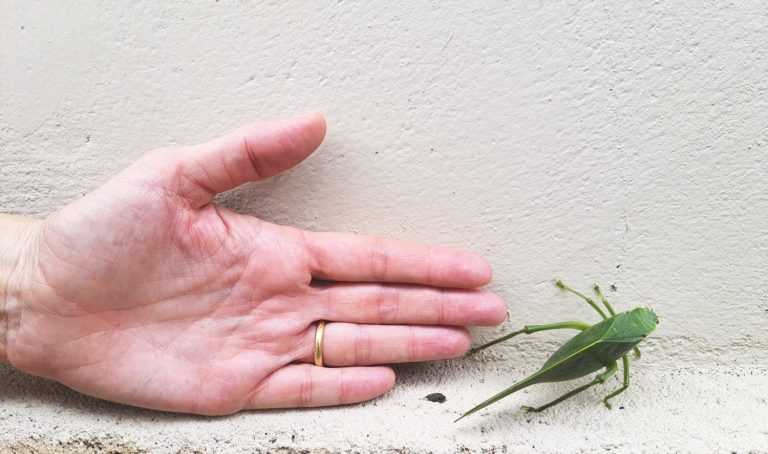
Adult female goliath stick insects are among the longest insects in the world, reaching lengths of up to about 7 inches from head to the tip of the abdomen—that’s more than four times longer than the average grasshopper. Males are smaller and slimmer, which is common among stick insects.
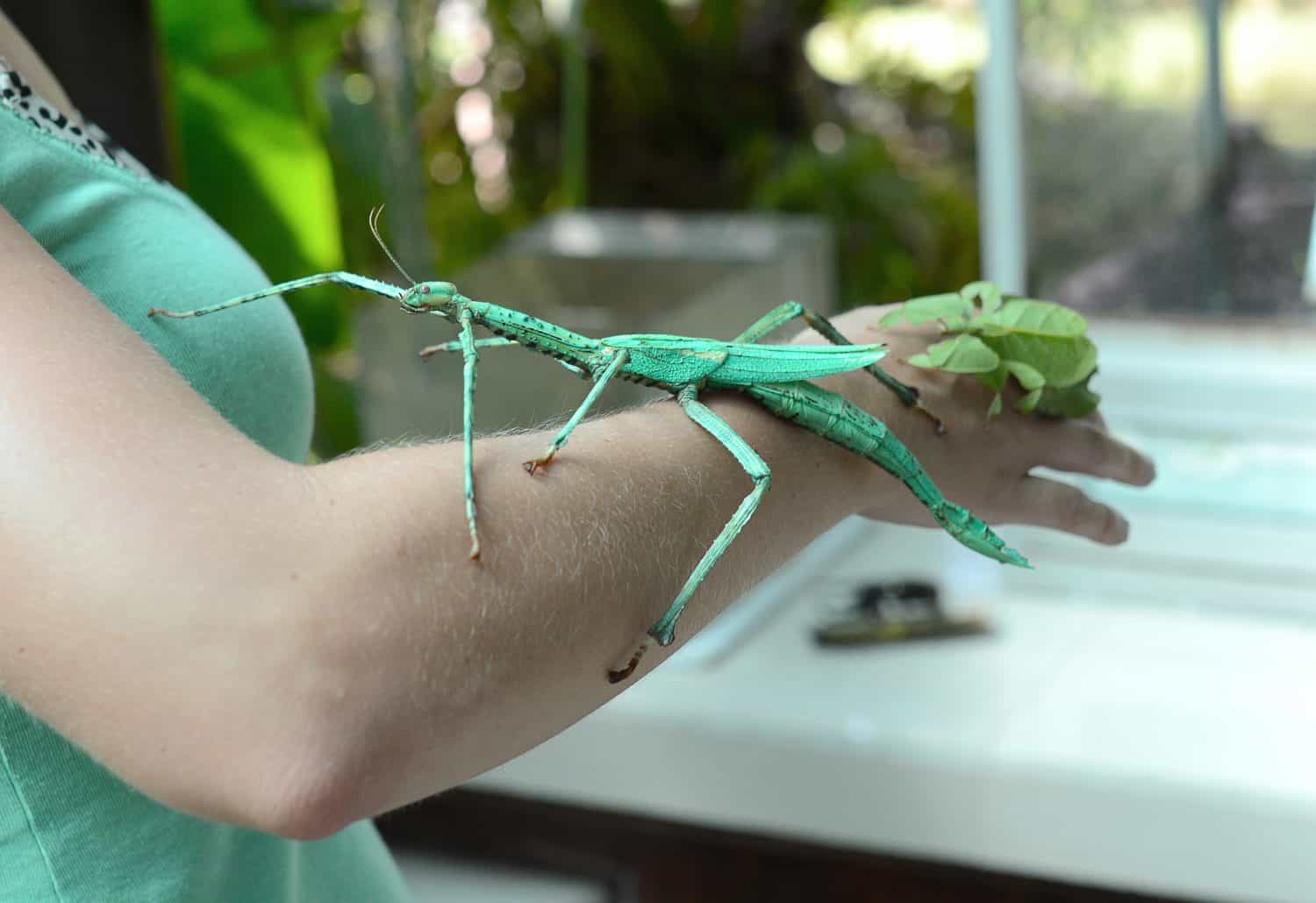
Adult females can reach up to 7 inches long—over four times the length of an average grasshopper—and weigh close to 2 ounces.
©LukaKikina/Shutterstock.com
Weight varies depending on age and condition, but adults can weigh close to 2 ounces, making them among the heaviest insects in Australia. By insect standards, this animal is enormous. For comparison, the common house fly weighs 0.00042 ounces. If you do the math, it would take close to 5,000 house flies to equal the weight of one female goliath stick insect.
What Exactly Is Happening in That Video?
Put simply: it’s a defensive display. The curved, thrusting motion looks like a scorpion’s sting, but there is no stinger involved. The goliath stick insect is curling its abdomen upward and jabbing toward a perceived threat. The flexible abdomen lets the stick insect target the area where a predator is likely to strike—usually near its midsection or legs—without exposing its head or vital organs. This movement is meant to both intimidate and startle.
But if the display is only meant to intimidate, can a goliath stick insect actually injure a predator? Yes. They don’t inject poison. They also don’t have biting mouthparts designed for defense. Their primary physical weapons are the spines on their legs, which are rigid and quite sharp. If a predator attempts to grab the insect, these spines can scrape or puncture sensitive tissue.
For birds, small mammals, or reptiles, grabbing a goliath stick insect can be an unpleasant experience. The sudden movement, combined with pain and confusion, is often enough to make a predator release the insect. Predators quickly learn that this is not an easy meal.
Are Goliath Stick Insects Dangerous to Humans?
No, but that doesn’t mean they want you handling them. They don’t chase people and don’t attack unless handled or restrained. Most human injuries associated with goliath stick insects are minor scratches caused by their leg spines when someone tries to pick one up. The safest approach is to observe them without handling, especially in the wild. Their defensive display is meant to prevent escalation, not start it.
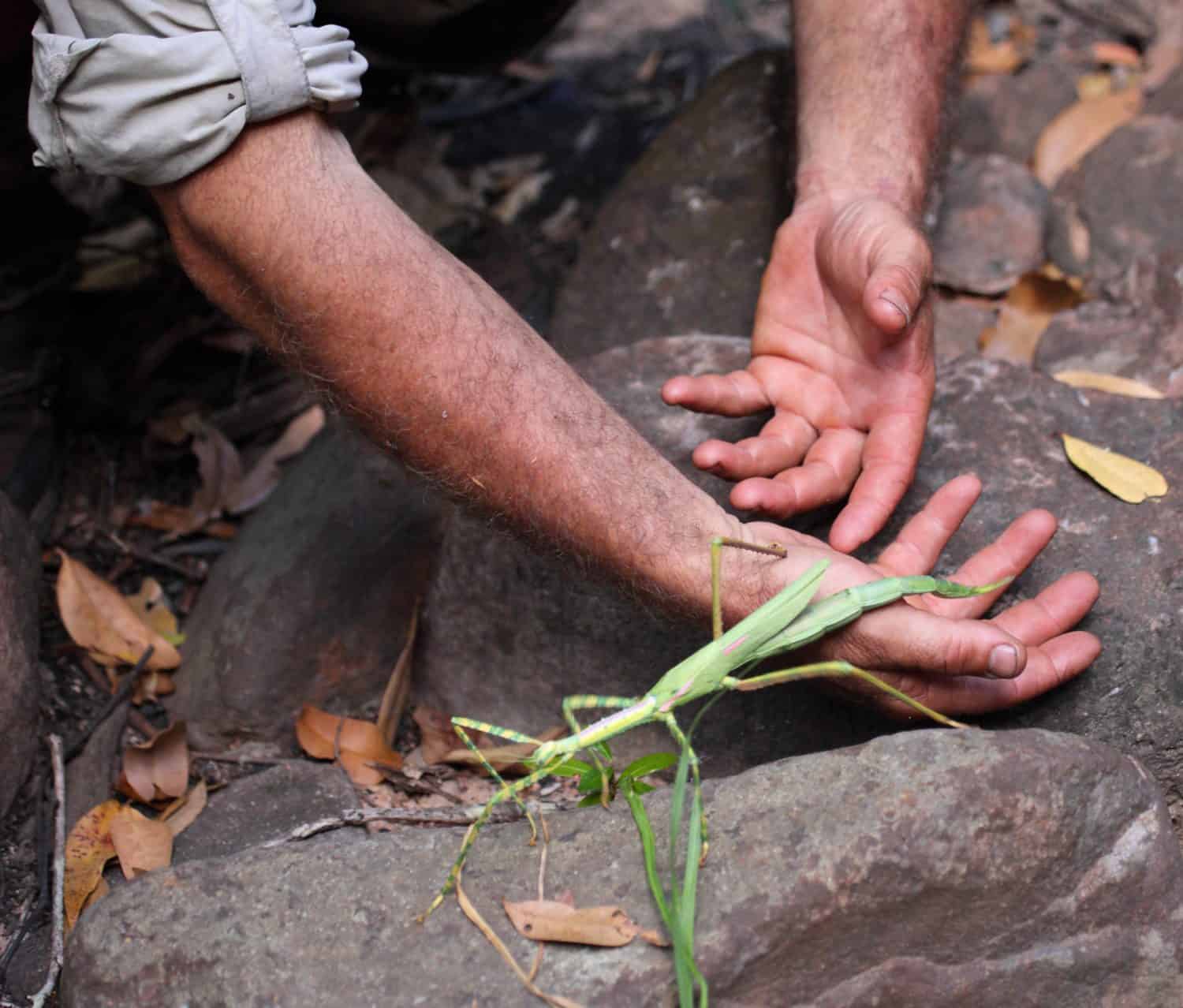
Despite their size and spiny defenses, goliath stick insects are harmless to humans if observed without handling.
©Chris Watson/Shutterstock.com
A Living Branch With Attitude
Bugs tend to be small, but there are exceptions to every rule. The goliath stick insect is bigger than most insects you’ve encountered, camouflaged like a piece of tree, and equipped with surprising defenses. It’s nature’s way of saying: never underestimate the quiet ones. Even a stick can sometimes demand respect.