
From curious sidekicks in kids’ cartoons to over-the-top villains in Hollywood blockbusters, primates rarely get an accurate portrayal on screen. Whether they’re mischievous banana thieves or ferocious predators, these depictions shape how we think about our closest relatives in the animal kingdom. Unfortunately, many of these images are more myth than fact.
To set the record straight, we spoke with Dr. Paul A. Garber, Professor Emeritus in the Department of Anthropology (Program in Ecology, Evolution, and Conservation Biology) at the University of Illinois. A primatologist with decades of research under his belt (he’s even the Executive Editor of the American Journal of Primatology!), Dr. Garber knows the difference between entertainment and reality. And as it turns out, some of our favorite “monkey myths” can be not only misleading but harmful to conservation efforts.

Monkeys may steal the spotlight in movies, but their real lives are even more fascinating than fiction.
©Photo courtesy of Brookfield Zoo Chicago – Original
Myth #1: Primates Make Great Pets
Hollywood loves an adorable monkey sidekick — the tiny capuchin perched on a pirate’s shoulder or the cheeky chimp in a diaper. But Dr. Garber says this is one of the most damaging myths of all.
“The biggest myth is that primates make good pets or can be domesticated like dogs or cats,” he explains. “Primates are wild animals, and they can’t be domesticated. It’s cruel to keep them as pets; they’re social beings, and they can’t thrive in a cage or outside their natural environment.”
The harsh reality is that taking an infant primate for the pet trade often requires killing its mother, and sometimes other group members. Since primates don’t stash their babies in nests like birds, removing one infant can devastate entire families. Even worse, most infants that are captured die long before reaching adulthood.
The internet has only made matters worse, with tens of thousands of primates now advertised online. “Sadly, in the United States, it’s still legal to own a pet primate in 25 states,” says Dr. Garber. Pending legislation called the Captive Primate Safety Act could finally outlaw the sale of primates as pets nationwide, but until then, the myth persists.
There’s also a public health angle. “Given that human and non-human primates have shared such a long evolutionary history, non-human primates can carry and transmit the same diseases as humans,” Dr. Garber warns. “In addition, if you take a primate from the wild, it can have an exotic disease that can be brought into a human setting, which could result in or lead to another pandemic.“ Cute? Maybe. Safe? Not at all.
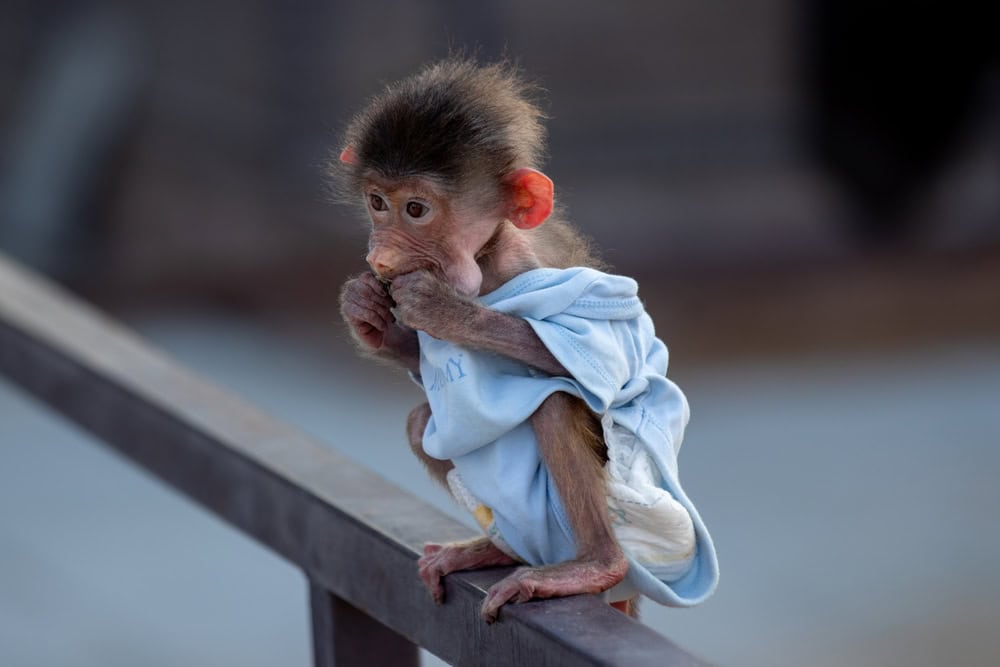
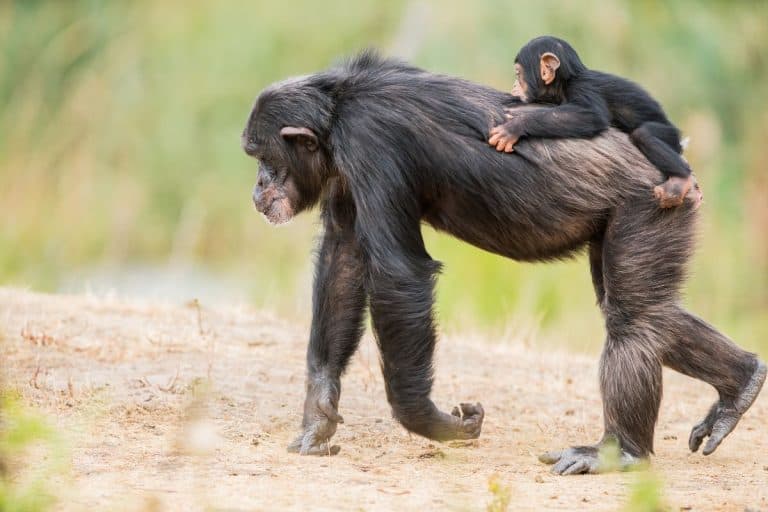
“Like humans, non-human primates have a very long period of infant dependency, and infants may nurse for as long as five years,” explains Dr. Garber. “Therefore, they really can’t survive without their mother.”
©Kanaga Subramaniyam K/Shutterstock.com
Myth #2: Chimps and Gorillas Are Aggressive and Dangerous
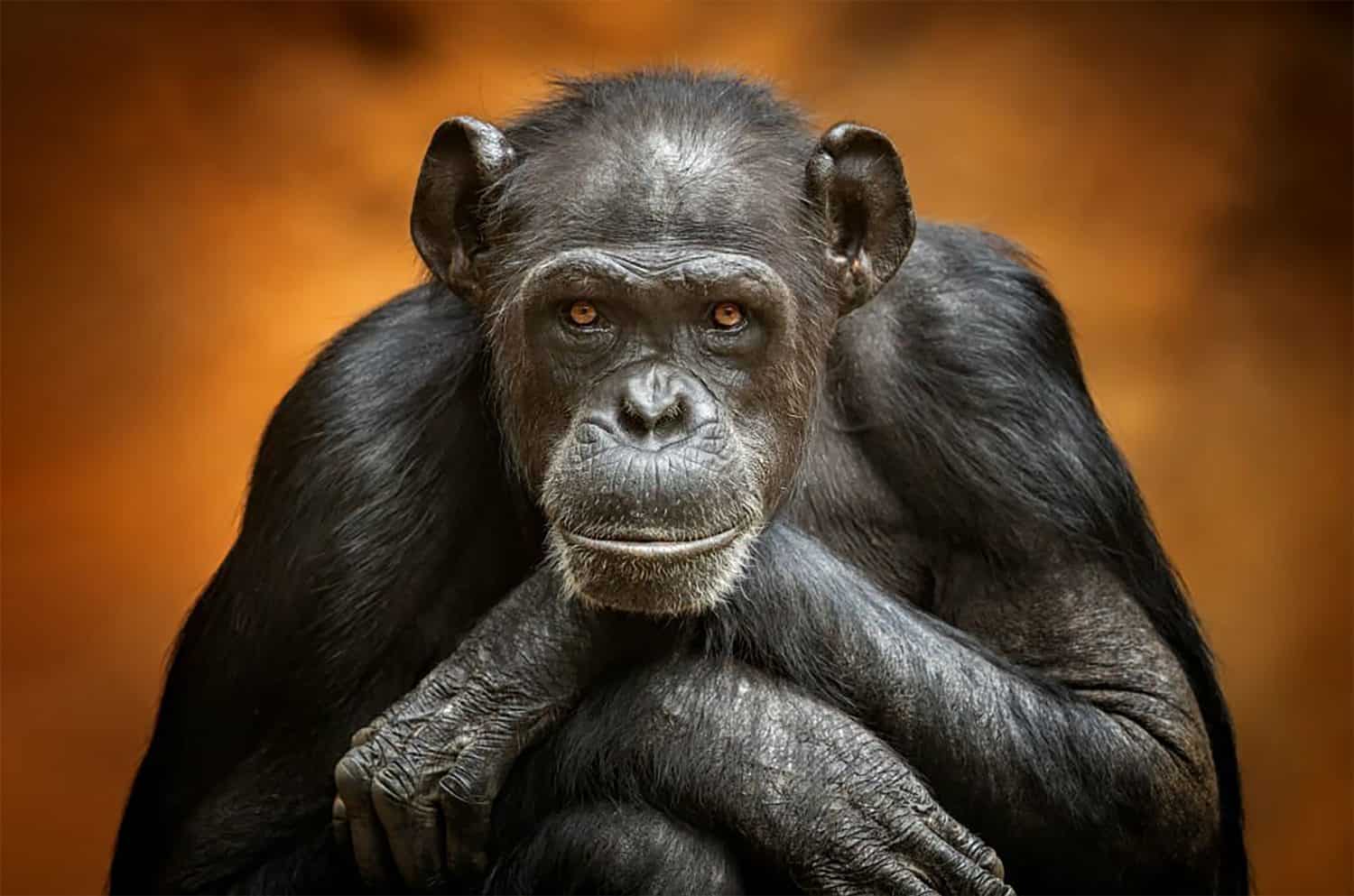
It’s easy to see where this myth comes from, with chimps baring their teeth on nature documentaries and gorillas pounding their chests on the big screen. But the idea that they’re inherently violent is simply not true.
“Chimps and gorillas represent our closest living relatives, and it’s true that they’re large and powerful animals, just as humans are large and powerful animals,” shares Dr. Garber. “Chimps and gorillas can be aggressive, but in the wild, chimps and gorillas spend the vast majority of each day engaged in peaceful, friendly, cooperative activities. And they’re certainly not dangerous to humans. Humans are dangerous to chimps and gorillas.”
It would be more appropriate, rather than thinking of non-human primates as mini humans, to think of humans as mini apes.
Dr. Paul A. Garber, Professor Emeritus in the Department of Anthropology (Program in Ecology, Evolution, and Conservation Biology) at the University of Illinois
Both species are endangered or critically endangered, with far more to fear from us than the other way around. And aggression doesn’t really help them anyway. “Primates are social because the benefits of group living outweigh the costs,” Dr. Garber explains. “Aggression is destabilizing for social groups, and primates have evolved behaviors that tend to de-escalate aggressive interactions. Cooperation is actually in their best interest.”
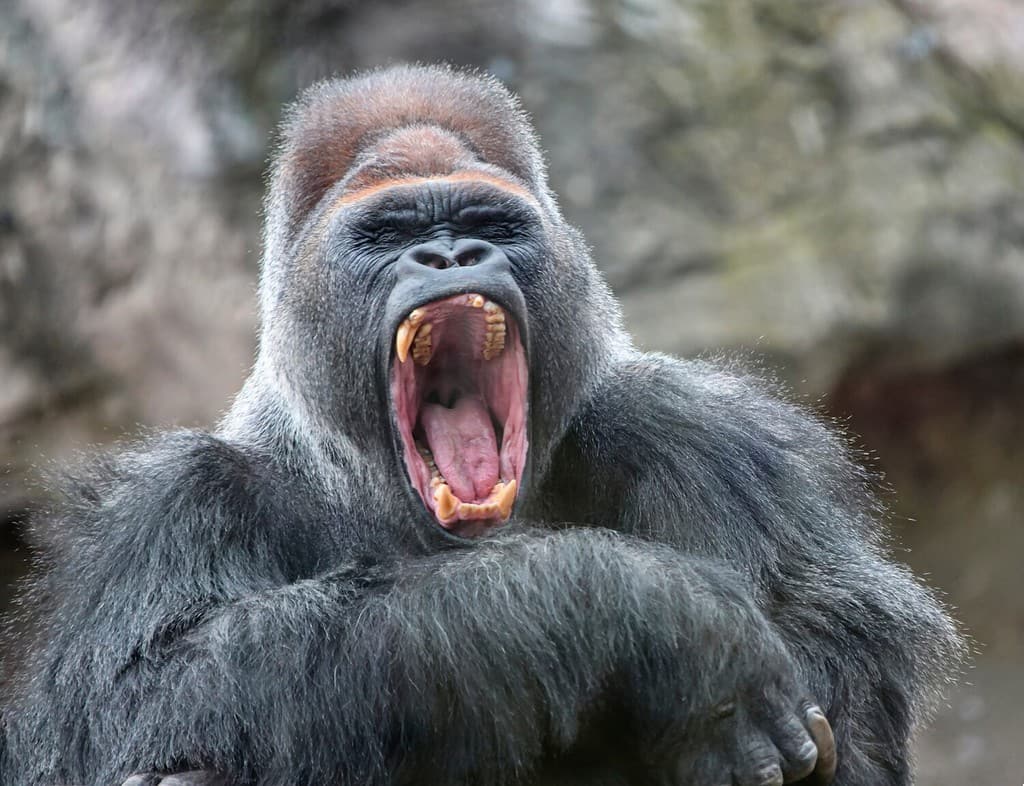
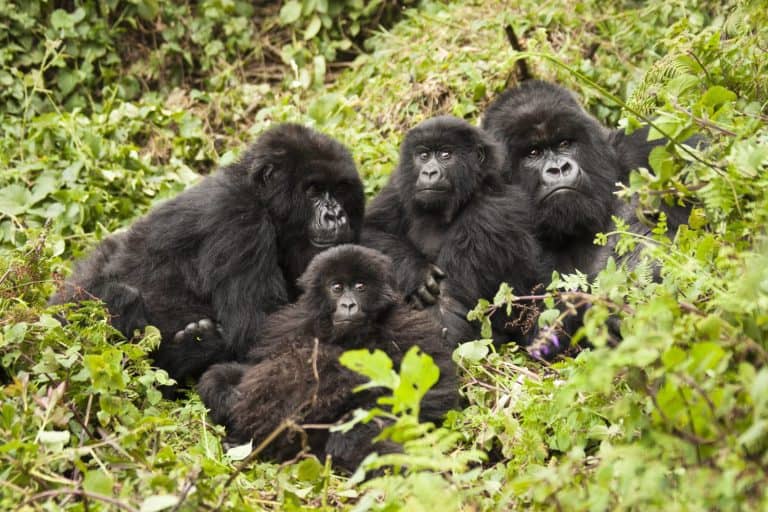
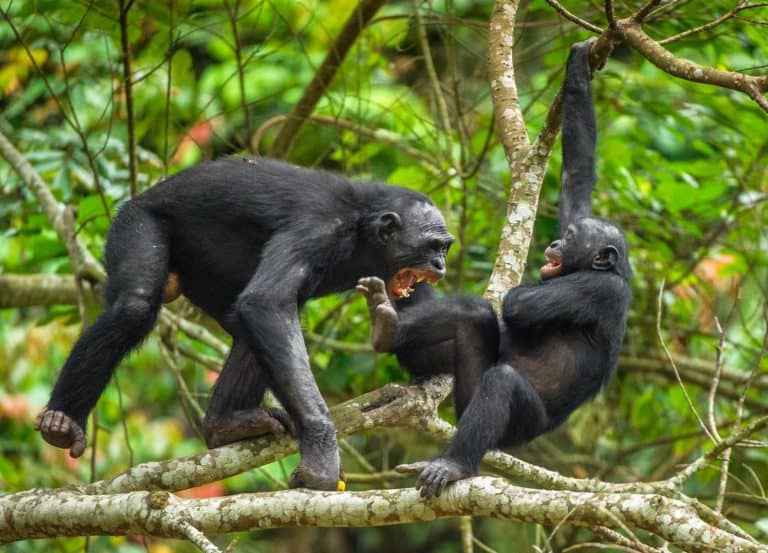
Far from fierce, chimps and gorillas spend most of their time in peaceful, cooperative activities, not Hollywood-style battles.
©Okyela/Shutterstock.com
Myth #3: Primates Are Just Mini-Humans
From trained circus acts to movie monkeys mimicking human behavior, it’s tempting to see non-human primates as smaller, fuzzier versions of ourselves. But Dr. Garber flips that idea on its head.
“It would be more appropriate, rather than thinking of non-human primates as mini humans, to think of humans as mini apes,” he says. “Many of the traits that humans have, we have not because we’re human, but because we’re primates.” In fact, he says some of the characteristics we think of as uniquely human — five fingers and toes, opposable thumbs, trichromatic vision, strong mother-infant bonds — actually come from our primate ancestors.
That said, many years of evolution separate us from chimpanzees. “Humans and chimps last shared a common ancestor six to eight million years ago, so there’s been the independent evolution of the human lineage over that six to eight million-year period,” says Dr. Garber. “I think it’s important to look at humans and non-human primates as special and distinct in their own right … Each primate species is a very individual and distinct species, and we should try to protect and save them, rather than trying to own or control them in some way.”
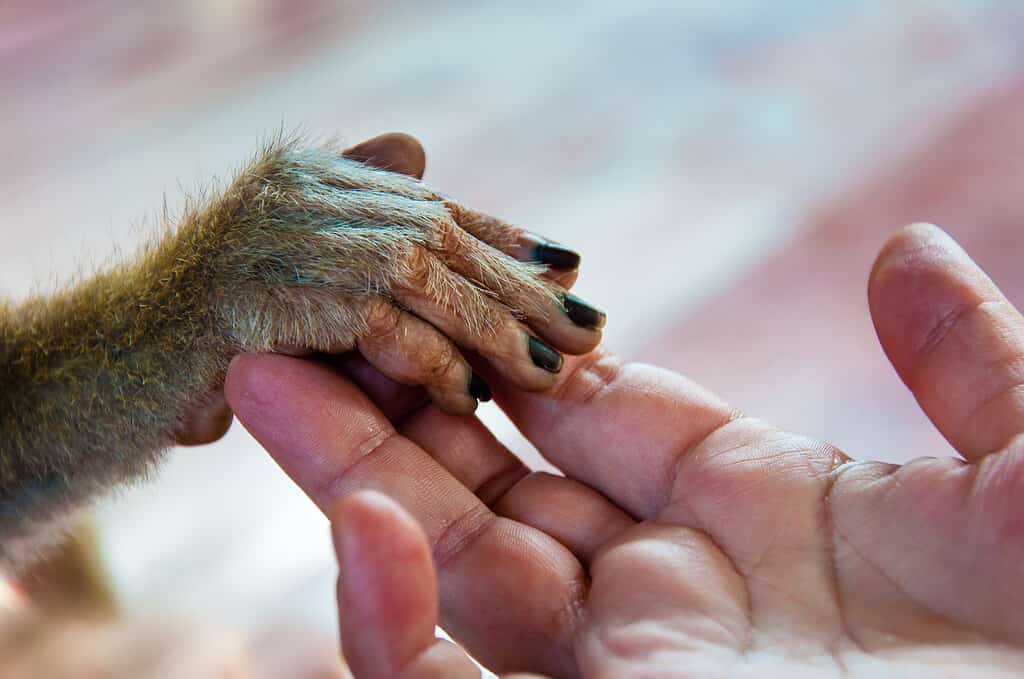
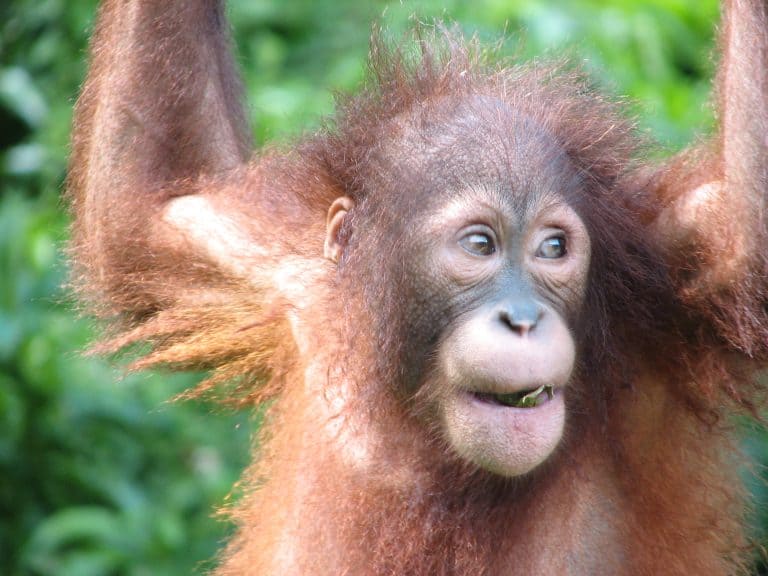
Primates aren’t mini-humans, but our evolutionary cousins. Many of our own traits, like opposable thumbs, come from them.
©stanciuc/iStock via Getty Images
Myth #4: All Primates Use Tools (and Understand Them)
Movies might make it seem like every monkey is a master inventor, but in reality, only a handful of primate species use tools naturally. Even then, their understanding varies.
“Only a small number of primates naturally use tools in the wild. But when we think about tool use, one of the biggest misconceptions is understanding the difference between knowing that something works versus knowing how something works,” Dr. Garber says. Using a stick to fish termites out of a mound doesn’t necessarily mean the chimp understands the engineering behind it; it just knows it works sometimes.
And no, tool use doesn’t mean a neat little intelligence ladder from lemurs to humans. Different species have developed specialized skills independently. “It’s much too simple to say, ‘lemurs are less intelligent than New World monkeys, and New World monkeys are less intelligent than Old World monkeys, and older monkeys are less intelligent than apes, and apes are less intelligent than humans,'” says Dr. Garber. “These kinds of intelligence or cognitive skills have evolved independently in different primate lineages, and different species have specialized cognitive skills in response to natural selection.”
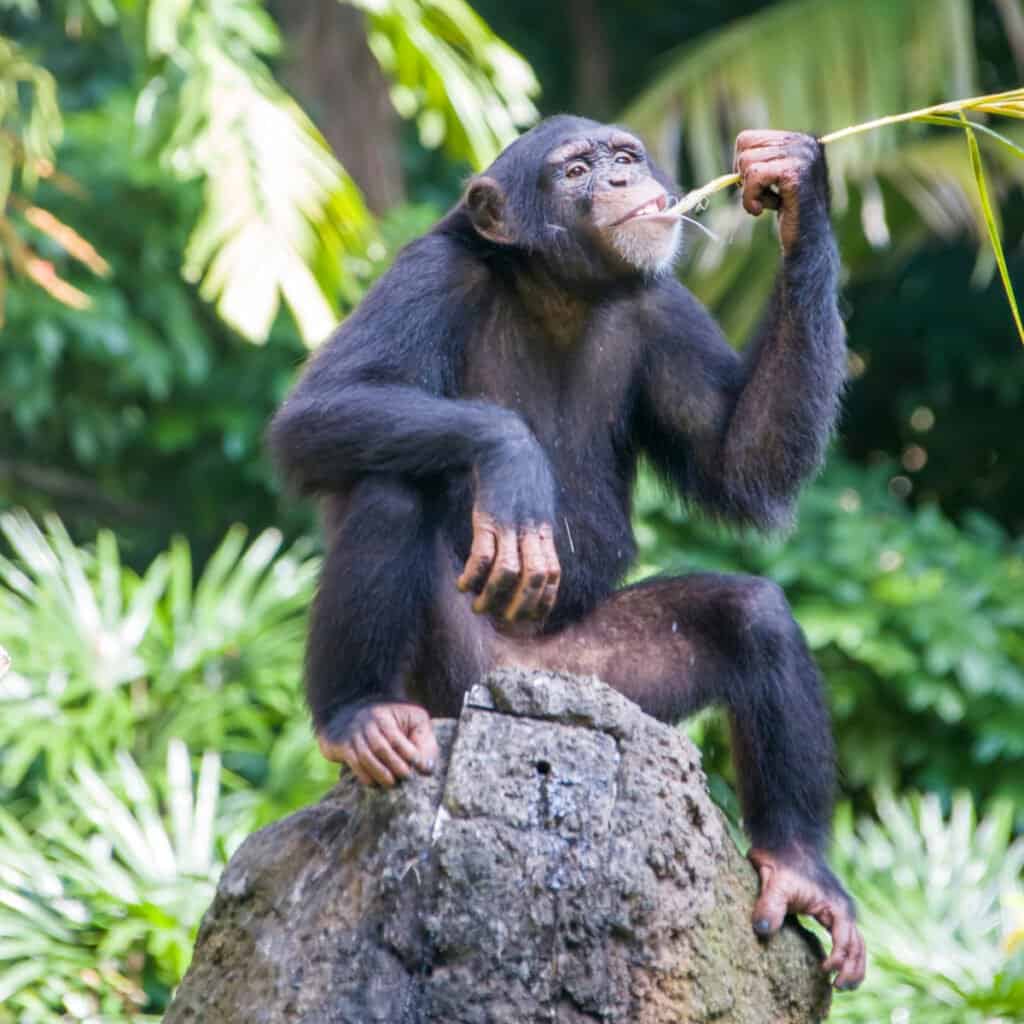
Some primates, like chimps, fashion tools to hunt insects such as termites. But not every species is a tool-using “MacGyver of the jungle!”
©Danny Ye/Shutterstock.com
Myth #5: A Monkey’s “Smile” Means Happiness
Think that grinning macaque is thrilled to see you? Not so fast.
“All primates, or at least all higher primates — monkeys, apes, and humans — have highly mobile lips and faces,” Dr. Garber tells us. “They have a number of facial muscles that help them retract their lips.”
Like humans, they also use their facial muscles in many different contexts. “Primates, in general, use manipulating their facial muscles to communicate,” Dr. Garber explains, “particularly at close distances where you want the meaning of the message to be very clear … communication is critically important. Primates all rely significantly on visual cues.” He adds that a bared-teeth display can signal everything from fear or anxiety to submission, play, or even aggression.
Non-human primates are like the canary in the coal mine. If they can’t survive because of deforestation, fossil fuel burning, and climate change, then humans won’t be able to either.
Dr. Garber emphasizes
Like humans, who can smile when we’re happy, anxious, or plotting revenge (yes, Dr. Garber went there), primate “smiles” aren’t always straightforward. They’re nuanced forms of communication, designed to make messages clear in close social settings.

This guy may look like he’s mugging for the camera, but that “grin” might not mean joy. In primate language, a bared-teeth display can signal play, fear, or even aggression.
©Edwin Butter/Shutterstock.com
Myth #6: Monkeys Love Bananas
This one’s almost too easy. Bananas are practically a visual shorthand for monkeys in pop culture. But in the wild, they’re a human invention.
Any primate would, I’m sure, eat a banana,” says Dr. Garber, “but bananas don’t grow naturally in the wild. They’re cultivated and planted by humans.”
Wild fruits are much smaller and less fleshy than the oversized ones we find at the grocery store. While a monkey certainly wouldn’t turn down a banana if offered, it’s hardly a staple of their natural diet.
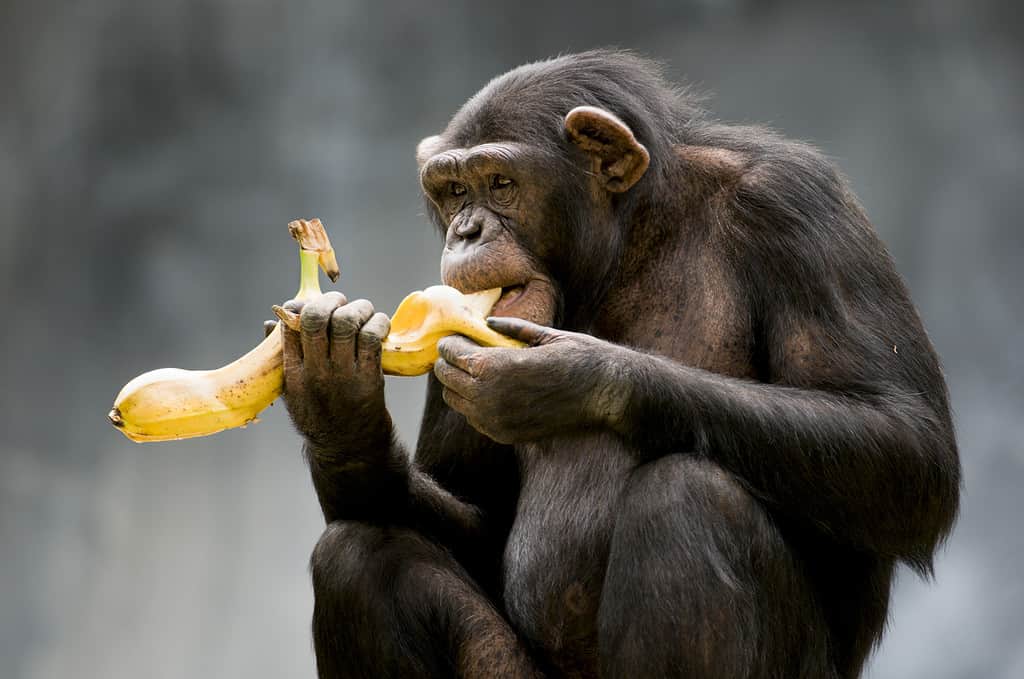
Bananas aren’t a natural food source for monkeys. In the wild, primates eat much smaller, less pulpy fruits than the grocery-store bunches we’re used to seeing.
©Windzepher/iStock via Getty Images
Myth #7: All Primates Live in Tropical Jungles
While most primates do live near the equator, that doesn’t mean they’re all swinging from rainforest vines. Some species thrive in savannas, swamps, woodlands, and even high-altitude mountain forests.
“One of the primate species that I’ve worked with is called the black and white snub-nosed monkey,” says Dr. Garber. “They range as high as 4,500 meters or 15,000 feet above sea level.” Not exactly your stereotypical jungle canopy!
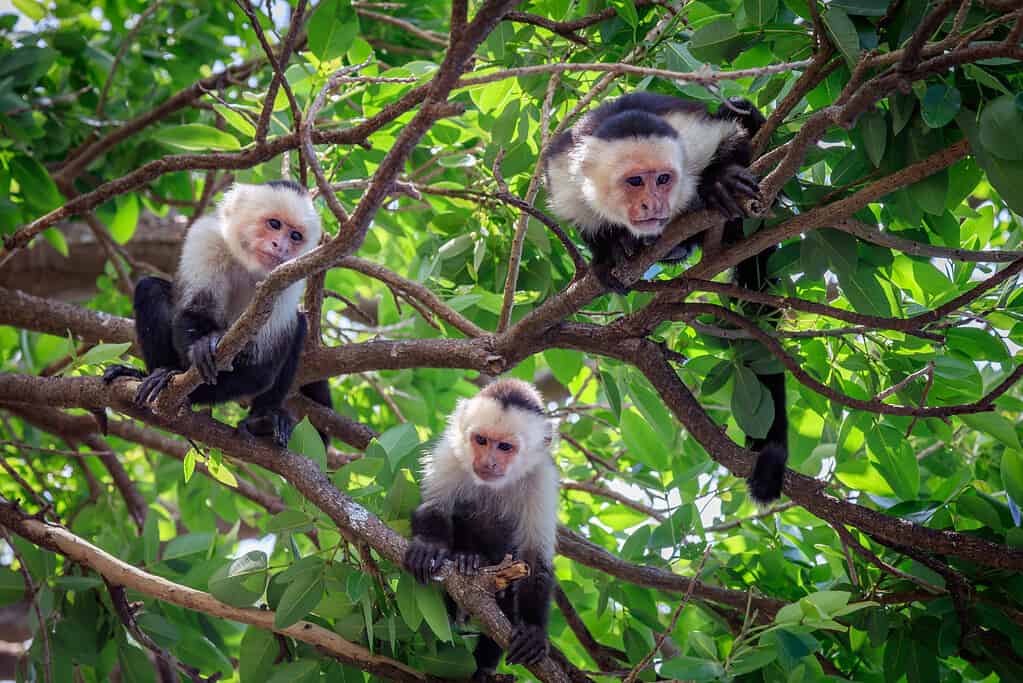
Think beyond the rainforest: primates live in swamps, savannas, woodlands, and even at 15,000 feet in the mountains.
©Kenny Borenstein/iStock via Getty Images
Myth #8: Gorillas and Chimps Are Basically the Same
Both are African apes. Both are endangered. But gorillas and chimps are far from interchangeable.
For starters, gorillas are much larger, with males weighing up to 400 pounds compared to a chimp’s 120. Their diets differ too: chimps hunt and eat meat, while gorillas mainly stick to plants. Chimps also use tools extensively, while gorillas rarely do.
Even their social lives vary. Chimpanzees live in large communities where males stay put and females leave, while gorillas form smaller groups where both sexes often migrate. And mating strategies? Let’s just say chimps are more egalitarian, while female gorillas give priority to the dominant silverback.
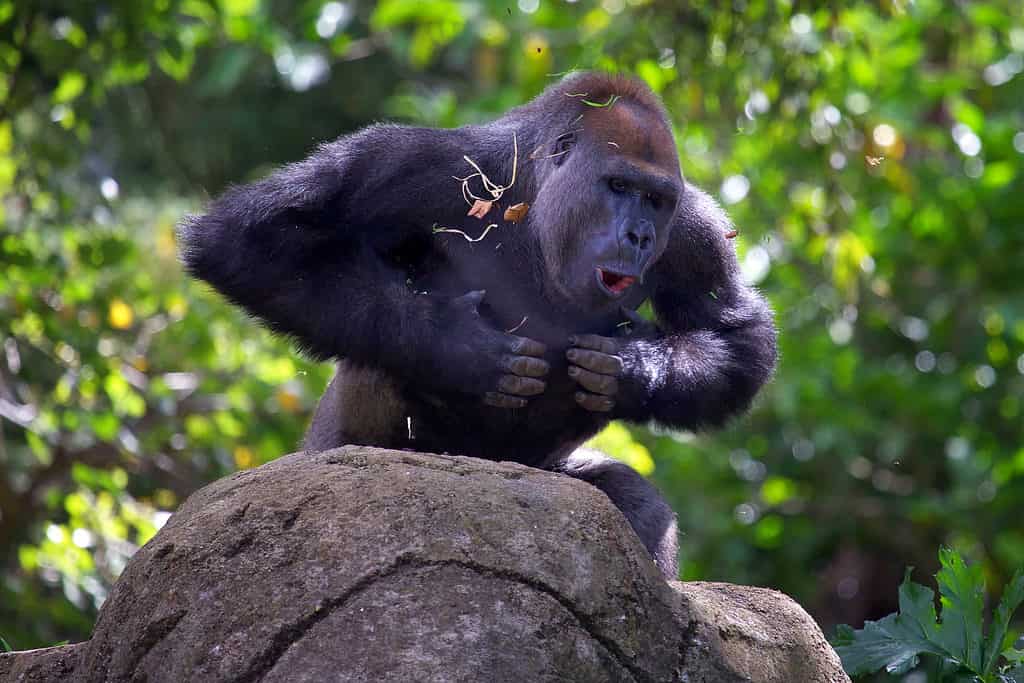
They may be close relatives, but chimps and gorillas differ in size, diet, tool use, and social structures.
©iStock.com/hypergurl
Why Do These Myths Matter?
At first glance, these misconceptions may seem harmless — a funny cartoon here, a banana joke there. But Dr. Garber points out that myths directly undermine conservation.
“I think one major misconception is that primates and their habitats are still abundant,” he says. He points out that statistically, of the 527 known primate species, 69% are threatened with extinction and 94% have declining populations.
Primates play a vital role in their ecosystems, from dispersing seeds to regenerating forests to sequestering carbon. Lose the primates, and you destabilize entire environments.
And here’s the kicker: protecting them isn’t nearly as costly as people assume. Dr. Garber cites research showing that preserving 80% of the Brazilian Amazon would cost just 0.0005% of the GDP of the G7 countries plus China. That’s pocket change compared to the benefits of safeguarding biodiversity and slowing climate change!
In the end, debunking myths isn’t just about giving monkeys better PR. It’s about survival.
“Non-human primates are like the canary in the coal mine,” Dr. Garber emphasizes. “If they can’t survive because of deforestation, fossil fuel burning, and climate change, then humans won’t be able to either.”