
Quick Take
- The same brain process you use to choose between A and B on a menu also drives something far more complex, as monkeys have just proved. See the shared brain process →
- Monkey cooperation hinges on one skill that has nothing to do with intelligence, and this skill may explain certain psychiatric conditions in humans. Discover the key skill →
- Scientists finally caught the exact moment a primate brain commits to cooperating, and the timing turns out to be stranger than expected. See the moment of commitment →
- Primates cooperate visually in a way most other species simply can't. The difference comes down to one sense that rodents rely on instead. Compare primates to rodents →
In a lab tucked away on the Yale University campus, researchers are quietly observing a pair of marmoset monkeys. The scientists have been training these monkeys for months in the art of cooperation.
Each monkey has been trained to recognize that pulling a lever in front of them delivers a tasty treat. But then the stakes are raised. Only if both monkeys pull their lever within one second of each other will treat rewards be dispensed. Wait too long, and no treats arrive.
The monkeys study each other carefully, waiting to see what the other will do.
As one reaches for their lever, the other quickly follows suit. Lever one pulled, lever two pulled in a flash. Both monkeys are happy with their reward. It seems the old adage “monkey see, monkey do” might actually be rooted in science.
What’s Behind Monkey Cooperation?
How, exactly, are these monkeys mastering the art of cooperation? Turns out, success depends not only on mutual observation but also on the ability to read body language. Only then can the pair effectively gauge when the other is poised to act.
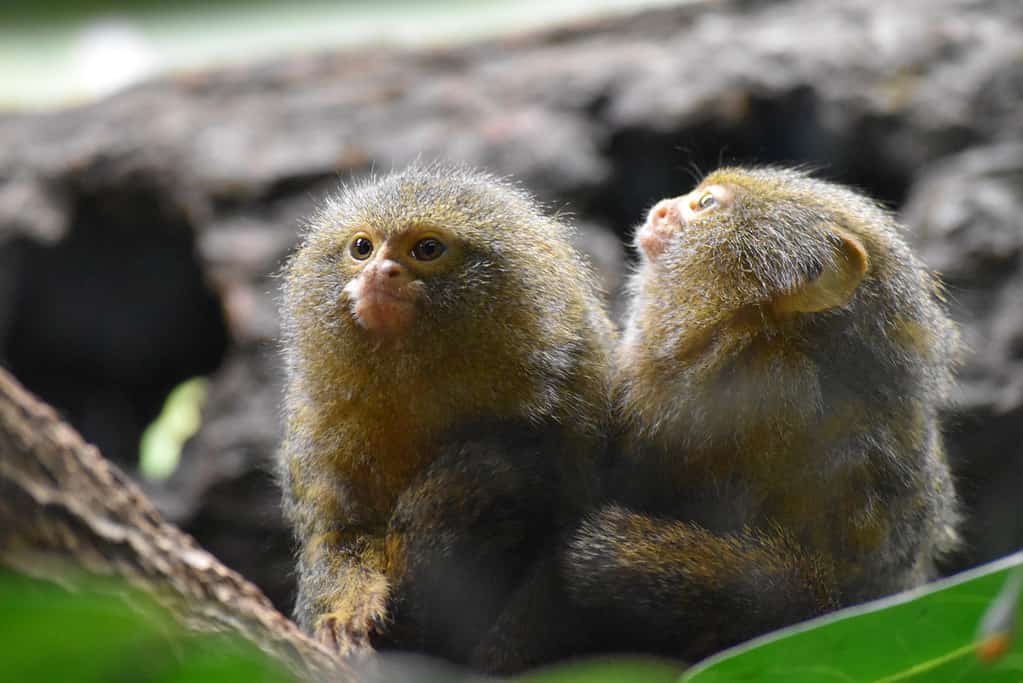
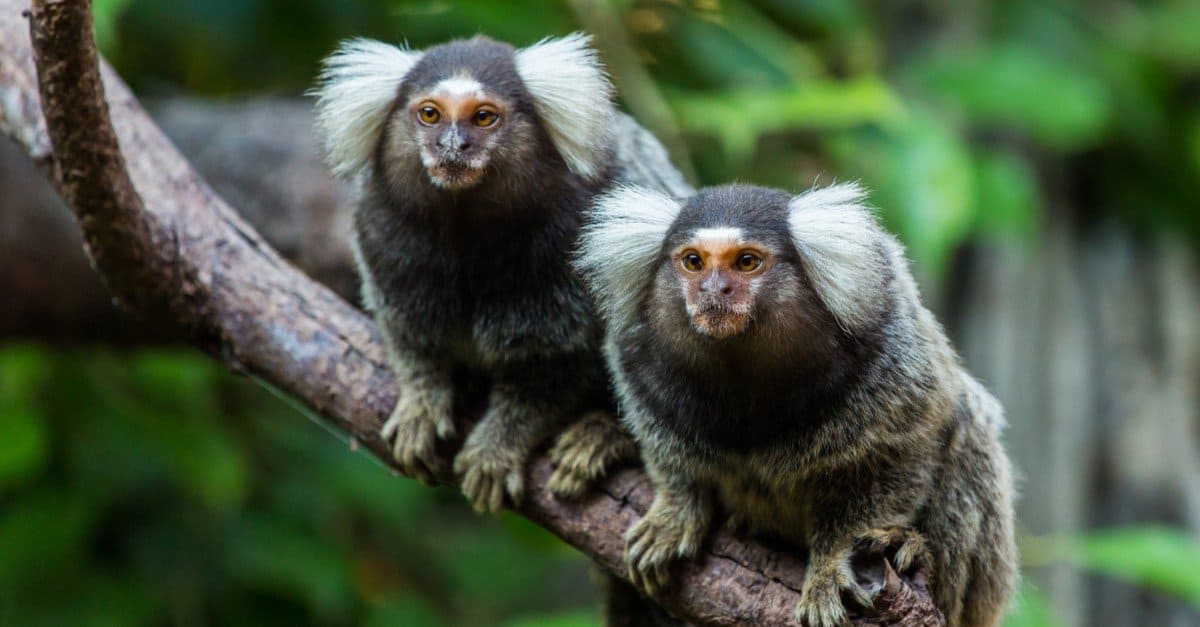
Pygmy marmosets, a different species from the marmosets used in the study, also work collaboratively.
©iStock.com/Donna Asarisi
A team of Yale researchers, including Steve Chang, Associate Professor of Psychology and of Neuroscience, Monika Jadi, Associate Professor of Psychiatry and Neuroscience, and Anirvan Nandy, Associate Professor of Neuroscience and Psychology, conducted these experiments to examine how primate brains function during social interactions to enable cooperative behavior. The team published their findings in the journal Neuron on May 11, 2026.
What the Study Found
According to the team’s findings, the monkeys based their behavior on a process of “evidence accumulation” in the region of the brain responsible for social thinking and decision-making — the dorsomedial prefrontal cortex (dmPFC).
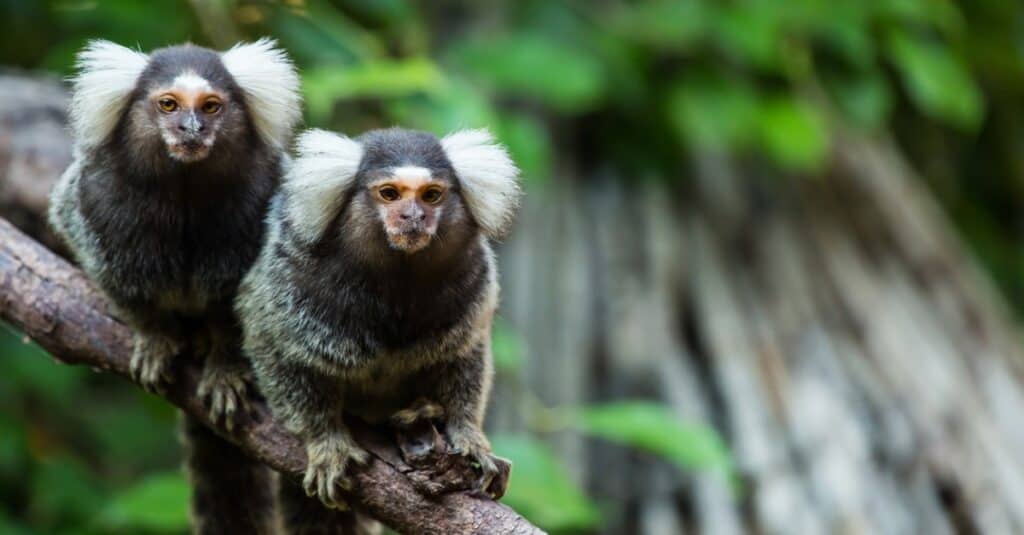
Marmosets use visual cues to cooperate with each other.
©iStock.com/konmesa
During each experiment, brain activity in this region was recorded. The neurons showed a consistent pattern of ramping up as the animals got closer to pulling the lever. The direct relationship between increased neuron activity and cooperative behavior is something researchers have identified for the first time.
The researchers believe this correlation explains a lot about social behavior, not just in primates but in humans, too. They also theorize that the same brain functionality may be an underlying factor in some psychiatric conditions.
What Is the Social Gaze?
What the researchers noted in each experiment is that the monkeys paid close attention to each other in the minutes leading up to activity, especially by looking at each other.
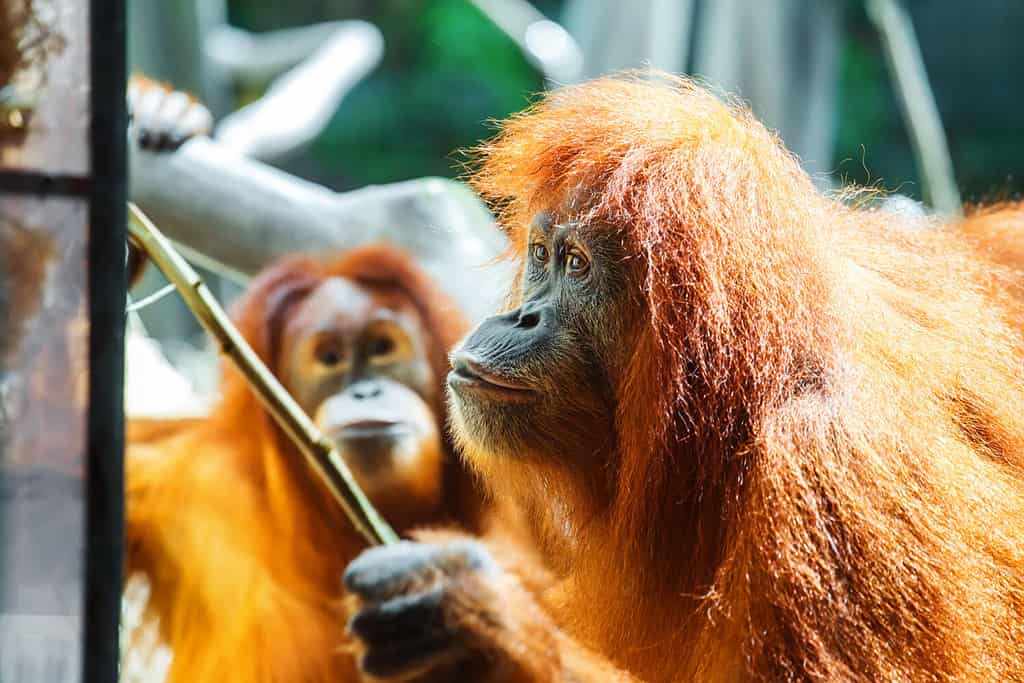
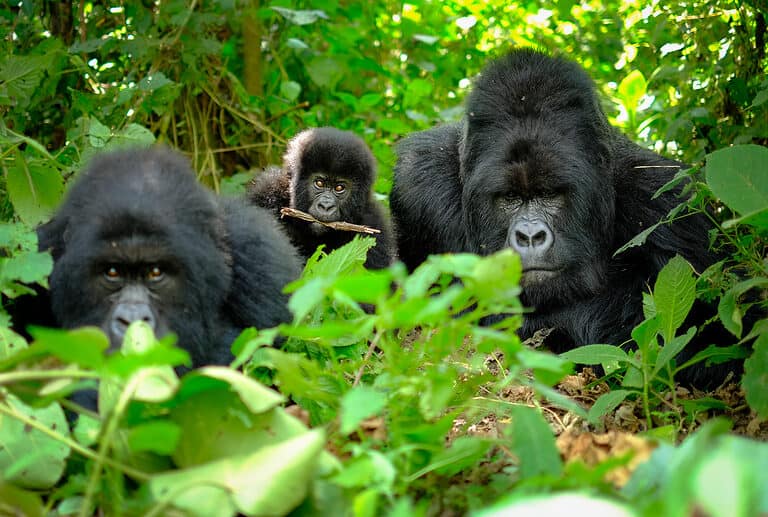
Primates use “the social gaze” to study what each other is doing.
©Funny Solution Studio/Shutterstock.com
Scientists refer to this skill as “the social gaze.” It is the process where members of a species continuously gather and interpret non-verbal social cues from one another. In the case of the monkeys, they succeeded by focusing on eye gaze and body movements to figure out what the other one was about to do.
Chang explained it in a recent news story, “It’s all about gathering evidence from your partner to figure out, ‘Okay, is this a great time to work together?'”
How the Brain Processes Cooperation
Notably, the research team comprised researchers from diverse backgrounds: one in primate social behavior, one in dense recordings of primate brain activity, and one in modeling the computational aspects of brain activity.
The team already had a solid baseline for understanding how decision-making occurs in the brain. However, it was based on solo subjects being studied, focusing on how an individual decides how to proceed in a given situation. This process is known as the “drift diffusion” model of decision-making.
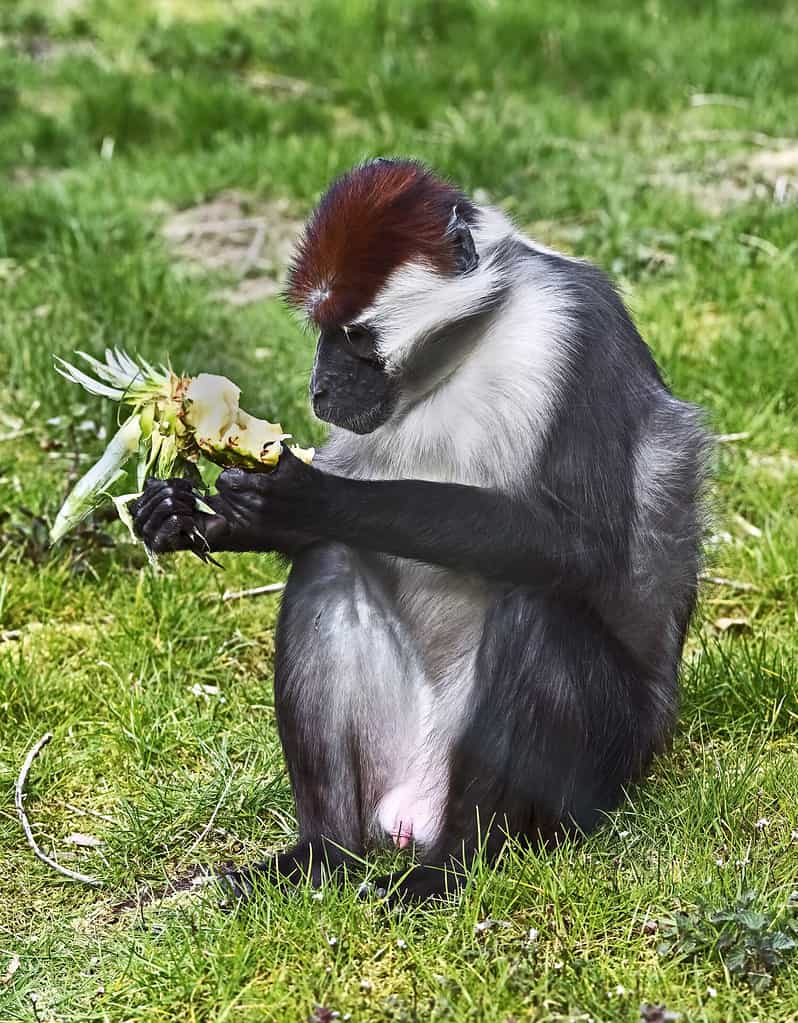
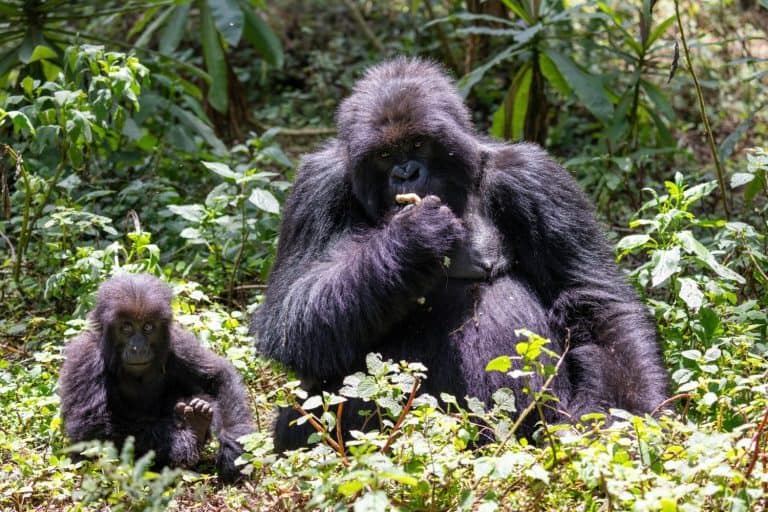
Primates use the same decision-making process whether acting solo or with another primate.
©Mikhail Blajenov/Shutterstock.com
For example, if a person is faced with choosing between A and B, they will gather evidence about which choice is best. Initially, the brain wavers between the choices. As strong evidence is gathered, the brain then drifts towards the option the evidence supports. But if the evidence is weak, the brain continues to drift back and forth (drift diffusion), and it takes longer to decide.
This study was the first time scientists tested the same “drift diffusion” principle to see if it applied to cooperative decision-making behavior, too. They found that the monkeys used the exact same model when observing their partner.
Do Other Species Use Cooperative Thinking?
The researchers say other species besides primates and humans likely use collaborative thinking. However, they’re quick to point out that what makes primates unique is the visual aspect to the process. Other species, like rodents, use other senses to gauge the world around them, like smell or whisker vibrations.
What’s Next?
The researchers are already planning their next study. While this one focused exclusively on one part of the brain–the dorsomedial prefrontal cortex–they say there are other regions of the brain that also contribute to cooperative behavior. Areas like the orbitofrontal cortex, associated with reward-related decision-making, are next on their list.
Their goal? To see how these various areas of the brain work together and communicate with each other. Researchers want to understand what that language is, not just for cooperative tasks but for other types of social interactions, too.