
If you are a snake with tiny teeth and no venom, what’s the best strategy for defending yourself from predators? The answer is to pretend that you are one of the super scary snakes with sharp teeth and toxic venom, and hope that your enemies fall for it! That is exactly what the rhombic egg-eater does with great skill. You can take a look for yourself in this amazing YouTube clip. Let’s find out more about this genius mimic.
All About Rhombic Egg Eaters
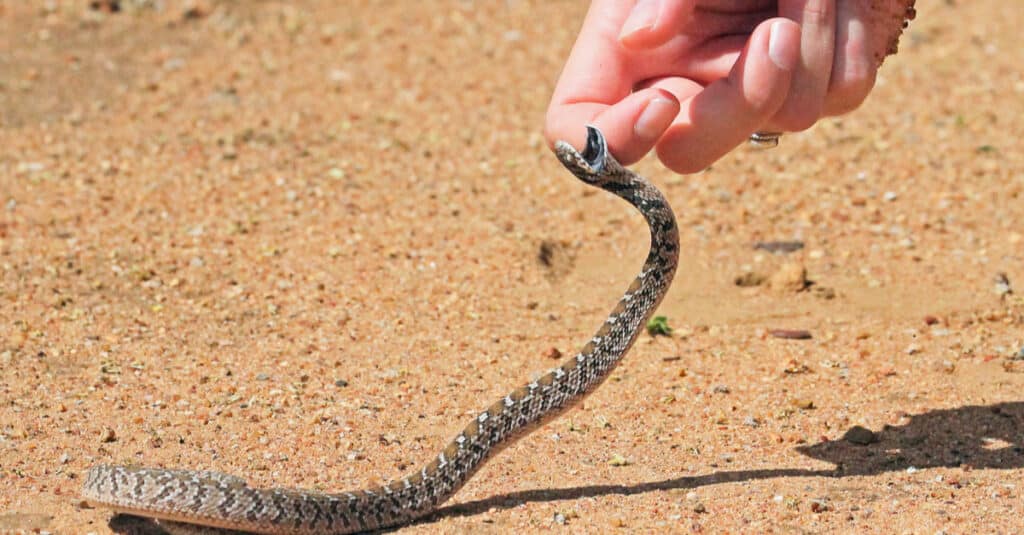
Rhombic egg-eater snakes are not venomous, and they don’t have any teeth.
©Eugene Troskie/Shutterstock.com
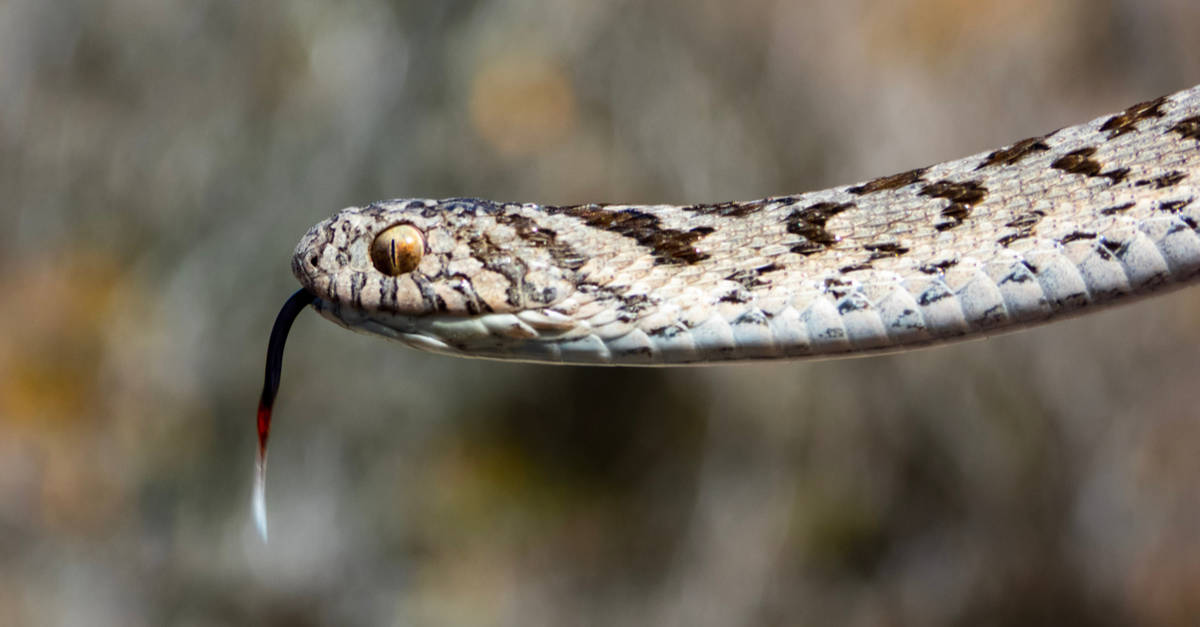
Rhombic egg eaters (Dasypeltis scabra) are also called common egg eaters and the egg-eating snakes. No prizes for guessing what their diet consists of! Because they feed exclusively on eggs, they do not need venom to subdue their prey. Long, sharp teeth would be no help when it comes to swallowing an egg whole. Instead, they have small ridges inside their mouths that help them to grasp slippery or shiny eggs. Once the egg is swallowed, they use a special type of bone called a vertebral hypapophysis, which extends into the esophagus (food pipe) to puncture the egg. The contents are swallowed, but the shell is regurgitated in one piece.
These fascinating snakes are found in sub-Saharan Africa and live in a variety of habitats except for closed-canopy forests and deserts. They are nocturnal and excellent climbers, allowing them to easily access birds’ nests high in trees or on cliffs to feed on eggs..
Defensive Mimicry
As you can see in the clip, when these snakes are disturbed, they make a hissing sound, which is not unusual for a snake. However, instead of producing the sound in their throats, they rapidly rub their rough scales together, creating a hissing noise that closely resembles that of an adder. They also strike at threats, despite lacking teeth to actually bite.
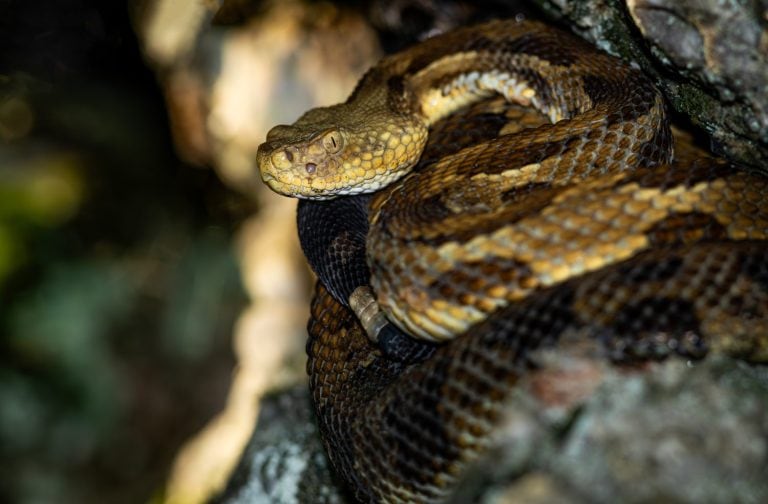
Their main defense is to mimic a more dangerous snake. They resemble some venomous African vipers, such as the rhombic night adder (Causus rhombeatus), which share similar patterns and habitats. They even alter the shape of their throat to make themselves look like an adder. This behavior is called mimicry and can be highly effective.