

Quick Take
- A water snake has a surprising trick for turning a predator's attack against it, and the trick has nothing to do with venom. See the surprising trick →
- Snakes have a whole arsenal of defenses before they ever resort to fighting back, most of which you would never expect. Explore snake defenses →
- Herons don't just eat fish. Their actual diet is far stranger and more aggressive than most people realize. Discover what herons eat →
- The heron's hunting technique looks almost impossibly slow, but that is precisely what makes striking a snake so deadly. See how herons hunt snakes →
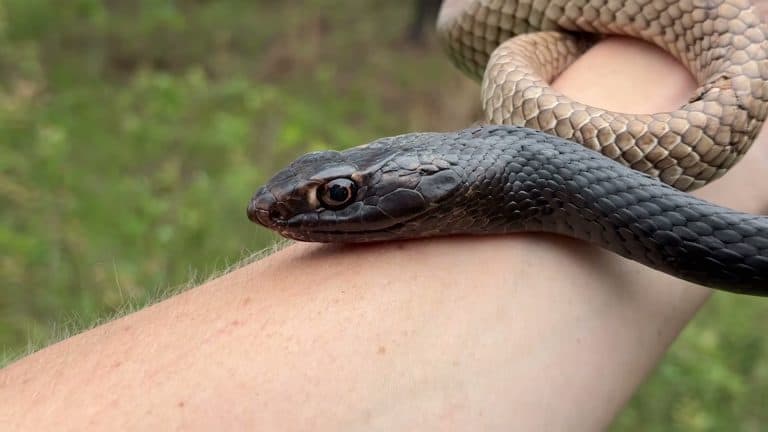
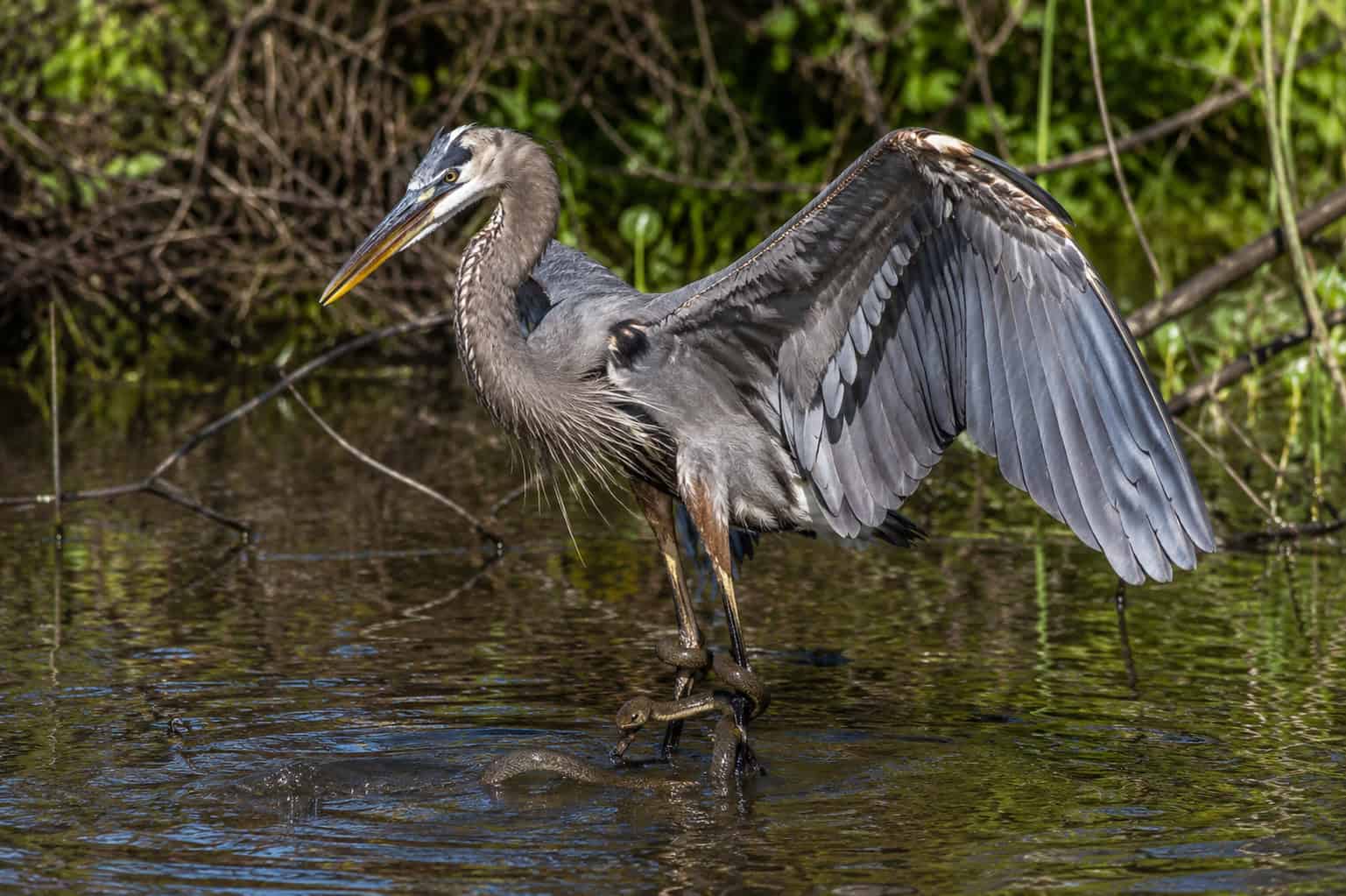
The great blue heron is a powerful creature with a unique hunting ability. In the video shown above, you can see it using its long, spear-like bill to try to subdue and eat a water snake. However, despite the heron’s efforts, the water snake puts up a tough fight by wrapping itself around the heron’s legs.
Where Do Great Blue Herons Live?
Great blue herons live across much of North America and can also be found farther south in parts of Central America, the Caribbean, and the Galápagos. Specifically, the large water bird occupies ecosystems like lakes, ponds, rivers, wetlands, and marshes. They live in both freshwater and saltwater.
Great blue herons typically nest in trees or shrubs near water, including mangroves, and may occasionally nest on the ground in areas free of predators or on human-made structures. They’ll use sticks, pine needles, moss, dry grass, small twigs, and other material from nearby trees, shrubs, or abandoned nests.
Do Herons Eat Snakes?
Yes, herons will occasionally hunt and eat snakes. Their diets primarily consist of fish, but they also eat amphibians, reptiles such as snakes, crustaceans, insects, small mammals, and birds when they can catch them.
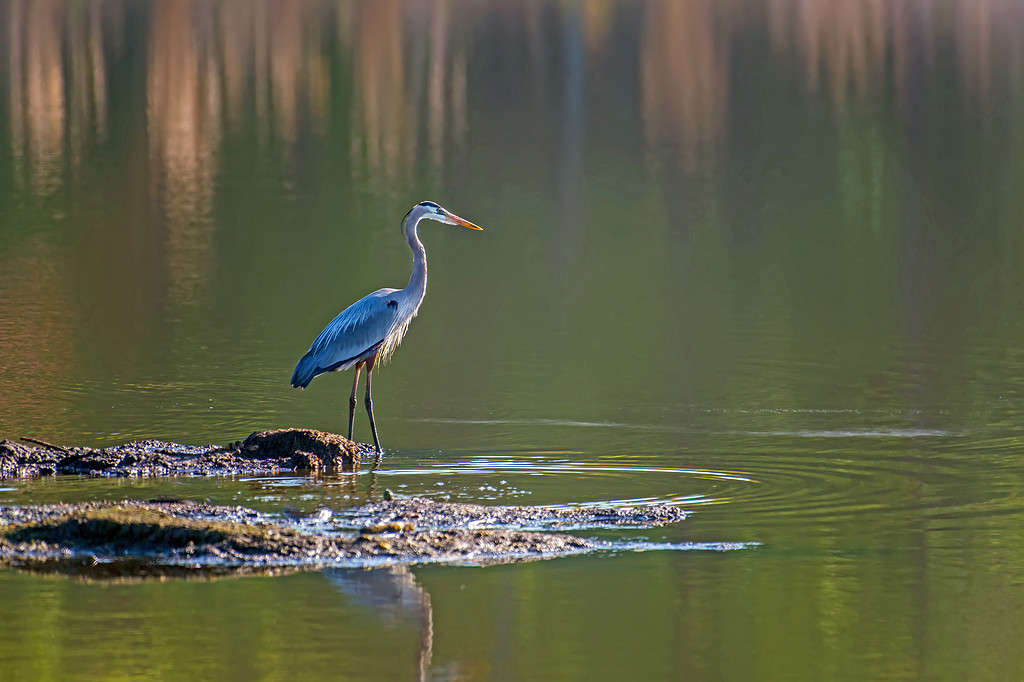
Great blue herons often hunt by standing motionless or walking slowly through shallow water, along shorelines, or in wetlands until prey comes within striking distance.
©flownaksala/iStock via Getty Images
When hunting prey such as a water snake, a great blue heron may stand nearly motionless or move slowly, then strike quickly once the snake is within reach. The heron strikes with its long bill, grabs or pins the snake, and then tries to swallow it whole. The sight can look strange because the heron often has to maneuver the snake’s long, flexible body before swallowing it.
How Do Snakes Avoid Predators?
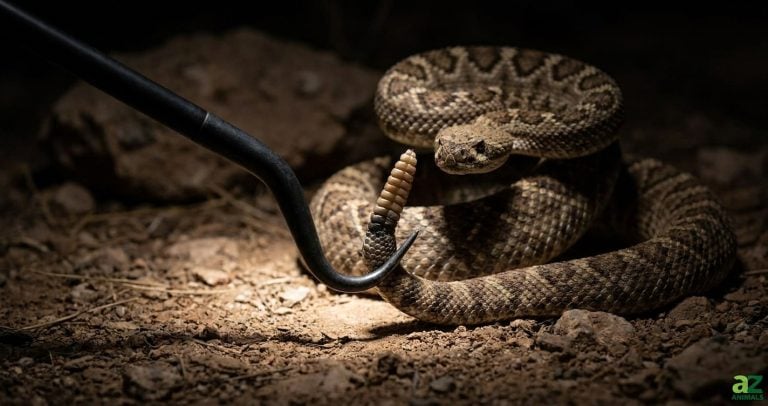
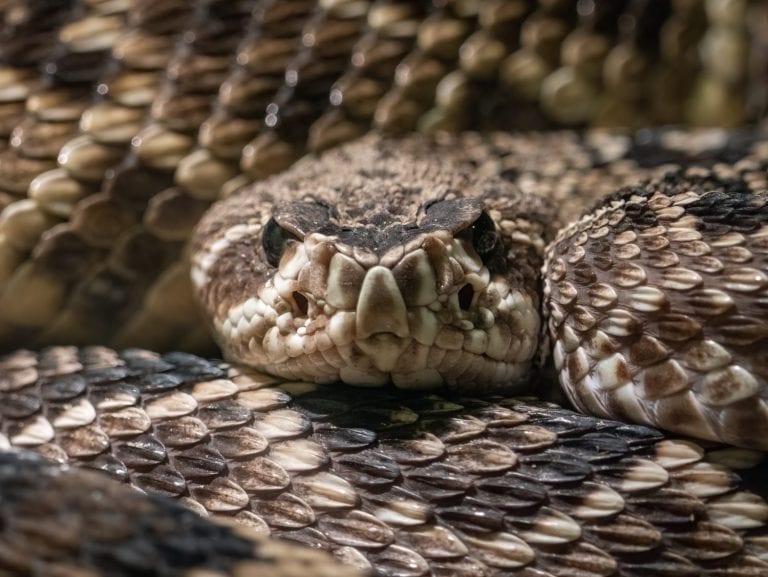
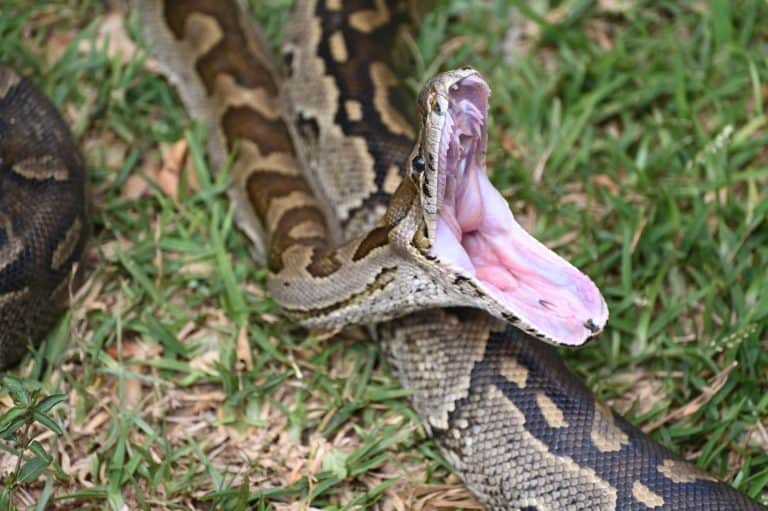
Snakes avoid predators in many ways; many species rely on camouflage, stillness, hiding, or fleeing before resorting to active defensive behavior. Depending on the species, some may burrow, flatten their bodies, release foul-smelling musk, bite, vibrate their tails, or even feign death.
If confronted or attacked, snakes may put up a fight — as demonstrated in the video above. Some snakes hiss, strike, release musk, or vibrate their tails; rattlesnakes specifically use a tail rattle as a warning. Venomous snakes may bite defensively, while nonvenomous snakes may bite, release musk, flee, or coil defensively. Constriction is mainly used to subdue prey rather than as a primary defense.